Mahoning Valley residents and volunteers “Feel the Heat” during emergency response tour

By Mark Sitch, American Red Cross volunteer

October 30, 2019- The American Red Cross partners with many organizations to create a network of volunteers and highly skilled professionals who are prepared when emergencies arise. The Youngstown Air Reserve Station (YARS) has served proudly since 1955 as a community jewel and thirdlargest employer of the Mahoning Valley—ready to serve our region and beyond in multiple ways.

On October 22 the Red Cross community was invited to Feel the Heat, a learning tour of facilities and tools used by the valley’s bravest to serve our region and nation. Nearly 1,900 military personnel efficiently operate this 321-acre federal facility in Trumbull County, where our assignment began.

48943605903_23f15a0a99_c

Karen Conklin, Executive Director of the Red Cross of Lake to River, and chapter board member Lou Joseph of Home Savings and Loan of Youngstown

We were greeted with opening remarks at the Community Activities Center (CAC) by Colonel Don Wren, 910th Air Wing Mission Group Support Commander. Joe Mersol, Lake to River chapter co-events chair, addressed attendees during refreshments. After Mike Parks, Red Cross regional executive, introduced Air Force Fire Chief John Lewis, we were divided into three squadrons and briefed with instructions for our nearly two-hour tour.

Our second stop was at the Family Assistance Center, where we learned training and drills that can help families in any YARS related event or disaster, with a staff  ready to provide counseling, food, first aid, shelter and specialized services.

48943615653_f843325853_c

Red Cross Regional CEO Mike Parks, a U. S. Coast Guard Rear Admiral (Retired) speaks with Air Force Reserve Col. Don Wren,  Commander, 910th Mission Support Group

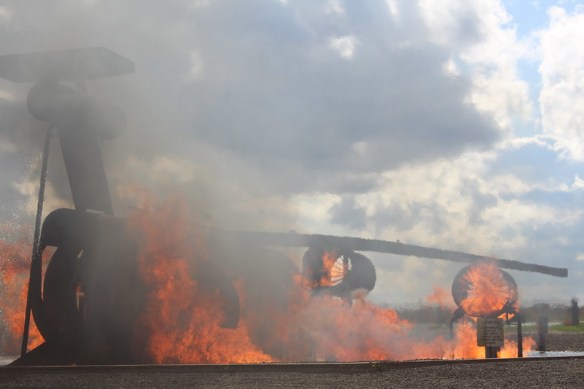
Our next adventure was reporting to the Smoke House for a simulated smoke demonstration. This illustrated how difficult it is to see in a fire. We learned the importance of staying low to the ground and other safety tips. Outside, we “felt the heat” at the next demonstration by witnessing a propane- fueled metal training jet set ablaze as Chief Lewis outlined the challenges of fighting such a fire.

“It’s our opportunity to work with our amazing 910th Airlift Wing on an exercise where we simulate a plane has gone down,” said Karen Conklin, Lake to River Chapter executive director.

48944161206_f9468f3637_c

They also demonstrated the powerful “jaws of life” and other tools used to extract victims of car accidents. The chief noted that they assist various area fire departments in the region, as was supported by the presence of Youngstown Fire Chief Barry Findley and Mayor Tito Brown.

Our last stop was at the Emergency Operations Center. This “situation room” with the latest technology helps federal, state and local responders coordinate emergency efforts and monitor events such as air shows hosted by YARS.

48944156906_3365b156d8_c

It was an informative and pride-filled day that helped show the community the value of this facility as a Red Cross trusted ally.

Our thanks to Lake to River chapter board chair Deborah Grinstein for coordinating the event; 910th Airlift Wing Commander Colonel Joseph D. Janik; and Master Sgt. Bob Bartko Jr. for allowing us to observe impressive team efforts and for planning this exciting event.

48943609108_00243c4ed5_c

Col. Wren with Red Cross AmeriCorps workers Carrie Schultz, left, and Teresa Greenlief

Visit www.youngstown.afrc.af.mil to learn more about this Mahoning Valley gem.

To see more photos from the Feel the Heat event, click here to visit our Flickr page.

Edited by Glenda Bogar, American Red Cross volunteer

International adventures with a former Red Cross staff member

By Beth Bracale, American Red Cross volunteer

October 28, 2019- Betty Lou Sobotincic started working for the American Red Cross right out of high school. Her friend’s mother catered luncheon meetings at the headquarters in Erie, Pennsylvania, and she told director Harry Ringer about Betty Lou. Ringer was known for overseeing all of the Red Cross during World War II and having worked with President Dwight D. Eisenhower.

The Erie branch was short-staffed, and Ringer hired Betty Lou as secretary to the First Aid, Water Safety and Disaster Response departments. She soon discovered that she and a college student from Gannon University had two weeks to prepare for the “Teach Johnny to Swim” program that summer – for 2,000 students! They managed to pull it off.

BLC wave

During Betty Lou’s time in Erie, President John F. Kennedy was assassinated. One of her jobs was to raise the flag. When Ringer told her to put the flag at half-mast that day, she asked him what that meant. “He gave me a look. When Harry told you to do something, you just did it. So I went outside and figured out how to hang a flag at half-mast.”

After a couple of years, Betty was getting restless and she had reached the cap of the pay range. Ringer called the Red Cross office in Washington, D.C., and opened the door for them to hire her for overseas duty. She traveled to D.C. and stayed at the famous Willard Hotel. Both the hotel and the Red Cross headquarters were quite impressive to a 19-year-old from Ashtabula, Ohio.

BLC Heidelberg, patient

Betty Lou’s first assignment was at the Far Eastern Area Headquarters of the Red Cross in Tokyo, Japan, during the build up to the Vietnam War. When she arrived, there were between eight and 15 personnel in Vietnam. By the time she left two years later, there were 250, and a substation had been created in Saigon. As secretary, and the youngest staff member by far, Betty Lou was in charge of payroll, processing transfers and keeping track of everyone’s location. She was tasked with going to embassies for the Southeast Asian countries and procuring visas for transferring workers. Finding her way around Tokyo was no easy task. Eventually she bought a car and drove herself wherever she needed to go.

At 21, Betty Lou was transferred to Heidelberg Hospital in Germany, again serving as secretary with a high-level security clearance, which was necessary due to her knowledge of troop movement. Her duties included sending messages to families of soldiers who had been killed and assisting families who came to visit those who had been severely wounded. While this job wasn’t as challenging as the one in Japan, it was emotionally draining.

BLC mag cover

Sometimes Red Cross personnel from Washington and other locations came to the hospital and were hosted by the director. One of those guests was Al Cherry , who Betty Lou met at a Red Cross gathering. Six weeks later the two were married in Switzerland! Eventually they moved to Ashtabula, Ohio, to raise a family.

Betty Lou served the Red Cross in Northeast Ohio during a number of local disasters, such as the tornadoes in Xenia, Ohio, and the surrounding area. In more recent years, Betty Lou and Al have been consistent contributors to the Red Cross, with a special focus on family needs following house fires. Betty Lou still stays in touch with people she met through her work, both here and abroad. The Red Cross holds a special place in her heart.

Edited by Glenda Bogar, American Red Cross volunteer

Safety advice for Halloween

Trick-or-treaters will be out tonight in some communities

Halloween is just days away! Masses of kids will be out in our neighborhoods, dressed as super heroes, cartoon and television characters for trick or treat fun. The American Red Cross has complied a list tips parents can follow to help keep the kids safe while enjoying the festivities.

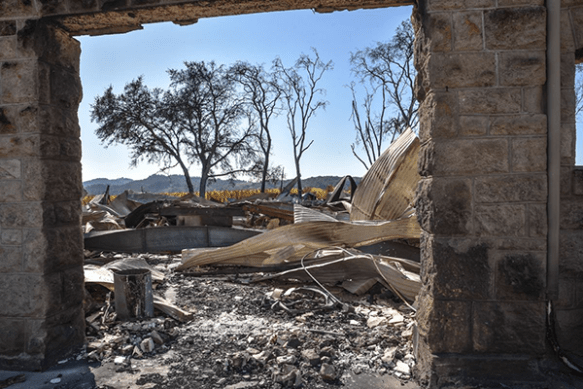
California Wildfires 2017

  1. Trick-or-treaters need to see and be seen.
    – Use face makeup instead of masks which make seeing difficult.
    – Give trick-or-treaters a flashlight to light their way.
    – Add reflective tape to costumes and trick-or-treat bags.
    – Have everyone wear light-colored clothing.
  2. Use flame-resistant costumes.
  3. Make sure adults know where the kids are going. A parent or responsible adult should accompany young children door-to-door.
  4. Be cautious around animals, especially dogs.
  5. Walk, don’t run.
  6. Only visit homes that have a porch light on. Accept treats at the door – never go Superstorm Sandy 2012inside.
  7. Walk only on the sidewalks, not in the street.
    – If no sidewalk is available, walk at the edge of the roadway, facing traffic.
    – Look both ways before crossing the street, and cross only at the corner.
    – Don’t cut across yards or use alleys.
    – Don’t cross between parked cars.
    – Drivers – use extra caution. The youngsters may forget to look both ways before crossing.
  8. A grown-up should check the goodies before eating.
    – Make sure to remove loose candy, open packages and choking hazards.
    – Discard any items with brand names that you are not familiar with.

If you are planning to welcome trick-or-treaters to your home, follow these safety steps:

  1. Light the area well so young visitors can see.
  1. Sweep leaves from your sidewalks and steps. Clear your porch or front yard of obstacles someone could trip over. If your steps or walkways are ice covered, make sure to lay down salt- this is Northeast Ohio after all!

Superstorm Sandy 2012

Trick or treat times vary; many communities have established tonight as the night for trick or treating, including Akron, Cuyahoga Falls and Ravenna. Visit your city’s website for exact dates and times, or visit this for a pretty extensive list.

Superstorm Sandy 2012

Download the free Red Cross First Aid App for instant access to expert first aid advice right at your fingertips. Use the free app Emergency for weather alerts and to let others know you are safe if severe weather occurs. Find these and all of the Red Cross apps in smartphone app stores by searching for the American Red Cross or going to redcross.org/apps.

Smoke alarm helps save lives in Wooster

By Samantha Pudelski, American Red Cross Volunteer

October 25, 2019- Did you know that if a fire starts in your home, you might have as little as two minutes to escape? Something as simple as a smoke alarm can alert those inside of a fire in its early stages, providing critical time to vacate the home and call for help. Unfortunately, there are many who don’t have working smoke alarms, or don’t have enough devices within their home.

One American Red Cross volunteer, Barbara Buchwalter, experienced first-hand how powerful a simple device like a smoke alarm can be.

33882105078_6646b24feb_c

Joe Kiefer

“I was given a business card at a senior event,” said Barbara. “We knew we didn’t have enough smoke alarms for the size of our home. A fireman came and installed several alarms. Within the same week, our stove caught fire and the smoke alarm went off.  The fireman that installed the alarms also responded to the fire that afternoon. I believe my husband and I were saved, because we had our old alarms replaced.”

47706530702_b58007362e_c (1)

Lieutenant Joe Kiefer was the Wooster firefighter who provided the services that saved the lives of Barbara and her husband. He said that the smoke alarm not only saved lives that day, but it minimized the damage the fire caused. With the fast actions of the homeowners, Joe and his fellow firefighters were able to quickly respond and put out the fire before it spread to other areas of the home.

Joe was recently named Wooster firefighter of the year, and his work with the Red Cross Home Fire Campaign was mentioned as one of the reasons for his nomination.

The Buchwalters are among the 642 people whose lives have been saved after smoke alarms installed by the Red Cross and its partners alerted them to the danger in their homes. In Northeast Ohio, the Red Cross and its partners have installed over 42,000 smoke alarms through its Home Fire Campaign.

Kiefers

Joe Kiefer with his wife Lara Kiefer, executive director of the Lake Erie/Heartland Chapter

Smoke alarm installations are available to any community member through their local chapter of the Red Cross. Many fire departments, like the Wooster Fire Department partner with the Red Cross to install smoke alarms the Red Cross provides. Fifteen to 30 minutes is all it takes to install smoke alarms in a home. Joe said that it also provides the firefighters an opportunity to answer any questions the homeowners may have, and to point out any potential fire hazards within the home.

33882104578_9636739437_c

Joe Kiefer with Ashland mayor Matt Miller

“It’s a great way to get [firefighters] face-to-face with their community members,” Joe said.

“It’s a simple thing people can do—there’s no reason not to have smoke alarms,” according to Joe. To learn more about how you can prepare your home in case of a fire, visit the Red Cross Home Fire Safety page.

Edited by Glenda Bogar, American Red Cross volunteer

New Facebook and Alexa features help boost blood donations

By Christy Peters, External Communications Manager, Northern Ohio Biomedical Services

October 23, 2019- The American Red Cross has partnered with some of the country’s leading technology brands to make donating blood even easier. Now, blood donors can find blood drives and schedule appointments using Facebook and Alexa devices.

Monroe Carell Jr Children's Hospital at Vanderbilt, Nashville, Tennessee 2019

In June, the Red Cross, along with other blood collection organizations, partnered with Facebook to help raise awareness about the critical need for blood donors. Facebook’s new Blood Donations feature makes it easier to find opportunities to donate – allowing users to sign up to be blood donors, receive notifications about nearby blood drives and invite friends to help save lives too. Since launching, more than one million people in the U.S. have signed up and it has helped to schedule over 600 Red Cross blood donation appointments.

Monroe Carell Jr Children's Hospital at Vanderbilt, Nashville, Tennessee 2019

To make it easier for people to access services and get critical safety information, the Red Cross is also partnering with Alexa, Amazon’s voice service. The Red Cross Blood scheduling skill for Amazon Alexa helps users schedule a blood donation appointment, find blood drives nearby and get notification reminders before an appointment. Users can enable this skill and link their Red Cross account to manage appointments. Donors can open the Red Cross Blood skill with a selection of prompts such as, “Alexa, open Red Cross Blood skill,” and ask, for example, “Alexa, find a blood drive.”

Bloodmobile Blood Drive Columbia, South Carolina 2018

Individuals interested in signing up to become a blood donor on Facebook can visit facebook.com/donateblood. The Red Cross Blood skill for Alexa is available on any Alexa-enabled device such as Amazon Echo, Echo Dot, Echo Show or Echo Spot. The skills can be enabled in the Alexa Skills Store through the Alexa app or at Amazon.com.

Blood Drive New York 2018

The Northern Ohio Blood Services Region of the Red Cross serves 19 counties in northern Ohio and needs to collect approximately 500 pints of blood every day to meet the needs of patients at more than 50 local hospitals. Without the generous giving of volunteer blood donors, that need cannot be met.

Northeast Ohio Region weekend disaster response report: October 18-20, 2019

By Eric Alves, Regional Communications Specialist, American Red Cross of Northeast Ohio

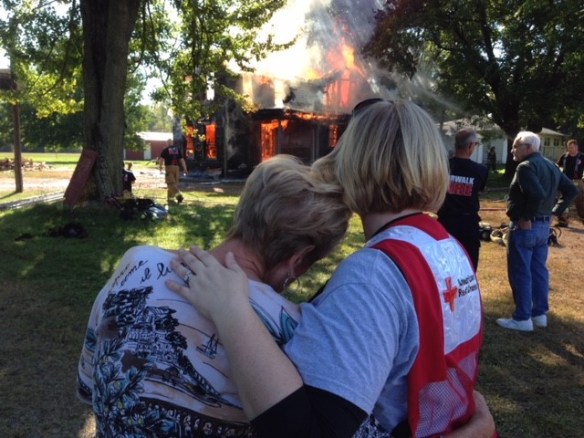
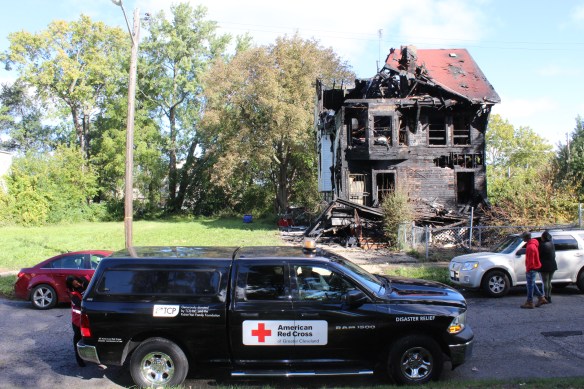
October 21, 2019- While residents of Northeast Ohio were enjoying the warm fall weekend weather and getting ready for Halloween, American Red Cross of Northeast Ohio Disaster Action Teams (DAT) were responding to individuals experiencing the worst day of their lives.

The Red Cross responded to 12 incidents, including several home fires, in nine counties, affecting all five regional chapters.

Eilene Guy photo (1)

As part of the weekend response, Northeast Ohio DAT volunteers assisted 26 adults and 14 children, and the Red Cross provided more than $7,000 in immediate financial assistance.

Just as disasters do not discriminate in terms of whose lives they destroy; the Red Cross does not discriminate in terms of whose lives we help rebuild. The Red Cross does not turn away people who need assistance after a disaster. We are committed to helping everyone in need.

dunham ave 2

As the largest humanitarian organization in the world, the Red Cross has the ability to use your donation to reach more people in need, more quickly. Your donation to the Red Cross helps provide food, shelter, relief supplies, emotional support, recovery planning and other assistance during disasters.

To help the Red Cross provide hope and comfort to individuals in Northeast Ohio experiencing their darkest hours, please visit redcross.org/donate to provide a financial donation. Any amount donated truly helps with their recovery.

Texas Floods 2019

Also, without the tremendous dedication of our volunteers, the Red Cross would not be able to serve the 22 counties and 4.5 million residents of Northeast Ohio. Volunteers make up 90 percent of our workforce. Our volunteers are without a doubt the face of the Red Cross. Visit redcross.org/volunteer to learn more and to apply to become a Red Cross volunteer today.

Red Cross helps prevent home fires as part of Ashland Day of Caring

By Eric Alves, Regional Communications Specialist, American Red Cross of Northeast Ohio

October 18, 2019- Support for neighbors and the community was in full swing on October 17, 2019, as part of the 25th annual Kay Conrad Ashland Day of Caring.

Organizations from all across Ashland County dedicated the day to volunteer their time to assist residents who are elderly, disabled and disadvantaged with tasks, such as light yard work, to help improve local communities.

IMG_6766

The American Red Cross was one of the organizations that took part in the day of caring.

Volunteers from the Lake Erie/Heartland Chapter and partners visited homes across the county to help prevent home fires and make communities safer.

IMG_6756

As part of the Home Fire Campaign, the Red Cross installed free smoke alarms in homes that had no or nonworking smoke alarms.

IMG_6752

Along with installing smoke alarms, volunteers provided residents with important fire safety tips and information on how to develop an escape plan, to ensure their family is prepared and safe in the event of a home fire.

For more information on the Home Fire Campaign in Northeast Ohio, including how to request a free smoke alarm, donate or how to become involved, visit SoundTheAlarm.org/NEO. The site also includes fire safety and prevention tips, checklists and more fire prevention and preparedness tools.

IMG_6732

To view more photos from the Kay Conrad Ashland Day of Caring, visit our Flickr page.

You can give blood even after getting a flu shot

Vaccination Does Not Prevent Blood Donation

October 16, 2019- Flu season is underway, and it is expected that more than half of the U.S. population will get a flu vaccine this year according to the National Foundation for Infectious Diseases (NFID). However, the American Red Cross does not defer individuals from donating blood after receiving the influenza vaccine if they are symptom-free and meet all other donation eligibility requirements.

Did you read that?  You can still give blood, even after getting a flu shot!

flushot

Important Flu and Blood Facts

The flu vaccine can be administered by a flu shot or intranasal. Neither are cause for a blood donation deferral and there is no risk of transmitting the influenza virus after receiving the vaccine. Additionally, influenza virus has not been shown to be transmitted through blood transfusion.

If you have the flu, it is important to wait until you no longer have symptoms and have recovered completely before attempting to donate. All blood donors must feel healthy and well on the day of donation.

Preventing the Flu

According to the Centers for Disease Control (CDC), millions of people in this country get sick with flu every year, hundreds of thousands are hospitalized and, unfortunately, tens of thousands die. The best way to help avoid getting influenza is to get vaccinated every year.

While seasonal influenza (flu) viruses are detected year-round in the United States, flu viruses are most common during the fall and winter. Influenza activity often begins to increase in October and most times peaks between December and February, although activity can last as late as May. It takes about two weeks after receiving your vaccine for the antibodies that protect against flu to develop in the body so it’s important to get your vaccine now.

The CDC recommends that everyone be vaccinated by the end of October. Children 6 months through 8 years of age who need 2 doses should receive their first dose as soon as possible after vaccine becomes available to allow the second dose (which must be administered at least 4 weeks later) to be received by the end of October.

AT HIGH RISK FOR FLU:

  • Adults 65 years and older
  • Children younger than 2 years old – although all children younger than 5 years old are considered at high risk for serious flu complications, the highest risk is for those younger than 2 years old, with the highest hospitalization and death rates among infants younger than 6 months old.
  • Pregnant women and women up to 2 weeks after the end of pregnancy
  • People who live in nursing homes and other long-term care facilities

The CDC also reports people with the following health and age factors are also at an increased risk of getting serious complications from the flu:

  • Asthma
  • Neurologic and neurodevelopment conditions
  • Blood disorders
  • Chronic lung disease
  • Endocrine disorders
  • Heart disease
  • Kidney disorders
  • Liver disorders
  • Metabolic disorders
  • People who are obese with a body mass index [BMI] of 40 or higher
  • People younger than 19 years of age on long-term aspirin- or salicylate-containing medications.
  • People with a weakened immune system due to disease or medications

Flu vaccine is available now in many locations such as your doctor’s office, pharmacies, grocery stores and health departments. Your vaccine will help protect you throughout the 2019-2020 flu season.

flusafety

DO I HAVE THE FLU? The common signs of influenza are high fever, severe body aches, headache, being extremely tired, sore throat, cough, runny or stuffy nose and vomiting and/or diarrhea (which is more common in children). If you think you have the flu, call your health care provider. Seek immediate care if you have any of these symptoms:

  • Fast breathing, trouble breathing or bluish skin color.
  • Pain or pressure in the chest or abdomen (adults).
  • Confusion or sudden dizziness.
  • Not drinking enough fluids, not being able to eat, or severe or persistent vomiting.
  • Flu-like symptoms that improve but then return with fever and worse cough.
  • Not waking up, being so irritable that the child does not want to be held or not interacting (children).
  • Fever with a rash (children).
  • No tears when crying or significantly fewer wet diapers than normal (children).

 YOU CAN HELP STOP THE FLU FROM SPREADING

  • Cover your nose and mouth with a tissue or sleeve when coughing or sneezing and throw the tissue away after use. If a tissue isn’t available, cough or sneeze into your elbow, not your hands.
  • Wash hands often, especially after coughing or sneezing. If soap and water are not available, use an alcohol-based hand-sanitizer.
  • Avoid touching your eyes, nose or mouth.
  • Avoid close contact with people who are sick.
  • Stay home if you’re sick.

More information about how to help keep you and your loved ones protected from the flu is available on this website and in the free Red Cross First Aid App. See all the Red Cross apps at redcross.org/mobileapps.

How Healthy Individuals Can Donate Blood

Learn more about how to stay healthy this flu season so you can help patients in need. You can find more information about preventing the flu at redcross.org, as well as receive guidance on the flu from the Centers for Disease Control and Prevention (CDC).

Schedule an appointment to give blood with the American Red Cross by visiting RedCrossBlood.org, using the Red Cross Blood Donor App, calling 1-800-RED-CROSS or activating the Blood Scheduling Skill for Amazon Alexa.

All blood types are needed to ensure a reliable supply for patients. A blood donor card or driver’s license or two other forms of identification are required at check-in.

You must be 17 years of age in most states (16 with parental consent where allowed by state law), weigh at least 110 pounds and be in generally good health to be eligible to donate blood. High school students and other donors 18 years of age and younger also have to meet certain height and weight requirements.

You can save time at your next donation by using RapidPass® to complete your pre-donation reading and health history questionnaire online, on the day of your donation, before arriving at the blood drive or donation center. To get started, follow the instructions at RedCrossBlood.org/RapidPass or use the Red Cross Blood Donor App.

Red Cross and partners Sound the Alarm in Richmond Heights

By Eric Alves, Regional Communications Specialist, American Red Cross of Northeast Ohio

October 14, 2019- During the weekend of October 11-13, 2019, the American Red Cross of Northeast Ohio responded to 7 home fires, assisted 34 individuals, including 14 children and provided more than $7,300 in immediate financial assistance.

48887634192_a4975b212b_c

The Red Cross is committed to helping to put an end to home fires in Northeast Ohio through the Home Fire Campaign.

As part of the campaign, the Red Cross holds Sound the Alarm events throughout the region to install free smoke alarms, such as the event held in Richmond Heights on October 12.

48886931763_6da1379019_c

Forty volunteers from partners Selman & Company, HOPE worldwide and the Richmond Heights CERT community response team installed 222 smoke alarms and made 83 homes safer.

“Thank you to the volunteers from Selman & Company, HOPE worldwide and the Richmond Heights CERT for helping make another Sound the Alarm installation event a success. With their assistance, we were able to ensure more homes in Northeast Ohio will be prepared in case of a home fire,” said Tim O’Toole, Red Cross regional disaster officer. “A special thank you to our partners with the Richmond Heights Fire Department, who will continue to install free smoke alarms in homes throughout their community.”

48886939583_5171bc9751_c (1)

“Saturday’s Sound the Alarm was a wonderful event. Everyone at Selman & Company who participated has said that it was the best volunteer event the company have ever done,” stated Brinton Lincoln, Greater Cleveland Chapter board member. “Thank you so very much for everyone’s efforts to make Saturday a success.”

Holly Tackett, Human Resources Generalist for Selman and Company, said, “The SelmanCo volunteer team has not stopped talking about their experience this past Saturday and they are even educating their peers and family on home safety. This was truly an impactful event that has changed lives – both the residents of the homes we installed in and SelmanCo team members.”

For more information on the Home Fire Campaign in Northeast Ohio, including how to request a free smoke alarm, donate, or help make homes safer, please click here.  Additional information regarding the national Home Fire Campaign is available here. Both sites include fire safety and prevention tips, checklists, and tools.

48886946948_63ca706e3d_c

To see more photos from the Richmond Heights installation event, please visit our Flickr page.

Photo credit: Cal Pusateri, American Red Cross volunteer


Disaster mental health volunteer helps people cope and heal after devastating losses

By Jason Copsey, American Red Cross volunteer

October 10, 2019- After Hurricanes Irma and Maria struck the U.S. Virgin Islands in September 2017, the American Red Cross deployed volunteers to help provide food, clothing and shelter for impacted residents. Alongside these basic needs, the Red Cross deployed specialized volunteers trained to help individuals navigate the difficult emotional and psychological aftermath of a traumatic experience.

Adrienne Ford was one of the disaster mental health volunteers deployed to the Virgin Islands. Ford, a retired teacher and school counselor, joined the Red Cross as a volunteer in 2014 after learning about disaster mental health at a conference for school counselors. As an independently licensed counselor, Ford saw in the Red Cross an opportunity to continue practicing while serving those in need.

California Wildfires 2018

“The first time the Red Cross called on me to provide services was in response to the California wildfires in 2014,” said Ford. “There was a massive shelter set up at the Napa Valley fairgrounds. So many people had run for their lives with nothing but the clothes on their backs.”

Disaster mental health volunteers tend to the emotional trauma people experience after a disaster. They play a critical role in the delivery of the Red Cross mission by providing support, comfort and hope to people impacted by incidents of all sizes, from home fires to natural disasters.

California Wildfires 2017

“Ultimately, people want to tell their stories to begin the healing process,” said Ford. “As mental health workers, we know how to ask the right questions for people to begin telling the story of what they have been through. The anxiety that comes from living through a near- death experience is considerable and depression can often follow.”

During her Virgin Islands deployment, Ford encountered families that were continuing to live in severely damaged homes instead of shelters. Working as part of medical teams consisting of a nurse, mental health advocate and a case worker, Ford would visit families and monitor for risk factors.

60405662_10157187182004500_3969712532230242304_n

“There was one family we had seen a few times and were continuing to check on,” said Ford. “I had talked with the mother several times about her experience. Half of her house had collapsed during the storm. Her son, a teenager, had been trapped in part of the house, and for a period of time she feared the worst.”

While Ford was able to connect with the mother, the son was less forthcoming. Over time, Ford was able to build trust with the child.

Texas Floods 2019

“We talked about sports and things he was interested in,” says Ford. “Little by little, he let me ask him questions about his experience. He started telling me about what it was like for him to have been alone and the fear he had experienced.”

As first responders, Red Cross volunteers are often the connection between individuals and community resources and local agencies. Mental health volunteers are critical in this role, as trauma can easily trigger harmful tendencies for those without adequate coping skills. The early intervention of a Red Cross mental health volunteer can be a key factor in the recovery process.

Oroville Dam Spillway Compromised 2017

Ford said that over her five years as a Red Cross volunteer, it is the firsthand experience of individuals helping one another that has been most rewarding.

“The way communities respond to disasters renews your faith in humanity,” said Ford. “People really do take care of each other.”

Edited by Glenda Bogar, American Red Cross volunteer