Red Cross assistance provided to help with immediate needs
More than 50 adults and children received assistance from the American Red Cross in Northern Ohio over the weekend, as disaster action team members responded to nearly a dozen home fires in six counties.
Red Cross disaster responder Doug Barwell took this photo upon arriving at the scene of a fatal apartment building fire in Garfield Heights early Monday morning.
Tragically, one of the fires claimed the life of a three-year old child.
When fatalities occur, the Red Cross offers the assistance of an Integrated Care and Condolence Team.
“The Red Cross began using the Integrated Care Condolence Team approach in 2011, following tornadoes in Alabama, to assist families of missing, injured or deceased,” said Renee Palagyi, Senior Disaster Program Manager for the Northern Ohio Region. “The team consists of specially trained staff from multiple disciplines- casework, disaster mental health, disaster spiritual care and disaster health services. It is designed to provide an array of resources as a follow-up after the event- at a later time, convenient to the family.”
The team generally consists of two members and can include all four disciplines as needed. It is designed to protect the families from multiple contacts by providing comprehensive services with limited staff.
The Red Cross is able to provide such service thanks to volunteers – psychologists, counsellors, nurses and other trained professionals who provide the help people need. Visit redcross.org/volunteer to learn more about volunteer opportunities for licensed or certified health, mental health, and spiritual care professionals.
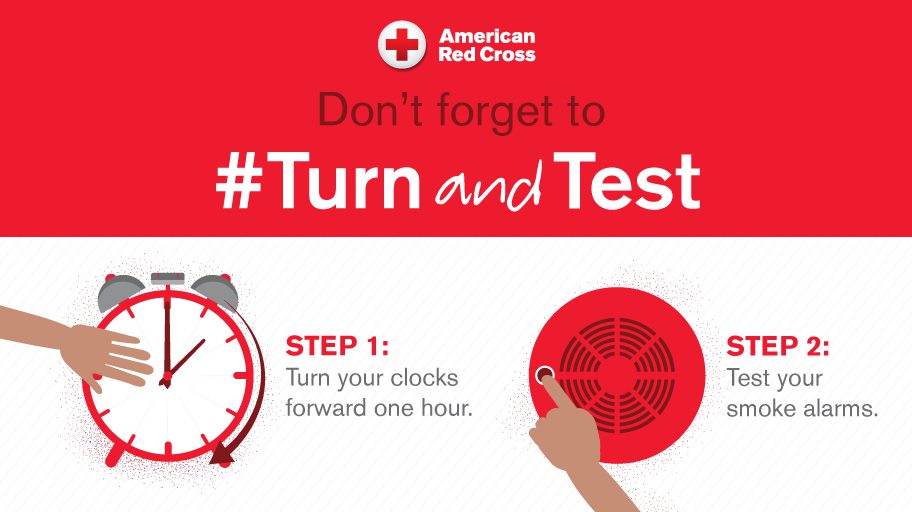
Daylight Saving Time begins this Sunday, and we all know what that means: Turn the clocks ahead one hour and check every smoke alarm in the house.
That first activity isn’t necessarily fun. Who wants to lose an hour of sleep?
But the second – checking your smoke alarms – is vital! It’s a key part of keeping your family safe from one of the most common disasters, a home fire. In fact, in a typical year, the death toll from home fires is higher than the toll from all natural disasters combined.
Most of us don’t realize we have just two minutes to escape a home fire. That’s why the American Red Cross is preparing families to act quickly through our annual Home Fire Campaign.
If you think home fires only happen to “somebody else,” think again.
“In just one year, the Red Cross was called to help nearly 4,300 people who were driven from their homes by fires in northern Ohio,” said Tim O’Toole, who heads up disaster response for the Red Cross in over 31 northern Ohio counties. And that doesn’t count those who didn’t need Red Cross assistance.
You can help keep your family safe by taking two simple steps:
Think through and practice a two-minute home escape plan with your family. (Don’t forget your pets!)
Test your smoke alarms every month. (No, it’s not enough to test them a couple of times a year.)
To create a worthwhile home fire escape plan, include at least two ways to get out of every room (doors, windows) and then practice it until every member of your family, old and young, can do it in two minutes or less. Teach children what a smoke alarm sounds like and what to do in an emergency. (Don’t hide! And don’t assume it’s a false alarm.)
Working smoke alarms can cut the risk of dying in a home fire by half.
In addition to testing all alarms monthly, change the batteries once a year (if your models use batteries). Check the date on the alarms; if they’re more than 10 years old, they need to be replaced as the sensors get less sensitive over time.
In 2014, the Red Cross began its Home Fire Campaign to join with fire departments and other safety-minded organizations across the country to cut fire-related deaths and injuries by 25%.
Since then, we’ve installed more than 2.1 million free smoke alarms, reached more than 1.6 million children with preparedness programs and made nearly 900,000 households safer with safety education. Most importantly, we’ve documented more than 800 lives saved.
Please do your part, for your family and your community: Make a plan, check your smoke alarms. Visit soundthealarm.org for more information or to get involved.
Edited by Glenda Bogar, American Red Cross volunteer
Reflections on the response to the pandemic on the one-year anniversary
By Doug Bardwell, American Red Cross volunteer
March 2020 would prove to be one of my most memorable volunteer months with the American Red Cross. Within weeks, the world began to see signs like this everywhere.
Everywhere, except at the Red Cross.
Let’s go back to March 1, 2020. This was the day the first case of COVID-19 was identified in the United States, in New York. By then, we had heard about the 400 Americans trapped on a ship in Japan, but we didn’t really consider that the virus was a U.S. problem at the time.
Two days later, everyone forgot about that story when multiple tornadoes ripped through central Tennessee, killing at least 25 people. I recall getting the call that morning and leaving immediately for Nashville to cover the details of the cleanup effort, the sheltering and feeding of hundreds of now homeless people and the mobilization of hundreds of truckloads of supplies.
As I drove home on March 10, New York Governor Cuomo had called on the National Guard to stop traffic around New Rochelle, where 108 cases had been discovered. COVID-19 was now a United States problem.
Just one day later, March 11, the WHO (World Health Organization) would declare this to be an official pandemic with more than 120,000 cases worldwide. That started a landslide of events, and before day’s end:
The NBA suspended the 2019-20 season until further notice
The NHL paused its 2019-20 season
The Dow Jones Industrial 30-day average plunged 20%, ending an 11-year bull market
But what didn’t come crashing to a stop…the Red Cross.
That same day, President of the American Red Cross Gail McGovern, issued a long memo to all Red Cross volunteers.
In it, she detailed how we would be making all sorts of changes to our day-to-day operations, but what would not change, was our mission to deliver services to those in need.
Blood drives needed to be rescheduled as many businesses closed down, but the need for blood didn’t slow down. By finding larger venues where people could be scheduled and kept socially distanced, the flow of blood continued.
Fires and disasters didn’t stop, but our Humanitarian Services division devised new ways to house people in motels instead of congregate shelters, and our Disaster Action Teams learned to respond virtually using electronic funds transfers to get money quickly into the hands of those left homeless from fires and floods.
While not as high profile as conducting blood drives and setting up disaster shelters, the American Red Cross’ origin was taking care of military personnel. Clara Barton, who founded the Red Cross, made a name for herself by her heroic volunteer efforts comforting and providing assistance to fallen soldiers during the Civil War.
Even now, as we celebrate Red Cross Month, Service to the Armed Forces is still a key pillar of the five service branches of the Red Cross. Not only do we care for the troops, but the Red Cross provides an indispensable range of services for the families of the servicepeople while deployed…and afterwards.
Worldwide Effort
The Red Cross provides 24/7/365 emergency communication services for military personnel and their families, no matter where on the globe they might be located. In addition:
The Commitment Never Ends
Since 9/11, the Red Cross has cared for more than one million military families. Today, we continue to provide support for those families before, during and after deployment.
Besides emergency communications while deployed, military members and their families benefit from information referrals, some financial assistance, and other non-emergency resources.
“The Red Cross helps members of the military, veterans and their families in a wide variety of ways,” said Jessica Tischler, Regional Service to the Armed Forces Program Director. “And we are continuing to provide services, thanks to our volunteer caseworkers, despite the limitations imposed by the pandemic.”
By: Donna Gracon, American Red Cross Philanthropy Officer
The Northern Ohio Region of the American Red Cross recently gathered on Zoom to hear regional leaders, including CEO Mike Parks and Tiffany Circle member Patty Flowers, describe their deployment experiences as they helped communities by responding during the unprecedented wildfire and hurricane season in 2020.
During the virtual session, the region launched its Holiday Mission Project to help female members of the U.S. military serving in Djibouti, a country in East Africa. Learning of the difficulties these military heroes face in securing personal care and hygiene products due to inaccessibility caused by COVID-19, Tiffany Circle members stepped up by purchasing items from a locally created Amazon Wish List.
Donna Gracon, Red Cross Philanthropy Officer, stands among the packages of items purchased for female members of the military serving in East Africa.
“How special it is to be a part of a group of women who so willingly volunteer their resources and join together to support others during the holidays and also during all seasons,” said Northern Ohio Tiffany Circle Chair Laurie Laidlaw Deacon.
In attendance was Julia Bianchi, who immediately engaged help from Tiffany Circle sisters in South Florida and the National Capital & Greater Chesapeake Region of the Red Cross who also contributed to the effort. In total, 450 items were shipped to the Red Cross office at Camp Lemmonier, the primary base of operations for the U.S. Africa Command in the Horn of Africa.
“It sometimes becomes apparent that women in the military feel overlooked or forgotten,” said Kelsey Smith, senior regional program specialist/site lead for the American Red Cross at Camp Lemonnier. “Generous donations that specifically target the needs of women are uniquely impactful, as they remind our female service members that their sacrifices and dedication do not go unnoticed. Females that serve deserve to be heard, supported and celebrated equally. By ensuring their health and wellness are maintained, we create a stronger and more resilient military community as a whole.”
Lt. Andrea Wright, Capt. Ellen Bramblee and Lt. Col. Abigail Lee at the Red Cross office at Camp Lemonnier in Djibouti, East Africa.
To learn more about the Tiffany Circle and how the philanthropic power of its women leaders advance the mission of the Red Cross, click here.
Edited by Glenda Bogar, American Red Cross Volunteer
When President Franklin D. Roosevelt proclaimed March “Red Cross Month” in 1943, he called on Americans to join a movement that was providing vital services to the nation’s war effort.
“I request that during that month (March) our people rededicate themselves to the splendid aims and activities of the Red Cross,” FDR declared.
During World War II alone, the American Red Cross recruited more than 104,000 nurses for the armed forces and sent more than 300,000 tons of supplies overseas. It launched a national blood donation program to support U.S. armed forces; by the end of the war, it had collected more than 13 million pints of lifesaving blood!
FDR knew the Red Cross could muster Americans for a heroic cause.
That’s still true today, because #HelpCantWait.
As COVID-19 continues to upend our lives, families across the country rely on the Red Cross for lifesaving blood, comfort and care after disasters, support for the military and veterans, and lifesaving training and preparedness skills.
With nearly 140 years of experience under its belt, the Red Cross knows how to pivot to meet unprecedented challenges – and this past year has been no exception.
New guidelines are in place to ensure the safety of Red Crossers – 90% of them volunteers – as well as those receiving services. And Americans have stepped up, just as they did in FDR’s time: Last year, more than 70,000 people across the country became new Red Cross volunteers, including more than 550 in Northern Ohio.
And we still need more folks to join us.
“We have plenty of opportunities for blood donor ambassadors to greet donors, take their temperatures and brief them on how to donate safely,” said Gail Wernick, who heads up volunteer services for the Red Cross in northern Ohio.
“And we need more blood transportation specialists to drive blood products from collection sites to our processing labs or to hospitals where patients need them.”
Unfortunately, there’s never a break from home fires and other local disasters, so the Red Cross is always looking to train more Disaster Action Team members to provide comfort and care to those in distress. Now, that’s being done virtually so volunteers can “respond” from the safety of their own homes.
August 30, 2020. Cameron, Louisiana
Pamela Harris of the American Red Cross looks out on a home destroyed by Hurricane Laura in Cameron Parish, LA, one of the hardest hit areas, on Sunday, August 30, 2020.
Photo by Scott Dalton/American Red Cross
Hero Care caseworker volunteers also help from home, fielding calls from military and veterans’ families for Red Cross Service to the Armed Forces aid.
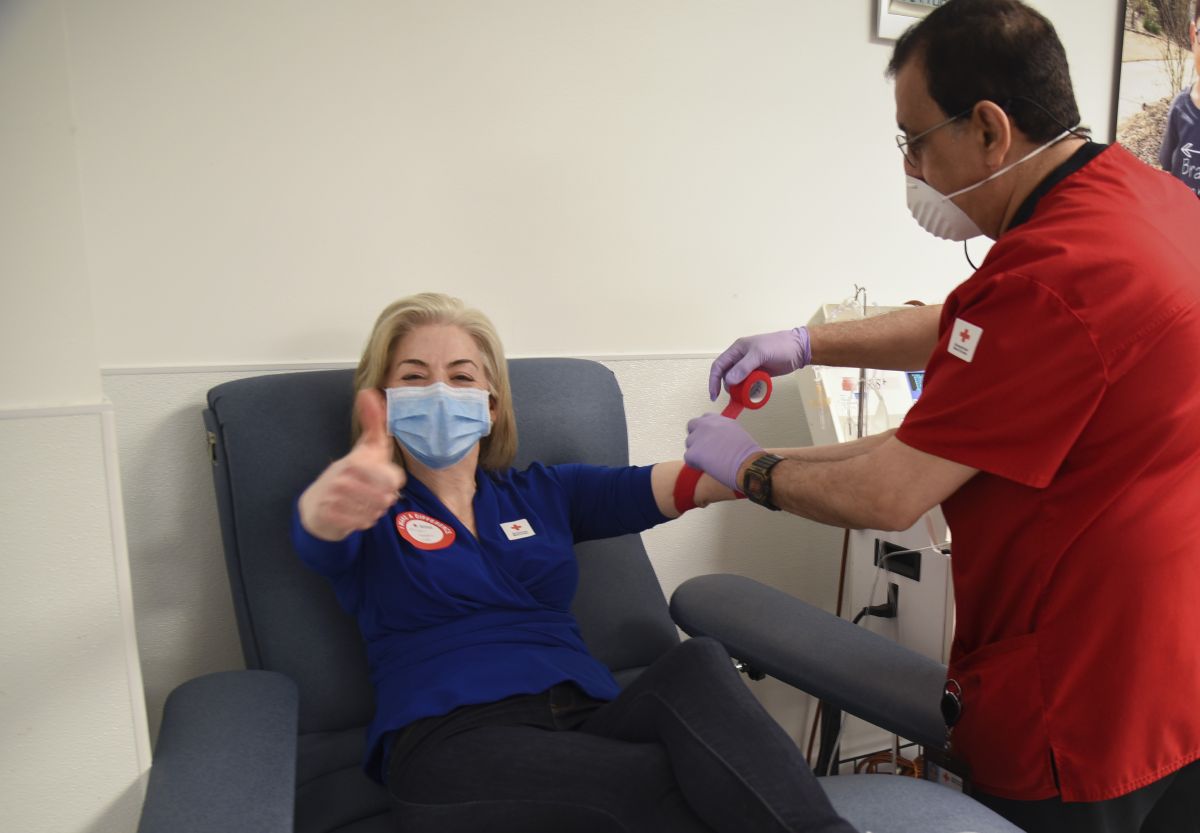
March is the ideal time to step up and “do your bit” as we all battle through this coronavirus siege. If you’re healthy, there’s no better feeling than giving the gift of life with a blood donation. Those who have recovered from COVID-19 are especially needed for their convalescent plasma, which is being used to treat acute COVID cases.
March 31, 2020. Washington, DC
Blood donation at Dr. Charles Drew Donation Center during COVID-19.
Photo by Jeanette Ortiz-Osorio/American Red Cross
If you can’t give time or blood, you can support Red Cross disaster relief activities financially on Giving Day, March 24. Every eight minutes, the Red Cross responds to a home fire or other disaster. A gift of $95, for example, will feed a family of three for a day and provide blankets and other essentials when they need them most.
To learn more about volunteering here in northern Ohio, reach out to Melanie Collins at melanie.collins4@redcross.org or 330-204-6615. To schedule a blood donation, check out redcross.org/blood or download the free Red Cross blood app from your app store. And to make a financial gift, go to redcross.org/donate or call 1-800-REDCROSS.
The clatter of my typing is accompanied by a low, bellowing wind. I look through the window at snow and ice, reflecting on the isolation and challenges of the past year. Realizing it is almost March and spring a few weeks away is a welcome thought. As pleasant as spring can be, however, it also brings thunderstorms, floods, and tornadoes. We must be prepared for them, just as we need to be ready for home fires and other disasters that can happen at any time.
I spoke with John Gareis, the Red Cross’s Northern Ohio Regional Manager, Individual Community and Disaster Preparedness, who leads these presentations. He said people often neglect or disregard preparedness, as many have an impression that “It won’t happen to me.” However, the COVID-19 pandemic and other events in the past year have shown we must all be prepared. In the Be Red Cross Ready presentations. “How prepared are you?” John asks. “How prepared were you last year, when COVID-19 first hit the world, and we were told to shelter in place? Think of the hardships that you may have gone through. What could you have done to alleviate your discomfort and the isolated situation?” Continuing, John asks, “What would you have done differently, and what can you do to avoid similar situations now?”
John Gareis, Regional Manager, Individual Community and Disaster Preparedness for the Northern Ohio Region of the Red Cross (Photo taken prior to COVID-19)
To help prevent, prepare for, and respond to disasters, the American Red Cross offers a series of “Be Red Cross Ready” presentations. These free, one-hour, online presentations are available to everyone.
Be Red Cross Ready presentations are designed to help answer these questions and be better prepared, as disaster can happen to every one of us.
March opens with the first of four sessions on General Preparedness & Tornado Safety. These presentations provide information and suggestions on being better prepared all types of emergencies. They also include tornado safety information with steps you can take to protect you and your family.
The first of four General Preparedness & Home Fire Safety presentations is on March 3rd. They will cover being prepared for all types of emergencies as well as fire safety preparedness, including how home fires happen and steps you can take to avoid them.
Are you ready to put your knowledge to the test? If so, the two Test Your Preparedness Knowledge sessions are for you. These fun, interactive presentations will test your knowledge on a variety of safety questions, such as: How Prepared are you? Would you know what to do if a fire broke out in your home? What kind of risk does carbon monoxide pose? If a tornado was sighted, where do you go? How well do you understand your smoke alarms? You will test your skills and learn a lot.
There are three sessions on Smoke Alarm Safety in March. They will discuss everything you need to know about smoke alarms, including proper installation and location, maintenance, and what to do if they sound off. The presentations include tips to avoid home fires and steps of an evacuation plan.
The March 23rd presentation is on General Preparedness & Flood Safety. Flooding, which occurs when water overflows onto normally dry land, is a threat to some parts of the U.S. and its territories nearly every day of the year and is always dangerous. The flood safety presentation will discuss the signs to know if a flood is eminent, and the safety actions you and your family can take to stay safe.
A General Preparedness & Thunderstorm Safety presentation is offered on March 25th. Every thunderstorm produces lightning and thunder. They are also associated with dangers such as hail, strong winds, and tornadoes. In addition, heavy rain can cause standing water and flash flooding. This presentation will discuss the signs that storms are eminent and actions that can keep you and your family safe.
To join any of these presentations, please register by clicking the date and time of the topic in which you are interested. The password is Prepare21. All times are Eastern.
Just as people have different hair or eye color and come in all shapes and sizes, they also have different blood types. While most blood types fall into one of the four major groups: A, B, AB and O, some people have rare blood types. Because of their rare blood types, these patients need a more diverse blood supply.
Red blood cells carry markers called antigens that determine one’s blood type. There are more than 600 known antigens, some that are unique to specific racial or ethnic groups. For example, U-negative and Duffy-negative blood types are two types unique to the African American community. When treating patients who have these rare types, blood from donors of the same ethnic background is less likely to cause complications.
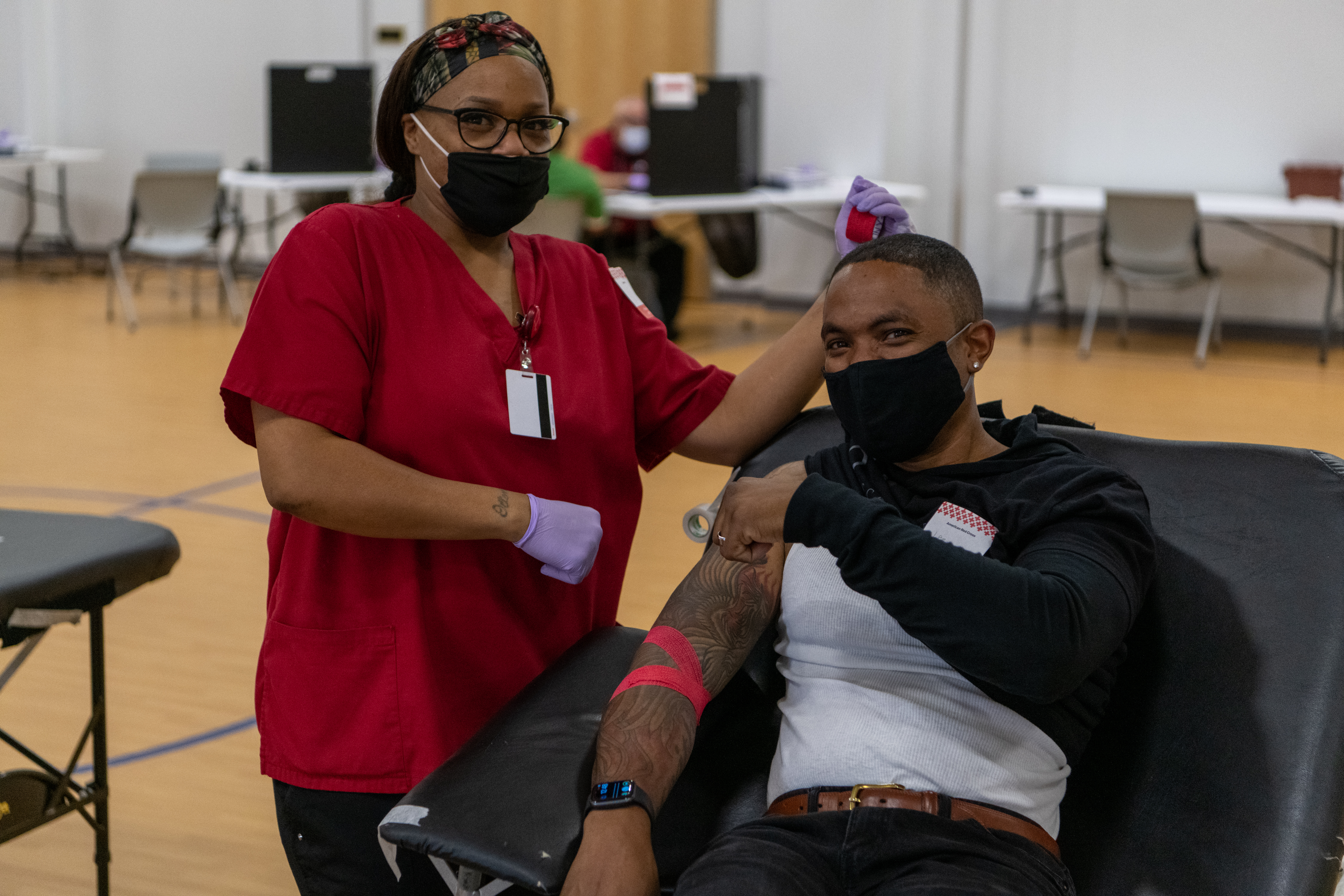
November 22, 2020. Portsmouth, Virginia. Grove Church Blood Drive 2020. Photos by Jared Beasley/American Red Cross
This is especially important for patients who have chronic blood disorders that require regular blood transfusions. Glinda Dames-Fincher, of Mayfield Heights, has lived with sickle cell disease for more than 60 years. Sickle cell disease is the most common genetic blood disease in the U.S. and it largely affects those of African and Latino descent. It causes red blood cells to be hard and crescent-shaped instead of soft and round. As a result, blood has difficulty flowing smoothly and carrying oxygen to the rest of the body. Blood transfusion is a known treatment for patients with sickle cell disease.
“As part of my treatment, I receive monthly red cell exchange transfusions. I receive two pints of red blood cells during each of these transfusions,” said Dames-Fincher. “I have received regular blood transfusions for the last 20 years to help manage my sickle cell disease. Without donated blood, sickle cell patients face sickle cell crisis, and other complications such as strokes, organ failure, chronic wounds, and shortened lifespan.”
The need for blood is constant and all eligible donors are encouraged to give and help meet the need. Whether blood is needed for a chronic condition, such as sickle cell disease, a surgical procedure or a large-scale emergency, it’s the blood already on the shelves that helps save lives.
Other hosts needed to serve vital role during challenging times
By Olivia Wyles, American Red Cross volunteer
One of the first things that comes to mind when someone mentions the American Red Cross is blood drives — and rightly so, as the Red Cross provides about 40% of the entire nation’s blood and blood components. However, only about 3% of age-eligible individuals donate blood on an annual basis. Unfortunately, that number has dropped even further in the last year due in part to a lack of blood drive sponsors.
You may recall having the opportunity to donate blood when you were in school. But the COVID-19 pandemic has resulted in many schools and businesses no longer being able to host blood drives as more and more locations close and/or restrict access to their facilities. Furthermore, finding spaces that are large enough to host Red Cross blood drives while accommodating social distancing has been a challenge. This is a major barrier for the Red Cross, as our blood drive hosts play an absolutely critical role in maintaining a sufficient blood supply by providing opportunities for people to give to others in their local community. More than 80% of the total blood donations are made at blood drives hosted by our volunteers. Our blood drive hosts play an absolutely vital role in helping the Red Cross ensure that blood is available for patients in over 2,500 hospitals throughout the nation.
Solon Community Center has stood out as a leader for not only continuing to host blood drives over the past year, but for even adding additional blood drives to its schedule. Solon Community Center has been a partner of the Red Cross since 2004. Even amidst the pandemic, it was able to collect 1,095 pints of blood in 2020, which has the ability to help save up to 3,285 lives. The persistent dedication of Solon Community Center staff to host blood drives, combined with the constant support of its local blood donors, have served as an exemplary model for other current and potential blood drive hosts who can also advance the Red Cross mission to provide lifesaving blood for those who need it.
Health and safety is a priority for the Red Cross. All of our blood drive hosts follow the highest standards of safety and infection control while we do our jobs. Some of these protocols include temperature checks for both staff and donors prior to entering a blood drive, mandatory face masks, easily-accessible hand sanitizer at every step of the donation process, and social distancing wherever possible. Lastly, we also urge donors to schedule appointments prior to arrival to ensure that we can manage the flow of donors at blood drives.
The Coronavirus Era has challenged us all with our daily lives. But one thing that is certain is that we are learning to adapt with new habits and fresh ideas.
Melissa Utterback is one of those people. She is a successful realtor for the Danberry Co. in Western Ohio. For more than 40 years, Danberry Realtors has been one of the most successful residential real estate brokerages in Northwest Ohio and Southeast Michigan. Melissa has been in the real estate business for 20 years, 13 at the Danberry Co. Melissa loves that her personal and professional passions for helping others, supporting her local community and providing her customers with an incredible home buying experience are all possible as a Danberry realtor.
Recently, Melissa successfully sold a property for Rachel Hepner-Zawodny, executive director of the American Red Cross of Northwest Ohio. They were wrapping up the paperwork when Melissa asked Rachel a question. “Which charity would you like to donate a $100 from the Heart of the Home program?” Rachel selected her local American Red Cross. Melissa has donated blood in the past. But this was one extra way for her to give back.
At every closing, her client can select from one of four charities to which she will contribute $100 of her own money.
Melissa’s new Heart of the Home program is inspired by the important role of charities in her local community. At every closing, her client can select from one of four charities to which she will contribute $100 of her own money. She wants her company to be simple to understand, offer a fun element to the home buying process and hopes to “inspire her customers to continue to support their charity of choice.”
Melissa has been giving back for years through Danberry’s charities (for details on the company’s charitable efforts, visit https://www.danberry.com/danberry-charities). Melissa’s company’s culture is based on charity for community. She came up with the creative idea of Heart of the Home to help her community even more in these tough times.
The Heart of the Home program is based on the premise of authentic connections to customers, friends and peers. She has discovered that this new idea has resulted in being very fulfilling personally and gratifying for customers.
We thank Melissa for creating the Heart of the Home program designed to support her local community, putting in the hard work to build this fun charity perk for her customers and helping the American Red Cross.










 NOHredcross