Red Cross issues call for volunteers

Help needed as winter increases the risk of home fires
Support also needed for Red Cross Blood Program

Winter weather has arrived and with it an increase in the number of home fires. The American Red Cross of Northern Ohio is recruiting new volunteers to help respond to these local emergencies by supporting people in their time of greatest need.

Nationally, the Red Cross has already responded to more than1,900 home fires since 2022 began, providing assistance to more than 6,500 people. In the Northern Ohio Region, trained Red Cross Disaster Action Team (DAT) members have responded to 60 home fires so far this year, helping 215 people impacted by a fire in their home.

LOCAL RESPONSE HELP NEEDED DAT volunteers help families with their immediate needs after a fire in their home and offer support during a very difficult time. As a DAT team member, you will provide emotional support, access to financial assistance and information to help families begin to recover. DAT team members respond to emergencies to provide immediate compassion and care. Training will be provided.

Home Fire Response

“Our Red Cross volunteers support their community and neighbors in need each and every day by responding to local emergencies,” said Mike Parks, Regional CEO, American Red Cross of Northern Ohio. “We need more help so no one faces this heartbreaking situation alone.”

Ruth Davidson Gordon – Red Cross Volunteer Blood Donor Ambassador

BLOOD SERVICES VOLUNTEERS ALSO NEEDED The Red Cross also needs volunteers to support blood collections as the country faces an ongoing critical need for blood products and platelets. Blood donor ambassadors play an important role by greeting, registering, answering questions and providing information to blood donors throughout the donation process. Blood transportation specialists provide a critical link between blood donors and blood recipients by delivering blood to hospitals in our communities.
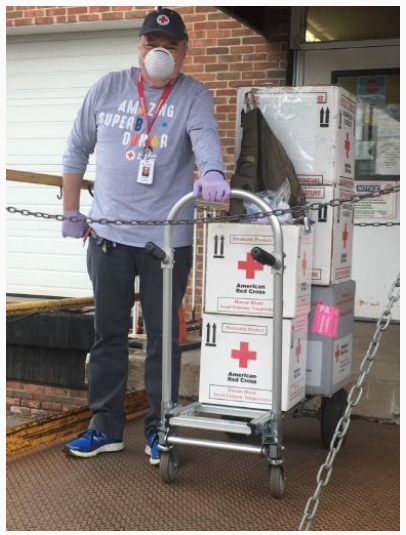
Blood Transportation Specialist

COVID-19 AND STAYING SAFE The need for volunteers is constant and continues to evolve as the Red Cross navigates the ongoing coronavirus pandemic. The safety of everyone is our top priority and our guidelines reflect the latest CDC safety recommendations. COVID-19 vaccination is required for in-person volunteer roles beginning February 15, 2022. When considering volunteer opportunities, review the CDC guidance for people who are at higher risk for severe illness, consult your health care provider and follow local guidance.

Please consider joining the Red Cross as a volunteer today and bring help and hope to people in need. Vaccination verification required for in-person roles. Find out more at redcross.org/volunteertoday.

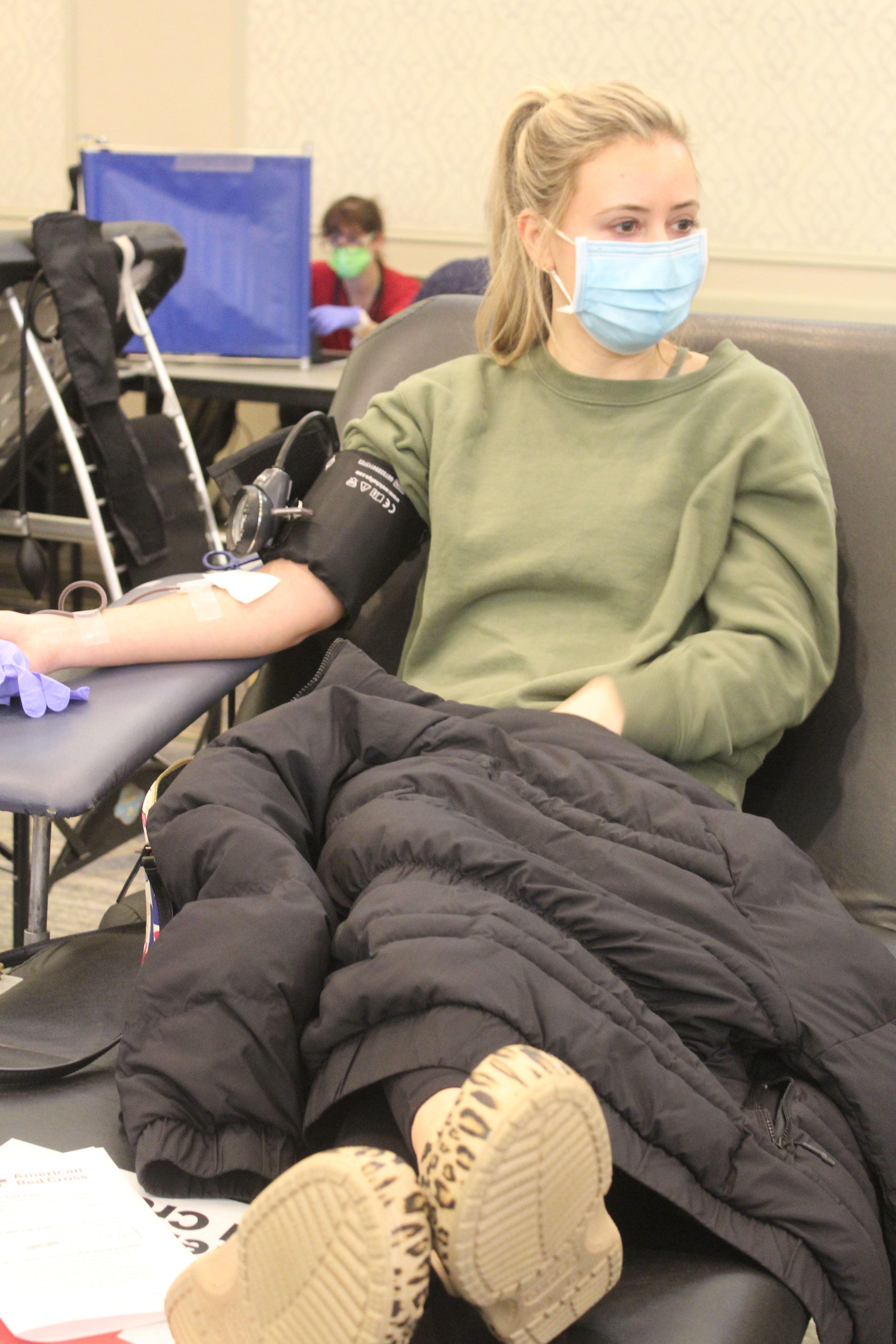
Donate blood or platelets now to help patients avoid delays in care

As we welcome 2022, the American Red Cross blood supply has now dipped to the lowest level in more than a decade and could force hospitals to hold off on essential blood and platelet transfusions for patients in Northern Ohio and across the country.  

The troubling decline of the Red Cross blood supply, which supports about 40% of the nation’s blood needs, comes at a time of year when donations typically fall. Holiday get togethers, school breaks and winter weather often lead to lower donor turnout, potentially further compounding the situation. The critical role of blood and platelet donors has been celebrated each January for nearly 50 years during National Blood Donor Month. If you’ve never given blood before or if it’s been a while now is the perfect time to start helping save lives!

The need for healthy blood donors is also important as Northern Ohio, like many communities across the country saw a significant rise in COVID-19 cases during the month of December. If you are feeling healthy and well, please consider sharing your good health by giving blood. If you received the Pfizer, Moderna or Johnson & Johnson vaccine or booster there is no deferral time to give blood. Additionally, there is also no deferral after a flu vaccine, as long as you are symptom-free and feeling well the day of donation.

Once again, the Red Cross is partnering with the NFL to thank donors during the month of January. Come to give blood or platelets Jan. 1-31 and you’ll automatically get a chance to score an exciting Super Bowl LVI getaway in LA for you and a guest! Plus, the Red Cross will give you a shot at a home theater package and $500 e-gift card in January. Terms apply; visit RedCrossBlood.org/SuperBowl for more information. 

Potential donors are urged to schedule an appointment now by using the Red Cross
Blood Donor App, visiting RedCrossBlood.org or calling 1-800-RED CROSS (1-800-733- 2767). If there is not an immediate opportunity to donate, please make an appointment in the days and weeks ahead to ensure the Red Cross can replenish and then maintain a sufficient blood supply.

Up your game: Resolve to volunteer!

By Eilene E. Guy, American Red Cross Volunteer

As we come to the end of another year, many of us are thinking about what we can do to make the next year better.

Resolve to lose (or gain) weight? Resolve to spend more wisely? Resolve to be on time?

How about, resolve to volunteer?

The American Red Cross has a wide variety of volunteer opportunities that pay off big time in “job satisfaction.”

“It’s a rewarding experience when you can help somebody,” said Paul Grygier.

Paul Grygier

Paul began his volunteer career as a Disaster Action Team (DAT) member, responding to home fires and other emergencies in Wyandot County, where he lives. In that role he brings compassion, safe accommodations and financial assistance to meet disaster-caused needs. “DAT is a good way to help people in their time of need,” he said.

Dotty Dolwick of West Park, in Cuyahoga County, finds her satisfaction as a blood donor ambassador, welcoming donors, being sure they’ve read important pre-donation materials and answering questions at a couple of blood drives a week.

“It’s a good way to get out with people,” the retired nurse said, adding that she likes the flexibility Red Cross offers its volunteers. “You get to kind of pick and choose where you go, when you go.”

Paul also leads his Red Cross chapter’s Sound The Alarm campaign, which strives to save lives by installing free smoke alarms in every home that needs one (or more). “I’m basically a mechanic,” he explained. “It’s easy for me to do. I like to help the older people who can’t get up on ladders.”

Dotty Dolwick

The Pillowcase Project is another of Paul’s favorites. He gives the Red Cross disaster preparedness presentations to third- through fifth-graders. “You know you’re reinforcing important lessons in an organized fashion,” he said, hoping those messages will spring to mind if the youngsters ever need them.

To explore all the volunteer roles the Red Cross has to offer, visit redcross.org/volunteer or contact your local chapter.

As for me, I wear a few hats with the Red Cross: Communicator, blood donor, chapter board member and financial supporter. These are all volunteer roles.

Eilene Guy

I enjoy spreading the message about what the Red Cross is doing to help people prevent, prepare for, respond to and recover from disasters large and small. Like a lot of other Red Cross activities, it’s something I can do from home; at a time of heightened COVID concern, the Red Cross has modified its activities to keep its staff, volunteers, and those we serve safe.

Serving as a board member and supporting the organization financially may be low-profile activities, but they’re vital for this organization with a big role in our society.

And don’t get me started about how rewarding it is to know that every time I donate blood, I could be saving up to three lives.

Dr. Paul Biedenbach

My ear, nose and throat doctor spotted my Red Cross socks and said proudly that he had just made a Power Red donation, giving two units of red blood cells at one sitting. “They even let me know where my blood is going,” Dr. Paul Biedenbach of Sandusky said. “It’s kinda cool.”

He realizes that giving the gift of life isn’t a casual act: “People need to make an effort, to register in advance. It’s not as easy as just walking into a donation site. But it’s so important.”

As someone said recently, “If I don’t do this, who’s gonna do it?”

So please, make it a happy new year and resolve to volunteer!

Edited by Glenda Bogar, American Red Cross volunteer

Volunteers respond to multiple local disasters; mobilize to assist in national relief efforts after horrific weekend tornadoes

It was another busy weekend for American Red Cross Northern Ohio disaster volunteers. Disaster action team members assisted families in nine counties who were affected by home fires, storms and a building collapse. The Red Cross helped 56 individuals, providing $11,433 in immediate assistance. Tragically, two young children died in one home fire. The Red Cross continues to provide home fire safety information to residents and install smoke alarms for those who need them. To request a smoke alarm, visit this site

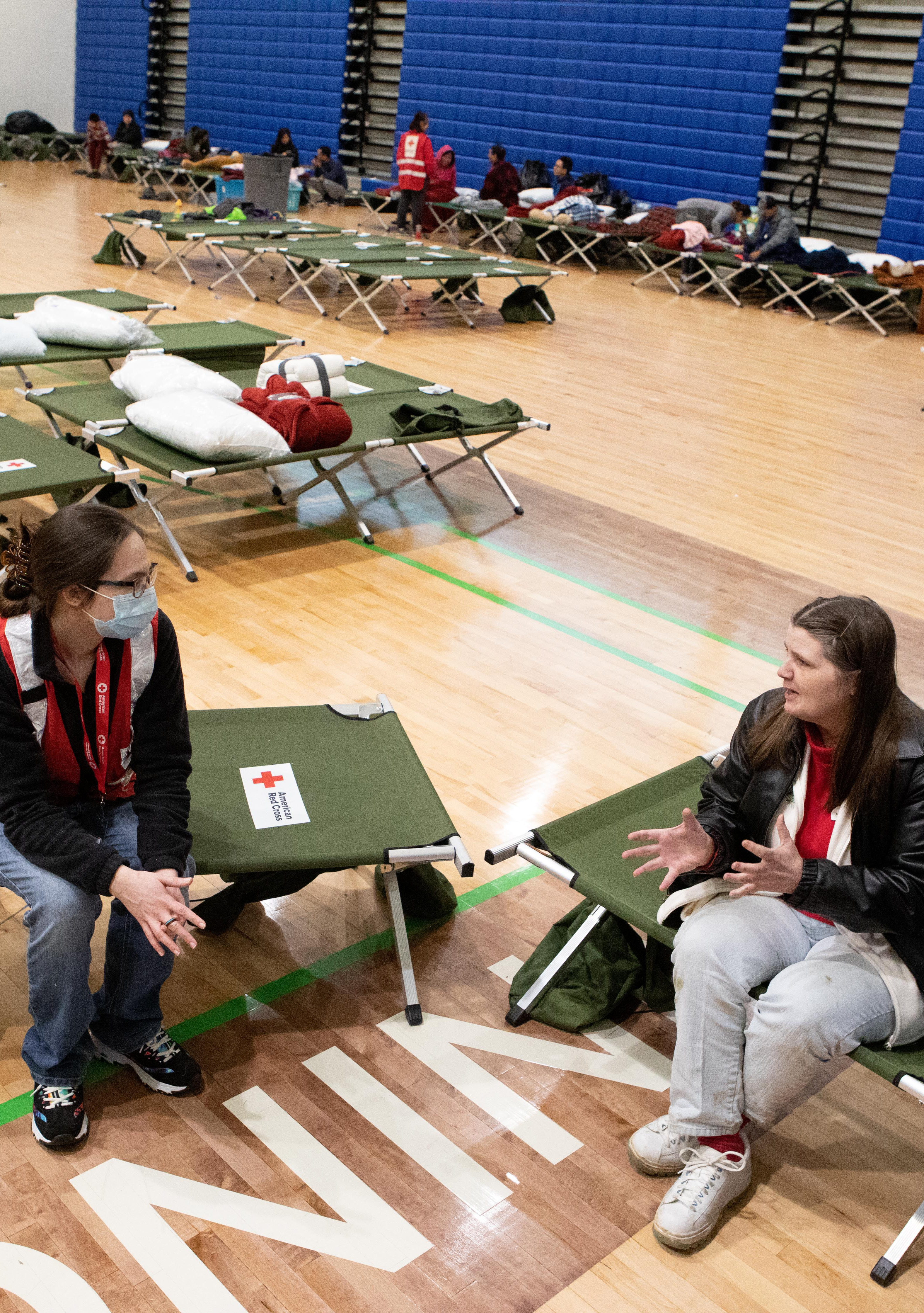
December 12, 2021. Bowling Green, Kentucky. Sharon Wilson speaks to Red Cross volunteer Amy Miller and explains what happened to her last Saturday morning. Photo by Marko Kokic/American Red Cross

In addition to responding to local disasters, the Red Cross is deeply saddened by the loss of life and incredible devastation brought by the horrific tornadoes that touched down this weekend across multiple states in the center of the country. Over the weekend, Red Cross personnel and volunteers were busy mobilizing to help assist on large relief efforts in Kentucky, Tennessee, Arkansas, and Missouri to provide safe shelter, comfort and support in the face of one of the most devastating tornado outbreaks in years. Northern Ohio volunteers will be leaving in the coming days along with two emergency response vehicles from the Region, each with a two-person crew.

If you are a current volunteer with the Red Cross, please consider deploying to assist in the relief efforts around the Midwest and southern tornadoes. With such widespread damage, we know families will need support for weeks to come and the Red Cross will be there for as long as we are needed. To be considered for deployment, please update your availability in Volunteer Connection and someone will contact you. The Red Cross also needs additional volunteers who are willing to be trained and to deploy to future disasters.  A two-week commitment is typically required. Visit our website or call 216-431-3328 to apply.

In addition to disaster relief, the Red Cross has also provided approximately 200 additional blood products to hospitals in response to these devastating tornadoes. We remain in contact with our hospital partners throughout the affected areas and stand ready to provide additional blood products as needed. We anticipate Red Cross blood drives in affected communities may be canceled or experience lower donor turnout in the coming days, straining supply levels. We depend on the community to donate blood so we are able to provide it to those in need each day. If you are eligible to give, please schedule an appointment in the coming weeks. If you have questions about your eligibility to give, learn more here or call 1-800-RED CROSS (1-800-733-2767).

Stay safe while cooking this Thanksgiving

By Tim Poe, American Red Cross Volunteer

On Thanksgiving loved ones gather to celebrate togetherness and express gratitude while sharing a feast. Some will also be assisting others, such as first responders, medical professionals and members of the American Red Cross’ Disaster Action Team (DAT). They will likely be busy. Last year’s Thanksgiving weekend, for example, saw Northern Ohio Red Cross DAT responders help 70 people who experienced home fires. They also continued aiding 80 residents displaced by an apartment fire earlier that week.

As wondrous as Thanksgiving is, home fires are a serious risk. The National Fire Protection Association states that cooking is the leading cause of home fires and home fire injuries, and that Thanksgiving is the leading day for home fires caused by cooking equipment. Other peak days for home cooking fires are Christmas Day, the day before Thanksgiving, Easter and Christmas Eve.

I asked Jani Memorich, a Northern Ohio DAT leader, for her perspective. She said, “My experience as a DAT responder has shown me the horrible effects a cooking fire can have on a family and their home. It seems like such a simple thing to avoid and yet it happens all the time. Even when someone doesn’t think what they are doing will end in a fire, it only takes seconds before it all goes wrong. Staying awake and keeping other items away from the stove seem to be two precautions most circumvented on the cooking fires I have responded to. Should the worst case scenario occur, every home should have a fire plan and everyone in the household should know what to do in the case of fire.”

“My experience as a DAT responder has shown me the horrible effects a cooking fire can have on a family and their home. It seems like such a simple thing to avoid and yet it happens all the time.”

Jani Memorich, Northern Ohio ReGION
Disaster action team Leader

Jani offered this cooking safety tip: Create a list of food and when to prep and cook it. “So many of our dishes take several steps,” she said, “and if you put it down on paper, it takes much of the guess work out. It’s almost like a recipe for the day!” Jani added, “Also, a lot of things happen about an hour out from turkey completion so having a checklist will help you keep it straight and on track. Hopefully eliminating stress helps eliminate mishaps in the kitchen!”

To keep you and your loved ones safe, please follow these cooking safety tips:

  • Never leave frying, grilling or broiling food unattended. If you leave the kitchen for even a moment, turn off the stove. In short, “Keep an eye on what you fry!”
  • Do not use the stove if you may fall asleep. I often saw the results of this as a disaster responder.
  • Move flammable items such as dishtowels, bags, boxes, paper and curtains away from the stove. Also keep children and pets at least three feet away.
  • Avoid wearing loose clothing or dangling sleeves while cooking.
  • Clean cooking surfaces on a regular basis to prevent grease buildup.
  • Fires can start when the heat is too high. When frying, turn the burner off if you see smoke, or grease starts to boil. Carefully remove the pan from the burner.
  • Keep a pan lid or a cookie sheet nearby. Use it to cover the pan if it catches on fire. This will put out the fire. Leave the pan covered until completely cooled.
  • Turn pot handles to the back of the stove, so no one bumps them or pulls them over.
  • Use a timer to remind yourself the stove or oven is on.
  • Limit the amount of people in the cooking area. Besides lessening the chances of a burn or cut, it will also lower the stress of those preparing food.
  • Oven mitts or items designed to carry hot plates/serving bowls are better at preventing burns than dish towels.
  • Consider purchasing a fire extinguisher for your kitchen. Contact your local fire department to take training on proper use.
  • Check the kitchen before going to bed or leaving home to ensure all stoves, ovens and small appliances are off.

In addition to cooking safely, please also test your smoke alarms, travel safely and consider downloading the free Red Cross First Aid app.

Have a wonderful and safe Thanksgiving!

Edited by Glenda Bogar, American Red Cross Volunteer

A chance to give back: One family’s first blood drive 

By Ryan Lang, American Red Cross Volunteer

“In the cancer world, I don’t think people understand how much blood product is needed and just how important it is.” 

Ed Fink, Krista Fink, Dylan Fink, Grady Fink

Those are the words of Krista Fink, mother of now 15-year-old Dylan Fink, who was diagnosed with non-Hodgkin lymphoma back in September 2019 at just 14 years old. That moment will forever be cemented in time as one of the most profound moments of Krista’s and her husband Ed’s lives. 

Will our son be OK? Will he play sports again? What now? All of those questions and so many more raced through their minds as they first had to consider how to tell Dylan, whose biggest concern to that point was trying out for the high school basketball team. 

They did tell Dylan and then the Fink family began their treatment plan, attacking the cancer as aggressively as they could, all while holding onto the hope that Dylan would be OK.

Chemotherapy was the first order of business, and it started almost immediately after Dylan’s official diagnosis. This continued over the course of nearly seven months, and as it does, chemo took its toll on Dylan and his young body, leaving him weak and his blood counts drastically low.

“It was after his fourth round of chemo that he needed his first blood transfusion,” Ed said. And over the course of his more than 100 days in the hospital between September 2019 and March 2020, Dylan would undergo nine blood transfusions and 11 platelet transfusions in addition to his cancer treatments.

Then came May 4, 2020, eight months to the day from when he was diagnosed with cancer. Dylan was able to “ring the bell” at Akron Children’s hospital, marking his remission.

“For Dylan, that was the goal… We talked about ‘the bell’ so much, and when it did happen it was truly a miracle,” Krista said.

From the moment Dylan’s treatments began, Ed and Krista Fink had decided that when they could, they would find a way to give back to all of the people who helped them, and helped Dylan, along the way. Between moral and emotional support and, of course, blood donations family and friends had made in Dylan’s honor, the Finks had a lot to be grateful for, and in turn, according to Ed, a lot to give back. 

That’s where the Fearless Fighters Foundation started. It’s the nonprofit started by Ed and Krista Fink, in honor of Dylan, with the mission of “crushing all pediatric cancers by funding research for new and improved treatments as well as helping families who are currently going through treatment,” according to the group’s Facebook page. As the Finks were launching the foundation, trying to decide what type of event would really get their charitable efforts off the ground, the answer came to them quickly: a blood drive! What better way to support pediatric cancer patients than helping to provide the lifesaving blood that Dylan was so dependent on during his treatment. 

On Wednesday, December 15, 2021, the Finks and the Fearless Fighters Foundation are hosting their very first blood drive at the SYB hall in Stow, located at 4157 Hudson Drive. For details, see the Facebook event page. There are several appointments still available for donors. Ed and Krista are urging all who can to sign up as soon as they can to secure their spot. 

December’s blood drive, the Finks said, is the first of many opportunities for their family to give back. For cancer patients needing blood products over the course of their treatments, there was one message Krista wanted to convey: “They would not be able to survive without it.” 

Edited by Glenda Bogar, American Red Cross Volunteer

Red Cross offers Halloween safety steps as pandemic continues

Trick-or-treating is back this Halloween, however the ongoing COVID-19 pandemic means there are extra factors to consider when planning your activities. The American Red Cross offers these tips and more to help keep you and your loved ones safe.

“Halloween is one of the most popular holidays in the U.S. and with most communities returning to normal activities this school year, people should expect a higher volume of visitors in search of tricks and treats,” said Mike Parks, Regional CEO, American Red Cross of Northern Ohio. “Whether you’re handing out goodies or going door-to-door, with just a few simple considerations you can make sure your family and those around you are safe and sound.”

Here are the top tips for parents to keep in mind while getting their kids ready for Halloween this year:

  1. Make your cloth mask part of your costume. A costume mask is not a safe substitute for a cloth mask. Avoid wearing a costume mask over a cloth mask as it can make breathing difficult.
  2. Plan outdoor activities and avoid indoor events where the risk of virus transmission is higher.
  3. Bring hand sanitizer with you while trick-or-treating and use it after touching objects or other people. Wash your hands when you get home.
  4. Avoid trick-or-treating in large groups, and social distance from others around the neighborhood.
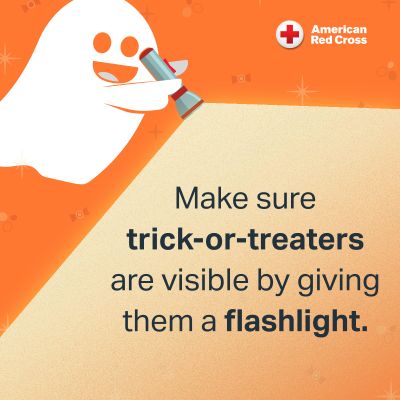
  5. Make sure trick-or-treaters can see and be seen. Give kids a flashlight to light their way and consider adding reflective tape to costumes and trick-or-treat bags.
  6. Plan the trick-or-treat route in advance and make sure adults know where their children are going. A parent or responsible adult should accompany young children door-to-door. 
  7. It’s not only vampires and monsters people have to look out for. Be cautious around animals, especially dogs.
  8. Walk only on the sidewalks, not in the street. Avoid running. Look both ways before crossing the street, and cross only at the corner. Don’t cross between parked cars.
  9. Only visit homes that have a porch light on, and never go inside.
  10. Make sure a grown-up checks the goodies before eating. Make sure to remove loose candy, open packages and choking hazards. Discard any items with brand names that you are not familiar with.

For those planning to welcome trick-or-treaters to their homes, follow these safety steps:

  • Give out treats outdoors, if possible.
  • Avoid direct contact with trick-or-treaters by setting up an area with individually bagged treats for kids to take. Wash your hands before handling treats.
  • Maintain social distancing and wear a cloth mask.
  • Light the area well so young visitors can see.
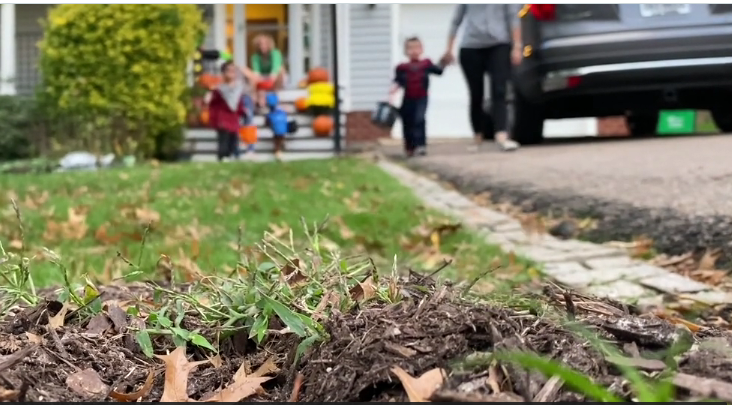
  • Sweep leaves from your sidewalks and steps. Clear your porch or front yard of obstacles someone could trip over.

Trick or treat dates and times vary; in Northeast Ohio, check here and in Northwest Ohio, here. You can also visit your city’s website for specific information.

Download the free Red Cross First Aid app for instant access to expert advice in case your ghost, goblin or superhero has a mishap. Use the Emergency app for weather alerts and to let others know you are safe if severe weather occurs. Find these and all of the Red Cross apps in smartphone app stores by searching for the American Red Cross or going to redcross.org/apps. 

Stay warm safely this winter

By Doug Bardwell, American Red Cross volunteer

We all have used them at one time or another. Just that added little bit of heat can make a nice difference on a really cold day. But did you know that space heaters account for four out of every five home heating fire deaths?

With the forecast calling for overnight temperatures dipping into the 40’s this week – and into the 30’s next week in Northern Ohio, you may be tempted to break out your space heaters.  And there are some things to keep in mind.

Any time you are using a portable electric heater, it’s important to remember to keep them at least three feet – from EVERYTHING. Look around and anything that’s liable to burn should be well away from those hot elements. Bed linens, blankets, socks, children’s clothes, draperies, newspapers and magazines, cardboard boxes, paper bags . . . they are all able to ignite easily if they contact the heating elements of a space heater.

Also, remember that space heater cords are designed to safety transmit the electricity needed to operate the device itself, but often, household extension cords are not. Many cords have wires that are a smaller gauge than required to transfer all the electrical current required by the space heater. That can cause inexpensive extension cords to literally melt and start a fire just from continued use.

To view a video with tips from the National Fire Protection Association, CLICK HERE.

The ‘three-foot’ rule

Space heaters aren’t the only things that benefit from the three-foot rule. The same goes for fireplaces, wood stoves, candles and your furnace. It’s best to teach young children that it’s a “Kid Free Zone” around anything flammable and that they are not allowed to be any closer than that.

And while half of home heating fires happen in the months of December, January and February, it’s also a good rule all year long. With windows open in the summertime, a breeze could easily blow draperies or loose paper into a burning candle if set too close. We need to be vigilant all year long.

Sweep and service

Other heating appliances also need your attention each year. Your furnace should be routinely serviced each year before heating season. Heating coils should be cleaned professionally. And don’t forget to change filters in your furnace every couple of months at least. With routine cleaning and new filters, your furnace will not only last longer, but you’ll feel warmer and have cleaner air to breathe.

Lastly, don’t forget that fireplace. Chimneys can get coated with creosote, and with as little as 1/8 to 1/4 inch of creosote on the walls of your chimney, when temperatures reach 451 degrees, creosote can catch fire.  A chimney fire has the potential to burn down an entire house, so check your chimneys if you haven’t had them cleaned recently.

Alarms save lives

On top of your home safety checklist should be to make sure that you have installed working smoke and CO2 alarms throughout your home. You need to check regularly that the batteries are fresh and that any alarm manufactured before 2011 is replaced. Even if the batteries are new, the actual detection mechanisms in smoke alarms cease to function after 10 years. Replace them immediately.

If you need alarms and can’t afford them or can’t install them, call the American Red Cross to be put on our complimentary free alarm installation list. Visit this site to learn more or to get on the list.

Edited by Glenda Bogar, American Red Cross volunteer

30-gallon blood donor says YOU can save a life

By Eilene E. Guy, American Red Cross volunteer

Marie Lecurgo doesn’t remember the first time she donated blood, which is understandable, because she started more than 40 years ago.

But she knows why she’s still donating blood: “The feeling that you’re helping so many people, it’s overwhelming.”

Marie chokes up as she thinks of how many people have benefitted from the 30 gallons she has given. That’s 240 pints, each of which can be separated into three critical components. So that’s as many as 720 recipients: accident victims, surgery patients, people undergoing treatment for everything from cancer to sickle cell disease.

Marie Lecurgo (center), with Red Cross staff, shows off her badge of honor after a recent donation at UAW Local 12 in Toledo

The 71-year-old Toledo resident, a not-yet-retired licensed practical nurse, is out front with her support for the American Red Cross. “I feel like a walking billboard for the Red Cross. I wear all their free T-shirts,” she says with a chuckle.

But she turns serious when she thinks about people who shy away from rolling up their sleeves, citing a fear of needles. Get over it!” she says firmly. There may be a time when you or someone you love needs blood.” She’d love to inspire a hundred more people to follow her selfless example.

“There may be a time when you or someone you love needs blood.”

Marie Lecurgo

In fact, Red Cross is seeing the worst post-summer shortage of blood and platelets in at least six years.

The blood inventory typically rebounds after summer shortages. But this fall, a surge in COVID-19 cases because of the Delta variant has contributed to the lowest donor turnout of the year. To meet hospital and patient needs, the Red Cross needs to collect 10,000 additional blood products each week this month.

With less than a day’s supply of certain blood types on hand in recent weeks, the Red Cross urges donors of all blood types — especially type O — to make an appointment to give blood or platelets.

Marie made an appointment to donate whole blood again last week and now she’s thinking about giving platelets too. Donors can give platelets every seven days because the process extracts just the platelets, returning the rest of the blood back to the donor, so there’s less recovery time.

To sign up for a blood drive or donation center near you, use the Red Cross Blood Donor App, visit RedCrossBlood.org or call 1-800-RED CROSS (1-800-733-2767).

Every Red Cross blood drive and donation center follows strict standards of safety and infection control, and  additional precautions  — including face masks for all donors and staff, regardless of vaccination status — are in place to protect everyone’s health. Donors are encouraged to schedule an appointment before arriving at a drive. 

Donors can save up to 15 minutes at their blood drive by using a RapidPass®. With RapidPass®, donors complete the pre-donation reading and health history questionnaire online, on the day of donation, from a mobile device or computer. To complete a RapidPass®, follow the instructions at RedCrossBlood.org/RapidPass or use the Red Cross Blood Donor App.

To donate blood, bring a blood donor card or driver’s license or two other forms of identification to check in. Individuals who are 17 years of age in most states (16 with parental consent where allowed by state law), weigh at least 110 pounds and are in generally good health may be eligible to donate blood. High school students and other donors 18 years of age and younger also must meet certain height and weight requirements.

Edited by Glenda Bogar, American Red Cross volunteer

Red Cross faces emergency need as blood supplies drop to lowest post-summer levels since 2015  

This is serious: The national American Red Cross blood inventory is the lowest it has been at this time of year since 2015. Donors of all blood types – especially type O – and platelet donors are urged to make an appointment to give now and in the weeks ahead to overcome an emergency shortage. 

Blood donor turnout has reached the lowest levels of the year as many delayed giving amid a return to the workplace and in-person learning, as well as a recent surge in COVID-19 cases across the country due to the delta variant. As cases spiked in August, blood donor participation decreased about 10%, but blood product distributions to hospitals have remained strong, significantly outpacing blood donations in recent weeks. 

Patients, including those facing cancer, rely on the kindness of blood and platelet donors to help ensure they have the blood products they need for treatment. During Breast Cancer Awareness Month this October, the Red Cross encourages eligible donors roll up a sleeve to provide hope and healing to cancer patients.

According to the National Cancer Institute, roughly 1.9 million people are expected to be diagnosed with cancer in the U.S. this year, and more than 281,000 of those individuals will have breast cancer. Patients with breast cancer and other cancers may need blood products on a regular basis during chemotherapy, surgery or treatment for complications. Platelet transfusions are often needed by patients to help prevent life-threatening bleeding. More than half of all platelets collected by the Red Cross are used by patients with cancer.

Here are 3 easy ways YOU can help restock the shelves:

  1. Make an appointment to give blood or platelets by downloading the free Blood Donor App, visiting RedCrossBlood.org or calling 1-800-RED CROSS (1-800-733-2767).  
  2. Let your friends and family know there is an emergency blood shortage.
  3. Invite someone to donate with you.

One act of kindness deserves another

All those who come to donate in October will receive a link by email to claim a free Zaxby’s Signature Sandwich reward or get a $5 e-gift card to a merchant of their choice. Terms and conditions apply; see rcblood.org/zax for details.

Blood drive safety 

Each Red Cross blood drive and donation center follows the highest standards of safety and infection control, and additional precautions – including face masks for donors and staff, regardless of vaccination status – have been implemented to help protect the health of all those in attendance. Donors are asked to schedule an appointment prior to arriving at the drive. 

Don’t wait – make your appointment to donate.