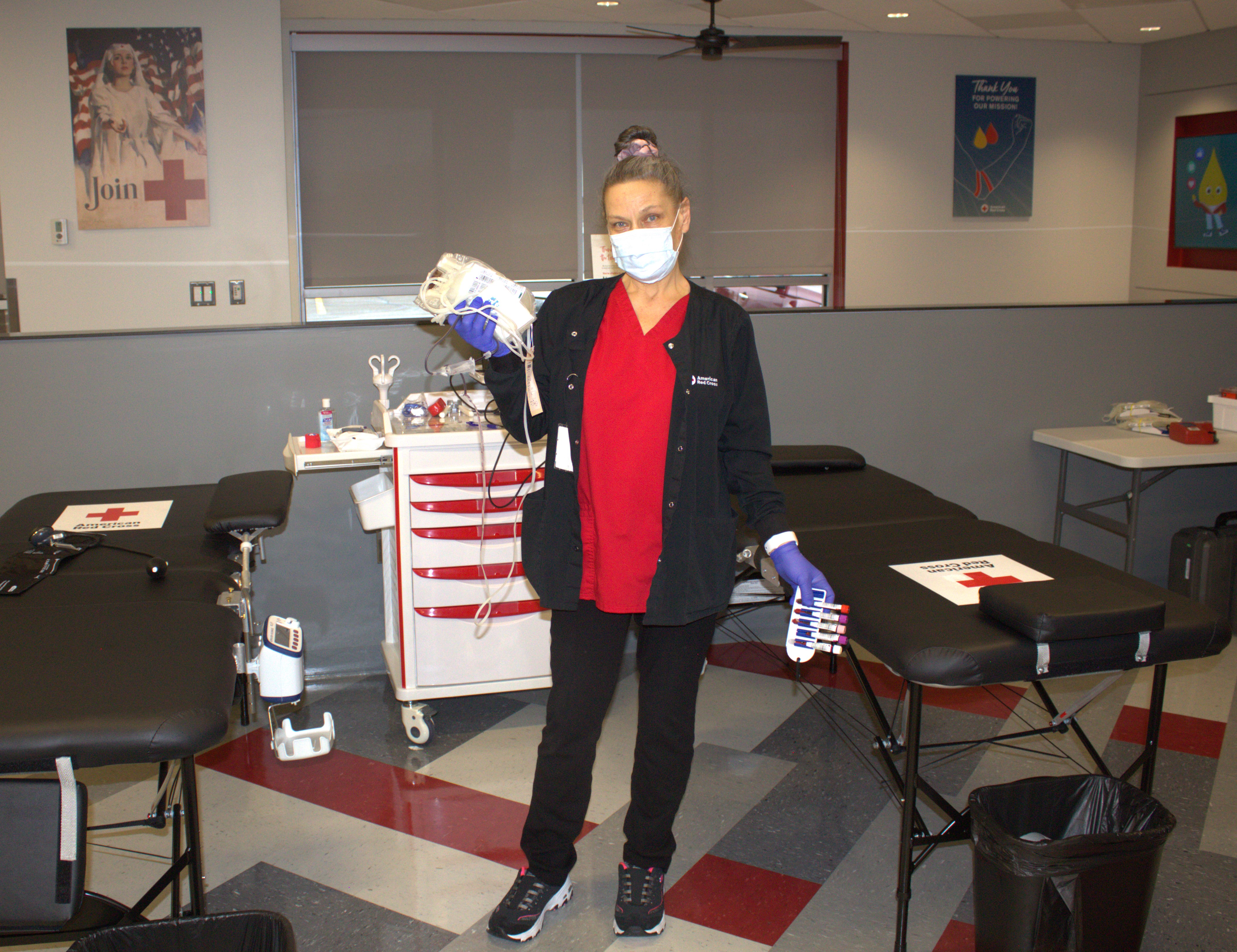
During Phlebotomist Recognition Week, the American Red Cross of Northern Ohio is proud to spotlight Katie Currenti, who has dedicated 29 years to serving as a Red Cross phlebotomist.
Katie first started working at the Red Cross after moving to the U.S. from Ukraine and studying to become a medical assistant. Before moving here, she had previously worked as a speech pathologist and held a nursing degree back at home.
Katie Currenti, Red Cross phlebotomist, at the newly opened Willoughby Blood Donation Center
“When I arrived here in this country, I wanted to continue to help people in the medical field,“ Katie explained, “so I went to school for medical assistance and started my career with the Red Cross, because what better way to continue helping others than making sure lifesaving blood products are available for patients in hospitals.”
Phlebotomists play a vital role in the blood donation process. Specially trained to collect lifesaving blood donations, they ensure each unit is safely prepared for patients in hospitals across the region. Their work extends beyond just basic blood collection as they also comfort and educate donors who come in, greeting them with a smile and providing a friendly, familiar face for repeat donors.
“What keeps me and has kept me here is my (Red Cross) family, which includes staff and, most of all, donors and volunteers.” Katie reflected, “I have come to know so many who have walked through these doors and continue to make new ones. I feel privileged that what I do truly matters to so many and know that all of us together have saved millions upon millions of lives in 29 years!”
Katie primarily works at the Red Cross Blood Donation Center in Parma, Ohio, and also supports the newest Northern Ohio blood donation center in Willoughby.
This Phlebotomist Recognition Week, help honor Katie and other Red Cross blood donation heroes by scheduling an appointment to give blood. Donors who give between now and February 28, 2026, will receive a $20 e-gift card to a merchant of their choice. Visit RedCrossBlood.org to find a blood drive or blood donation center near you.
Each day in Northern Ohio, the American Red Cross collects and distributes lifesaving blood platelets to help treat people fighting cancer, chronic diseases and traumatic injuries. Platelets are crucial in treating cancer, as they are a key blood clotting component.
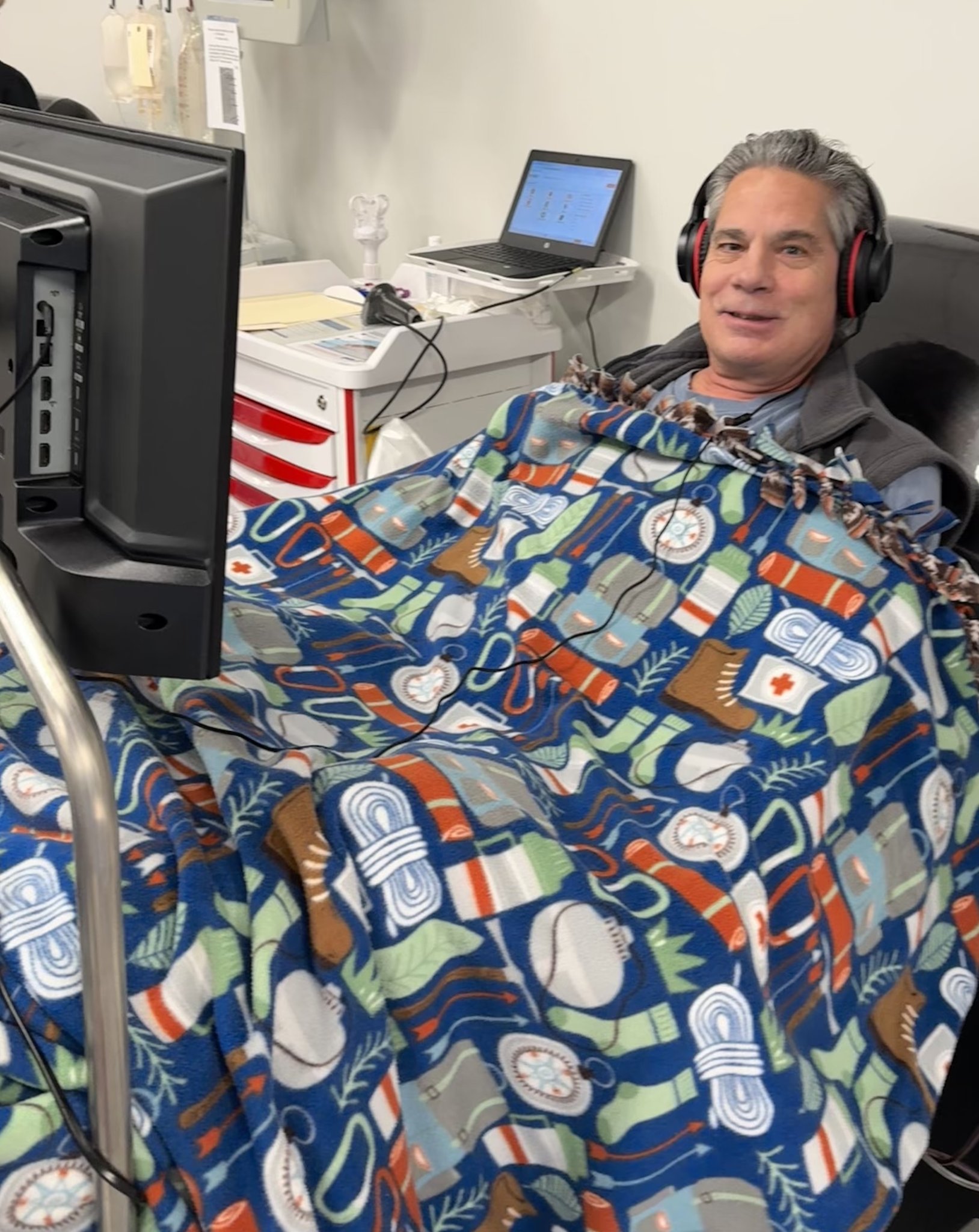
Karl donating platelets at the new Willoughby Blood Donor Center. Karl’s been donating platelets for roughly 30 years! “A kid at the school where my wife worked was diagnosed with cancer and they were looking for people to donate platelets,” Karl said. He stepped up decades ago and continues to do his part to save lives today.
Platelets have a shelf life of only five days, and a unit is needed every 30 seconds in the U.S., creating continual demand.
February 4th is World Cancer Day, which focuses on a disease that has deeply touched many of our lives. For 2026, excluding non-melanoma skin cancers, The American Cancer Society expects about 2.1 million new cancer cases to be diagnosed in the U.S., over 78,000 of them in Ohio.
As the Red Cross supplies 40% of the U.S.’s blood supply, we wanted to focus on the power of platelets in fighting cancer, especially as the Red Cross is currently facing a blood shortage and needs your help.
I spoke with James Keane about his experience on the importance of blood platelets for cancer patients. James’ daughter, Molly, was treated for leukemia from 2015 to 2017, beginning when she was 7 years old.
“When Molly was in the hospital,” James said, “especially during the first few months of her treatment, she got platelets all the time. Both the nature of her leukemia and the course of her treatment made it an almost-daily thing for weeks, if not months. If I recall correctly, there were some medications she received which required a platelet transfusion as part of the protocol.”
James has been aware of blood products much of his life, since his grandfather’s career was at a lab where his team separated blood products. Because of his family history, James asked the doctors and nurses “where all these yellow bags were coming from.” He would have asked if he thought blood shortages were something he needed to worry about but thinks he would have been told “no” even if not true. James explained, “Pediatric doctors and nurses are very careful to only let you know about the things you should be worrying about and watching for at the moment. They are very good at keeping you on a need-to-know schedule, shielding parents from worrying about things in the distant future or otherwise out of their control. There was generally plenty to worry about in the moment.”
To answer James’ question of where blood platelets come from, the vast majority are from platelet donors. An apheresis machine collects the donor’s platelets along with some plasma, returning red cells and most of the plasma back to the donor over about two hours. Platelets can be donated every seven days, up to 24 times a year.
Nurses are vital to delivering the lifesaving services of the American Red Cross – an organization founded by Clara Barton, whose own nursing during the Civil War earned her the title “Angel of the Battlefield.”
“Nurses fill so many roles in the Red Cross. We couldn’t function without them,” said Barb Thomas, recovery manager for the Red Cross Northern Ohio Region.
Nationwide, more than 20,000 Red Cross nurses – both paid and volunteer – do everything from caring for disaster victims to working in military hospitals to collecting lifesaving blood. They teach CPR/first aid and disaster preparedness, and even serve in the management and governance of the Red Cross itself.
“Nurses are integral to what we do at the Red Cross, so we try to keep them engaged and be sure they know how much we appreciate them,” Barb said. “We don’t just salute them during National Nurses Week (starting today), but all year long.”
Barb introduced me to two of the dozens of nurses in northern Ohio who apply their time and skills to those who need them, near and far.
Phyllis Esposito of Massillon, Ohio, is enthusiastic about her role in Red Cross disaster health services.
Phyllis Esposito, Red Cross volunteer, with Tim Reichel, Disaster Program Manager, Heartland, Stark and Muskingum Lakes Chapter
“I can honestly say, I talk up the Red Cross every time I can,” she said. “It’s such a rewarding thing. My only regret is, why didn’t I do this 10 years earlier?”
After more than 50 years as an emergency room nurse, Phyllis understands how stressed people can be in the wake of an emergency. She knows how to help calm them, assess their health-related needs and – most importantly – fill those needs.
That can range from getting glasses, dentures or refills for medications lost in a fire evacuation to replacing a child’s aerosol machine or a continuous positive airway pressure (CPAP) machine destroyed by a tornado or flood.
Early in her Red Cross “career,” Phyllis was glad to travel to disaster sites, to look after the medical needs of home fire victims, shelter residents or even Red Cross volunteers. But she said as she’s gotten older, she’s glad to be able to serve virtually, reaching out by phone all the way to victims of a hurricane in Louisiana, for example.
This kind of long-distance service is a vital and efficient way for the Red Cross to help local disaster survivors or even a whole community where medical resources are overwhelmed.
“Phyllis is a disaster health service star,” Barb said. “She’s eager to learn as we evolve our ways of helping people, especially as we adjusted to COVID. And her personality just lets people know, there’s light at the end of this dark tunnel they’re in, after a disaster.”
Jennifer Dremann of Deerfield, Ohio, has a special rapport with those who’ve experienced tragedy in the course of a disaster.
Jennifer Dremann, Red Cross volunteer
“I lost my brother in a house fire in 1996; he was 19 years old” when he succumbed to smoke inhalation and carbon monoxide, she said. “He’s why I became a nurse.”
When Jennifer heard about what the Red Cross does, particularly for home fire victims, she knew this was a fit for her. “I’ve lived it; I’ve lost somebody. I’ve done several cases where somebody has passed. It’s got to be the absolute worst nightmare, especially when a child has perished.”
She’s also moved by cases involving an elderly adult who doesn’t have family or social support nearby.
Like Phyllis, she works with folks by phone, day or night, finding out what their disaster-related medical needs are and helping them replace prescriptions and/or medical equipment, navigating insurance and then dipping into Red Cross funds if necessary.
But perhaps the most important help she can give is to listen, not just to survivors’ physical needs but to their emotional wounds. “People are like, ‘You volunteer to do this?’ she said. “I don’t think most people realize what the Red Cross does, and how rewarding it is.”
The Red Cross is proud to have tens of thousands of skilled, compassionate nurses like Phyllis and Jennifer on the team, ready across the country and around the clock to help people prepare for, respond to and recover from disasters.
To learn more about the many services of the Red Cross and how you can be involved as a volunteer, financial supporter or blood donor, go to redcross.org.
Edited by Glenda Bogar, American Red Cross volunteer



 NOHredcross