Turkey day hazards: Don’t let your holiday meal go up in smoke

By Kathryn Dean, American Red Cross volunteer

Juicy, flavorful, and tender meat.  Crispy, golden-brown skin.  For a perfect holiday centerpiece that cooks in under an hour, the deep-fried turkey seemed like a miracle.  If you lived through the 1990s, you probably remember the phenomenon that spread through the country like wildfire. 

Triggered in part by Martha Stewart featuring this Cajun method of cooking on her television show and in her magazine, it sparked a craze amongst Americans who were looking for easier ways to cook their Thanksgiving turkeys. 

Unfortunately, this method came with a steep price.  An increase in fires and injuries resulted from improper use of this technique, and many homes burned down as a result.  If you’ve never seen a video of a turkey fryer quickly going up in flames, do yourself a favor and Google it now. 

But the danger isn’t limited to outdoor frying.  In the United States, Thanksgiving Day and the day before are the top two most likely days for cooking fires to happen in the home.  44% of all house fires in the U.S. can be attributed to cooking fires, making it the leading cause of home fires and home fire injuries.
COOKING SAFETY TIPS: The American Red Cross recommends these cooking safety tips to reduce your risk of fire during this holiday season.

  • Never leave the kitchen unattended when frying, grilling, or broiling food.
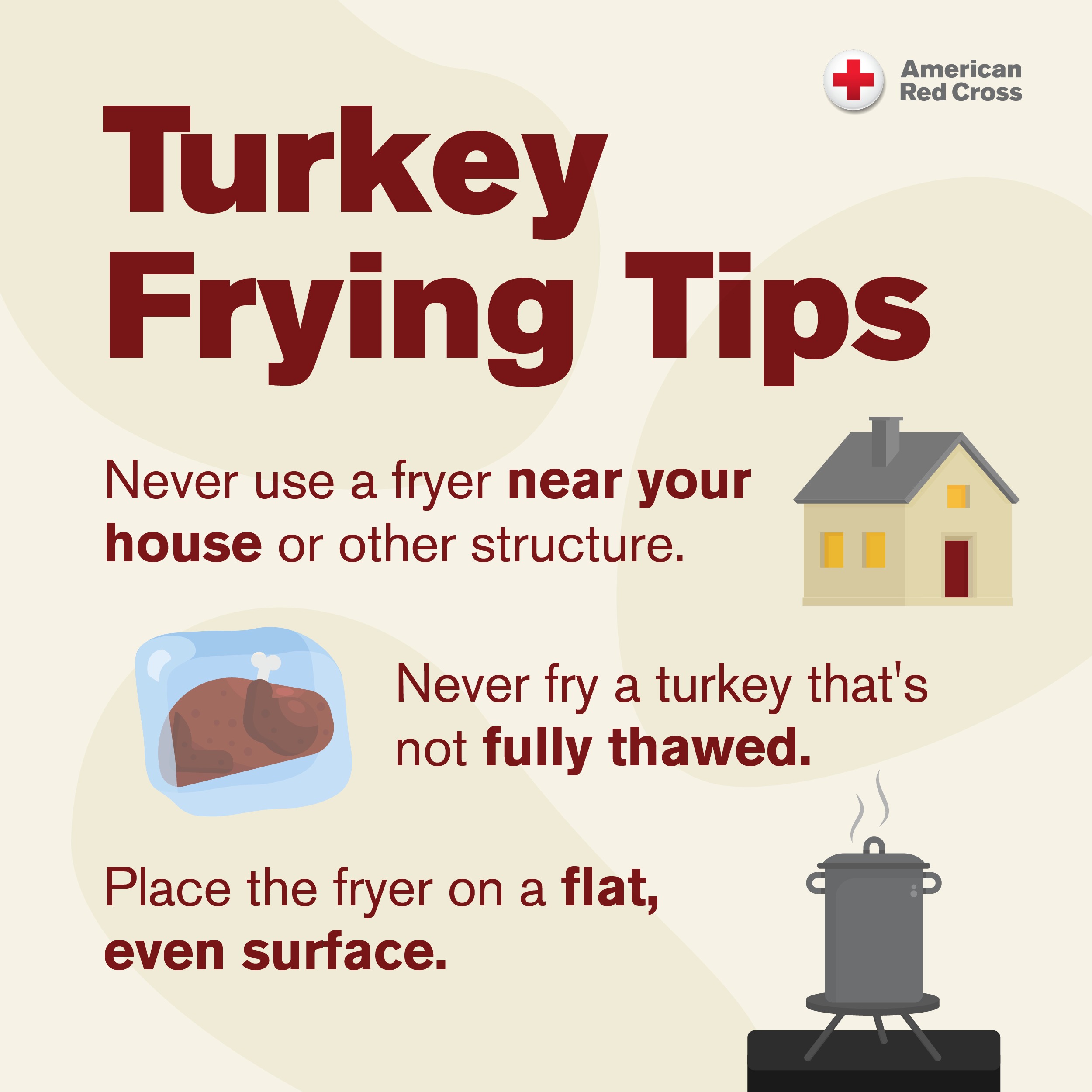
  • Keep grills or deep fat fryers at least 10 feet away from home structures while in use.
  • If you are using a turkey fryer, remember that proper safety requires a completely thawed turkey and oil that is at the correct temperature and level.
  • Set a kitchen timer to remind you when the stove is on.
  • Keep children and pets at least three feet away from all cooking appliances and cords.
  • Remove flammable items, like wooden utensils, curtains, potholders, and oven mitts, from the vicinity of the stovetop.
  • Pull up sleeves and avoid loose clothing that can get in the way while cooking.
  • Keep a fire extinguisher near any area where cooking is being performed.  Do not use water to put out a grease fire.
  • Check that all appliances are off before going to bed at night.

Fall is a great time to check that you have working smoke detectors in your home. Test your units monthly, and replace batteries annually (on units that allow you to do so).  Replace any units that are over 10 years old.  If you need help replacing or installing smoke detectors, the Red Cross may be able to help. Click here to find out how to request a free smoke alarm in Northern Ohio. Wishing everyone a wonderful Thanksgiving!

Don’t Be the Griswolds

By Mary Falconer-Williams, American Red Cross volunteer

Introduction by Ryan Lang, American Red Cross board member and volunteer

When Clark Griswold’s dad was teaching him everything he knew about exterior illumination, perhaps a lesson on safeguarding his home during the holidays was in order. Anyone who’s seen the classic “National Lampoon’s Christmas Vacation” knows that everything that can go wrong, does go wrong for the Griswolds. But maybe, if Clark had been better prepared with tips from the American Red Cross, things may have gone more smoothly for him.

When you are decorating for the holidays, it’s so tempting – I know! – to load up one plug beyond its capacity. Why would they make it so you can daisy chain a set of lights if they didn’t mean for you to do so? And if I just need the wire to stretch one foot more, why can’t I just plug a power strip into a power strip into the extension cord?

The U.S. Fire Administration states on its website, “In 2021, an estimated 24,200 residential building electrical fires were reported to United States fire departments.”

Additionally, the National Fire Protection Agency indicates that December is the leading month for home fires in the U.S. According to them an annual average of 155 home fires were the result of Christmas tree fires, with electrical distribution or lighting equipment involved in more than two in five home Christmas tree fires.

Another way to make to protect yourself from home fires? You’re your home safely during cold weather. According to the National Fire Protection Association (NFPA), space heaters are most often responsible for home heating fires. Follow these tips on how to safely heat your home:

● If you must use a space heater, never leave it unattended. Place it on a level, hard, and nonflammable surface, such as a ceramic tile floor. Don’t place it on rugs and carpets, or near bedding and drapes.
● Plug space heater power cords directly into outlets — never into an extension cord. Turn the space heater off every time you leave the room or go to sleep.
● Keep children, pets, and anything that can burn at least three feet away from heating equipment.
● Never use a cooking range or oven to heat your home.
● Never leave a fire burning in the fireplace unattended. Make sure any embers in the fireplace are extinguished before going to bed or leaving home. Use a glass or metal fire screen to keep embers in the fireplace.
● Have furnaces, chimneys, fireplaces, wood, and coal stoves inspected annually by a professional and cleaned if necessary.

The NFPA also indicates that Christmas Day and Christmas Eve were the second and third-leading days of the year for home cooking fires, respectively, in 2022. So, as you’re putting the fixings for your holiday meal on the stove, keep these tips in mind:

● Stand by your pan. If you leave the kitchen, turn the burner off.
● What you are cooking. Fires start when the heat is too high. If you see any smoke or the grease starts to boil, turn the burner off.
● Turn pot handles toward the back of the stove so that no one can bump them or pull them over.
● Keep a pan lid or baking sheet nearby. Use it to cover the pan if it catches on fire. This will put out the fire.
● Installing smoke alarms can help save lives, but make sure it is 10 feet or more away from your cooking surface.

RED CROSS TIPS to help protect your family this season, and year-round: test your smoke alarms monthly and practice your home fire escape plan until everyone can escape in less than two minutes — the amount of time you may have to get out of a burning home before it’s too late.

Posted by Ryan Lang, Red Cross board member and volunteer

Deck the halls and trim the tree: Tips for a festive and safe home

Written by Brad Galvin and edited by Glenda Bogar, American Red Cross volunteers

The holidays are approaching, so is the heightened risk for home fires. Unfortunately, this time of year is tragically one of the busiest for fire departments due to the surprising danger of holiday décor, dry Christmas trees, holiday cooking and misuse of fireplaces and chimneys.

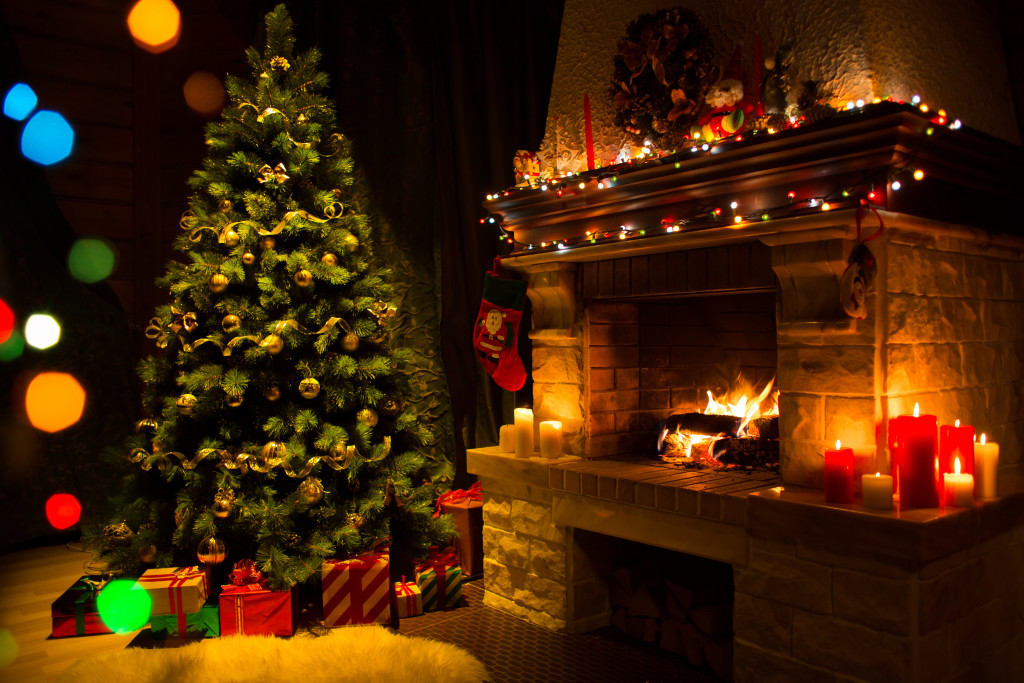
fireplace-1024x683.jpgBeautiful, fragrant and festive, the live Christmas tree can be very risky if safety precautions are not observed. The longer the tree is in the home without being given ample water, the more it will dry out and become a fire hazard. A dry live tree can go up in flames quickly if there is an electrical mishap with a strand of lights or if an open flame gets too close to the needles. It is important to continue to give your tree plenty of water and keep it away from energy sources. Strands of lights should be checked frequently.

According the National Fire Protection Agency, between 2012 to 2016, U.S. fire departments responded to an average 170 home fires per year that started with Christmas trees. These fires caused an average of four deaths, 15 injuries and $12 million in direct property damage annually.

Festive décor should be installed with common sense in mind. Décor such as candles and lights can catch their cheerful counterparts such as garland, bows and wreaths on fire if they aren’t properly inspected and used correctly. Do not overload sockets and connect too many extension cords.

Hams, casseroles and delicious cookies are staples on the holiday plate but use caution 240_F_146531964_rcj4af3xtTm2f3nW8aoKU9G6Y14fPSt6when using the oven and cooking range. FEMA recommends a common-sense practice of simply staying in the kitchen when you are frying, grilling or cooking on the stove top or broiling food. The idea of “set-it and forget-it” is dangerous. Additionally, FEMA recommends to never use a turkey fryer in a garage or on a wooden deck. It’s imperative to watch the fryer carefully, as the oil will continue to heat until it can catch on fire. To avoid oil spillover, don’t overfill the fryer.

The holidays are the perfect time to enjoy the crackling of a fire in the fireplace. Stockings hung from the mantel is an iconic holiday image. While picturesque, it is critical to be smart when operating the fireplace. Some suggestions from the American Academy of Pediatrics include:

  • Even if the chimney is not due for cleaning, it is important to check for animal nests or other blockages that could prevent smoke from escaping.
  • Make sure the area around the fireplace is clear of anything that is potentially flammable (furniture, drapes, newspapers, books, etc.). If these items get too close to the fireplace, they could catch fire.
  • Never leave a fire in the fireplace unattended. Make sure it is completely out before going to bed or leaving the house. If you leave the room while the fire is burning or the fireplace is still hot, take your small child with you.
  • Always have a fire extinguisher nearby.

heating-en

The holidays are meant to be enjoyed with friends and family. The excitement can often divert our attention and distract us from our usual diligence. It’s imperative to use these common-sense suggestions to decrease the risk of a dangerous home fire.

You can learn more about preventing home fires with tips from the American Red Cross at redcross.org. The Red Cross offers simple safety tips that take you safely through the holidays and into the new year. Read  them here.