Protecting every member of your family with your 72-hour kit

FamilyThere is nothing more frustrating (or hilarious, depending on how you view it) than going through your 72-hour kit and seeing a huge pack of newborn diapers intended to fit your 15-month-old toddler.

That teensy, tiny diaper simply isn’t going to cut it.

If you are the parent or care-giver to an infant or toddler, you will need to go through your 72-hour emergency kit quarterly to keep up with your ever growing child.

For those who haven’t built a 72-hour kit, yet, here are some items you will need in addition to your family’s regular kit:

  • 96 oz of water (about ¾ of a gallon) will cover a 72-hour span. Keep in mind, infants may drink up 32 oz a day when mixed with formula. If you are breastfeeding, keep more on hand for you to drink to in order to keep up your supply.
  • POWDERED Formula. Make sure that you have enough to cover the number of bottles and ounces that your baby drinks during the day, times three.
  • Bottles and nipples (make sure they are the right size of nipple for your child!) The more you have in your kit, the less washing and sterilizing you will have to do.
  • A large pack of diapers.
  • Baby wipes.
  • Diaper rash ointment.
  • Re-sealable gallon bags (for soiled clothes and diapers).
  • Clothing:
    • 3-5 onsies.
    • 3-5 footed pajamas.
    • 6-10 pairs of socks.
  • Burp cloths.
  • 3-5 receiving blankets.
  • 1-2 fleece (or heavier) blankets.
  • Toys, teething rings or other items to occupy attention.
  • Copy of Immunization Record in the family files.
  • Add to the first aid kit:
    • Teething gel.
    • Infant acetaminophen.
    • Infant ibuprofen.
    • Bulb syringe.
    • Hand sanitizer.

When you go through your kit (quarterly!) be sure to pay attention to your diaper sizes, clothing sizes, nipple sizes and amount of formula on hand (if needed).

Don’t forget about your pets! In the event of a disaster they will have supply needs as well. Here are some tips to keep your four-legged family members safe during a disaster:

  • Store extra food, water, bowls, litter box, medicine, first aid supplies and health records for each animal with your 72-hour kit.
  • Leashes and pet carriers should be together and accessible.
  • Before disaster strikes, identify pet-friendly places to stay within a 50-mile radius. Keep your pet with you if at all possible during a disaster.
  • Have current health/vaccination records, proof of ownership and brand or microchip identification.

To ensure that all members of your family are safe during a disaster, download the Red Cross First Aid apps available for people or pets. For more information on building a 72-hour kit, check out redcross.org!

10 ways to stay safe during this latest round of cold temperatures

COLD WEATHER SAFETY TIPS

Here are ten ways to stay safe during this latest round of cold temperatures:

Wear layers of lightweight clothing to stay warm. Gloves and a hat will help prevent losing body heat.

Wear layers of lightweight clothing to stay warm. Gloves and a hat will help prevent losing body heat.

  1. Wear layers of lightweight clothing to stay warm. Gloves and a hat will help prevent losing body heat.
  2. Know the signs of hypothermia – confusion, dizziness, exhaustion and severe shivering. If someone has these symptoms, they should get immediate medical attention.
  3. Watch for symptoms of frostbite including numbness, flushed gray, white, blue or yellow skin discoloration, numbness or waxy feeling skin.
  4. Bring the pets indoors. If that’s not possible, make sure they have enough shelter to keep them warm and that they can get to unfrozen water.
  5. Avoid frozen pipes – run water, even at a trickle, to help prevent them from freezing. Keep the thermostat at the same temperature day and night to help avoid freezing pipes.
  6. Do not use a stove or oven to heat the home.
  7. Space heaters should sit on a level, hard surface and anything flammable should be kept at least three feet away.
  8. If using a fireplace, use a glass or metal fire screen large enough to catch sparks and rolling logs.
  9. Turn off space heaters and make sure fireplace embers are out before leaving the room or going to bed.
  10. Learn how to treat cold weather related emergencies by downloading the free Red Cross First Aid App at redcross.org/apps. More information about winter safety is available on redcross.org.         

After you turn back the clock, check your smoke alarm batteries and emergency preparedness supplies

This weekend marks the end of Daylight Saving Time which means we will turn the clocks back one hour on Saturday night and receive an extra hour of sleep Sunday morning.

You can post this graphic to your Facebook page to help remind all of your friends and family to do the same.

You can post this graphic to your Facebook page to help remind all of your friends and family to do the same.

We recommends that you also use this as an opportunity to prepare for the winter season by checking you smoke alarm batteries and emergency preparedness supplies – a step that could save you time should an unexpected crisis arise.

Other preparedness steps you can take this weekend include:


  • Updating the emergency contact information in your family communications plan. Choose an out-of-area emergency contact that each person in your family can call if he/she becomes separated during a disaster situation.
  • Making sure your emergency preparedness kit still includes at least a three-day supply of non-perishable food items and water (one gallon per person per day), a flashlight, a battery-powered or crank radio, can opener, first aid kit, copies of important documents, and special items such as medications, diapers, and infant formula.
  • Checking your emergency preparedness kit for expired food items; refresh staples such as water, food and batteries. If there have been changes in prescriptions or dietary needs, add new foods and medications as needed.


Taking simple actions like these can help you be better prepared for emergencies. You can find more information on preparedness on redcross.org.

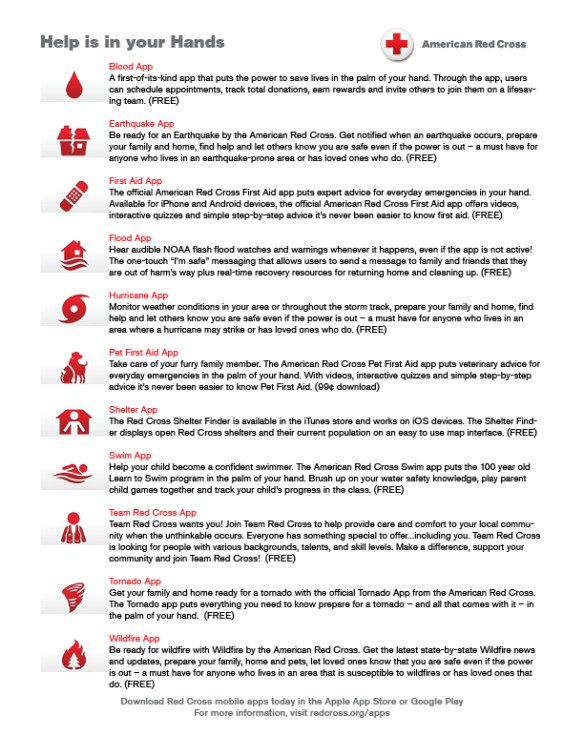
The Red Cross has free mobile apps that help people learn what to do before, during and after an emergency or disaster

Join the Red Cross and Federal Emergency Management Agency in the second annual PrepareAthon on September 30

Join us for the second annual America’s PrepareAthon! national day of action.

The last few years have been an important reminder to all of us that disasters can strike anytime and anyplace. Nearly every region of the country experienced some form of extreme weather event, including devastating tornadoes in Oklahoma, scorching wildfires throughout California, and destructive flooding in Northeastern Ohio.

The destructive power of weather affects all communities. Learning how prepare for an emergency will help determine your course of action during a disaster.

The destructive power of weather affects all communities. Learning how prepare for an emergency will help determine your course of action during a disaster.

As with many life events, preparation is the key to success. When you prepare and practice for an emergency in advance of an event, it makes a real difference in your ability to take immediate and informed action when it matters most. Early action can also help you to recover more quickly.

That’s why thousands of individuals, organizations, schools, houses of worship, and local governments across the Nation are actively participating in a new national campaign for action – America’s PrepareAthon!

The Red Cross continues to support and promote this action-based initiative to build a more resilient Nation starting with the national day of action on September 30.

Can’t participate on September 30? Preparing for disasters is a year-round activity. So pick a date that works for you. You can still register to be counted in the movement. And be sure to post your preparedness activities on the national calendar.

It’s not a matter of if the next disaster will happen, but when. Take action and prepare now by completing simple steps such as making a plan and having an emergency kit. Start the conversation in your family today. It can help determine what you need to do next to become more prepared.

Be smart, take part, and prepare for emergencies before they strike!

Disaster preparedness for pets too!

When disaster strikes, all members of the family should be prepared with a disaster kit – including your pets.  Keep items in an accessible place and store them in sturdy containers so that they can be carried easily.

Pictured beside Zack and Zoe are leashes, water, food, Vet information, dog toys, a towel, dog treats, medical history, medicine, current picture of Z&Z and a water bowl.

Pictured beside Zack and Zoe are leashes, water, food, Vet information, dog toys, a towel, dog treats, medical history, medicine, current picture of Z&Z and a water bowl.

Your kit should include—

  • Sturdy leashes, harnesses and/or carriers to transport pets safely and ensure that they can’t escape.
  • Food, drinking water, bowls, cat litter/pan and a manual can opener.
  • Medications and copies of medical records stored in a waterproof container.
  • A first aid kit and download the Pet First Aid App
  • Current photos of you with your pet(s) in case they get lost. Since many pets look alike, this will help to eliminate mistaken identity and confusion.
  • Information on feeding schedules, medical conditions, behavior problems, and the name and number of your veterinarian in case you have to foster or board your pets.
  • Pet beds and toy

Click here for a complete list of pet disaster preparedness items: http://www.redcross.org/images/MEDIA_CustomProductCatalog/m3640126_PetSafety.pdf

Pets will look to family members for comfort during all the changes that disasters bring.  Having a plan ahead of time will reduce stress and ensure you that you can care for your furry family members.

Celebrate National Preparedness Month: Make a plan, get a kit, be informed!

September is National Preparedness Month.  There are many ways that your family and community can prepare for an emergency. Over the next few weeks, we’ll be showcasing some of the simple steps that you can take to get prepared.

Oklahoma Tornado One Year Report 2014Carney, Oklahoma Home Kit DeliveryThe simplest way to prepare for a crisis is to have an emergency kit ready to go. An emergency kit is made up of basic necessities that will help you and your loved ones survive sheltering in place. (To shelter in place means that you are staying in a safe space in your home for any amount of time, like when you go to your basement or other enclosed area during a tornado warning.)

The core items needed for a basic emergency kit are available at many of the locations where you do your weekly shopping, so it doesn’t even require a special trip to get started!

Your kit should include:

  • Water
    • one gallon per person, per day (3-day supply for evacuation, 2-week supply for home)
  • Food
    • Ready-to-eat canned meats, fruits, vegetables
    • Protein or fruit bars
    • Dry cereal or granola
    • Peanut butter
    • Dried fruit
    • Nuts
    • Crackers
    • Canned juices
    • Non-perishable pasteurized milk
    • High energy foods
    • Vitamins
    • Food for infants
    • Comfort/stress foods
  • Can Opener
  • Flashlight
  • Battery-powered or hand-crank radio (NOAA Weather Radio, if possible)
  • Extra batteries
  • First aid kit
    • 2 absorbent compress dressings (5 x 9 inches)
    • 25 adhesive bandages (assorted sizes)
    • 1 adhesive cloth tape (10 yards x 1 inch)
    • 5 antibiotic ointment packets (approximately 1 gram)
    • 5 antiseptic wipe packets
    • 2 packets of aspirin (81 mg each)
    • 1 blanket (space blanket)
    • 1 breathing barrier (with one-way valve)
    • 1 instant cold compress
    • 2 pair of nonlatex gloves (size: large)
    • 2 hydrocortisone ointment packets (approximately 1 gram each)
    • Scissors
    • 1 roller bandage (3 inches wide)
    • 1 roller bandage (4 inches wide)
    • 5 sterile gauze pads (3 x 3 inches)
    • 5 sterile gauze pads (4 x 4 inches)
    • Oral thermometer (non-mercury/nonglass)
    • 2 triangular bandages
    • Tweezers
    • First aid instruction booklet
  • Medications (7-day supply) and medical items
  • Multi-purpose tool
  • Sanitation and personal hygiene items
  • Copies of personal documents (medication list and pertinent medical information, proof of address, deed/lease to home, passports, birth certificates, insurance policies – paper copies and on a usb stick)
  • Cell phone and/or chargers
  • Family and emergency contact information
  • Extra cash
  • Emergency blanket(s)
  • Map(s) of the area

Don’t forget to include specialized items for all of your family members, especially the tiny or four-legged ones! If relevant, be sure to include:

  • Baby supplies
    • Bottles
    • Formula
    • baby food
    • diapers
  • Games and activities for children
  • Pet supplies
    • Collar
    • leash
    • ID
    • Food
    • Carrier
    • Bowl
  • Medical supplies
    • hearing aids with extra batteries,
    • glasses
    • contact lenses
    • syringes, etc

And some additional supplies that would be good to keep at home or in your survival kit (based on the types of disasters common to your area):

  • Whistle
  • N95 or surgical masks
  • Matches
  • Rain gear
  • Towels
  • Work gloves
  • Tools/supplies for securing your home
  • Extra clothing, hat and sturdy shoes
  • Plastic sheeting
  • Duct tape
  • Scissors
  • Household liquid bleach
  • Entertainment items
  • Blankets or sleeping bags

For more information on building an emergency kit, visit www.redcross.org/prepare or download our free Situational Emergency apps.

On Twitter? Show us your kit! Tweet a picture, tag @neoredcross and use the hashtag #NatlPrep.