More Local Red Cross Workers Respond to West Virginia Flooding

Resources Include Personnel, Equipment

Nearly 500 American Red Cross volunteers have responded to the call for help in West Virginia, where heavy rain last week caused widespread flooding.  Seven volunteers are from Northeast Ohio.  In addition, Regional CEO Mike Parks is there to offer his assistance.

“It’s extremely rewarding to see American Red Cross volunteers and staff from across the country descend on the devastated communities of West Virginia,” said Parks. “It makes me proud to be part of this humanitarian organization.”

23 fatalities are being attributed to the flooding.  Preliminary reports indicate upwards of 2,000 homes could have been damaged or destroyed.  Thousands of people are still without power and gas service. Many areas are still inaccessible due to flood damage, and the number of affected homes is likely to change.

Red Cross workers, including those from Northeast Ohio, continue to support shelter operations. Workers are also providing meals, relief supplies and other assistance to those affected.

By the numbers:

-More than 1,900 overnight stays in emergency shelters

-More than 40,000 meals and snacks distributed

-Over 61,000 relief items like cleaning supplies and comfort kits distributed

Red Cross disaster mental health workers are helping people cope with the loss of their homes. Health workers are helping to replace needed items like prescription medications and eyeglasses. The Red Cross is working with state and local officials and with partners like the Southern Baptist Convention and AmeriCorps to help ensure people get the help they need.

In addition to the Red Cross personnel deployed, the Northeast Ohio Region is also contributing 3 emergency response vehicles and 2 passenger vans to the response and recovery effort in West Virginia.

This is a large relief response and the Red Cross needs the public’s support. Entire families have lost their homes and everything they own. We need your support now to help people affected by disasters big and small.

  • People can help by donating to Red Cross Disaster Relief to support disasters big and small by visiting redcross.org, calling 1-800-RED CROSS or texting the word REDCROSS to 90999 to make a $10 donation.
  • Donations to Disaster Relief will be used to prepare for, respond to and help people recover from disasters big and small.

 Financial donations are the quickest and best way to get help to the people who need it most.

FLOOD SAFETY

Download the free Red Cross Emergency App to have safety information and shelter locations available on your mobile device.

  • The Emergency App features emergency weather alerts to help keep the user safe, and provides information about what to do in case of floods as well as the locations of open shelters.
  • Red Cross apps are available in smartphone app stores by searching for the American Red Cross or going to redcross.org/apps.


Bring IT On: Disaster Services Technology

When a disaster strikes, who is it that gets the basic IT services that we’ve come to depend upon back up and running? The Disaster Services Technology team – a unique group of volunteers who deploy to a disaster response to set up communications technology!

The team provides the necessary infrastructure that a response may require, from internet capabilities (think: Safe And Well Services) to telecommunications (like an antenna based radio if cellular services are down).

“We can service everyone from a single user connection up to a whole site,” said Ed Finley, National Field Communications Engineer.

This week the team held a rare hands-on training at our Akron office. The three-day course is only offered once a year in each division. The training staff has already taught the course in Mobile, Ala.; Oakland, Calif.; and Austin, Texas. After Akron, they will head out to Tinton Falls, N.J.; Columbia, S.C.; and Minneapolis, Minn.

The course gives volunteers the opportunity to train on equipment that will deploy to a disaster response; such as laptops, cell phones, routers and satellites.

“Not only will students learn how to set-up and use the equipment, but also that there is a support system behind them that will help them get through the process and be successful,” said Ed.

Students at the Akron class hail from all over Ohio and the rest of the country – California, New York, New Jersey, Arizona, Florida, Pennsylvania, Indiana, Michigan, Kentucky, and West Virginia.

If you are interested in joining the Disaster Services Technology team, visit www.redcross.org/volunteer and sign-up to be a volunteer. You’ll go through a couple of basic Red Cross courses, including Disaster Services Technology Overview, and from there you’ll be able to train with some of the IT leaders who we are lucky enough to have living in Northeast Ohio before deploying.

This slideshow requires JavaScript.


Preparing the Community (And the Volunteer Jobs that go with it)

By: Debra, Regional Volunteer Specialist

September is Preparedness Month and throughout Northeast Ohio the Red Cross is asking that individuals, families, and businesses to be Red Cross Ready.  Red Crossers know that preparedness begins with them; by taking a few simple preparedness steps they help save themselves and their family when an emergency strikes and are taking action to bolster their resilience should the unthinkable happen.  From July 2014 through June 2015 the Red Cross of Northeast Ohio responded to 967 incidents across 22 counties, providing comfort and hope to those affected.

Red Cross volunteers expand on this promotion for preparedness through their actions of volunteering;  passionately sharing resource information with members of their community, to help change behavior and reduce the risk of injury and loss due to an emergency. 

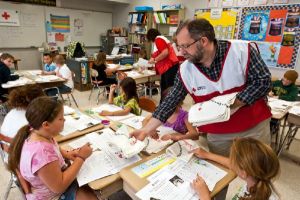
Three years ago The Pillowcase Project was implemented in Red Cross regions nationwide. The program, which was developed after Hurricane Katerina and through support from Disney, focuses on reaching young students (3rd-5th grade) and sharing preparedness resources and resiliency techniques.  Volunteer Pillowcase Project Instructors complete a training course that hones their preparedness knowledge and presentation skills and readies them to conduct classroom instruction and interactive activities in schools, summer camps, youth programs and after-school settings.  The program empowers students to act as advocates for disaster preparedness in their homes and communities, as well as teaches them how to use coping skills to help manage stress during emergencies and in everyday situations.
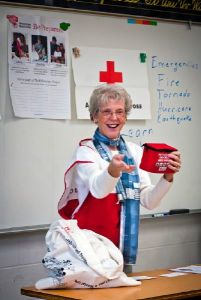
Community Disaster Education (CDE) Presenters continue to encourage adult community members, organizations and agencies by promoting and conducting public speaking and/or booth support on how to prevent and prepared for emergencies. Preparing the nearly 4.5 million residents Northeast Ohio home is no small feat, but Red Cross volunteers participate in many community outreach events across our area, helping to educate over 75,000 individuals annually.

If you are interested in volunteering to prepare your community in either of these capacities, please visit our website: www.redcross.org/neo and click on Volunteer on the left side of the screen. You will be dropped directly into the application process. You may also call 216-431-3328 or email, NEOvolunteer@redcross.org.

Remembering Hurricane Katrina

image

Ten years ago, the costliest natural disaster in the history of the United States, Hurricane Katrina barreled its way onto land, causing devastation from Florida to Texas.  And the Red Cross launched the largest disaster response in its 134 year history, involving more than 245,000 disaster workers and volunteers who helped millions of people with shelter, food and funds to help them get back on their feet.

John Gareis and Tony Rivera of the Northeast Ohio Region of the Red Cross were among the relief workers dispatched to the hurricane-affected region.  They were featured this week in a story about the 10th anniversary of hurricane Katrina, aired by WKYC channel 3.

As noted in the story, the Red Cross established the Safe and Well website to let family and friends know you’re OK after a disaster.  And to help children be better prepared for future disasters, the Pillowcase Project was launched.  It teaches students in third, fourth and fifth grades how to create a disaster kit by packing essential items into a pillowcase for swift escape and easy transport in the face of emergencies.

If you are a registered volunteer who has taken the Disaster Services Overview course and are interested in presenting a Pillowcase Project to children, please call John Gareis at 216-431-3219 or email him at John.Gareis@redcross.org.  If you are not a volunteer yet, log onto redcross.org/volunteer to get started.

And as we note the tenth anniversary of hurricane Katrina, millions of people in Florida and along the Gulf Coast are breathing a bit easier, as all tropical storm warnings and watches were dropped following the weakening of what once was tropical storm Erika.  But it serves as a reminder that this is peak season for hurricanes, and the Red Cross is ready to assist, whenever and wherever needed.

https://www.youtube.com/watch?feature=youtu.be&v=U8XkVQscIuY&app=desktop

Why I Volunteer: Disaster Mental Health

By: Christine, a Red Cross Volunteer in Boston (but calls NEO her hometown)

A colleague of mine, another therapist, always talks to clients about “shipwreck experiences”: those moments of tragedy where we are pushed to our limits, but learn something about ourselves and are moved to grow. That’s more than a feel-good saying or a pop-psychology mantra. In fact, it is at the core of the theory of post-traumatic growth, a counterpart to the idea of post-traumatic stress, and something that’s been found to happen more commonly than previously believed.

But how do people grow when everything around them seems to be lost? There are many pieces to that puzzle, but one of them is the support of the community. It is that support, which the Red Cross gives, and that Disaster Relief volunteers are trained to provide. These are the community responders you see on the news during times of tragedy. Perhaps they are setting up cots in gymnasiums, or preparing meals out of a truck. They are also the ones at the home fire in the middle of the night, handing out blankets and water.

My own background is in providing mental health services, and as a psychologist I work every day with people who have experienced loss – but usually months and years after the fact. When I was in grad school a professor of mine spoke to our class about the Red Cross’ Disaster Mental Health (DMH) services. This was in the years immediately following 9/11, and there were many stories about psychologists, social workers, and mental health counselors who had worked Ground Zero.

A key point, he said, was that we would unfortunately have to wait to volunteer till we were licensed and could practice independently. So, I finished my clinical training, graduated, did more coursework and training to get licensed, and in the process sort of forgot about it all.

On April 15, 2013, I was getting home just after 3 p.m. from volunteering at Mile 13 of the Boston Marathon. I didn’t understand the words I was reading when a friend texted asking me about explosions. Throughout the next hour I had people, having seen my excited posts about heading off to volunteer and my close-up shots of the course, trying to text and Facebook me about where I was and if I was ok. I, myself, was trying to keep my cool as I texted the family of friends who were supposed to be crossing the finish line. I am still grateful that all of my friends and their families were safe, but it was a long, few hours. A mini-shipwreck experience, if you will.

The next day I looked into the Red Cross DMH training. Things were chaotic, and I didn’t hear back from the coordinator. It got set aside as I dealt with people already in my practice that had been affected by the bombing. But this time I didn’t forget, and finally I made the time to apply this summer.

When I was ready, the process was actually quite easy – go through your local Red Cross website, you can walk through the process of signing up. My trainings were mostly online, and volunteer coordinators helped me along the way. I’ll actually do my last training soon, and then I’ll start attending update meetings as the year goes on. I’ll be able to give my schedule of when I can volunteer for common incidents (like house fires) and be on call for larger incidents.

Through the trainings I learned more about the Red Cross and its mission, the role of Disaster Relief, and the specifics of being a DMH volunteer. The coolest thing I learned? That there are people, mostly retirees, that are called DOVEs (Disaster Operations Volunteer Escapees) who travel the US in RVs, and wait to be called upon to travel to disaster sites. My husband is not yet aware that I am going to push for this in our retirement. Please don’t ruin the surprise!

Christine_Williams_rdax_225x150

A photo of the author from her “grown-up” job.

Volunteering as a Disaster Team Member

Team members on a Firewalk - passing out fire safety literature in susceptible areas - in Summit CountyOur Disaster Action Team (DAT) members are amazing people!

When a family experiences a home fire a two a.m., it is the DAT team that pull themselves from their own beds and respond, bringing a little light into a dark situation. If a building complex catches fire on Thanksgiving Day and requires multiple fire departments to respond and control, DAT team members leave their own families and turkey dinners to serve hot coffee, cold water and other snacks to the fire personnel.

Walter Reddick, DAT volunteer with the Greater Cleveland Chapter, feels that giving people a direction after a disaster has given him a purpose. When asked what made him want to volunteer with the American Red Cross he said he had a stranger show him love and wanted to do the same thing, to better himself and to help create something new in the lives of those with whom he interacts.

For some, volunteering with the Red Cross has been a family affair. Jack Beck, a volunteer with the Summit, Portage, and Medina Counties Chapter, became a volunteer after his father and uncle volunteered with the organization. Once, he responded to a familiar address. When his aunt experienced a home fire, Jack found it was gratifying to be able to provide support as the Red Cross to her.

Many of our volunteers work with families across the United States. When a disaster strikes, they are called up on to report to the scene, even if it is hundreds of miles away. Gene McCray, DAT Team Leader and Logistics Lead for the Stark and Muskingum Lakes Chapter, has been on 10 disaster relief operations including places as far away as Tampa and South Dakota.

Gene even met the love of his life, Cheryl, through the Red Cross!

It’s not just the two a.m. calls that keep our volunteers busy, many also volunteer in other Red Cross services areas, such as our Service to Armed Forces programs and Disaster Education Preparedness programs. Take for example, Alice Martinez, a volunteer with the Lake Erie/Heartland Chapter, who volunteers with as DAT member, a Pillowcase Project presenter, a general Community Disaster Education Presentations/Events worker, as part of the Shelter Survey project and provides occasional support to disaster casework and volunteer candidate inquires. Or Mark Morrow, from the Lake to River Chapter, who- in addition to his DAT team responsibilities, volunteers as Office Support at the Jefferson Office location, and recently became an instructor for our health and preparedness classes!

If you are interested in volunteering as a DAT member – or in any of the other positions available with the Red Cross – visit www.redcross.org/volunteer or call 216-431-3328

Disaster preparedness for pets too!

When disaster strikes, all members of the family should be prepared with a disaster kit – including your pets.  Keep items in an accessible place and store them in sturdy containers so that they can be carried easily.

Pictured beside Zack and Zoe are leashes, water, food, Vet information, dog toys, a towel, dog treats, medical history, medicine, current picture of Z&Z and a water bowl.

Pictured beside Zack and Zoe are leashes, water, food, Vet information, dog toys, a towel, dog treats, medical history, medicine, current picture of Z&Z and a water bowl.

Your kit should include—

  • Sturdy leashes, harnesses and/or carriers to transport pets safely and ensure that they can’t escape.
  • Food, drinking water, bowls, cat litter/pan and a manual can opener.
  • Medications and copies of medical records stored in a waterproof container.
  • A first aid kit and download the Pet First Aid App
  • Current photos of you with your pet(s) in case they get lost. Since many pets look alike, this will help to eliminate mistaken identity and confusion.
  • Information on feeding schedules, medical conditions, behavior problems, and the name and number of your veterinarian in case you have to foster or board your pets.
  • Pet beds and toy

Click here for a complete list of pet disaster preparedness items: http://www.redcross.org/images/MEDIA_CustomProductCatalog/m3640126_PetSafety.pdf

Pets will look to family members for comfort during all the changes that disasters bring.  Having a plan ahead of time will reduce stress and ensure you that you can care for your furry family members.

The power of being prepared (at any age)…

My boys are survivalists at heart.

When they were little, each carried around a bag full of cherished things:   “Puppy” the stuffed dog, a tape measure from Papa, a wallet with a few bucks in it, a note pad, a toy car, a plastic hammer, a blanket.  Today they still carry around bags, though now it is a camel pack filled with a pocket knife, wallet, gloves, bug spray, bandana, flashlight, and first aid kit.  As teenagers they are more inclined to be prepared for an emergency.

This is not a scientific fact, but, personally, I believe that people want to be prepared. Stuffing a bag full of essentials is one way to do that.  Heck, I have a purse stuffed full with essentials, myself! This personal belief is what made me fall in love with the American Red Cross Pillowcase Project sponsored by Disney!

A Girl Scout troop colors preparedness kits during a Red Cross Pillowcase Project session.

A Girl Scout troop colors preparedness kits during a Red Cross Pillowcase Project session.

The pillowcase project is an emergency preparedness exercise that teaches children grades 3-5 about weather related emergencies, coping mechanisms, and provides them with a “bag” in which to stuff all their essentials.  Instead of an ordinary bag it is a personally decorated, canvas pillowcase. I was very excited about this project, not only as a Red Crosser, but also as a parent.  I signed up right away to be a presenter and am so happy that I did.

My first session was with a group of Girl Scouts from Wooster, Ohio.  To my surprise they were very well-versed in tornado safety.  They already knew the difference between a tornado watch and a warning.  They knew where to go and what to do.  They were very smart cookies (no pun intended)!  However, when we talked about coping mechanisms, none of them really knew what that meant. As a presenter, I was able to introduce them to new ways to deal with fear and anxiety in just a few steps through coping mechanisms like breathing with color or singing their favorite song.  These mechanisms can help on a day-to-day basis and in times of emergency.

When the time came to pass out the pillowcases, we talked about what they would put in their pillowcase.  I asked them to think about the items that they would need in an emergency.  They began to list the items like flashlight, band-aids, batteries, phone charger before they mentioned the important stuff: stuffed animals, pictures of family, and special toys.

It is very important to be prepared for an emergency physically – with all the emergency equipment – but it is equally as important prepared mentally, emotionally and spiritually. Hence the need for a stuffed animal and family photos!

This project is valuable in so many ways.  It is a fun and interactive teaching tool and the take a way is a tangible, touchable, stuffable pillowcase.  My day-to-day tasks don’t usually put me in contact with children, but this project has allowed me to reach out to the children in our community as future Red Crossers, future leaders, volunteers, and emergency personal.  I feel priveledged to be a Pillowcase Presenter.

Katie Myers-Griffith

Executive Director, American Red Cross, Ashland & Wayne Counties, Ohio.


Cleveland State Intern, Mary Malone shares her Red Cross story

As a senior at Cleveland State University pursuing a bachelors of Social Work, I began an internship with the American Red Cross, in the Emergency Services department.

After a fire, the Red Cross assists the family in immediate and urgent needs. As a student intern I am learning how to participate in a social services agency setting by working directly with clients, other caseworkers, volunteers, and various other staff positions. I look to each person at the Red Cross as a “teacher” and someone from whom I can learn valuable lessons and techniques.

A typical day for me at the Red Cross includes following up with clients after they have experienced a disaster. The most prevalent of emergency situations that I have encountered, during my time, are single-family house fires. The caseworkers at the Red Cross and I ensure that the client’s direct needs are being met. If the Red Cross cannot provide it directly, there are countless referrals to other community organizations. I spend a lot of time on the phone talking with clients, sometimes it is a short call and sometimes the client wants to have someone to talk to and express their fears, worries, and sometimes even joys. I use my ability to communicate with others when they have just experienced a crisis, by validating their words and listening to what it is that they are saying. Other times I meet with clients when they need to come in to the Red Cross for a meeting with a caseworker. Being able to help people in such a dire time of need, knowing that I have many tools in my toolbox to assist them and let them know that they are not alone, is so rewarding.

As part of my internship, I have been able to go out and witness the scene of a disaster. I went to a house that had been burnt very badly and the emotions of clients as they were standing outside, were very raw. Having never been in a situation quite like this I was not sure how I would feel, or how I should act. I learned a lot by watching my Red Cross supervisor communicate with empathy, understanding, and patience. Even though her home was very badly damaged, the client was most concerned for her cat’s well-being. As we left various neighbors, family members and friends came to her and lavish her with hugs, and envelopes of money to help financially. Even in a situation that is inconceivably horrible, the strengths within this one client’s community gives me hope of a full recovery and resiliency.

After semesters of studying books and articles, participating in mock interventions, and writing papers in preparation for my future as a Social Work practitioner, my work with the Red Cross has reaffirmed my passion for social work.