
Subscribe to continue reading
Subscribe to get access to the rest of this post and other subscriber-only content.

Subscribe to get access to the rest of this post and other subscriber-only content.
By Kathryn Dean
March is Red Cross Month and the American Red Cross wants to encourage everyone to learn the important skills of CPR, first aid and AED usage.
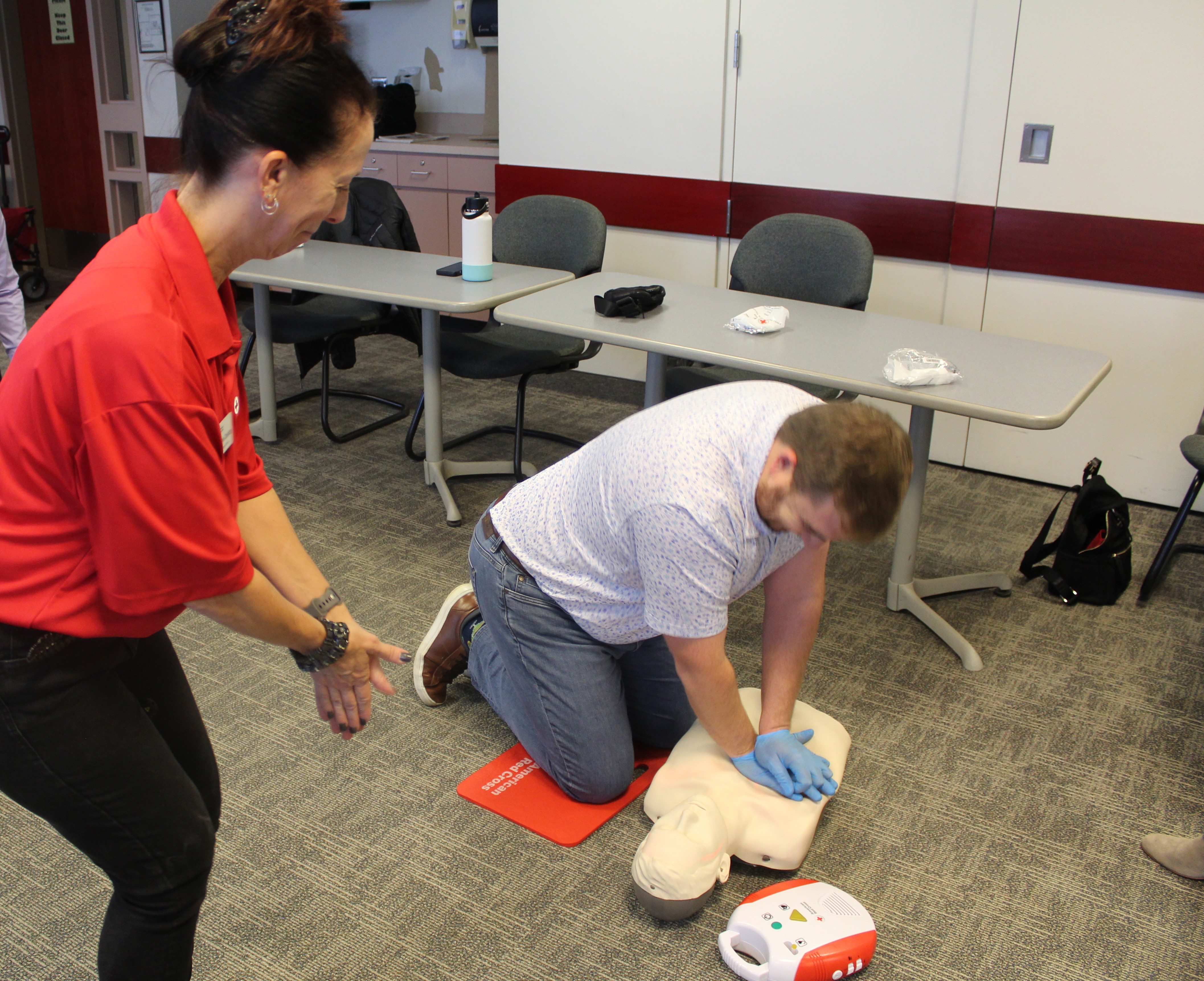
Sudden cardiac arrest can happen anywhere. According to the American Heart Association, more than 357,000 cardiac arrests occur outside of the hospital setting each year in the United States, and nearly 90% of those arrests are fatal.
Despite this, survival rates can double or triple for victims of cardiac arrest if CPR is started immediately. That’s why training is vitally important so that prompt medical attention can be given before emergency responders arrive.
What should you do if you see a person suddenly collapse? Assess the scene for safety and check the victim’s pulse and breathing. Call 911. Start CPR. Use an AED.
How do you check a pulse? The easiest way is to place your fingers on the victim’s throat and slide your fingers laterally down into the groove on either side of the esophagus. The wrist can also be used; the pulse is located just below the thumb joint, also in the groove.
CPR, or cardio-pulmonary resuscitation, is the application of chest compressions to keep blood pumping through the body. The Hands-Only CPR method is recommended for bystanders in public settings, meaning the focus is solely on delivering chest compressions, without breaths, until emergency responders arrive.
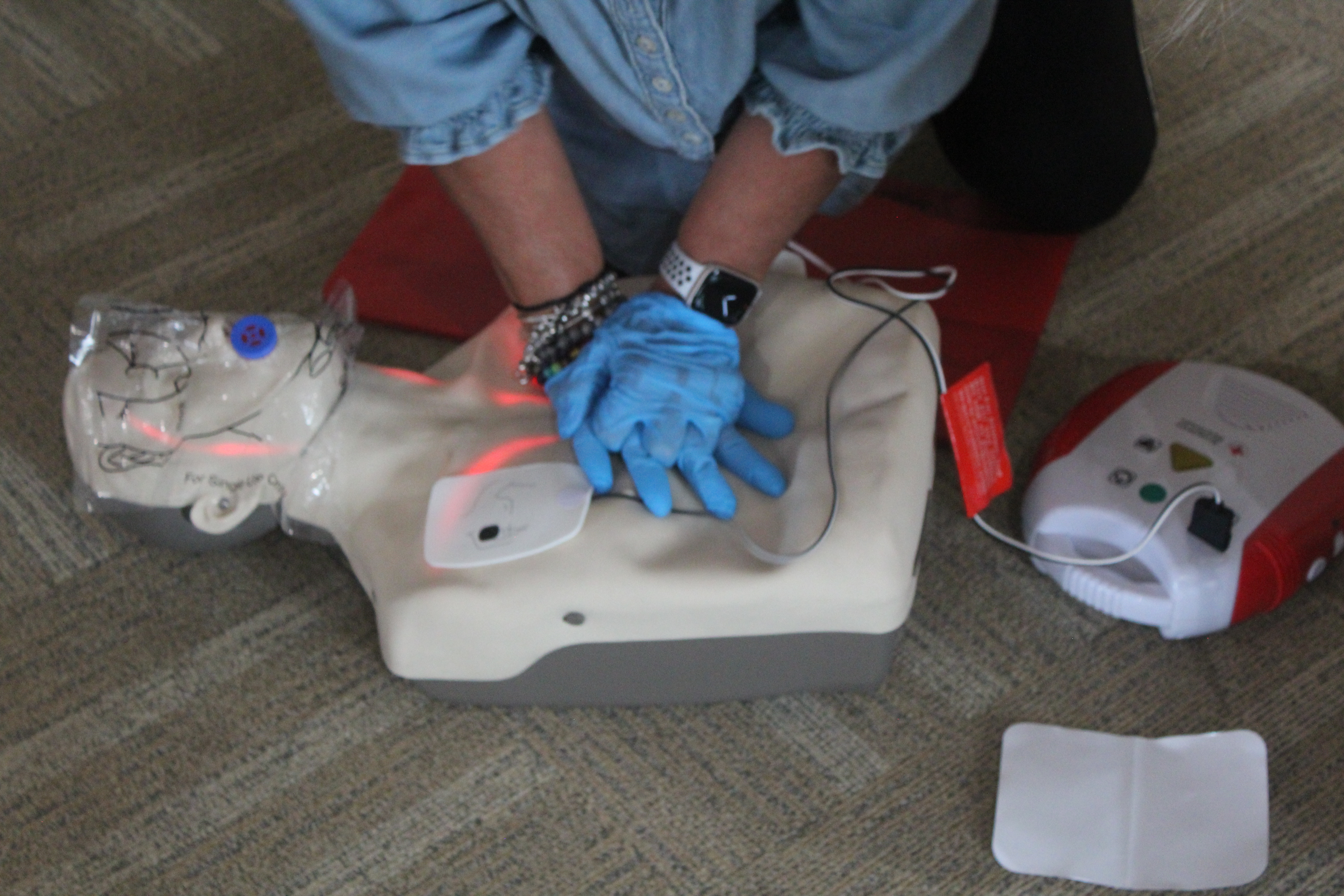
AED stands for automated external defibrillator. It is an important, lifesaving tool used in sudden cardiac arrest when the heart stops beating or is beating ineffectively. The machine is easy to use and talks you through the steps to deliver effective medical care until help arrives. Anyone can learn to use an AED.
More and more communities are placing AEDs in public areas, such as parks, town centers, grocery stores and workplaces, so lifesaving measures can be started even earlier. The next time you are out and about, note the locations of AED machines in your community. This knowledge may help save someone’s life one day.
Did you know that the Red Cross offers training in CPR, first aid and AED? While CPR and AED training is common among health care workers, child care workers and lifeguards, it is a skill that anyone can and should learn. Be prepared for any situation by visiting https://www.redcross.org/take-a-class and signing up to take an online or in-person class.
Edited by Glenda Bogar, Red Cross volunteer
Posted by Ryan Lang, Red Cross board member and volunteer
The basketball referee crumbled to the floor of the court, lifeless. The game between the Glass City Wranglers of Toledo and the Jamestown Jackals of New York came to an abrupt halt, as players and spectators wondered what was wrong.
Myles Copeland did not wait.

Myles is a Toledo firefighter – and was playing with the Wranglers during his off hours when referee John Scully suffered cardiac arrest – something Myles was trained to treat. He immediately began CPR, cardiopulmonary resuscitation, performing chest compressions while awaiting the arrival of emergency medical personnel, and that likely saved John’s life.
Myles Copeland won an Acts of Courage award from the American Red Cross of Western Lake Erie for his swift intervention, as did Lt. Jim Schulty, also with the Toledo Fire Department. Jim performed CPR on a fellow hockey player after his heart stopped beating and is also credited with saving a life.
These are just two examples of the value of knowing how to perform CPR, and there’s no better time to highlight these stores, as National CPR + AED Awareness week begins today. And while Myles and Jim are professional firefighters and have had on-the-job training, anyone can be trained to help save lives with CPR and an AED.
More than 350,000 people suffer a cardiac arrest annually, but only 9% survive.
Every second counts when responding to a cardiac arrest. If you see someone suddenly collapse, call 911, send someone for the AED and begin CPR.

That’s what Lindsey and Nicole Bechter did while they were serving as referees at a volleyball court in Cuyahoga Falls last summer. A player collapsed, and the sisters took turns performing CPR until the ambulance arrived.
Even if you aren’t trained, doing chest compressions (pushing hard and fast in the center of the chest) is better than doing nothing. It’s what Jim Kuhn did. The bus driver for the city of Wadsworth helped keep a passenger alive by pushing down on the man’s chest after he collapsed when trying to board the bus last November. For their lifesaving actions, Jim, Lindsey and Nicole received Acts of Courage awards from the Red Cross of Greater Akron and the Mahoning Valley.

You can get trained by visiting redcross.org/take-a-class. At the very least, learn how to perform hands- only CPR.
Every second counts in cardiac arrest. If you see someone collapse without warning, know your “Cardiac Arrest 1‐2‐3.”
Edited and posted by Ryan Lang, Red Cross board member and volunteer
By Chris Chmura, American Red Cross volunteer
The American Red Cross celebrates the work and support of the hundreds of thousands of volunteers during National Volunteer Week. Red Cross volunteers fulfill many roles from coordinating blood drives, to responding to home fires in the middle of the night, to serving as board members and many more.

Betsy Sterling volunteers with the Red Cross of Heartland, Stark and Muskingum Lakes. Betsy met chapter Executive Director Kim Kroh years ago at a charity event called Day of Caring and they have supported each other ever since.
Betsy is a Tiffany Circle member, current board chair (past 9 years), an every 56-day blood donor, hosts regular blood drives at her company, and a former BASH co-chair (two years in a row). BASH is an annual fundraiser for the chapter which raised $80,000 in 2022. Monies raised by this event are used to support the chapter’s work in the local community:
In 2023, the chapter is combining the BASH fund raiser with the annual Festival of Trees to create a unique event! https://www.redcross.org/local/ohio/northern-ohio/about-us/news-and-events/events/festival-of-trees.html
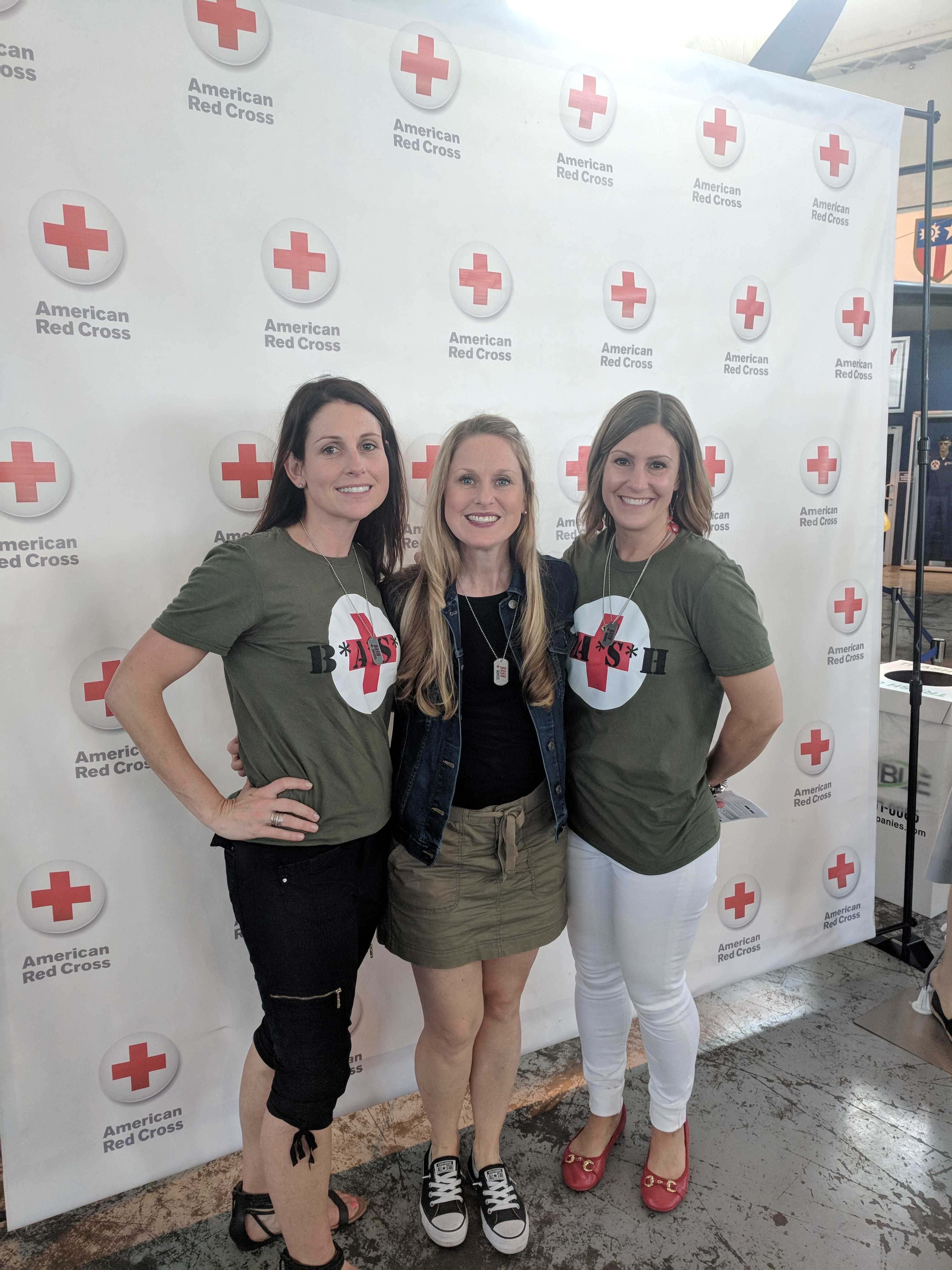
The Tiffany Circle is a close group of people that donates their own personal funds to support the Red Cross.
Betsy and her family are true believers in giving back to their community. She is a third-generation member of the Sterling family Beaver Excavating Company. Community service has played a key role in shaping the long history of community involvement that Beaver Excavating’s ownership and employees have created. Contributions not only include personal time and money, but also have included many donations of construction services, labor, and materials.
Nationally, the Red Cross has more than 200,000 volunteers, which makes up more than 90 percent of the workforce. The Heartland, Stark and Muskingum Lakes Chapter is thankful to have humble volunteers like Betsy Sterling. Her time is extremely valuable because she works in her family business, takes time to volunteer for several charities, and perhaps most importantly is a mom.
Posted by Ryan Lang, Red Cross board member and volunteer
 NOHredcross