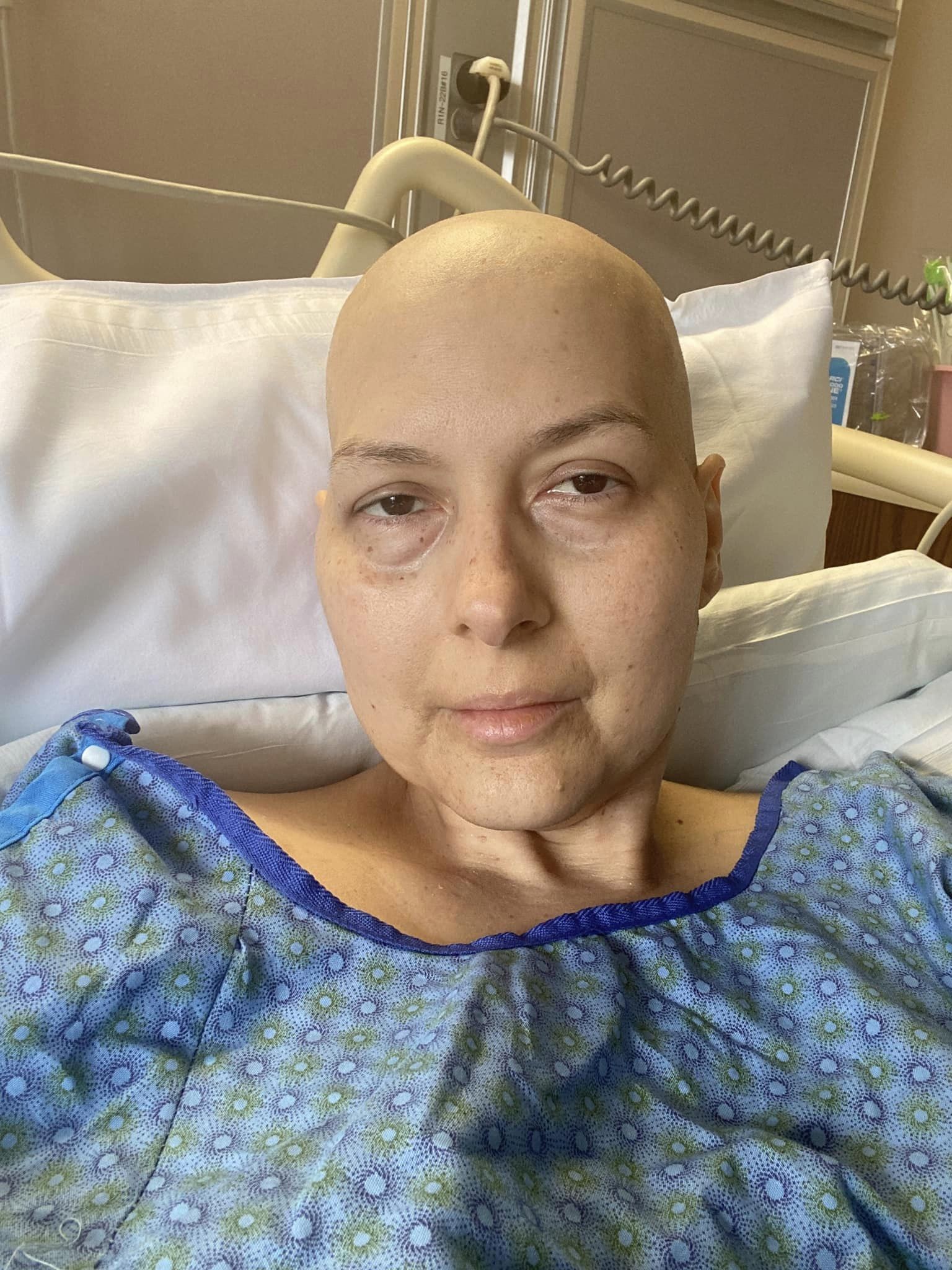
The Unseen Battle: Why Platelet Donations are Vital for Those Fighting Breast Cancer 

By Kathryn Dean, American Red Cross volunteer 

October is Breast Cancer Awareness Month.  In the United States, 1 in 8 women will be diagnosed with breast cancer at some point in their life, making breast cancer the second most common cancer in women behind skin cancer.   

Mother and son, Rosalie Lang and Ryan Lang

Almost all of us have been affected in one way or another by this terrible disease, whether it has impacted a family member, friend, associate, or oneself.  Ryan Lang, Regional Communications Manager at the American Red Cross Northern Ohio Region, shared his own personal story back in February about his mom’s battle with breast cancer.  You can read his story HERE

When dealing with any cancer, transfusions are often an important and crucial part of treatment.  Chemotherapy and radiation cause bone marrow suppression, reducing the number of blood cells that the body can produce.  Low counts of red and white blood cells and platelets lead to symptoms like anemia, immunosuppression, and risk of hemorrhage.   

With around one-fourth of all blood products and half of all platelets used in the U.S. by patients who are fighting cancer, it is crucial to maintain an adequate blood supply. 

Platelet donations are needed daily, as they have a shelf life of only about 5 days.  However, most are tested and used within 3 days.  The need is so great that every 15 seconds, someone in the U.S. receives a platelet infusion.   

Donating platelets is by appointment only and will take around 3 hours of your time, but a single donation can help up to 3 people in need.  Here are some things to expect at your visit: 

  • 3 hours from start to finish includes set up, pre-donation questionnaire, and refreshments afterwards. 
  • A smaller needle is used to donate platelets than a standard blood donation, making the process more comfortable for some. 
  • Eligibility is the same as that for whole blood donations. 
  • It is possible to donate both plasma and platelets at the same time if you choose. 
  • Some find recovery to be easier than blood donations, as the fluids and red blood cells are returned to you during the process. 

Make a difference this October and help those fighting breast cancer and beyond by considering a life-giving donation. Donate platelets by Oct. 19 and receive a $10 Amazon Gift Card, or donate between Oct. 20–Nov. 3 to receive an American Red Cross Platelet Donor t-shirt, while supplies last! 

To learn more about platelet donations, click the link HERE.  You can schedule an appointment by downloading the Red Cross Blood Donor App HERE, or by visiting this link HERE

Get a free pair of shades by goodr when you donate blood or platelets

By Kathryn Dean, American Red Cross Volunteer 

July is finally here, and summer has officially started. For many, this means vacations, cookouts, pool time, and fun with family and friends. For blood banks, this busy season can mean a time of fewer donors and a limited blood supply.   

Every two seconds, someone in the U.S. requires a blood transfusion. This equates to around 29,000 units of blood that are needed every day! Whether it be for cancer patients, accident victims, surgical patients, or new mothers, be a hero for a person in need by donating this precious, lifesaving gift. 

While all potential donors are asked to donate if they can, Type O is urgently needed at this time.   

Type O negative blood, often called the “universal donor,” can be safely transfused to anyone and is commonly used in emergencies when there is no time to determine blood type. With only around 7% of the U.S. population having Type O negative blood, it is often in short supply, even though the need for it is great. 

Special Promotion for donors 

Between July 1-14, consider taking time out of your schedule to donate blood, plasma or platelets, and look cool leaving with a free pair of American Red Cross x goodr “Just My Type” sunglasses, while supplies last! You will also receive a sticker with your blood type to personalize your glasses. Find out more about the promotion by clicking HERE

To donate, simply visit RedCrossBlood.org and enter your zip code or download the free Red Cross Blood Donor App by clicking HERE. Save time on the date of your donation by completing your pre-donation forms at RedCrossBlood.org/RapidPass or by using the Blood Donor App. 

Edited by Glenda Bogar, American Red Cross volunteer

Mother advocating for her “Sickle Cell Warrior”

By Ryan Lang, American Red Cross

Sickle cell disease affects more than 100,000 people in the United States. One out of every 365 Black or African American births is affected by sickle cell. People living with sickle cell disease may need as many as 100 units of blood each year. These are all statistics that Demeatrice Nance was unaware of prior to October 2003, when her daughter Makenzie was born. 

Makenzie Nance, sickle cell warrior

“There were some abnormalities in her newborn screening and the doctor wanted us to come in to talk about it,” Demeatrice said. “That was when they told us that Makenzie had sickle cell disease.”

Demeatrice and her husband were devastated, mostly, she said, because they didn’t know where to start getting the best help for their daughter.

From that point on, Demeatrice was on a fact-finding mission – a quest for knowledge about sickle cell disease. “We did a lot of online research and had a lot of conversations with the doctors. We were also referred to a local sickle cell outreach group that provided a lot of resources for Makenzie and our family,” Demeatrice said.

As Demeatrice delved more deeply into the world of sickle cell disease, she quickly discovered how important blood donors, especially Black blood donors, would be in Makenzie’s life.

Fast forward just two and a half years and Makenzie needed her first blood transfusion. “The doctor told us her hemoglobin had dropped, and it was at a crucial state, and Makenzie needed a blood transfusion,” Demeatrice explained. Then she and her husband got word from the doctor that there was a blood shortage, specifically from African American donors, which was what Makenzie and most all sickle cell patients need.

“The doctor said we’re just gonna try and wait it out and try and locate blood for her,” Demeatrice said. And while it was only about a day before they did locate blood for Makenzie, Demeatrice said it felt like a year. “From that time, donating blood has been a priority to me and educating people about the importance and the reason to donate blood. It’s important that our sickle cell warriors have the blood supply when it’s needed.”

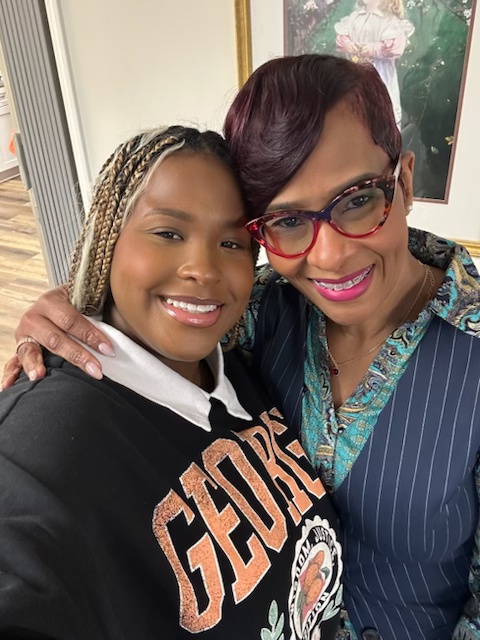
Makenzie and Demeatrice Nance

For the past 15-plus years Demeatrice and her family have been advocating and educating. Advocating for her own sickle cell warrior, Makenzie, and all of the sickle cell warriors who desperately need blood. And educating the public about why they need blood and why the blood supply needs to be maintained through regular donations.

“My first blood drive was small,” Demeatrice said, “but when I shared my story and explained the importance of donating, not just for sickle cell patients, but for cancer patients and trauma victims and others, the numbers started growing.” Demeatrice says she always tells people, “It could by my day today, or it could be your day tomorrow,” which is why she encourages everyone she meets to donate blood.   

As for Makenzie, she’s just graduated with an associate’s degree in health science and is starting her nursing clinicals in the next couple of months. “Sickle cell patients are often told they can’t do a lot of things, but over the past 21 years Makenzie’s done more things than a lot of people ever thought she could do,” Demeatrice said, beaming with pride for her sickle cell warrior.

Click here to hear more of Demeatrice’s story about her journey with Makenzie and sickle cell disease.

To schedule your appointment to donate today, visit redcrossblood.org.  

Back in good ol’ 1955

By Mary Falconer-Williams, American Red Cross volunteer

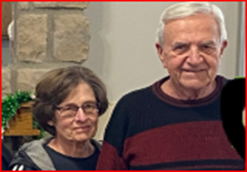
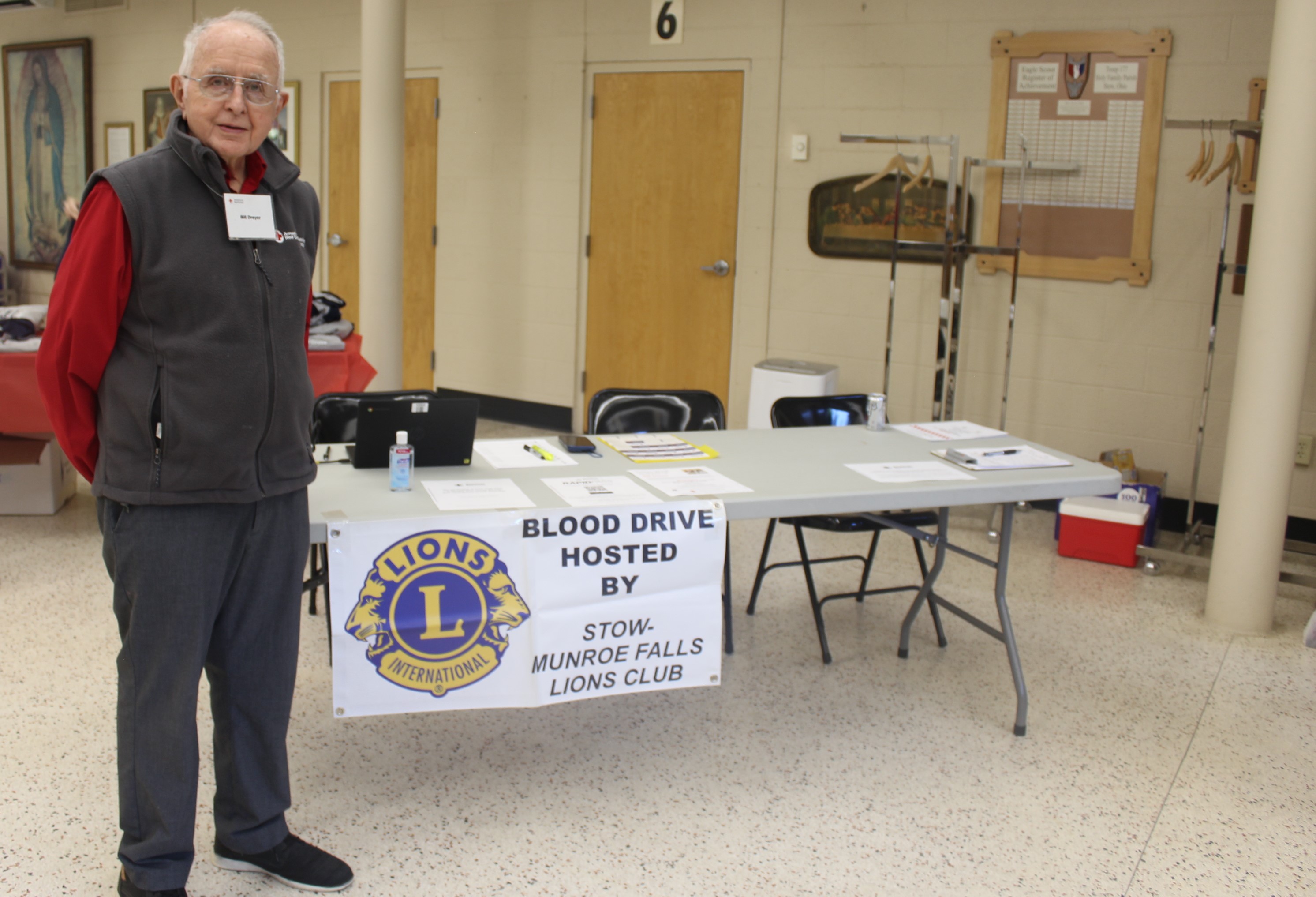
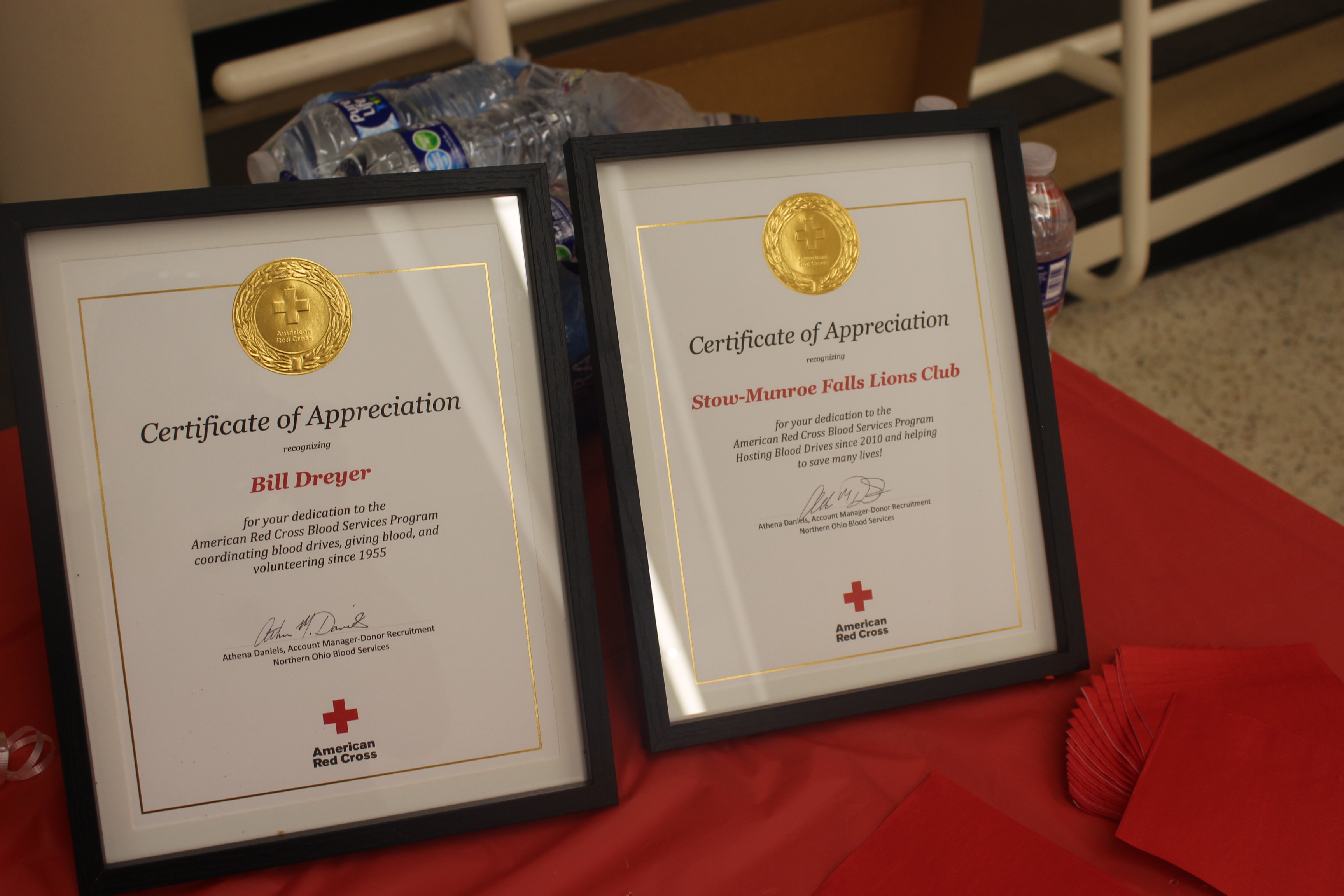
Volunteer Bill Dreyer first spotted the poster announcing that the American Red Cross would be hosting a blood drive on the Kent State University campus in 1955. Bill attended the drive, donated a pint, and from that point on was a firm believer in the power of donating blood, and gave every chance he could.

Bill Dreyer, Red Cross volunteer

“I know that my donations mean so much to those individuals who are fighting an illness or have been in an accident,” Bill states. Individuals like his mother, who received several pints in 1999.

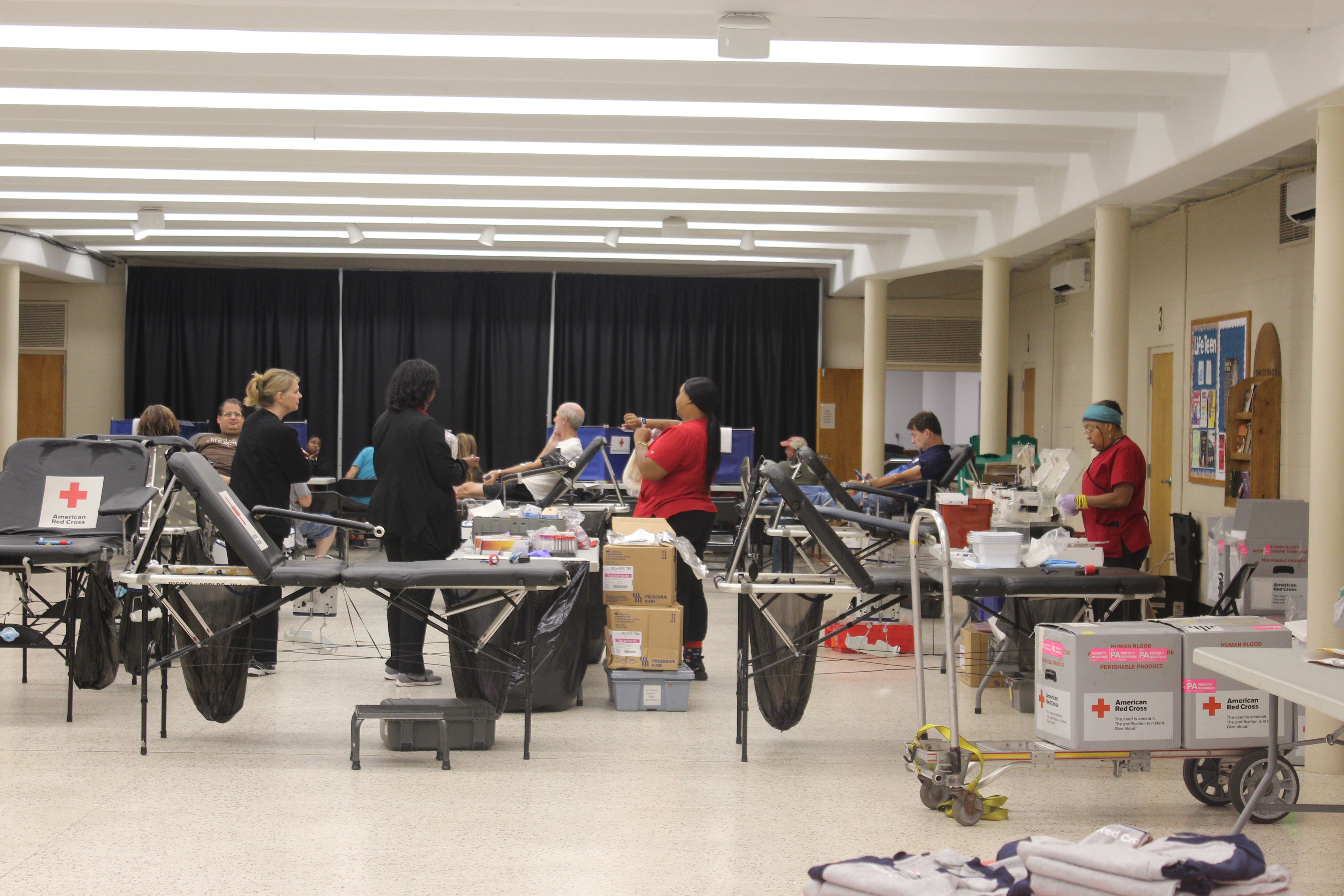
A humanitarian at heart, Bill joined the Stow-Munroe Falls Lions Club in the fall of 2000 and shortly afterward began volunteering with the Red Cross helping in the refreshment area (canteen), at registration, and as a bag labeler. And in 2010 his passions combined when the Lions Club and Holy Family Catholic Church in Stow hosted a blood drive. And Bill has been instrumental in growing the impact of that first drive. The co-sponsored event has hosted drives six times a year, ever since!

65 pints of lifesaving blood were collected at the drive held on September 3, 2024.

Though he is now unable to donate blood due to medical reasons, Bill proudly notes that he has donated 278 pints of blood throughout his life.

“It’s really not hard, and the staff are gentle. Come in and see us, we’ll show you around,” Bill invites those individuals who haven’t ever donated or haven’t in a while. To find a drive near you, go to redcrossblood.org and tap “find a drive.”

Posted by Ryan Lang, Red Cross board member and volunteer

2023 trends: Red Cross responds to growing disaster-driven humanitarian needs

Donate on GivingTuesday or give blood during the holidays to help for future crises

Randy Liang and Monica Bunner, volunteers from Greater Akron and the Mahoning Valley responded to wildfires in Hawaii

In 2023, extreme disasters took a devastating toll on people in the U.S. who turned to the American Red Cross for help coping with a record number of billion-dollar disasters.

So far this year, an all-time high of 25 separate billion-dollar disasters ravaged communities across the country, and more than 170 disaster workers from the Northern Ohio Region responded. They deployed to help people affected by extreme weather disasters such as:
 January tornadoes in Georgia, Alabama and Mississippi
 Flooding caused by an atmospheric river in California in March
 April flooding in Florida
 Tornadoes in Missouri and Arkansas in April
 Typhoon Mawar in Guam in May
 Catastrophic flooding in Vermont in July
 Southern California flooding in the wake of Tropical Storm Hillary in August
 Wildfires fueled by prolonged drought conditions in Hawaii in August
 Hurricane Idalia in Florida in August
 Hurricane Lee in New England in September

Red Cross volunteer Jeff Mann of Heartland, Stark and Muskingum Lakes deployed to Guam in response to Typhoon Mawar in May

Volunteers from Northern Ohio also responded to disasters in our own communities, including:
 The train derailment and chemical burn in East Palestine in February
 The largest shelter operation in Northern Ohio since 2004 following an apartment fire in East Cleveland
 August flooding in several north central Ohio counties
 Multi-family fires in Akron, Uhrichsville, and Maumee

Robert Gee, a resident of East Palestine, stayed in a Red Cross shelter after a train derailment there in February

In addition, families sweltered in the nation’s hottest summer on record. And back-to-back disasters led to a series of blood drive cancellations, which further strained the national Red Cross blood supply that was already dwindling from summer travel and back-to-school activities.

“Increasing extreme disasters are causing more humanitarian needs for families in Northern Ohio and across the country,” Mike Parks, Regional CEO of the Red Cross of Northern Ohio, said. “This holiday season, please remember those who need support in the face of emergencies — and join us to provide care and comfort by making a financial donation or by giving blood or platelets.”

Help on GivingTuesday and during the holidays by visiting redcross.org to make a financial donation or an appointment to give blood or platelets. Individuals can also register for volunteer opportunities.

 Volunteers from Northeast Ohio helped feed and shelter more than 130 residents for six nights after fire forced them to flee their apartment building in East Cleveland

RESPONDING TO ADDITIONAL EMERGING NEEDS Beyond extreme disasters, people stepped up through the Red Cross to address other emerging needs for communities, including:
BLOOD DONATIONS: As the nation’s largest blood supplier, the Red Cross is grateful for the millions of donors who rolled up a sleeve throughout the year for patients in need. To further improve people’s health outcomes, the Red Cross has been working with community partners to introduce blood donation to a new and more diverse generation of blood donors — which is critical to ensuring that a reliable blood supply is available to the 1 in 7 hospital patients who need a lifesaving blood transfusion.
LIFESAVING TRAINING: This year, the Red Cross expanded its training to empower people to act during current-day crises — which is vital considering that nearly half of U.S. adults report being unprepared to respond to a medical emergency. This included launching the new “Until Help Arrives” online training course last spring for opioid overdoses, severe bleeding, cardiac arrest and choking emergencies, and partnering with professional sports leagues through the Smart Heart Sports Coalition to help prevent tragedies among student athletes by offering CPR training and increasing access to AEDs.
MILITARY FAMILIES: Red Cross workers helped service members on U.S. military installations and deployment sites worldwide — including in Europe, the Middle East and Southeast Asia. As part of our support this year, Red Cross volunteers delivered emergency communications messages connecting more than 87,000 service members with their loved ones during times of family need, while also engaging members in morale and wellness activities during deployments.
INTERNATIONAL: As part of the world’s largest humanitarian network, the American Red Cross supported international response efforts to disasters such as this year’s massive earthquakes in Türkiye and Syria, the drought and hunger crisis in Africa, and flooding in Pakistan and Bangladesh. This has included providing millions in cash assistance, food, shelter, basic supplies, medical care and mental health services. As devastating conflicts persist in other areas of the world, the global Red Cross Movement continues to provide aid for people suffering, including those in Ukraine and in Israel and Gaza, as part of its neutral, humanitarian mission.

Visit https://www.redcross.org/local/ohio/northern-ohio/ways-to-donate/local-giving.html for more information about how the Red Cross helped people throughout the Northern Ohio Region in 2023.

About Our Regional Holiday Supporters: 
The Red Cross is grateful for corporate partners who contribute to our Holiday Campaign. They include Westfield. Thanks to their generosity and that of other supporters, the Red Cross is able to bring help and hope to people in need.

Posted by Ryan Lang, Red Cross board member and volunteer

Michigan woman loses battle with ALM

By Kathryn Dean, American Red Cross volunteer

Editor’s Note: Jennifer Koerber passed away 16 days after this story was posted. We mourn her loss, and hope her story of strength and resilience inspires others to donate blood.

Jennifer Koerber first knew something was wrong last year when she would catch her son’s colds and it would take a long time to recover. Then, the Monroe County, Michigan woman began having severe fatigue, pale lips and gums, a rapid heart rate, and she would even pass out sometimes. She discovered what she was experiencing were the symptoms of aplastic anemia, a condition where not enough red blood cells are being produced by the body for it to function normally. Red blood cells are essential for carrying oxygen to the organs and other parts of the body. She required a blood transfusion to bring her hemoglobin levels back to a normal level during her first hospital stay.

Jennifer Koerber – from Facebook, with permission.

It took many more months of visiting different doctors and hospitals before she finally got her diagnosis, Acute Myeloid Leukemia (AML). AML is a type of leukemia that affects blood cell production in the bone marrow. Large numbers of abnormal cells called myeloblasts are created in the bone marrow, which in turn crowd out red blood cells, platelets and white blood cells that are normally found in the bloodstream. This leads to an array of symptoms, including a weakened immune system, anemia, bruising, shortness of breath, weakness and bleeding.

During her treatment over the past year and a half, Jennifer was reliant on blood transfusions to replace the missing blood components that her body can no longer efficiently make.

“I do rely on the American Red Cross,” Jennifer said while receiving treatment. “I am transfusion dependent, meaning I cannot live without receiving blood.”

Due to chemotherapy and the nature of AML, Jennifer relied on infusions of packed red blood cells and platelets to keep her blood levels in check.

Jennifer Koerber – from Facebook, with permission.

Jennifer encouraged people to donate blood.

“I really urge people to know that it’s not just about donating money … you could simply donate blood to save a life, and it’s free,” Jennifer said. “Also, there’s a misconception about where the help goes, because there are multiple things the Red Cross does to help people, not just in disasters. They help local people who are transfusion dependent for blood.”

Schedule an appointment or find a local blood drive near you by visiting redcrossblood.org or by downloading the Red Cross blood donor app.

Posted by Ryan Lang, Red Cross board member and volunteer

Edited by Glenda Bogar, Red Cross Volunteer

Cleveland Clinic blood drive hits milestone

3,000 donations made since 2019

Hundreds of Cleveland Clinic employees pass through the lower-level atrium in the Robert J. Tomsich Pathology and Laboratory Medicine Institute every day. Institute Communications Manager Gary Weiland saw the space as an ideal place to hold American Red Cross blood drives. The first one was held in April of 2019.

Dr. Zaher Otrock and Sheri Bova of Cleveland Clinic,, Jill Trupo and Bonnie Flenner of the Red Cross, and, Gary Weiland of Cleveland Clinic

Less than a year later, the COVID-19 pandemic began.

Many businesses and schools that had been used regularly for blood drives before the pandemic were shuttered, severely reducing the number of blood drives – and the number of blood donations – causing a nationwide blood shortage.

But Cleveland Clinic did not – COULD not – close, and with a robust health care workforce passing through the atrium every day, there was plenty of opportunity to collect much-needed blood in that space.

“At first it was quarterly,” Gary said of the blood drives being held there. “But when COVID hit, we began to schedule them every two weeks.”

“We can’t overemphasize the value of having Cleveland Clinic as a site for frequent blood drives,” said Bonnie Flenner, Regional Donor Services Executive for the Red Cross of Northern Ohio. “We are so grateful for their partnership, especially during the pandemic. It has truly made a difference in the lives of so many patients.”

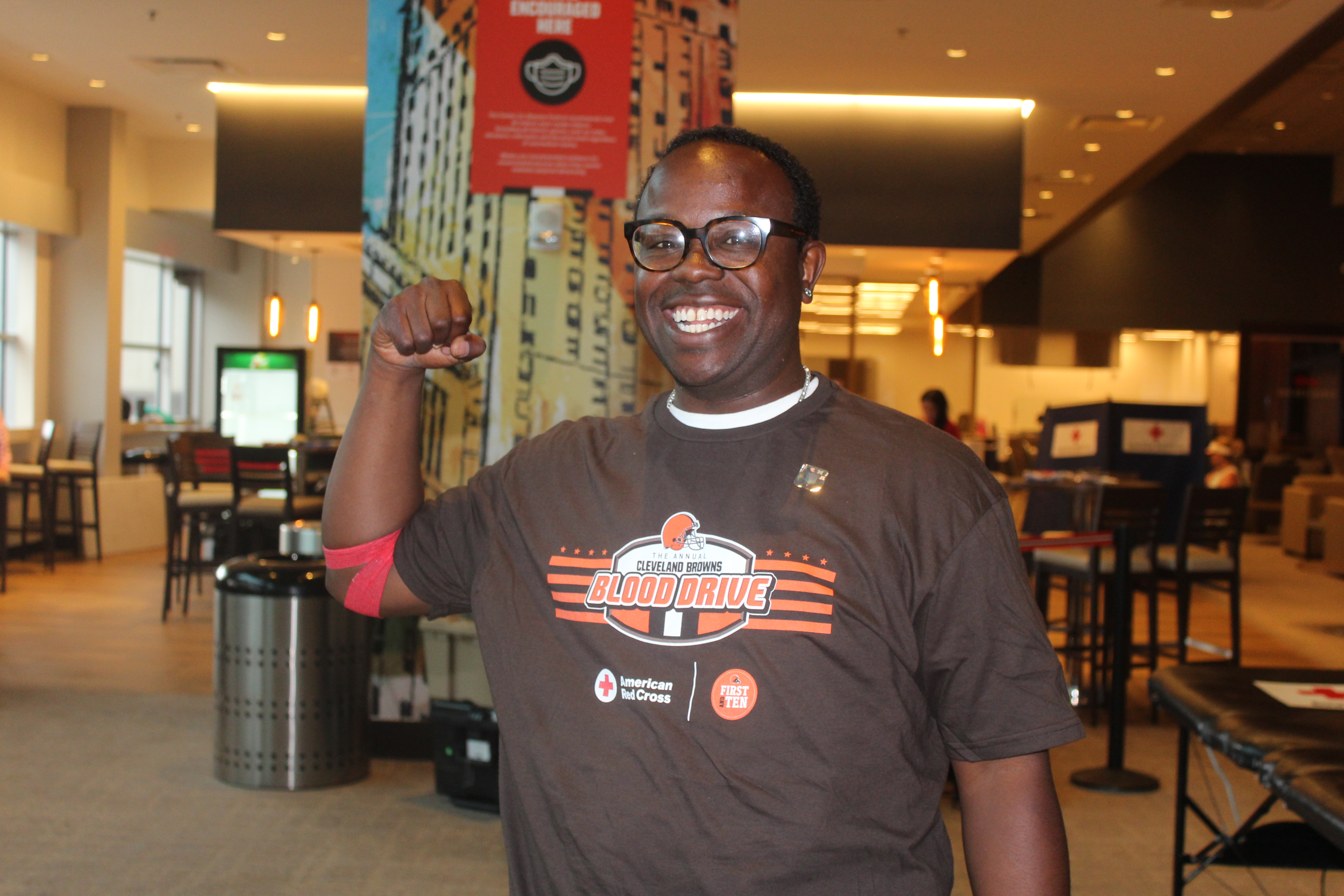
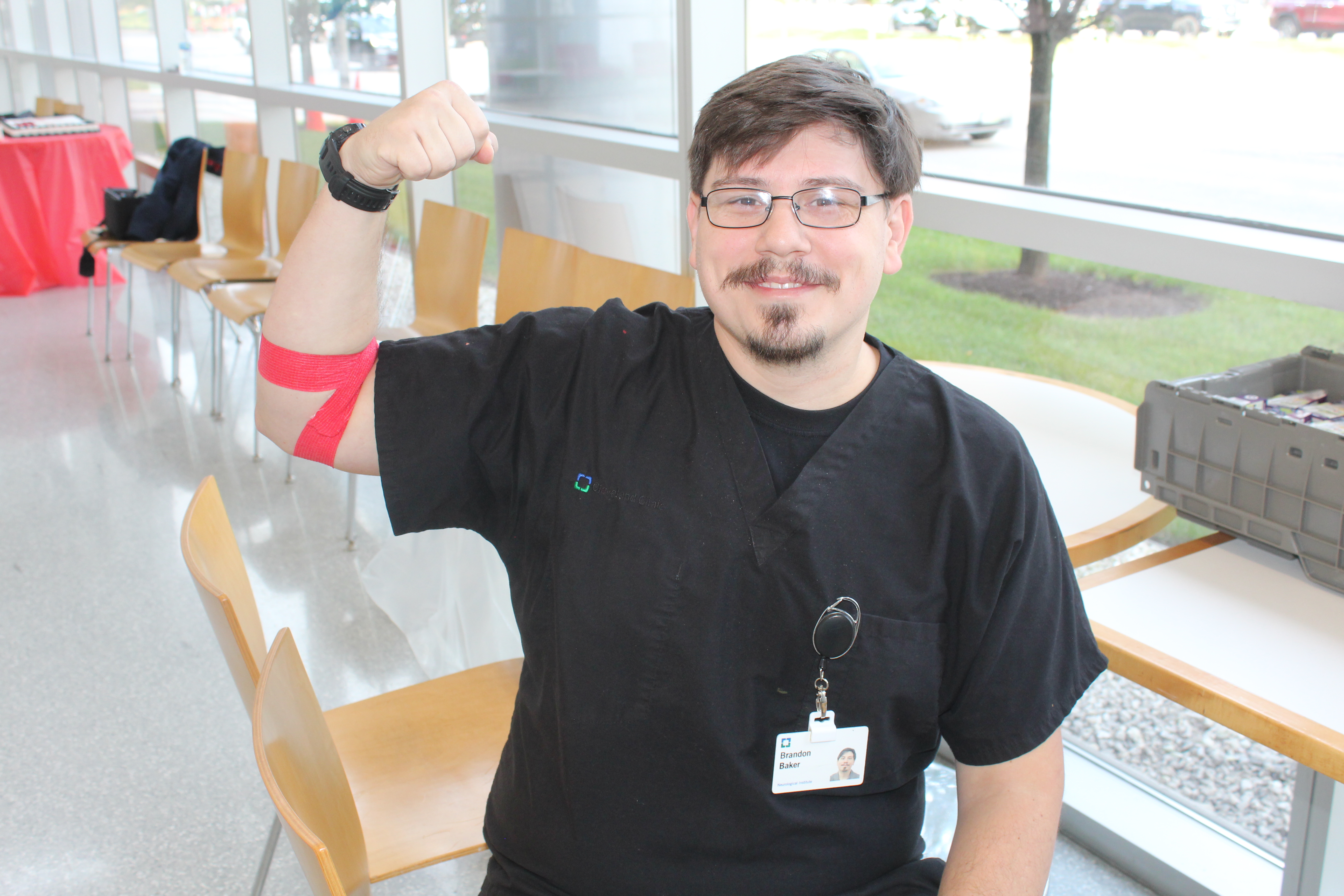
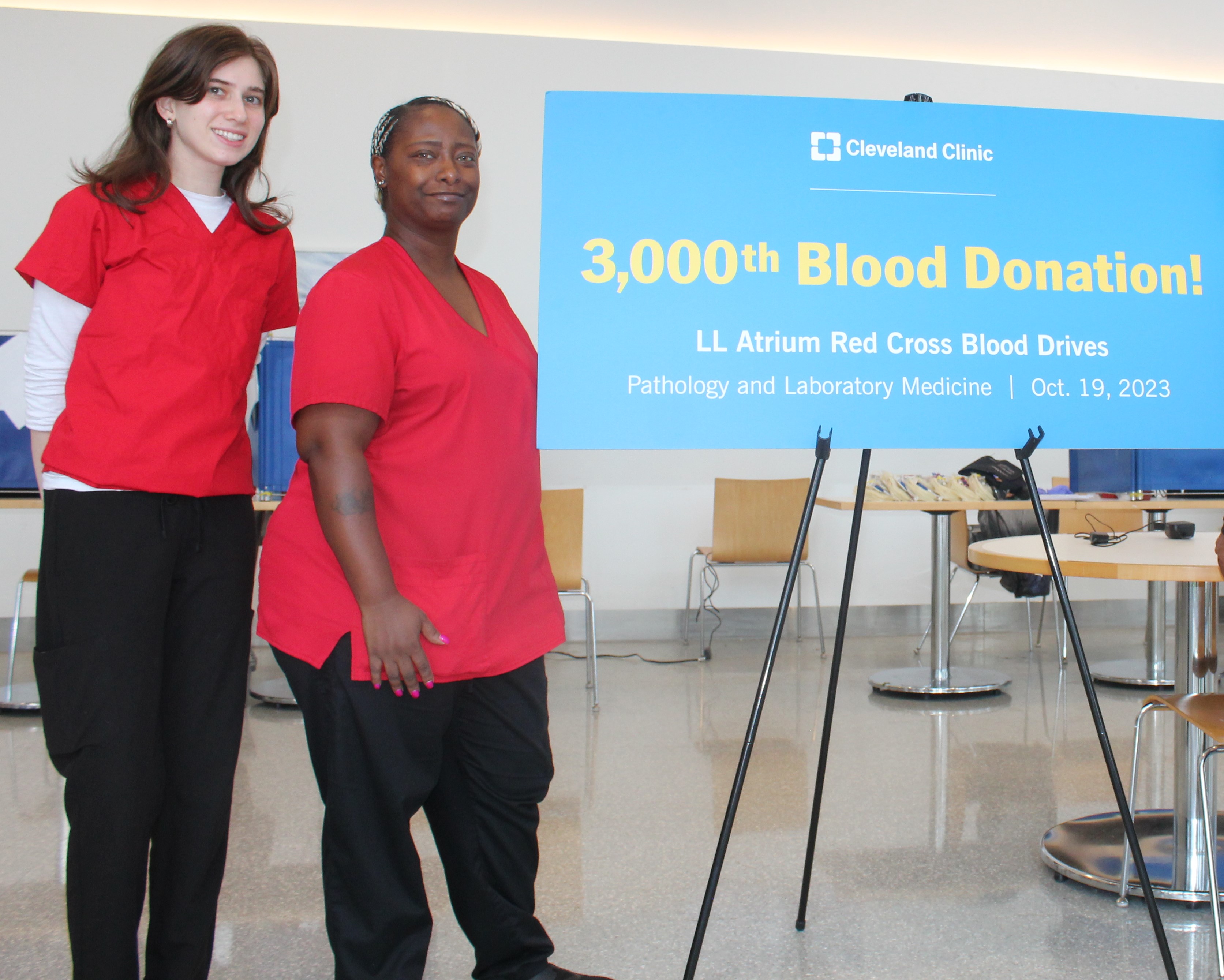
Since that first blood drive in 2019, more than 3,000 donations of blood have been collected, a milestone recently celebrated when Cleveland Clinic research coordinator Brandon Blake became the donor from whom the 3,000th donation was collected.

Brandon Blake, Cleveland Clinic Research Coordinator made the 3,000th donation

“I was shocked,” Brandon said upon learning of the milestone. “It’s like a baseball player getting his 3,000th hit. It’s pretty special.”

Brandon said he donates blood because it makes a difference. Dr. Zaher Otrock, head of Transfusion Medicine at Cleveland Clinic, couldn’t agree more.

“People with cancer and so many other conditions could not be treated without the blood they need to have every day,” he said.

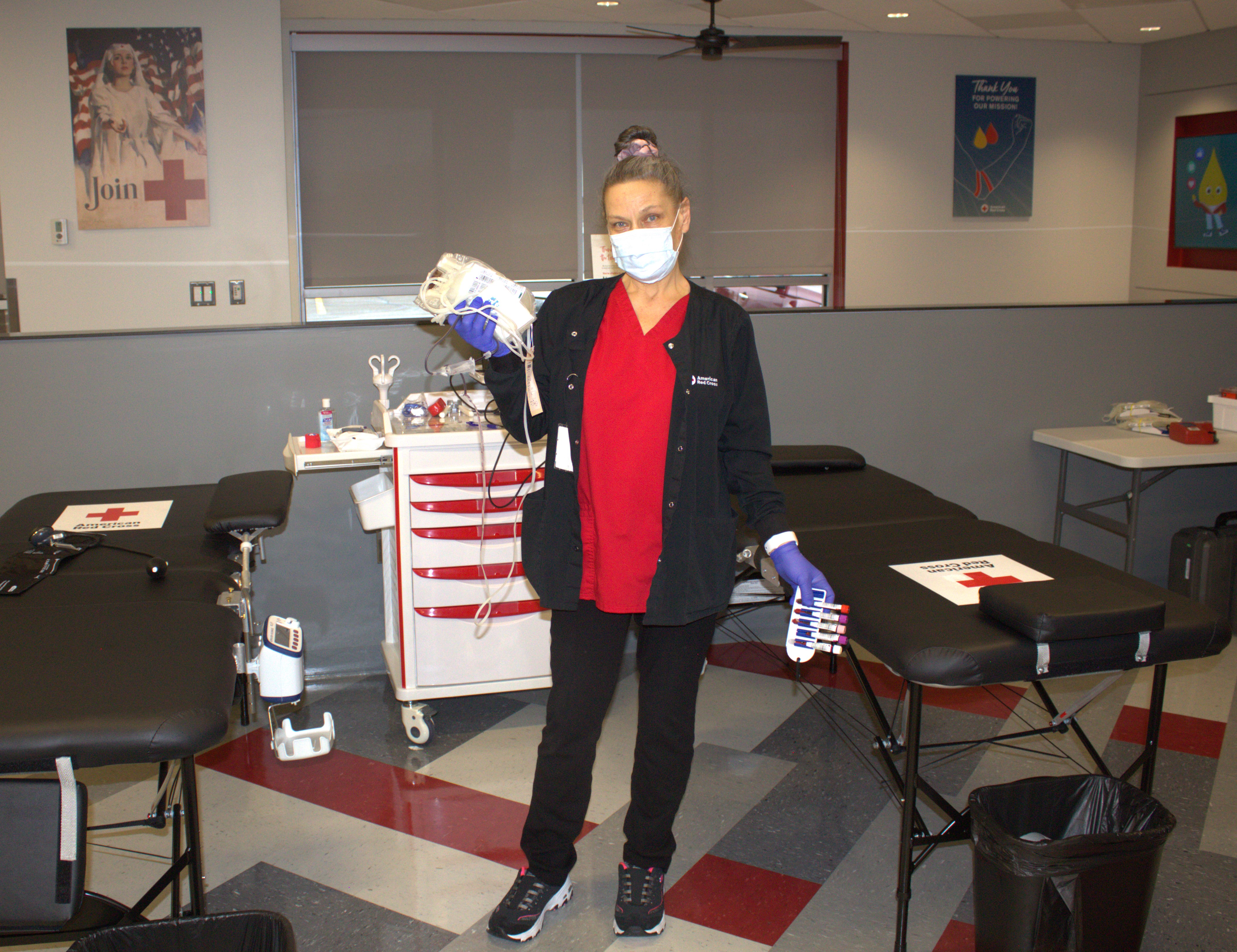
The Red Cross collections staff working at the blood drive that day included Shacriea Bost, Kary Conley, Makayla Williams, Devyn Mills and Alexis Bell. They posed for a photo, surrounding a sign created to mark the milestone event.

Red Cross phlebotomists Alexis Bell and Kary Conley

And donors that day got a special treat – beyond the cookies, snacks and juice boxes that are typically available following a blood donation. They were offered a piece of cake as well, also created to help celebrate the 3,000 th donation made at that blood drive site.

Companies, churches, civic groups and others interested in hosting a blood drive – or multiple blood drives – can learn more by visiting redcrossblood.org.

See more photos from the 3000th blood donation here.

Posted by Ryan Lang, Red Cross volunteer and board member

Edited by Glenda Bogar, Red Cross volunteer
Reasons to give – in the words of Red Cross blood donors

By Samantha Pudelski, American Red Cross volunteer
Everyday people across the Northern Ohio Region of the American Red Cross go to neighborhood drives to give blood. Several drives are scheduled this week. Throughout the year, many donors share their reasons for donating, and explain why others should consider donating blood. The stories they share are inspiring, touching and sometimes, their reasoning is simple.

We wanted to share just a few of the reasons why our blood donors made their first donation, and continue to give blood.

As we wrap up 2022 and look forward to 2023, consider adding “donate blood” on your New Year’s Resolution list. Or if you have donated in the past, put it on your to-do list for next year. Whatever your motivation, whatever your reason, we hope you share it with your family, friends, colleagues and if you feel so inclined, please share why you donate with us. Your stories and those of the individuals who receive blood continue to inspire the Red Cross every day.

For more information on donating blood, and to find an upcoming blood drive near you, visit https://www.redcrossblood.org/give.html/find-drive.

Learning by example: How will you celebrate National Parents’ Day?

By Doug Bardwell, American Red Cross Volunteer

National Parents’ Day (July 24, 2022) isn’t one of the most recognizable holidays in the United States, but it has been celebrated since 1994. That’s when President Clinton signed a congressional resolution to “recognize, uplift and support the role of parents in the rearing of children.” It’s been held annually on the fourth Sunday of July ever since.

Really?

Having been a proud parent for 55 years, would you like to know how many times we’ve been wished “Happy Parents’ Day?” Me too. I don’t think ever. 

So, maybe Parents’ Day is a day to wish each other congratulations for everything you’ve done well over the years. I can get into that.

A bit of background

Growing up as an only child, I had only one perspective on my parents’ parenting skills. Conversely, my wife was one of 11, and grew up with an entirely different set of experiences. Fortunately, being the second oldest in her family, she learned all the skills I never did about taking charge of and caring for youngsters. That bode well for our children, and I credit her for keeping our family on the straight and narrow.

When we were expecting our first child, I took Parenting 101 at Cuyahoga Community College, and the only thing I recall but did try to live by was that “children learn by example.”

Jim Henson, of Muppets fame, probably said it better:  “The attitude you have as a parent is what your kids will learn from more than what you tell them. They don’t remember what you try to teach them. They remember what you are.”

Did it work?

Having been a blood donor for years now, as our children got older, they were aware of my blood donations, and as they entered college, a majority donated as well. At a recent boy’s night out with my boys and grandsons, I polled the table and was delighted to find out that most of my grandchildren, 17 and over, are donors as well. As their younger siblings become of age to donate, I’d expect the trend to continue.

Siblings Greg and Sarah Whitkoski recently donated blood together at Lakewood High School.

Hopefully, you are a donor (but if not, now’s not too late to start.) Next time you donate, consider coaxing your teen to come along. They can donate in many states at 16 with parental consent, assuming they meet certain height and weight restrictions. Learn more here about special student guidelines.

Even if they don’t come along, make them aware of why donating is important to you. I didn’t realize its impact on my family until years later. Happily, I didn’t have to tell them to do it – they just grew up doing what I did. That’s thanks enough for Parents’ Day.

And I can’t think of a better tradition for Parents’ Day than giving blood regularly.  Start here by finding a blood drive close to you.

Edited by Glenda Bogar, American Red Cross volunteer

Blood donations: Who benefits?

By Samantha Pudelski, American Red Cross volunteer

We’ve all seen the American Red Cross logo at one time or another in our lives. Many of us have seen it promoting a local blood donation drive being held that day as we drove down the road. We all know that blood is needed for us to live–but we may not always think of how many different individuals rely on blood donations, until we or someone we know needs it. In fact, in Northern Ohio the Red Cross provides blood for patients in more than 70 local hospitals in Cleveland, Akron, Youngstown and Toledo.

Platelet donors Al Whitney of Avon Lake and Vinton Smith of Gettysburg, PA

Who are some of the people who rely on blood donations? Below are just a few:

Cancer Patients

Cancer patients may need blood transfusions to implement platelets back into the body after treatments such as chemo or radiation therapy. Certain cancers can also affect a patient’s ability to produce their own platelets.

Trauma Patients

When a patient comes into an emergency department with a trauma injury and there’s no time to check the patient’s blood type, emergency providers use type O negative red blood cells and type AB plasma. O negative blood cells and AB plasma can be transfused into any patient, regardless of blood type. However, less than 7 percent of the population has type O negative blood, and only about 4 percent have type AB Blood. A constant flow of blood donors who have these blood types are critical to keep up with hospital demand, and to help emergency providers save lives.

Glinda Dames-Fincher, of Mayfield Heights has lived with sickle cell disease for more than 60 years and receives regular red cell exchanges as part of her treatment.

Sickle Cell Patients

Sickle cell disease affects about 100,000 people in the United States, and causes red blood cells to harden and form a C-shape. When these cells harden, they can get caught in blood vessels and cause serious complications like respiratory conditions, organ failure, stroke or severe pain. While there is no cure for the disease, there is a critical treatment—blood transfusions. 

Burn Patients

Burn patients may experience blood loss through surgery or anemia. These individuals may need blood transfusion to replace the blood or red blood cells lost. 

Patients Who Have Major Surgeries

Patients who have a major surgical procedure may need a blood transfusion to replace any blood loss that occurred during their surgery.

Patients with Chronic Diseases

Patient with certain chronic diseases or disorders may require blood transfusions. Some may need blood transfusions throughout their lives. 

The next time you see one of those signs, one of our advertisements or think about the Red Cross, take the next step. Schedule an appointment to donate blood. Your donation helps people in your community – and you never know if that person could be standing right beside you. To take that next step now, visit www.redcrossblood.org/give.html/find-drive to find an upcoming blood drive or donation site near you.

Edited by Glenda Bogar, American Red Cross volunteer