An intense, exhausting, grateful December

A personal account of getting through a tough time

By Tim Poe, American Red Cross volunteer

Streams of people, ambulances and occasionally a helicopter. In a parking lot and garage just beyond, cars arrive, depart, circle. Each time I look out the fourth-story window in my dad’s hospital room, I see this scene. Whether in the cerulean predawn, during the intense glow of short December days, or beneath pools of sodium light in long evenings, it continues. Lives impacted, whether through illness, tragedy, or disaster. Crises do not cease. I also watch the many who arrive to help, while others leave, often looking exhausted, and am grateful for them.

Tim Poe, Red Cross volunteer

The last few weeks have been a torrent of emotion, of worry, discussions, activity, seeking information, of varying between bleakness and optimism.

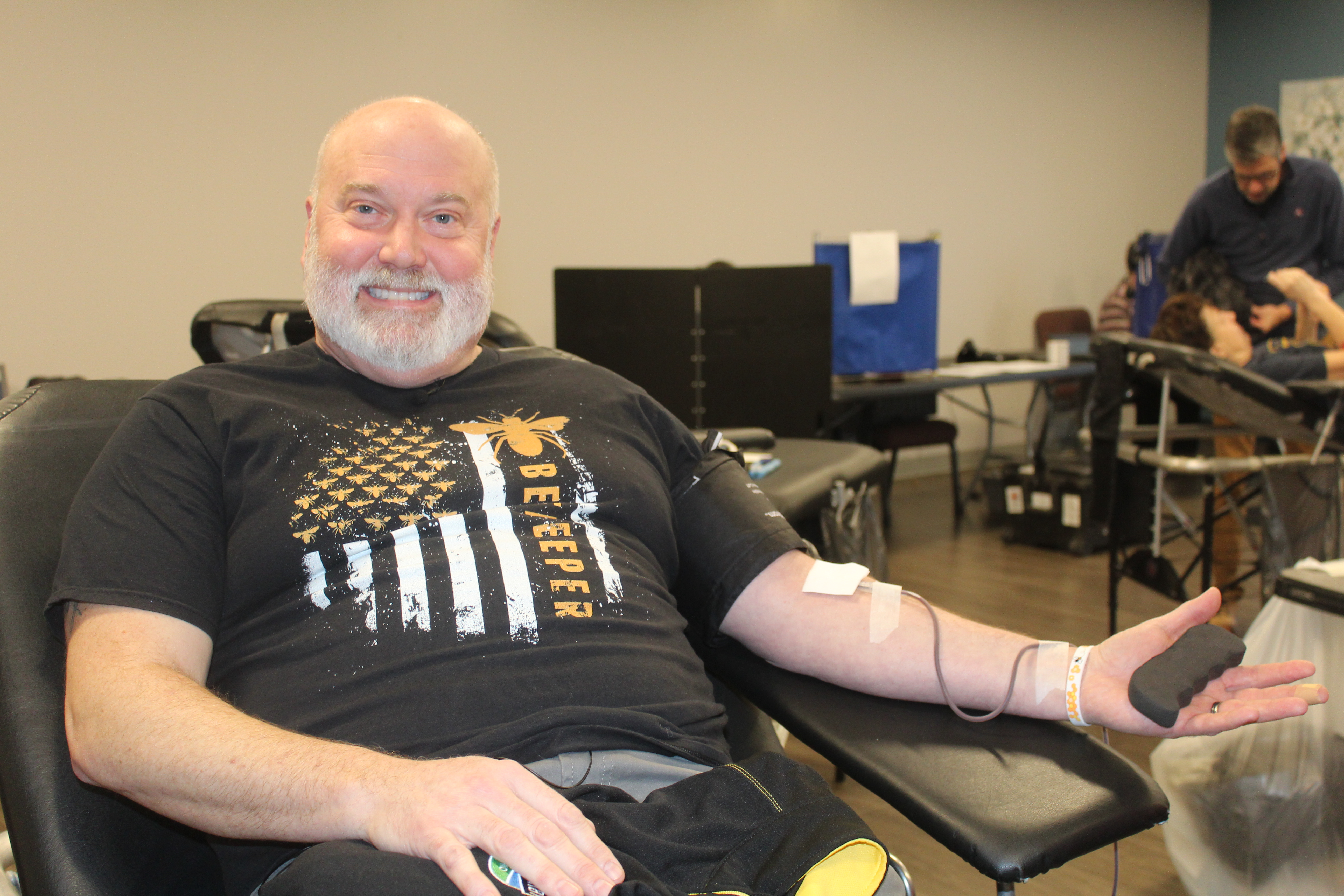
I am especially grateful to the doctors, nurses, and other medical professionals working to identify the cause of and cure my dad’s illness and address the complications that arise. And to the blood donors and blood services personnel who enabled a transfusion to be ready if needed. I take a mental note to schedule a blood donation.

I hear rhythms of footsteps, medical equipment rolling on wheeled carts, voices, a cacophony of whirs and beeps emerging from medical devices, approaching sirens (silenced just before arrival), PA announcements, and occasionally the music-box chime of “Lullaby and Good Night” announcing a new life. I imagine orchestrating all this into a symphony.

I think of the times I have been in that and other ERs and hospitals in the area, as an American Red Cross volunteer, a patient, a friend, and family member. And how grateful I am to have been able to help and receive it when needed.

I have previously written about seeing the results when bringing help to those in need as a Red Cross volunteer. The tears of relief, smiles returning to faces, human resilience being bolstered, people beginning to recover and move forward, and especially gratitude.

Linda, Tim, and Billy Poe

My goal with this article, before my dad’s illness, was to focus on how much your help is needed and the tremendous good it does. As we have recently written, the need for Red Cross services is tremendous and continues to increase, with the climate crisis, global instability, and other factors. We have also written about seeing the impact of your donations, whether through financial support, volunteering time, or donating blood.

But now I wanted to offer another perspective, that of a family member during a time of need. While my dad’s illness is not the result of a disaster—although having a blood transfusion ready was necessary—I am trying to show a little of the intensity and worry felt when in need of help, and the thankfulness and relief when help is received.

My dad is home now. Recovery will take some time, including doses of antibiotics every eight hours, which I am administering via an IV attached to a PICC line. As I write this, we are on day six of 10. Since my formal education is in literature and music, this is far outside my area of expertise. I’m experiencing a fair amount of anxiety and fatigue. My Red Cross experience helps, especially managing in times of crisis, but I have needed and found help, advice, expertise, wisdom, and kindness from medical professionals, friends, family members, and others in the Red Cross. Each instance has helped keep me going, to refocus, to help the optimism win out over the bleakness. And for that I am deeply grateful.

Through all this, my family and I have not done much for the holiday season. I did put up a Christmas tree, and there are a few decorations. I have not been able to attend celebrations, and there won’t be much to wrap and unwrap, but if all continues to improve, the season will be one of the most grateful, thanks to those who helped.

So when life regains some normalcy, I’m more resolute than ever to continue helping where and how I can, help with and encourage financial support, and schedule a blood donation .

Edited by Glenda Bogar, Red Cross volunteer

Posted by Ryan Lang, Red Cross board member and volunteer
Platelet donor understands impact of giving from both sides

By Kathryn Dean, American Red Cross volunteer

As the director of manufacturing at the American Red Cross blood lab in Cleveland, Darlene Morris has a unique perspective on the importance of donating blood products. Over her 30+ year career in the biomedical field, Darlene has experience both working in hospitals and in the blood centers where products such as blood, platelets and plasma are processed.

Darlene Morris, All-Star Platelet Donor

This unique perspective has allowed her to not only understand what goes into making the blood products, but to witness firsthand the good that they can do.

“It is important to always keep blood on the shelf because you never know when something is going to happen,” said Darlene. “I’ve seen lives saved, and that’s why it’s important to me.”

In her current role, she oversees all of the blood once it’s been collected and returned to the Red Cross at the Warzel Donation Center in Cleveland. There the collections are divided into their respective products and sent back to the hospitals to be used. This center is the third-highest manufacturing site in the country, producing over 700,000 products last year serving Northern Ohio and the Detroit and Fort Wayne regions in Michigan.

She is also an all-star platelet donor, giving donations of platelets about once every two weeks for the past several years. Platelet donations can be made with a wait time of only around seven days, versus a 56-day interval between standard blood donations.

Platelets are an important blood component that enable clotting when there is an injury or trauma. They are also important for cancer patients and others suffering from hematological conditions. Darlene notes that “between the (blood) products being available and improved procedures, now a lot of people survive.”

Darlene Morris, All-Star Platelet Donor

Darlene’s experiences have shaped her views of blood donations and the people they serve.

“For me, I feel like it’s been a privilege to be a part of the Red Cross,” she explained. “It’s been a blessing to me, and this has been the greatest career. It’s not just about me, it’s about everybody else that we help.”

Learn more about the different types of blood donations you can give this holiday season here.

To find a blood drive near you, click here and enter your zip code.

Edited by Glenda Bogar, Red Cross volunteer

Posted by Ryan Lang, Red Cross board member and volunteer

Gift giving made simple: donate blood this Holiday Season

By Tim Poe, American Red Cross volunteer

Editor’s note: This post has been updated with information on current donor incentives

Blood. It’s red, deep red, like a worldview when tediousness and life drama build and become epic. It’s also lifegiving, sustaining, and needed. Most of us only feel we need such a boost on occasion, but others—including trauma, leukemia, and kidney disease patients, those experiencing childbirth emergencies, and more—truly need it to keep living, right away.

And you know what? You have blood! Lots of it! About 1.5 gallons, just waiting to help. Even a paper cut will remind you it’s there. Yet a lot of people will need blood today, tomorrow, and next week. On average, someone in the U.S. needs blood every two seconds. So, schedule a time to donate some. You’ll feel good about yourself, get a cookie and juice, bring much needed light to the world (metaphorically), and potentially save a life (literally).

Thanks to Prime Video and their new film Candy Cane Lane, those who come to give now through Dec. 31 will automatically be entered for a chance to win a $1,000 Amazon.com Gift Card and a 65-inch Omni QLED Series Amazon Fire TV. (Details at RedCrossBlood.org/Amazon). In thanks for giving, we’re also offering a $10 Amazon.com Gift Card by email for those who come to give Dec. 1-17, and a long-sleeved Red Cross T-shirt Dec. 18-Jan. 5, while supplies last.

Did you know we decorate with red during the giving season because donating blood is among the greatest gifts of all? Okay, I made that up, but I like it and am sticking with it.

However awesome you believe yourself to be, you can be even more so. Just with a little less blood for a very short time. Your body will quickly make more; and remember, you have around a gallon and a half of the stuff. They won’t take anywhere near that much. Promise.

To take part in this much needed awesomeness and giving spirit, visit redcrossblood.org or download the free app. Here are the season’s blood drives in our area, where you’ll be among other fantastic, giving people, like Eilene, Don, and Doug.

Holiday Blood Drive, Sheraton Suites Akron/Cuyahoga Falls, 2022

American Red Cross Northern Ohio 2023 Holiday Blood Drives

December 12, 2023
Rocket Mortgage Fieldhouse
1 Center Court
Cleveland, OH 44115
8 a.m. – 2 p.m.
Make an appointment today!

December 15, 2023
Crocker Park
239 Market Street
Westlake, OH 44145
10:00 a.m. – 5:00 p.m.
Make an appointment today!

December 19, 2023
Sheraton Suites Akron/Cuyahoga Falls
1989 Front St.
Cuyahoga Falls, OH 44221
7 a.m. – 7 p.m.
Make an appointment today!

December 20, 2023
Hilton Garden Inn
8971 Wilcox Drive
Twinsburg, OH 44087
7 a.m. – 7 p.m.
Make an appointment today!

December 21, 2023
Packard Music Hall
1703 Mahoning Ave.
Warren, OH 44483
9 a.m. – 4 p.m.
Make an appointment today!

December 21, 2023
WNWO Holiday Blood Drive
Hilton Garden Inn Perrysburg
6165 Levis Commons Blvd.
Perrysburg, OH 43551
8 a.m. – 4 p.m.
Make an appointment today!

December 22, 2023
Stambaugh Auditorium
1000 Fifth Ave.
Youngstown, OH 44504
Make an appointment today!

Posted by Ryan Lang, Red Cross board member and volunteer

Give blood and celebrate the 20th Anniversary “Elf”

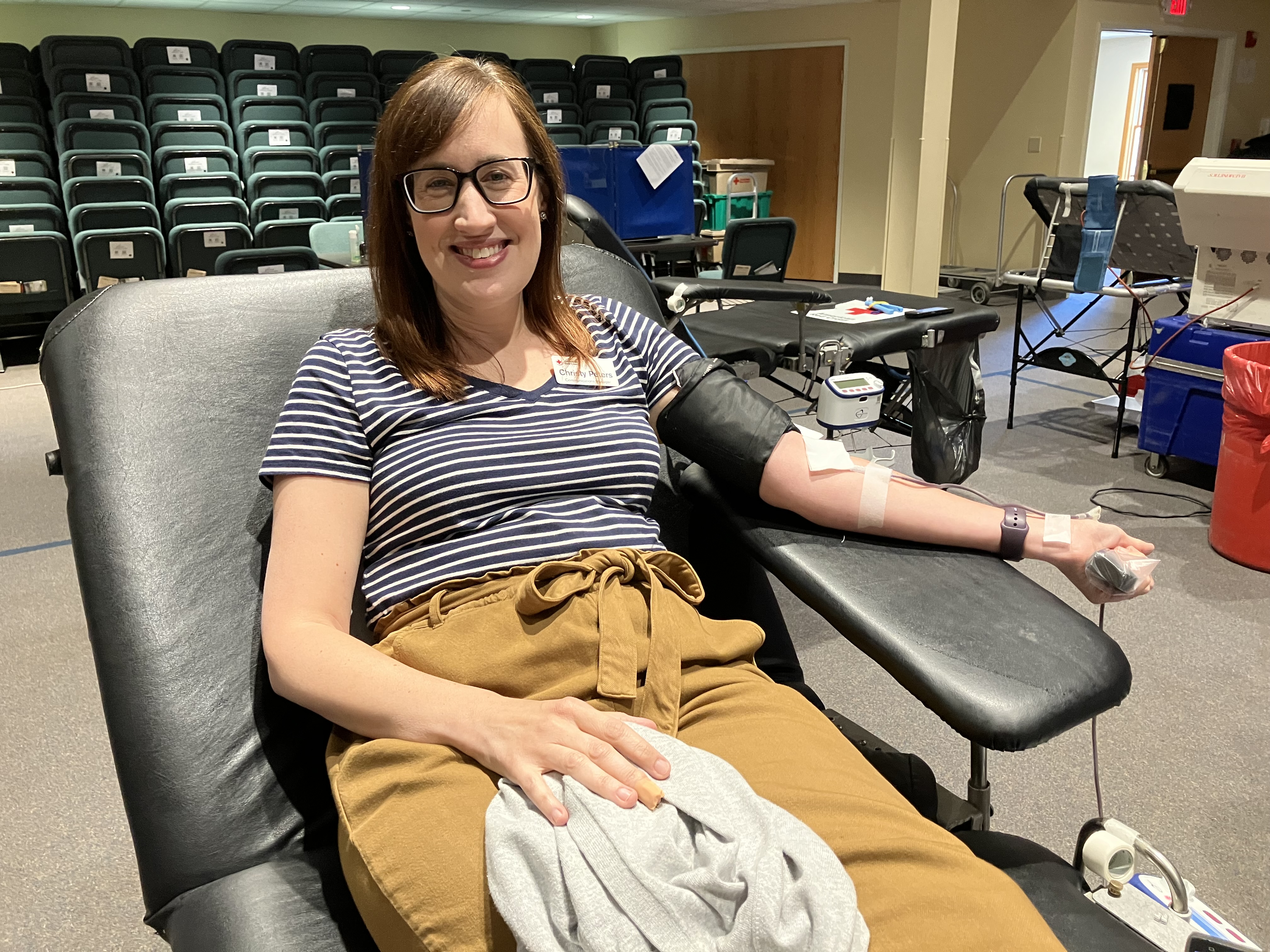
By Christy Peters, Regional Communications Manager

For most of my life, I have been a holiday purist. My family always waited until after Thanksgiving before we did anything related to Christmas. No decorating the house or finding a tree until the last weekend in November. And, of course, only certain foods on certain holidays. Heaven forbid you have turkey on both holidays – turkey on Thanksgiving, ham on Christmas.

My strict expectations even extended into holiday entertainment. Only certain films were true holiday “classics.” For example, there are only two acceptable versions of “A Christmas Carol.” For the kids “A Muppet Christmas Carol” and only George C. Scott as Ebeneezer Scrooge for everyone else. And if you don’t watch “It’s A Wonderful Life,” can it even be Christmas? So, it probably comes as no surprise that when the movie “Elf” debuted, I didn’t see it. I was good with my classics, and it didn’t seem to fit that category at all.

But it seems I missed the memo because “Elf” is celebrating its 20th anniversary this year and has rightly earned classic holiday movie status. As strongly as I feel about George C. Scott, there are probably many more people who see Buddy as the true hero of the holiday season. And for them, I have some fantastic news! When you come to give blood now through Nov. 30, you’ll receive an exclusive pair of “Elf” + American Red Cross socks, while supplies last.

Donations are critical to the blood supply as the holiday season draws near – a time when blood donations often decline. And for traditionalists like me, the Red Cross is encouraging people to add a new tradition as the holiday season begins: Spread cheer with a blood or platelet donation. Donors of all blood types are urged to give, especially type O blood donors and those giving platelets.

Before the holiday rush begins, take an hour out of your day to give blood or platelets and help someone in need. You can find a blood drive near you and make an appointment using the Red Cross Blood Donor App, visiting RedCrossBlood.org or calling 1-800-RED CROSS (1-800-733-2767).

And, in case you were wondering, at the insistence of my husband, I finally watched “Elf” a few years ago…and loved it. It’s now required viewing in our home every year. Even us traditionalists can shake it up every now and then.

Cleveland Clinic blood drive hits milestone

3,000 donations made since 2019

Hundreds of Cleveland Clinic employees pass through the lower-level atrium in the Robert J. Tomsich Pathology and Laboratory Medicine Institute every day. Institute Communications Manager Gary Weiland saw the space as an ideal place to hold American Red Cross blood drives. The first one was held in April of 2019.

Dr. Zaher Otrock and Sheri Bova of Cleveland Clinic,, Jill Trupo and Bonnie Flenner of the Red Cross, and, Gary Weiland of Cleveland Clinic

Less than a year later, the COVID-19 pandemic began.

Many businesses and schools that had been used regularly for blood drives before the pandemic were shuttered, severely reducing the number of blood drives – and the number of blood donations – causing a nationwide blood shortage.

But Cleveland Clinic did not – COULD not – close, and with a robust health care workforce passing through the atrium every day, there was plenty of opportunity to collect much-needed blood in that space.

“At first it was quarterly,” Gary said of the blood drives being held there. “But when COVID hit, we began to schedule them every two weeks.”

“We can’t overemphasize the value of having Cleveland Clinic as a site for frequent blood drives,” said Bonnie Flenner, Regional Donor Services Executive for the Red Cross of Northern Ohio. “We are so grateful for their partnership, especially during the pandemic. It has truly made a difference in the lives of so many patients.”

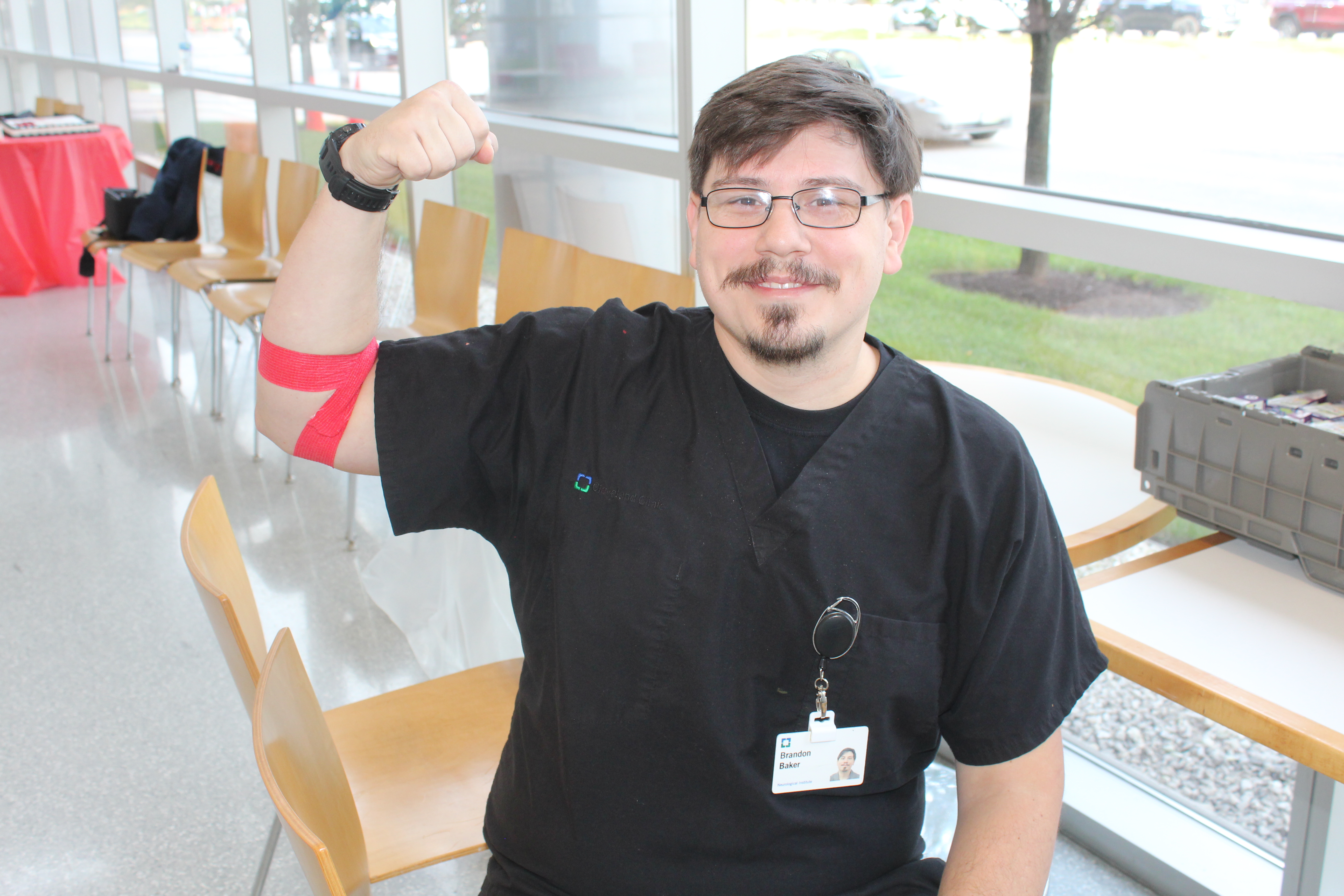
Since that first blood drive in 2019, more than 3,000 donations of blood have been collected, a milestone recently celebrated when Cleveland Clinic research coordinator Brandon Blake became the donor from whom the 3,000th donation was collected.

Brandon Blake, Cleveland Clinic Research Coordinator made the 3,000th donation

“I was shocked,” Brandon said upon learning of the milestone. “It’s like a baseball player getting his 3,000th hit. It’s pretty special.”

Brandon said he donates blood because it makes a difference. Dr. Zaher Otrock, head of Transfusion Medicine at Cleveland Clinic, couldn’t agree more.

“People with cancer and so many other conditions could not be treated without the blood they need to have every day,” he said.

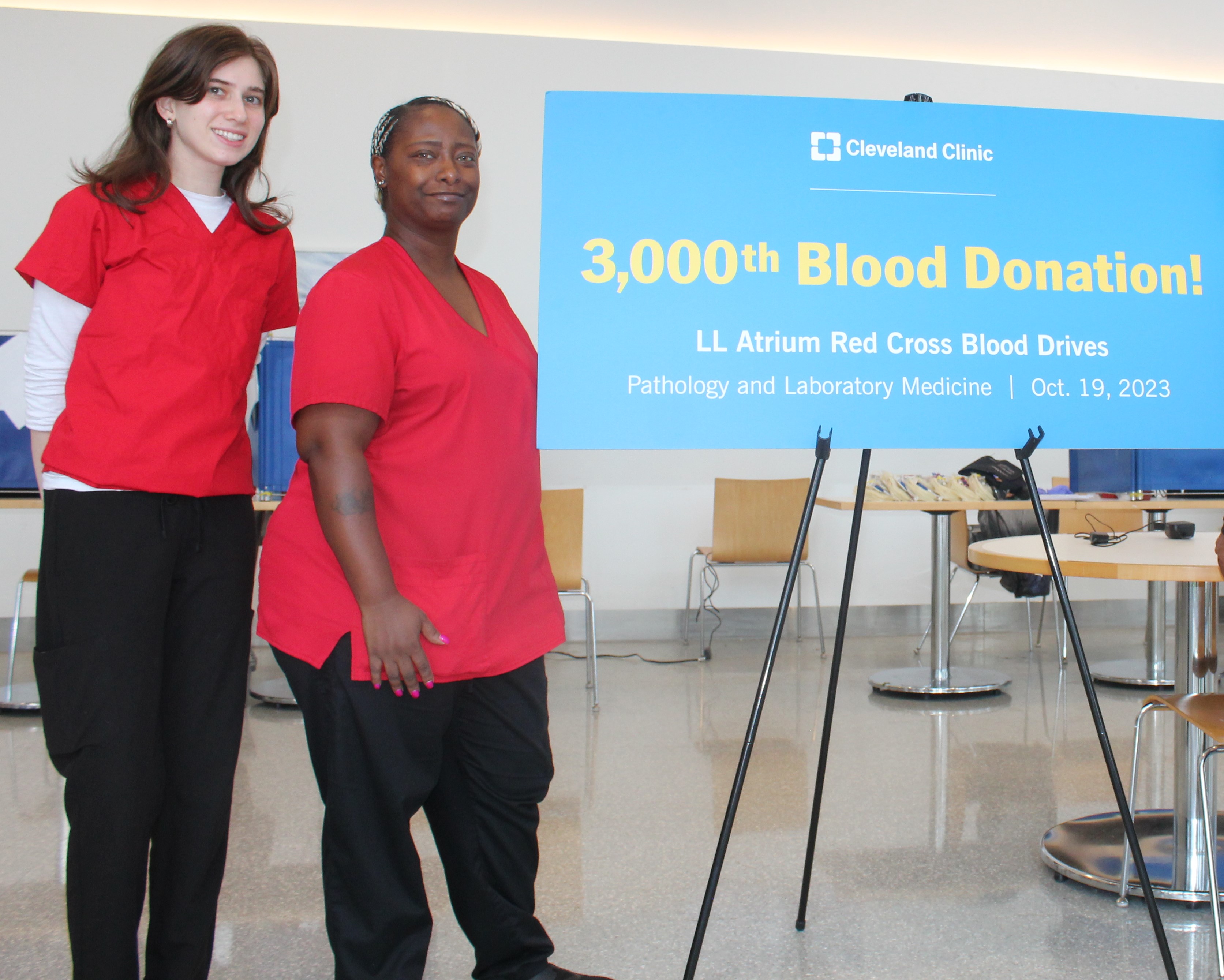
The Red Cross collections staff working at the blood drive that day included Shacriea Bost, Kary Conley, Makayla Williams, Devyn Mills and Alexis Bell. They posed for a photo, surrounding a sign created to mark the milestone event.

Red Cross phlebotomists Alexis Bell and Kary Conley

And donors that day got a special treat – beyond the cookies, snacks and juice boxes that are typically available following a blood donation. They were offered a piece of cake as well, also created to help celebrate the 3,000 th donation made at that blood drive site.

Companies, churches, civic groups and others interested in hosting a blood drive – or multiple blood drives – can learn more by visiting redcrossblood.org.

See more photos from the 3000th blood donation here.

Posted by Ryan Lang, Red Cross volunteer and board member

Edited by Glenda Bogar, Red Cross volunteer

An apprehensive volunteer turned regular blood donor: How Ashley Hopkins discovered just how special her blood is

By Ryan Lang, American Red Cross board member and volunteer

More than 20 years ago, if you’d asked Ashley Hopkins about donating blood, you may have gotten a cringe coupled with a shake of the head. While she’d grown up around blood donors and blood drives (her father was a firefighter, now fire captain), donating herself was never really an option.

Ashley Hopkins, American Red Cross board member, volunteer and blood donor

“Back then I had a crazy fear of not even needles, but needles taking blood out — it just freaked me out so I never did it,” Ashley said. 

So how did someone with a healthy fear of the blood donation process wind up a volunteer for the American Red Cross Blood Services and a regular donor? 

“I went to volunteermatch.org and put in my zip code, and (blood services) came up as a flexible option with weekend availability.” So despite Ashley’s apprehensions, it was a perfect match, and as she’d soon find out, even more perfect than she’d initially thought. 

Ashley started out working weekend blood drives. “I did a background check and then shadowed someone for a couple of blood drives and then I was on my own,” she said, noting that back in 2012 things were “a little bit different.” 

At one of those blood drives at the Canfield fair (Ashley’s favorite blood drive), she was working a few days in a row with one specific blood rep who asked her why she’d never donated before.

“I don’t know, it just seemed kinda scary,” Ashley replied. But that same day she decided to roll up her sleeve and donate — on the bus at the fair, which Ashley highly recommends. “It is heaven,” she advocated. 

When you donate blood, the Red Cross tests your blood. And that’s when Ashley found out how special hers was. “I did not know that they were testing for a specific allele (genetic information present in your DNA) in your blood that is an antibody.” After donating Ashley got an email saying that her blood was CMV negative, which is quite rare. 

Red Cross board member and volunteer Lou Joseph with Ashley Hopkins

From RedCross.org: CMV is generally harmless to adults but can be fatal to babies. For this reason, babies needing transfusions as part of their medical care should only receive blood from donors who have not been exposed to CMV (CMV negative).

And being O-Positive, Ashley’s blood is even more special, as she’s compatible with roughly 80 percent of people who need blood! Even more of a reason for her to donate regularly — every 56 days, if she can. 

When asked what she’d say to someone who is apprehensive about donating for the first time, especially someone who is nervous or scared, Ashley simply said, “Volunteer at a blood drive!” She said seeing it happen and helping with the process helped her overcome her fear of not just needles, but the whole process.

To find a blood drive near you, CLICK HERE. To learn about volunteer opportunities with the Red Cross, CLICK HERE.

Edited by Glenda Bogar, American Red Cross volunteer

Raising awareness in Akron for patients with sickle cell disease

When patients living with sickle cell disease face a sickle cell crisis, blood transfusions can make a lifesaving difference. That’s why the Akron National Panhellenic Council partnered recently with the American Red Cross to grow the number of blood donors who are Black to help patients with sickle cell disease, the most common inherited blood disorder in the U.S.

28 donations were collected at the Akron NPHC blood drive on Saturday, June 23, to help raise awareness for patients living with the disease. Nine sororities and fraternities took park in the drive.

Jasina Chapman, first-time blood donor and organizer of the Akron NPHC blood drive for sickle cell awareness

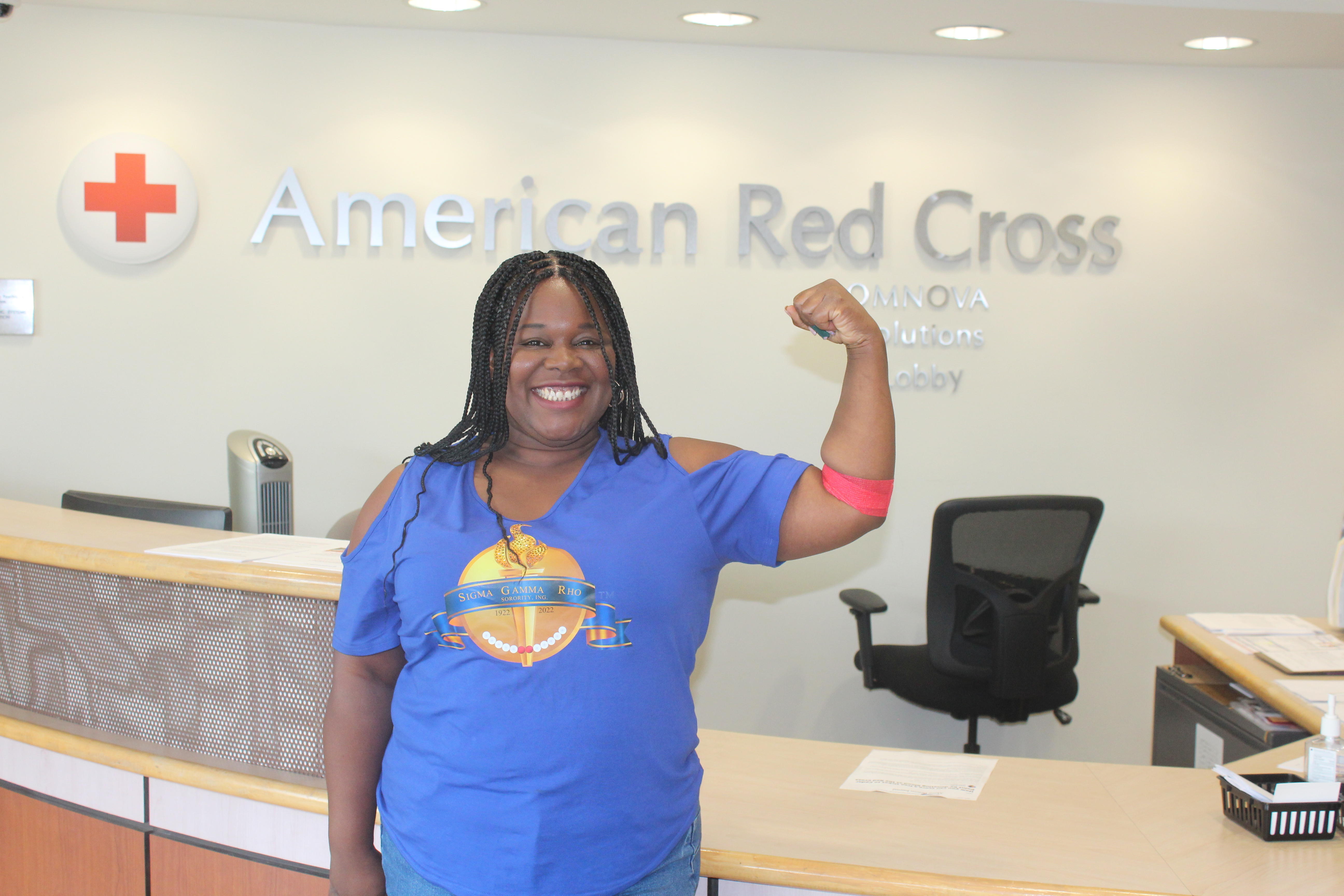
“We mobilized all of our groups to get them to either donate or volunteer,” said Jasina Chapman, who donated blood for the first time at the drive. As the Community Service Chairperson for the Eta Delta Sigma Chapter of Sigma Gamma Rho Sorority, Inc. and the Akron NPHC, she helped organize the blood drive.

“We are African American leaders in our community,” she said. “We need to activate African Americans to donate blood.”

More than 100,000 people live with sickle cell disease nationwide, and the majority of patients are of African descent. The disease distorts soft, round blood cells and turns them hard and crescent-shaped, which can cause extreme pain. When hardened, the cells can get caught in blood vessels, potentially leading to stroke and organ failure. Blood transfusions are often used in treatment, and many individuals who are Black have distinct markers on their red blood cells that make their blood donations the most compatible match for helping patients with sickle cell disease. One in three African American blood donors is a match for people with sickle cell disease.

Christa Nuru, one of 28 donors at the Akron NPHC blood drive

How to donate blood:
Simply download the American Red Cross Blood Donor App, visit RedCrossBlood.org, call 1-800-RED CROSS (1-800-733-2767) or enable the Blood Donor Skill on any Alexa Echo device to make an appointment or for more information. All blood types are needed to ensure a reliable supply for patients. A blood donor card or driver’s license or two other forms of identification are required at check-in. Individuals who are 17 years of age in most states (16 with parental consent where allowed by state law), weigh at least 110 pounds and are in generally good health may be eligible to donate blood. High school students and other donors 18 years of age and younger also have to meet certain height and weight requirements.

Blood and platelet donors can save time at their next donation by using RapidPass ® to complete their pre-donation reading and health history questionnaire online, on the day of their donation, before arriving at the blood drive. To get started, follow the instructions at RedCrossBlood.org/RapidPass or use the Blood Donor App.

World Sickle Cell Day

By Eilene E. Guy, American Red Cross Volunteer

What do Juneteenth (today) and World Sickle Cell Day (also today) have in common? Both of these events focus on African Americans.

Glinda Dames-Fincher is a member of the American Red Cross Sickle Cell Sub-committee in northern Ohio. She’s a proud, outspoken “sickle cell warrior” calling for more Black blood donors.

Glinda Dames-Fincher

“Over 80 percent of Americans with Sickle Cell Anemia are of African descent, and ethnicity matters with blood transfusion,” she said. Many individuals who are Black have unique structures on their red blood cells that make their donations the most compatible to help patients with sickle cell disease. Glinda likes to think of it as “special sauce.”

“So please, African Americans, roll up your sleeves and help sickle cell warriors like me fight their battle!”

For Glinda, the need is personal. In order to combat the many effects of sickle cell (SCD) on her body, she gets two units of red blood cells every month; the procedure involves withdrawing one unit of her damaged blood each time and then transfusing in two units of healthy red cells.

She figures she’s received more than 600 units of red cells, between regular transfusions and the many surgeries she’s undergone to repair organs damaged by oxygen deprivation.

Glinda is a wealth of knowledge about sickle cell:

 This inherited disorder makes red blood cells sticky, rigid and curl into a C “sickle” shape, limiting their ability to carry oxygen into every tissue in the body. The misshapen cells also tend to clump, leading to various complications. “For many pediatrics, a stroke is their first major sickle cell event,” she said.

 When tissues are starved of oxygen, something as simple as a change in the weather can trigger excruciating pain – called a sickle cell crisis – lasting from hours to days or even weeks. That often sends sickle cell sufferers to emergency rooms for treatment, including pain killers and blood transfusions.

 Sickled red blood cells also die prematurely: The distorted cells die within 10 to 20 days, compared to normal red blood cells that typically last 100 to 120 days. That leads to a shortage of red blood cells, a type of anemia. Here again, transfusions are crucial.

 Glinda is 64. “When I was born, life expectancy for a sickle cell patient was 18 years. Now it’s 40 to 60 years, thanks to medications and research,” she said. However, over time, patients may be subject to persistent infections, and damage to kidneys, heart, lungs and other organs.

 SCD affects more than 100,000 people in the United States. Eight out of 10 of them are of African descent; the rest are Hispanic or trace their ancestry to south Asia (such as India), southern Europe (Greece and Italy) or the Middle East (such as Saudi Arabia and Lebanon).

 SCD testing is part of the routine blood tests for newborns in the United States. Additionally, the Red Cross provides sickle cell trait testing for all blood donors who identify themselves as Black or African American. Those with the “trait” inherited a sickle cell gene from one parent; those who got a sickle cell gene from both parents are born with the disease.

Since the best blood match for a patient receiving ongoing transfusions comes from donors of the same genetic background, the Red Cross is urging people of all ethnicities to give blood and help increase the number of diverse donors, so we can find the best match for all patients.

Watch this video that documents Glinda’s ongoing struggle with sickle cell disease.

In honor of Juneteenth, learn more about SCD and please make an appointment to donate blood at RedCrossBlood.org/SickleCell.

Posted by Ryan Lang, American Red Cross board member and volunteer

Why am I a blood donor? Why not?

A dedicated donor reflects on World Blood Donor Day

By Doug Bardwell, American Red Cross volunteer

As I was asked to write this article, I tried to remember back when I made my first donation, some 56 units and 26 years ago. At the time, I was working in Terminal Tower, and I decided to give when a co- worker said something as simple as, “Hey, I’m going over to donate blood. Want to come along?”

Doug Bardwell

I’m sure I asked about qualifications, but he assured me that they’d give me a quick physical check and make sure I was able to donate. That’s all it took, and I was on my way to becoming a blood donor. “Why not?”


The blood donor center was set up in an unoccupied office space in Tower City Center. I was actually amazed at how quick it was to make my donation. No drama, just a pint of blood lighter when I left and a sticker to show I had donated.

Outta sight – outta mind

Nobody asked again until 2003, right after the Invasion of Iraq. While having a discussion about the war with a friend, he said that he had heard someone saying the only thing we could do to help our troops was to donate blood or donate money.

With a growing family, I had more of the former than the latter, so I checked around to see where and when the closest donation site would be opening. Donation number two was scheduled, but this time, someone at the Red Cross site asked about how often I donated. They made mention of the idea of donating around Christmas each year as a way to give someone else a gift that might save a life but cost me nothing. That sounded like a great idea, so I put a yearly note on my Day-Timer calendar for each December.

You can do more, you know?

It was another conversation with a Red Cross worker that finally spurred me to do more when they said, “You know, you can donate every eight weeks, don’t you?” Well, no, I guess I didn’t, but that started it rolling, trying to donate as frequently as my schedule would permit.

I also realized at that time that if I hadn’t been asked by someone else to go the first time, I might have never donated at all. I then started talking about donations to family members and other friends.

I do the coming events A/V screens in our church’s foyer and lobby, so I started making sure that all upcoming blood drives were advertised on our screens each time they were scheduled. Posting on social media, I’d mention the date and time with a “Won’t you join me next Tuesday?” type message.

So, I’ll end with the same message that started me – “Hey, want to come along?” There are dozens of locations available each week. It’s honestly easy to do, and you could save as many as three lives each time you donate.

Posted by Ryan Lang, Red Cross board member and volunteer

Bringing help and hope: Volunteer nurses find sharing their skills rewarding

Honoring professional healthcare volunteers during National Nurses Week

By: Kelly C. McClure, MLS, BSN, RN, American Red Cross volunteer

What does a disaster look like? There’s no rough blueprint or an all-encompassing definition for the word, but for those who have lost everything in a fire, flood, earthquake, or hurricane, it can look like complete despair. In the United States alone, a disaster occurs approximately every eight minutes. Stretched out, that’s more than 60,000 disasters each year that the American Red Cross will deploy volunteers to help victims by supplying clean water, food and shelter. But what happens when there are physical injuries, wounds or medical conditions that need immediate attention? The Red Cross’ team of volunteer nurses are there to help.

Beth Kartman-Orgel, RN, Red Cross volunteer

The volunteer nurse corps for the Red Cross include an amazing team of registered nurses (RNs), licensed practical nurses (LPNs), licensed vocational nurses (LVNs) and nurse practitioners (NPs) who undergo many hours of training to become Service Associates (SAs) with the Red Cross’ Disaster Health Services. In addition to learning first aid, providing care at a shelter, psychological first aid, mass casualty education and deployment training, they also learn how to reunify families that have been separated. Once deployed, they not only provide physical assessments of injured victims who may need to be transported to a hospital for a higher level of care but also provide valuable health care education to victims.

One of the many dedicated nurses in the volunteer nurse corps is registered
nurse, Beth Kartman-Orgel, who has been a nurse for 46 years and a volunteer nurse with the Red Cross for six. During this time, she has deployed to many disaster sites including several in Florida after hurricanes and some in California during wildfires.

“Being deployed is a whole lot different than being a regular nurse,” Beth said. “You need to be able to think on your feet, make do with little to no equipment or support and, at times, without electricity, running water or supervisors because there is no internet or phone service.”

Any nurse will tell you that each day brings with it a whole new set of challenges. However, as a volunteer nurse in the Red Cross, those challenges look somewhat different.

“I love the challenges we face on deployments — the different ethnicities,
languages, and belief systems among staff and clients,” she explained. “I always loved camping, so showering in a truck, washing at a sink with bottled water, if need be, using flashlights to make rounds or give meds or change dressings is all in a day’s work.” Undoubtedly, Beth loves what she does for the Red Cross and has also completed Disaster Health Services supervisor training, which she hopes to utilize on her next deployment.

Deploying to a disaster area after a hurricane or wildfire isn’t the only way nurses can be involved with the Red Cross. Registered nurse, Cindy Russo, has been a volunteer with the Red Cross for 30 years and began her journey in Blood Donor Services at blood drives. Here, she completed donor registrations and medical histories and obtained blood pressure and hemoglobin tests before blood donation. In more recent years, Cindy has predominantly worked in Disaster Health Services, assisting victims after home fires to obtain new prescriptions for their medications and necessary medical equipment like wheelchairs, walkers and oxygen machines. In the past, Cindy has also deployed to regions affected by hurricanes and has even helped install smoke alarms in local homes. After 30 years of volunteering, she has found the work to be extremely rewarding.

“Helping those in a time of need is the most rewarding part,” she said. “It is a great extension of what many nurses do every day and is a way to use their skills and talents to help others.”

If you’re a nurse and want to volunteer with the Red Cross, browse through the listings of volunteer opportunities and complete an online volunteer application.

Edited by Glenda Bogar, Red Cross volunteer
Posted by Ryan Lang, Red Cross board member and volunteer