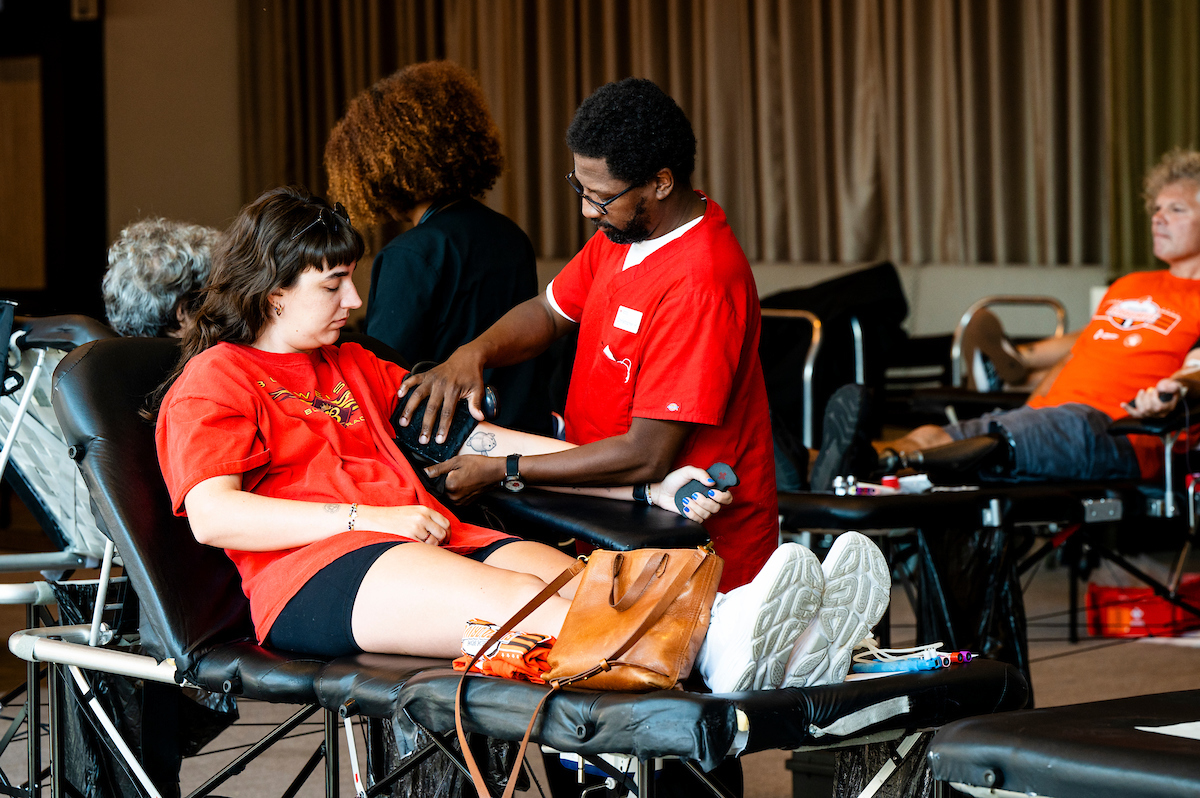
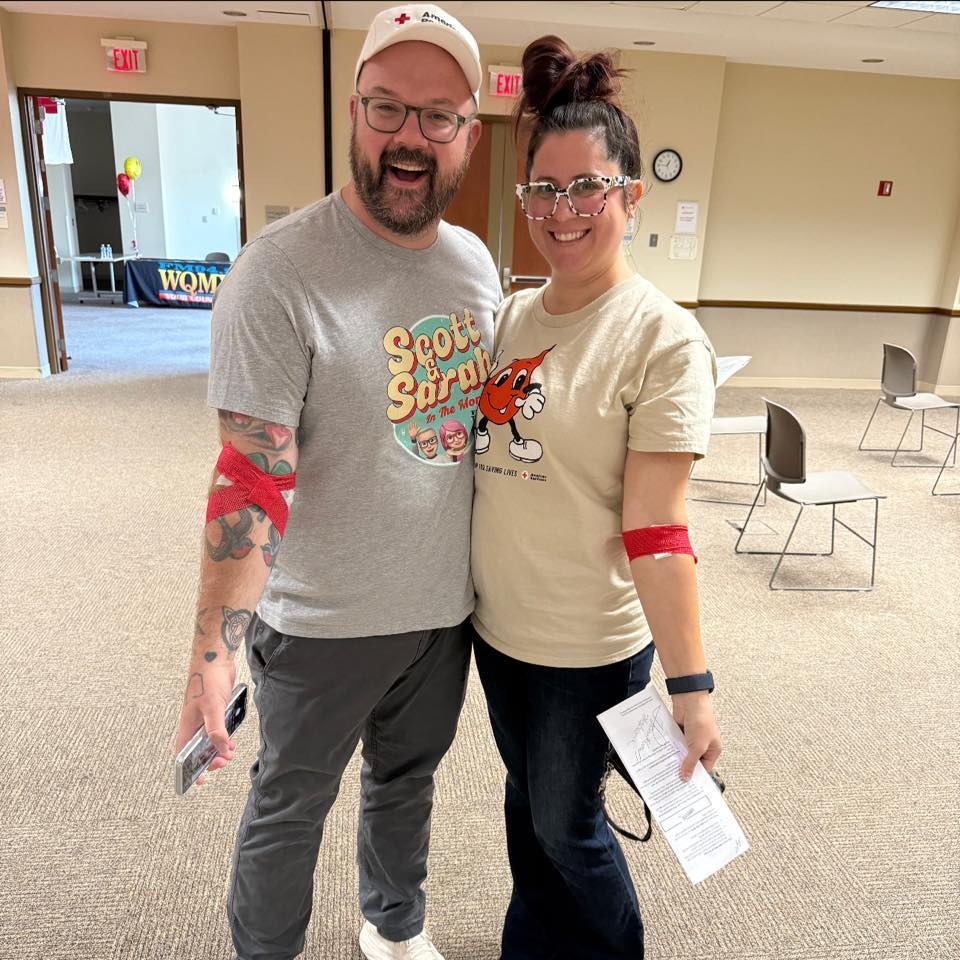
Blood drives abound this holiday season

By Jim McIntyre, American Red Cross volunteer

In Northern Ohio, we’ve experienced weather-related school closings, road closures and traffic accidents – and it’s not even mid-December! 

As winter approaches, the chance of severe weather can compound an already challenging time for blood donors who are busy with holiday preparations and travel plans.  Seasonal illnesses can also keep donors from making or keeping an appointment to give. 

That’s why the American Red Cross schedules several highly visible blood drives throughout the region during the month of December – to give busy donors a variety of days, times and locations where they can roll up a sleeve and help bring hope and healing to patients in need. 

“People with cancer and so many other conditions could not be treated without the blood they need to have every day,” said Dr. Zaher Otrock of Cleveland Clinic.  It’s just one of the many quotes I’ve gathered while visiting blood drives and talking to donors over the past 10 years. 

“I was in a car crash in 2006 and needed 15 pints of blood. I’m giving back,” said Christopher Haddock. 

“This is my way to give of myself to help someone in need.” – Sylvia Stewart-Lumkin 

“I love that I get to save lives and find out my blood type.” – first-time donor Meredith Reinhard 

 “My mom taught me to give back.” - Bridget Miller 

“Christ gave His blood for everyone, the least I can do is help a few.” - Gary Pfeiffer 

 “It doesn’t take a lot of time and it’s really, really, rewarding.” – Mark Fleischer 

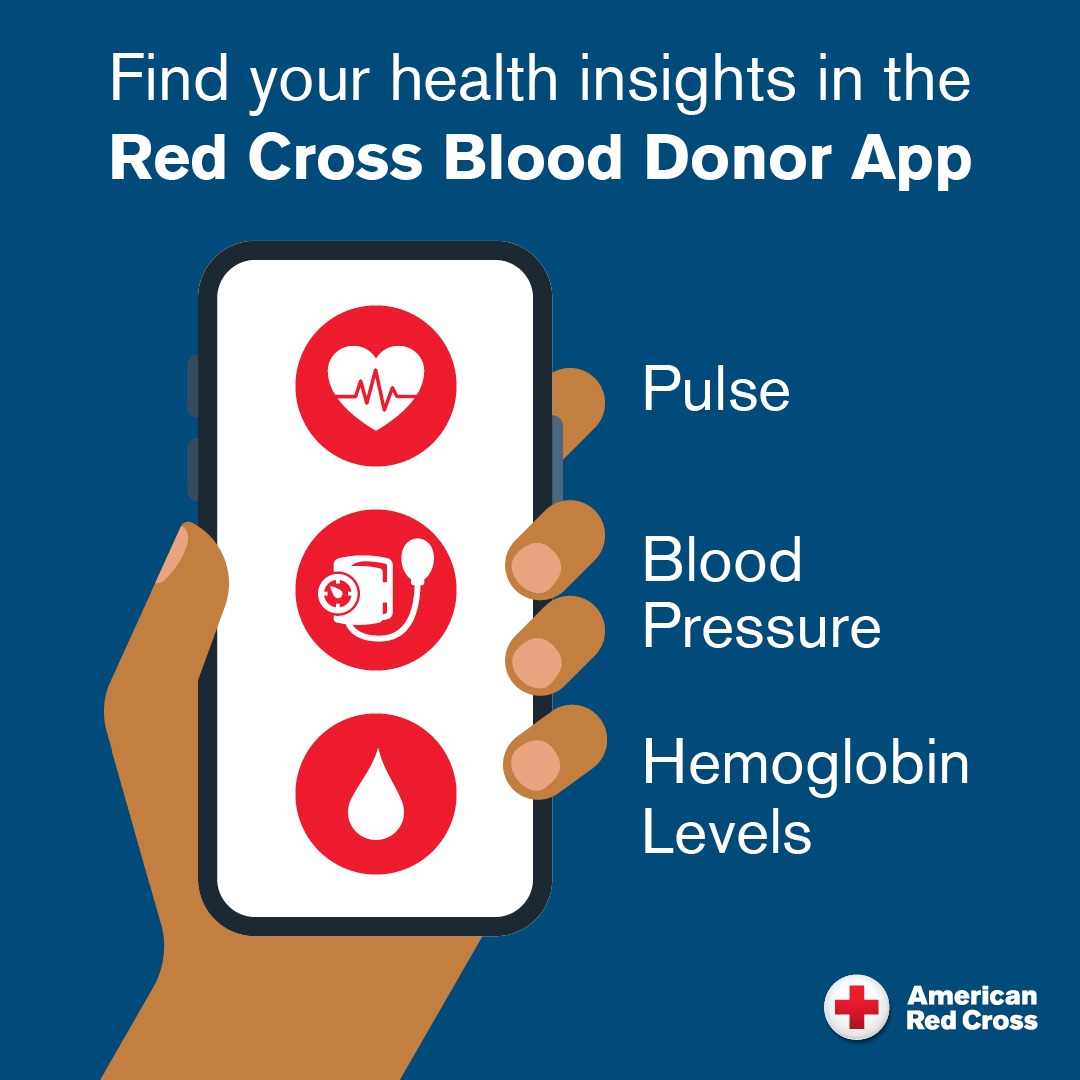
There’s still time to help save lives this year. During this season of giving, give something that means something and make an appointment to give blood or platelets by using the Blood Donor App, visiting RedCrossBlood.org or calling 1-800-RED CROSS (1-800-733-2767.) 

OR… 

Come to one of the following holiday season blood drives: 

17th Annual Holiday Blood Drive – Cuyahoga Falls  
Tuesday, December 16 from 7 a.m. – 7 p.m. 
Sheraton Akron/Cuyahoga Falls  
1989 Front St.
Cuyahoga Falls, Ohio 44221 

Annual Holiday Blood Drives – Mahoning Valley
Monday, December 22 from 9 a.m.- 4 p.m. 
Packard Music Hall 
1703 Mahoning Ave.
Warren, Ohio 44483 
Tuesday, December 23 from 9 a.m. – 4 p.m. 
Stambaugh Auditorium 
1000 Fifth Ave.
Youngstown, Ohio 44504 

In Memory of Harvey J. Steele Blood Drive – Toledo
Tuesday, December 23 from 8 a.m. – 2 p.m.  

Hilton Garden Inn Toledo/Perrysburg

Create a new holiday tradition and help spread comfort and support lifesaving care.

Red Cross staff detects health issue in longtime blood donor during routine check in

By Sam Pudelski, American Red Cross volunteer

Peggy Hammond has donated blood for over 40 years. As someone with O+ blood, she understands the importance of giving blood. She started giving blood after a friend had a daughter diagnosed with Apert syndrome and needed regular blood infusions. She realized how extremely important it was to donate blood to help people like her friend’s daughter, who rely on blood donations.

Fast forward a few years, and Peggy was at the American Red Cross Michael T. George Blood Donation Center checking in for her routine blood donation. When she was signing in, the nurse noticed a sore on her head and told Peggy, “I think it’s infected.” The supervisor confirmed it was, and Peggy wasn’t able to donate that day. Over Christmas, she contacted her doctor and after sending a picture of the spot in question, she went in to have it evaluated.

Her doctor determined the sore was not just an irritated spot on the head, but was in fact skin cancer, specifically squamous carcinoma. Approximately 2 out of every 10 skin cancers are squamous cell skin cancers, according to the American Cancer Society. Luckily, the cancer was caught early. Peggy had Mohs micrographic surgery to have the cancerous spot removed. The procedure went well, and with the surgical site healed, she was able to resume her regular blood donations.

She returned back to the donation center to begin her regular blood donations again, and of all people volunteering that day, the same nurse who discovered her spot, was there again! “She saved my life,” Peggy said. She was grateful to have the chance to tell her how much her catch that day helped her.

In speaking with Peggy, it’s evident she’s passionate about giving back and grateful that she’s still able to continue to donate to help others in need. If you are interested in donating blood, the Red Cross holds blood drives across Northern Ohio. To find an upcoming blood drive near you, visit redcrossblood.org.

Edited by Glenda Bogar, American Red Cross volunteer


The Unseen Battle: Why Platelet Donations are Vital for Those Fighting Breast Cancer 

By Kathryn Dean, American Red Cross volunteer 

October is Breast Cancer Awareness Month.  In the United States, 1 in 8 women will be diagnosed with breast cancer at some point in their life, making breast cancer the second most common cancer in women behind skin cancer.   

Mother and son, Rosalie Lang and Ryan Lang

Almost all of us have been affected in one way or another by this terrible disease, whether it has impacted a family member, friend, associate, or oneself.  Ryan Lang, Regional Communications Manager at the American Red Cross Northern Ohio Region, shared his own personal story back in February about his mom’s battle with breast cancer.  You can read his story HERE

When dealing with any cancer, transfusions are often an important and crucial part of treatment.  Chemotherapy and radiation cause bone marrow suppression, reducing the number of blood cells that the body can produce.  Low counts of red and white blood cells and platelets lead to symptoms like anemia, immunosuppression, and risk of hemorrhage.   

With around one-fourth of all blood products and half of all platelets used in the U.S. by patients who are fighting cancer, it is crucial to maintain an adequate blood supply. 

Platelet donations are needed daily, as they have a shelf life of only about 5 days.  However, most are tested and used within 3 days.  The need is so great that every 15 seconds, someone in the U.S. receives a platelet infusion.   

Donating platelets is by appointment only and will take around 3 hours of your time, but a single donation can help up to 3 people in need.  Here are some things to expect at your visit: 

  • 3 hours from start to finish includes set up, pre-donation questionnaire, and refreshments afterwards. 
  • A smaller needle is used to donate platelets than a standard blood donation, making the process more comfortable for some. 
  • Eligibility is the same as that for whole blood donations. 
  • It is possible to donate both plasma and platelets at the same time if you choose. 
  • Some find recovery to be easier than blood donations, as the fluids and red blood cells are returned to you during the process. 

Make a difference this October and help those fighting breast cancer and beyond by considering a life-giving donation. Donate platelets by Oct. 19 and receive a $10 Amazon Gift Card, or donate between Oct. 20–Nov. 3 to receive an American Red Cross Platelet Donor t-shirt, while supplies last! 

To learn more about platelet donations, click the link HERE.  You can schedule an appointment by downloading the Red Cross Blood Donor App HERE, or by visiting this link HERE

Celebrate Blood Collectors Week by thanking those who make life saving blood donations possible

By Tim Poe, American Red Cross volunteer

I walked into the cot-filled room on a sundrenched late-summer Friday, saw an arm rise and heard a smiling voice, “Hey, my man, I can take you over here!” After checking in with the American Red Cross blood donor ambassador, I was greeted by a phlebotomist, Will, who was professional, compassionate, and kind, as all the blood collectors I’ve met have been, making the experience as pleasant as possible. And phlebotomists are one portion of the blood collection process, as there are also ambassadors, apheresis operators, donor recruiters, and technicians.

These medical professionals play a critical role in our nation’s blood supply and health, yet their contributions are often unsung, so we honor their dedication, compassion, and skill during the 20th annual Blood Collectors Week, September 7-14.

Tessa Lewis, Red Cross phlebotomist, after ten Power Red donations were collected a recent blood drive at the Lakewood YMCA

To help celebrate the week, I spoke with Tessa Lewis, a phlebotomist with the Red Cross. Like many blood collection professionals, Tessa’s career choice grew out of a desire to help others. Tessa said, “My mom and close family are some of the most selfless people I have ever met. Growing up I had great examples of what a caring person looked like.” When Tessa was taking GED classes in Bucyrus, Ohio, which she credits with helping turn her life around, Tessa expressed her desire to help others with a counselor, who led her to phlebotomy school, which she loved. After working at a hospital for a short time, Tessa found her way to the Red Cross and loves her job.

When asked what she enjoys most about her job, Tessa said, “Not only do I get to help save someone’s life every day, I also get to travel places and meet new people. I’ve grown a close bond with multiple coworkers and donors.”

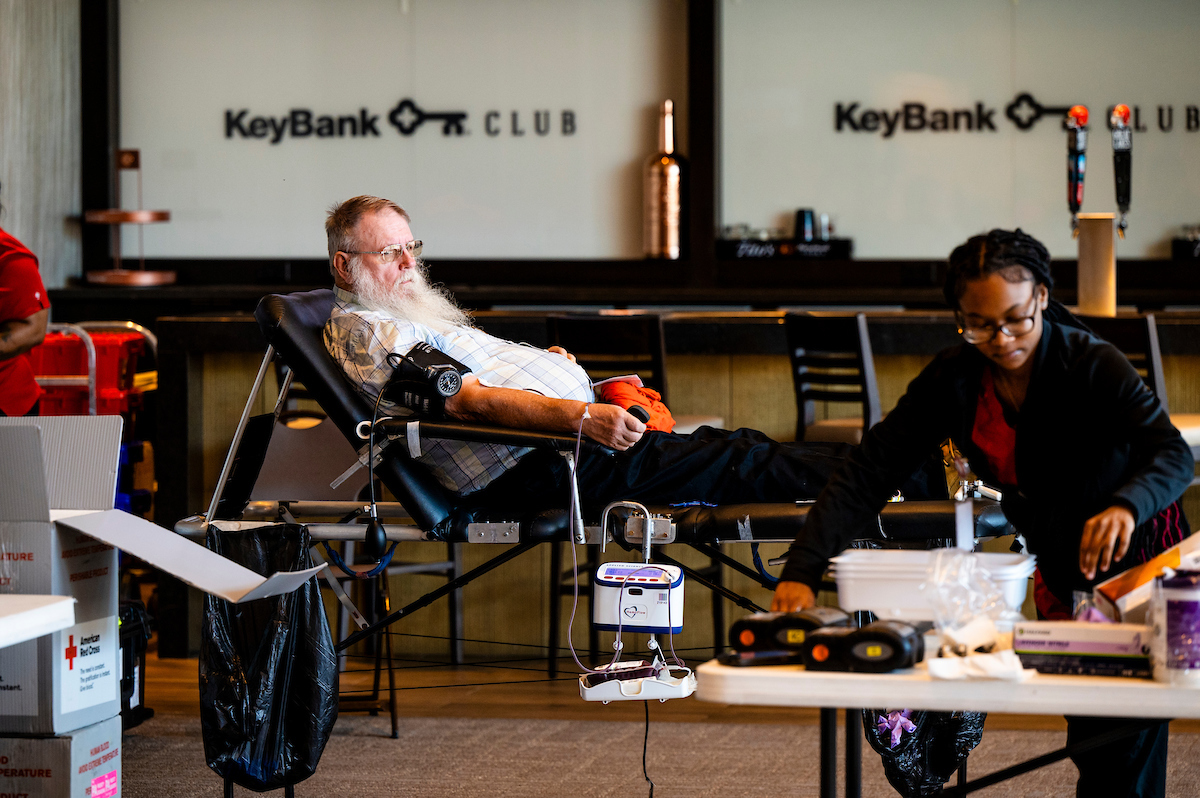
Browns Give Back hosted our annual First and Ten Blood Drive in the KeyBank Club of Cleveland Browns Stadium in partnership with the American Red Cross on July 27, 2024.

Tessa has had many positive experiences with donors. One example is a donor who was also a surgeon and family man and loved learning what vitamins can do for your body. “By the time he left,” Tessa said, “I had so much respect for him.” Later that week, Tessa received an e-mail from the donor who wrote several nice things, which really stuck with and further helped motivate her. Tessa also spoke of the critical need for a diverse blood supply, mentioning that it is especially heartwarming when donors show their support for sickle cell. Tessa also believes we need to continuously educate those in our lives on the importance of donating blood.

To celebrate Blood Collectors Week, Tessa plans to show her love to her colleagues and those in the lab who make it all possible.

Outside of her career, Tessa enjoys spending time with family and friends, as well as yoga, meditation, and drawing. She also has an adventurous spirit and has skydiving on her bucket list.

Tessa highly recommends those who, like her, want to help others consider a career in blood collection, as there are many opportunities for growth.

Finally, thanks to the continuous work and dedication of blood collectors, my most recent donation was a little different, as the hemoglobin check did not involve a needle. (I also received an exceptionally groovy Peanuts t-shirt, which is available for blood donors until September 21st.) More information on Blood Collectors Week is available here. If you would like to meet some of our fantastic blood collection professionals like Tessa and donate blood, please visit RedCrossBlood.org.

Red Cross youth and young adult volunteer roles offer invaluable experience for individuals like Maddie Frank

By Tim Poe, American Red Cross volunteer

Before American Red Cross Youth Volunteer Maddie Frank arrived for her first shift as Blood Donor Ambassador, she had already recruited a new blood donor, her dad. As Maddie was not yet old enough for her license, her dad drove, deciding to give blood on the way. After her dad downloaded the Blood Donor App, Maddie said, “It was fascinating and fun to watch the blood donation’s progress with him,” culminating in the location where it helped save a life.  

Maddie Frank, Red Cross volunteer

Maddie has been volunteering since January of this year and has already made a tremendous impact. Beginning with Totes for Hope, she has taken on several roles, including Blood Donor Ambassador, Youth Advocate, and Volunteer Services Youth Engagement Lead.  

Red Cross Youth and Young Adult volunteer opportunities and Red Cross Clubs are excellent ways giving people like Maddie can assist their communities, gain tremendous experience, develop leadership and public speaking skills, build resumes, make lasting friendships, and help make the world better.   

There are many Red Cross volunteer opportunities for young people, depending on age. In fact, nationally, as many as 25% of our volunteers are age 24 and younger. For instance, individuals 13 and over can volunteer at blood drives; additional adult supervision is required for those 13-15. Prepare with Pedro presenters can be at least 14. While you must be at least 18 for most disaster relief roles, those ages 16-17 can help support logistics, inventory, and preparation in their region. And young adults (ages 18-24) may be involved in College Red Cross Clubs or hold an adult volunteer position. 

Maddie told me how she has grown up in an atmosphere of helping others and has always enjoyed doing so. Her schools have had service hour requirements, she began working with Totes of Hope for services project at her church, her dad coaches, and her mom helps at a food bank.  

Maddie said she greatly enjoys helping and interacting with people, is looking to become a nurse, and her work as a Red Cross volunteer has helped. Maddie said, “I really enjoy interacting with the donors, seeing their milestones, and working with the other volunteers and staff, as everyone is very kind.” Maddie also said the experience is helping her get a sense of working in a medical field. She has also found several fellow volunteers are studying to become medical professionals, including nurses, and share their experiences. 

In addition to aiding the Red Cross, Maddie has assisted with several programs to help others, is a member of her school’s medical club, enjoys playing basketball, and will soon begin her Junior year at Wash Jesuit High School. 

I asked Maddie what she would tell someone her age interested in becoming a Red Cross volunteer. She said, “Starting out as a blood donor ambassador is really beneficial, as you get to meet people, including those in medical fields, and see what blood drive are like. And you get to see your impact.” 

Grateful mother encourages others to donate blood after experiencing hemorrhage during birth

By Kathryn Dean, American Red Cross volunteer

In some situations, it takes a village of people to save one persons life.”  – Dr. Kristin Gype 

Last August, 38 weeks pregnant with her second child, Dr. Kristin Gype went in to see her doctor for a routine checkup and ultrasound. Everything had been going smoothly with this pregnancy, but at this appointment, the staff noticed that her amniotic fluid appeared cloudy on the scan. As a precaution, her doctor recommended that she deliver within 24 hours.  

Dr. Kristin Gype and her daughter,

Feeling a bit unnerved at this unexpected turn of events, she called her husband, reluctantly gathered her belongings, and dropped her daughter off at her mother-in-law’s house.  As she hugged her daughter goodbye, Kristin had a powerful urge to squeeze her extra tight and hold on a little longer. 

A few years earlier, she had undergone a C-section with the birth of her daughter and was determined this time to try a natural birth. At the hospital, labor was induced and she received an epidural as she waited for her son to be born. Sometime overnight, they broke her water, and it was perfectly normal. She felt a wave of relief, but also a hint of frustration.

Later that morning, she noticed that her son’s fetal monitor was showing his heart rate dipping periodically into the 30s. A normal fetal heart rate is around 110 to 160 beats per minute. She was also feeling pain in her lower right abdomen. Despite the anesthesiologist administering more medicine, the pain persisted. 

Due to the low heart rate, it was determined that a C-section was necessary, and she went in for emergency surgery. Her son was born in under 90 seconds and was perfect and healthy, but she quickly realized something else was seriously wrong.   

Having attended many C-sections during her career as a nurse anesthetist, Kristin understood the subtle cues the medical staff were giving. She soon realized that she had uncontrolled bleeding and they were trying desperately to stop it.   

“I felt this impending doom,” she recalled. “I felt like I was dying…it truly felt cold and dark, and gloomy, and there was no control.” 

She began losing her ability to communicate coherently with her husband and staff.  At one point they informed her that a total hysterectomy was necessary to try to stop the bleed and she readily agreed. The next thing she knew she woke up in recovery in the ICU.   

After speaking to her doctor the next day, she learned that she had required a total of 52 units of blood during her surgery. To put that number into perspective, the average human body holds around 10 units or pints of blood. In addition, she estimates that up to 83 blood donors were required to produce all of the blood products she needed that day. 

Luckily, she suffered no long-term consequences from this traumatic incident. Today she has a new life perspective, realizing that she was literally saved from the brink by the generous blood donors who contribute to the crucial blood supply in our community.  

To give back, she has been donating her extra breast milk to the Ohio Milk Bank. “I went on to donate 3,500 oz of breast milk,” she proudly explained. “The milk bank providers said 1 ounce of breastmilk can give three meals to a newborn ICU patient.” 

Regarding her blood donors, she reflected, “Those people had a ripple effect. They kept me alive, kept these two babies’ mommy alive. I get to go to work and take care of people and keep them alive, and my breastmilk goes to critically ill babies.”   

“It seems so simple because putting a needle in your arm and donating a pack of units is so minor compared to the downstream effects of all those things. You give somebody another Christmas, give somebody another chance at life.” 

The American Red Cross is in critical need of blood donors. Just one hour of your time could save the life of a new mother or other critically ill patient. To donate, visit RedCrossBlood.org, or download the free American Red Cross Blood Donor App by clicking HERE.

Edited by Glenda Bogar, American Red Cross volunteer

Celebrate tattoos and schedule a blood donation this National Tattoo Day! 

By Tim Poe, American Red Cross volunteer

July 17 is National Tattoo Day, a day to “recognize the history, culture, and artists dedicated to etching ink permanently on the skin.” We also think it’s a fantastic time to schedule a blood donation as, despite some myths, having tattoos does not prevent you from donating blood.  

Ryan and Megan Lang, tattooed blood donors

Even if you do not have a tattoo, you’ve likely pondered possibilities. I am. Should I get an American Red Cross logo to commemorate my 7.5 years as a volunteer? Possibly. Or a fountain pin nib, for my love of writing? Granted, I mainly write on a laptop, but we need some artistic license. The pen could also be writing something, like a schwa! Yeah! Or a treble and bass clef, even a grand staff, to celebrate my love of music? That could mask some scars, too! Groovetastic! How about mascots of universities I attended? You have to admit, an Eagle-Penguin-Viking combo could be epic! Logos of previous employers? No, definitely not, especially the one with the common word ending. I’ve got it! All of them, being juggled by a jester! 

Now to bust a myth. Even if I went out and got these tattoos today, I could immediately donate blood if the tattoos were done at a state-regulated, licensed facility in Ohio or most other states. If done in one of the few states that do not regulate tattoo facilities, or by an unlicensed person, I’d only need to wait three months to ensure blood safety. (All blood donations are tested for hepatitis B and hepatitis C, but it is still important for people who may be infected with hepatitis viruses to not donate blood.) More about blood donor eligibility is available here

Also, the Red Cross is currently in need of blood donations and is offering additional ways to say thanks this summer. Those donating from July 15-31 will receive a Fandango movie ticket. Those donating in August can receive a free A1C test and, from August 1-28, a $15 gift card

Whether you have tattoos or not, enjoy celebrating them today, and consider scheduling a blood donation at RedCrossBlood.org or download the free blood donor app. After all, if you’re tattooed you don’t have a problem with needles. And a fun observation: many of the phlebotomists I’ve met have tattoos. Finally, please also read Christy Peters’ excellent post about her grandfather’s tattoos. 

Get a free pair of shades by goodr when you donate blood or platelets

By Kathryn Dean, American Red Cross Volunteer 

July is finally here, and summer has officially started. For many, this means vacations, cookouts, pool time, and fun with family and friends. For blood banks, this busy season can mean a time of fewer donors and a limited blood supply.   

Every two seconds, someone in the U.S. requires a blood transfusion. This equates to around 29,000 units of blood that are needed every day! Whether it be for cancer patients, accident victims, surgical patients, or new mothers, be a hero for a person in need by donating this precious, lifesaving gift. 

While all potential donors are asked to donate if they can, Type O is urgently needed at this time.   

Type O negative blood, often called the “universal donor,” can be safely transfused to anyone and is commonly used in emergencies when there is no time to determine blood type. With only around 7% of the U.S. population having Type O negative blood, it is often in short supply, even though the need for it is great. 

Special Promotion for donors 

Between July 1-14, consider taking time out of your schedule to donate blood, plasma or platelets, and look cool leaving with a free pair of American Red Cross x goodr “Just My Type” sunglasses, while supplies last! You will also receive a sticker with your blood type to personalize your glasses. Find out more about the promotion by clicking HERE

To donate, simply visit RedCrossBlood.org and enter your zip code or download the free Red Cross Blood Donor App by clicking HERE. Save time on the date of your donation by completing your pre-donation forms at RedCrossBlood.org/RapidPass or by using the Blood Donor App. 

Edited by Glenda Bogar, American Red Cross volunteer

Mother advocating for her “Sickle Cell Warrior”

By Ryan Lang, American Red Cross

Sickle cell disease affects more than 100,000 people in the United States. One out of every 365 Black or African American births is affected by sickle cell. People living with sickle cell disease may need as many as 100 units of blood each year. These are all statistics that Demeatrice Nance was unaware of prior to October 2003, when her daughter Makenzie was born. 

Makenzie Nance, sickle cell warrior

“There were some abnormalities in her newborn screening and the doctor wanted us to come in to talk about it,” Demeatrice said. “That was when they told us that Makenzie had sickle cell disease.”

Demeatrice and her husband were devastated, mostly, she said, because they didn’t know where to start getting the best help for their daughter.

From that point on, Demeatrice was on a fact-finding mission – a quest for knowledge about sickle cell disease. “We did a lot of online research and had a lot of conversations with the doctors. We were also referred to a local sickle cell outreach group that provided a lot of resources for Makenzie and our family,” Demeatrice said.

As Demeatrice delved more deeply into the world of sickle cell disease, she quickly discovered how important blood donors, especially Black blood donors, would be in Makenzie’s life.

Fast forward just two and a half years and Makenzie needed her first blood transfusion. “The doctor told us her hemoglobin had dropped, and it was at a crucial state, and Makenzie needed a blood transfusion,” Demeatrice explained. Then she and her husband got word from the doctor that there was a blood shortage, specifically from African American donors, which was what Makenzie and most all sickle cell patients need.

“The doctor said we’re just gonna try and wait it out and try and locate blood for her,” Demeatrice said. And while it was only about a day before they did locate blood for Makenzie, Demeatrice said it felt like a year. “From that time, donating blood has been a priority to me and educating people about the importance and the reason to donate blood. It’s important that our sickle cell warriors have the blood supply when it’s needed.”

Makenzie and Demeatrice Nance

For the past 15-plus years Demeatrice and her family have been advocating and educating. Advocating for her own sickle cell warrior, Makenzie, and all of the sickle cell warriors who desperately need blood. And educating the public about why they need blood and why the blood supply needs to be maintained through regular donations.

“My first blood drive was small,” Demeatrice said, “but when I shared my story and explained the importance of donating, not just for sickle cell patients, but for cancer patients and trauma victims and others, the numbers started growing.” Demeatrice says she always tells people, “It could by my day today, or it could be your day tomorrow,” which is why she encourages everyone she meets to donate blood.   

As for Makenzie, she’s just graduated with an associate’s degree in health science and is starting her nursing clinicals in the next couple of months. “Sickle cell patients are often told they can’t do a lot of things, but over the past 21 years Makenzie’s done more things than a lot of people ever thought she could do,” Demeatrice said, beaming with pride for her sickle cell warrior.

Click here to hear more of Demeatrice’s story about her journey with Makenzie and sickle cell disease.

To schedule your appointment to donate today, visit redcrossblood.org.  

American Red Cross remains committed to helping everyone as needs increase

By Tim Poe, American Red Cross volunteer

Portrait of Clara Barton, founder of the American Red Cross.

She was bent over, sobbing, frustrated, nearly everything in her family’s apartment destroyed. We sat in an American Red Cross vehicle outside a partially burned apartment complex. It was near the beginning of the school year, and she had recently purchased books, school supplies and clothes for her children. Unfortunately, her neighbor, whom I had helped earlier, had a moment of carelessness. Like most renters I assisted, especially those in lower-income areas, she did not have renter’s insurance. But we were there. One of my favorite moments as a Red Cross volunteer was handing her an aid packet, a lifeline, and seeing her frustration and despair turn to gratitude and resilience. Her family would have a place to stay, would eat, and her children’s clothes and school supplies would be replaced. Her race, gender, legal status, religion, beliefs, class and orientation didn’t matter. She needed help, and the Red Cross provided.

Scenes like this play out an average of three times per day in Northern Ohio, and about 65,000 times per year nationally. Similarly, someone in the U.S. needs blood every two seconds, while U.S. Armed Forces members, veterans and their families receive assistance daily. Our services have never, nor will ever, be contingent on anything other than if someone needs our help.

As March is Red Cross Month, we would like to reiterate that helping everyone has been a core principle since our founding in 1881 and remains central to our Fundamental Values of
humanity, impartiality, neutrality, independence, voluntary service, unity and universality. Clara Barton, who faced discrimination as a woman, believed in “perfectly equal rights–human rights,” and instilled those values in the Red Cross from the outset.

For the past 144 years, the Red Cross remained committed to helping those in need, bringing out the best of humanity in times of crisis.

February 25, 2025. Pike County, Kentucky.
American Red Cross volunteer, Tony Susi, comforts Tina Roberts after she lost her entire home in Eastern Kentucky after devastating floods hit her community just over a week ago.

Red Crossers are on the ground across Kentucky, assessing damage, working with community partners and local emergency management, and providing hot meals, a safe place to stay and other support to residents impacted by flooding.

Photo by Scott Dalton/American Red Cross

The need for Red Cross services and the commitment to help everyone has never been greater. The climate crisis is having a tremendous impact, as the Red Cross is responding to nearly twice as many large disasters as a decade ago, and they are increasing. Additionally, the climate crisis is taking a heavier toll on frontline communities, including low-income families, older adults, communities of color and people with disabilities.

The Red Cross is responding to these challenges through strengthening partner networks;
improving disaster relief capacity; enhancing our engagement with diverse communities, including offering information in Spanish; reaching out to diverse blood donors; continuing our Sickle Cell initiative; and adding health screenings for blood donors at different times throughout the year, currently including screening for Sickle Cell trait and, this month, A1C.

We could use your help. If you can donate blood, give financially or volunteer, your assistance has a tremendous impact. And no matter who you are, please reach out if disaster strikes, as the Red Cross continues its commitment to helping all.

Edited by Glenda Bogar, Red Cross volunteer

Posted by Ryan Lang, Red Cross board member and volunteer