Donate Blood and Platelets During National Preparedness Month

As the American Red Cross responds to wildfires and historic hurricanes, eligible donors are reminded that giving blood or platelet donations during National Preparedness Month in September is one way to help ensure the Red Cross is prepared to respond to patient emergencies across the country every day.
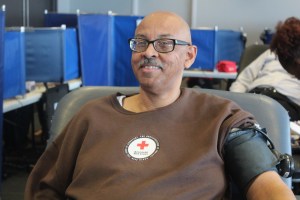
IMG_3757Hurricane Irma has forced the cancellation of dozens of Red Cross blood drives in the Southeast, resulting in more than 2,100 uncollected blood and platelet donations. Natural disasters like hurricanes can disrupt blood drives and prevent donors from giving, but hospital patients still depend on lifesaving transfusions. Volunteer blood and platelet donors are the only source for blood products needed by hospital patients.

Blood Donors

Individuals in parts of the country unaffected by Hurricane Irma are encouraged to give blood or platelets to help ensure a sufficient blood supply. All blood types are currently needed. Appointments can be made by using the Blood Donor App, visiting redcrossblood.org or calling 1-800-RED CROSS. To help reduce wait times, donors are encouraged to make appointments and use RapidPass® to complete their pre-donation reading and health history questions online, on the day of their donation, from a computer or mobile device at redcrossblood.org/rapidpass.

As a thank-you, those who come to donate blood or platelets through Sept. 30, 2017, will receive a coupon for a free haircut at participating Sport Clips locations. More information is available at redcrossblood.org/sport-clips.

Upcoming blood donation opportunities:

Ashland County

9/18/2017: 12:30 p.m. – 4 p.m., Trinity Lutheran Church, 508 Center Street

9/23/2017: 9 a.m. – 2 p.m., Peace Lutheran Church, 1360 Smith Road

9/26/2017: 8:30 a.m. – 1:30 p.m., Crestview High School, 1575 SR 96

Jeromesville

9/18/2017: 3 p.m. – 7 p.m., Jeromesville United Methodist Church, 40 North Street

Loudonville

9/25/2017: 3 p.m. – 8 p.m., Mohicanville Community Church, 347 State Route 95

9/27/2017: 2 p.m. – 6 p.m., Loudonville Lions Club, 643 Wooster Road

Holmes County

Millersburg

9/19/2017: 2 p.m. – 7 p.m., West Holmes Middle School, 10901 State Route 39

9/21/2017: 10 a.m. – 3 p.m., Paint Valley Parts, Ltd, 10850 County Road 320

9/25/2017: 3 p.m. – 7 p.m., Bowman Harness, 6928 County Road 77

9/27/2017: 10 a.m. – 3 p.m., Yoder Lumber Company, 4515 Township Road 367

Nashville

9/29/2017: 1 p.m. – 7 p.m., Nashville Church of Christ, 13457 State Route 39

Medina County

Brunswick

9/16/2017: 9:30 a.m. – 2:30 p.m., Brunswick Community Recreation & Fitness Center, 3637 Center Road

9/17/2017: 1 p.m. – 5 p.m., Xerxes Athletics, 424 Pearl Road

9/18/2017: 1 p.m. – 7 p.m., Brunswick United Methodist Church, 1395 Pearl Road

Medina

9/19/2017: 11:30 a.m. – 4 p.m., Western Reserve Masonic Community, 4931 Nettleton Road

9/19/2017: 4:30 p.m. – 9 p.m., Fenn Elementary School, 320 N. Spring Grove

9/22/2017: 10 a.m. – 2 p.m., Medina Community Recreation Center, 855 Weymouth Road

9/23/2017: 10 a.m. – 2 p.m., Living Hope Church, 6628 Wooster Pike

Seville

9/18/2017: 1 p.m. – 7 p.m., Seville United Methodist Church, 74 West Main Street

Summit County

Akron

9/16/2017: 7:45 a.m. – 2:45 p.m., Summit Blood Donation Center, 501 W. Market Street

9/17/2017: 7:45 a.m. – 2:45 p.m., Summit Blood Donation Center, 501 W. Market Street

9/18/2017: 7:45 a.m. – 2:45 p.m., Summit Blood Donation Center, 501 W. Market Street

9/19/2017: 12:45 p.m. – 7:45 p.m., Summit Blood Donation Center, 501 W. Market Street

9/20/2017: 12:45 p.m. – 7:45 p.m., Summit Blood Donation Center, 501 W. Market Street

9/21/2017: 10 a.m. – 4 p.m., Cleveland Clinic Akron General, 1 Akron General Avenue

9/21/2017: 12:45 p.m. – 7:45 p.m., Summit Blood Donation Center, 501 W. Market Street

9/22/2017: 7:45 a.m. – 2:45 p.m., Summit Blood Donation Center, 501 W. Market Street

9/23/2017: 7:45 a.m. – 2:45 p.m., Summit Blood Donation Center, 501 W. Market Street

9/24/2017: 7:45 a.m. – 2:45 p.m., Summit Blood Donation Center, 501 W. Market Street

9/25/2017: 7:45 a.m. – 2:45 p.m., Summit Blood Donation Center, 501 W. Market Street

9/26/2017: 12:45 p.m. – 7:45 p.m., Summit Blood Donation Center, 501 W. Market Street

9/27/2017: 8:30 a.m. – 2 p.m., East Community Learning Center, 80 Brittain Road

9/27/2017: 12:45 p.m. – 7:45 p.m., Summit Blood Donation Center, 501 W. Market Street

9/28/2017: 8 a.m. – 2 p.m., Manchester High School, 437 West Nimisila Road

9/28/2017: 12:45 p.m. – 7:45 p.m., Summit Blood Donation Center, 501 W. Market Street

9/28/2017: 1 p.m. – 6 p.m., Our Lady of the Elms High School, 1375 West Exchange Street

9/29/2017: 7:45 a.m. – 2:45 p.m., Summit Blood Donation Center, 501 W. Market Street

9/30/2017: 7:45 a.m. – 2:45 p.m., Summit Blood Donation Center, 501 W. Market Street

Barberton

9/21/2017: 10:30 a.m. – 4:30 p.m., BWX Technologies, 91 Stirling Avenue

Copley

9/25/2017: 1 p.m. – 6 p.m., The HUB Community Center, 3676 Community Lane, Suite 100

Cuyahoga Falls

9/18/2017: 2 p.m. – 7 p.m., St Lukes Lutheran Church, 2121 Sixth Street

Hudson

9/27/2017: 12 p.m. – 6 p.m., Barlow Community Center, 41 South Oviatt

Norton

9/18/2017: 1 p.m. – 6 p.m., Johnson United Methodist Church, 3409 Johnson Road

Tallmadge

9/18/2017: 1 p.m. – 7 p.m., Our Lady of Victory, 73 North Ave

9/22/2017: 7:30 a.m. – 1:30 p.m., Tallmadge High School, 140 N. Munroe Road

9/30/2017: 11 a.m. – 4 p.m., Tallmadge Library, 90 Community Rd

Twinsburg

9/25/2017: 10:30 a.m. – 3:30 p.m., Twinsburg Public Library, 10050 Ravenna Road

Wayne County

New Pittsburg

9/19/2017: 3 p.m. – 7 p.m., St Peter Lutheran Church, 9451 Ashland Rd.

Orrville

9/20/2017: 12 p.m. – 6 p.m., Student Life Center, 1901 Smucker Rd.

9/21/2017: 1 p.m. – 7 p.m., Kingsway Christian School, 11138 Old Lincoln Way E.

Shreve

9/25/2017: 1:30 p.m. – 6:30 p.m., American Legion Post 67, 10094 Shreve Rd.

Wooster

9/16/2017: 8 a.m. – 1 p.m., American Red Cross Wayne County Chapter, 244 West South St.

9/26/2017: 10 a.m. – 4 p.m., The Ohio State University Agricultural Technical Institute, 1328 Dover Rd.

9/28/2017: 10 a.m. – 3:30 p.m., College of Wooster, 1189 Beall Ave.

9/28/2017: 3 p.m. – 8 p.m., College of Wooster, 1189 Beall Ave.

More information about how the Red Cross is responding to hurricanes Harvey and Irma, the western wildfires and other disasters is available at redcross.org.

 How to donate blood

Simply download the American Red Cross Blood Donor App, visit redcrossblood.org or call 1-800-RED CROSS (1-800-733-2767) to make an appointment or for more information. All blood types are needed to ensure a reliable supply for patients. A blood donor card or driver’s license or two other forms of identification are required at check-in. Individuals who are 17 years of age in most states (16 with parental consent where allowed by state law), weigh at least 110 pounds and are in generally good health may be eligible to donate blood. High school students and other donors 18 years of age and younger also have to meet certain height and weight requirements.

Akron Volunteer in the News!

Local media in Texas have been covering the efforts of the Red Cross to offer care to residents affected by Hurricane Harvey.  The following excerpt appeared in an article in the Killeen Daily Herald on September 6, 2017:

…Meanwhile, Red Cross Shelter Manager Jackie Speciale, a resident of Woodstock, Illinois, is technically on vacation. Some people dream of a tropical destination or a week at a ski lodge. Speciale requested two weeks of vacation from her boss and hopped on a plane to Killeen. Her husband’s back home, going into work late every day this week so he can drop their children off at school.

“For each person you see here with the Red Cross, there’s four or five people behind them,” she said.

She stood in the library with Jason Humphrey, another Red Cross volunteer from the Midwest. The Akron, Ohio, resident was volunteering in his fifth natural disaster. His volunteer work has brought him to Arkansas for tornado relief and New Jersey after Hurricane Sandy. He works as a security guard at concerts, so his work schedule has a bit more flexibility than most. But still, he dropped everything, for the fifth time in his life, to help those who needed it.

“Somebody’s taking care of my dog,” he said with a laugh.

To read more about the volunteers from across the country who have responded to Hurricane Harvey in Killeen, Texas, click here.

To start a volunteer application, visit this page on our website.

Photos following Hurricane Harvey in Texas/ Credit: Chuck Haupt/American Red Cross

Messy, Stressful, Heartwarming; Volunteers Describe Work in Texas

Disaster Workers Return After Two-Week Deployment 

Furman&Sue

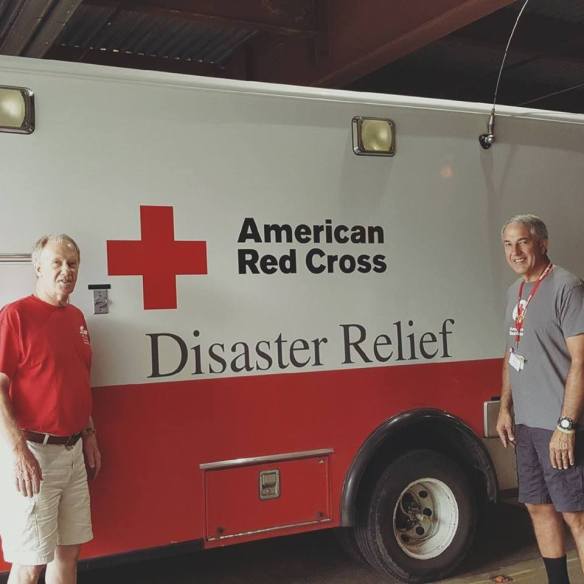
Northeast Ohio Red Cross volunteers Furman Alden and Sue Wisdom

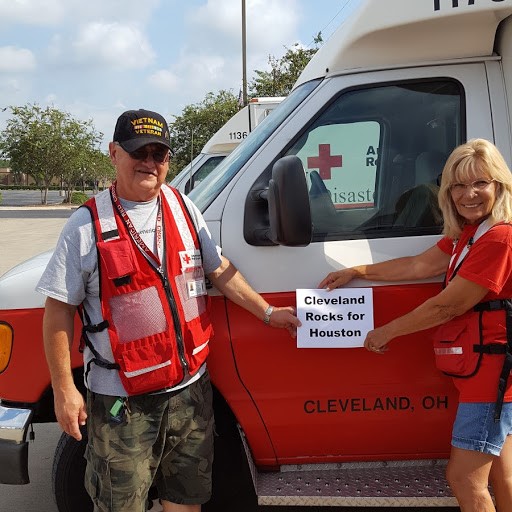
Furman Alden and Sue Wisdom are back home, after spending two weeks on deployment following Hurricane Harvey.  The Northeast Ohio volunteers spent long hours driving an Emergency Response Vehicle through streets in and around Houston, making sure residents had access to warm meals, water and snacks.

“No one sees skin color, religion or politics,” said Sue, a Lake County resident and a veteran of disaster relief operations.  “From the youngest to the oldest, the way people came together to help each other, it’s heartwarming.”

Sue said several little boys volunteered to help distribute meals, going door-to-door after receiving their own meals and learning about the work of the Red Cross.  “They were amazing,” she said.  “I gave them cookies, and one of them said ‘You are so nice.’  That made may day!”

Furman Alden, also a veteran of disaster work, said he has never seen so much debris piled so high in front of so many houses. The Youngstown resident said, “The whole way down the street, they emptied their houses completely.   Furniture, dry wall, everything. It was messy.”

He says they were the first relief workers to reach a neighborhood that had been cut off by flooded roadways.  “We were the first ones to get in there.  They were so happy to see us.”

It was a struggle getting anywhere.  Furman says driving was stressful, due to bumper-to-bumper, stop-and-go traffic.  But the ERV he and Sue drove was a lifeline for so many Texans who lost so much in the wake of Hurricane Harvey.

More than 7,000 Red Cross disaster workers responded in Texas, Florida, and other areas hit hard by Harvey and Hurricane Irma, providing the same life-sustaining services that Sue and Furman delivered.  More volunteers are needed to continue the mission.  Visit our website at redcross.org/neo, and click the VOLUNTEER tab to begin an application.

A message from the Volunteer Services Department:

All volunteers must complete a free online volunteer application, which includes acknowledgement of policy statements and a criminal background check

Volunteers will need to successfully complete disaster training before being eligible for potential deployment, this can include a combination of in-person and/or online training

Depending on adjustment of the real-time needs of the disaster locations and your specific abilities- you may not deploy immediately or at all. 

Call 216-431-3328 for more information.

This video was created on the day Sue Wisdom and Furman Alden left Northeast Ohio in response to the residents of Texas following Hurricane Harvey.

Two Hurricane Relief Efforts Underway

Here are the latest updates.

Hurricane Harvey 2017


Over 5,800 Red Cross workers from across the country continue to assist with the relief effort, including 41 individuals from Northeast Ohio. With many more expected to arrive.

Almost 190 emergency response vehicles have been activated to help deliver meals and relief supplies throughout Texas. 100 more are activated to respond to the communities affected by Irma.


Hurricane Harvey 2017

Overnight, an estimated 108,000 people were provided refuge from Hurricane Irma in as many as 530 government and Red Cross evacuation centers across 6 states, Puerto Rico and the U.S. Virgin Islands.


Additionally, more than 5,000 people sought refuge in 30 Red Cross and partner shelters across Texas. To date, there have been more than 364,000 overnight shelter stays for Hurricane Harvey.

Hurricane Harvey 2017

If  you would like to volunteer as a member of the Red Cross team, whether in your community or across the nation, get started on your volunteer application, today. Visit redcross.org/neo and click on VOLUNTEER.


Help for Hurricane Victims is Music to Our Ears

Bravo!

On Friday, September 8th, members of the Cleveland Orchestra and Credo Music, along with students from the Cleveland Institute of Music and Oberlin Conservatory of Music performed together at the famed Severance Hall in Cleveland.

IMG_4486

Conductor James Feddeck, a graduate of Oberlin Conservatory,  led the musicians through six compositions, including Aaron Copeland’s Fanfare for the Common Man, Stravinsky’s Firebird Suite, and the American Red Cross March.

Henry Peyrebrune, Executive Director of Credo Music, said, “When the Credo Music staff first considered the idea of this concert, we decided to go for it – first, because it’s the right thing to do, and second, because it would be a turbo-charged fulfillment of our mission to develop young musicians for a lifetime of using their musical gifts to serve those around them.”

100% of the income from ticket sales will go to disaster relief, in the wake of Hurricanes Harvey and Irma.  That’s in addition to the generous donations made at the venue and online.  Funds raised total about $20,000.

Mike Parks, CEO of the Northeast Ohio Region, thanked the audience and the musicians for their support of the Red Cross.  IMG_4494

“We have dozens of volunteers on the ground in Texas,” Parks said from the stage.  “Your donations will help give them the resources they need to fulfill our mission, which is to prevent and alleviate suffering.”

The concert was made possible thanks to the generous support of The Musical Arts Association, The Kulas Foundation and the John P. Murphy Foundation.

And thanks to the time and talent of the musicians who filled the stage at Severance with the sound of a full symphony orchestra.

Theirs was a unique and welcome donation indeed.

From Hurricanes to Home Fires – Get Prepared in September

Hurricane Harvey 2017By now you know may think that you know all about hurricanes — massive storm systems that form over the water and move toward land. Threats from hurricanes include high winds, heavy rainfall, storm surge, coastal and inland flooding, rip currents, and tornadoes. These large storms are called typhoons in the North Pacific Ocean and cyclones in other parts of the world. The Atlantic hurricane season runs from June 1 to November 30, with the peak occurring now, between mid-August and late October. The Eastern Pacific hurricane season begins May 15 and ends November 30.
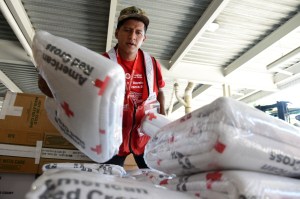
It may seem like you’re well versed on basic preparedness tips, such as:

  • Know where to go if ordered to evacuate.
  • Put together a go-bag: disaster supply kit, including a flashlight, batteries, cash, first aid supplies, medications, and copies of your critical information if you need to evacuate
  • If not in an area that is advised to evacuate and you decide to stay in your home, plan for adequate supplies in case you lose power and water for several days and you are not able to leave due to flooding or blocked roads.
  • Make a family emergency communication plan.

And with Ohio not being a coastal state, you may feel that you don’t have to worry about any of these things!

But you should.

Hurricane Harvey 2017Coming right smack in the middle of the peak of Hurricane season, is Preparedness Month. Celebrated every September, it is the perfect time for you, your family, and your community learn how to BE PREPARED.
Prepare for the things you may experience as an Ohioan: tornadoes, flooding, extreme winter weather, power outages, or a home fire.

Step one:
Build a Kit or Do an Annual Supply Check

Make sure your emergency kit is stocked with the items on the checklist below. Most of the items are inexpensive and easy to find, and any one of them could save your life. Headed to the store? Download a printable version to take with you. Once you take a look at the basic items, consider what unique needs your family might have, such as supplies for pets, or seniors.

After an emergency, you may need to survive on your own for several days. Being prepared means having your own food, water and other supplies to last for at least 72 hours. A disaster supplies kit is a collection of basic items your household may need in the event of an emergency.

Basic Disaster Supplies Kit

To assemble your kit, store items in airtight plastic bags and put your entire disaster supplies kit in one or two easy-to-carry containers such as plastic bins or a duffel bag.

A basic emergency supply kit could include the following recommended items:

  • Waterone gallon of water per person per day for at least three days, for drinking and sanitation
  • Food – at least a three-day supply of non-perishable food
  • Battery-powered or hand crank radio and a NOAA Weather Radio with tone alert
  • Flashlight
  • First aid kit
  • Extra batteries
  • Whistle to signal for help
  • Dust mask to help filter contaminated air and plastic sheeting and duct tape to shelter-in-place
  • Moist towelettes, garbage bags and plastic ties for personal sanitation
  • Wrench or pliers to turn off utilities
  • Manual can opener for food
  • Local maps
  • Cell phone with chargers and a backup battery

Download the Recommended Supplies List (PDF)

Additional Emergency Supplies

Consider adding the following items to your emergency supply kit based on your individual needs:

  • Prescription medications
  • Non-prescription medications such as pain relievers, anti-diarrhea medication, antacids or laxatives
  • Glasses and contact lense solution
  • Infant formula, bottles, diapers, wipes, diaper rash cream
  • Pet food and extra water for your pet
  • Cash or traveler’s checks
  • Important family documents such as copies of insurance policies, identification and bank account records saved electronically or in a waterproof, portable container
  • Sleeping bag or warm blanket for each person
  • Complete change of clothing appropriate for your climate and sturdy shoes
  • Household chlorine bleach and medicine dropper to disinfect water
  • Fire extinguisher
  • Matches in a waterproof container
  • Feminine supplies and personal hygiene items
  • Mess kits, paper cups, plates, paper towels and plastic utensils
  • Paper and pencil
  • Books, games, puzzles or other activities for children

Maintaining Your Kit

After assembling your kit remember to maintain it so it’s ready when needed:

  • Keep canned food in a cool, dry place
  • Store boxed food in tightly closed plastic or metal containers
  • Replace expired items as needed
  • Re-think your needs every year and update your kit as your family’s needs change.

Kit Storage Locations

Since you do not know where you will be when an emergency occurs, prepare supplies for home, work and vehicles.

  • Home: Keep this kit in a designated place and have it ready in case you have to leave your home quickly. Make sure all family members know where the kit is kept.
  • Work: Be prepared to shelter at work for at least 24 hours. Your work kit should include food, water and other necessities like medicines, as well as comfortable walking shoes, stored in a “grab and go” case.
  • Vehicle: In case you are stranded, keep a kit of emergency supplies in your car.

On Being a Phone Bank Volunteer for Hurricane Harvey Relief

By Doug Bardwell, American Red Cross Volunteer 

Your alarm goes off at 4:30 a.m. and its pitch-dark outside. You shower, shave, fill your travel mug with coffee and head for the garage. Traffic is amazingly light at 6:00 a.m., which is one of the benefits of starting so early, you tell yourself.

You and seven of your fellow Red Crossers are heading to the Cleveland ABC affiliate – WEWS Channel 5 TV, for the start of an all-day Hurricane Harvey fund raiser.  Only the all-night anchors are here, so there’s plenty of parking spaces to choose from.

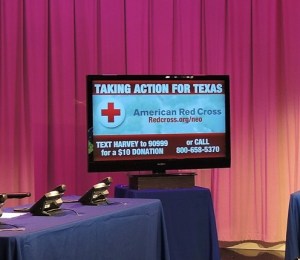
graphiconscreenThe studio is all set for us.  Tables are arranged, phones are ready and a large flat screen announces the Red Cross website URL, phone number and text information for a quick pledge.
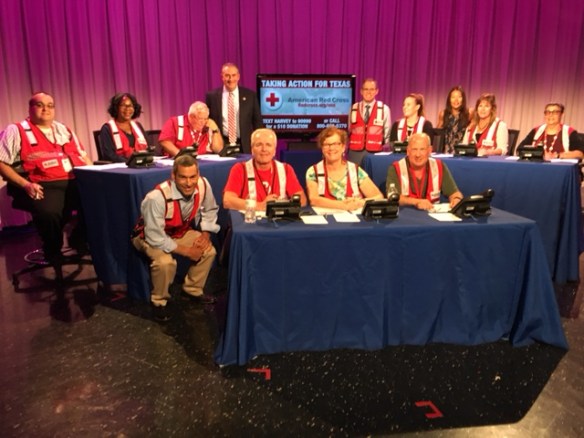
One-by-one, Red Cross volunteers, employees and even a board member file in and take their place at the tables.  Four shifts are planned, so plenty of people can take part in this 6:00 a.m until 11:00 p.m. phone bank effort.Thursday phonebank

In fact, this is our second phone bank. Three days prior, another group of volunteers manned the phones from 4 p.m. until 6 p.m. and were inundated with calls. “It was non-stop calling,” one volunteer said. “As soon as you hung up the call, there was another one ringing on the same line.”


Tuesday phone bank

The cameraman comes in and suggests a slight modification to our seating arrangement.  We’ve begun the countdown to going ‘On Air.’

“We’re live in ten seconds,” says the cameraman, and we are off, fielding phone calls from across Northeastern Ohio.

By this time, there’s probably no one in America that hasn’t heard about the devastation being wrought upon Texas and Louisiana.  News anchors compare the total rainfall to the amount of water in Lake Michigan, and another asks you to visualize the amount of water flowing over the Horseshoe Falls at Niagara Falls. Now consider that flow for nine months straight, and you’ve got an idea how much water fell in just a few days in Texas.

“Oh my,” says the first caller. “Thank you for doing this for those poor people.  I only wish I could give more.  They must need so much help.”

Another caller is so distraught that she asks for a few seconds to collect herself, before completing her credit card information.  Actually, many of the callers were quite emotional, knowing the stress and anguish being felt by the thousands of victims.

“I don’t know what those people would do if it weren’t for the Red Cross and the other agencies down there,” says another.  This was a recurrent theme all morning.

By the end of the first shift, you start to compare numbers of callers and amounts raised. Amounts donated ranged from $10 to $1,000 this morning.  Even larger amounts were reported from that first phone bank and possibly will be duplicated later in the day. Northeast Ohio has always been famous for its immense generosity whenever a need like this occurs, and it’s a great privilege to help out those so desperately in need.

You turn over your phone to the next volunteer, already missing the opportunity to talk with more like-minded Ohioans, bound to make a difference for the victims in Texas and Louisiana.

Won’t you join us? The American Red Cross is always looking for more volunteers. Sign up today to donate or to volunteer at http://www.redcross.org/volunteer/become-a-volunteer. 


Volunteer Provides Leadership at Many Levels

Some of us plan barbecues and college football watch parties on Labor Day Weekend.

Not Pam Williams.

Pam2

Pam, chairwoman of the board of the Summit, Portage and Medina Counties Chapter was waiting to find out if she’ll be headed to the Houston area in response to Hurricane Harvey.

As of Monday night, nearly 300 shelters were open in Texas and Louisiana, with about 35,000 people spending the night.  3,760 Red Cross workers have been deployed to the disaster relief operation so far, including 30 from Northeast Ohio.

In addition to her board responsibilities, Pam is a Red Cross volunteer, and, if needed, would deploy as the assistant director for external relations on the Division Response Management Team.

Over the last ten years, Pam has been deployed around 30 times, including Hurricane Sandy in 2012 and Hurricane Matthew in 2016.

“I get to see the country at its worst, but people at their best.” Pam said.

Pam recalled working with Native American tribes in Montana when asked what was the most interesting thing she’s done on deployment.

“Sometimes it’s the people who have been affected that make the biggest difference. I remember a family during a storm who were offered aid. They pointed to the next family and said ‘they need it more.”

She realizes that what she does isn’t for everyone. If someone were on the fence about volunteering in a crisis, she would ask them why they wanted to do it.

“You have to have a passion for it. It’s not just about being on TV.”

There are a few things that Pam hasn’t done yet on deployment that she’d like to; “I’ve never been deployed to a wildfire. As much as you don’t want it to happen to anyone, I’d like to have that experience. I’d also like the opportunity to ride along in an ERV (emergency response vehicle).”

Pam’s a retired school teacher by trade, and even with 30 deployments under her belt, she’s not ready to kick back and enjoy retirement just yet.

“I’ll keep going as long as I believe I’m contributing. I had two great mentors when I got started, and I’d love to mentor the folks who are coming up.”

If you would like to become a trained volunteer with the skills needed to help people affected by disasters big and small, visit our volunteer site to begin the application process.  Expedited training is currently taking place throughout the Northeast Ohio Region.

Help NEEDED…More Volunteers

Red Cross volunteer Kim Sterling of Ashtabula met Red Cross President and CEO Gail McGovern after being deployed to Austin, Texas

There are currently 30 volunteers from Northeast Ohio in or en route to Texas to provide relief to those affected by Hurricane Harvey. Some of them have been featured in the local media:

http://www.wkyc.com/news/local/five-ways-you-can-help-make-a-difference-for-harvey-victims-in-need/469042466

http://www.medina-gazette.com/Medina-County/2017/08/31/Medina-County-natives-involved-in-Harvey-efforts.html

http://www.news5cleveland.com/news/local-news/oh-summit/two-local-red-cross-volunteers-head-south-to-help-thousands-forced-from-their-flooded-homes

Volunteers continue to leave for the hurricane zone to provide sheltering, meals, and other services to residents who were forced from their homes.  And more volunteers will be needed in the coming weeks, to continue providing assistance to the tens of thousands of residents affected by Hurricane Harvey.

Red Cross volunteers are trained to provide the services needed before, during and after disaster strikes.  New training sessions are being scheduled.  If you are interested in becoming a Red Cross volunteer, and helping people like the volunteers featured in the media stories above, visit our volunteer page to begin the application process.

Local Volunteers Helping in Texas

21231897_1516811688365112_5973836313552191305_n

Red Cross volunteers Cameron Fraser and Rick King are improvising.

“We’re both trained in logistics, but when we got here, we saw a greater need and offered to help deliver meals,” Rick said as he assembled packages of snacks. “Flexibility is key. Our snack packs could end up being lunch, dinner and breakfast.”

Rick and Cameron are among more than two dozen volunteers from Northeast Ohio who have been deployed in the wake of Hurricane Harvey.  They have been assigned to help residents in and around Texas City, Texas.

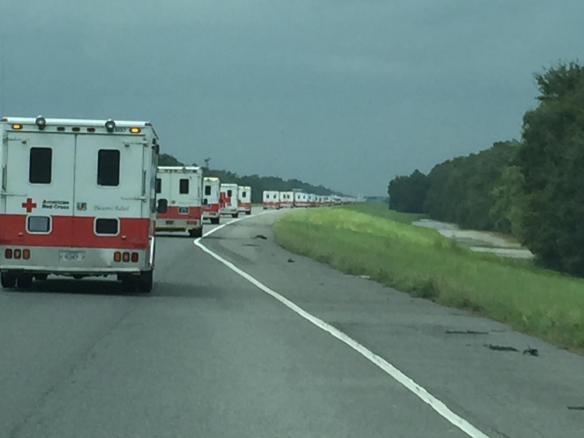
“We went from Baton Rouge to Hempstead in the Great Texas ERV Drive,” Rick said, referring to a convoy of more than 40 emergency response vehicles (ERVs) that made their way to the Houston area. “It took us hours and hours to get there.”

ERV drive

In total, eight groups headed to the area last Thursday.  They were able to communicate with one another through a smart phone app.

Cameron and Rick are working with partners from the Southern Baptist Convention, who set up a mobile kitchen for preparing the meals Red Cross workers will deliver.

“There’s a feeling of nervous energy,” said Rick. “We’ve spent time training on what to expect and we’re ready to go.”

To become a Red Cross volunteer, visit our volunteer page, or call 216-431-3328.

By the numbers:

· Saturday night, at least 32,399 people sought refuge in 226 Red Cross and partner shelters across Texas overnight. The Red Cross is also assisting the Louisiana state government with an emergency shelter which hosted nearly 1,700 people last night.

· More than 2,700 Red Cross disaster workers are on the ground, and more than 660 are on the way.

· Shelter supplies to support more than 85,000 people are on the ground.

· Along with our partners, we have served more than a half million (515,000) meals and snacks since the storm began.

· We have trailers of kitchen supplies on the ground to support 14 kitchens, each able to produce 10,000 meals a day, and 2 more trailers are on the way.

· We also have about 150,000 ready-to-eat meals currently on the ground with an additional 5,000 on the way.

· More than 215 emergency response vehicles have been activated to help deliver meals and relief supplies.

· Mental health and health services professionals have provided some 15,000 contacts to provide support and care to evacuees.

· We’ve distributed more than 27,000 relief items like diapers and comfort kits that contain deodorant, toothbrushes, toothpaste and other hygiene items for people forced from their homes. Cleaning and relief supplies to support more than 15,000 homes are on the ground, with an additional 5,000 on the way.