Home Fire Prevention Tips, Inspired by the TV Show “This Is Us”

By: Sue Wilson Cordle, Volunteer Leader and Board Member

Last night was a big night for NBC. And if you think it’s because the underdog Eagles upset the Patriots you’d only be partially right. It was the devastating loss after the game that has so many of us reeling. Jack Pearson, the loving, perfect-with-all-his-flaws husband and father died on NBC’s series This is Us.  

If you aren’t familiar with the show, it is a brilliantly written series about the Pearson family, told in a creative style of flashbacks from the parents and the kids’ youth, to the present day.

The generational story of Jack, his wife Rebecca and their 3 kids- triplets Kate, Randall and Kevin and how they discover deeper meaning in their present day lives after loss and tragedy is inspiring and compelling. Successful businessman and father Randall searches for information about his biological parents. Kate finds love and self-acceptance while battling obesity. Kevin pursues a more meaningful career, and battles his own demons which brings some difficult choices. Viewers have known from the beginning that Jack dies at some point while the kids were teenagers, but the dramatic episode aired last night after the big game, exposed the circumstances; that Jack died from a heart attack caused by the prolonged smoke exposure he suffered after saving his family from a home fire.

The fire started when a slow cooker with a faulty switch overheated and sparked. The Pearson home was old, with old wiring. The spark quickly turned into an electrical fire which spread rapidly to engulf the entire home. The smoke alarm did not sound because the batteries were dead. In fact, in previous episodes the fact that the Pearson’s kept forgetting to replace the batteries in the smoke alarms in the house was a set-up and hinted at how Jack’s death might unfold.

There has been some PR fallout for the company that makes Crock Pots, and NBC and the company itself has since been assuring people of the product’s safety- but the episode serves as a reminder and a public service announcement for all of us to unplug (not just turn off) our small appliances in our homes- from toasters in the kitchen to curling irons in the bathroom.

The Red Cross responds to hundreds of thousand of home fires nationally and has a number of reminders for basic fire prevention tips for your home:

  • Keep items that can catch on fire at least three feet away from anything that gets hot, such as space heaters.
  • Smoking materials are the leading cause of residential fire deaths in the United States. If you smoke, take precautions: Smoke outside; choose fire-safe cigarettes; never smoke in bed, when drowsy or medicated, or if anyone in the home is using oxygen.
  • If you do smoke, use deep, sturdy ashtrays and douse cigarette and cigar butts with water before disposal.
  • Talk to children regularly about the dangers of fire, matches and lighters and keep them out of reach.
  • Turn portable heaters off when you leave the room or go to sleep.
  • Never leave a burning candle unattended, even for a minute.
  • Unplug small appliances when not in use.

The Red Cross also has these 7 Ways to Prepare for a Home Fire

  1. Install the right number of smoke alarms. Test them once a month and replace the batteries at least once a year.
  2. Teach children what smoke alarms sound like and what to do when they hear one.
  3. Ensure that all household members know two ways to escape from every room of your home and know the family meeting spot outside of your home.
  4. Establish a family emergency communications plan and ensure that all household members know who to contact if they cannot find one another.
  5. Practice escaping from your home at least twice a year. Press the smoke alarm test button or yell “Fire“ to alert everyone that they must get out.
  6. Make sure everyone knows how to call 9-1-1.
  7. Teach household members to STOP, DROP and ROLL if their clothes should catch on fire.

For more information on preparedness resources from the Red Cross click here.


Disaster Relief Takes Flight

By: Debbie Chitester, Disaster Program Manager Summit, Portage, and Medina Counties

A few months ago an email came across my computer asking if I would be interested in partnering with the National Inventors Hall of Fame STEM High School.  Curious, I asked for more information.  The computer science class conducts problem based learning. The problem they were trying to solve was delivering disaster relief to people in hard-to-reach areas, a real world issue that they had seen on TV due to the 2017 hurricanes. They were starting to work with drones in the class and the teaching staff wanted a real world scenario so learners could relate the problem/solution process to something in real life.

Jorge Cropped

At first I was unsure if this was something we could do, but I was inspired by a photo of our Regional COO, Jorge Martinez,  hiking up the side of a mud covered hill in Puerto Rico to get water to a family following Hurricane Maria.

A task just perfect for a drone!  I agreed, and was scheduled to talk to the class about Disaster Cycle Services, what we do, and how we deliver service.

On a cold January day, I presented the “problem” to the learners.  I showed photos of Emergency Response Vehicles, clients walking through knee deep water to get to supplies, and Red Cross volunteers on one side of a river while the clients were on the other with no easy way to get supplies to them.  The learners were interested in the services we provide and asked good questions.  The coach (their term for the teacher) and I expressed the need and how this can save lives.  The problem demonstrated that drones could be used for more than having fun with friends, and could actually make a difference.

Their task was to create a flight plan, write code for the drone and write an essay about the experience.

On January 31, the class presented their projects.  The learners were ready to fly their drones and demonstrate how they could deliver supplies to multiple locations.  The gymnasium was set with three “landing depots”, the closer to center the better and the more points received.  The points represented the numbers of lives saved at each landing depot.  (They also received “style points” if they performed a flip between depots.) Each team had the opportunity for 2 “flights”.

That morning I was excited as I witnessed amazing young adults using math, geometry and trigonometry to program their flights, and loving what they were doing!

As I sat on the sidelines watching and encouraging the learners, I overheard one say to his teammate, who was upset by their results, “well we did not get the center, but we still saved lives.”

I thought he was being sarcastic, so I looked over at him. But no, it showed on their faces that they truly understood why they were doing this.

While some teams were more successful than others with their flights, every single team tried their hardest and learned that technology can save lives.

This partnership is something that was a first for both of us, and I look forward to solving other “problems” with them in the future.


To view a short video of a flight, visit https://twitter.com/NIHFHS/status/958742381557420032.


Give From the Heart Turns 20

Landerhaven Blood Drive Comes Amidst Critical Shortage, Urgent Need for Donations

By Christy Peters, External Communications Manager, Biomedical Services

The American Red Cross is partnering with Executive Caterers at Landerhaven for the 20th annual Give from the Heart Blood Drive. The blood drive is Tuesday, Feb. 6, from 7 a.m. to 7 p.m. at Landerhaven, 6111 Landerhaven Drive in Mayfield Heights.

IMG_0824

Photo Credit: Mary Williams/American Red Cross

The Give from the Heart Blood Drive is a lifesaving tradition in northeast Ohio. In the past 19 years, the event has collected more than 12,200 units of blood for local patients. All presenting donors will receive gifts from blood drive sponsors, while supplies last, and enjoy live entertainment throughout the drive. Donors will also enjoy gourmet food for breakfast, lunch or dinner, courtesy of Executive Caterers.

This blood drive comes as the Red Cross faces a severe blood shortage. Ongoing winter weather has more than doubled the number of canceled Red Cross blood drives and the resulting blood and platelet donation shortfall since earlier this month. Blood donations are critically needed now so patients can continue to receive the lifesaving treatments they need. Right now, blood products are being distributed to hospitals faster than they are coming in.

To schedule an appointment for this special event, download the free Red Cross Blood Donor App, visit rcblood.org/appt and enter code: Landerhaven  or call 1-800-RED CROSS (1-800-733-2767).


Even When A River Doesn’t Run Through It

Whether you live ten feet or ten miles from one of the many rivers and streams that run through Northeast Ohio, you never know when heavy rains and melting snow will combine to produce a terrible flood. Here are some ways to keep your friends and family safe as we look to the skies over the next few weeks.

Hurricane Harvey 2017

Right Before a Flood

  • Listen to local area radio, NOAA radio or TV stations for the latest information and updates.
  • Be prepared to evacuate quickly and know your routes and destinations. Find a local emergency shelter.
  • Check your emergency kit and replenish any items missing or in short supply, especially medications or other medical supplies. Keep it nearby.
Then, If You Can, Do This
  • Fill plastic bottles with clean water for drinking.
  • Fill bathtubs and sinks with water for flushing the toilet or washing the floor or clothing.
  • Fill your car’s gas tank, in case you need to evacuate.
  • Bring outdoor belongings, such as patio furniture, indoors.
  • Turn off propane tanks to reduce the potential for fire.
If You Have Pets or Livestock
  • Consider a precautionary evacuation of your animals, especially any large or numerous animals. Waiting until the last minute could be fatal for them and dangerous for you.
  • Where possible, move livestock to higher ground. If using a horse or other trailer to evacuate your animals, move sooner rather than later.
  • Bring your companion animals indoors and maintain direct control of them. Be sure that your pet emergency kit is ready to go in case of evacuation.

Staying Safe Indoors

  • Turn off the power and water mains if instructed to do so by local authorities.
  • Boil tap water until water sources have been declared safe.
  • Avoid contact with floodwater. It may be contaminated with sewage or contain dangerous insects or animals.
  • Continue listening to local area radio, NOAA radio or TV stations for the latest information and updates.
  • Don’t use gas or electrical appliances that have been flooded.
  • Dispose of any food that comes into contact with flood water .

Staying Safe Outdoors

  • Don’t walk, swim or drive through floodwater. Just six inches of fast-flowing water can knock you over and two feet will float a car.
  • If caught on a flooded road with rapidly rising waters, get out of the car quickly and move to higher ground.
  • Don’t walk on beaches or riverbanks.
  • Don’t allow children to play in or near flood water.
  • Avoid contact with floodwater. It may be contaminated with sewage or contain dangerous insects or animals.
  • Stay out of areas subject to flooding. Underpasses, dips, low spots, washes, etc. can become filled with water.

For more information on what to do if your home becomes flooded, visit http://www.redcross.org/get-help/how-to-prepare-for-emergencies/types-of-emergencies/flood#After.

Firm Steps Up During Urgent Appeal for Blood Donations

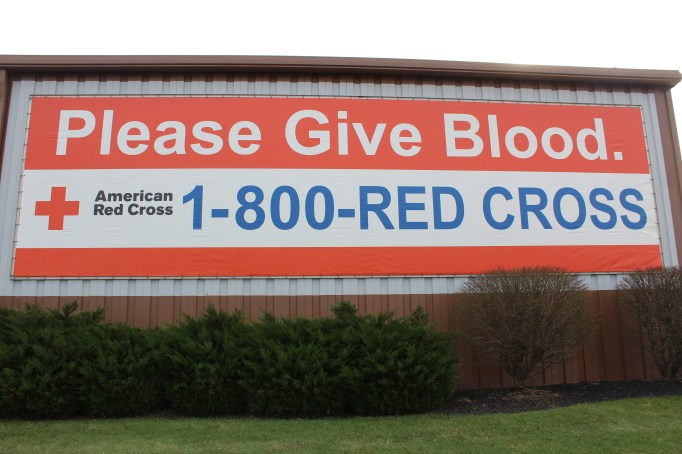
You can’t miss the banner as you drive just east of downtown Cleveland on I-90.

It’s huge.
IMG_5153

The timing of the message, hanging on a wall facing north at Jergens Inc. couldn’t be better. There is an urgent need for blood and platelet donors, due to a donation shortage this winter.  But even if there wasn’t a shortage, that banner would still be hanging, urging motorists to become blood donors.

“We hang the banner at this time every year,” said Jack Schron, President and CEO of Jergens Inc.  They also hold employee blood drives, 4 or 5 a year, about every 56 days – which is the amount of time donors must wait before giving blood again.

“It’s just the right thing to do, a way to give back,” said Schron, who added, “A lot of people can write a check, but as I tell my kids, only you can decide whether to give your blood and your time.”

Schron shared his motivation for hosting regular blood drives as he donated another pint.  His 83rd.  The CEO of the Red Cross of Northeast Ohio, Mike Parks, joined Schron as they both gave the gift of life.


“We want to recognize loyalty,” said Parks.  “When you look at the culture of this company, the 25-year employees, it’s evident that this company really values loyalty.”

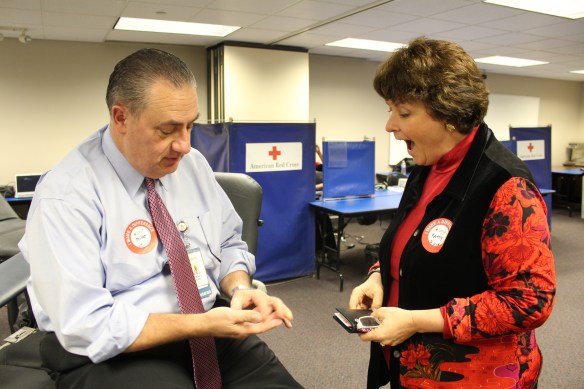
Parks gave a “Challenge Coin” to long-time Human Resources Director, Kathy Puskas, for organizing the blood drives at Jergens for the past 25 years.
IMG_5209

Mike Parks gives a Challenge Coin to Kathy Puskas, long-time Human Resources Director at Jergens Inc. for organizing more than 100 blood drives at the Cleveland manufacturing plant

As we recently noted, severe winter weather, in addition to seasonal illnesses and hectic holiday schedules, have collectively contributed to about 28,000 fewer donations than what was needed in November and December. Blood and platelet donations are being distributed to hospitals as fast as they come in. The Red Cross must collect more than 13,000 blood and platelet donations every day for patients at about 2,600 hospitals and transfusion centers nationwide.

“The Red Cross is grateful to Jergens, and so many companies throughout Northeast Ohio who host regular blood drives throughout the year,” said Christy Peters, External Communications Manager for the Northern Ohio Region.  “If they did not open their doors and allow us to have blood drives, we could not continue to meet the needs of local hospitals. Every blood drive sponsor is a vital part of our lifesaving mission.”

Eligible donors can schedule an appointment to donate by using the free Blood Donor App, visiting redcrossblood.org or calling 1-800-RED CROSS (1-800-733-2767).

“Hey, if you can do it,” says Schron, “go for it!”

When the Weather Outside is Frightful, Driving Can Be, Too!

By Brad Galvan, American Red Cross Communications Volunteer

When wintry conditions strike, it can make for treacherous travel.  Follow these suggestions for staying safe so you can get over the river and through the woods this winter.

If you do not HAVE to go out, stay home.

– many employers have flexible options for poor weather days – speak with your supervisor and work out a proactive plan that involves Skype, email and instant messages so you can still get the job done.

generally, meteorologists give plenty of notice when winter storms are on their way. That’s your cue to stock your pantry and tackle any errands that may need to get done prior to being snowed-in.

If you truly need to go out, here’s how to stay safe:

Vehicle: make sure your car has plenty of fuel, windshield washer fluid, a snow brush and a safety kit. The best kits contain: flares, a bright safety vest, a blanket, tire pressure gauge, jumper cables, flashlight and minor first aid supplies. Your vehicle should be equipped with quality tires, working wipers and heat as well as a working defrost system. You’ll also want to make sure your cell phone is fully charged.

Bring enough of the following for each person:

  • Blankets or sleeping bags
  • Rain gear, extra sets of dry clothing, mittens, socks, and wool hats
  • Newspapers for insulation
  • Plastic bags for sanitation
  • Canned fruit, nuts, and high energy snacks (Include a non-electric can opener if necessary)
  • Warm broth in a thermos and several bottles of water
  • Keep a cell phone or two-way radio with you. Make sure the battery is charged.
  • Plan to travel during daylight and, if possible, take at least one other person with you.
  • Let someone know your destination, your route, and when you expect to arrive. If your vehicle gets stuck along the way, help can be sent along your predetermined route.
  • Before leaving, listen to weather reports for your area and the areas you will be passing through, or call the state highway patrol for the latest road conditions.
  • Be on the lookout for sleet, freezing rain, freezing drizzle, and dense fog, which can make driving very hazardous

The drive: Prior to hitting the road, be sure to have your preferred route and a back-up route in-case the weather gets to be too severe. You’ll need to make sure all snow, frost and ice is removed from your vehicle, including the roof.

Once you are behind the wheel, it’s important to maintain proper distance from the vehicles ahead of you. The slick roads could cause breaking to be a challenge so give yourself plenty of space. Additionally, the snow plows on the roads are there for your safety – please be generous with the space you give them, too. The plows generally travel well below the speed limit, so be patient.

For more winter driving tips, visit here.26196357_10155747520710071_8760805260501895770_n

As pretty as Northern Ohio winters can be, they can be even more frustrating to navigate. Remember to take your time and take precautions to travel safely. And if it can wait, just enjoy a cup of hot cocoa from the comfort of your warm home!

The Need Never Ends

Red Cross issues urgent call for blood and platelet donors

This January, National Blood Donor Month, the American Red Cross has an urgent need for blood and platelet donors of all blood types to make an appointment to give now and help address a winter blood donation shortage. Severe winter weather, in addition to seasonal illnesses and hectic holiday schedules have collectively contributed to more than 28,000 fewer donations than what was needed in November and December.

There is a critical need for the following blood and donation types right now:

  • Platelets: The clotting portion of blood primarily given to cancer patients during treatment and always in great demand.
  • Type O negative: The blood type that can be transfused to almost everyone and is what doctors reach for in trauma situations.
  • Type B negative: The blood type that can be transfused to type B Rh-positive and negative patients.
  • Type AB: The plasma type that can be transfused to almost everyone and can be donated through a platelet or plasma donation, where available, or during a regular blood donation.

Right now, blood and platelet donations are being distributed to hospitals as fast as they come in. The Red Cross must collect more than 13,000 blood and platelet donations every day for patients at about 2,600 hospitals and transfusion centers nationwide.

Eligible donors can find a blood platelet donation opportunity and schedule an appointment to donate by using the free Blood Donor App, visiting redcrossblood.org or calling 1-800-RED CROSS (1-800-733-2767). Donation appointments and completion of a RapidPass are encouraged to help speed up the donation process. RapidPass lets donors complete the pre-donation reading and answer the health history questionnaire online, on the day of their donation, by visiting redcrossblood.org/rapidpass from the convenience of a mobile device or computer, or through the Blood Donor App.

Red Cross Workers Respond to Multiple Home Fires

Nearly a dozen responses to disasters over the holiday weekend

MedinaFire

The lives of more than 50 residents of Northeast Ohio were disrupted over the New Year holiday weekend by disasters, the vast majority of them home fires.

Red Cross disaster workers responded to home fires in 5 Northeast Ohio counties, providing assistance to 29 adults and 24 children.  Immediate financial assistance totaling $11,415 was provided to the affected residents, to help them find suitable lodging, or to meet other immediate needs.

Other assistance, including comfort kits and initial case work was also provided.

“It’s never a good time to go through something like a home fire,” said Tim O’Toole, Regional Disaster Officer.  “It’s especially hard on families to be chased from their homes during the holidays.  We are grateful there was no loss of life over the weekend, and we’re thankful for our dedicated volunteers who responded to these residents in need.”

Red Cross workers from the Northeast Ohio Region responded to disasters, including multiple family home fires, in Cleveland, North Olmsted, Garfield Heights, Chesterland, Sandusky, Girard, Cadiz and Monroeville.

In addition to our weekend disaster response, the Red Cross is continuing to provide support to several warming centers in the city of Cleveland, with cots and blankets as requested.

The bitter cold temperatures are expected to continue to affect millions of people this week and the Red Cross has steps they should follow to stay safe during the ongoing deep freeze:

WINTER SAFETY TIPS

  • Wear layers of clothing, a hat, mittens and waterproof, insulated boots.
  • Be careful when tackling strenuous tasks like shoveling snow in cold temperatures.
  • Check on your neighbors, especially elderly people living alone, people with disabilities and children.
  • Bring pets indoors. If they can’t come inside, make sure they have enough shelter to keep them warm and that they can get to unfrozen water.
  • Watch for hypothermia and frostbite. Hypothermia symptoms include confusion, dizziness, exhaustion and severe shivering. Frostbite symptoms include numbness, flushed gray, white, blue or yellow skin discoloration, numbness, or waxy feeling skin.

Plow

WINTER TRAVEL SAFETY

Stay off the road if possible during severe weather. If you have to drive, follow these tips:

  • Make sure everyone has their seat belts on and give your full attention to the road.
  • Don’t follow other vehicles too closely. Sudden stops are difficult on snowy roadways.
  • Don’t use cruise control when driving in winter weather.
  • Don’t pass snow plows.
  • Ramps, bridges and overpasses freeze before roadways.

PREVENT HOME FIRES

With the cold temperatures there is often a rise in the number of home fires. Follow these tips to help prevent a fire in your home:

  • Keep all potential sources of fuel paper, clothing, bedding, curtains or rugs – at least three feet away from sources of heat.
  •  Never leave portable heaters and fireplaces unattended.
  • Place space heaters on a level, hard and nonflammable surface. Keep children and pets away from space heaters. Look for models that shut off automatically if the heater falls over.
  • Never use a cooking range or oven to heat your home.
  • Keep fire in your fireplace by using a glass or metal fire screen.


DOWNLOAD APPS People can download the Red Cross Emergency App for instant access to weather alerts for their area and where loved ones live. Expert medical guidance and a hospital locator are included in the First Aid App in case travelers encounter any mishaps. Both apps are available to download for free in app stores or at redcross.org/apps.


Resolve to be Prepared

by: Melissa Papini, Disaster Program Manager

As we spend time reflecting on the closing of 2017, celebrating the season with our loved ones, being thankful for all the little things that bring us joy like safety and security, let’s also take time to think about (and say prayers for, if you’re so moved) our friends and family all over the world whose safety and security was threatened this year by natural disasters.

12292-409.jpgI recently heard an interview on the radio about a couple who moved from Brooklyn, NY to Ventura, CA this year. The interview was about the mandatory evacuations in their neighborhood related to the Thomas fire. They talked about how different it is to live in a community that has to be prepared at all times to flee their homes. Everyone they know has an emergency kit ready for not if, but when the wildfires get too close. That observation struck me. We live in a part of the country where very few people have natural disasters on their minds regularly. How many people do you know in Northeast Ohio that have an emergency kit ready at home?

Through my recent career move to “all things disaster,” my 10-year-old daughter has picked up on the idea of disaster preparedness. She has heard me talking about the Pillowcase Project and has created her own emergency kit that she’s packed in a pillowcase. She has a change of clothes, a flashlight, and a first aid kit ready to go if we ever need it. After reviewing the checklist in the Pillowcase Project booklet, I may suggest she add things like toiletries, markers and paper, a blanket, and a favorite toy.

For a detailed list of items that you can put together to create an entire household emergency kit please refer to our previous posts. There are also many Red Cross apps that can help you be prepared for and alerted about local disasters.

One other thing I’ve realized about preparedness through follow-up casework with our clients who’ve had home fires is how important it is to create an inventory of the contents of your home. If you are ever in a situation where you have a fire, your insurance company cannot begin to help you start replacing things until you’ve created a detailed inventory list for them. This is a daunting task for people who have millions of other things on their minds after a home fire. The easiest way to do this is take videos in each room of your home. Be sure to open drawers where you may have valuables too. Keep a copy of this video somewhere safe like an external hard drive in a fire proof lock box, the cloud, or you can even email it to yourself.

If you are like me and can’t wait to crack open your new planner for 2018 and start making lists of goals, be sure to add preparedness to your list of resolutions!

Staying Out of the Frigid Temps? Then it’s Quiz Time!

It’s time for a little quiz.

How many of you burn fuels such as:

⎕ Gasoline?

⎕ Wood?

⎕ Propane?

Did you check any one of the boxes? All of the boxes? If the answer is “yes”, you have the potential of being poisoned by a small amount of Carbon Monoxide, or CO. CO is an odorless, colorless gas. It can kill you.

CO is found in fumes produced any time you burn fuel in cars or trucks, small engines, stoves, lanterns, grills, fireplaces, gas ranges, or furnaces. CO can build up indoors and poison people and animals who breathe it.

According to the CDC, while everyone is at risk for CO poisoning, infants, the elderly, and people with chronic heart disease, anemia, or breathing problems are more likely to get sick from CO. Each year, more than 400 Americans die from unintentional CO poisoning not linked to fires, more than 20,000 visit the emergency room, and more than 4,000 are hospitalized.

How can you keep your family and friends safe?

  • Know the symptoms of carbon monoxide poisoning: headache, dizziness, weakness, nausea, vomiting, sleepiness, and confusion. If you suspect carbon monoxide poisoning, move quickly to a fresh air location, and then call 9-1-1.
  • Install carbon monoxide alarms in central locations on every level of your home and outside sleeping areas (avoid corners where air does not circulate). Test the alarm every month.
  • Treat the alarm signal as a real emergency each time. If the alarm sounds and you are not experiencing any symptoms described above, press the reset button. If the alarm continues to sound, call the fire department.
  • Do not use gas appliances such as ranges, ovens or clothes dryers to heat your home.
  • Never use a generator, grill or camp stove inside a home, garage or basement.
  • Have heating systems (including chimneys and vents) inspected and serviced annually, checking for blockages, corrosion, and partial and complete disconnections.
  • Never run your car or truck inside a garage that is attached to a house even with the garage door open. Always open the door to a detached garage to let in fresh air when you run a car or truck inside.

Learn more about how you and your family can stay safe this winter. Visit www.redcross.org/prepare for helpful tips, tricks and information.

Young Woman Makes An Emergency Call