By Samantha Pudelski, American Red Cross Volunteer
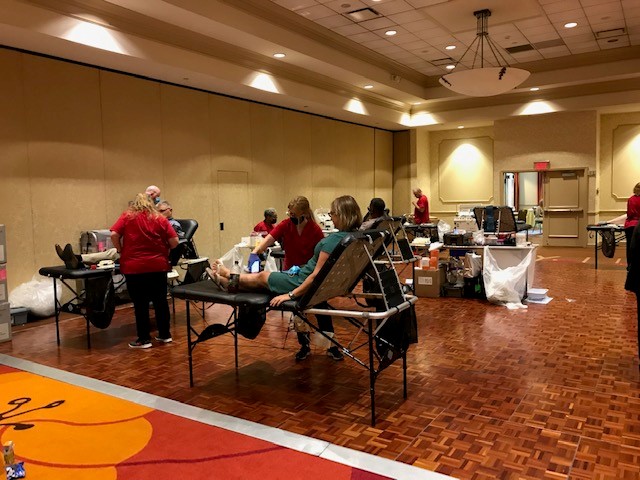
The American Red Cross of Northern Ohio held holiday blood drives across the region, providing an opportunity for donors to give the gift of life for people in need during this holiday season.
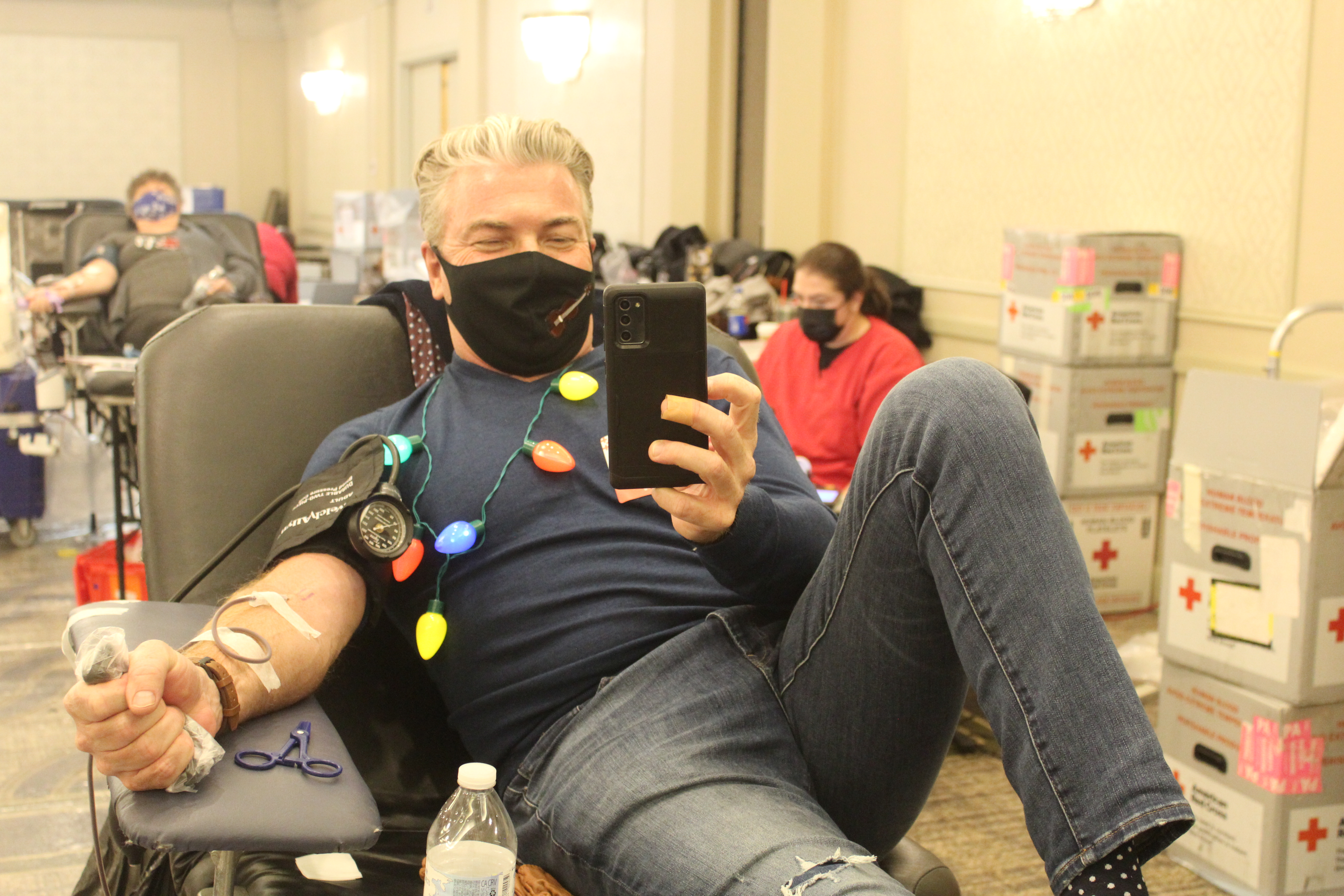
Hailee Horstman, Blood Donor
The drives were held between December 14th and December 23rd at the Rocket Mortgage Fieldhouse in Cleveland, the Hilton Garden Inn in Twinsburg, the Sheraton Suites Akron/Cuyahoga Falls, the Hilton Garden Inn in Perrysburg and Stambaugh Auditorium and Packard Music Hall in Youngstown.
Daniel Salmons, Blood Donor
The Red Cross put the call out to the public, encouraging them to donate at our holiday drives, and our community members answered. Across all of the holiday blood drives, 1,240 pints of blood were donated to provide critical help for patients across the region.
Each donation can help up to three patients awaiting a blood product – red blood cells, platelets, or plasma. That means more than 3,700 people will possibly benefit by the donations made at this year’s holiday blood drives.
Lee Holmes-Blood Donor
Blood donations help patients in our community of all ages, including accident and burn victims, heart surgery and organ transplant patients, and those battling cancer, among others. In fact, every two seconds someone in the U.S. needs blood.
The need this year is high, as pandemic challenges and concerns, along with the typical winter lulls, have resulted in historically low levels of blood supply. If you haven’t had a chance to donate—don’t delay. We are calling all eligible donors this January as part of National Blood Donor Month to roll up their sleeves and donate. To find an upcoming blood donation drive near you, click here.
Many will spend the holidays away from home to help others
Two more disaster workers – volunteers – from Northern Ohio left their homes today to head to Kentucky, where they will join the American Red Cross disaster relief operation in Kentucky.
Al Irwin and Barb Gabel departed from the Greater Akron and the Mahoning Valley chapter headquarters Monday morning, December 20th, in an emergency response vehicle (ERV), fully aware that they will be spending the Christmas holiday away from home.
Al Irwin and Barb Gabel
“It’s the first time in forever I haven’t been with my kids,” Barb said. “They understand. They know this is what I really want to do, so I’m going to celebrate when I get home.”
Al shared similar sentiments. “Especially at this time of year, I can’t even imagine what they’re going through,” he said. “Anything we can to to help alleviate their pain, I’m all in.”
Today, some 470 trained Red Cross disaster workers from all over the country remain on the ground in multiple states, providing shelter, meals, comfort and support after last week’s devastating tornadoes that left behind a heartbreaking trail of destruction. Our hearts go out to all those whose lives have been forever changed by these deadly storms.
In Kentucky, hundreds of people remain displaced, and the Red Cross is working alongside state officials and other community organizations to support those staying in emergency shelters and other temporary accommodations, such as state park lodges and hotel rooms.
With the help of partners, the Red Cross has served more than 28,000 meals and snacks, distributed more than 16,700 relief items, and provided more than 3,800 individual care contacts to help people with medical or disability needs, as well as emotional and spiritual support during these challenging times.
This will be the third time Al has been part of an ERV crew at a disaster. He expects to be loaded with food, water, and critical supplies when they arrive at their destination in Kentucky, and to then drive into impacted areas to bring much needed relief to people who have suffered so much.
“Anything I’m feeling right now, they have it much, much worse,” Barb said. “Anything I can do to ease their pain and make them happy, I’ll do it.”
Everyone knows that being prepared for a holiday is the key to truly enjoying it. Conversely, a lack of preparation, not only creates stress, but it also creates accidents. And who needs that on a holiday?
To that end, here are a dozen to-do’s and don’ts, (mostly don’ts) that will make your holidays more merry.
Decorations to avoid if you have pets
Holly, poinsettia, and mistletoe – they are all poisonous to your dog.
As mentioned last month, real candles can be a danger if pets can get near them. Cats can get most anywhere, BTW.
Silver icicle strands are so interesting to pets who like to play with it, but it is a choking hazard for them.
You need to provide live trees with a good supply of water , but cover it so pets aren’t tempted to drink. It can get stagnant easily, and could contain bacteria that will make your pet sick.
Low-hanging ornaments are a temptation for pets. Save that lower space for presents under the tree.
Best practice, if possible, would be to set a pet fence around your tree and gifts.
Serving suggestions
In case you’ve not had dogs before, they love chocolates; but chocolate is extremely toxic and dangerous for them. Teach your children and guests not to offer them to your pups.
If you spike your eggnog, be sure to put a warning label on the bottle or serving pitcher. My dad’s friend poured a big bowl for his dog, and by the time my dad saw him, the poor dog was bouncing off the walls. (True story)
Meal prep and cleanup
Avoid the temptation to buy that big bird a week ahead of time. Many stores let you order in advance and pick up your order from the store just a day or two before your holiday. Saves worrying about adequately defrosting a big bird in time, and keeps a fresh bird from spoiling.
Don’t use the same cutting board for poultry and veggies or fruit, unless you sanitize vigorously between. Avoid bacterial contamination, which could cause your family to get sick.
Keep guests out of the kitchen, especially during flu season. Serve light appetizers elsewhere to keep them from snitching “tastes” of the food as you are carving. Most likely they haven’t washed their hands before tasting.
Reheat your leftovers to 165 degrees throughout or until steaming hot. Soups, sauces and gravies should be brought to a rolling boil for one-minute before re-serving.
Speaking about food safety, the American Red Cross offers all our disaster team members a great food safety course – for free. We could use more team members ready to respond to disasters, and would love to have you join the team. You can learn more here.
It was another busy weekend for American Red Cross Northern Ohio disaster volunteers. Disaster action team members assisted families in nine counties who were affected by home fires, storms and a building collapse. The Red Cross helped 56 individuals, providing $11,433 in immediate assistance. Tragically, two young children died in one home fire. The Red Cross continues to provide home fire safety information to residents and install smoke alarms for those who need them. To request a smoke alarm, visit this site.
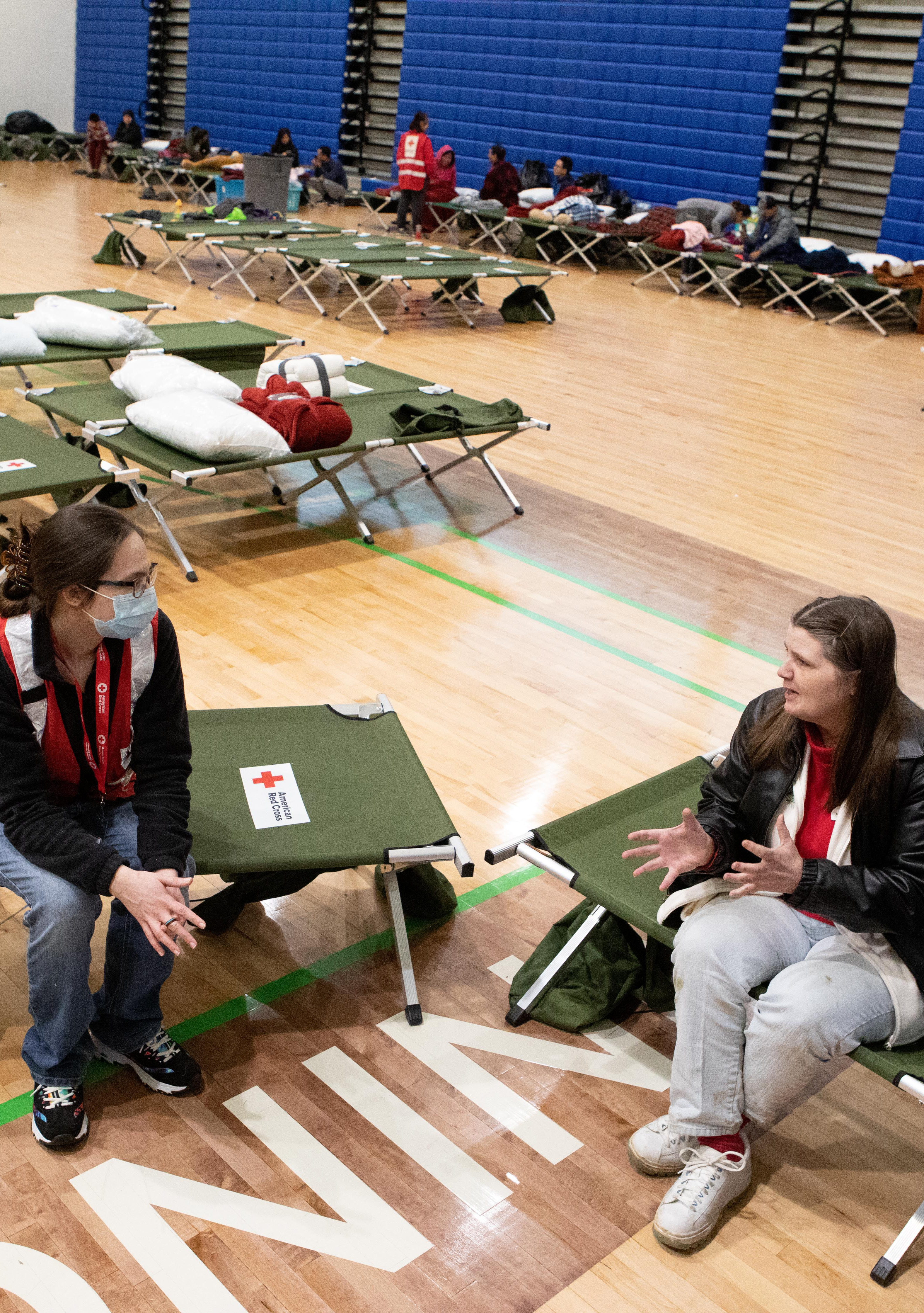
December 12, 2021. Bowling Green, Kentucky. Sharon Wilson speaks to Red Cross volunteer Amy Miller and explains what happened to her last Saturday morning. Photo by Marko Kokic/American Red Cross
In addition to responding to local disasters, the Red Cross is deeply saddened by the loss of life and incredible devastation brought by the horrific tornadoes that touched down this weekend across multiple states in the center of the country. Over the weekend, Red Cross personnel and volunteers were busy mobilizing to help assist on large relief efforts in Kentucky, Tennessee, Arkansas, and Missouri to provide safe shelter, comfort and support in the face of one of the most devastating tornado outbreaks in years. Northern Ohio volunteers will be leaving in the coming days along with two emergency response vehicles from the Region, each with a two-person crew.
If you are a current volunteer with the Red Cross, please consider deploying to assist in the relief efforts around the Midwest and southern tornadoes. With such widespread damage, we know families will need support for weeks to come and the Red Cross will be there for as long as we are needed. To be considered for deployment, please update your availability in Volunteer Connection and someone will contact you. The Red Cross also needs additional volunteers who are willing to be trained and to deploy to future disasters. A two-week commitment is typically required. Visit our website or call 216-431-3328 to apply.
In addition to disaster relief, the Red Cross has also provided approximately 200 additional blood products to hospitals in response to these devastating tornadoes. We remain in contact with our hospital partners throughout the affected areas and stand ready to provide additional blood products as needed. We anticipate Red Cross blood drives in affected communities may be canceled or experience lower donor turnout in the coming days, straining supply levels. We depend on the community to donate blood so we are able to provide it to those in need each day. If you are eligible to give, please schedule an appointment in the coming weeks. If you have questions about your eligibility to give, learn more here or call 1-800-RED CROSS (1-800-733-2767).
The gift of blood has never been more in-demand perhaps than it is this holiday season. Between the typical winter lulls, pandemic challenges and concerns, and more, the American Red Cross is facing historically low levels of blood supply.
With that, the Red Cross is urging the public to answer the call to donate, and soon. In a recent press release, the Northern Ohio Region of the Red Cross noted that “if more donors don’t come forward to give blood, some patients requiring a transfusion may potentially face delays in care.” Each pint of blood donated has the potential to help up to three people.”
In the coming weeks, the Red Cross will host several special holiday blood drives throughout the Northern Ohio Region. These drives offer special gifts for donors, refreshments and the chance to enter drawings for various prizes. Below is information for each blood drive, as well as a link to make an appointment. We encourage everyone to make an appointment, as these special events tend to be busier than the average blood drive.
Tuesday, Dec. 14, 2021 8 a.m. – 2 p.m. Rocket Mortgage Fieldhouse 1 Center Court Cleveland, OH 44115 Appointments: Click here and enter code: ROCKET
Wednesday, Dec. 15, 2021 7 a.m. – 7 p.m. Hilton Garden Inn Twinsburg 8971 Wilcox Drive Twinsburg, OH 44087 Appointments: Click here and enter code: HILTONTWINSBURG
Tuesday, Dec. 21, 2021 7 a.m. – 7 p.m. Sheraton Suites Akron/Cuyahoga Falls 1989 Front Street Cuyahoga Falls, OH 44221 Appointments: Click here and enter code: SUMMA
Tuesday, Dec. 21, 2021 8 a.m. – 4 p.m. Hilton Garden Inn 6165 Levis Commons Perrysburg, OH 43551 Appointments: Click here and enter code: WNWO
Wednesday, Dec. 22, 2021 9 a.m. – 4 p.m. Stambaugh Auditorium 1000 Fifth Ave Youngstown, OH 44504 Packard Music Hall 1703 Mahoning Ave. Warren, OH 44483 Appointments for both sites: Click here and enter code HOLIDAYHERO
And, if you’re not able to join us at a holiday blood drive, please visit redcrossblood.org and make an appointment for a blood drive that fits your schedule.
As an extra incentive, donors who give blood between the 17th of this month and January 2nd will get an exclusive Red Cross long-sleeved T-shirt, while supplies last.
To expedite the donation process, you’re encouraged to schedule an appointment through the Red Cross Blood Donor app that you can download to your smartphone, visiting RedCrossBlood.org, or by calling 1-800-RED-CROSS (733-2767). You can also complete a RapidPass that allows you to expedite the pre-donation process through an online questionnaire the day you are donating.
A reminder: All donors must bring a blood donor card or a valid driver’s license or two other forms of identification that will be verified at check-in. To see more requirements and COVID-19 protocols, click here.
While many of us enjoyed time relaxing with family and friends over the Thanksgiving holiday, American Red Cross disaster volunteers were busy responding to multiple incidents across the Northern Ohio Region. During the week of Thanksgiving, November 22-28, the Red Cross of Northern Ohio responded to 34 home fires, affecting 110 adults and children. We distributed more than $22,000 in immediate assistance to help these families begin the recovery process.
Of the many responses that happened in the past week, three occurred on Thanksgiving Day. Dedicated volunteers in the Northern Ohio Region left their own families and celebrations to assist families facing one of the worst days imaginable. Without the continued commitment of volunteers who are available 24/7 to respond to disasters, the Red Cross could not meet the needs of the many communities we serve.
The Red Cross normally sees an increase in local disasters, especially home fires, during the holiday season and this year is no exception. Cooking accidents and home heating mistakes often lead to fires that leave families stranded during the winter months. The Red Cross encourages the community to celebrate safely in the coming weeks and to read up on our tips to cook and decorate safely.
It’s also important that families are prepared for a home fire that could happen at any time. In most cases, families have less than two minutes to escape a home fire, although many believe they have much longer. The Red Cross encourages you to protect your family by taking two simple steps.
Practice your two-minute escape drill
Test your smoke alarms monthly
In an effort to #EndHomeFires, the Red Cross continues to provide home fire safety information to residents and to install smoke alarms for those who need them. On Monday Nov. 29, volunteers visited 22 homes and installed 67 smoke alarms in Cleveland and East Cleveland. View our photo album here.
For more information on the Red Cross Home Fire Campaign, fire safety tips, or to request a smoke alarm, please visit this site. The Red Cross also has an urgent need for volunteers to respond to local disasters and help in other ways as we carry out our lifesaving mission. Learn more about our volunteer positions and sign up today.
Please take part in Red Cross Giving Tuesday as #HelpCantWait
Tim Poe, American Red Cross Volunteer.
September 7, 2021. Kenner, Louisiana. American Red Cross volunteer, Charisse Brown, hands out hot meals and words of comfort to residents of Kenner, Louisiana, after over a week of power outages in the community. Photo by Scott Dalton/American Red Cross
In my various capacities as an American Red Cross volunteer the last few years, I have seen the impact of your donations, whether financial support, donating blood, or volunteering time and expertise. I have seen the moment in people’s faces when despair turns to hope following a disaster and they begin focusing on recovery, the appreciation of first responders receiving food and beverages while working at a large-scale event, and the caring during the organized bustle of blood drives. I have also been fortunate to speak with veterans and their families assisted by the Red Cross, met people who saved lives with the help of Red Cross training, and worked alongside incredibly kind and dedicated fellow volunteers and staff members. I, my family, and friends have also benefitted from the Red Cross in our personal lives, both through lifesaving blood donations and a deployed relative brought home after his mother passed. None of this would have been possible without donations.
The monetary value of items I have seen provided varies, from a cup of coffee and toiletries to food and safe shelter to the pricelessness of needed blood and assistance from well-trained people.
On Giving Tuesday, please consider donating to the Red Cross. The effectiveness of your donations is tremendous and, as this recent article states, needed now more than ever. This year alone Northern Ohio Red Cross staff and volunteers responded to nearly 1,200 disasters, aiding more than 1,800 people.
There is also a critical need for blood—the Red Cross distributed 250,000 more blood products this year—while the pandemic caused fewer blood drives and donors, a 32% decrease in Northern Ohio and a 34% drop nationally. The Red Cross’s blood supply is at its lowest in more than a decade.
Also, the COVID-19 pandemic, severe weather, and global conflict have created tremendous demand for Red Cross services and posed significant challenges. Nationally, the Red Cross launched a new major relief effort every 11 days to provide refuge, food, and care. Families displaced by disasters spent an average of nearly 30 days in a Red Cross-supported emergency shelter. In addition, 2.1 million essential items were provided to evacuees and children seeking asylum.
To provide a sense of scale for the impact of your donations, each day the Red Cross:
helps nearly 170 families affected by a home fire or other disaster,
collects about 12,500 blood donations to help people in need,
provides critical aid to members of the military, veterans, and their families around 1,400 times,
along with its partners, helps provide more than 683,000 rubella vaccinations to children,
and provides lifesaving training to nearly 13,000 people.
To help provide financial support, please visit this link. To schedule a blood donation, please see here. And to explore volunteer opportunities, please click here.
When I was young, I visited the home of an elderly Finnish couple. I remember the heavenly aroma of special cookies baking for the upcoming Christmas holiday.
But my most vivid memory of that visit was of an unfinished wooden frame in the shape of a Christmas tree with delicate straw ornaments and real candles burning!
I asked my dad why we didn’t have real candles on our tree. He immediately dismissed the idea as “too dangerous.” Boy, was he right: According to the National Fire Protection Association, candles cause an average 20 home fires a day in the U.S., and these emergencies peak in December and January.
The American Red Cross suggests that if you’re decorating with candles this holiday season, consider using the battery-operated kind. They’re flameless, many are scented and they come in a variety of styles, from votives and pillars to tapers for windowsills and the dining table. If you must use real candles, keep them away from anything that could burn and out of reach of pets and children. Never leave burning candles unattended.
The Red Cross offers other steps you can take to be sure you and your family enjoy the holidays safely: – Check all light cords to ensure they aren’t frayed or broken. Don’t string too many strands of lights together – no more than three per extension cord. – Turn off all holiday lights – including window candles – when going to bed or leaving the house. – Be sure outside decorations are labeled for outdoor use and fasten lights securely to your home or trees. If you’re using hooks or nails outside, make sure they’re insulated to avoid an electrocution or fire hazard. – If you’re buying an artificial tree, look for a fire-resistant label. When putting it up, keep it away from fireplaces, radiators and other sources of heat. Never use electric lights on metallic trees. – If you’re getting a live tree, make sure it’s fresh – and keep it watered. To test if the tree is fresh, bend the needles up and down to make sure needles aren’t falling off. – Clear the mantel of stockings and other dangling decorations before lighting a fireplace. – Check the labels on older decorations. Some older tinsel is lead-based. If using angel hair, wear gloves to avoid irritation. Avoid breathing in artificial snow. – If you’re using a ladder to hang the mistletoe or place a tree-topper, be extra careful. Make sure to have good, stable placement and wear shoes that allow for good traction.
The Red Cross responds to more than 60,000 disasters a year – and the majority are home fires. Home fires claim seven lives a day in the U.S., but working smoke alarms can cut the risk of death by half. This is a good time to test your smoke alarms and practice your home fire escape plan until everyone can get out in less than two minutes: That’s how long you may have to leave a burning home before it’s too late.
If you’re looking for a gift for that someone “who has everything,” how about a new smoke alarm, carbon monoxide detector, fire extinguisher or emergency escape ladder?
How about a donation in that person’s name to the American Red Cross, to support activities that help prepare for, prevent and respond to disasters down the street, across the country and around the world? To make a donation, visit here.
Bring hope to the holidays by donating on Giving Tuesday or giving blood to help overcome the nation’s emergency blood shortage
In 2021, people in Northern Ohio and across the country faced great emergency needs as the ongoing pandemic exacerbated the challenges related to severe disasters, blood shortages and global conflict.
“Our most vulnerable neighbors are facing unique and pressing struggles when crisis strikes on top of COVID-19,” Mike Parks, Regional CEO said. “This holiday season, join us to provide help and hope in these difficult moments by making a financial donation or by giving blood or platelets.”
Visit redcross.org to make a financial donation or an appointment to give blood or platelets. Individuals can also learn about volunteer opportunities in their area and give back in honor of American Red Cross founder Clara Barton, whose 200th birthday will be commemorated on December 25.
RELENTLESS DISASTERS COMPOUND COVID-19 STRUGGLES 2021 marked one of the country’s most active years for severe weather — which battered many communities still reeling from last year’s disasters. For thousands of people in need, the Red Cross launched a new major relief effort every 11 days to provide refuge, food and care.
August 10, 2021. Chicago Park, California.
Red Cross volunteer Dave Wagner surveys damage from the River Fire on Meyer Drive in Chicago Park, California.
Photo by Scott Dalton/American Red Cross
This year, a family displaced by a disaster in the U.S. spent an average of nearly 30 days in a Red Cross-supported emergency shelter. These extended stays were largely due to a lack of savings and community housing shortages — signs that climate-driven disasters are compounding the financial hardships of the pandemic.
Tom Revolinsky and Tracy Endress travelled to the hurricane-ravaged gulf coast
65 disaster workers from Northern Ohio, most of them volunteers, helped people across the country who were impacted by disasters, including western wildfires, Hurricane Ida, Tropical Storms Fred and Henri, flooding in middle Tennessee, and the repatriation of refugees from Afghanistan in Maryland, Virginia and Wisconsin.
In Northern Ohio, Red Cross workers responded to nearly 1,200 disasters – the vast majority of them home fires. More than 1,800 families received assistance in the immediate hours and days after experiencing their darkest hours.
GLOBAL CONFLICT CREATES MASS NEEDS FOR DISPLACED FAMILIES Around the world, massive humanitarian needs emerged in 2021 for a growing number of families displaced by the overlapping challenges of conflict, COVID-19 and climate change. This year, at the request of federal government partners, Red Cross workers from Northern Ohio and across the country distributed more than 2.1 million essential items — like blankets, diapers, medicine and toys — for Afghan evacuees arriving on U.S. military bases and unaccompanied children seeking asylum at the U.S.-Mexico border.
September 1, 2021. Ramstein Air Base, Ramstein-Miesenbach, Germany. The American Red Cross is welcoming evacuees from Afghanistan at Ramstein Air Base in Germany, at the request of the Department of Defense. Red Cross team members are offering hygiene supplies, baby items, and other necessities. Photo by Emily Osment / American Red Cross
COVID-19 STRAINS BLOOD SUPPLY FOR PATIENTS To meet the increasing needs of hospital patients, the Red Cross distributed 250,000 more blood products in 2021 than last year, until the delta variant began to spread in August. The pandemic also resulted in fewer blood drives at schools and colleges, contributing to a 34% drop in new blood donors from last year — one of the largest year-to-year decreases and one that could threaten essential medical care for patients. Locally, the Northern Ohio Red Cross Region has experienced a 32% decrease in new blood donors this year.
Blood donor Ed Lewis gives at the WNCX Rock and Roll blood drive in April, 2021
As a result of low blood donor turnout in recent months, the Red Cross is heading into the holidays with its lowest blood supply in more than a decade at this time of year. Blood donations are desperately needed now to meet the needs of accident and burn victims, heart surgery and organ transplant patients, and those receiving treatment for leukemia, cancer or sickle cell disease.
All those who come to give Nov. 29-Dec.16 will automatically be entered for the chance to win a private screening for the winner and 50 of their guests of the epic new film The Matrix Resurrections. Plus, those who come to give Nov. 29-Dec. 16 will also get a $10 Amazon.com Gift Card by email, thanks to Amazon.*
On Thanksgiving loved ones gather to celebrate togetherness and express gratitude while sharing a feast. Some will also be assisting others, such as first responders, medical professionals and members of the American Red Cross’ Disaster Action Team (DAT). They will likely be busy. Last year’s Thanksgiving weekend, for example, saw Northern Ohio Red Cross DAT responders help 70 people who experienced home fires. They also continued aiding 80 residents displaced by an apartment fire earlier that week.
As wondrous as Thanksgiving is, home fires are a serious risk. The National Fire Protection Association states that cooking is the leading cause of home fires and home fire injuries, and that Thanksgiving is the leading day for home fires caused by cooking equipment. Other peak days for home cooking fires are Christmas Day, the day before Thanksgiving, Easter and Christmas Eve.
I asked Jani Memorich, a Northern Ohio DAT leader, for her perspective. She said, “My experience as a DAT responder has shown me the horrible effects a cooking fire can have on a family and their home. It seems like such a simple thing to avoid and yet it happens all the time. Even when someone doesn’t think what they are doing will end in a fire, it only takes seconds before it all goes wrong. Staying awake and keeping other items away from the stove seem to be two precautions most circumvented on the cooking fires I have responded to. Should the worst case scenario occur, every home should have a fire plan and everyone in the household should know what to do in the case of fire.”
“My experience as a DAT responder has shown me the horrible effects a cooking fire can have on a family and their home. It seems like such a simple thing to avoid and yet it happens all the time.”
Jani Memorich, Northern Ohio ReGION Disaster action team Leader
Jani offered this cooking safety tip: Create a list of food and when to prep and cook it. “So many of our dishes take several steps,” she said, “and if you put it down on paper, it takes much of the guess work out. It’s almost like a recipe for the day!” Jani added, “Also, a lot of things happen about an hour out from turkey completion so having a checklist will help you keep it straight and on track. Hopefully eliminating stress helps eliminate mishaps in the kitchen!”
To keep you and your loved ones safe, please follow these cooking safety tips:
Never leave frying, grilling or broiling food unattended. If you leave the kitchen for even a moment, turn off the stove. In short, “Keep an eye on what you fry!”
Do not use the stove if you may fall asleep. I often saw the results of this as a disaster responder.
Move flammable items such as dishtowels, bags, boxes, paper and curtains away from the stove. Also keep children and pets at least three feet away.
Avoid wearing loose clothing or dangling sleeves while cooking.
Clean cooking surfaces on a regular basis to prevent grease buildup.
Fires can start when the heat is too high. When frying, turn the burner off if you see smoke, or grease starts to boil. Carefully remove the pan from the burner.
Keep a pan lid or a cookie sheet nearby. Use it to cover the pan if it catches on fire. This will put out the fire. Leave the pan covered until completely cooled.
Turn pot handles to the back of the stove, so no one bumps them or pulls them over.
Use a timer to remind yourself the stove or oven is on.
Limit the amount of people in the cooking area. Besides lessening the chances of a burn or cut, it will also lower the stress of those preparing food.
Oven mitts or items designed to carry hot plates/serving bowls are better at preventing burns than dish towels.
Consider purchasing a fire extinguisher for your kitchen. Contact your local fire department to take training on proper use.
Check the kitchen before going to bed or leaving home to ensure all stoves, ovens and small appliances are off.