Mike’s 2023 Veterans Day message

By Mike Parks, RADM, U.S. Coast Guard (Ret.), CEO, American Red Cross Northern Ohio Region

Greetings, Northern Ohio Red Cross Family and Friends!  This Saturday we’ll be celebrating Veterans Day.  Prior to that, on Friday, November 10th, we will honor the United States Marine Corps’ 248th anniversary.  Thank you to all those Marines who have remained Semper Fidelis (Always Faithful) as they’ve helped keep our country safe and free for almost two and half centuries! 

Veterans Day (that’s right—no apostrophe) is celebrated on the 11th of November, although this year the federal holiday is observed on Friday the 10th of November.  Veterans Day, formerly known as Armistice Day, was originally set as a U.S. legal holiday to honor the end of World War I, which officially took place on November 11, 1918 (the 11th hour of the 11th day of the 11th month).  In 1938, through an act of Congress, November 11th was made a legal holiday.  There are currently 18.5 million veterans of which almost 2.5 million are women.  Texas, Florida, California, Pennsylvania, Virginia, and Ohio are the six states with the greatest number of veterans. 

I’m often asked what is the best thing to say to a veteran on Veterans Day? I’ve always felt the right thing to say is to thank the veteran for their service & sacrifice in defending our freedom.  I also feel it’s important to thank their families for their tremendous sacrifices in supporting their veteran over the years. 

Photo Illustration by Abby Walker/American Red Cross

One of the most admirable qualities of many of our veterans is their commitment to continued service—even after serving their country in uniform.  Several of our nation’s veterans find ways to continue to selflessly serve their communities as civil servants, first responders, teachers, and members of Veteran Service Organizations (USO, DAV, AmVets, American Legion, & NEOPAT to name just a few), as well as other non-profits.   This includes our own American Red Cross, where there are currently more than one thousand men and women who indicate they are veterans engaging in all lines of Red Cross service and representing all branches of the Armed Forces.   For these veterans, service seems to be in their DNA.  This is also true of the tens of thousands of veterans who volunteer their time, talent, and treasure supporting countless righteous causes in their communities around the country.  As a nation, we are truly blessed by so many veterans who are committed to “service beyond service.”   

Photo Illustration by Betsy Robertson/American Red Cross

I’d be remiss if I didn’t mention the Red Cross also has a Team Member Resource Group for veterans and allies.  If you’re interested in more information about the Vets + TMRG, please reach out to VeteransPlus@redcross.org

I think President Ronald Reagan said it best in a 1983 radio address to the nation when he commented, “Veterans know better than anyone else the price of freedom, for they’ve suffered the scars of war. We can offer them no better tribute than to protect what they have won for us.”  Hopefully, all of us will never take for granted the freedom we’ve been afforded to us by the valor and courage of our veterans! 

Best regards…Mike

Cleveland Clinic blood drive hits milestone

3,000 donations made since 2019

Hundreds of Cleveland Clinic employees pass through the lower-level atrium in the Robert J. Tomsich Pathology and Laboratory Medicine Institute every day. Institute Communications Manager Gary Weiland saw the space as an ideal place to hold American Red Cross blood drives. The first one was held in April of 2019.

Dr. Zaher Otrock and Sheri Bova of Cleveland Clinic,, Jill Trupo and Bonnie Flenner of the Red Cross, and, Gary Weiland of Cleveland Clinic

Less than a year later, the COVID-19 pandemic began.

Many businesses and schools that had been used regularly for blood drives before the pandemic were shuttered, severely reducing the number of blood drives – and the number of blood donations – causing a nationwide blood shortage.

But Cleveland Clinic did not – COULD not – close, and with a robust health care workforce passing through the atrium every day, there was plenty of opportunity to collect much-needed blood in that space.

“At first it was quarterly,” Gary said of the blood drives being held there. “But when COVID hit, we began to schedule them every two weeks.”

“We can’t overemphasize the value of having Cleveland Clinic as a site for frequent blood drives,” said Bonnie Flenner, Regional Donor Services Executive for the Red Cross of Northern Ohio. “We are so grateful for their partnership, especially during the pandemic. It has truly made a difference in the lives of so many patients.”

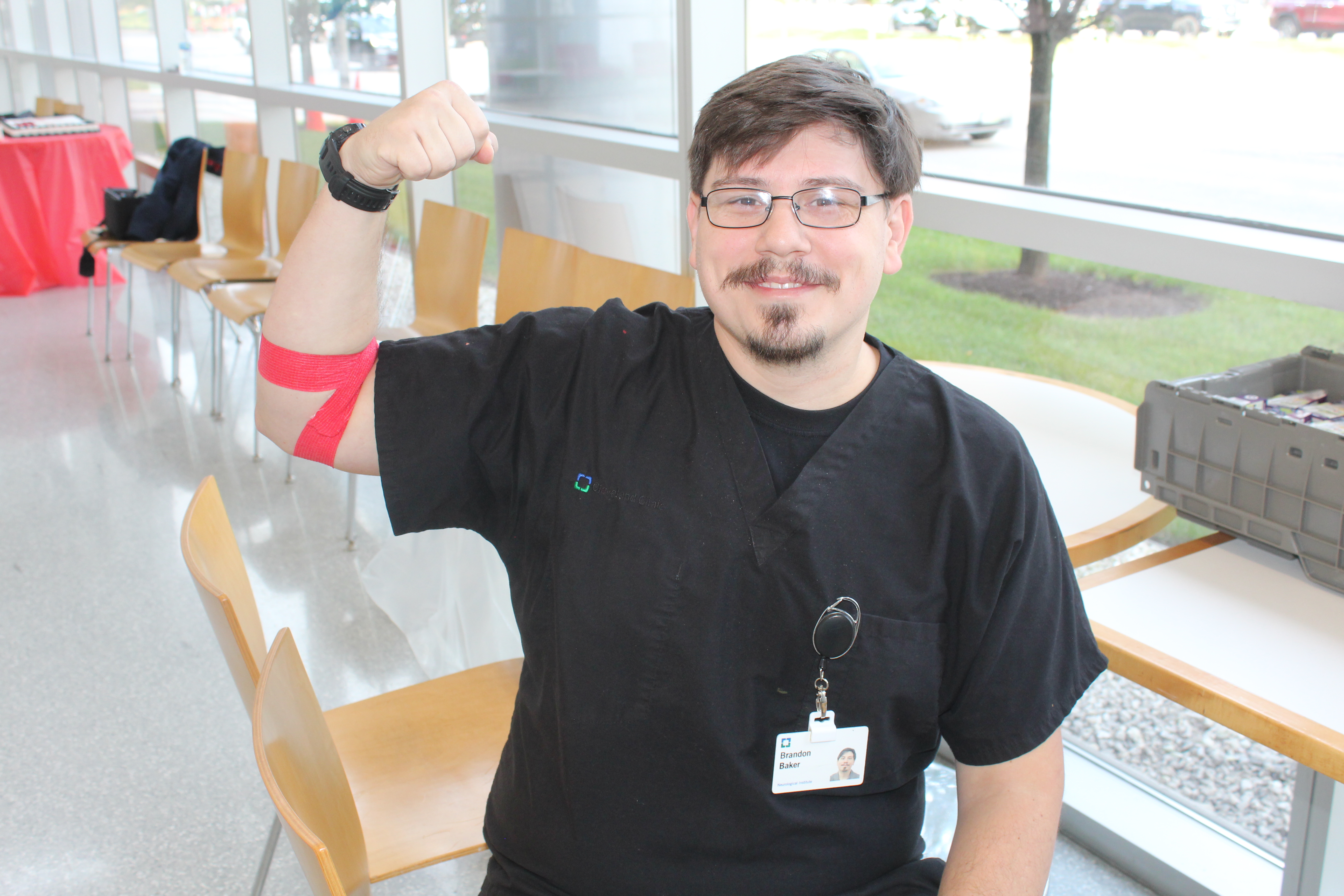
Since that first blood drive in 2019, more than 3,000 donations of blood have been collected, a milestone recently celebrated when Cleveland Clinic research coordinator Brandon Blake became the donor from whom the 3,000th donation was collected.

Brandon Blake, Cleveland Clinic Research Coordinator made the 3,000th donation

“I was shocked,” Brandon said upon learning of the milestone. “It’s like a baseball player getting his 3,000th hit. It’s pretty special.”

Brandon said he donates blood because it makes a difference. Dr. Zaher Otrock, head of Transfusion Medicine at Cleveland Clinic, couldn’t agree more.

“People with cancer and so many other conditions could not be treated without the blood they need to have every day,” he said.

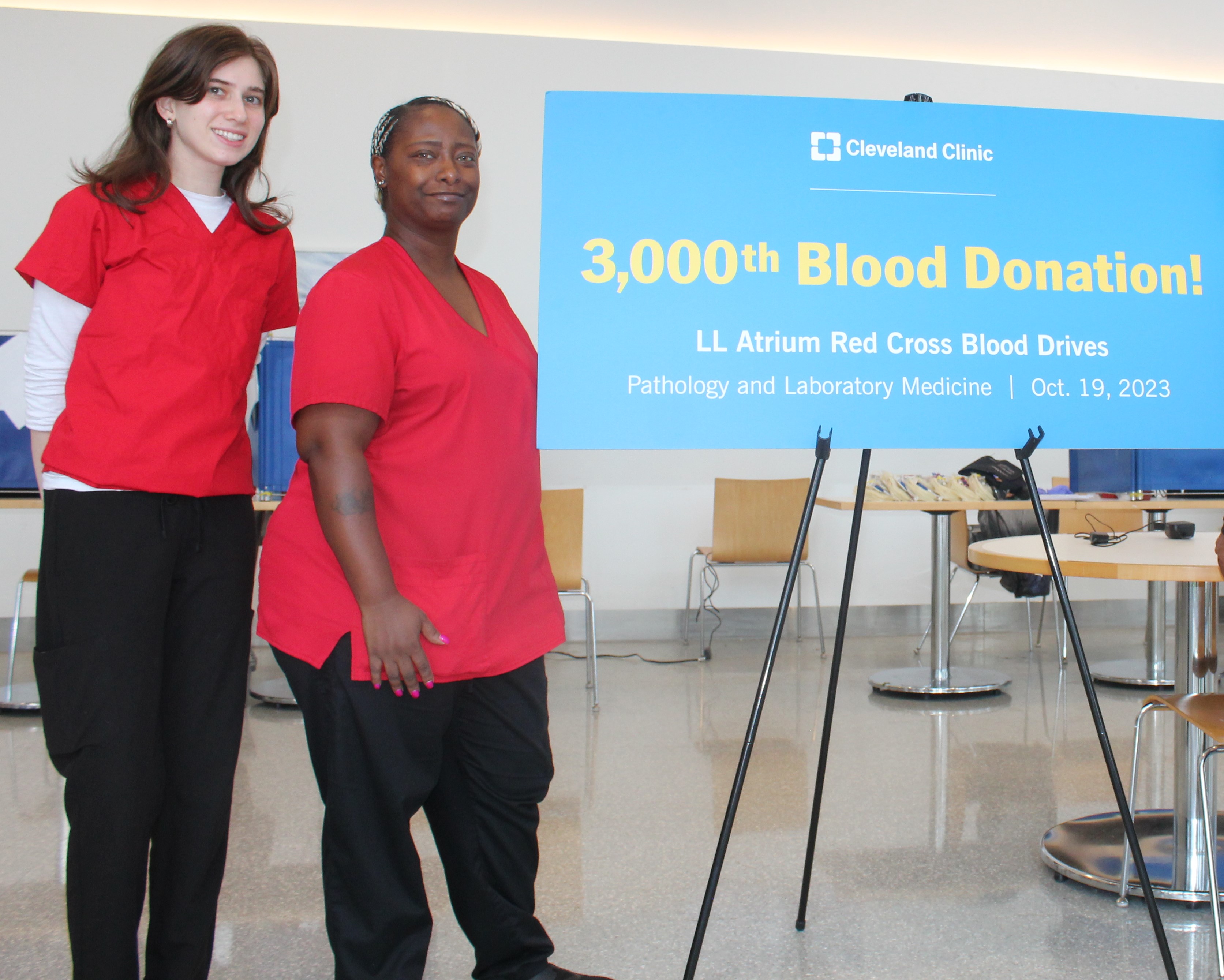
The Red Cross collections staff working at the blood drive that day included Shacriea Bost, Kary Conley, Makayla Williams, Devyn Mills and Alexis Bell. They posed for a photo, surrounding a sign created to mark the milestone event.

Red Cross phlebotomists Alexis Bell and Kary Conley

And donors that day got a special treat – beyond the cookies, snacks and juice boxes that are typically available following a blood donation. They were offered a piece of cake as well, also created to help celebrate the 3,000 th donation made at that blood drive site.

Companies, churches, civic groups and others interested in hosting a blood drive – or multiple blood drives – can learn more by visiting redcrossblood.org.

See more photos from the 3000th blood donation here.

Posted by Ryan Lang, Red Cross volunteer and board member

Edited by Glenda Bogar, Red Cross volunteer

As temperatures drop, heat your home safely

By Tim Poe, American Red Cross volunteer

I arrived home after jogging through a cool drizzle in fading gray light and heard the furnace’s low hum, recently woken from summer slumber. That sound will be a familiar undertone over the next few months, so I remembered to double check the filters and vents and schedule maintenance. As an American Red Cross volunteer, I have seen that forgetting these tasks can have tragic results, especially when space heaters are used, as they are involved in most fatal home heating fires.

As temperatures drop, the risk of home fires increases. Home fires account for most disasters to which the Red Cross responds, especially in Northern Ohio, and responses increase 30% during cold months. In 2022, for instance, the Northern Ohio Red Cross responded to 345 home fires in the last three months of the year, compared to 249 from July through September. And in just the first 15 days of October 2023, Northern Ohio Red Cross teams responded to 33 events, all home fires, and assisted 115 people.

To help keep you and your loved ones safe, here are a few home heating safety tips:

  • Have at least three feet of space between heating equipment and children, pets and anything that can burn. Most home heating fire tragedies occur when flammable items like furniture, rugs, bedding, and drapes are too close.
  • If you must use a space heater, never leave it unattended. Place it on a level, hard and nonflammable surface, such as a ceramic tile floor. Again, keep it away from anything flammable.
  • Look for models that automatically shut off if the heater falls over.
  • Plug space heaters directly into outlets, never into an extension cord, and turn it off when you leave the room or go to sleep.
  • Never use a cooking range or oven to heat your home.
  • Never leave a fire burning in the fireplace unattended. Make sure any embers are extinguished before going to bed or leaving home. Use a glass or metal fire screen to keep embers in the fireplace.
  • Have furnaces, chimneys, fireplaces, wood, and coal stoves inspected annually by a professional and cleaned if necessary.

Additional information and tips are available at redcross.org/fire, including an escape plan. You can also download free apps at redcross.org/apps.

Red Cross efforts to help prevent home fires and save lives when they occur have had tremendous success. The Home Fire Campaign—including Sound the Alarm, which originated in Northern Ohio—is credited for saving at least 1,969 lives since October 2014, 22 of them in Northern Ohio.

If you would like to request a smoke alarm or read more information about the Home Fire campaign, please click here.

Edited by Glenda Bogar, Red Cross volunteer

Posted by Ryan Lang, Red Cross volunteer and board member

Tips to Help Keep This Halloween a Treat

By Sam Pudelski, American Red Cross volunteer

It’s Halloween season here in Northern Ohio, and while kids are prepping to get tons of treats, adults should also prepare to make the evening a safe and fun event. Here are 10 things to keep in mind when trick-or-treating this holiday.

  1. Make sure trick-or-treaters can see and be seen. Use face makeup instead of masks, which can make it hard to see when wearing them. Make sure trick-or-treaters can be seen be using a flashlight to light their way, adding reflective tape to costumes and trick-or-treat bags and wearing light-colored clothing.
  2. Use costumes that are flame-resistant.
  3. Never let children trick-or-treat alone. A parent or responsible adult should accompany young children door-to-door. Make sure adults know where kids are going and do not get too far ahead.
  4. Be cautious around animals, especially dogs.
  5. Walk, don’t run from door to door. Avoid walking in the street and stick to sidewalks. If no sidewalk is available, walk at the edge of the roadway, facing traffic. When crossing the street, stop and look both ways. Don’t cross between parked cars. If trick-or-treating in a city, do not take alleyways.
  6. If you are driving, use extra caution. Kids may forget to look both ways before crossing amongst all of the excitement.
  7. Only visit homes that have a porch light on. Accept treats at the door and never go inside a home. Before eating goodies, make sure adults check all of them, removing loose candy, open packages and any choking hazards. Throw away any items with brand names you are not familiar with.

If you are handing out goodies at your home for trick-or-treaters:

  • Light the area well so visitors can see where they are walking.
  • Clear obstacles someone can trip over. Sweep leaves from steps and sidewalks.
  • Use caution when carving pumpkins. Adults should do the carving, and young kids should draw the face on the pumpkins instead of doing the carving. Do not use a candle to light a pumpkin. Opt for a flashlight or glowstick instead.

With these tips, we hope you all have a safe and fun Halloween! For more tips on first aid, weather alerts and more, download our American Red Cross apps by searching for the Red Cross in your app store or visiting redcross.org/apps.

Stay well this flu season and donate blood

By Kathryn Dean, American Red Cross volunteer

Flu season is here and it’s time to start thinking about receiving your annual flu vaccination. According to the Ohio Department of Health, flu season in Ohio typically runs from October to March. However, you can get the flu at any time of the year. The American Red Cross recommends that you protect yourself and your loved ones by getting your annual flu vaccination this year.

“Vaccination is really the most effective way to protect yourself against influenza,” said Dr. Christine Schmotzer, vice chair of system pathology operations at University Hospitals in Cleveland and a member of the Board of Directors for the Red Cross of Northeast Ohio. “The flu vaccine is known to be effective at both preventing flu illness and decreasing the severity of flu illness.”

With a national blood shortage declared on Sept. 11, the Red Cross is in need of healthy donors to help meet the blood needs of more than 70 area hospitals and their patients in Northern Ohio. Only around 3% of the general population is eligible at any given time to donate blood due to a variety of factors, and when people become ill, eligibility drops even more. As flu numbers begin to climb across the country, it’s vital that healthy members of the community stay well by getting their annual vaccinations.

“It’s important to note that we recommend getting the flu vaccine every year to maximize the protective benefits,” Dr. Schmotzer said. “The protective effects of the virus decrease over a period of months, so they do not last strongly into the next season. Also, the virus changes frequently between seasons, so vaccine manufacturers modify the strains of virus in the vaccine to match the protection from season to season.”

Around 500 units of blood are needed per day in Northern Ohio and with the current shortage, it’s more important than ever to come out and donate. The Red Cross recommends that as long as you are feeling healthy and symptom-free on the day of donation, it is okay to donate. There is no wait time between flu vaccination and blood donation. This includes vaccination against COVID-19 and respiratory syncytial virus (RSV).

From now until Oct. 20, the Red Cross will be providing a $15 Amazon gift card to anyone who comes to donate blood as a thank you for your support. Visit RedCrossBlood.org or use the Red Cross Blood Donor App to schedule an appointment or find a blood drive near you.

Edited by Glenda Bogar, Red Cross volunteer

Posted by Ryan Lang, Red Cross board member and volunteer

Protecting what matters most in Northern Ohio

October 8 – 14 is National Fire Prevention Week

By Doug Bardwell, American Red Cross volunteer

Unless you live near a fire station, you might be surprised by how many fires occur in
Northern Ohio. Where we live in Strongsville, you can usually detect that single
siren driving down Royalton Road as an EMS ambulance. But, if you hear multiple
sirens and the sound of large diesel engines, you know the entire squad is responding
to yet another fire – and they are usually home fires.

The Red Cross works with local fire departments to help prevent home fires

The most common home fires are caused by cooking. Every year, firefighters respond
to more than 170,000 kitchen fires, causing hundreds of deaths, thousands of injuries
and more than $1 billion in damages each year.

Since 2015, would you believe the American Red Cross in Northern Ohio has
responded to more than 11,000 home fires, and assisted nearly 17,000 families?
Despite insurance or Red Cross financial assistance, think of the inconvenience of
being displaced for weeks or months before your home is habitable again after a fire.

Damage caused by fire to a home in East Cleveland in 2022

There’s a better way

Following these simple tips, you and your family can help prevent kitchen fires:

  1. Use a timer to remind yourself that the stove or oven is on.
  2. Keep anything that can catch fire — potholders, oven mitts, wooden utensils,
    paper or plastic bags, food packaging, towels or curtains — away from your
    stove, oven or any other appliance in the kitchen that generates heat.
  3. Always check the kitchen before going to bed or leaving the home to make
    sure all stoves, ovens, and small appliances are turned off.
  4. Install a smoke alarm near your kitchen, on each level of your home, near
    sleeping areas, and inside and outside bedrooms if you sleep with doors closed. Use the test button to check it each month. Replace all batteries at least once a year if your smoke alarm requires it.
  5. Tap here for another half dozen sensible tips to avoid kitchen fires.
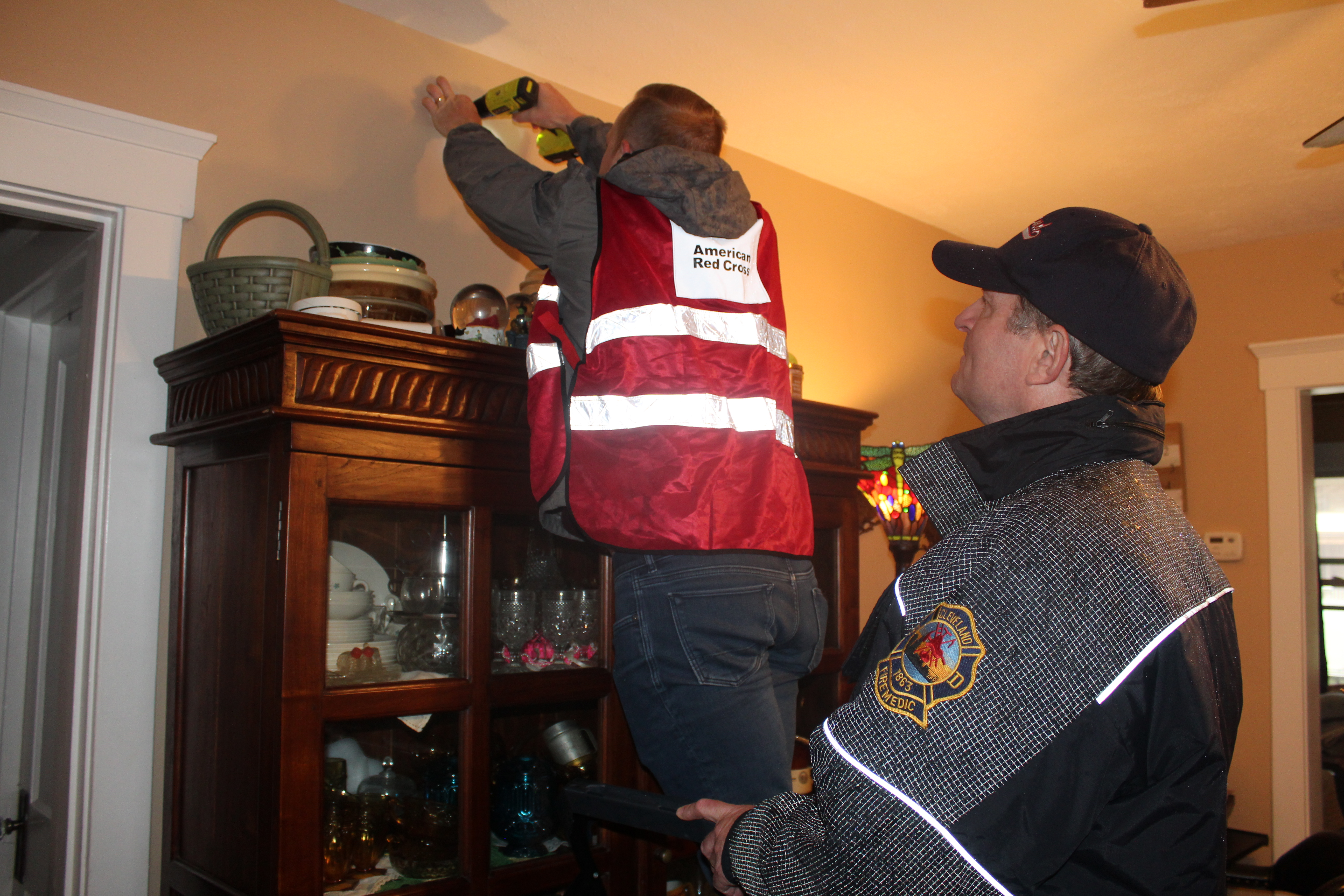
A Red Cross volunteer installs a smoke alarm in a home in Cleveland, with guidance from a firefighter

Smoke alarms are crucial in saving lives

The Northern Ohio region of Red Cross has been installing free smoke alarms for those who need them since 1992. To date, more than 200,000 alarms have been
installed.

Nationally, the Red Cross and partners, through the Home Fire Campaign, have installed 2.6 million alarms in more than 1.1 million households since 2014.

Do they really make that much difference?

Verifiably – yes, they do. As of August 31, 1,928 lives nationwide were documented as
saved due to work done by the Red Cross and partners through the Home Fire
Campaign.

For five more ways you can help the Red Cross continue this valuable practice in Northern Ohio communities, tap here.

If you’d like trained Red Cross volunteers to offer you valuable home fire safety
information to help YOU prevent a fire in your home – and/or to install smoke alarms in
your home, tap here.

Posted by Ryan Lang, Red Cross board member and volunteer

Blood drives held for Sickle Cell Awareness Month

Three separate blood drives were scheduled in Akron, Ohio for the final three days of September to collect lifesaving blood and to raise awareness of sickle cell disease.

About 100,000 people in the United States have sickle cell disease. The disease affects 1 out of every 365 Black or African American births.

Michael Irby, President of the 100 Black Men of Akron, Rachel D’Attoma, Executive Director
Greater Akron and The Mahoning Valley, Ryan Lang, Red Cross board member and volunteer, Amy Cole, Red Cross board member and volunteer

People with sickle cell disease may need as many as 100 units of blood each year. Blood donations could help alleviate the symptoms of someone living with sickle cell disease, or even help save their life.

On Thursday, September 28th , the organization 100 Black Men of Akron hosted a drive at the headquarters of the Red Cross of Greater Akron and the Mahoning Valley. Michael Irby, President of the local organization, said hosting the blood drive fits with the national group’s mission.

Michael Irby, President of 100 Black Men of Akron with Charles Brown, Red Cross board member and Deputy Mayor of Akron, (retd.)

“Being out in the community, not just mentoring but partnering is important to us,” he said. “Blood drives fit right into our narrative of health and well-being.”

Michael said hosting the blood drive was especially important, not just because September is Sickle Cell Awareness Month, but also because of the shortage of blood nationwide.

The American Red Cross declared a national blood shortage on Sept. 11, citing a critically low blood supply level that dropped nearly 25% since early August.

When supplies are low it can often take weeks for inventories to rebound. The Red Cross estimates that 10,000 additional blood products must be collected each week over the next month for the blood supply to reach sufficient levels and meet hospital and patient needs.

On Friday, September 29th , the Akron Public Schools and Delta Sigma Theta Akron Alumnae Chapter and the Active Chapter at the University of Akron scheduled a blood drive at the Akron Public schools board office. And on Saturday, September 30th, a blood drive sponsored by the Akron National Panhellenic Council was scheduled at the Greater Akron and the Mahoning Valley Chapter headquarters. It’s the second blood drive for sickle cell awareness hosted by the group, following an initial blood drive last June.

If you feel healthy and well, please consider scheduling a blood donation by visiting redcrossblood.org, or by calling 1-800-RED CROSS (1-800-733-2767.) You can also schedule an appointment on the Red Cross blood donor app.

Donors of all blood types are urgently needed, and there is an emergency need for platelet donors and type O blood donors to make an appointment to give now to ensure patients across the country continue receiving critical medical care. And for people with sickle cell disease, blood from people of the same race or similar ethnicity is important in ensuring the best transfusion results, with the least potential reaction.

Posted by Ryan Lang, Red Cross board member and volunteer

Three Northern Ohio companies aid in disaster response through annual giving

By Tim Poe, American Red Cross volunteer

As an American Red Cross volunteer, I have seen the need and effectiveness our disaster relief services. When families are affected by a disaster—whether a single-family home fire or large-scale event—they need immediate assistance, as “Help can’t wait.” And the need for services has never been greater and continues to increase.

August 31, 2023. Horseshoe Beach, Florida. A Red Cross emergency response vehicle drives through the devastated community of Horseshoe Beach, Florida. Red Cross volunteers are delivering food and supplies in hard-hit neighborhoods after Hurricane Idalia. As a result of the climate crisis, hurricanes are becoming more intense and more destructive with increased rainfall and higher storm surges. Photo by Scott Dalton/American Red Cross

Here in Northern Ohio, we recently reported that, following severe storms, the Red Cross assisted 62 families, providing more than $42,500 in financial aid, in a single week. And last July, the Red Cross conducted its largest sheltering operation in the region since 2004.

Nationwide, we experienced 15 billion-dollar disasters in the first half of 2023, a new record, and the Red Cross is responding to nearly twice the number of large disasters than it did a decade ago.

When disaster strikes, the Red Cross’ ability to immediately respond is thanks to generous donations, including funding from members of the Annual Disaster Giving Program (ADGP). Three of these members are based in Northern Ohio. The J.M. Smucker Company, Marathon Petroleum Foundation, Inc., and FirstEnergy Corporation aid through the Annual Disaster Giving Program.

The J.M. Smucker Company became a Red Cross Disaster Responder in 2017 and went on to become an ADGP supporter in 2019. It currently contributes at the $500,000 level. On its Community Resources web page, The J.M. Smucker Company says, “Major tragedies are a heartbreaking reality, and it is critical our communities have the resources to recover and rebuild. Through our partnerships, including with the Red Cross, United Way and Habitat for Humanity, we have helped support these efforts with product and financial donations. Our employees have also stepped up, volunteering time and effort to help their neighbors in need.”

Marathon Petroleum Foundation, Inc., has been an ADGP supporter since 2020 and currently contributes at the $250,000 level. In its 2022 Sustainability Report, Marathon Petroleum said, “MPC’s disaster response support considers immediate humanitarian needs, as well as long-term recovery in affected communities. As an added form of support in times of high-impact emergencies, MPC activates a special employee donation matching program separate from our company matching gift program, enabling employee donations to make a greater impact in times of crisis.” It donated over $1.2 million to disaster recovery efforts in 2022.

FirstEnergy became a Disaster Responder Partner in 2021 and has since been an ADGP partner at the $250,000 level. The company’s Community Preparedness web page says, “The FirstEnergy Foundation’s contributions to local nonprofit organizations help strengthen the social and economic fabric of our communities.” Its priorities include “Improving the quality of life in our communities and supporting key safety initiatives.” FirstEnergy is also proud of its employee volunteers.

Thanks to the ADGP members and other donors, the Red Cross has the resources, personnel and training to respond, even as needs increase.

“The generous support of the members of ADGP allows the Red Cross to provide services such as preparedness programs, response to disasters and client recovery planning,” said Barb Thomas, senior disaster program manager for the Red Cross’ Northern Ohio region. “The American Red Cross could not meet the mission of alleviating human suffering in the face of disasters without the members of ADGP as community partners and donors.”

Learn more about the Annual Disaster Giving Program and how these year-round contributions help meet the needs of disaster survivors.

Edited by Glenda Bogar, American Red Cross volunteer

Posted by Ryan Lang, American Red Cross board member and volunteer
A Hispanic Heritage Month profile: HOLA Ohio partners with Red Cross to assist Hispanic community

By Tim Poe, American Red Cross volunteer

A few years ago, as a member of the American Red Cross’ Disaster Action Team, I responded to a large apartment fire in Painesville. While working with first responders, other Red Cross members and the affected families, many of whom primarily spoke Spanish, two representatives from HOLA Ohio arrived to help, especially with translation.

Since that time, HOLA Ohio has been an important partner with the Red Cross in Northern Ohio. It has been an integral part of fire safety initiatives in Latino communities, as well as assisting Hispanic families impacted by home fires.

During Hispanic Heritage Month (September 15 to October 15), we are highlighting the Northern Ohio Red Cross’ partnership with HOLA Ohio and the importance of reaching the Latino community.

I spoke with Tom Revolinsky, disaster program manager for the Red Cross, Northeast Ohio region. He explained the importance of HOLA Ohio in reaching the Hispanic community, especially following disasters.

“HOLA and the Red Cross routinely partner to help those in the Hispanic community affected by home fires,” said Tim. “HOLA helps identify families in need, provides translation assistance, additional financial assistance and helps overcome cultural barriers.”

A Painesville-based charitable nonprofit, HOLA Ohio was founded in 1999 to provide programs and services to Hispanic workers, families and children. Its services have grown from serving Lake and Ashtabula counties to reaching most of Northern Ohio and beyond.

In May 2022, HOLA Ohio opened its new Hispanic Community Center in Painesville, which contains staff offices, classrooms, a commercial kitchen and meeting spaces. It recently hosted a Health and Wellness Fair at the center, which the Red Cross helped support. Free medical check-ups, health screenings and food were provided.

“HOLA is grateful for our ongoing partnership with the Red Cross to ensure Spanish-speaking people impacted by disasters are provided resources,” said Veronica Isabel Dahlberg, executive director of HOLA Ohio. “Whether a devastating fire or a dangerous power outage during a bitterly cold blizzard, we have seen the Red Cross respond quickly to assist our community. We admire their commitment and dedication.”

The need for the types of assistance HOLA Ohio and the Red Cross provide is growing. According to the Ohio Department of Development and UCLA Latino Policy and Politics Institute, the Latino population in Ohio grew by 112% between 2000 and 2020 to over 505,000, which is 4.2% of the state’s population.

Additionally, the need for Red Cross services is dramatically increasing. Nationally, the Red Cross is responding to nearly twice as many large disasters as it did a decade ago.

Volunteers are needed to help respond to these growing needs, including those fluent in Spanish. For more information, please visit this site.

The Red Cross’s website is available in English and Spanish.

Edited by Glenda Bogar, American Red Cross volunteer

Shedding light on Sickle Cell Disease

By Eilene E. Guy, American Red Cross volunteer

Sickle Cell Disease is hiding in plain sight, and La’Shardae Scott is determined to bring it into the spotlight.

Sickle Cell Disease (SCD) is the most common genetic blood disorder in the United States, afflicting some 100,000 people, primarily those of African descent. Every year, an estimated 1,000 babies are born with SCD.

During September, Sickle Cell Awareness Month, the American Red Cross is teaming up with SCD crusaders like La’Shardae to bring attention to this painful and life-threatening disorder.

The Scott Family: Eric, La’Shardae, Emory, Evan, Eric and Liam

La’Shardae has launched the nonprofit Scott Center for Observation, Treatment and Transition in Oregon, Ohio, to minimize infant mortality in populations of color and help families and individuals with SCD transition successfully from pediatric to adult care.

She’s well aware that people of color have a fraught history with the medical establishment, which leads to poor doctor-patient relationships. Even today, misconceptions persist about Black people’s tolerance for pain.

“Patients born with this condition don’t look ill; they learn to manage their pain, but that doesn’t mean it isn’t real,” she said. “So when they finally seek help, they get dismissed as drug-seeking and that leads to further complications.”

Screening of newborns for SCD is now routine in all 50 states, but too often parents — confronted with the sudden notice that their baby has an incurable condition — don’t know how to handle that reality as the child grows, La’Shardae said.

At her house, she relies on medications, appropriate diet and “hydration, hydration, hydration” to keep her two SCD “warriors,” eight-year-old Emory and Evan, 7, thriving. At the same time, she advocates for them when they experience the acute pain and other side effects typical of SCD. But she knows the damaging effects accumulate.

SCD causes red blood cells to take the shape of crescent moons or sickles. These misshapen cells don’t carry their full load of oxygen throughout the body, leading to anemia, pain “crises” and gradual damage to organs and tissues. Worse yet, the sickled cells tend to clump together, causing strokes.

Transfusions play a key role in “diluting” these defective cells in the blood stream, easing pain and slowing damage. Blood from one in three African American donors carries unique characteristics — antigens — that make it a close match for SCD patients.

This is where the Red Cross comes in. As supplier of more than 40% of the nation’s whole blood and blood products, the Red Cross needs a diverse donor population to meet the many unique transfusion needs.

Since launching its Sickle Cell Initiative in 2021, the Red Cross has seen a 60% increase in first- time African American blood donors to more than 45,000.

La’Shardae is working hard to boost that number. She uses social media platforms, Facebook Live and community presentations to educate and recruit. You can read all about her activities at scottcenteroh.org.

Her next event is the Scott Community Blood Drive in partnership with the Red Cross, from 9 a.m. to 2 p.m. Sept. 16 at 653 Miami St. in Toledo.

To register to give blood, go to redcrossblood.org, call 1-800-REDCROSS or use the free Red Cross blood donor app.

Edited by Glenda Bogar, Red Cross volunteer

Posted by Ryan Lang, Red Cross board member and volunteer