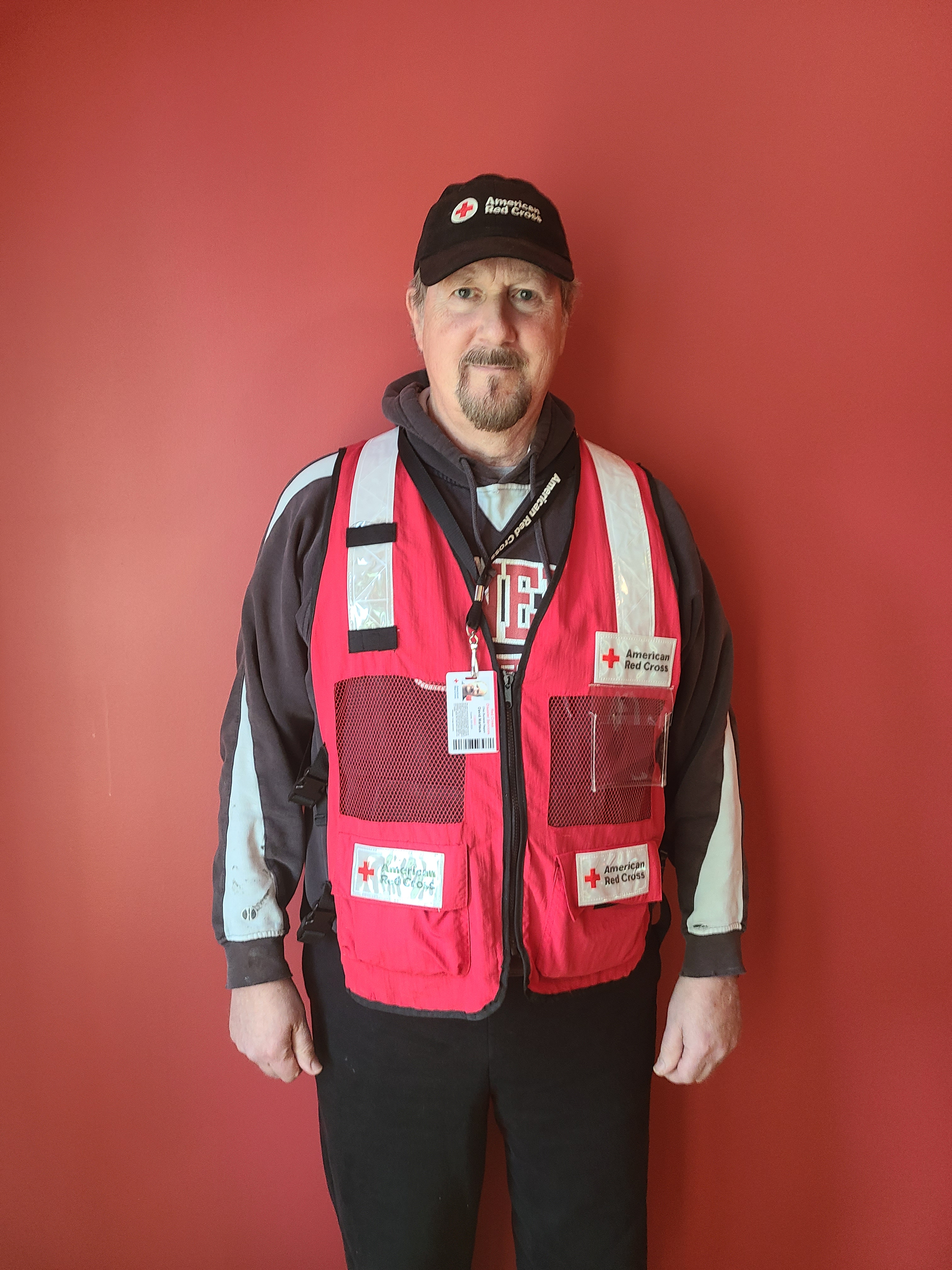
Semper Gumby: Always flexible. That’s a cherished characteristic of American Red Cross volunteers – and Dave Martaus is Gumby in person.
Dave Martaus, American Red Cross volunteer
“Dave is a key volunteer here at the North Central Ohio chapter. He’s willing to do anything that needs to be done – not just the high-profile, public-facing activities, but even the so-called ‘little things’ that keep an operation running,” said chapter Executive Director Todd James.
A retiree from Marathon Petroleum Corp. in Findlay, where he rose through a series of interesting assignments, Dave has been involved with Red Cross facilities maintenance, logistics, disaster response and support for our armed forces.
“Cheryl Wolfe (operations manager for the chapter) always has a list of things for me to do,” he said with a chuckle. Recently, he assembled a couple of new filing cabinets for the office. “Wasn’t something I’d ever done before, but it was interesting.
“When Lora Taylor (disaster program manager) came on board, we needed to account for our disaster trailers. So we brought all four trailers from around the chapter to a vacant garage here in Findlay and emptied all the contents,” he recalled. “We laid all the stuff out; it looked like a giant garage sale.”
He and his co-workers sorted the contents and repacked the trailers with the right number of cots, blankets, comfort kits and other supplies that would be needed in case of a major disaster. He said it was interesting, getting familiar with what’s involved in preparing for a big response.
Dave appreciates the variety of volunteer opportunities within the Red Cross. “I’ve thought about possibly getting involved with blood services,” he said. “I know they need people to transport blood (from blood drives to the blood processing center in Cleveland and from there to hospitals). I could do that.”
Dave Martaus is one of the more than 265,000 Red Cross volunteers that we’re saluting during Volunteer week. But their selflessness is invaluable all year round.
If you’d like to find out more about the many volunteer opportunities with the Red Cross, please click here for more information.
Edited by Glenda Bogar, American Red Cross volunteer
Posted by Ryan Lang, American Red Cross board member and volunteer
What would we do without the selflessness of those who give their time by volunteering?
In honor of National Volunteer Week (April 21-27), we are featuring profiles of some of the dedicated volunteers who help the American Red Cross fulfill its mission in Northern Ohio.
From left: Gail Wernick, Pat Crawford, Kelsey Jeffrey, Debra Kellar, and Kevin Brooks of the Northern Ohio Region Volunteer Services team, and Rachel Hepner, Executive Director, Western Lake Erie Chapter
Pat Crawford spends most of her time honoring and thanking others for their service. From her home base in the Western Lake Erie Chapter, headquartered in Toledo, she handles the five chapters in the Northern Ohio region as the Regional Volunteer Services Recognition and Appreciation Lead. If you thought that in this crucial role in the Volunteer Services Department, Pat seems to have volunteering in her blood, (pun intended) you’d be right! And she passed down that heart to serve to her sons: her eldest was Red Cross trained in water survival, first aid/CPR and was a lifeguard, and her youngest is a law enforcement officer in Findlay.
Like many who volunteer, Pat has a Red Cross story.
Pat’s oldest son and his family moved to Louisiana. When Katrina hit, their home experienced extensive damage, and they had to come back to Ohio for awhile. Pat will be forever grateful for the tremendous support the family received from the Red Cross. Beyond that, Pat appreciates what the Red Cross does for our military.
“I have many family members and friends that were and still are in the military. I know what the Red Cross does to help our servicemen and women and their families,” she said.
Pat’s volunteer experience started many years ago. She was a front desk receptionist and a TeleCare call receiver. She was later “hired” by AmeriCorps to serve a year at the Red Cross, but stayed on for four years, starting first in the Disaster Services office and then moving to other areas like the Pillowcase Project and educational classes. After her last AmeriCorps year, she retired and became a full-time volunteer for the Red Cross.
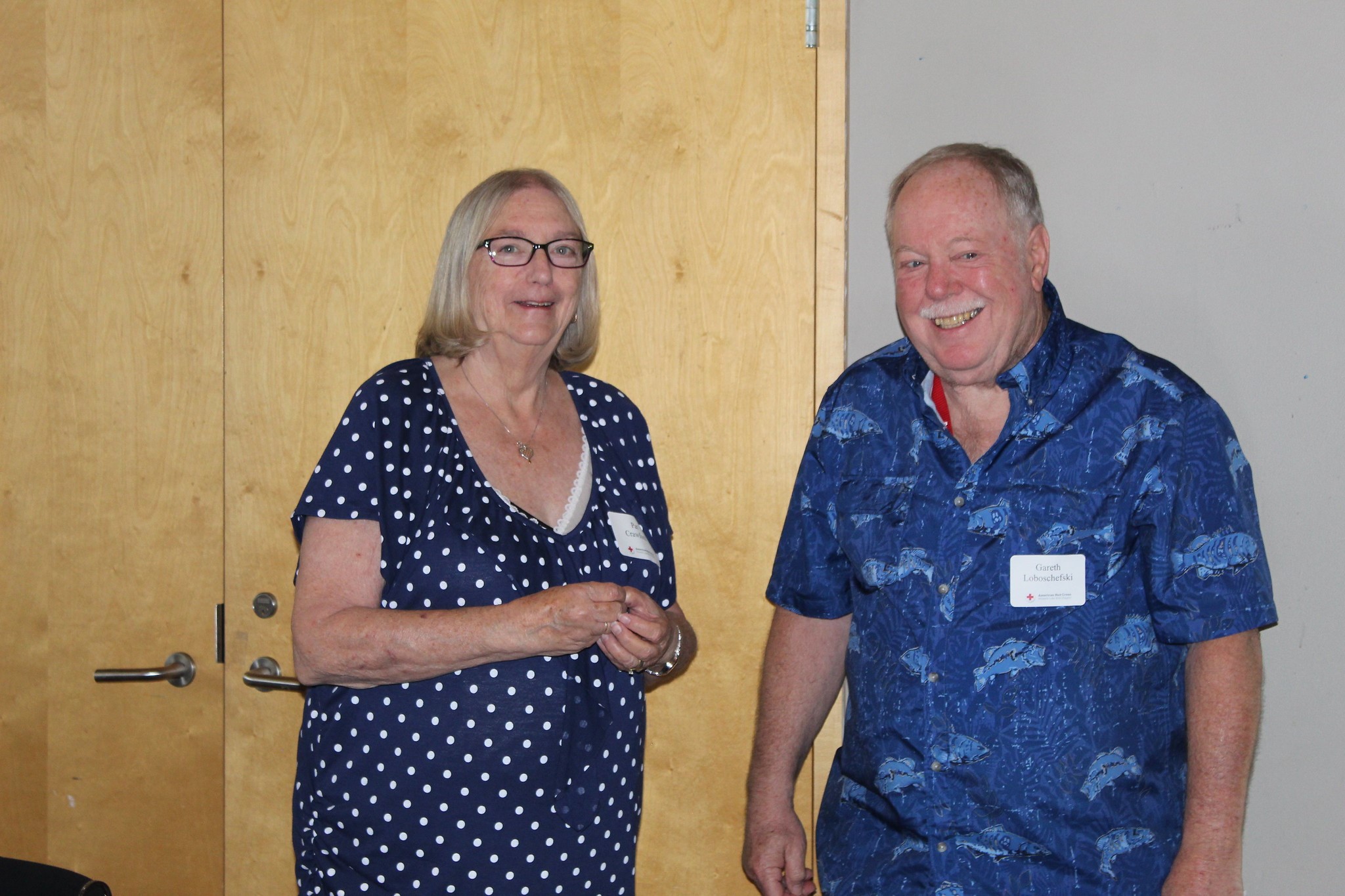
Volunteers Pat Crawford and Gareth Loboschefski catch up at a volunteer recognition event
What Pat loves most about her job as the Volunteer Services Recognition and Appreciation Lead is expressing gratitude for the hard work of the many volunteers throughout the regions’ five chapters.
“I feel it is very important to let volunteers know that they are appreciated and supported for what they do,“ Pat said. “I feel really good when a volunteer wins a gift card or receives a Red Cross item and they take the time to tell you how much they appreciate it.”
While it may be the little things that Pat finds rewarding, she has one story in particular that exemplifies the powerful life-changing and lifesaving impact volunteering can make.
One day, way back when she worked the phones, she received a call from a woman who could not get in touch with one of her older female clients. “We called the police and fire to do a wellness check on this person, because her daughter, who lived out of town, hadn’t spoken to her since Saturday, and it was now Monday,” Pat shared.
Pat called emergency responders who broke into the house and found the woman unresponsive, but thankfully alive. When Pat went to visit the client in the hospital, the grateful woman said, “you saved my life” — a comment she still gets goosebumps about.
One of Pat’s dreams, and something she worked over two years to accomplish was to get the Nurses Pin awarded at the Recognition and Appreciation Events. That dream came true for Pat in 2023 and will continue every year. “They are special pins that have numbers that are assigned to the volunteer nurse, and records of these pins are kept in the archives in Washington, D.C.,” said Pat.
Pat Crawford, who spends much of her time honoring others for their volunteer work, is a true example herself of what it means to be a Red Cross volunteer.
Edited by Glenda Bogar, Red Cross volunteer
Posted by Ryan Lang, Red Cross board member and volunteer
CLEVELAND, April 16, 2024 When John Gareis began his career with the American Red Cross, there were elevator operators in the building that housed the offices in Cleveland. Blood collected from donors was stored in glass bottles – not the plastic pouches used today. “And there were no electronics,” John said, pointing to an old typewriter on display in the lobby of the current Red Cross offices in Cleveland.
John Gareis and wife Emily at a Red Cross fundraiser
If the computer systems that exist today were common then, John may not have been hired.
“I saw a notice posted on a job board at CSU (Cleveland State University),” John said. He was studying business management at the time and needed a part-time job. “They asked me if I had good handwriting. I said, ‘I guess so,’ and I got the job.”
48 years later, John is retiring from the Red Cross, following a storied career that began in the records department, where he was tasked with writing blood donor information by hand.
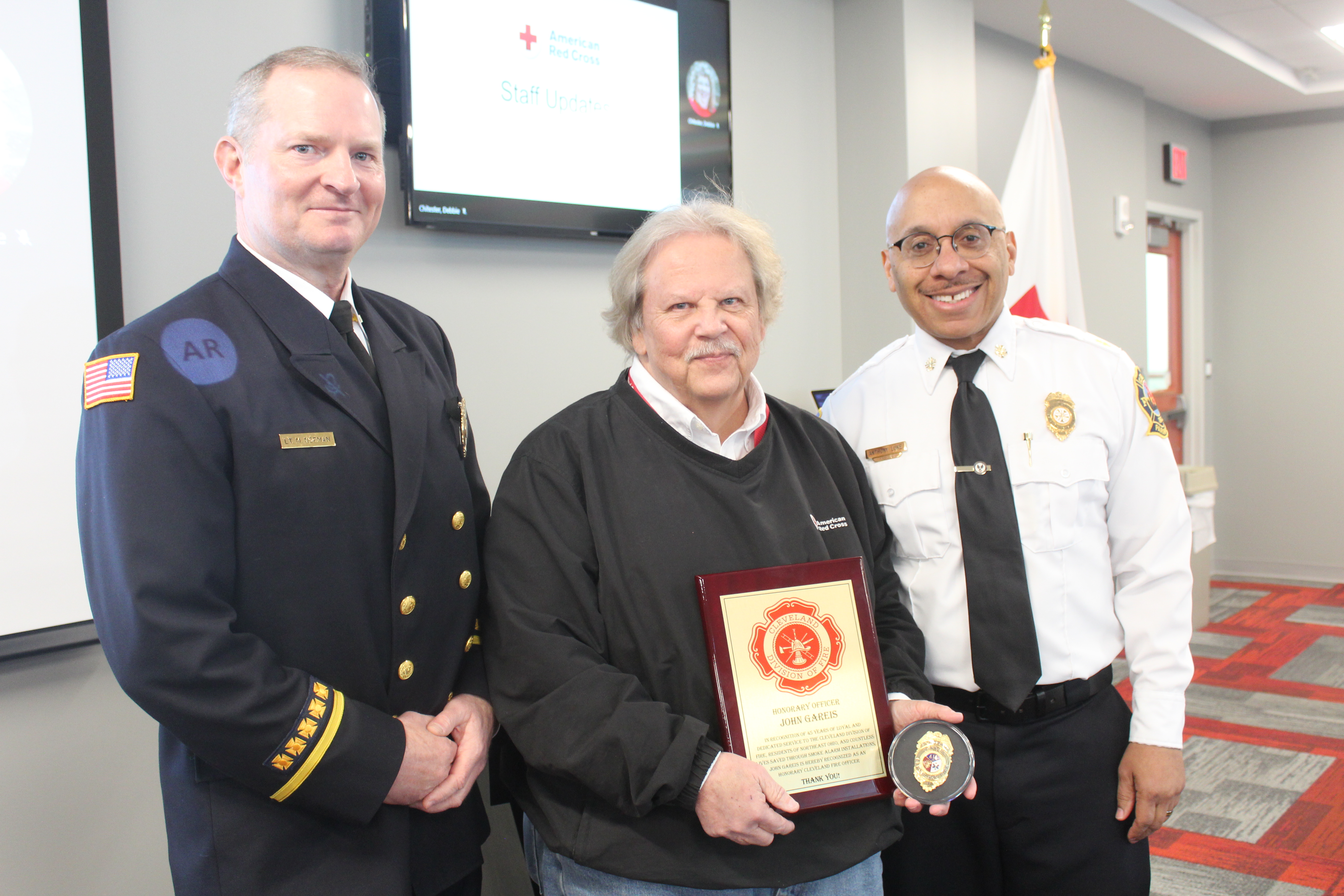
Lt. Mike Norman, left, and Chief Anthony Luke of the Cleveland Division of Fire recently presented John with a plaque and a badge as an honorary officer
“It was only supposed to last a couple of weeks,” he said with a wry grin.
“I met John in December 1986,” said Darlene Morris, the current manufacturing director at the blood laboratory in Cleveland. “I had started at Red Cross the month prior, and he was hosting our Christmas party.! He had a great sense of humor and was fun to be around.”
John eventually transferred from Biomedical Services to Humanitarian Services and led the Wayne County chapter headquartered in Wooster. “Whenever there were any disasters or fires, John was always there to help,” said Greg Long, who served as the chapter chairman of the board. “He always had whatever was needed to assist the families and first responders.”
Greg said John worked hard to create and develop the Festival of Trees, a legacy fundraising event. And he worked with John to help build a new chapter headquarters building in downtown Wooster. “John put together a blue-ribbon campaign committee and we raised the money, 1.8 million dollars, and built the new chapter house.” Construction was completed in 2008.
John Gareis providing instructions at a Sound the Alarm event
John has weathered many changes in structure and operation at the Red Cross and is ending his career as the regional preparedness manager. Renee Palagyi, who worked closely with John for several years at regional headquarters in Cleveland, first met John in 2006, when she was a Red Cross volunteer in Ashtabula County. She served on a committee focused on disaster preparedness and response. “I was immediately struck by the wide base of knowledge John had, not just in disaster but in overall chapter function, fundraising, Service to the Armed Forces, and so much more,” she said. “Such an easy-going guy who was willing to share what he knew with the entire group.”
Arguably, John’s most significant contribution to the Red Cross involves the development of Operation Save-a-Life, an initiative to make homes and families safer with free smoke alarms. It began in 1992 in partnership with the Cleveland Division of Fire and served as a model for the national Home Fire Campaign, a highly successful initiative that is credited with saving more than 2,000 lives since being introduced nationwide in 2014.
“The success of the life-saving smoke alarm program is truly a credit to John and his desire to get it done,” said Renee. “For so many years our region was the gold standard in this program and that must be credited to John, who didn’t just lead it; he was out there installing alarms, teaching families how to be safe and pulling together incredible teams across the region for large scale installations.”
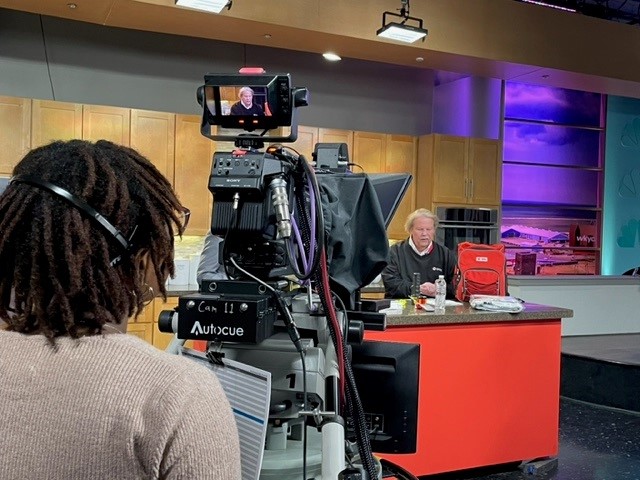
John Gareis at WKYC demonstrating the importance of building a preparedness kit
John is quick to note he wasn’t involved with the creation of the smoke alarm program, but he speaks of it with pride. “We started it. It went national because of the work done by our staff, our volunteers and our partners to make it such a success,” he said. “We wear that as a badge of honor, and we continue to be a national leader every day.”
Regional CEO Mike Parks also shared his high praise for John.
“John’s contribution to the American Red Cross over the past five decades cannot be overstated. His knowledge and expertise, especially when it comes to preparing communities and families for potential disasters, has resulted in a more resilient Northern Ohio,” he said. “His inspiring leadership of the Home Fire Campaign has created safer homes, families, and communities. Thanks to his tireless efforts, the Northern Ohio Region continues to set an example for the rest of the country when it comes to smoke alarm installations and homes made safer.”
Regional CEO Mike Parks recognized John’s contributions at the 30th anniversary celebration of the smoke alarm program
His retirement is not the end of John Gareis’ Red Cross career; he plans to continue sharing his expertise as a volunteer.
“I feel honored to have worked alongside John for the past eight years and look forward to continuing to do so as John moves into a volunteer role supporting our training team,” said Emily Probst, regional disaster officer.
Mike Parks shared a similar sentiment. “I wish John the very best in the future and am comforted in knowing he will continue to provide his valuable service to the Red Cross as a volunteer.”
Edited by Glenda Bogar, American Red Cross volunteer
Posted by Ryan Lang, American Red Cross board member and volunteer
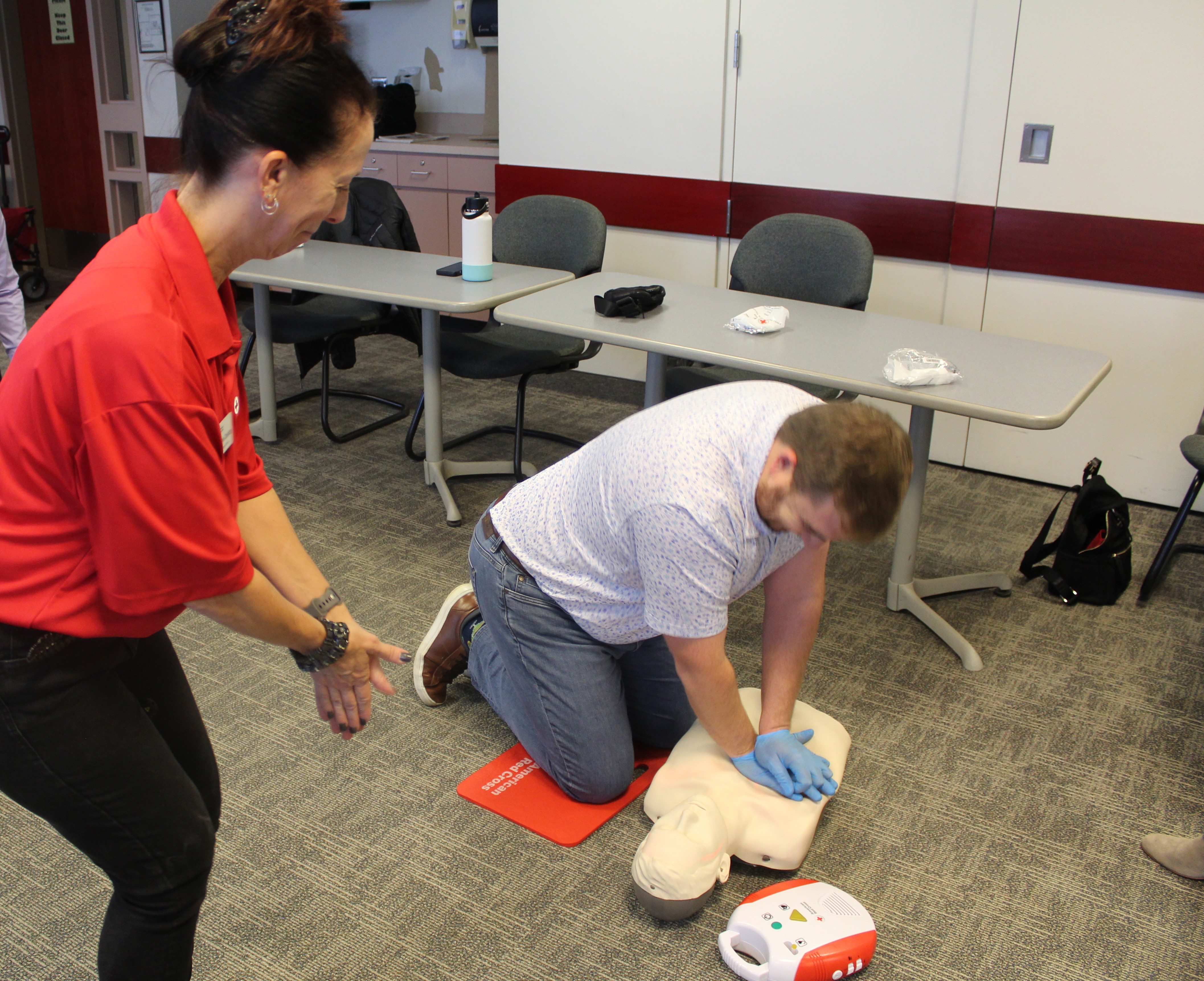
March is Red Cross Month and the American Red Cross wants to encourage everyone to learn the important skills of CPR, first aid and AED usage.
Red Cross instructor Angele Cassiday teaching CPR
Sudden cardiac arrest can happen anywhere. According to the American Heart Association, more than 357,000 cardiac arrests occur outside of the hospital setting each year in the United States, and nearly 90% of those arrests are fatal.
Despite this, survival rates can double or triple for victims of cardiac arrest if CPR is started immediately. That’s why training is vitally important so that prompt medical attention can be given before emergency responders arrive.
What should you do if you see a person suddenly collapse? Assess the scene for safety and check the victim’s pulse and breathing. Call 911. Start CPR. Use an AED.
How do you check a pulse? The easiest way is to place your fingers on the victim’s throat and slide your fingers laterally down into the groove on either side of the esophagus. The wrist can also be used; the pulse is located just below the thumb joint, also in the groove.
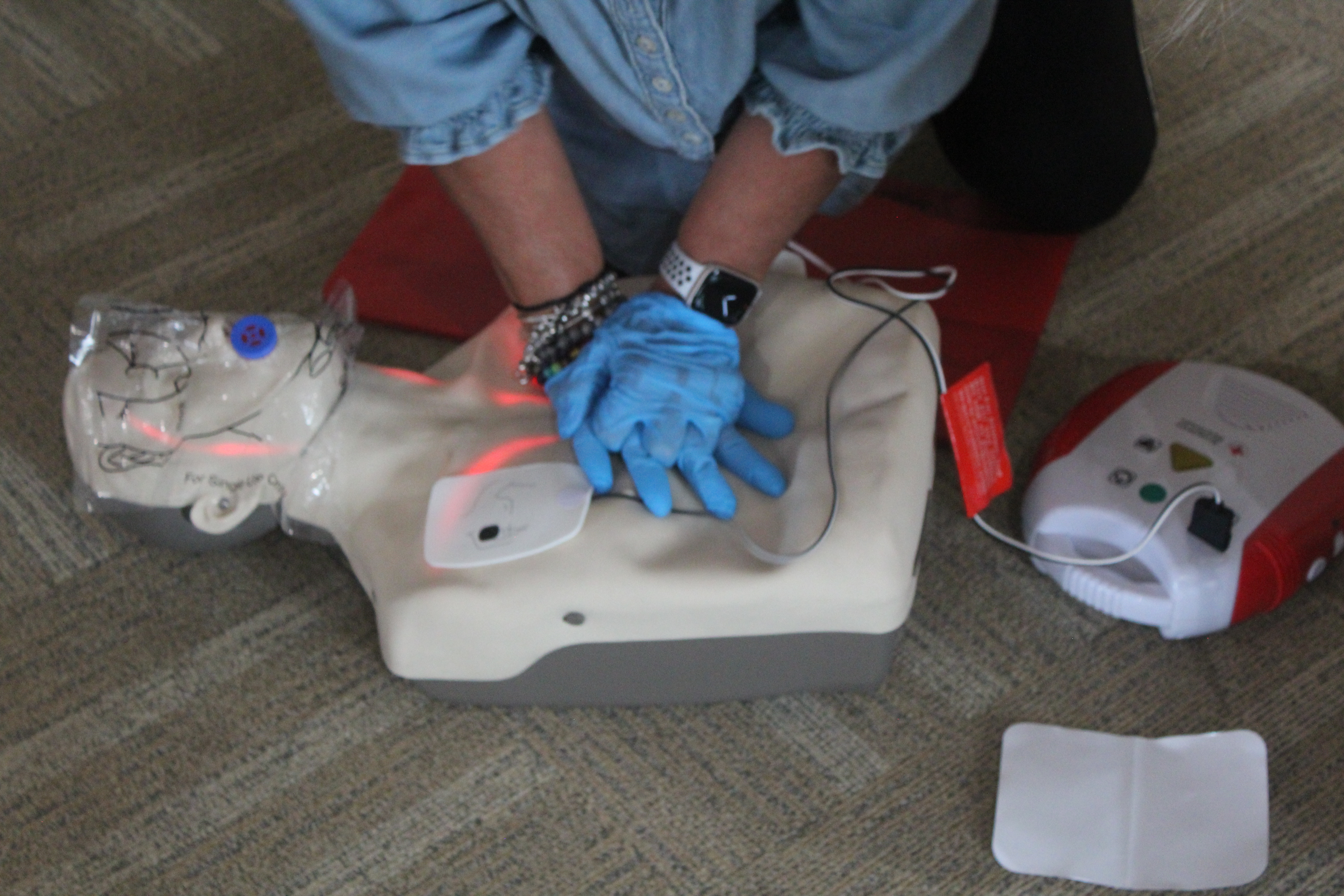
CPR, or cardio-pulmonary resuscitation, is the application of chest compressions to keep blood pumping through the body. The Hands-Only CPR method is recommended for bystanders in public settings, meaning the focus is solely on delivering chest compressions, without breaths, until emergency responders arrive.
AED stands for automated external defibrillator. It is an important, lifesaving tool used in sudden cardiac arrest when the heart stops beating or is beating ineffectively. The machine is easy to use and talks you through the steps to deliver effective medical care until help arrives. Anyone can learn to use an AED.
More and more communities are placing AEDs in public areas, such as parks, town centers, grocery stores and workplaces, so lifesaving measures can be started even earlier. The next time you are out and about, note the locations of AED machines in your community. This knowledge may help save someone’s life one day.
Did you know that the Red Cross offers training in CPR, first aid and AED? While CPR and AED training is common among health care workers, child care workers and lifeguards, it is a skill that anyone can and should learn. Be prepared for any situation by visiting https://www.redcross.org/take-a-class and signing up to take an online or in-person class.
Edited by Glenda Bogar, Red Cross volunteer
Posted by Ryan Lang, Red Cross board member and volunteer
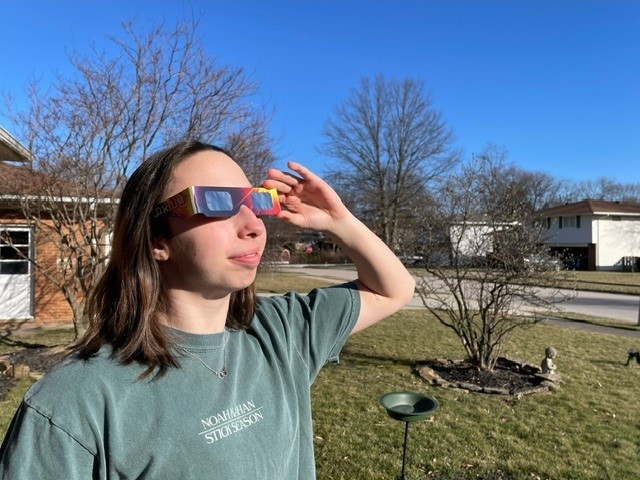
Millions of Northern Ohio residents and hundreds of thousands of visitors will look to the sky through dark glasses on April 8, and the American Red Cross is preparing.
In doing so, Red Cross volunteers and staff throughout Northern Ohio, especially the disaster Assistance Team (DAT), are employing several of their greatest strengths: their experience and dedication, relationships with partner organizations and flexibility.
Preparation is needed. In addition to the eclipse and NASA’s broadcast from the Great Lakes Science Center, Cleveland will host the NCAA Women’s Final Four on April 5 and Championship on April 7. The Cleveland Guardians’ home opener is on the 8th.
While estimates fluctuate, the number of expected visitors is up to 500,000, in addition to the 7.2 million Ohioans who live within the path of totality. The entire region will be crowded, especially downtown Cleveland. Other locations face unique challenges, such as Avon Lake, which will have the longest period of totality.
I spoke with two people leading the preparations. Emma Banton, Regional Readiness Program Manager for Northern Ohio, and Piet Hagenaars, Disaster Program Manager for Northeast Ohio. Both are exceptionally experienced in crisis and emergency management.
The entire Northern Ohio Region Red Cross team has garnered considerable preparedness experience. Emma mentioned seven shelters were operated in our region over the past year, including our largest in over 20 years in Cleveland.
Emma, whose focus is all of Northern Ohio, said, “Each chapter will have at least one shelter team on call from April 5 through 9, while the Northeast and North Central Ohio chapters will each have two shelter teams standing by. Each chapter will also have one canteen team ready for any safety forces that may request refreshments during a response, like a home fire.”
“A Red Cross representative will also be deployed at the Cuyahoga County Office of Emergency Management’s Emergency Operation Center (EOC),” said Piet, “And we are prepared to work with other county offices as needed.”
As home fires will still occur–the Red Cross responds to an average of more than three per day in our region–DAT crews will also be ready. Depending on traffic, crowds and logistics, they may respond virtually. In fact, home fires are a major reason shelters need to be ready. Should a family need a safe place to stay, hotels are fully booked.
Emma and Piet both stressed the importance of preparation, which can be difficult when we do not know where an incident may occur. Considerations include maintaining communication and having fully fueled vehicles should access to gas stations become limited. Emma has also supported the region’s chapter Disaster Program managers and specialists as they updated shelter agreements and ensured readiness.
Emma added that the Disaster Program managers and specialists in all five of our region’s chapters are working diligently to ensure we are fully prepared.
Piet also finds inspiration from other crisis managers, like one who remarked he would never apologize for being over-prepared, and others who pointed out normal rules and expectations often do not apply in a crisis.
Finally, both are looking forward to enjoying this once-in-a-lifetime event. But when and where help will be needed, they are ensuring that the Red Cross is ready.
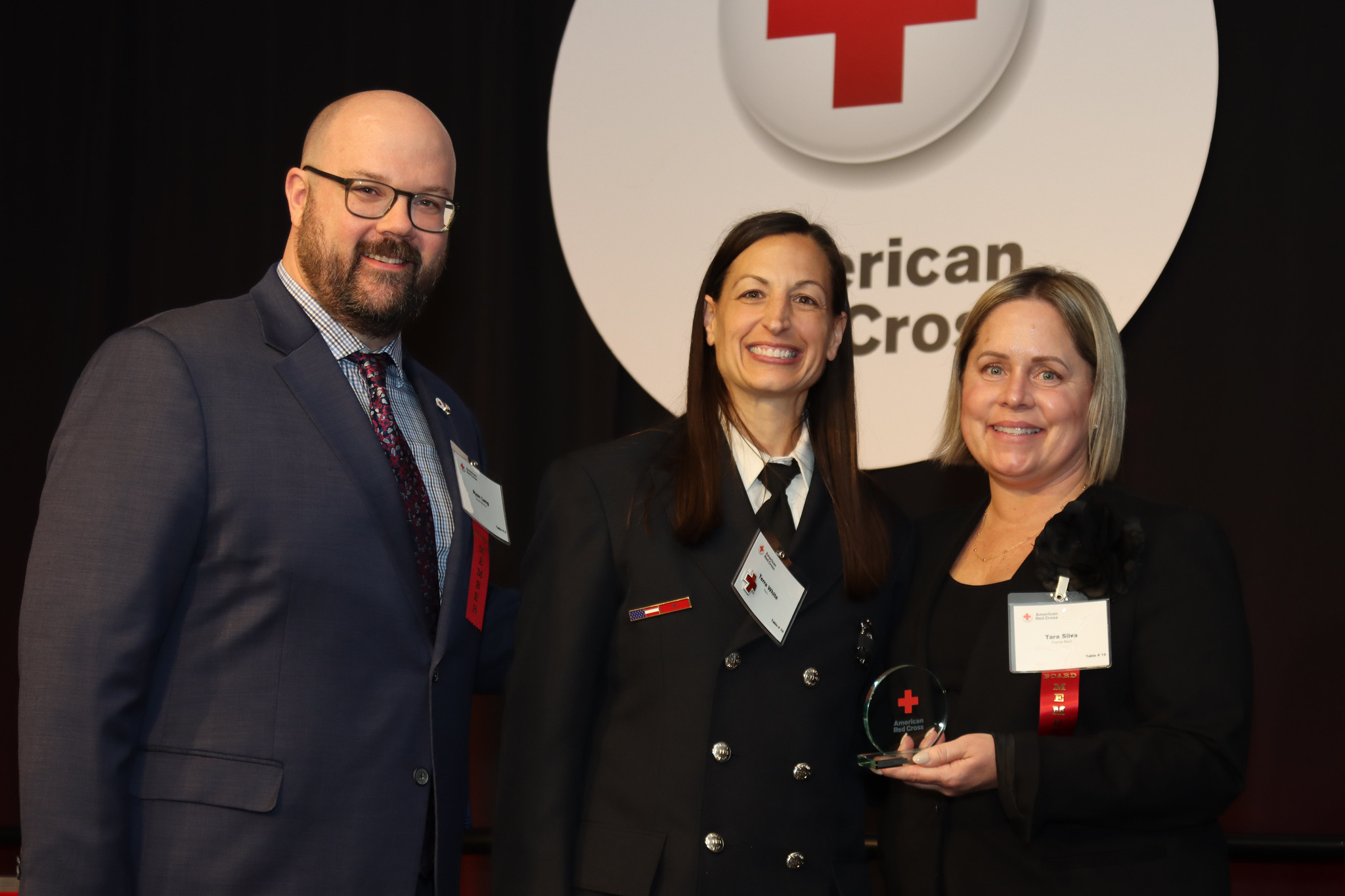
Several local community members who performed brave acts of heroism were recently honored at the annual Acts of Courage Awards, presented by the American Red Cross of Greater Akron and the Mahoning Valley.
The annual dinner and award ceremony took place last Thursday at the NEW Center at Northeast Ohio Medical University (NEOMED) in Rootstown. As a special feature of the awards, the Red Cross also presented the H. Peter Burg Community Leader Award to Rick Burke for his lifetime of community leadership and dedication to the Red Cross mission.
Read on to learn more about this year’s winners as well as their heroic acts. View more photos here and watch this special story on the event from Cleveland’s Fox 8 News.
Acts of Courage Award Winners:
Audrey Jokovich, Keenan Orr & Marissa Tyger While in Wooster, Ohio completing an assignment for their nursing class at Kent State University, students Audrey Jokovich, Keenan Orr and Marissa Tyger noticed a man lying in the middle of roadway. As they rushed to help, they realized he was unconscious, aggressively shaking and slamming his head against the ground. While another bystander called 911 the students protected his head and airway and placed him on his side. Finding the man’s cell phone, the students heard his father on the line and he provided much needed medical history and other health information about the individual. Emergency services arrived and transported the man to a local hospital.
Jenna Omar
Seventh graders Jenna Omar and Luciana Kolat, friends since they were four, were sitting at lunch when Luciana began choking on a piece of breaded shrimp. She tried to reach down and pull it out herself but only pushed it down further. Unable to breathe, she started gagging and put her hands to her throat to show she was in distress. Jenna realized the emergency, jumped up and patted her friend on the back. When that didn’t work, she ran behind Luciana and gave her a strong abdominal thrust. Everything came out and Luciana’s airway was cleared.
Deputy Brian Gorham and Don Sedlock
Portage Lakes resident Don Sedlock was driving to the boat dock near his home when he saw that a fire had broken out at his neighbor’s. Stopping at the scene, Don discovered someone trapped inside and rushed in to get him out. Deputy Brian Gorham arrived shortly after and found the side of the house engulfed in flames. He also ran inside where he discovered Don trying to help his neighbor. Brian and Don worked together to carry out the 92-year-old man who was unable to walk and had been trapped in his bedroom. Four other adults and the family dog were able to follow Don and Deputy Gorham to safety while firefighters extinguished the blaze.
Hannah Stein
While running with her dog Boltan on the Cuyahoga Valley National Park Towpath, Hannah Stein heard a cry coming from the river. She ran toward the cries and found a young woman waist deep in the river. The woman had lost her footing, fallen in and was trapped waist-deep in the water, unable to get out. Hannah immediately rushed to the riverbank to help, with Boltan right behind. Removing Boltan’s harness and leash, Hannah passed them to the girl to grab onto. After a couple of strong pulls from Hannah, the young woman was able to lift herself onto the riverbank. The Valley Fire Department was called to check on the young woman.
Tim Graichen
Tim Graichen and a co-worker were traveling home from a business trip in Tennessee when they witnessed a car lose control, flip and roll multiple times, finally landing in the median in front of them. Tim yelled for someone to call 911 as he jumped from the car to help. Tim saw the car engine was on fire and immediately began to work on pulling the driver from the vehicle. Finally freeing him, Tim saw the victim was unresponsive, and he was unable to find a pulse. Tim began performing CPR and worked alone for several minutes until a nurse stopped at the scene and offered to take over chest compressions. The paramedics arrived and transported the man to the hospital, where he arrived breathing and with a pulse.
Terra White
Terra White, a veteran firefighter, was in an ambulance working her first shift with a new partner. As they traveled through Akron, her partner, who was driving, suffered a medical emergency. The ambulance began to swerve, and Terra saw her partner slumped in his seat with his foot on the accelerator. Knowing she had to act quickly, Terra reached over a large computer between them and grabbed the steering wheel. She then maneuvered her way into the driver’s side, removed her partner’s foot from the gas and slammed on the brakes. The vehicle skidded and finally came to a stop in a vacant lot. Terra later discovered the ambulance stopped just a few feet shy of 50 ft. embankment, a drop that would have been fatal had the ambulance not stopped.
Congratulations to all the winners! Do you know someone who acted in an emergency to help save a life? Share their story with us for possible recognition at upcoming Acts of Courage and Hero awards events across the Northern Ohio Region. And make sure you’re prepared to help save a life like these heroes by signing up for a Red Cross training course near you.
When is a chain stronger with a flexible link? When it’s the American Red Cross chain that gets vital blood and blood products from donors to recipients.
I’ve blogged about almost all of the links in that life-saving chain: donors who generously volunteer to give the liquid of life; phlebotomists who skillfully, patiently drain that blood from donors’ arms; trained lab technicians who test blood for safety and for unique characteristics that will match with recipients.
Chris Chmura, a Red Cross volunteer delivering lifesaving blood
But that only takes the blood and blood products so far. How does blood get to hospitals where it’s needed for trauma victims, surgery patients and folks being treated for cancer, sickle cell disease and other conditions?
That’s the flexible link in this chain of life. Volunteer Red Cross blood transportation specialists cover this last mile.
“Our blood collection and distribution system would stall without our transportation specialists,” said Alayah Ross, who supervises drivers out of the Cleveland Red Cross blood center.
Alayah Ross supervises drivers out of the Red Cross blood center in Cleveland
“This is ideal for someone who enjoys driving and would like to be involved in a really meaningful activity,” she said.
“And one of the perks of the job is that it’s flexible. We ask for one to four trips a month; we need drivers during the day, in the evening and on weekends, so we work hard to match trips with our volunteers’ own schedules.”
Currently, the Red Cross needs volunteers to drive blood from blood collection sites to the lab in Cleveland for testing and processing, and to deliver blood products to hospitals around northern Ohio.
If you have a valid state driver’s license and at least three years of licensed driving experience, you can choose regular routes, stand-by emergency deliveries or both. This is a great volunteer opportunity for couples, friends or family members.
If you’d like to help hospital patients who need blood and blood products during their battle back to health, click here for more information.
Edited by Glenda Bogar, American Red Cross volunteer
Posted by Ryan Lang, Red Cross board member and volunteer
“We found a cat!” I was descending a stairwell, having spent the day assisting those impacted by a multi-family fire, when a firefighter and police officer rushed in. They had found someone’s pet, soot-covered, but alive. Reaching out to the family so they could contact the fire department about their pet is among my favorite American Red Cross experiences. I’ve also seen how much animal family members mean during times of crisis, whether helping recover from tragedy or mourning their loss.
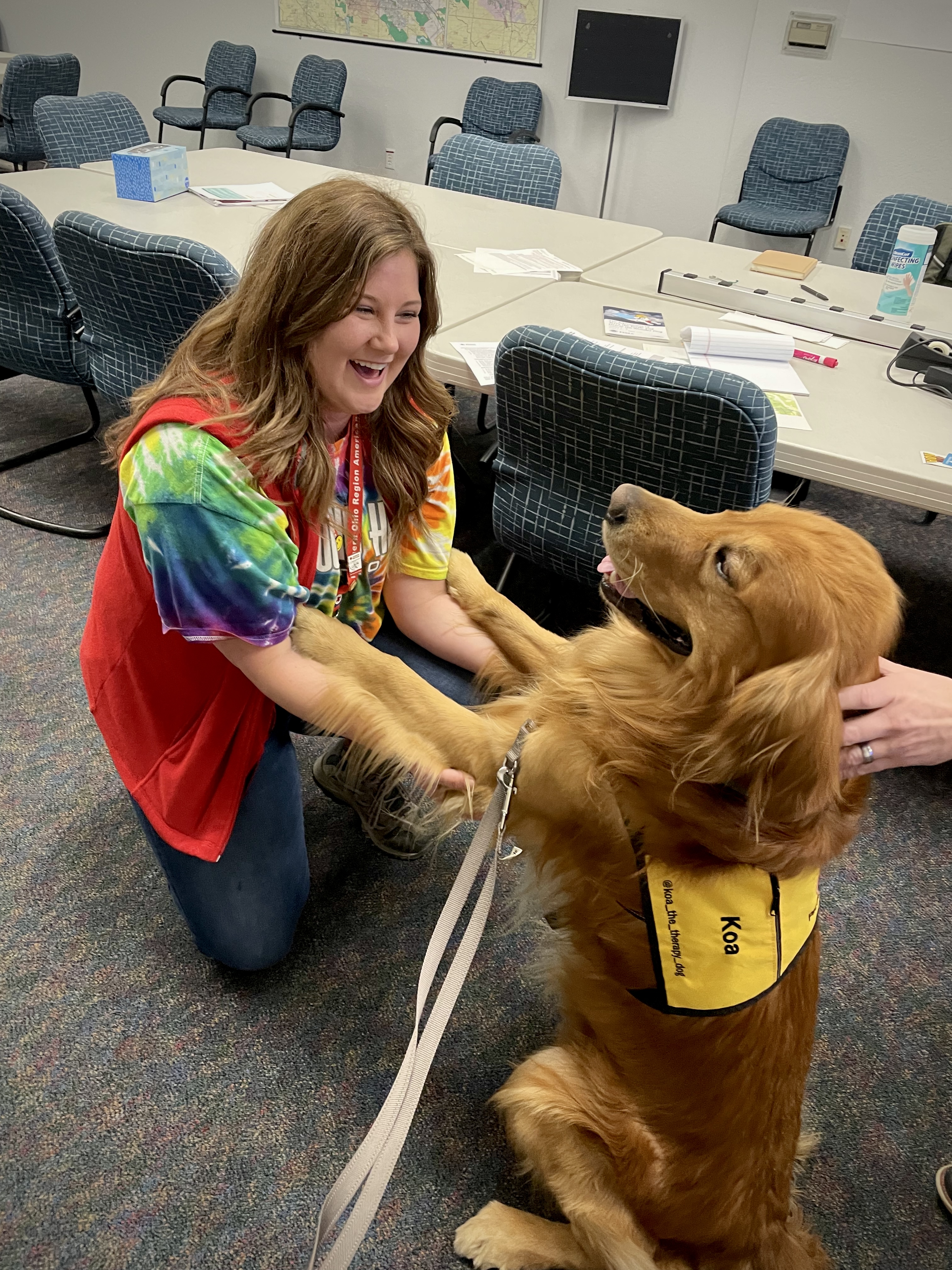
Over the past year, the Red Cross Northern Ohio Region has improved its ability to ensure pets are included when assisting families after a disaster. Megan Sylvester, Regional Recovery Manager for the Red Cross, has led this initiative.
Megan Sylvester, Regional Recovery Manager for the Red Cross
Megan, who has a zoology degree and extensive experience caring for and working with animals–including having “two rescue pitties and a shepherd” of her own–realized the need for improved pet care after responding to a home fire in which three cats died. When asked what the family could do with the bodies, she did not have an immediate answer. She knew pets are important family members that bring joy and comfort to our lives, and that the issue had to be addressed.
The efforts are having tremendous results. In January alone, the Northern Ohio Disaster Assistance Team (DAT) responded to 121 events, aided 454 people (330 adults and 124 children) and 226 household pets, including seven emotional support and three service animals. Most were dogs and cats, but there were also small mammals, lizards, and a bird.
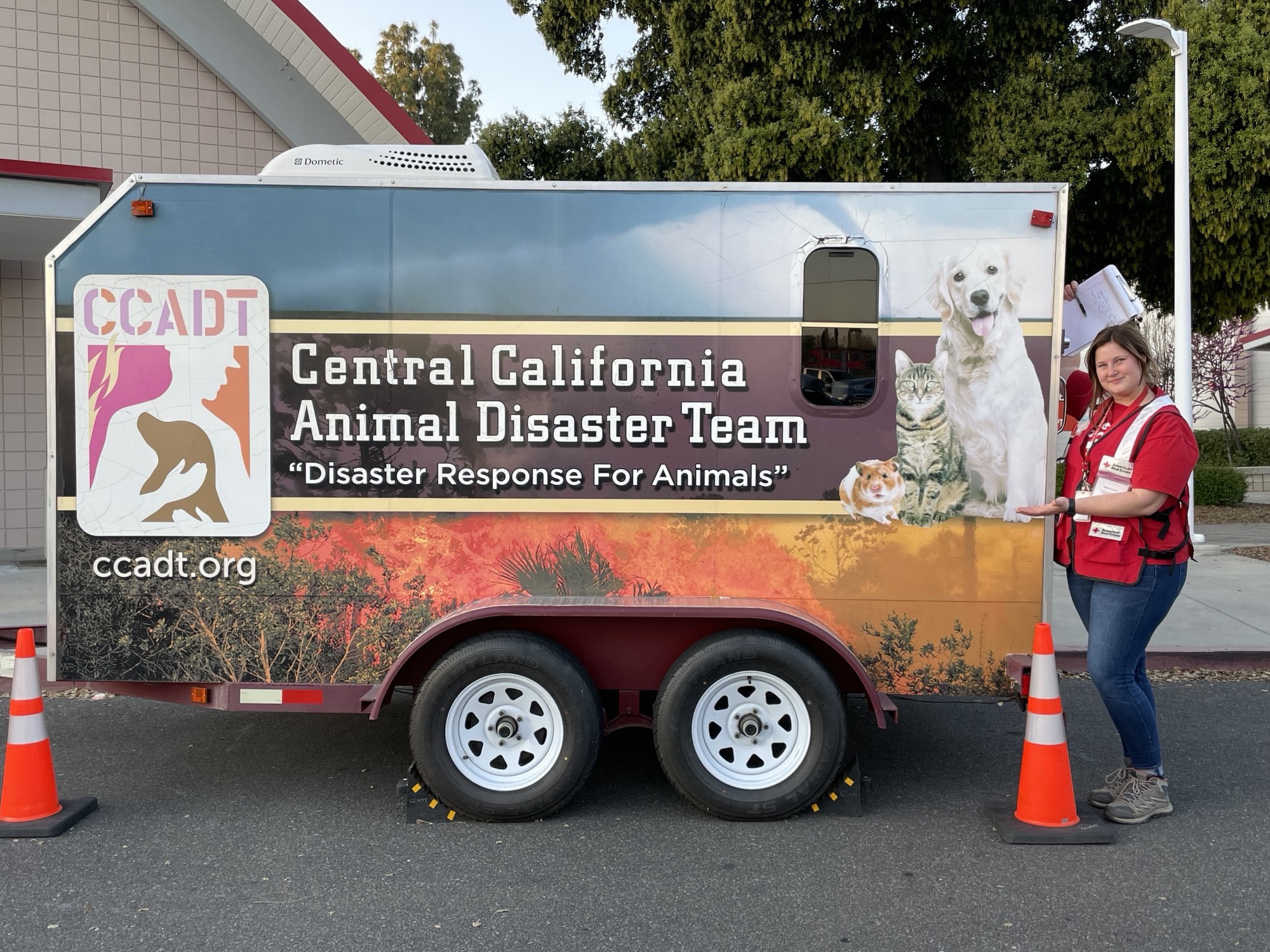
Megan Sylvester, with the Central California Animal Disaster Team
These partners help ensure families recovering from a disaster have resources for pet food, bedding and, when needed, services to take care of their pet’s remains.
In addition to her local efforts, Megan said that nationally, the Red Cross now has a household pet program. Sadly, people have perished in large disasters because they did not want to leave their pets behind. There were no pet shelters, so they did not evacuate. The national household pet program is meant to address this issue.
Megan helped the national effort while aiding families impacted by California floods, where she saw how greatly pets helped those recovering from disaster as well as Red Cross members.
Working as a pet liaison, she helped coordinate Red Cross efforts with those of humane societies, the ASPCA, animal control and shelter organizations, veterinarians, a pet groomer, and therapy dogs (pet visitation is also an important part of the Red Cross’s Services to the Armed Forces).
“Walking a dog brings a little bit of normalcy,” Megan said. “helping both human and animal.” She also spoke of a young girl who was comforted by keeping her pet fish nearby. Overall, the pets brought, “A little sunshine during rainy days.”
Spring is almost here and we’ve already seen many of the signs: robins in the yard, daffodil and tulip greens emerging from the ground, budding maples, and warm, sunny days! Unfortunately, if you’ve lived in Northern Ohio long enough, you know the cold and the snow could be lurking just around the corner.
Just as winter is not yet over, neither is cold and flu season. According to The Ohio Department of Health, Ohio is still experiencing very high levels of flu activity, as of the week ending February 10.
The American Red Cross wants people to stay as healthy as possible so they are available to donate blood. Remember, there is no wait time between receiving the influenza vaccine and giving a blood donation, as long as you are feeling well on the day of donation.
Here are some tips & best practices to keep the flu and other illnesses away:
Wash your hands. Most people are familiar with this common epigram; however, it remains one of the best ways to prevent illness. Frequent handwashing, especially when coming in contact with public spaces, is your best bet against bringing unwanted diseases home with you.
Avoid crowded spaces. Spending time in close contact with others, especially during cold and flu season, increases your chances of exposure to airborne illnesses.
Keep soiled hands away from your face. When you can’t wash your hands, make sure you avoid touching your eyes, mouth, and face.
Eat a healthy, vitamin-rich diet, stay hydrated, and get plenty of rest and exercise to boost your immune system.
Take the flu vaccine annually. The vaccine is an important barrier against catching the flu, and it’s not too late to get your vaccination. Flu season typically runs through the end of March, but you can catch the flu at any time of year.
The Red Cross is in urgent need of donors to maintain an adequate blood supply. Consider donating blood this winter season, and give the gift of life to a recipient in need. Even a single donation can make an impact. During the month of February, all donors will receive a $20 Amazon.com gift card. Please visit https://www.redcross.org/give-blood.html to find a blood drive near you.
Recognizing the men and women who collect lifesaving blood
By Eilene Guy, American Red Cross volunteer
One of the key activities of the American Red Cross is collecting, testing and distributing blood for trauma victims, cancer and sickle cell “warriors” and others in need of critical treatment.
Phlebotomists – the men and women who skillfully slide needles into arms – are vital connections between our blood donors and those who need lifesaving transfusions.
This week, the Red Cross salutes its 5,500 team members across the country who collect nearly 2.5 million blood and platelet donations each year.
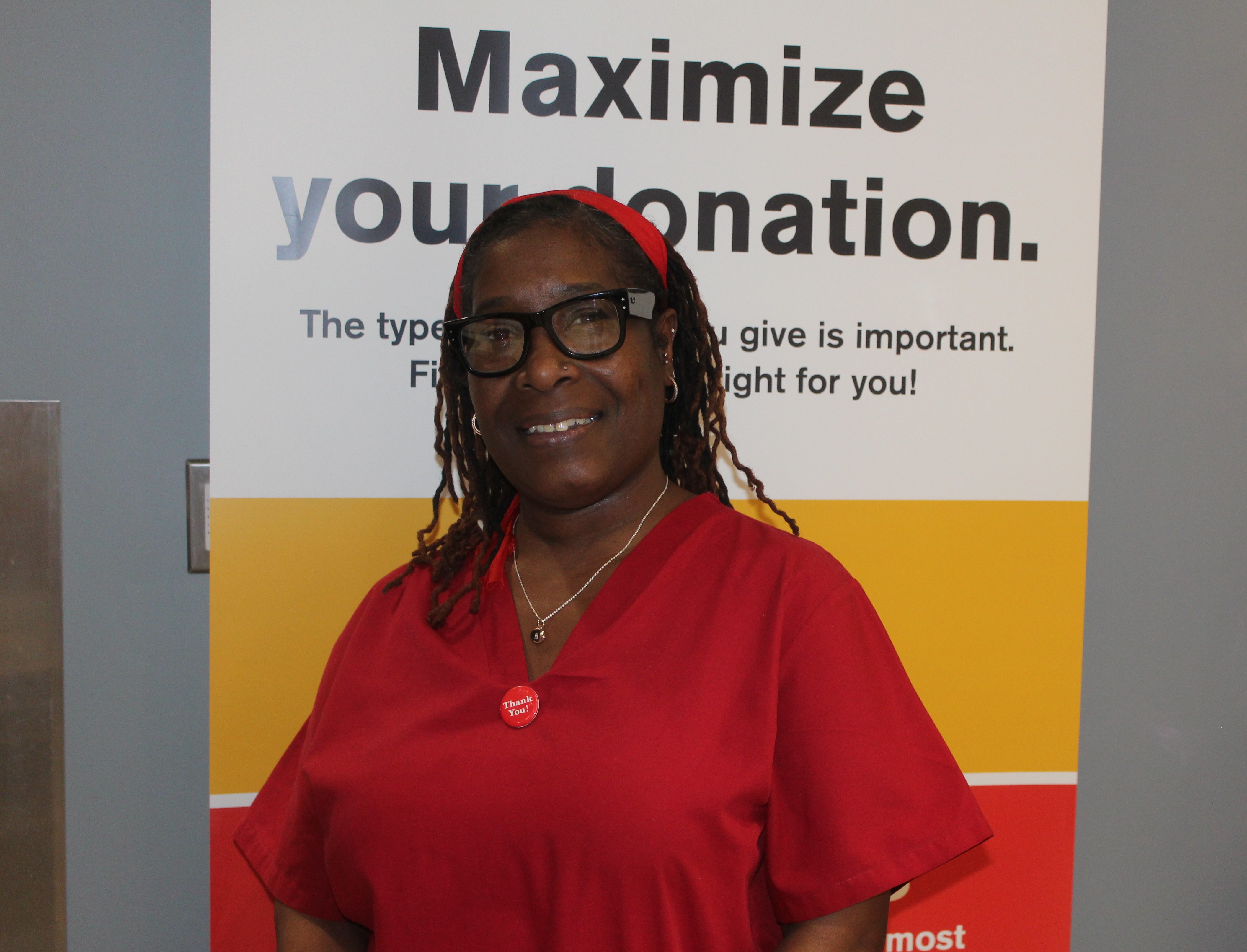
If you have trouble wrapping your mind around the word “phlebotomist,” just relax and picture Safeyyah Edwards in her deep red and black scrubs, gently but efficiently preparing a donor for their “pinch.”
Safeyyah Edwards
Safeyyah has been drawing blood for 23 years for the Red Cross and she values the donor/friends she’s made at the Cleveland blood, platelet and plasma donation center.
“We refer to them as ‘my donor.’ They become like family. We hear their stories, we hear why they donate; we see pictures of their kids, events in their lives.”
“Phlebotomists help people help people,” Safeyyah says, referring to the fact that trained professionals like her make it possible for donors to give the gift of life, mostly for people they don’t even know.
“I am just in awe,” she says respectfully. “Some people are just terrified when they come for the first time, but they want to donate; they want to save lives.
“We do have good people out there.”
Every two seconds, someone in the U.S. needs blood. As the provider of nearly half of the nation’s blood supply, the Red Cross relies on phlebotomists to help fill that need. They strive to give volunteer donors a safe and positive experience while ensuring that blood is collected properly for the safety of recipients.
Safeyyah and her fellow professionals – You wouldn’t want to trust a blood draw or transfusion needle to an amateur, would you? – are especially crucial at a time like this: Seasonal illnesses and extreme weather events have cancelled hundreds of blood drives, leading to a nationwide blood emergency.
In the 31 counties of the northern Ohio region, the Red Cross needs to collect some 500 donations a week to meet the needs of more than 70 local hospitals.
To make an appointment to donate at a Red Cross blood drive near you, go online to redcrossblood.org or call 1-800-RED CROSS (1-800-733-2767).











 NOHredcross