September is Red Cross Preparedness Month. You never know when a disaster might occur, so it’s important to be prepared for anything and everything. To help you, we have created a list of 30 items…one for each day of the month…that should be together and ready to go to help you survive for 72 hours—the length of time everyone should be self-sufficient during a large-scale disaster.
 1 | Water: It’s the essence of life, and you’ll need plenty of it. The rule of thumb is one gallon per person per day, and enough for three days. For a family of four, that’s 12 gallons. It wouldn’t hurt to toss in some instant drink packets to add a little flavor. And if you really want to be safe, you could add a water purification pump to your kit in case you run out of bottled water, since tap and well water often get contaminated during disasters.
 2 | Food: In many disasters, gas and electric are often knocked out, meaning you can’t cook or refrigerate food, so plan on having a selection of canned and/or ready-to-eat foods on hand. A big jar of peanut butter is a popular start. Cans of veggies, beans, peanuts, soups and tuna also work. (Keep in mind that canned foods do expire, so rotate your stock once or twice a year. And don’t forget a can opener!) Granola bars, protein bars and energy bars are good options. Or, you can purchase emergency food rations, which aren’t gourmet, but provide you with the needed nutrients and have a shelf life of five years. Eating food helps improve your mood.
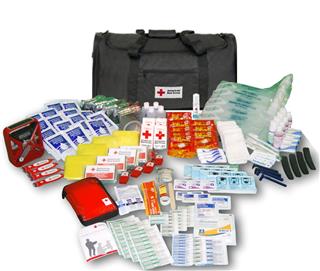
 3 | First aid kit / medical supplies: This is vital. Disasters are an injury waiting to happen and a breeding ground for germs. The Red Cross offers everything from basic kits to the extreme.
4 | Flashlight: When the electricity’s out and the sun goes down, it gets dark. Very dark. That means without a flashlight you’re a stubbed toe just waiting to happen. With the invention of LED lighting, flashlights are now small and powerful, so get one. Or two. You might also want to consider a flashlight that stands up and transforms into a lantern for general room lighting, or a headlamp that you can wear to free up your hands or to read in bed. The Red Cross Store offers a wide variety of lights, including lights that are powered by a hand crank and even lights that are activated by water.
 5 | Radio: When a disaster strikes, keeping abreast of the latest news and weather is a must. Also, cranking up the tunes occasionally can help battle stress. But radios don’t work without electricity and can gobble up batteries, so make it a radio with a hand crank that generates its own power. The Red Cross Store has a variety of options, including ones that doubles as a flashlight and cell phone charger.
 6 | Batteries: During a disaster, when the electricity is out, batteries are power—in many ways. So stock up on extras. And not just flashlight batteries, but some for cell phones, radios, two-way radios and whatever else needs power. Leaving the extra batteries in their original packaging, by the way, is a good way to help keep them fresh.
 7 | Medications: A week’s worth of prescription medications are, of course, a must since these are usually vital to good health or maybe even survival. But don’t skimp on other basic medicines. Getting through a disaster is tough, and having a headache or upset stomach is only going to make it tougher, so create a mini-medicine cabinet with anything you typically need for a headache, upset stomach, menstrual cramps, diarrhea and whatever ails you.
 8 | Cleaning supplies, part one: Disasters are dirty, so having something to clean up with is a huge help. A container of Clorox wipes is great to wipe down surfaces and kill germs—which spread like wildfire during disasters. Household bleach and rags also work well.
 9 | Cleaning supplies, part two: Disasters are dirty, so having something to clean yourself with is next to godliness. Soap and a washcloth are ideal, if you can find a shower or running water. If not, baby wipes are a great alternative. They do a great job of getting rid of the grime and usually leave you smelling fresh as a daisy. Keeping a bottle of hand santizer handy is also a wise idea—getting sick isn’t a great way to deal with a disaster.
 10 | Sanitation and personal hygiene kit: Think of your bathroom and all that’s in it. A roll of toilet paper is a must. Toothbrush and toothpaste, razor, deodorant, shampoo and body wash. Travel-sized toiletries are just right. For women, don’t forget three days worth of tampons or pads.
 11 | Duct tape: It’s the universal tool, or as comedian Red Green calls it, the handyman’s secret weapon. You can hang strips from the ceiling to serve as flypaper; make a bandage in a pinch; hold together just about anything; spin it and make a clothesline; reseal food packages; repair shoes or broken eyeglasses; write a note on it; the list goes on.
 12 | Towels: Towels aren’t quite duct tape when it comes to multiple utilitarian functions, but they can serve many purposes other than drying off after a sponge bath or getting caught out in the rain. You can roll them up and use them as pillows, wrap them around you to help keep you warm, sit on them as an extra layer of padding or while pretending you’re at the beach,mop up spills or wipe off sweat.
 13 | Maps of the area: It’s old-school, true, but you’ll be glad you have them when your smartphone dies. Just for the record, Google maps aren’t available in paper. Try your local bookstore.
 14 | Copies of personal documents: If your home or car is damaged, you’ll want copies of insurance policies in hand. It’s also helpful to have extra copies of bank records and Social Security card to reestablish accounts. Also consider credit card numbers to cancel the cards if they’re lost or destroyed, birth certificates, passports, driver’s license, car registration. Don’t pack the originals, though, just copies. And keep them in a waterproof container.
 15 | Cash: ATMs don’t work without electricity, so forget that quick trip to the money machine up the street. Credit card machines also don’t work without electricity either, so you’ll quickly Discover your MasterCard got a Visa and has left town on the American Express. The only currency that works during a disaster is cash. Pack away about $150, which should be enough to get you through a few days, although make sure it’s a collection of small bills since the one convenient store that’s open probably isn’t going to be able to make change for a $50.
 16 | Bedding: Unless the disasters happen during the dog days of summer, chances are it will get anywhere from nippy to bone-chilling cold at some point, so make sure you have something that is going to keep you warm and dry at night, like blankets or sleeping bags. Emergency space blankets are also a nice alternative, as they are light and pack small but are made of materials that keep in body heat so you stay warm. A good night’s sleep is the best way to deal with a tough situation.
 17 | Clothing: There’s nothing quite like living and sleeping in the same clothes for several days—for you or the people around you. To make everyone happy, pack a complete change of clothing. Pick shirts with long sleeves. (You can roll up long sleeves in hot weather, but you can’t pull down short sleeves in cold weather.) Also consider adding a hat and rain gear. And make sure you have sturdy shoes since the most common injuries during disasters are foot cuts.
 18 | Mess kits: One of the most important pieces in surviving a disaster is eating. Food improves your mood. And while your food selection during a disaster may not be gourmet, that doesn’t mean it has to be uncivilized. You can still eat off of plates using knives and forks and spoons. OK, the plates may be paper and the utensils plastic, but it’s better than eating out of a can. Don’t forget paper towels. And insulated mugs also work well since you can use them for hot soup or cold drinks.
 19 | Family and emergency contact information: For most people these days, this is kept in their cell phones. Don’t risk your phone dying. Keep names and phone numbers of family members, doctors, pharmacies, insurance agents, anyone who you may need to contact in a notebook. It’s old-school, yes, but in a disaster when the power is out you often have to resort back to how things were done in the 1970s–before there were smart phones, the Internet and quite possibly fire.
 20 | Baby supplies: Going through a disaster is tough. Going through a disaster with an upset baby is a double disaster. Many parents already keep a baby bag, but if not make sure you have enough diapers and food to make it through three days, along with baby powder, wipes, pacifiers and whatever else your baby needs.
21 | Miscellaneous items: Safety pins, Velcro strips, bobby pins, rubber bands, super glue, carabiners. It’s amazing how often you need these things. Just toss some in a small bag or container and you’ll be good to go.
22 | Sharpies: They’ll write on anything. Label plates and cups so the kids don’t argue over which one is theirs. Write on a piece of duct tape and you can leave a note anywhere. Put your name on your disaster kit and anything (and everything) else.
23 | Storage: Ziploc baggies can hold leftovers as well as keep papers or cell phones dry. Garbage bags not only provide a place for trash, but they can double as ponchos if it’s raining, an extra layer to keep you warm or a tarp if you’re sitting on wet ground. Storage containers can hold items when you’re preparing your disaster kit, and then be used as bowls to eat out of or a place to store leftovers. Plastic grocery bags are great to hold wet clothes or washcloths, or you can use the handles and string them up with some rope for out-of-the-way storage space.
 24 | Snacks: A little snack is a welcome relief during a disaster. Hard candy such as butterscotch candies and peppermints are ideal for disaster kits, since they won’t melt and taste good.
25 | Two-way radios: During many disasters, cell phone service tends to go out along with the electricity, so a great way to keep in contact with family members is to share a couple of two-way radios. They’re small, relatively inexpensive and have a range of up to 50 miles.
 26 | Work gloves: Most disasters leave behind a mess, meaning you may have to move dirty or dangerous debris. Gloves can also double as hand warmers on cold days, pot holders if you’re cooking on a camp stove, even fly swatters if you have good hand-eye coordination.
27 | An extra set of car and house keys: When a disaster hits, you may not have time to grab your keys, so keep an extra set in your bag.
 28 | Pet supplies: Don’t forget the dog and cat. Plan for three days of pet food and supplies, as well as extra water for your pets. A toy or two also helps. If you have a cat, aluminum roasting pans are inexpensive and make great makeshift litter boxes. For dogs, pack an extra leash and clean-up bags. If you can’t grab a crate, make sure you have a blanket for your pets to sleep on. It also helps to have photos of your pets in case you become separated. Medical records also help.

29 | Entertainment: TVs, the Xbox, DVD players—none of these things work when the electricity’s out, so unless you’re a musician or stand-up comedian, the kids are going to need something to keep them entertained. Crayons, pencils and paper work with smaller kids. Card games and puzzle books might work for older kids. Don’t forget to bring reading material for yourself.
 30 | A multi-purpose tool: These amazing little devices go beyond the basic pocket knife by including such handy tools as a can opener, scissors, a saw, pliers, screwdrivers, tweezers and files. You’ll find yourself using this more than you think.


 There is nothing more frustrating (or hilarious, depending on how you view it) than going through your 72-hour kit and seeing a huge pack of newborn diapers intended to fit your 15-month-old toddler.


 NOHredcross