Local Red Cross Volunteers Help Neighbors in West Virginia

Thousands of Residents Affected by Devastating Floods

Six volunteers from Northeast Ohio are among the Red Cross workers assisting West Virginians affected by summer flooding.

The floods were caused by heavy rain that fell on Thursday, June 23.  More than two dozen fatalities have been attributed to the flooding, and thousands of homes have been damaged or destroyed.

“I am always in awe of the power of something so simple as water,” said Mary Williams, a Red Cross Communications Officer from the Northeast Ohio Region, who arrived in West Virginia on Saturday, along with a growing number of volunteers.

“The number of volunteers responding to this disaster is amazing,” said Charlotte Rerko, Chief Operating Officer of the Northeast Ohio Region.  “It’s people helping people at it’s best.”

Red Cross volunteers are providing support and comfort to people affected by the flooding, by operating or supporting 13 shelters for people who lost their homes or who were forced to evacuate.  Some 1,200 people had a safe, dry place to stay Sunday night.

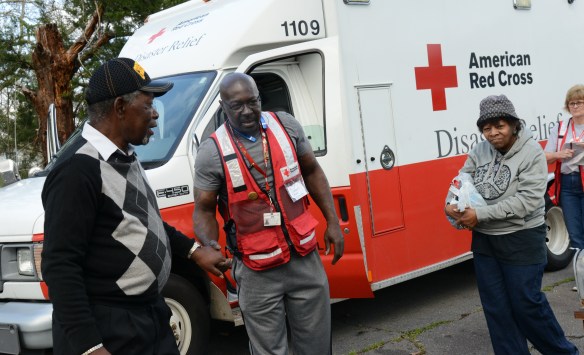
An Emergency Response Vehicle based at the Summit, Portage and Medina Counties chapter in Akron was also dispatched to the area, to bring food and other supplies to the flood-affected residents of West Virginia.

Because it’s such a traumatic time for so many families unexpectedly forced from their homes,  Red Cross disaster mental health workers have also been sent to the area to give the residents guidance on how to prepare for the return to their homes.  And Red Cross health workers are helping to replace needed items like prescription medications and eyeglasses.

More help is on the way, with more volunteers, emergency vehicles and other supplies on the way to West Virginia.  As of Monday, there were 150 Red Cross personnel assisting with the recovery effort.

We need your help.  Entire families have lost their homes and everything they own.  Your support will help people affected by disasters big and small.  You can donate to Red Cross Disaster Relief by visiting redcross.org  or calling 1-800 RED CROSS.  Or you can make a $10 donation by texting REDCROSS to 90999.

You can prepare for floods and stay safe when they occur by following a few steps, including:

  • Be prepared to evacuate at a moment’s notice and heed evacuation orders when given. When a flood or flash flood warning is issued for your area, head for higher ground and stay there.
  • Stay away from floodwaters.
  • If you come upon a flooded road while driving, turn around and go another way. If you are caught on a flooded road and waters are rising rapidly around you, get out of the car quickly and move to higher ground. Most cars can be swept away by less than two feet of moving water.
  • Keep children out of the water.
  • Be especially cautious at night when it is harder to recognize flood danger.

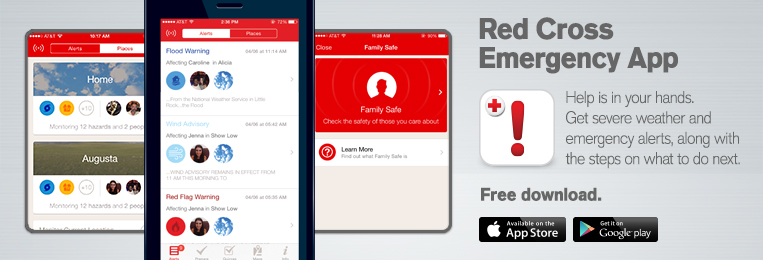
You can also download the free Red Cross Emergency App,  to have safety information, severe weather alerts and shelter locations available on your mobile device.

Texas Needs Our Help After Relentless Rain Causes More Flooding

More rain predicted for the area. Volunteers prepared with more supplies and shelters.

Texas Floods 2016

March 22, 2016. Orange, Texas. 75 year old Maybel Bordelon from Orange Texas comes to the Red Cross resource center to get much needed cleaning supplies. “Everyone here is so friendly and kind. Everyone is town is talking about the help that Red Cross is providing. We are so thankful you are here.” Photo by Danuta Otfinowski/American Red Cross

Volunteers from the American Red Cross are responding to the devastating flooding occurring in Texas after some parts of the state received 19 inches of rain over the holiday weekend. Among them are volunteers deployed from the Northeast Ohio Region.  They are assisting with communications and mental health services.

Since the beginning of the year, numerous storms have ravaged the state, displacing thousands of families and devastating homes and businesses.

Over the weekend, Brenham, Texas, located about 65 miles northwest of Houston, received 18 inches of rain in a 24-hour period. Houston, which has been hammered with severe weather and flooding for several months, was again in the storm’s path and people were forced to leave their homes. The threat isn’t over – weather experts predict flooding will continue for several more days. Emergency officials estimate that some 6,000 homes may be affected.

Red Cross volunteers have mobilized once again. Fifteen shelters were opened in the affected areas and volunteers are helping to assess the damage. The Red Cross is also providing meals in coordination with the Southern Baptist Disaster Relief and other local partners. Red Cross volunteers will also be delivering relief supplies as soon as it is safe to do so.

The Red Cross is monitoring the ongoing threat for more flooding and is setting up in areas that are likely to be hit by the next onslaught of bad weather later this week.

“This part of the country has been hit with multiple disasters for months now, and the Red Cross has been helping from day one,” said Brad Kieserman, vice president, Disaster Services Operations and Logistics for the Red Cross. “We have nearly 300 Red Cross workers on the ground or on their way to help people in Texas. Our volunteers will remain in these communities in the weeks ahead to make sure people get the help they need.”

HOW TO HELP You can help people affected by the Texas Floods and Tornadoes by contacting Scott Thompson at scott.thompson@redcross.org, or calling 216-431-3064 or 1-800-RED CROSS, or texting the word TXFLOODS to 90999 to make a $10 donation. Donations to Texas Floods and Tornadoes will be used to prepare for, respond to and help people recover from these disasters.

DOWNLOAD EMERGENCY APP With the threat of more severe weather, people should download the free Red Cross Emergency App to receive emergency alerts and information about what to do in case of flooding and other disasters, as well as locations of shelters. The App also includes emergency first aid information and a Family Safe feature which allows people to instantly see if loved ones are okay. The free Emergency App is available in app stores by searching for the American Red Cross or going to redcross.org/apps.

A Report on the Flooding in Louisiana

By: Pam Williams, volunteer


Since the flooding in the south began three weeks ago, nearly 2,000 Red Crossers working alongside partners have provided 4,700 overnight stays in 60 shelters; served 290,000 meals and snacks; distributed more than 119,000 relief items including comfort kits and cleaning supplies; and provided nearly 9,000 health and mental health consultation.

I deployed to Louisiana as part of the External Relations team. As a Government Operations Lead, I helped coordinate necessary services and activities with local, state, federal and Tribal government partners and worked with our Community Partner Services volunteers who identify non-government partners, private agencies and/or organizations and members of the affected communities to assist those affected by the disaster.

This was my 22nd deployment and several of them have been in response to floods. My friends think I’m off to see the country, and I suppose they’re right, but I’m seeing it in pain. However, while each disaster and each response is different I have found one constant – I am seeing people at their best. Whether it is Red Cross volunteers who leave their lives and families to respond, community groups who step up to help their neighbors or those affected by the disaster who are amazingly resilient there is a spirit that moves people forward.

Since returning to Northeast Ohio, here are some of the things I have learned about the response in Louisiana:

  • This is the largest sheltering operation for the Red Cross in Louisiana since Hurricane Gustav and Ike in 2008, and Hurricane Isaac in 2012.
  • As many as 12,000 people have been impacted by the flooding across the state with hundreds of residences either destroyed or receiving major damage.
  • The Red Cross estimates that we will spend between $8.5 million and $11.5 million helping people affected by spring floods and storms across Texas, Mississippi, Louisiana and Tennessee – and we haven’t raised anywhere near the millions of dollars we’re spending to provide the relief needed.
  • Since the flooding began, the Red Cross and our partners have provided more than 3,000 overnight stays in 30 shelters; served 216,000 meals and snacks; distributed 53,000 relief items including comfort kits and cleaning supplies; and provided 3,800 health and mental health consultations in Louisiana alone. Over three weeks into this response operation we are still sheltering affected residents and pockets of previously unidentified people are popping up everyday. There are over 430 areas that continue to be marked as inaccessible so our Disaster Assessment teams can’t yet get in to see how badly the homes have been affected.

The Red Cross has also deployed hundreds of volunteers (like me) to staff these disasters–and we are appealing for additional Red Cross volunteers now. The time and talent of every volunteer makes a real difference in people’s lives. Go to redcross.org/volunteer today to learn more about volunteer opportunities and how to submit a volunteer application.

Louisiana Floods 2016

Sunday March 13, 2016. Rayville, Louisiana. Bobby Ray Griffin and Mildred Means took on more than a foot of water in their Rayville, Louisiana, home. They had already spent much of the day removing flood-damaged furniture from their home when Red Cross volunteers came through their neighborhood with snacks and water. Photo by Daniel Cima/American Red Cross

Louisiana Floods 2016

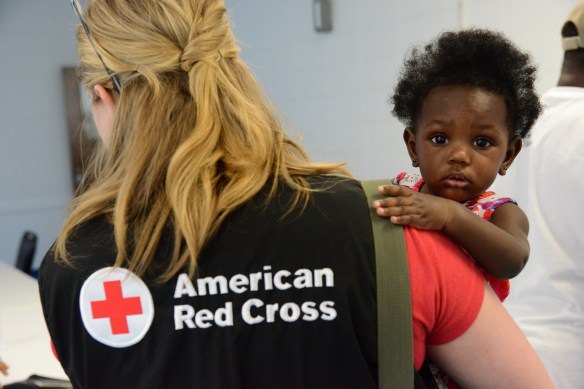
March 14, 2016. Monroe, Louisiana. At 9-months-old, Jakenzie Bradford is one of the youngest staying at this Monroe, Louisiana, Red Cross shelter. She and her family where displaced when floodwaters entered their home nearly a week ago. The Red Cross provides a safe place where children and families can feel comfortable and secure as they begin the road to recovery after disasters like floods. Photo by Daniel Cima/American Red Cross

Metropolis Red Cross Responds to Latest Battle

Article reprint courtesy of today’s Daily Planet

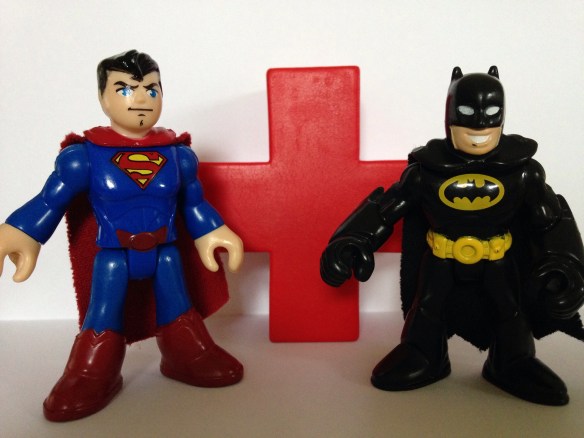
As so-called “Heroes” battle in the skies above the city, the American Red Cross of Metropolis Chapter has quietly begun to set up services for those displaced by the most recent disaster.

“When villains call out Superman, Red Cross workers know that a disaster response will not be far behind,” said Tim O’Toole, Regional Disaster Manager for the Metropolis Chapter. “Now that we have the dark knight of Gotham added to the mix, we have braced for an even larger response.”

Those displaced by the fighting can find shelter by visiting www.redcross.org/shelter. Red Cross volunteers will be on site to provide financial assistance and vital services, including mental health.

As first responders continue to work on the destruction left in the wake of these super men (and reportedly at least one woman), the Red Cross is on scene to provide coffee, water and snacks to those fighting the blazes.

For more information on the response of the Metropolis Red Cross, or to get info on your local chapter, subscribe to www.neoredcross.org.

You can also donate to “this” and other local disasters by going to www.redcross.org/donate, calling 1 800 RED CROSS, or texting RED CROSS to 90999.

image

(Batman v Superman opens today. For times and locations check out this link here.)

THIS IS NOT A DRILL: Northeast Ohio Weather Turns Frightful

Since Northeast Ohio has been experience a nice (for some) respite from the polar vortex winters of the past few years, it is quite possible that we’ve all forgotten how to react to cold, normal-Ohio weather.

With frigid temperatures sticking around for the next 10 or so days, it’s time to review!

Freezing Pipes

  • Keep the thermostat set to the same temperature both during the day and at night. By temporarily suspending the use of lower nighttime temperatures, you may incur a higher heating bill, but you can prevent a much more costly repair job if pipes freeze and burst.
  • Keep garage doors closed if there are water supply lines in the garage.
  • For more freezing pipe tips and tricks, visit our page on redcross.org!

Fire Safety

  • Keep items that can catch on fire at least three feet away from anything that gets hot, such as space heaters.
  • Never smoke in bed.
  • Talk to your children regularly about the dangers of fire, matches and lighters and keep them out of reach.
  • Turn portable heaters off when you leave the room or go to sleep.
  • Install smoke alarms on every level of your home, inside bedrooms and outside sleeping areas.
  • Teach your children what smoke alarms sound like and what to do when they hear one.
  • Test smoke alarms once a month, if they’re not working, change the batteries.
  • For more information about fire safety, visit the Home Fire tab on redcross.org/prepare.

Personal Safety

  • Avoid unnecessary exposure to the cold. Be aware of both the temperature and the wind chill when planning outdoor activities. 
  • Most of your body heat is lost through your head so wear a hat, preferably one that covers your ears.
  • Dressing in layers helps you retain heat. You can remove layers as needed if you become too warm.
  • Mittens provide more warmth to your hands than gloves.
  • Wear waterproof, insulated boots to help avoid hypothermia or frostbite by keeping your feet warm and dry and to maintain your footing in ice and snow.
  • Get out of wet clothes immediately and warm the core body temperature with a blanket or warm fluids like hot cider or soup. Avoid drinking caffeine or alcohol if you expect you or someone you are trying to help has hypothermia or frostbite.
  • Recognize the symptoms of hypothermia that can be a serious medical condition: confusion, dizziness, exhaustion and severe shivering. Seek medical attention immediately if you have these symptoms.
  • Recognize frostbite warning signs: gray, white or yellow skin discoloration, numbness, waxy feeling skin. Seek medical attention immediately if you have these symptoms.
  • Download the Red Cross First Aid app for more information about how to respond during a personal safety emergency.

Red Cross Responds to Several Weekend Disasters

Assists Searchers Looking for Missing Child; Helps Victims of Epic Flooding

A major, historic flood event is ongoing in South Carolina and parts of North Carolina. And the search for a missing child ended successfully in Trumbull County. Volunteers from the American Red Cross assisted there, and with several other disasters over the weekend.

The child, two-year old Rainn Peterson was reported missing Friday night from the family home in North Bloomfield.  Some 60 searchers spent almost 48 hours looking for the little girl, and the Red Cross provided canteen services, including food, water and warmth inside an emergency response vehicle.

In addition, cots were provided to police and FBI agents who stayed at the Emergency Operations Center Saturday night.

On Sunday, just as the sun was setting, a volunteer found the the little girl about a quarter mile from the home. The Trumbull County sheriff said she was doing “as fine as can be expected” after spending nearly two days outdoors, with temperatures that dipped into the lower 40’s and a steady rain on Saturday.

“We all wanted to see heartbreak turn into hope, and that’s exactly what happened,” said Karen Conklin, Executive Director of the Lake to River Chapter of the Red Cross. “That little girl was in our hearts the whole time.  It could have happened to any of us.”

While THAT story ended happily, the flooding on the East Coast is far from over.

This is now the wettest October on record in downtown Charleston, South Carolina, surpassing the previous record of 11.59 inches in 1959 – and it’s only the beginning of the month.

Flash flooding is ongoing and has become serious in many locations, including in Charleston, where numerous swift-water rescues were reported. Roads were closed all over the state, including portions of Interstates 77 and 20. A 75-mile stretch of Interstate 95 between Interstates 20 and 26 was closed. The heavily traveled highway through the eastern portion of the state was not closed during 1989’s Hurricane Hugo.

Widespread rainfall totals since Thursday are between 5 to 10 inches, with locally heavier amounts reported. Some coastal areas from Charleston to Myrtle Beach have recorded 10 to 16 inches. Additional heavy rainfall of between 5 and 10 inches is possible. These extreme rainfall amounts will continue to lead to widespread and catastrophic flooding and flash flooding.  It will take several days for water to recede in the region once the rain ends. A Federal Emergency Declaration has been declared for South Carolina.

“We are helping families across South Carolina that are in need of shelter, disaster relief and comfort,” said Louise Welch Williams, regional chief executive officer of the American Red Cross in South Carolina. “We are also welcoming members of the community who want to help to join us as Red Cross disaster volunteers.”

The American Red Cross has opened 35 emergency shelters, helping people stay safe and dry and providing meals and emotional support. More than 200 people spent the night Sunday in a Red Cross shelter. Nearly 400 Red Cross workers, 22 emergency response vehicles and supplies for 5,000 people have been mobilized.

Additional shelters are on standby and the Red Cross is working closely with government partners to ensure immediate needs of residents are being met.

Volunteers from every Red Cross region in the Midwest, including Northeast Ohio, responded to a variety of disasters over the weekend. We respond to nearly 70,000 disasters every year, from home fires to wildfires, flooding and more.

In addition to flooding, we are still helping people impacted by the wildfires in California, a blizzard in Alaska, and the school shooting in Oregon, where volunteers are providing mental health support and assistance at community events.  And in Florida, more than a dozen Red Cross volunteers are providing emotional support and other assistance for the families of the seamen aboard the cargo ship El Faro, which sank during Hurricane Joaquin last week.

You can help by donating to Red Cross Disaster Relief by visiting redcross.org, calling 1-800-RED CROSS or texting the word REDCROSS to 90999 to make a $10 donation. Donations to Disaster Relief will be used to prepare for, respond to and help people recover from disasters big and small.

Remembering Hurricane Katrina

image

Ten years ago, the costliest natural disaster in the history of the United States, Hurricane Katrina barreled its way onto land, causing devastation from Florida to Texas.  And the Red Cross launched the largest disaster response in its 134 year history, involving more than 245,000 disaster workers and volunteers who helped millions of people with shelter, food and funds to help them get back on their feet.

John Gareis and Tony Rivera of the Northeast Ohio Region of the Red Cross were among the relief workers dispatched to the hurricane-affected region.  They were featured this week in a story about the 10th anniversary of hurricane Katrina, aired by WKYC channel 3.

As noted in the story, the Red Cross established the Safe and Well website to let family and friends know you’re OK after a disaster.  And to help children be better prepared for future disasters, the Pillowcase Project was launched.  It teaches students in third, fourth and fifth grades how to create a disaster kit by packing essential items into a pillowcase for swift escape and easy transport in the face of emergencies.

If you are a registered volunteer who has taken the Disaster Services Overview course and are interested in presenting a Pillowcase Project to children, please call John Gareis at 216-431-3219 or email him at John.Gareis@redcross.org.  If you are not a volunteer yet, log onto redcross.org/volunteer to get started.

And as we note the tenth anniversary of hurricane Katrina, millions of people in Florida and along the Gulf Coast are breathing a bit easier, as all tropical storm warnings and watches were dropped following the weakening of what once was tropical storm Erika.  But it serves as a reminder that this is peak season for hurricanes, and the Red Cross is ready to assist, whenever and wherever needed.

Why I Volunteer: Disaster Mental Health

By: Christine, a Red Cross Volunteer in Boston (but calls NEO her hometown)

A colleague of mine, another therapist, always talks to clients about “shipwreck experiences”: those moments of tragedy where we are pushed to our limits, but learn something about ourselves and are moved to grow. That’s more than a feel-good saying or a pop-psychology mantra. In fact, it is at the core of the theory of post-traumatic growth, a counterpart to the idea of post-traumatic stress, and something that’s been found to happen more commonly than previously believed.

But how do people grow when everything around them seems to be lost? There are many pieces to that puzzle, but one of them is the support of the community. It is that support, which the Red Cross gives, and that Disaster Relief volunteers are trained to provide. These are the community responders you see on the news during times of tragedy. Perhaps they are setting up cots in gymnasiums, or preparing meals out of a truck. They are also the ones at the home fire in the middle of the night, handing out blankets and water.

My own background is in providing mental health services, and as a psychologist I work every day with people who have experienced loss – but usually months and years after the fact. When I was in grad school a professor of mine spoke to our class about the Red Cross’ Disaster Mental Health (DMH) services. This was in the years immediately following 9/11, and there were many stories about psychologists, social workers, and mental health counselors who had worked Ground Zero.

A key point, he said, was that we would unfortunately have to wait to volunteer till we were licensed and could practice independently. So, I finished my clinical training, graduated, did more coursework and training to get licensed, and in the process sort of forgot about it all.

On April 15, 2013, I was getting home just after 3 p.m. from volunteering at Mile 13 of the Boston Marathon. I didn’t understand the words I was reading when a friend texted asking me about explosions. Throughout the next hour I had people, having seen my excited posts about heading off to volunteer and my close-up shots of the course, trying to text and Facebook me about where I was and if I was ok. I, myself, was trying to keep my cool as I texted the family of friends who were supposed to be crossing the finish line. I am still grateful that all of my friends and their families were safe, but it was a long, few hours. A mini-shipwreck experience, if you will.

The next day I looked into the Red Cross DMH training. Things were chaotic, and I didn’t hear back from the coordinator. It got set aside as I dealt with people already in my practice that had been affected by the bombing. But this time I didn’t forget, and finally I made the time to apply this summer.

When I was ready, the process was actually quite easy – go through your local Red Cross website, you can walk through the process of signing up. My trainings were mostly online, and volunteer coordinators helped me along the way. I’ll actually do my last training soon, and then I’ll start attending update meetings as the year goes on. I’ll be able to give my schedule of when I can volunteer for common incidents (like house fires) and be on call for larger incidents.

Through the trainings I learned more about the Red Cross and its mission, the role of Disaster Relief, and the specifics of being a DMH volunteer. The coolest thing I learned? That there are people, mostly retirees, that are called DOVEs (Disaster Operations Volunteer Escapees) who travel the US in RVs, and wait to be called upon to travel to disaster sites. My husband is not yet aware that I am going to push for this in our retirement. Please don’t ruin the surprise!

Christine_Williams_rdax_225x150

A photo of the author from her “grown-up” job.

Eight-year-old honored for saving sister life

Trinity holds her sister, Londyn, at the school’s assembly in her honor.

On a cold night in March, 8-year-old Trinity Seymour woke to the sound of a blaring smoke detector.  The piercing sound of several smoke alarms was scary to her 3-year-old sister, Londyn who had run into their shared closet while covering her ears. The family had recently moved into the apartment building, however, Trinity’s grandfather, Scott Bentley would not allow his daughter’s family to move in until he purchased and installed three smoke detectors.

Trinity knew what to do.

Red Cross staff member, Tim Reichel, had recently spoken at her school about fire safety.  “Stay calm,” Trinity thought to herself. “Get Londyn and get out of here!”  Trinity went to the closet, consoled Londyn, picked her up and calmly exited the home.   “Mr. Tim says you should stand very far away from the burning building so I told everyone to stand across the street.” The Navarre Fire Department quickly responded to the apartment fire that displaced four families.  The Red Cross was on the scene and provided bedding, clothing, shoes and seasonal clothing to all the families.  In addition, Red Cross volunteers consoled the distraught families and provided much needed hugs and emotional support.

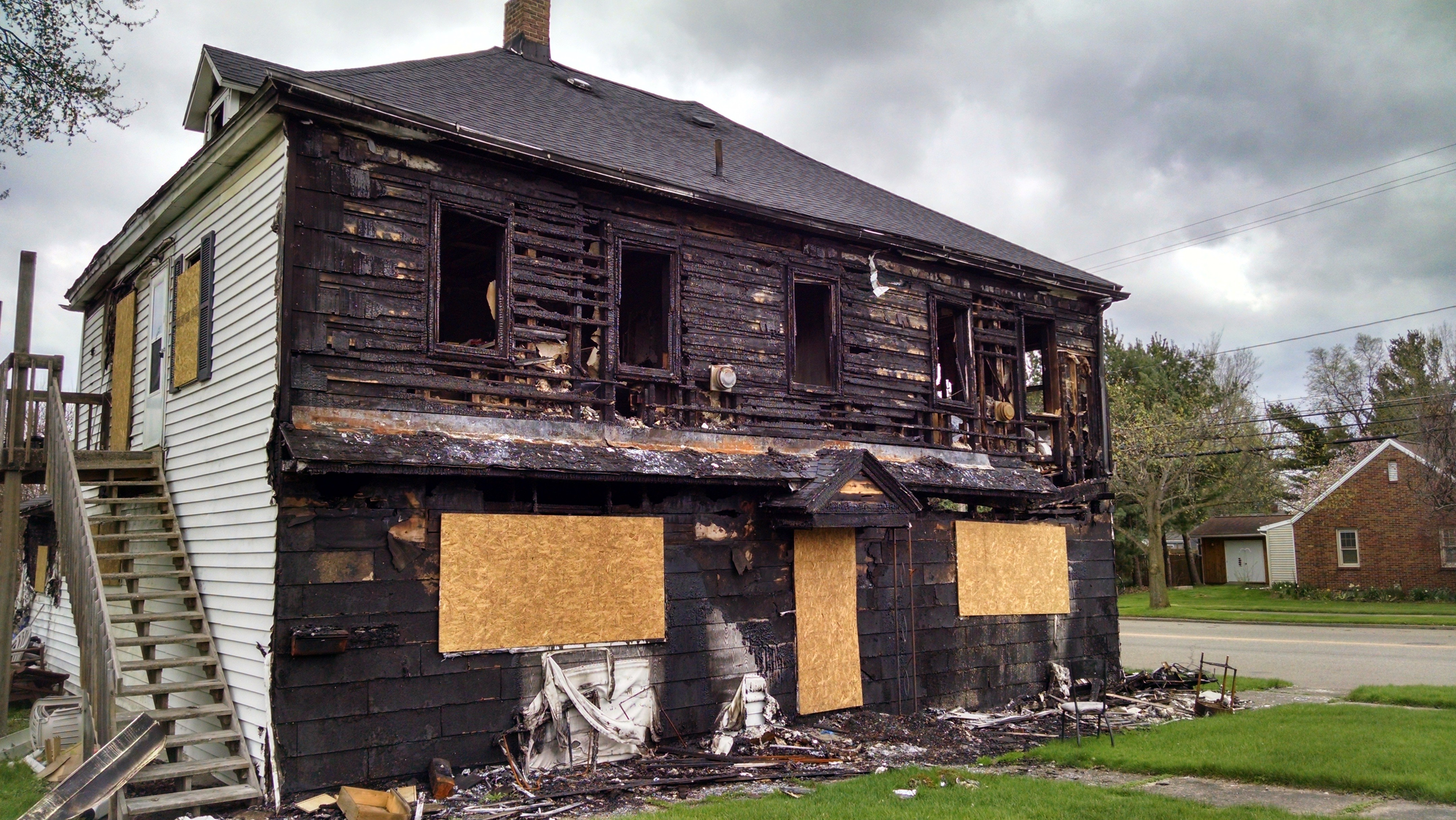
Navarre apartment fire.  Everyone escaped without injury.

Navarre apartment fire. Everyone escaped without injury

A week later, Tim received an email from Trinity’s teacher, Holly Charton.  After explaining Trinity’s home fire and her heroic act in rescuing her sister, Ms. Charton explained, “Her grandpa told me that someone at our school did a fabulous job teaching her what do when there is a fire. I told him that person was Mr. Tim from the Red Cross!”

Tim Reichel fist bumps a Fairless Elementary student.

Tim Reichel fist bumps a Fairless Elementary student.

On March 14, 2015 the Fairless Elementary school held a school assembly to honor Trinity.  As a surprise, her family was there as she received the Certificate of Recognition for Extraordinary Action from the Red Cross and an award from the Navarre Fire Department.  Her story appeared on the front page of the Massillon Independent and on Channel 5 news in Cleveland. At the assembly Grandfather Scott Bentley thanked the school and the Red Cross for educating the students on fire safety.  “Smoke detectors do save lives,” said Bentley.  “After the fire, I stood in the closet where Londyn hid and nothing survived that fire.  Thank god my little girls knew what to do and got out!” Although Trinity is very shy and was overwhelmed with the attention, she did wear her Red Cross medal for the rest of the school day.

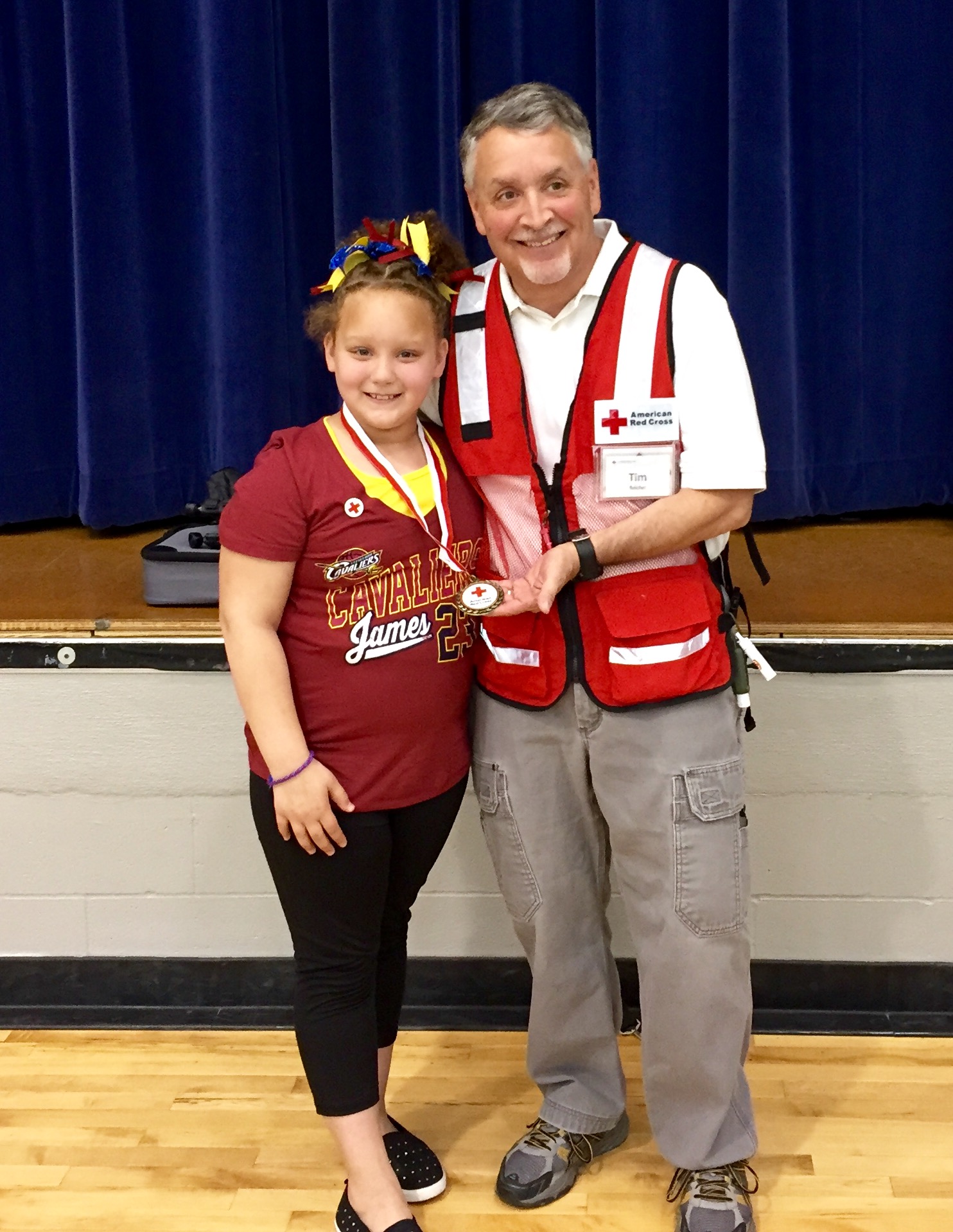
Trinity Seymour and Tim Reichel

Trinity Seymour and Tim Reichel

Everything You Need to Know in New All-in-One Red Cross Emergency App

The new, all-inclusive Emergency App from the American Red Cross provides people with instant access to emergency alerts, life-saving information, and ways to contact family and friends in one free, easy-to-use app for smart phones and tablets.Emergency App

The Emergency App is a single ‘go-to’ source for everything from home fires to hurricanes. It includes content from a group of award-winning Red Cross apps with additional information about what to do in case of 14 different types of emergencies and disasters. Users can customize more than 35 emergency alerts based on their location and where loved ones live.

The app includes a new featured called “Family Safe” that allows the app user to notify loved ones who are in an area affected by an emergency or disaster. The recipient can instantly see the alert details as well as specific “what to do now” steps, and then respond with either “I’m safe” or “I’m not safe.” This feature works even if the recipient has not downloaded the Emergency App. In addition to smartphones and tablets, this feature will be available on the new Apple Watch and can be downloaded from the Apple Watch App Store starting April 24.

Other important features include:

  • Emergency first aid information for situations such as heart attacks, heat-related emergencies as well as water safety information;
  • Preloaded content so users can access guidance from Red Cross experts even without mobile connectivity;
  • A single map with open Red Cross shelter locations and weather information;
  • A home fire section with detailed prevention and safety tips as well as Red Cross “After the Fire” information;
  • “Make a Plan” feature to help families plan what to do and where to go if a disaster strikes; and
  • The ability to easily toggle between English and Spanish.

The app is available in app stores by searching for the American Red Cross or by going to redcross.org/apps.

Red Cross apps have been downloaded more than 6 million times and nearly 400 million alerts have been sent since the launch of the first app in 2012. While apps can help prepare someone for disasters, it’s important to note that they are not substitutes for training. People can take Red Cross First Aid and CPR/AED courses so they’ll know what to do in case help is delayed. They can get information and register at redcross.org/TakeAClass.