Why celebrate World Humanitarian Day?

By Doug Bardwell, American Red Cross volunteer

August 19, 2020- If you watch or read world news, you undoubtedly know there are millions of people who live in conditions that we would consider “intolerable.” Those who strive every day to prevent and alleviate this human suffering, without regard to race, creed, sex, color or nationality, are humanitarians, and those are the ones honored each August 19th.

Every volunteer with the American Red Cross is a humanitarian. Here in Northern Ohio, our volunteers respond every day to local disasters, such as home fires, to help residents in need and provide comfort and support.

Our volunteers even deploy across the country to help provide humanitarian assistance. During the early hurricane and wildfire season in 2020, Northern Ohio has deployed more than 10 disaster volunteers to assist affected communities.

The Problem

You don’t have to listen to the news very long to comprehend all the challenges in the world today:

  • Armed conflicts are killing innocent civilians without regard to international conventions
  • Infectious diseases are becoming more prevalent and harder to contain
  • Lack of employment, housing, nutrition and medical supplies are all worldwide concerns
  • Climate change has decimated crop growing regions and endangered coastal areas with flooding
  • Authoritarian leaders have pillaged country’s coffers and jailed those who dare to protest

The Need

According to the 2020 United Nations (UN) Global Humanitarian Overview, responding to these needs is going to require an unprecedented effort.

  • 166,500,000 People are in need worldwide
  • 108,800,000 People have been targeted for aid by the UN. (Some countries will not allow UN aid)
  • $29,700,000,000 Required to meet their needs
  • $15,960,000,000 Funding received from UN members
  • $13,740,000,000 Yes, that’s a $13-billion shortfall for meeting the anticipated needs this year.

That’s a crisis in itself…

But, that’s not all

The above numbers represent day-to-day requirements for those in need worldwide. What they don’t include are disasters, which the Red Cross forecasts will be increasing each year due to climate change.

That is where the Red Cross comes in. Helping people prepare for disasters, responding immediately after disasters, and helping people reconnect and rebuild lives in the aftermath are all specialties of the Red Cross.

August 17, 2020. Veterans Memorial Colosseum Red Cross operated shelter. Cedar Rapids, Iowa. Fried chicken and vegetables is the ultimate comfort meal, served to shelter client Brian by volunteer Robert. Photo by Dennis Drenner/American Red Cross

Moreover, the Red Cross supplies humanitarians, more than 90% of whom are volunteers, who give of their time and talents to provide hope and comfort to others in their time of need.

Across the United States, nearly 372,000 volunteers give a little or give a lot of their time to be on-call for the next home fire, flooding event or other emergency. Won’t you consider becoming part of this country’s largest humanitarian organization? Explore the opportunities you might be qualified for by clicking here.  And remember to celebrate all the humanitarians actively working around the world each August 19.

Get emergency answers from your pocket with Red Cross apps

By Jason Copsey, American Red Cross volunteer

August 17, 2020- Preparation is the key to staying safe when disaster strikes. The American Red Cross continually promotes disaster preparedness measures, and offers a wide range of resources to help everyone stay as safe as possible during disaster season.

Red Cross mobile safety apps are powerful tools designed to place potentially life-saving resources in the palm of your hand. These free, easy to use mobile apps offer services that range from day to day useful information such as scheduling blood donations and common first aid, to disaster response information to keep you safe when you need it most.

The Emergency app is particularly helpful during disaster season, when weather is at its worst. Early warning is one of the most critical elements of any preparedness plan. With the Emergency app, users can monitor more than 35 different severe weather and emergency alerts.  The app features expert advice on what to do in case of hurricanes, earthquakes, floods, tornadoes, home fires, wildfires and more.

The Emergency app’s Family Safe feature allows users to notify loved ones in an affected area of an impending emergency or high-risk event. Recipients receive alert details, including specific safety recommendations, and can respond to indicate they are either safe or in need of assistance. This feature works even if the recipient has not downloaded the Emergency app.

Tennessee Tornadoes 2020

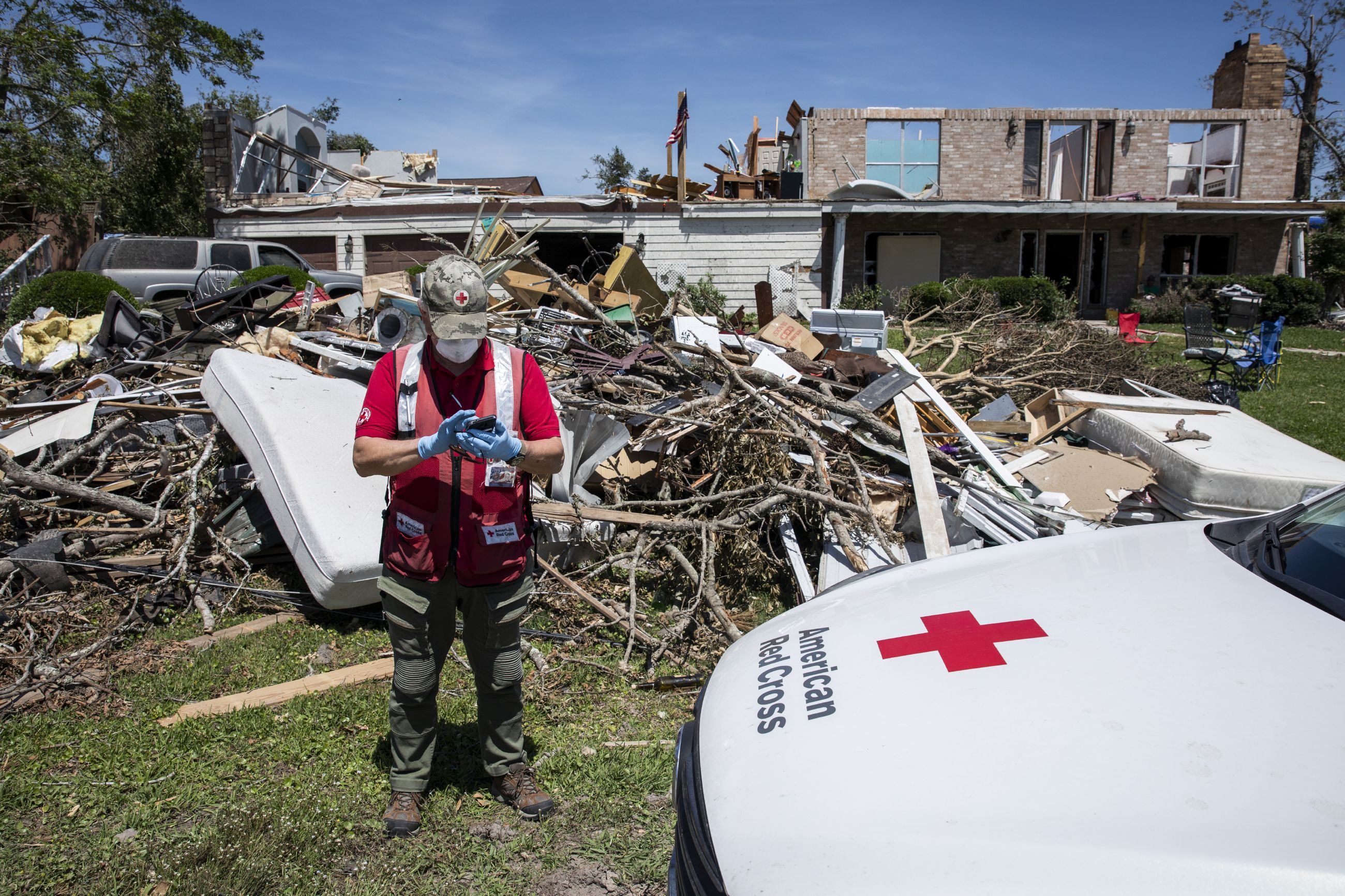
March 4, 2020. Nashville, Tennessee. Northern Ohio Red Cross volunteer, Doug Bardwell, reviews the damage caused by the destructive tornado on this neighborhood. Photo by Scott Dalton/American Red Cross

The app also provides emergency first aid detail for heart attacks, heat-related emergencies, water safety information and more. Preloaded content ensures users can access guidance even if connectivity is lost.

The free Emergency App is available at redcross.org/apps. Or, you can text: “GETEMERGENCY” to 90999.

Other Red Cross mobile apps include disaster-specific tools for users who live in geographies where certain risks are more common. These apps include Tornado, Flood, Hurricane and Earthquake. Each of these offer English and Spanish language options and are available at redcross.org/apps.

To learn more about the free mobile apps offered by the Red Cross, visit https://www.redcross.org/get-help/how-to-prepare-for-emergencies/mobile-apps.html.

This is what a socially distant response looks like

By Eric Alves, American Red Cross of Northern Ohio

August 10, 2020- This summer has been unlike any other. We have canceled vacation plans, avoided the pools due to safety concerns and we are even wearing masks and keeping our distance when visiting family and friends. However, one thing that has not changed, despite the coronavirus, is that emergencies still occur and the American Red Cross will be there to assist residents in need.

50210689657_ce6aecaa98_o (1)

Resident Kim Lane speaks with Red Cross Disaster Action Team member Jan Cooper

On Sunday, August 9, the Red Cross of Northern Ohio responded to a condo fire in Westlake that affected 15 residents. While the response was similar to past responses, it was also quite different.

The residents affected by the fire received immediate financial assistance, a cornerstone of Red Cross disaster response.  Those displaced by the Courtyard Condominium fire received a total of nearly $2,800 for a hotel room, food, and other immediate needs.

There were no hugs or handshakes, but the comfort the Red Cross is known for was there. Following CDC and Red Cross guidelines, Northern Ohio Disaster Action Team members wore masks, washed hands frequently, and kept their distance as much as possible.

Resident Kim Lane, upon receiving financial assistance to help her find a safe place to stay, said “It’s all very helpful. This will help with tonight (Sunday) and tomorrow. It takes a load off.  I’m very grateful.”

Jennifer Easton, who also received assistance with her husband Matthew said, “I wasn’t aware the Red Cross did this (aiding people affected by home fires.) I know they go to floods and hurricanes, but this is a revelation.”

Here is a video showing how the Red Cross maintained social distance during the response:

In addition to the Westlake response, over the weekend, the Red Cross of Northern Ohio assisted 24 residents and provided $5,760 in immediate financial assistance.

Since July 1, the Red Cross has assisted 307 adults, 220 children and has provided more than $111,000 in immediate financial assistance.

50209892198_6cf2712197_o

The Red Cross is in need of healthy individuals who want to assist their local communities and respond to disasters like the Westlake fire. For more information and to see high-demand volunteer opportunities, visit redcross.org/volunteertoday.

To see more photos from the Westlake socially distant response, visit our Flickr page.

Updated hurricane forecast highlights the need for volunteers to help people who have to flee their homes

By Tim Poe, American Red Cross volunteer

August 7, 2020- The National Oceanic and Atmospheric Administration (NOAA) is predicting an “extremely active” hurricane season with the potential to be one of the busiest on record, according to the agency’s annual August update.

Hurricane Hanna 2020

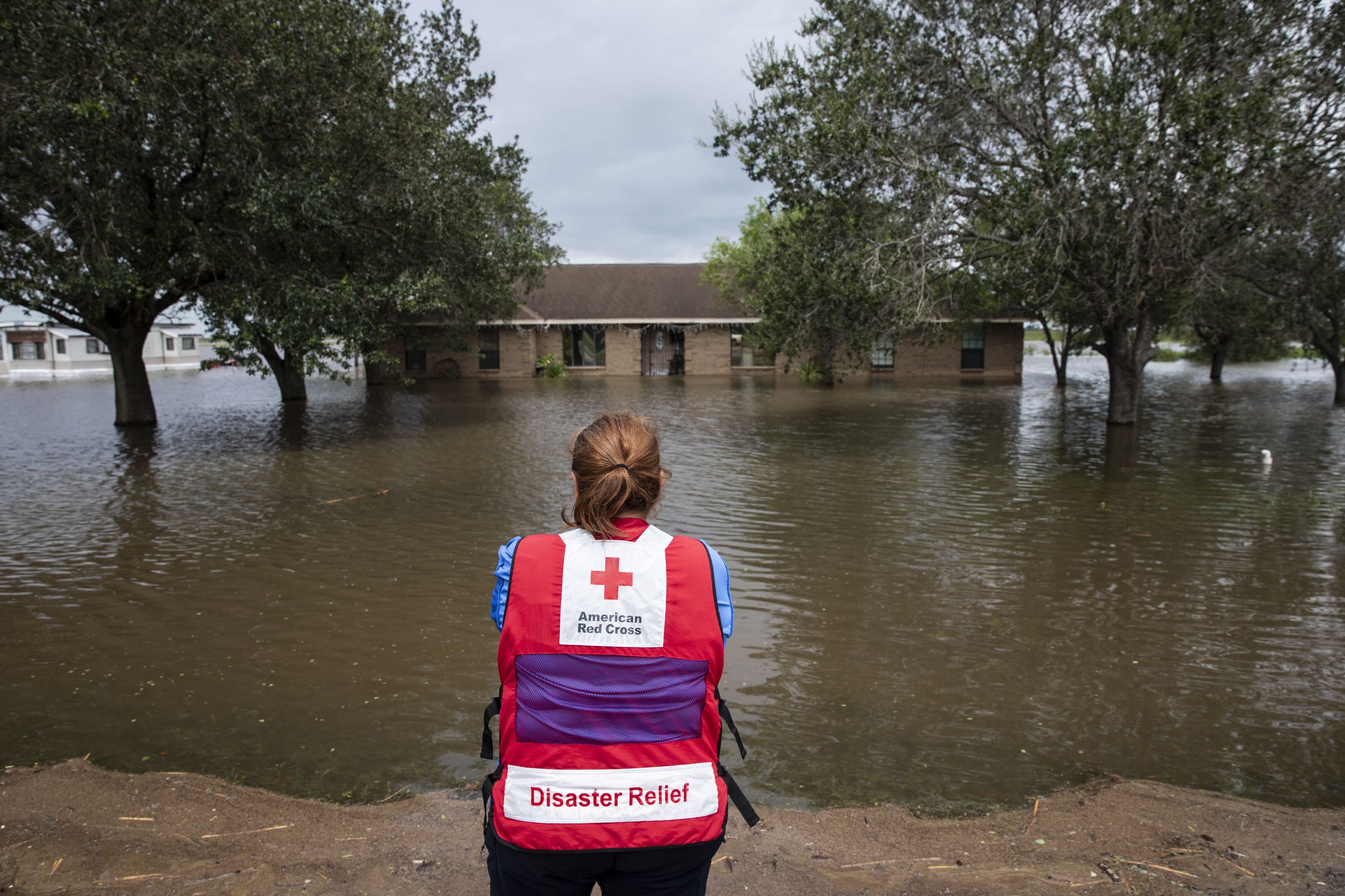
July 28, 2020. Edcouch, Texas Carol Holm of the American Red Cross surveys flooding caused by Hurricane Hanna, in Edcouch, TX on Tuesday July 28, 2020. Photo by Scott Dalton/American Red Cross

In order to prepare, the Northern Ohio Region of the American Red Cross is seeking volunteers able to train as shelter service or disaster health supervisors and associates. They must also be willing to deploy.

Already, 12 Northern Ohio volunteers responded to Hurricane Isaias, most of whom are physically deployed.

According to this press release, the NOAA now expects 19-25 named storms for the season, which ends November 30. 7-11 are anticipated to become hurricanes, including 3-6 major hurricanes with winds of 111 mph or greater.

This year’s storms are also expected to be stronger and longer-lived than average. While the outlook does not forecast landfall, we must be ready.

Whether you are a current Red Cross volunteer or interested in becoming one, please consider applying for the following positions. If you have any family members or friends who may be interested, please speak to them as well.

Shelter Services

As always, the Red Cross is committed to providing safe shelter following a disaster and is taking steps to keep shelter residents, volunteers, and staff safe during the pandemic, including using non-traditional shelters where possible. No matter the type of shelter used, volunteers are needed to help staff reception, registration, feeding, dormitory, information collection, and other vital tasks to help those impacted by a disaster. Associate and supervisory level opportunities are available.

Disaster Health Services

The Red Cross needs licensed medical professionals for a number of volunteer roles. These include:

  • Helping assess people’s health and providing hands-on care in alignment with professional licensure (RN and LPN/LVN).
  • Assisting with daily living activities, personal assistance services, providing health education, and helping to replace medications, durable medical equipment, or consumable medical supplies.
  • And possibly performing daily observation and health screening for COVID-19-like illness among shelter residents.

Both supervisory and associate positions are available. If you are an RN, LPN, LVN, APRN, NP, EMT, paramedic, MD/DO, or PA with an active, current, and unencumbered license, please consider volunteering. Ancillary roles are available locally for Certified Nursing Assistants, Certified Home Health Aides, student nurses, and medical students. RNs supervise all clinical tasks.

Hurricane Hanna 2020

July 28, 2020. Edcouch, Texas Juanita Casanova of the American Red Cross surveys flooding caused by Hurricane Hanna, on the outskirts of Edcouch, TX on Tuesday July 28, 2020. Photo by Scott Dalton/American Red Cross

If you are able to help or would like more information, please go to redcross.org/volunteertoday. The Red Cross covers travel and training expenses.

Power up for disaster preparedness

Free on-line Red Cross presentations share safety tips

By Eilene Guy, American Red Cross volunteer

August 3, 2020- As we move into the “dog days” of August, it’s easy to feel a bit bogged down, a bit lethargic.  The American Red Cross is ready to wake up your brain and pump up your ability to care for yourself and others in an emergency.

“Be Red Cross Ready” is a collection of free safety presentations, delivered on-line. They cover disasters that happen every day – and explain what you can do to prevent and react to them.

People young and old all over Northern Ohio have been sitting in on these hour-long sessions to learn how to strengthen their own safety and the safety of those they love.

Hurricane Hanna 2020

“I wanted to thank you for the wonderful presentation,” Bill Riter said after taking a recent home fire safety class. “I’m trying to learn as much as I can {about preparedness) and your presentation had an immediate impact. I spoke with my girlfriend about a fire extinguisher and she doesn’t have one. She will in two days: I ordered one on Amazon.  We’ll check smoke detectors Saturday.”

“The COVID-19 pandemic isn’t stopping the Red Cross from offering vital information about being prepared for disasters,” said John Gareis, Northern Ohio regional manager for individual community and disaster preparedness.

“Our presentations are designed to help people prepare for thunderstorms, floods, home fires and other potential disasters.  We even offer a safety course for pets,” John added.

So, let’s start with pets. Pet First Aid covers hazards that can affect cats and dogs, and the first aid actions owners can take until they get their animal to a veterinarian. Owners also learn the signs of a healthy pet, so they recognize signs of distress.

California Wildfires 2018

How about General Preparedness and Fire Safety, the presentation Bill Riter took? It includes suggestions on how you and your family can be prepared for all kinds of emergencies, especially home fires. Learn how home fires start, how to prevent them and what to do if one flares up.

Sound the Alarm Event in Capitol Heights, Maryland 2019

Speaking of general preparedness, how about General Preparedness and Tornado Safety? This one also covers preparedness for all kinds of disasters, particularly tornadoes. (No, we’re definitely not out of tornado season yet in Northern Ohio!)

Texas Tornadoes 2020

One of the most effective disaster programs of the Red Cross is our Pillowcase Project. Volunteers present this program to children in grades 3-5, teaching them about personal and family preparedness – including safety skills, local hazards and basic coping skills. You can learn to lead students through a “Learn, Practice, Share” framework – a resource that will be vital as schools reopen for in-person learning.

IMG_7205

To join any of these presentations, register by clicking on the date and time of the topic you’re interested in; use the password Prepare20.

For more disaster safety tips, visit redcross.org. Be sure to also download the free Red Cross mobile apps, available in the Apple App Store or Google Play, for tools and preparedness information you can use every day.


Red Cross adapts sheltering strategies to maintain safety as hurricane season begins, pandemic continues

By Tim Poe, American Red Cross volunteer

July 31, 2020- Providing shelter and care after a major disaster—such as a hurricane or tropical storm—is especially challenging during a pandemic.

Hurricane Hanna 2020

July 28, 2020. Edcouch, Texas Marc Lazerow of the American Red Cross welcomes the Cantu family to their cots at a Red Cross shelter for people displaced by Hurricane Hanna in Edcouch, TX on Tuesday July 28, 2020. Family units are grouped closer together while other cots are spaced further apart for social distance from others. Photo by Scott Dalton/American Red Cross

As the 2020 hurricane season begins, Mike Arthur, the Red Cross’ regional mass care and logistics manager for Northern Ohio, updated area volunteers and staff on sheltering methods during the pandemic. Here is an overview of initiatives:

The Red Cross’ mission is to assist everyone, regardless of background or illness status. Several steps are being taken to ensure safety and provide assistance for all in need following a disaster. These include following CDC guidance to identify those with COVID-19 symptoms and adhering to public health guidelines for quarantines. In addition, each shelter will have an Isolation Care Area. Those who have been diagnosed with COVID-19 or show signs of illness will be separated from the general shelter population.

When possible, the Red Cross will employ non-congregate sheltering. Red Cross representatives will work with partners and communities to find non-congregate options, such as hotels, dormitories and campgrounds.

Hurricane Hanna 2020

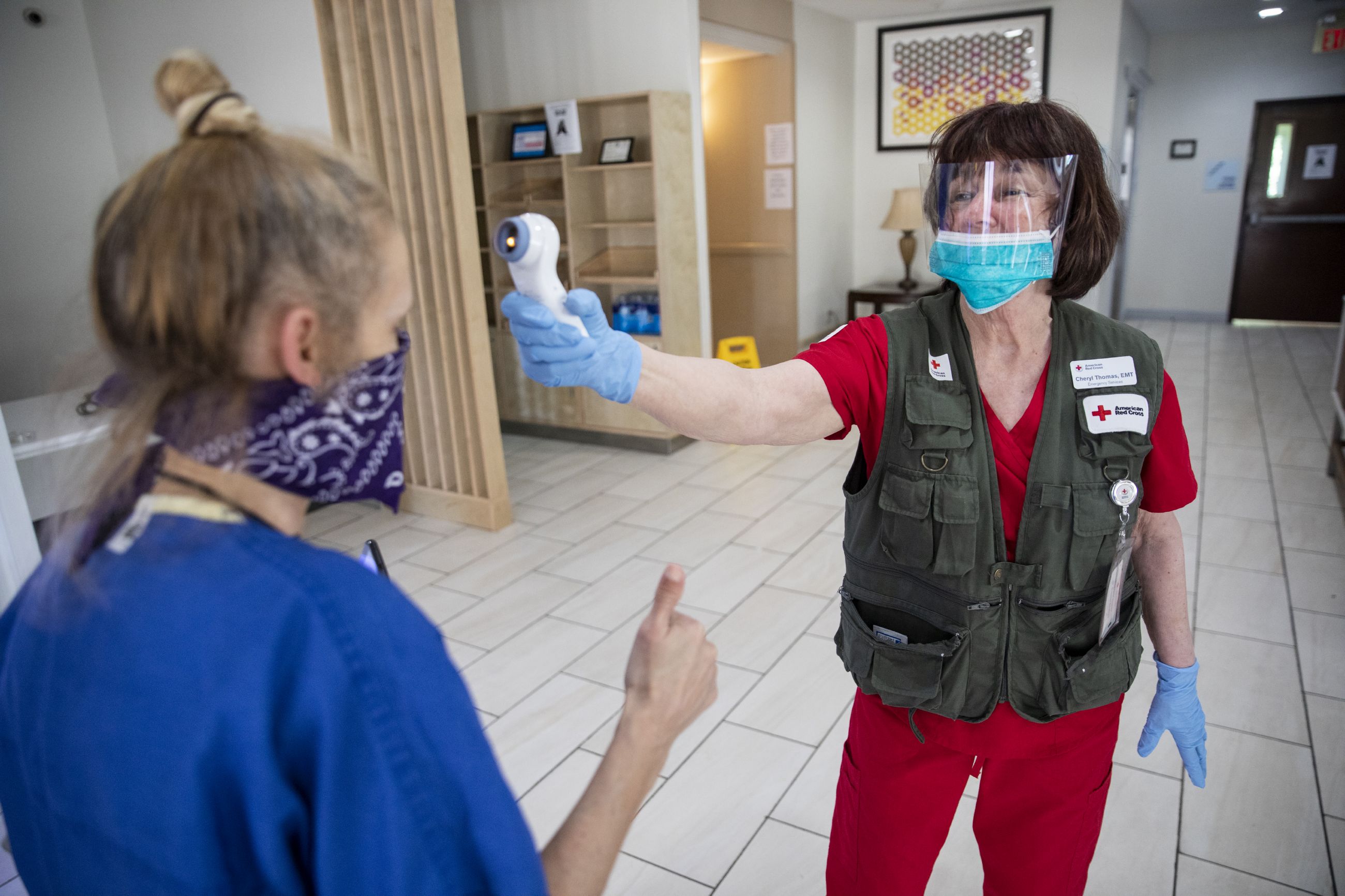
July 28, 2020. Edcouch, Texas The Cantu’s family get their temperatures checked as part of a COVID-19 screening precaution before entering a Red Cross emergency shelter for people displaced by Hurricane Hanna in Edcouch, TX on Tuesday July 28, 2020. Photo by Scott Dalton/American Red Cross

When a congregate shelter is needed, ensure safety. In some cases, a congregate shelter may be the only option. In this event, the Red Cross will work to reduce the risk of infection, including:

  • Ensuring resources are available for Isolation Care Areas.
  • Requiring everyone to be screened before entering a shelter.
  • Increasing health and security staff.
  • Following social distancing practices inside the shelter.
  • Maintaining a safe environment through increased cleaning and disinfection of facilities.
  • Following safe practices when providing food and supplies and handling waste removal.
  • Providing virtual support services where possible.
  • Moving to smaller shelters and finding non-congregate housing as soon as possible.

While Northern Ohio is not prone to hurricanes, the region does experience disasters that require mass care and sheltering, such as apartment building and condominium fires. And wherever hurricanes, wildfires, earthquakes and other national disasters occur, many local Red Cross volunteers and staff deploy to affected areas.

Hurricane Hanna 2020

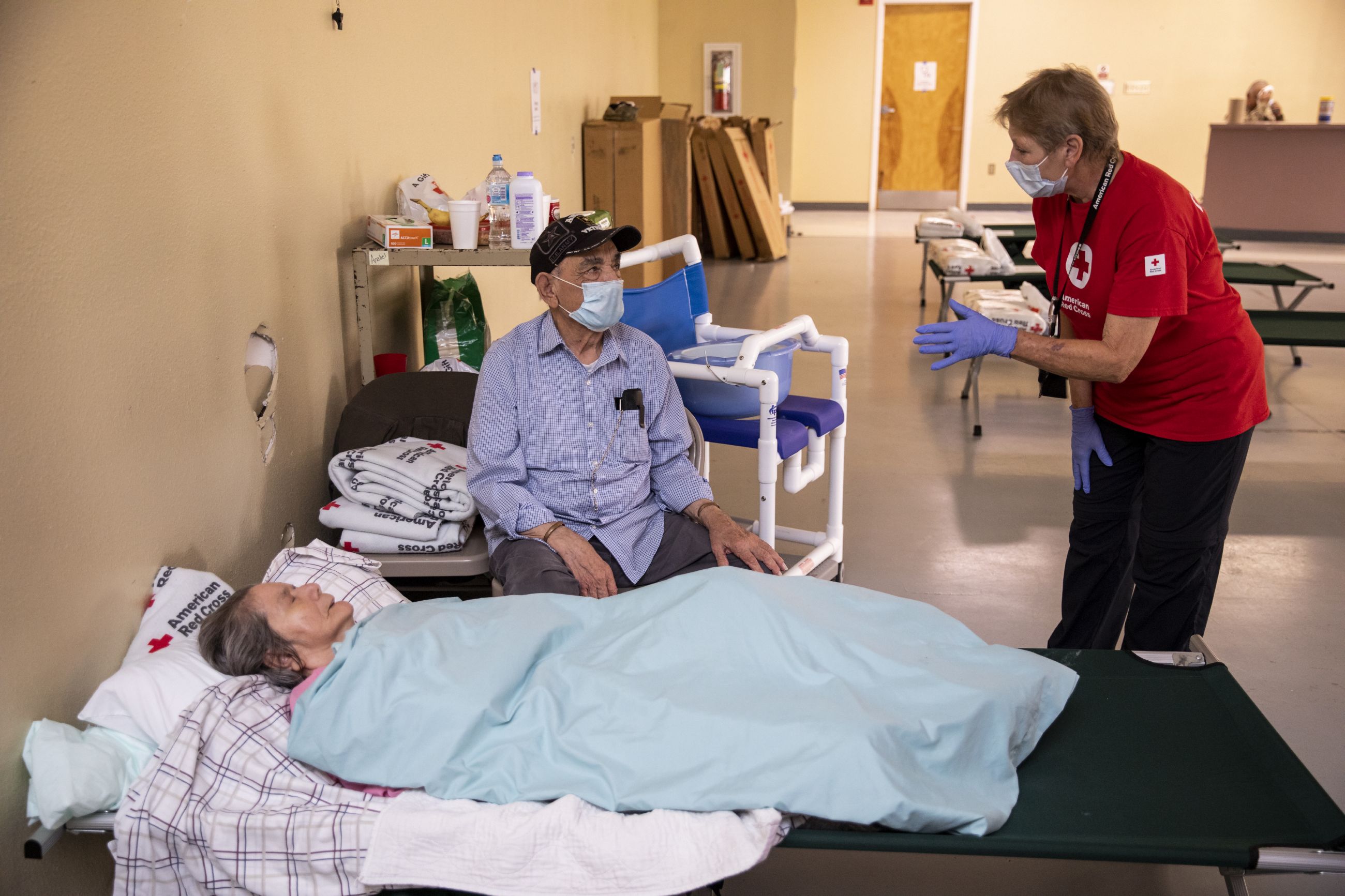
July 28, 2020. Edcouch, Texas Diana Buckley of the American Red Cross checks on Jose and his wife Maria Elvia, who needs hospice care, at a Red Cross emergency shelter for people displaced by Hurricane Hanna in Edcouch, TX on Tuesday July 28, 2020. Photo by Scott Dalton/American Red Cross

Additionally, every day in Northern Ohio, Red Cross staff and volunteers help people recover after a home fire. The organization is reducing COVID-19 risk in these cases as well, particularly by using virtual support as much as possible.

Hurricane Hanna 2020

July 28, 2020. La Feria, Texas Siblings, from left to right, Yakelin, 10 years old, Reyes Jr., 11 years old and Edwin, 16 years old, play with their smart phones while resting in their cots at a Red Cross emergency shelter for families displaced by Hurricane Hanna, in La Feria, TX on Tuesday July 28, 2020. Photo by Scott Dalton/American Red Cross

With these and other adaptations, the Red Cross is doing all it can to reduce the risk of COVID-19 exposure while effectively continuing its mission. Help is needed to sustain this important work. If you are interested in becoming a Red Cross volunteer, information is available here. If you are able to provide financial support, please visit this page.

Edited by Glenda Bogar, American Red Cross volunteer

“Red Cross Roadie” hits the road again

IT worker heads to USVI ahead of strengthening storm


By Jim McIntyre, American Red Cross

July 29, 2020- David Schindler is heading to his 35th assignment as an information technology (IT) volunteer for the American Red Cross, as tropical storm Isaias chugs toward the Virgin Islands and Puerto Rico.

He is being deployed as the disaster services technology chief, responsible for setting up workstations, ensuring connectivity, and troubleshooting tech issues for Red Cross disaster workers who could be assigned to respond to the storm.

“It’s the best job I’ve ever had,” said the unassuming IT expert from his home in Lake County, as he prepared Tuesday night for his trip to St. Thomas, USVI.

How long he stays is anybody’s guess.

“I spent 21 months in Austin, Texas for the Hurricane Katrina response,” David said, recalling one of his first Red Cross assignments.  It was also his longest, but lengthy assignments are routine for him.

“I spent six months in Puerto Rico for (responding to) Hurricane Maria,” where he helped establish satellite services for the people of the devastated island.

David Schindler

David Schindler on a Zoom virtual news conference on July 28 prior to deploying to the U.S. Virgin Islands

“David is an outstanding volunteer, and an outstanding individual,” said Emily Probst, the workforce engagement manager for the Red Cross of Northern Ohio.  “So many people depend on him, and he always answers the call.”

“I call myself a Red Cross roadie,” David said, recalling the Jackson Browne song about the workers who are the first to arrive to set up the stage and the band’s equipment, and are the last to leave after packing everything away for the next show on the tour.

David spent a career as an information technology systems manager before retiring 16 years ago and using his experience to assist us whenever and wherever people need Red Cross help.

What’s changed since then?  “Laptops have gotten lighter.  Cellphones are different. We had flip phones when I started.  Now we use smartphones.”

Hurricane Hanna 2020

July 28, 2020. Edcouch, Texas Juanita Casanova of the American Red Cross surveys flooding caused by Hurricane Hanna, on the outskirts of Edcouch, TX on Tuesday July 28, 2020.  Photo by Scott Dalton/American Red Cross

David rates the technology we use as state-of-the art.

As a disaster services technology chief, David said he has worked with up to 80 others on disaster responses, and at times, he has been the sole technology worker.

“Every operation has unique challenges,” David said.  He’s not too concerned about traveling for this assignment, despite COVID-19.  The Red Cross is following CDC guidelines and has instituted several procedures to ensure the health and safety of its workforce and the people we are assisting.

“I’m a little concerned about wearing a face covering all day, but it’s a petty thing when you think about the job we’re doing.”

If you’re healthy and you would like to help others who may be affected by severe weather this hurricane/wildfire season by working in a shelter, visit redcross.org/volunteertoday.


Early active hurricane season highlights need for disaster support

By Eric Alves, American Red Cross of Northern Ohio

July 27, 2020- Earlier this year, weather experts predicted that the 2020 hurricane season would be one of the most intense seasons in recent memory. So far, the early hurricane season has not made any efforts to debunk those predictions, with an unprecedented 8 named storms already developing, with 4 months remaining in the season.

Currently there are two different storms affecting different regions of the United States, which the American Red Cross is actively monitoring to assist residents in need.

Hurricane Hanna

Hanna

  • Record-earliest eighth named storm in the Atlantic Basin and the first hurricane of the season.
  • Downgraded to a tropical storm overnight after making landfall twice Saturday evening along southern Texas’s Gulf coast as a Category 1 hurricane.
  • Heavy rainfall has already produced numerous reports of flash flooding across south Texas, and tropical storm conditions are expected to continue Sunday afternoon.

Red Cross Response:

In response to Hanna, the Red Cross has pre-positioned thousands of cots, blankets and other shelter supplies across the Gulf Coast.

The Red Cross has also opened 3 Red Cross shelters in Cameron, Nueces and Kleberg Counties and is supporting the state with hotel stays as needed. The Red Cross is also serving hundreds of meals and snacks with partners so far.

Hurricane Douglas

Douglas

  • First Eastern Pacific major hurricane of the season as it became a Category 4 storm on July 24. As of Sunday morning, Douglas was downgraded to a Category 1 storm.
  • Although some slow weakening is anticipated over the next two days, Douglas is expected to maintain its hurricane intensity as it passes dangerously close to the main Hawaiian Islands on Sunday and into Monday. If it does make landfall, it would be only the third hurricane to make landfall in Hawaii.
  • With the close passage of the storm, damaging winds, flooding rainfall, dangerously high surf and mudslides could threaten the islands. Impacts from Douglas will first impact the Big Island before moving to Maui and other islands into the beginning of this week.

Red Cross Response:

The Red Cross has pre-positioned relief supplies to support residents in need. The Red Cross is also currently supporting 5 government-run evacuation centers and several more are expected to open today.

In addition to Hanna and Douglas, the Red Cross is closely monitoring Invest 92L in the Atlantic. It is expected to move westward during the next several days, and it could become a tropical depression or storm this week as it moves toward the Lesser Antilles.

While a busy hurricane season, along with a busy wildfire season, is enough cause for concern, the current environment surrounding COVID-19 is making responding to disasters more difficult.

As COVID-19 numbers increase, it is making it challenging for the Red Cross to deploy trained disaster volunteers to other parts of the country should an emergency occur. To help respond to these disasters, the Red Cross needs volunteers from the Northern Ohio Region


, who are willing to travel when necessary, to lend a helping hand.

Texas Tornadoes 2020

Shelter Help Needed

There is a special need for volunteers to support sheltering efforts. Because of COVID-19, the Red Cross is placing those needing a safe place to stay in emergency hotel lodging when possible. If hotel stays aren’t possible, then the Red Cross will open traditional shelters. To help keep people safe, we have put in place additional precautions and developed special training for our workforce.

We need volunteers to help staff shelter reception, registration, feeding, dormitory, information collection and other vital tasks to help those we serve. We have both associate and supervisory level opportunities available.

Health Services Support Needed 

If you are an RN, LPN, LVN, APRN, NP, EMT, paramedic, MD/DO or PA with an active, current and unencumbered license, the Red Cross needs your support. Volunteers are needed in shelters to help assess people’s health. Daily observation and health screening for COVID-19-like illness among shelter residents may also be required. RNs supervise all clinical tasks.

Roles are also available for Certified Nursing Assistants, Certified Home Health Aides, student nurses and medical students. We need volunteers who can provide care as delegated by a licensed nurse in shelters. This could include assisting with activities of daily living, personal assistance services, providing health education and helping to replace medications, durable medical equipment or consumable medical supplies.

If you are interested in helping our community should a disaster occur, please go to redcross.org/volunteertoday

Seeking hero volunteers: The need is great; the reward, greater

By Sue Wilson, American Red Cross volunteer

July 20, 2020- It has been a tumultuous 2020 so far. A global pandemic, waves of protests for social justice, a massive economic downturn and a volatile political environment in an election year. And it’s only July. But amidst the chaos, there is hope. We see it shine in stories of everyday heroes— first responders, medical workers and essential employees. While most of America is trying to cope with the stress of the pandemic, we can find comfort knowing there is an organization full of heroes working quietly behind the scenes, whose sole mission is to plan for the worst, so that we don’t have to. The volunteer heroes of the American Red Cross.

The Red Cross provides support to victims of disasters, and supplies about 40 percent of the nation’s blood. They depend on volunteers to perform their mission. Right now they are short-handed, especially in the area of blood services and disaster volunteers. Planning for a natural disaster, like a hurricane or wildfire, is a challenge any time, but especially during this pandemic. Emily Probst is the regional disaster workforce engagement manager for the Red Cross Northern Ohio Region. She coordinates the deployment of local volunteers when natural disasters occur.

Southern Storms and Tornadoes 2020

“Currently our biggest challenge is finding volunteers who are willing to deploy in the COVID environment.” said Emily.

Melanie Collins, regional volunteer recruitment specialist for the Red Cross of Northern Ohio agrees that recruiting new volunteers and keeping current ones at this time has presented some challenges.

“A lot of our current volunteers who are ages 60+ have decided to not volunteer at this time– which is completely understandable as the health and safety of our workforce comes first and foremost,” said Melanie. “At the same time, we saw a huge increase in volunteer applications over the last few months. Those who are healthy and willing to volunteer have stepped up to give their time.”

People have been hesitant to donate blood, so there is a blood shortage. But when donors do  give, the Red Cross needs volunteer blood donor ambassadors to check the temperatures of potential donors and staff so a phlebotomist does not have to be pulled away. Melanie said donors and volunteers can feel safe going to a blood donation center because several enhanced blood donation protocols have been put into place.

Texas Tornadoes 2020

In the event of a natural disaster requiring the opening of shelters, there will be a need for volunteers in those shelters. Additional safety measures have been implemented for disasters. “Our disaster response has gone almost completely virtual,” said Melanie. “If a home fire or other disaster can’t be responded to virtually, social distancing measures are put in place.”

Volunteers give their time and talents. In return, they get a sense of purpose and pride in helping others. The need is great for volunteers in the areas of local engagement, blood services, deployment opportunities, sheltering and disaster health. A complete list of volunteer needs is available here. If you are interested in a rewarding volunteer opportunity, visit redcross.org/volunteertoday. You can also reach out to the volunteer services department at NOHvolunteer@redcross.org or contact Melanie Collins via email or call 330-204-6615.

Edited by Glenda Bogar, American Red Cross volunteer


Preventing wildfires, right here in Ohio

By Beth Bracale, American Red Cross volunteer

July 15, 2020- Wildfires? In Ohio? Absolutely. Ohio’s Emergency Management System (EMS) reports in its Hazard Mitigation Plan, that hundreds of wildfires occur in Ohio each year. Most of them are caused by humans, either on purpose or accidentally. Common causes besides arson are the burning of cleared debris, campfires, smoking and, of course, children playing with lighters or matches. The fires in Ohio are not on the catastrophic size of those in the western United States, but they can still do great damage.

California Wildfires 2018

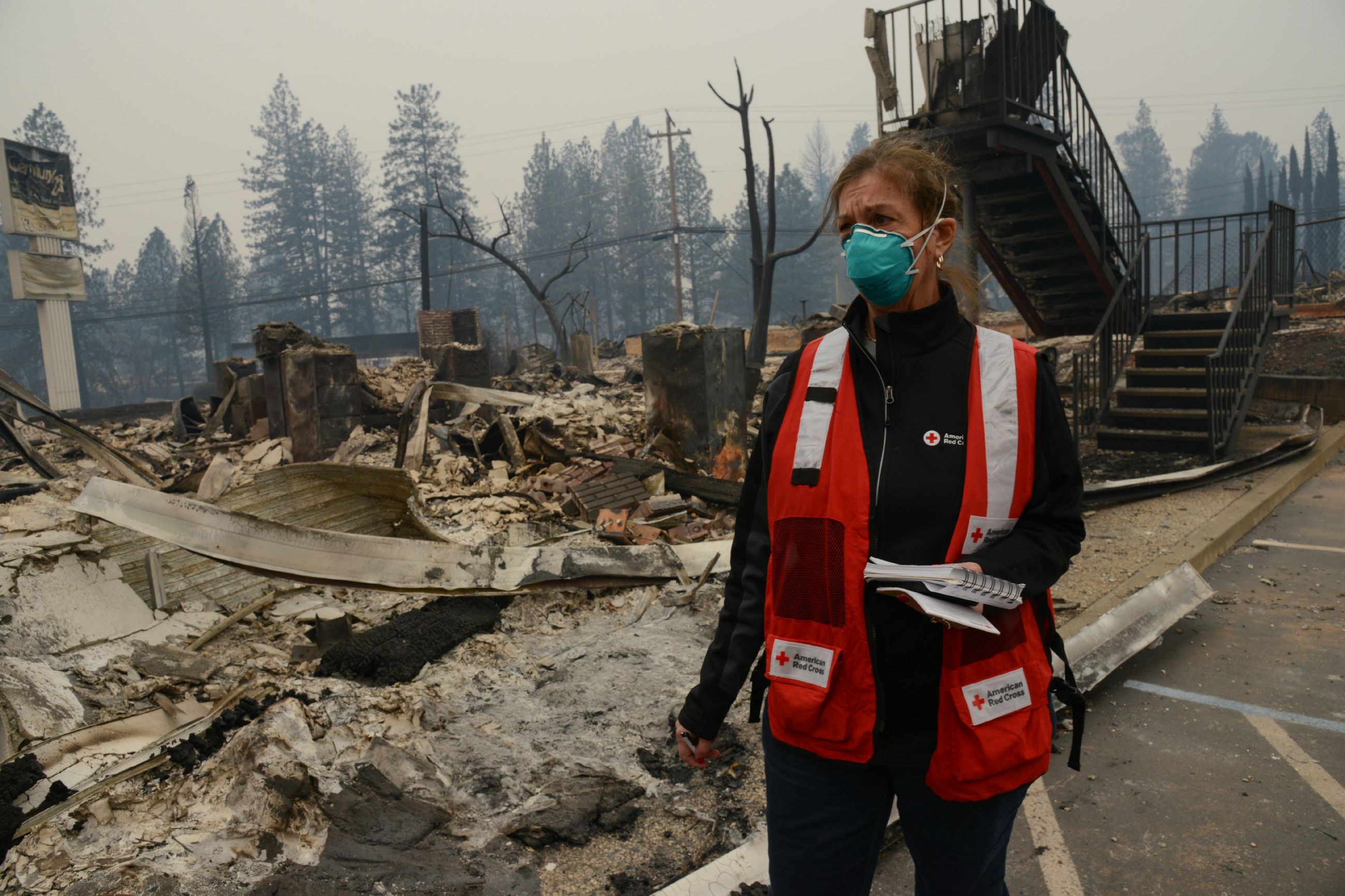
Wildfires are especially dangerous when they happen in areas surrounded by homes and businesses. Last year, for example, a fire got out of control in a Conneaut farm field near care facilities for both seniors and developmentally disabled adults. Even though it was relatively small, you can imagine the panic the fire caused. In recent years, flames have roared through the Mentor Marsh, which is surrounded by densely populated communities. I personally witnessed a wildfire spring up during a dry spell not long ago. While driving on I-90 I was stunned to see pine trees engulfed in flames along the side of the freeway. Fortunately, fire teams were able to put out the fire before it got farther out of control.

It’s important to know the fire guidelines for where you live. Open burning during daylight hours is often prohibited in the months when wildfires are hardest to control. While July isn’t regularly on that list, dry weather conditions like we’ve experienced create greater risk. According to the National Weather Service’s online Fire Weather page for our region on the last day of June, a dry spell of nearly two weeks was predicted. That included the 4th of July weekend, traditionally celebrated with cookouts, campfires and fireworks.

California Wildfires 2018

Social distancing due to COVID-19 caused many such events to be canceled, community fireworks displays among them. Unfortunately, that encouraged many individuals to create fireworks displays of their own.

According to a June 20 Wilmington News Journal article, mishandled fireworks also cause fires, with July among the busiest days for professional firefighters. Fireworks started an estimated 19,500 fires last year, including 1,900 structure fires, 500 vehicle fires and 17,100 outside and other fires.”

California Wildfires 2019

What can you do to keep wildfire risk at a minimum?

  • Water the area around a site where you plan to build a fire.
  • If a garden hose won’t reach the burn site, be sure to have buckets of water nearby.
  • Be aware of the direction in which the wind is blowing. Do not light fires when wind is high or gusty.
  • Remove anything from the area that might catch on fire from flying sparks.
  • Never leave a fire unattended. Soak the burning material thoroughly when you are done.

California Wildfires 2017

The American Red Cross responds when disasters such as wildfires occur, even on a small scale. To learn more about this and other services provided by the Red Cross in our area, visit redcross.org/NOH.

If you would like to volunteer to assist those suffering from a disaster both here in Northern Ohio and across the country, visit redcross.org/volunteertoday.