Keep Calm, It’s Stress Awareness Day

By Brad Galvan; edited by Glenda Bogar, American Red Cross Volunteers

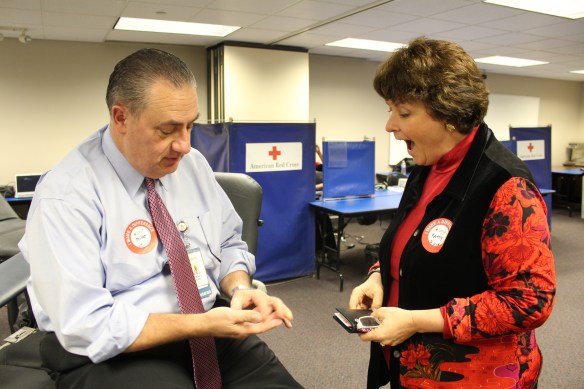
Does even the thought of Stress Awareness Day stress you out? Stress, anxiety, pressure and strain are all synonyms for that uncomfortable burden on one’s mental health. Each of us have experienced stress in varying degrees often caused by workloads, relationships or other factors. Effective, healthy stress management can literally be a Hurricane Matthew 2016lifesaver. That’s the focus of Stress Awareness Day, which is recognized on November 7.
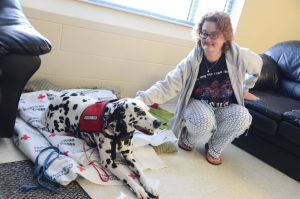
A healthy amount of stress can be viewed as a motivator, a reason to strive for improvement and it can feel good when one can overcome challenges. But when it’s overwhelming, causing illness, hurting relationships and overall well-being, it’s important to evaluate environmental stressors. Stepping back, evaluating the cause of stress and using a mitigation technique can be very effective.

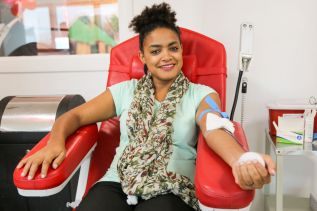
Many people suffer from stresses related to not feeling as if there are enough hours in the day or stress related to not being prepared for the known, and unknown. There’s no need to re-create the wheel; checklists, planning documents and organizers are readily available. Consider reviewing The Be Ready Red Cross checklist. Other folks find comfort in turning the attention away from themselves and focus on others as a strategy to reduce stress. A great way to do that is to donate blood. Finding a nearby drive whereBlood bank Campaign ceremony 2017 you can relax for a few minutes and know that you are helping someone else could be a wonderful way to reduce tension.
If personal evaluation of anxiety and management of stresses do not seem to help, consulting a mental health professional is always the best bet. Mental health is just as important as physical health—it’s critical to care for your own well-being on November 7 and throughout the entire year.

Ronald J. Warzel Blood Donation Center relocates

Now in the Regional Headquarters building across the street

By Christy Peters, Manager, External Communications, Northern Ohio Blood Region

As part of the continuing effort to provide the best service and experience to our dedicated donors, the Northern Ohio Blood Services Region of the American Red Cross recently relocated its Ronald J. Warzel Donation Center. Formerly housed at 3636 Euclid Ave., the donation center has is now located in the Northeast Ohio Regional headquarters building at 3747 Euclid Ave. The new site officially opened Aug. 30, 2018 and many donors have already stopped by the newly renovated space.

The new site continues to offer Red Cross donors the opportunity to give whole blood, platelets or plasma. The site is open seven days a week and offers more flexible hours than a mobile site, for donors who may need early morning or late evening appointments. Currently, the Red Cross has a critical need for platelet and type O blood donations. Hundreds of blood drives have been forced to cancel due to Hurricane Florence, resulting in over 6,000 uncollected blood and platelet donations. Donors of all types are need to recover donations canceled by the storm.

The Northern Ohio Blood Services Region is excited to share the new and improved Ronald J. Warzel Donation Center with the community. Donors are encouraged to make an appointment to give at redcrossblood.org, by downloading the Red Cross Blood Donor App or calling 1-800-RED CROSS (1-800-733-2767).

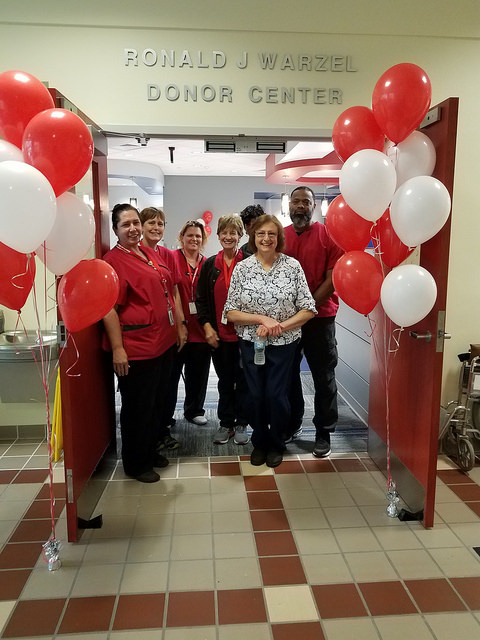
Here are some photos from the grand opening of the Ronald J. Warzel Donation Center. To see more photos from the center opening, please visit our Flickr page:

29537987537_322010cc1c_z

Regional CEO Mike Parks donates blood during the grand opening of the Ronald J. Warzel Donation Center

29538001147_658e5304fa_z

Donors give blood in the new Ronald J. Warzel Donation Center in Cleveland

44914544441_7c49a5a420_z

Ronald J. Warzel Donation Center staff

44929134231_b55eb9c2e9_z

Ronald Warzel accepts a commemorative photograph of the grand opening of the new blood donation center from Greater Cleveland Chapter Chairman Christopher Mapes

Veronica Wise, Volunteer and Longtime Blood Donor

By Christy Peters, External Communications Manager

Veronica Wise began her journey with the American Red Cross at the former Portage County Chapter. As a volunteer, she helped coordinate blood drives and was a regular blood donor. So regular, in fact, that she has given more than 210 pints of blood to help patients in need. It is an amazing gift to give, and Veronica was recently recognized by Nancy Janis, the Executive Director of the Summit, Portage and Medina Counties Chapter for her efforts on behalf of the Red Cross.


IMG_6192

Red Cross volunteer and blood donor Veronica Wise received a Red Cross pin from Nancy Janis, Executive Director of the Summit, Portage and Medina Counties Chapter.


Not only did Veronica impact her community and the countless patients she helped save through blood donation, she instilled that same commitment to giving in her family. Karen Wise, Veronica’s daughter, knew from a young age the importance of giving back. She watched her mother donate blood and it made an impression on her. “When I was 16 it was a given – get your driver’s license and your Red Cross donor card,” Karen said.


IMG_6178

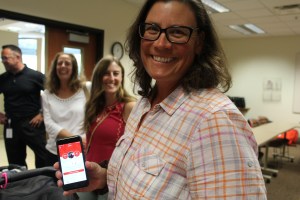
Karen displays the Red Cross Blood App

When asked about donating blood, 90-year-old Veronica insists, it wasn’t hard. “I enjoyed every minute of it.” The importance of donating grew for the Wise family when another of Veronica’s daughters was diagnosed with breast cancer. The family began giving platelets in her honor. Though, sadly, she lost her battle, the family continues to give blood regularly.


Karen shares that Veronica’s commitment left a mark on her family. “It’s something we can continue on,” she said. The Red Cross congratulates Veronica for her many donations and thanks her for inspiring so many to join her in helping save lives.  If you are so inspired, you can make an appointment to donate blood at RedCrossBlood.org, or call 1-800 RED CROSS.


Photo Credit: Jim McIntyre/American Red Cross.  Visit our album on Flickr for more photos.


Missing Types Campaign Launched in Cleveland

N_tice _nything missing? A few missing letters may not seem like a big deal, but for a hospital patient who needs type A, B or O blood, these letters mean life.

As part of an international movement, the American Red Cross is launching the Missing Types campaign to raise awareness of the need for new blood donors – and those who haven’t given in a while – to donate and help ensure lifesaving blood is available for patients in need. You may notice A’s, B’s and O’s – representing the main blood groups – missing from signage, websites, social media and other public-facing platforms to illustrate the critical role every blood donor plays.

The sad fact is that blood shortages are not uncommon in the U.S. and other parts of the world. But they can be prevented when more people roll up a sleeve to give.

When blood types go missing

_D5C7122

Stephanie Aholt and son Benjamin.  Photo credit: Doug Bardwell/American Red Cross volunteer

“You never know whose life you might be saving,”  Stephanie Aholt told a group of Red Cross supporters and media gathered for a news conference to kick-off the Missing Types campaign in Cleveland.  Her two-year old son, Benjamin, lives with hemophilia B.  Just three days after his birth, Benjamin had lost more than 10% of his birth weight.

_D5C6722

“He was bleeding to death, and was in critical condition,” she said.  “Benjamin needed several units of blood and blood products.  Without the donations he received, he would not be alive today.”


The news conference was held in the law offices of Jones Day, which has been hosting_D5C6862 regularly scheduled blood drives for the past 20 years.  “In that time, our lawyers and staff have donated thousands of pints, most recently just two weeks ago,” said Paula Batt Wilson, Administrative Partner for Jones Day’s Cleveland office and active Red Cross Blood Services volunteer.
See more photos from the news conference here.

Join the movement

  1. Give blood – Schedule your appointment at org/MissingTypes or with the Blood Donor App.
  1. Recruit new donorsEncourage a friend or family member to roll up a sleeve too.
  2. Spread the word
  • Take a photo with one of these selfie signs and post it to your social media along with the message “I am the #MissingType.”
  • Write out your name with the A’s, B’s and O’s missing on the “blank” selfie sign, and take a photo with it. (Underscores are recommended. Example: _meric_n Red Cr_ss)
  • Visit RedCrossBlood.org to a Missing Types message on your social mediaWhat to expect at your donationGiving blood is simple. Commit about an hour of your day to help save a life.
    • Registration – Sign in, show your ID and read the required information.
    • Health check – Answer questions and receive a mini-physical.
    • Donation – Giving a pint of blood takes about 8-10 minutes.
    • Refreshments – Enjoy some snacks and relax before resuming your day.


Y_u _re the #MissingType p_tients need. Don’t wait until the letters A, B and O go missing from the hospital shelves. Schedule your appointment to give now.

Keeping Fans’ Blood Pressure in Check

By Doug Bardwell – American Red Cross volunteer

It’s June again, and Cavs fans blood pressures are rising.  It could have to do with missed free throws.  It might be due to poor calls by the selectively blind referees. Or it could be due to an opponent overly adept at shooting three-point baskets from obscene distances.

In any event, it’s NBA Finals time and collectively our blood pressures are on the rise…. which is not a good thing.

IMG_1459

Hopefully, this situation will improve shortly; but high blood pressure can be caused by a number of other factors, and it’s something that definitely needs to be monitored.

Some symptoms of dangerously high blood pressure include:

  • Severe headache
  • Chest pain
  • Irregular heartbeat
  • Unusual fatigue
  • Problems with your vision
  • Throbbing in your chest, ears or neck

If you notice these symptoms, it’s wise to seek a doctor’s help quickly. Extreme blood pressure problems could cause a stroke or heart disease.

Remedies for high blood pressure (for other than NBA-induced causes) include:

  • Adopting a healthy diet
  • Regularly exercising
  • Losing weight
  • Reducing sodium in the diet
  • Cutting back on caffeine
  • Quitting smoking
  • Limiting use of alcohol
  • Reducing stress

One other thing everyone can do is to get your blood pressure checked on a regular basis.  How about every eight weeks for example?

That’s how often you can donate blood, and each time you donate, you’ll get a mini-checkup from your friendly Blood Services professional at the donation site.  Iron levels and blood pressure are always checked before you donate, so you won’t develop a problem without being alerted.dougdonating

Give yourself plenty of time to get to your donation location, as blood pressure can rise needlessly if you are stressed about being late to your appointment. Fortunately, in a case like that, sitting quietly for 10-15 minutes should bring you right back to normal levels, and your pressure can be checked a second time.

To schedule your regular eight-week appointment, log on to redcrossblood.org and pick a convenient date and location. Or, you can do it quickly from the Red Cross Blood Donor App for your Android or iOS phone.

The ABCs of Donating A, B, A/B and O

What All Donors Need To Know Before Rolling Up Their Sleeves

By Christy Peters, External Communications Manager, Biomedical Services

The need for lifesaving blood and platelets is constant. In fact, every two seconds, someone in the U.S. needs a blood transfusion. And your contribution is important for a stable and reliable blood supply. But before you schedule your appointment to donate blood, here is information to ensure you’re prepared for a successful donation.

To donate blood, you must be:

  • At least 17 years-old in most states, or 16 years-old with parental consent if allowed by state law (such as Ohio).
  • You must weigh at least 110 pounds
  • You must be in good general health and feeling well on the day of your donation.

Prior to your blood donation, make sure you drink plenty of water and eat a healthy meal. When you come to give, you will also be asked to show a donor card, driver’s license, or other form(s) of ID.

The entire blood donation process takes about an hour from start to finish. It consists of :

  • Registration
  • A mini-physical
  • The actual donation
  • Refreshments!

The actual blood donation takes about 8-10 minutes and you will donate one pint of blood (the average person has 10-12 pints). Your one pint consists of three components, red blood cells, platelets and plasma and each one can be given to a different patient based on their need. With each blood donation you have the potential to help save up to three lives!

Join the lifesaving mission of the Red Cross and make an appointment now to give blood. Download the free Blood Donor App, visit redcrossblood.org or call 1-800-RED CROSS (1-800-733-2767).

Celebrating a Red Cross Pioneer During Black History Month

By Christie Peters, External Communications Manager, Biomedical Services

Dr-Charles-Drew

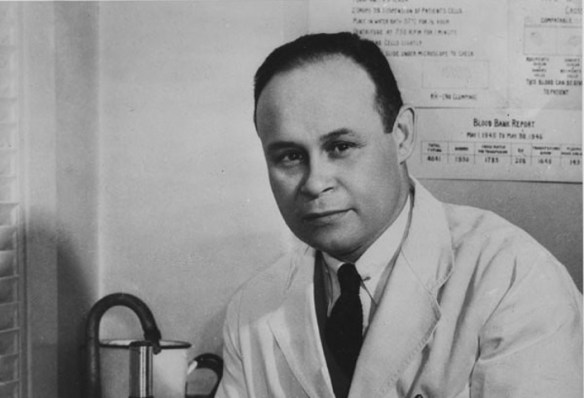
During Black History Month this February, the Red Cross celebrates the legacy of blood-banking pioneer Dr. Charles Drew.  Dr. Drew was an African-American surgeon who became the medical director of the first Red Cross blood bank in 1941. Drew’s research about the storage and shipment of blood plasma proved that blood could be stored for transfusions. During World War II, at the military’s request, Drew helped the Red Cross initiate a national blood program that collected 13.3 million pints of blood for use by the armed forces.

Donors of all blood types and ethnic backgrounds are encouraged to give to help ensure blood and platelet donations reflect the diversity of the patients who rely on them. Certain blood types are unique to specific racial and ethnic groups. Red blood cells carry markers called antigens on their surface that determine one’s blood type. There are more than 600 known antigens, and some are unique to specific racial and ethnic groups. Blood must be matched very closely for patients with rare blood types or those who need repeated transfusions. Patients are less likely to have complications from blood donated by someone of a similar ethnicity.

  • Every day, volunteer blood and platelet donors across the country are needed to help save lives. The Red Cross must collect more than 13,000 blood and platelet donations every day for patients at about 2,600 hospitals and transfusion centers nationwide. Eligible donors are urged to make an appointment to give now by using the Blood Donor App, visiting redcrossblood.org or calling 1-800-RED CROSS (1-800-733-2767).

Firm Steps Up During Urgent Appeal for Blood Donations

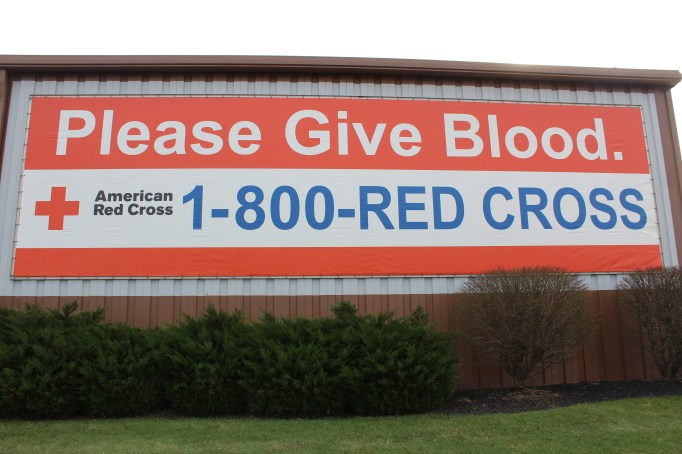
You can’t miss the banner as you drive just east of downtown Cleveland on I-90.

It’s huge.

IMG_5153

The timing of the message, hanging on a wall facing north at Jergens Inc. couldn’t be better. There is an urgent need for blood and platelet donors, due to a donation shortage this winter.  But even if there wasn’t a shortage, that banner would still be hanging, urging motorists to become blood donors.

“We hang the banner at this time every year,” said Jack Schron, President and CEO of Jergens Inc.  They also hold employee blood drives, 4 or 5 a year, about every 56 days – which is the amount of time donors must wait before giving blood again.

“It’s just the right thing to do, a way to give back,” said Schron, who added, “A lot of people can write a check, but as I tell my kids, only you can decide whether to give your blood and your time.”

Schron shared his motivation for hosting regular blood drives as he donated another pint.  His 83rd.  The CEO of the Red Cross of Northeast Ohio, Mike Parks, joined Schron as they both gave the gift of life.


“We want to recognize loyalty,” said Parks.  “When you look at the culture of this company, the 25-year employees, it’s evident that this company really values loyalty.”

Parks gave a “Challenge Coin” to long-time Human Resources Director, Kathy Puskas, for organizing the blood drives at Jergens for the past 25 years.

IMG_5209

Mike Parks gives a Challenge Coin to Kathy Puskas, long-time Human Resources Director at Jergens Inc. for organizing more than 100 blood drives at the Cleveland manufacturing plant

As we recently noted, severe winter weather, in addition to seasonal illnesses and hectic holiday schedules, have collectively contributed to about 28,000 fewer donations than what was needed in November and December. Blood and platelet donations are being distributed to hospitals as fast as they come in. The Red Cross must collect more than 13,000 blood and platelet donations every day for patients at about 2,600 hospitals and transfusion centers nationwide.

“The Red Cross is grateful to Jergens, and so many companies throughout Northeast Ohio who host regular blood drives throughout the year,” said Christy Peters, External Communications Manager for the Northern Ohio Region.  “If they did not open their doors and allow us to have blood drives, we could not continue to meet the needs of local hospitals. Every blood drive sponsor is a vital part of our lifesaving mission.”

Eligible donors can schedule an appointment to donate by using the free Blood Donor App, visiting redcrossblood.org or calling 1-800-RED CROSS (1-800-733-2767).

“Hey, if you can do it,” says Schron, “go for it!”

The Need Never Ends

Red Cross issues urgent call for blood and platelet donors

This January, National Blood Donor Month, the American Red Cross has an urgent need for blood and platelet donors of all blood types to make an appointment to give now and help address a winter blood donation shortage. Severe winter weather, in addition to seasonal illnesses and hectic holiday schedules have collectively contributed to more than 28,000 fewer donations than what was needed in November and December.

There is a critical need for the following blood and donation types right now:

  • Platelets: The clotting portion of blood primarily given to cancer patients during treatment and always in great demand.
  • Type O negative: The blood type that can be transfused to almost everyone and is what doctors reach for in trauma situations.
  • Type B negative: The blood type that can be transfused to type B Rh-positive and negative patients.
  • Type AB: The plasma type that can be transfused to almost everyone and can be donated through a platelet or plasma donation, where available, or during a regular blood donation.

Right now, blood and platelet donations are being distributed to hospitals as fast as they come in. The Red Cross must collect more than 13,000 blood and platelet donations every day for patients at about 2,600 hospitals and transfusion centers nationwide.

Eligible donors can find a blood platelet donation opportunity and schedule an appointment to donate by using the free Blood Donor App, visiting redcrossblood.org or calling 1-800-RED CROSS (1-800-733-2767). Donation appointments and completion of a RapidPass are encouraged to help speed up the donation process. RapidPass lets donors complete the pre-donation reading and answer the health history questionnaire online, on the day of their donation, by visiting redcrossblood.org/rapidpass from the convenience of a mobile device or computer, or through the Blood Donor App.

Ways to Brighten Black Friday

By: Sue Wilson, Volunteer Leader and Board Member

Black Friday. The kick off to what is suppose to be the most joyous time of the year. Yet, a trip to any mall parking lot or big box retailer shows anything but joy. Black Friday can be a dark day, exemplifying the worst of consumerism in the holidays, and by the end of it we often hear some dreadful news story about customers rushing into stores, battling over a limited number of “door buster” specials. Sales consultant, Steven A McQueen, tweeted: “Black Friday is the day we trample people for things we don’t need, the day after being thankful for what we have.”

We have been convinced, through a bombardment of advertising messages, that the holiday season is all about MORE. Spending more money on more presents to fill our spaces with more stuff that we’ll be paying off for a long time.

If stepping back from the consumerism of gift giving sounds good to you, here are four suggestions to bring some meaning back to the holidays:

  1. Give the gift of time. Volunteer with an organization you believe in. Every single day, the Red Cross helps people in emergencies. Whether it’s one displaced family, thousands of disaster victims, or providing care and comfort to an ill or injured service member or veteran or support to a military family member, our vital work is made possible by people like you. It is through the time and care of ordinary people that we can do extraordinary things. Click here for information about becoming a Red Cross volunteer.
  2. Give something that means something. Honor a friend or family member with a gift that helps those in need. When you donate to the Red Cross you are helping people who face emergencies every day rebuild their lives. Donations can help provide safe shelter, food, emergency relief supplies, emotional support and health services to people in need. To make a tax-deductible donation, visit redcross.org/gifts and choose from a variety of symbolic gifts that give back to the community, or call 1-800-RED CROSS to support Red Cross services.
  3. Give something practical. If you still enjoy giving traditional gifts, you can shop online at the Red Cross Store and give a practical gift; the gift of preparedness for emergencies, with first aid kits, a hand-crank radio that can charge your cell phone, water bottles and more.
  4. Donate Blood. The holidays are a hectic time with upcoming travel, family gatherings and festive events. But hospital patients don’t get a holidays from needing lifesaving blood donations. To make an appointment to donate blood or platelets visit  redcrossblood.org.

Brighten up Black Friday. Give …rather than buy.