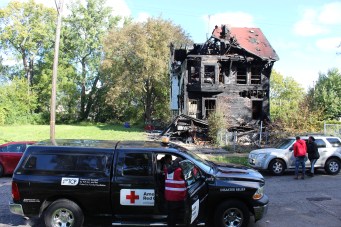
Over the weekend, the American Red Cross was once again very active responding to calls across Northern Ohio and assisting residents who have suffered a local disaster.
During the weekend of July 17-18, the Red Cross responded to 9 incidents across the region, including home fires and flooding. The disaster team assisted 15 adults and 11 children, and provided more than $5,5000 in immediate financial assistance.
While many of us hear “disaster” and think of large events like wildfires and hurricanes, local disasters are where much of our response happens. In fact, every 24 hours, on average, the Northern Ohio Red Cross responds to three home fires, as well as floods and severe storms. Red Cross volunteers are on call and ready to respond 24/7 when a disaster strikes. After emergency personnel, these individuals are often some of the first people to be on scene at a disaster. They assess the victims’ needs and ensure they have food, clothing, shelter and other services to help take the first steps to recovery.
The Red Cross is committed to helping our community prepare for, respond to, and recover from emergencies. We are able to make a difference in our local communities because of the generosity of our donors and support of our volunteers.
If you would like to provide a financial donation to assist the Red Cross’ efforts to support the residents of Northern Ohio, visit redcross.org/donate, call 1-800-RED CROSS or text REDCROSS to 90999 to make a $10 donation. If you cannot support the Red Cross monetarily but you are interested in making an impact in your local community, the Red Cross is always looking for volunteers. To volunteer, visit redcross.org/volunteer to learn more and sign up.
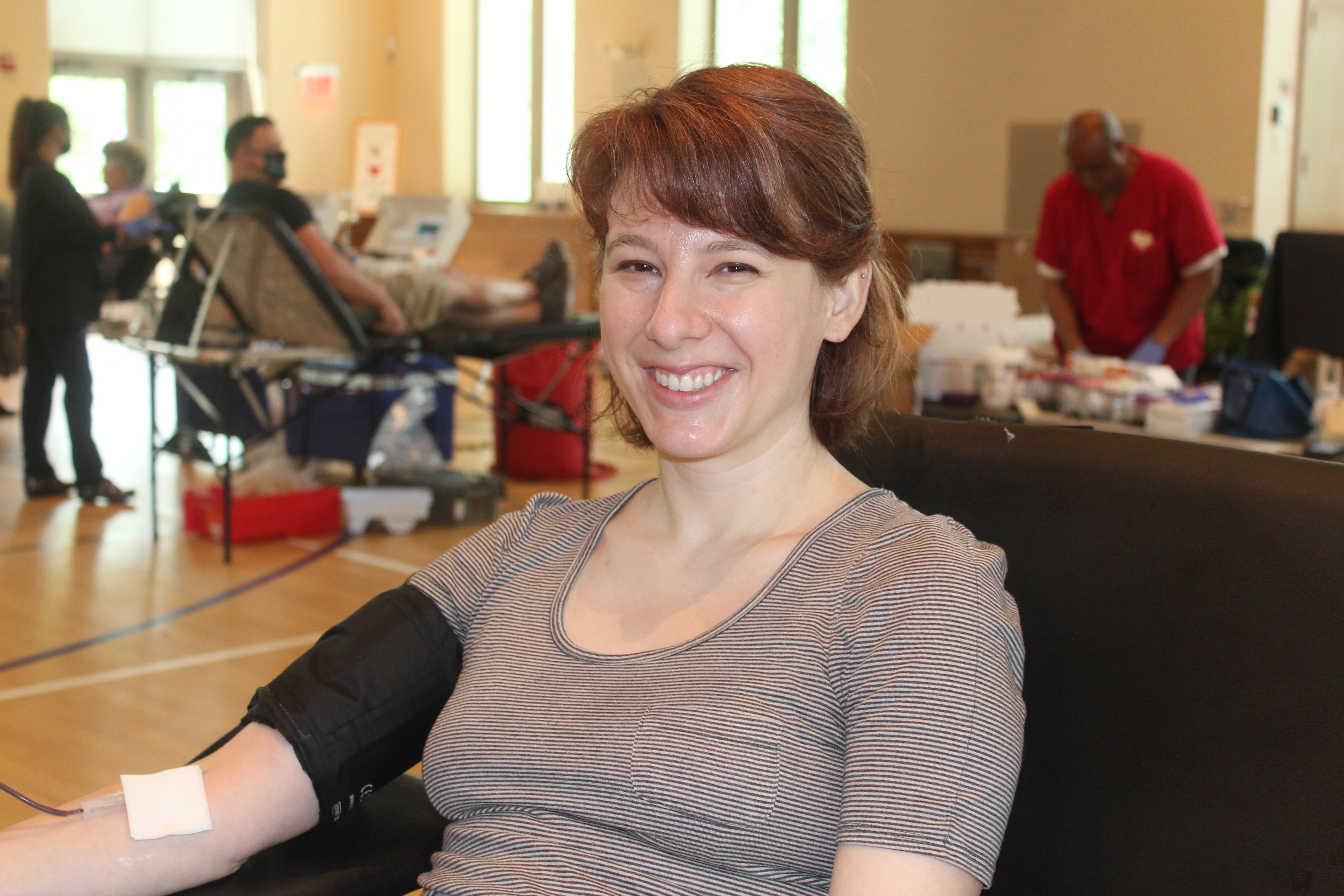
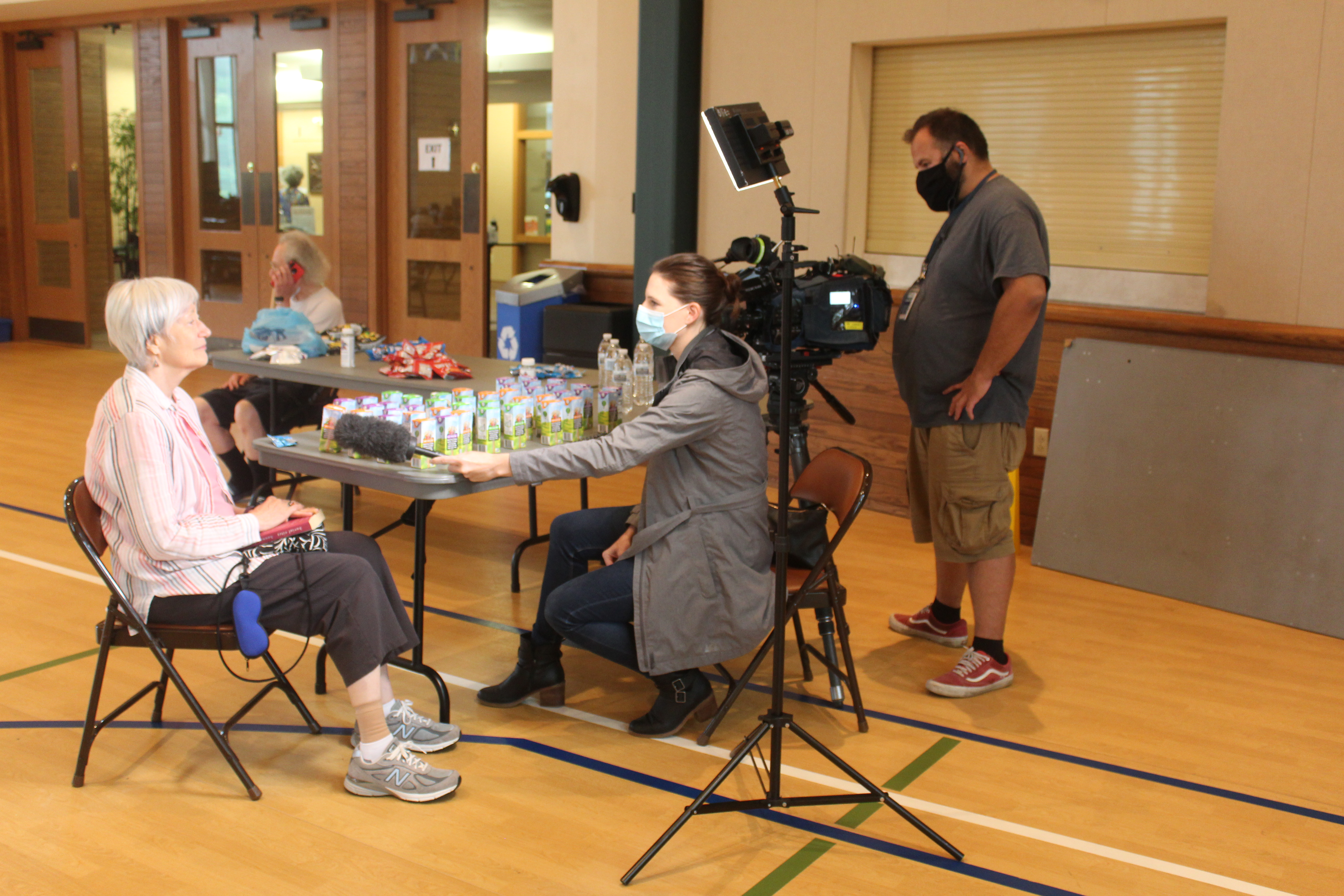
It had been about five years since Ellen Eoff last donated blood. “I heard about the shortage,” she said as she rested on a donor bed at a recent blood drive at the Church of the Savior in Cleveland Heights. “I’m vaccinated and felt comfortable about donating blood again.”
Red Cross blood donor Ellen Eoff
Ellen was one of 44 people who donated at the blood drive, helping the American Red Cross address a severe blood shortage, as hospitals respond to an unusually high number of traumas and emergency room visits, organ transplants and elective surgeries.
In most cases, those who have received a COVID-19 vaccine – like Ellen – can donate. However, knowing the name of the manufacturer of the vaccine they received is important in determining donation eligibility.
Currently, the Red Cross needs to collect more than 1,000 additional blood donations each day to meet current demand. That’s why donations like Ellen’s are so important.
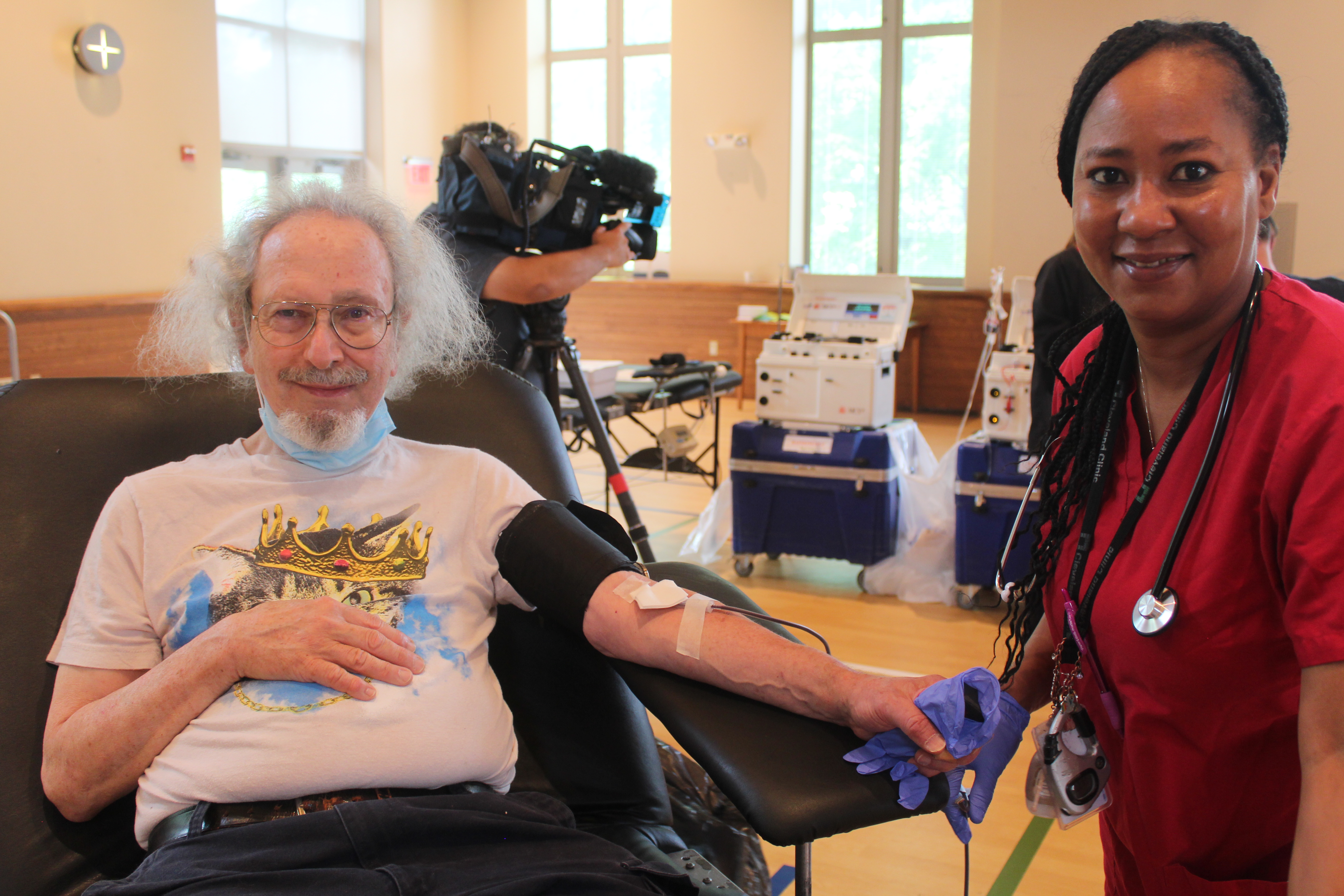
Red Cross blood donor Michael Melicoff and blood drive supervisor Shantel Haynes
“I donate for the public good,” said Michael Melincoff, who has been a Red Cross blood donor for more than 40 years. “I donate 2 to 4 times a year,” he said. He also makes financial donations in response to disasters.
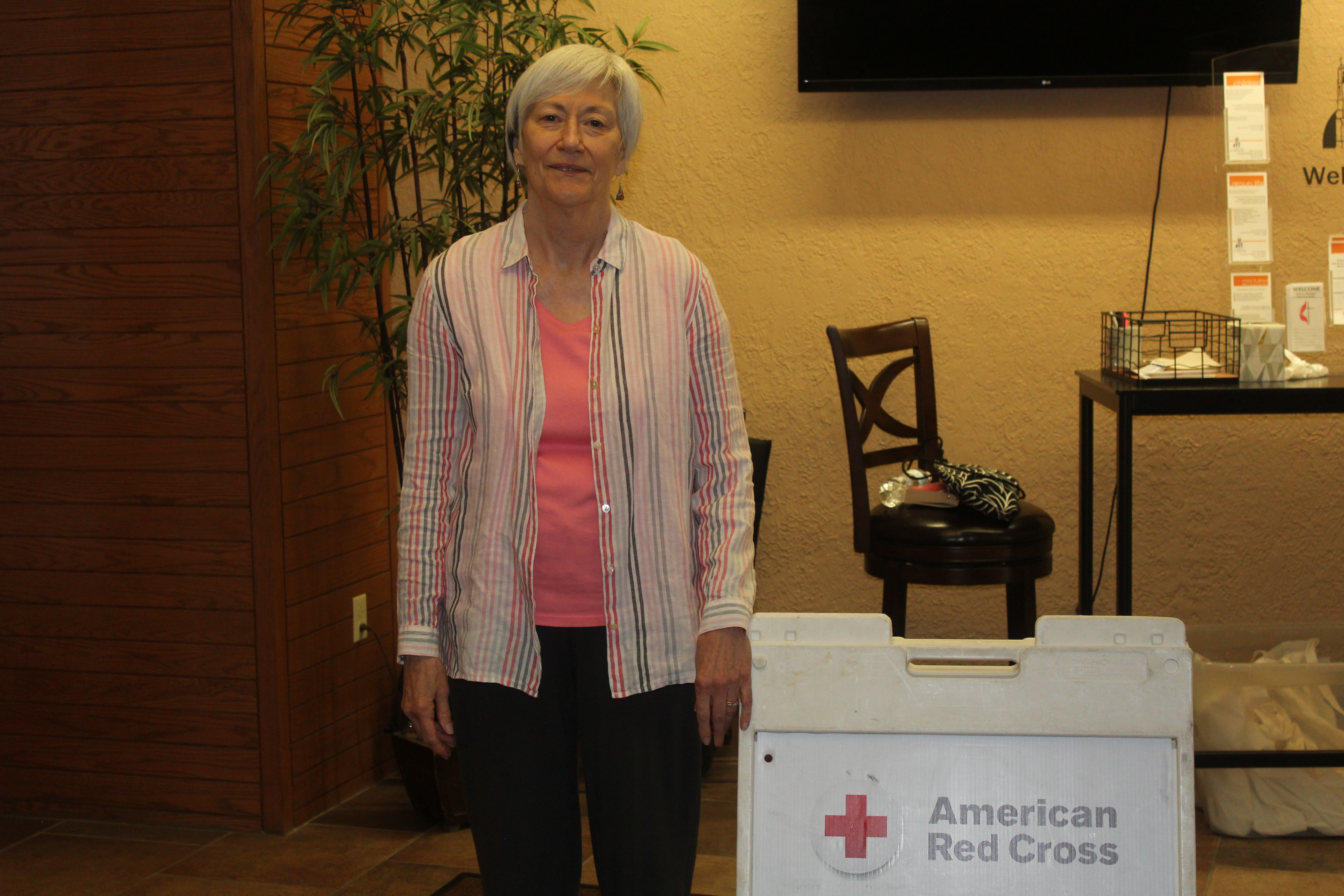
Patricia Moyer said she’s working toward donating her second gallon of blood. “It was there when I needed it,” she said, referring to a past surgical procedure she experienced.
WEWS News 5 reporter Caroline Sweeney and photographer Anthony Garcia helped the Red Cross spread the word about the blood shortage by covering the blood drive. You can see their report here.
To thank donors who help refuel the blood and platelet supply this month, all who come to give July 7-31 will receive a $10 Amazon.com Gift Card via email and will also receive automatic entry for a chance to win gas for a year (a $5,000 value). More information and details are available at rcblood.org/fuel. Also, all those who come to donate throughout the entire month of July will be automatically entered for a chance to win a trip for four to Cedar Point or Knott’s Berry Farm. To learn more, visit rcblood.org/CedarFair.
Donors who give now will help stock the shelves for the rest of the summer season. Schedule an appointment to give blood or platelets by using the Red Cross Blood Donor App, visiting RedCrossBlood.org, calling 1-800-RED CROSS (1-800-733-2767) or enabling the Blood Donor Skill on any Alexa Echo device.
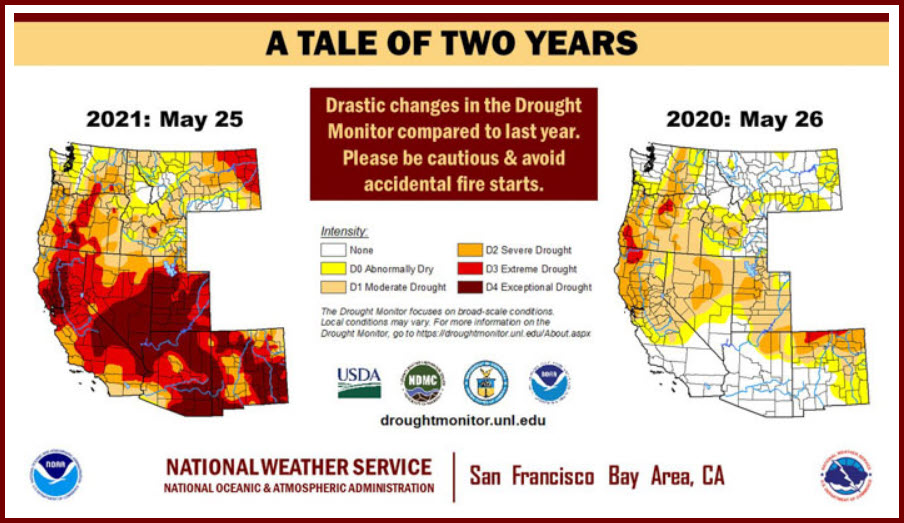
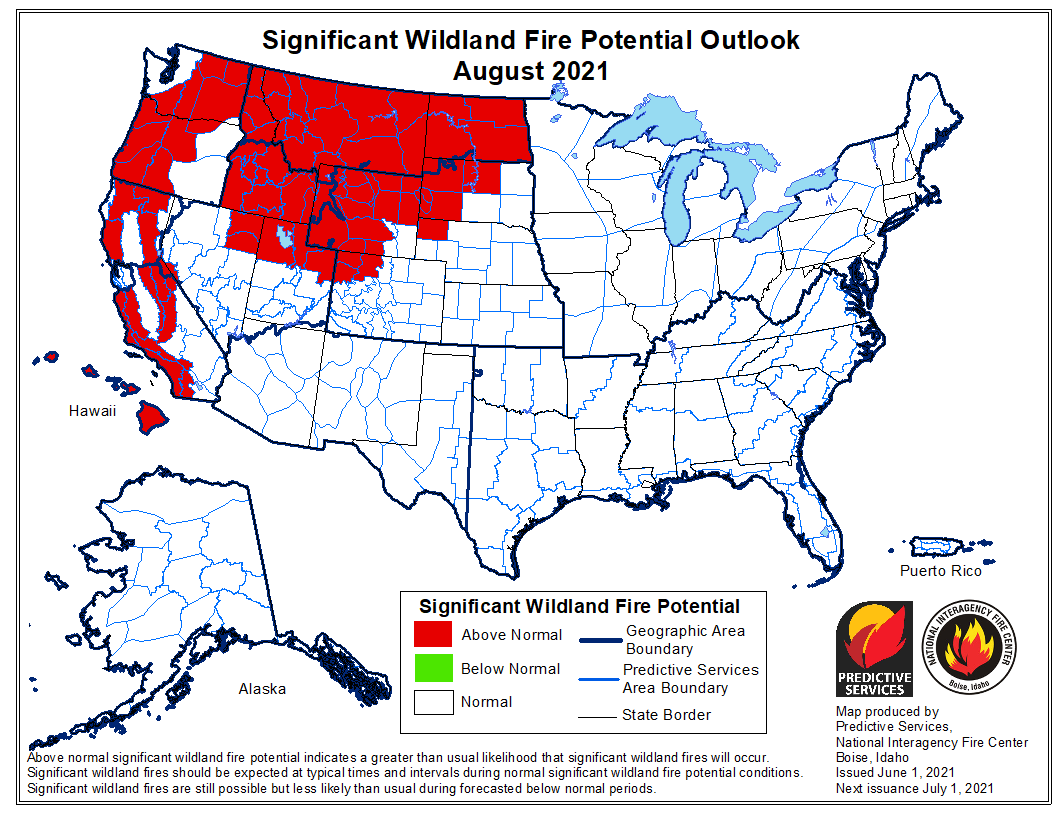
According to the National Interagency Fire Center, there have already been 31,000 wildfires across the country, with more than 1.5 acres affected. As of July 4th, people have had to evacuate their homes for the Tennant, Salt and Lava wildfires in California. That means there will be a need to shelter and feed residents impacted, and more opportunities for American Red Cross volunteers.
Volunteers often talk about how appreciative people are when offered water or buckets and rakes to assist their cleanup. Many I’ve spoken with mentioned that Red Cross trucks brought the first and only assistance they had encountered since the fire. It’s a privilege to serve those who’ve just lost most of their material possessions.
What can you expect if deployed to volunteer?
First, you won’t be anywhere near the flames. Shelters are selected in safe zone areas, so you can feel safe wherever they are located. Even if you are part of a Red Cross mobile feeding operation, you won’t be dispatched to burnt areas until the fire has been totally contained for a safe period of time.
There are three types of work most volunteers experience: sheltering, feeding or supply distribution.
Sheltering volunteers work to set up and maintain the sleeping/living areas for those displaced by the fire. After the setup and registering of incoming victims, just letting people tell their stories is very cathartic for those affected.
While deployed to the Camp Fire in California, I noticed most people just wanted someone to talk to. Not that they expected any earthshaking solutions, they just needed to verbalize their plight to a caring set of ears. Sometimes, just playing cards or a board game was a great distraction from their worries.
November 17, 2018. Chico, California. At the Neighborhood Church shelter in Chico, California, Daniel Nieves grieves the loss of his friends, who perished in the Camp Fire. Red Cross volunteers Pamela Harris and Vicki Eichstaedt listen and offer comfort as Daniel remembers a special friendship. Photo by Daniel Cima/American Red Cross
Feeding volunteers help serve meals that are usually supplied by one of our Red Cross partners. Three meals a day are served to those affected. You might also be serving meals to first responders, cleaners and other service personnel involved around the shelter operation.
In all the sheltering operations I’ve been involved with, there is always a 24/7 snack area for the shelter residents. Chips, cookies and snack bars are always available, along with coffee, tea, soft drinks and water.
Distribution volunteers are those who take cleanup tools and supplies out to the victims at the site of the fire after the “all clear” notice has been issued.
Deploying on a national disaster usually requires a two-week commitment. However, local/regional events can be staffed on more flexible schedules. A limited amount of pretraining is necessary for either, but there are plenty of people ready to get you up to speed quickly. For more information on volunteer opportunities, visit redcross.org/volunteer and select DCS – Disaster Cycle Services – Responder, or contact Emily Probst, Disaster Workforce Engagement Manager, at emily.probst@redcross.org.
Edited by Glenda Bogar, American Red Cross volunteer
American Red Cross disaster responders were busy throughout northern Ohio on Friday and Saturday, July 9th and 10th, responding to 8 home fires – including 5 multi-family home fires. 54 residents, including 30 adults and 24 children were affected by the fires.
Six of the fires occurred in Cuyahoga County.
The residents received more than $11,300 in immediate financial assistance, to help them find a safe place to stay, provide food for their families, replace lost clothing, or fulfill other immediate needs. That assistance, coming at such a critical time, is only available because of generous people who make financial donations to the Red Cross.
If you have a desire to help members of your community recover from disasters like home fires, visit redcross.org/donate or call 1-800 RED CROSS.
Trained Red Cross volunteers will continue to help the families during the recovery process, providing information, resources and referrals to community partners. If health or mental health services are required, Red Cross volunteers with professional certifications will offer their assistance.
Whether you are a certified health or mental health provider, or just have a heart to help your neighbors in their darkest hours, visit redcross.org.volunteer to become a Red Cross volunteer.
A variety of virtual programs being offered online to help you better prepare for emergencies
Despite pandemic restrictions being lifted in so many areas of our daily lives, our efforts to be sure you can Be Red Cross Ready remain available to you free of charge, and from the comfort of your own home.
Be Red Cross Ready is a national, standardized, FREE preparedness education curriculum for adults taught by certified presenters. The program is designed to help people understand, prepare for and respond appropriately to disasters big and small.
“We offer people good reminders about being prepared and staying safe,” said John Gareis, Regional Preparedness Manager. “It’s common sense information that people may not think about, like not opening a door when there’s fire burning on the other side.”
John said attendance numbers vary. He said 175 employees of First Energy were in attendance during one of the emergency preparedness sessions.
All you need is a laptop or smart phone to access the online classroom. This month, topics being covered include General Preparedness and Tornado Safety, Summer Fire Safety Tips, Smoke Alarm Safety, and Summer Pet Safety.
Visit our calendar of events to view the days and times for each session, and visit our website for more information on each topic.
As we prepare to celebrate Independence Day this weekend, many people plan to attend fireworks displays, a backyard picnic, or just enjoy the outdoors. The American Red Cross wants you to enjoy a fun-packed, safe holiday and offers these tips you can follow over the upcoming holiday:
FIREWORKS SAFETY
The safest way to enjoy fireworks is to attend a public firework show put on by professionals. Cities and towns across Northern Ohio are hosting events with fireworks throughout the weekend. Click the links below to find a celebration near you.
While attending, stay at least 500 feet away from the show. Leave any area immediately where untrained amateurs are using fireworks. If you are setting fireworks off at home, follow these safety steps:
Never give fireworks to small children, and never throw or point a firework toward people, animals, vehicles, structures or flammable materials. Always follow the instructions on the packaging.
Keep a supply of water close by as a precaution.
Make sure the person lighting fireworks always wears eye protection.
Light only one firework at a time and never attempt to relight “a dud.”
Store fireworks in a cool, dry place away from children and pets.
PICNIC SAFETY
Don’t leave food out in the hot sun. Keep perishable foods in a cooler with plenty of ice or freezer gel packs.
Wash your hands before preparing the food.
If you are going to grill, always supervise when in use. Don’t add charcoal starter fluid when coals have already been ignited. Use the long-handled tools especially made for cooking on the grill to keep the chef safe.
Never grill indoors. Keep the grill out in the open, away from the house, the deck, tree branches or anything that could catch fire.
Make sure everyone, including pets, stays away from the grill.
HEAT SAFETY
Hot cars can be deadly. Never leave children or pets in your vehicle. The inside temperature of the car can quickly reach 120 degrees. Check on animals frequently to ensure that they are not suffering from the heat. Make sure they have plenty of cool water and shade.
Stay hydrated by drinking plenty of fluids. Avoid drinks with caffeine or alcohol.
Avoid extreme temperature changes.
Wear loose-fitting, lightweight, light-colored clothing. Avoid dark colors because they absorb the sun’s rays.
Check on family, friends and neighbors who do not have air conditioning, who spend much of their time alone or who are more likely to be affected by the heat. If someone doesn’t have air conditioning, they should seek relief from the heat during the warmest part of the day in places like schools, libraries, theaters, malls, etc.
DOWNLOAD OUR APPS. The Red Cross app “Emergency” can help keep you and your loved ones safe with real-time alerts, open Red Cross shelter locations and safety advice. The Red Cross First Aid app provides instant access to information on handling the most common emergencies. Download these apps for free by searching for ‘American Red Cross’ in your app store or at redcross.org/apps.
Follow COVID-19 Guidelines
Remember to review the latest COVID-19 pandemic guidelines from the Centers for Disease Control and Prevention (CDC) with your family before you head out.
We hope everyone has a safe and enjoyable 4th of July!
Awarded Certificate of Extraordinary Personal Action
Sergeant Greg Patterson of the Richmond Heights police department was the first to respond, after a disturbing call to 9-1-1 about a baby who had stopped breathing.
“When I received the call, my first thought was to get there as quickly as possible,” said Sergeant Patterson. “When I arrived, the mother ran out the front door and handed the baby to me. When I saw that his face was blue and he wasn’t breathing, my training kicked in.”
He then described the actions he took to bring the baby back.
“I sat down on a chair on the front porch and began chest compressions,” he said. “I then turned the baby over and gave him a few back blows.” That’s when the infant began to respond, as he coughed up some mucous that Sergeant Patterson wiped away.
“I could see that he was starting to breathe again. When I saw the color coming back into his face, I was beyond relieved.”
Richmond Heights Police Sergeant Greg Patterson congratulated by Mike Parks, Regional CEO, American Red Cross of Northern Ohio
Sergeant Patterson has been awarded a Red Cross Certificate of Extraordinary Personal Action, which is given to those who step up in an emergency situation and help save or sustain a life. “Sergeant Patterson’s actions exemplify the mission of the American Red Cross to prevent and alleviate human suffering in the face of emergencies,” said Mike Parks, Regional CEO of the Red Cross of Northern Ohio. “He is to be commended for his willingness to help others in distress.”
Sgt. Greg Patterson, Mike Parks, and Kim Riley, Board Chair, Red Cross of Northeast Ohio
“When I arrived, the mother handed the baby to me. When I saw that his face was blue and he wasn’t breathing, my training kicked in.”
Sergeant Greg Patterson
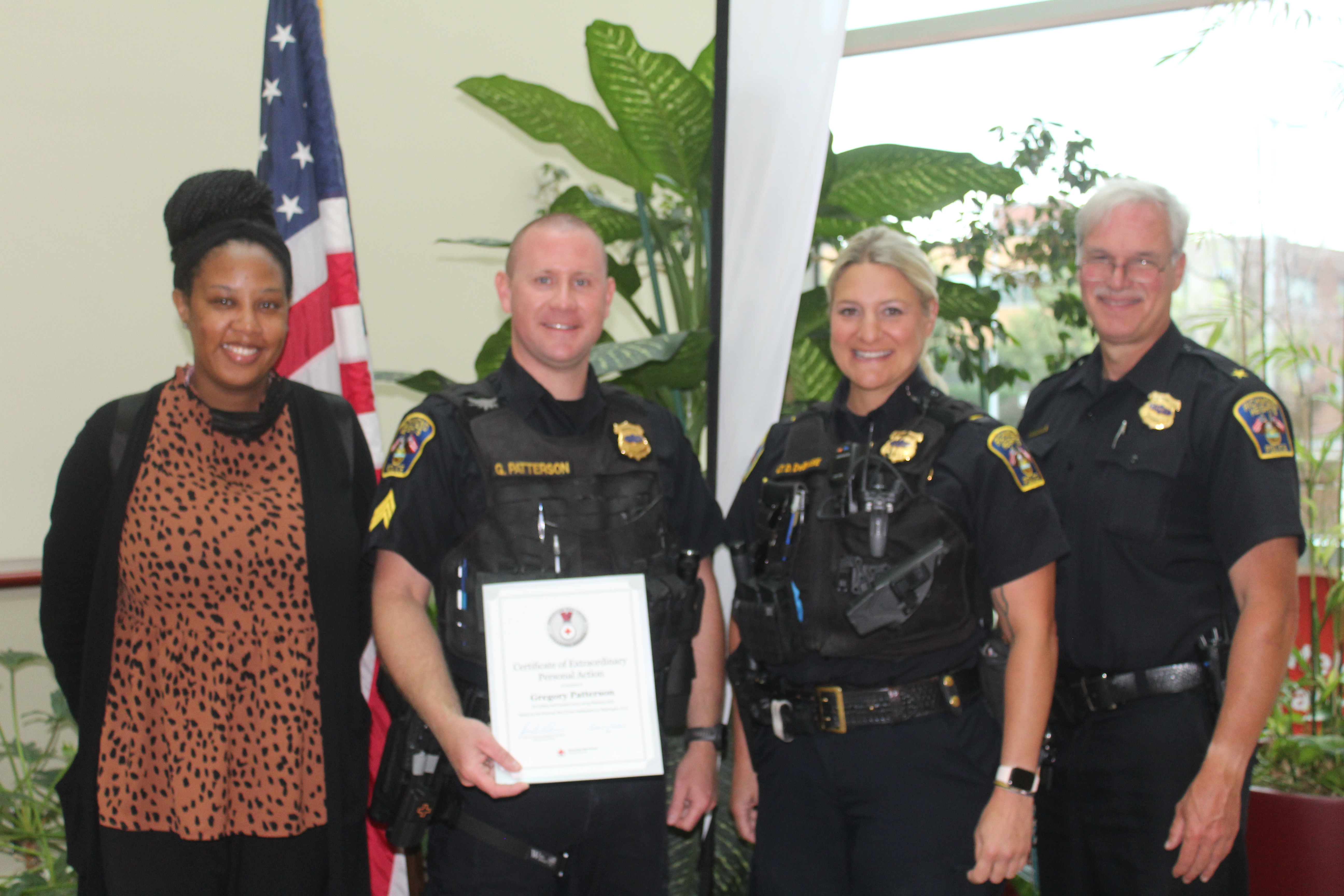
Sergeant Patterson was honored during the June, 2021 meeting of the board of directors of the American Red Cross of Northeast Ohio. He was accompanied by his wife and daughter, along with Chief Thomas Wetzel, Lieutenant Denise DeBiase, and Records Clerk Latrice Evans, who submitted the lifesaving award nomination.
The Certificate of Extraordinary Personal Action is one of three awards bestowed by the Red Cross for lifesaving actions. The Certificate of Merit is the highest award given by the Red Cross to an individual or team of individuals who saves or sustains a life by using skills and knowledge learned in an American Red Cross Training Services course.
Records Clerk Latrice Evans, Sgt. Greg Patterson, Lt. Denise DeBiase, and Chief Thomas Wetzel, Richmond Heights Police Department
The Lifesaving Award for Professional Responders is given to an individual, or team of individuals, who saves or sustains a life, outside of a medical setting, as part of their employment or while on duty and had an obligation to respond.
If you know someone who may qualify for a Red Cross Lifesaving Award, you can nominate that individual or group by using this online form. And you can visit LifesavingAwards.org to learn more.
Sergeant Patterson doesn’t think he acted any differently than any of his fellow officers would have acted when responding to that call.
“I don’t consider myself a hero,” Sergeant Patterson said. “I just happened to be the one to get there first. I am very grateful that I was able to be there to help.”
Here are some things to check before you leave Northern Ohio
By: Doug Bardwell, Red Cross Volunteer
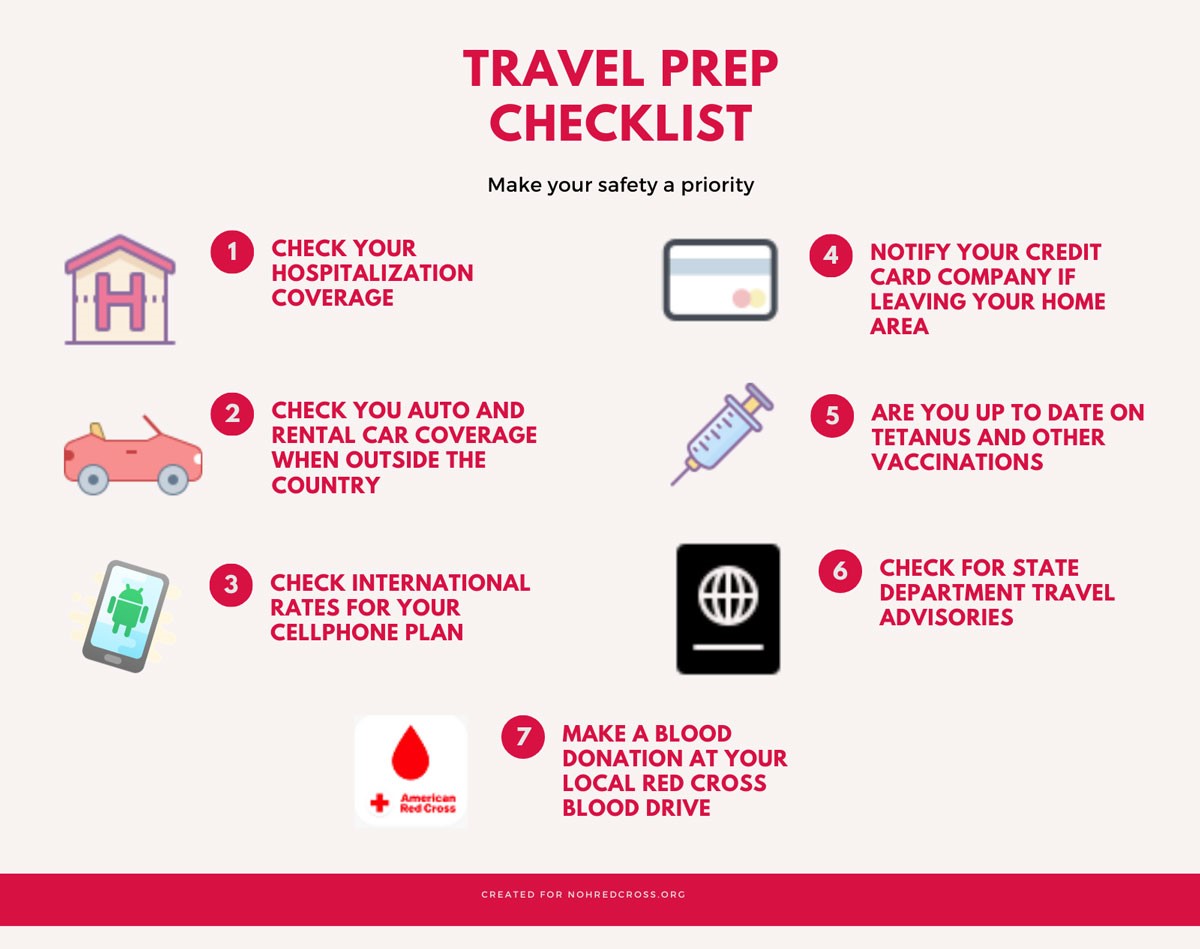
Travel restrictions have just been lifted for those who want to go to Europe, so it appears that travel season is about to switch into high gear here in Northern Ohio. If you are planning a trip out of the country, there are a number of points you’ll want to check to ensure that it is a safe and enjoyable experience.
Does your hospitalization cover you when you travel? Some only work in this country, and some only with certain health organizations. Here’s a good reference.
Driving? Will your car insurance cover you when you cross into Canada (probably) or into Mexico (probably not). Be sure to call your agent and verify. You also need to check if you’ll be renting a car – most local policies don’t cover rentals abroad.
And don’t forget to check very specifically about your cellphone rates outside the country. Many people didn’t check first, only to find out that international rates added thousands to their cellphone bill.
Check your credit cards. Some issue surcharges for international transactions, while others do not. Also, avoid travelers’ cash exchanges at airports, which usually offer less advantageous conversion rates than banks in town.
Be sure to notify your credit card company about when you plan to be out of town (even in this country), so your cards are not held up pending “fraud protection” while you try to prove it’s really you buying shoes in Guadalajara.
Are you up to date on your vaccinations, malaria shots, tetanus shots, etc. Let your county health care professional know where you’ll be traveling and see if any additional shots are required. Here’s the link to Cuyahoga County’s board of health, but each county should have their own.
Before you go, photograph or scan your passport, immunization record, any important medical information and emergency numbers for your credit cards and bank. Put it on a small USB flash drive that you can hide in your socks, just in case you are robbed. Also leave a duplicate of the information with a friend or relative who is not traveling with you.
Lastly, before you go, make a blood donation appointment. There’s a severe shortage right now, and the need is great. If you’ve never donated before, you can load the Red Cross Blood app on your phone, and shortly after your donation, you’ll know what blood type you are. Then, while you are traveling, rest easy, knowing your donation can save up to three lives.
We usually take our summers seriously in Northeast Ohio, but this year is extra special due to COVID-19 restrictions easing and life normalizing a little.
The Fourth of July is right around the corner, a time when people typically enjoy the summer holiday with backyard barbecues, fireworks, or water fun. Independence Day will be different due to the ongoing COVID-19 pandemic which could be a little tricky because of the mixed rates of vaccinated Ohioans across the region. The American Red Cross offers safety tips you can follow to help you enjoy and stay safe during the Fourth of July.
“We know the summertime, particularly the time around the 4th of July, is a great time to get together with friends and family,” said Dr. Austin Wellock, Medical Director, Emergency Department at Summa Health System – Akron Campus. “It’s important to know there can be dangers associated with some everyday outdoor activities. Around this time each year, we see patients in our emergency departments for fireworks related injuries and food illnesses.”
As communities reopening with events, inform yourself of precautions and new regulations that are being set to attend in public settings.
If you have not been vaccinated, you may want to continue to social distance by staying 6 feet away from others, especially if you are at high risk for serious illness from COVID-19 (over age 65 or any age with underlying medical conditions). If you are vaccinated, educate yourself about the events your planning to attend through their websites and contact numbers.
Some events may have attendees and/or working staff continue to wear cloth face coverings in public. Face coverings are most essential when social distancing is difficult. If vaccinated, you might be free or required to wear a mask.
Follow guidelines for your area when it comes to how large gatherings can be. Avoid crowds and mass gatherings if you are not comfortable.
Many of last year’s public fireworks shows were canceled across Northern Ohio last summer as communities tried to avoid holding events with large crowds. If you plan to attend a public show this year, we suggest educating yourself on the event that you plan to attend because each city/county may have different restrictions. Each state have various laws related to personal use fireworks.
Never give fireworks to small children, and never throw or point a firework toward people, animals, vehicles, structures, or flammable materials. Always follow the instructions on the packaging.
Keep a supply of water close by as a precaution.
Make sure the person lighting fireworks always wears eye protection.
Light only one firework at a time and never attempt to relight “a dud.”
Store fireworks in a cool, dry place away from children and pets.
GRILLING SAFETY
Grilling fires spark more than 10,000 home fires on average each year in the U.S. To avoid this:
Always supervise a barbecue grill when in use. Don’t add charcoal starter fluid when coals have already been ignited.
Never grill indoors — not in the house, camper, tent or any enclosed area.
Make sure everyone, stays away from the grill, including children and pets.
Keep the grill away from the house or anything that could catch fire.
Use the long-handled tools especially made for cooking on the grill.
WATER SAFETY
Warmer weather means enjoying the water. Be “water smart,” have swimming skills and know how to help others. This includes home pools — where young children are most at risk of drowning — and open water, such as ponds, rivers and lakes — where older children and teens are more likely to drown than any other location. With less access to lifeguarded aquatic facilities this summer, youth and teens may consider open water environments that are not designated for swimming.
If you choose to take your family to the water, make sure the area is designated for swimming and has lifeguards on duty. Once there, maintain social distancing, both in and out of the water, between you and people who don’t live with you.
Wear face coverings on land, especially when physical distancing is difficult. Do not wear them in the water as it may be difficult to breathe. Don’t share goggles, nose clips, snorkels or other personal items.
Designate a water watcher whose sole responsibility is to supervise people during any in-water activity until the next person takes over.
Kiddie or inflatable pools can be a great way to have fun. Drain the water from the pool and flip it over after swim time is over.
DOWNLOAD RED CROSS APPSThe Red Cross offers a series of free mobile apps to put lifesaving safety information in the palm of your hand. Download these apps by searching for “American Red Cross” in your app store or at redcross.org/apps.
The Red Cross Swim App has water safety tips and resources for parents and caregivers along with child-friendly games, videos and quizzes.
The Red Cross Emergency App can help keep you and your loved ones safe by putting vital information in your hand for more than 35 different severe weather and emergency alerts.
The Red Cross First Aid App puts instant access to information on handling the most common first aid emergencies at your fingertips.
The American Red Cross is experiencing a severe blood shortage as the number of trauma cases, organ transplants and elective surgeries rise– and deplete the nation’s blood inventory. Donors of all blood types – especially type O and those giving platelets – are urged to make an appointment to give as soon as possible to prevent further impact to patients.
Right now, hospitals are responding to an atypically high number of traumas and emergency room visits, as well as overdoses and resulting transplants. In comparison to 2019, the Red Cross has seen demand from trauma centers climb by 10% in 2021− more than five times the growth of other facilities that provide blood transfusions.
The Red Cross Northern Ohio Region appreciates the support of the local media, who have shared our need for blood and encouraged the community to come out now and help overcome the shortage. Read more at the links below:
In addition to trauma needs, there is a great hospital demand for blood as people who deferred care during the height of the pandemic present with more advanced disease progression, requiring increased blood transfusions. Over the last three months, the Red Cross has distributed about 75,000 more blood products than expected to meet these needs.
In most cases, those who have received a COVID-19 vaccine can donate. However, knowing the name of the manufacturer of the vaccine they received is important in determining donation eligibility.
Final weeks for COVID-19 antibody testing
As more than a third of Americans have become fully vaccinated against COVID-19, the Red Cross is winding down COVID-19 antibody testing for blood, platelet and plasma donations.
Through June 25, the Red Cross is testing all donations for COVID-19 antibodies. Testing may show possible exposure to the virus or whether a donor has developed an immune response to vaccination. The conclusion of Red Cross antibody testing represents a new, hopeful phase as the nation continues to journey out of this pandemic.
Thanks to the donors who turned out in Twinsburg at the Cleveland Clinic blood drive on June 16, 2021. Their donations will help alleviate the current blood shortage.
The Red Cross of Northern Ohio hosts around 20 blood drives each day across the 30 counties we serve. Approximately 80 local hospitals in Cleveland, Akron, Youngstown and Toledo depend on us to help meet the blood transfusion needs of patients. Below are several upcoming blood drives across the region. Schedule an appointment to give blood now by using the Red Cross Blood Donor App, visiting RedCrossBlood.org, calling 1-800-RED CROSS (1-800-733-2767) or enabling the Blood Donor Skill on any Alexa Echo device. As a thank-you, those who come to give now through June 30 will receive a $5 Amazon.com Gift Card via email, courtesy of Amazon. (Restrictions apply. Additional information and details are available at RedCrossBlood.org/Together.)
Cleveland June 25, 10 a.m. – 2:30 p.m., Mentor Civic Arena, 8600 Munson Rd., Mentor June 28, 1 – 7 p.m., Independence Community Center, 6363 Selig Drive, Independence June 29, 7 a.m. – 7 p.m.: Cuyahoga Valley Church, 5055 E. Wallings Rd., Broadview Heights June 30, Noon – 7 p.m., Avon Isle Park, 37080 Detroit Road, Avon
Akron/Canton June 28, Noon – 6 p.m., St Paul Lutheran Church, 127 Cherry Road NE, Massillon June 30, 11 a.m. – 5 p.m., United Methodist Church, 1435 E. Main St., Kent July 1, 7 a.m. – 7 p.m., Cuyahoga Falls Natatorium, 2345 4th St., Cuyahoga Falls
Youngstown June 24, 11 a.m. – 5 p.m., Stambaugh Auditorium, 1000 Fifth Ave., Youngstown June 28, 11 a.m. – 5 p.m., Boardman Public Library, 7680 Glenwood Ave., Boardman June 30, Noon – 6 p.m., Packard Music Hall, 1703 Mahoning Ave., Warren
Toledo June 26, 9 a.m. – 3 p.m., First Presbyterian Church, 200 East Broadway, Maumee June 27, 8:30 a.m. – 2 p.m., Grace Lutheran Church, 4441 Monroe St., Toledo June 28, 1:30 p.m. – 6 p.m., Fremont VFW, 204 Birchard Ave., Fremont June 30, 9:30 a.m. – 2:30 p.m., Zoar Lutheran Church, 314 East Indiana, Perrysburg