While not as high profile as conducting blood drives and setting up disaster shelters, the American Red Cross’ origin was taking care of military personnel. Clara Barton, who founded the Red Cross, made a name for herself by her heroic volunteer efforts comforting and providing assistance to fallen soldiers during the Civil War.
Even now, as we celebrate Red Cross Month, Service to the Armed Forces is still a key pillar of the five service branches of the Red Cross. Not only do we care for the troops, but the Red Cross provides an indispensable range of services for the families of the servicepeople while deployed…and afterwards.
Worldwide Effort
The Red Cross provides 24/7/365 emergency communication services for military personnel and their families, no matter where on the globe they might be located. In addition:
The Commitment Never Ends
Since 9/11, the Red Cross has cared for more than one million military families. Today, we continue to provide support for those families before, during and after deployment.
Besides emergency communications while deployed, military members and their families benefit from information referrals, some financial assistance, and other non-emergency resources.
“The Red Cross helps members of the military, veterans and their families in a wide variety of ways,” said Jessica Tischler, Regional Service to the Armed Forces Program Director. “And we are continuing to provide services, thanks to our volunteer caseworkers, despite the limitations imposed by the pandemic.”
By: Donna Gracon, American Red Cross Philanthropy Officer
The Northern Ohio Region of the American Red Cross recently gathered on Zoom to hear regional leaders, including CEO Mike Parks and Tiffany Circle member Patty Flowers, describe their deployment experiences as they helped communities by responding during the unprecedented wildfire and hurricane season in 2020.
During the virtual session, the region launched its Holiday Mission Project to help female members of the U.S. military serving in Djibouti, a country in East Africa. Learning of the difficulties these military heroes face in securing personal care and hygiene products due to inaccessibility caused by COVID-19, Tiffany Circle members stepped up by purchasing items from a locally created Amazon Wish List.
Donna Gracon, Red Cross Philanthropy Officer, stands among the packages of items purchased for female members of the military serving in East Africa.
“How special it is to be a part of a group of women who so willingly volunteer their resources and join together to support others during the holidays and also during all seasons,” said Northern Ohio Tiffany Circle Chair Laurie Laidlaw Deacon.
In attendance was Julia Bianchi, who immediately engaged help from Tiffany Circle sisters in South Florida and the National Capital & Greater Chesapeake Region of the Red Cross who also contributed to the effort. In total, 450 items were shipped to the Red Cross office at Camp Lemmonier, the primary base of operations for the U.S. Africa Command in the Horn of Africa.
“It sometimes becomes apparent that women in the military feel overlooked or forgotten,” said Kelsey Smith, senior regional program specialist/site lead for the American Red Cross at Camp Lemonnier. “Generous donations that specifically target the needs of women are uniquely impactful, as they remind our female service members that their sacrifices and dedication do not go unnoticed. Females that serve deserve to be heard, supported and celebrated equally. By ensuring their health and wellness are maintained, we create a stronger and more resilient military community as a whole.”
Lt. Andrea Wright, Capt. Ellen Bramblee and Lt. Col. Abigail Lee at the Red Cross office at Camp Lemonnier in Djibouti, East Africa.
To learn more about the Tiffany Circle and how the philanthropic power of its women leaders advance the mission of the Red Cross, click here.
Edited by Glenda Bogar, American Red Cross Volunteer
When President Franklin D. Roosevelt proclaimed March “Red Cross Month” in 1943, he called on Americans to join a movement that was providing vital services to the nation’s war effort.
“I request that during that month (March) our people rededicate themselves to the splendid aims and activities of the Red Cross,” FDR declared.
During World War II alone, the American Red Cross recruited more than 104,000 nurses for the armed forces and sent more than 300,000 tons of supplies overseas. It launched a national blood donation program to support U.S. armed forces; by the end of the war, it had collected more than 13 million pints of lifesaving blood!
FDR knew the Red Cross could muster Americans for a heroic cause.
That’s still true today, because #HelpCantWait.
As COVID-19 continues to upend our lives, families across the country rely on the Red Cross for lifesaving blood, comfort and care after disasters, support for the military and veterans, and lifesaving training and preparedness skills.
With nearly 140 years of experience under its belt, the Red Cross knows how to pivot to meet unprecedented challenges – and this past year has been no exception.
New guidelines are in place to ensure the safety of Red Crossers – 90% of them volunteers – as well as those receiving services. And Americans have stepped up, just as they did in FDR’s time: Last year, more than 70,000 people across the country became new Red Cross volunteers, including more than 550 in Northern Ohio.
And we still need more folks to join us.
“We have plenty of opportunities for blood donor ambassadors to greet donors, take their temperatures and brief them on how to donate safely,” said Gail Wernick, who heads up volunteer services for the Red Cross in northern Ohio.
“And we need more blood transportation specialists to drive blood products from collection sites to our processing labs or to hospitals where patients need them.”
Unfortunately, there’s never a break from home fires and other local disasters, so the Red Cross is always looking to train more Disaster Action Team members to provide comfort and care to those in distress. Now, that’s being done virtually so volunteers can “respond” from the safety of their own homes.
August 30, 2020. Cameron, Louisiana
Pamela Harris of the American Red Cross looks out on a home destroyed by Hurricane Laura in Cameron Parish, LA, one of the hardest hit areas, on Sunday, August 30, 2020.
Photo by Scott Dalton/American Red Cross
Hero Care caseworker volunteers also help from home, fielding calls from military and veterans’ families for Red Cross Service to the Armed Forces aid.
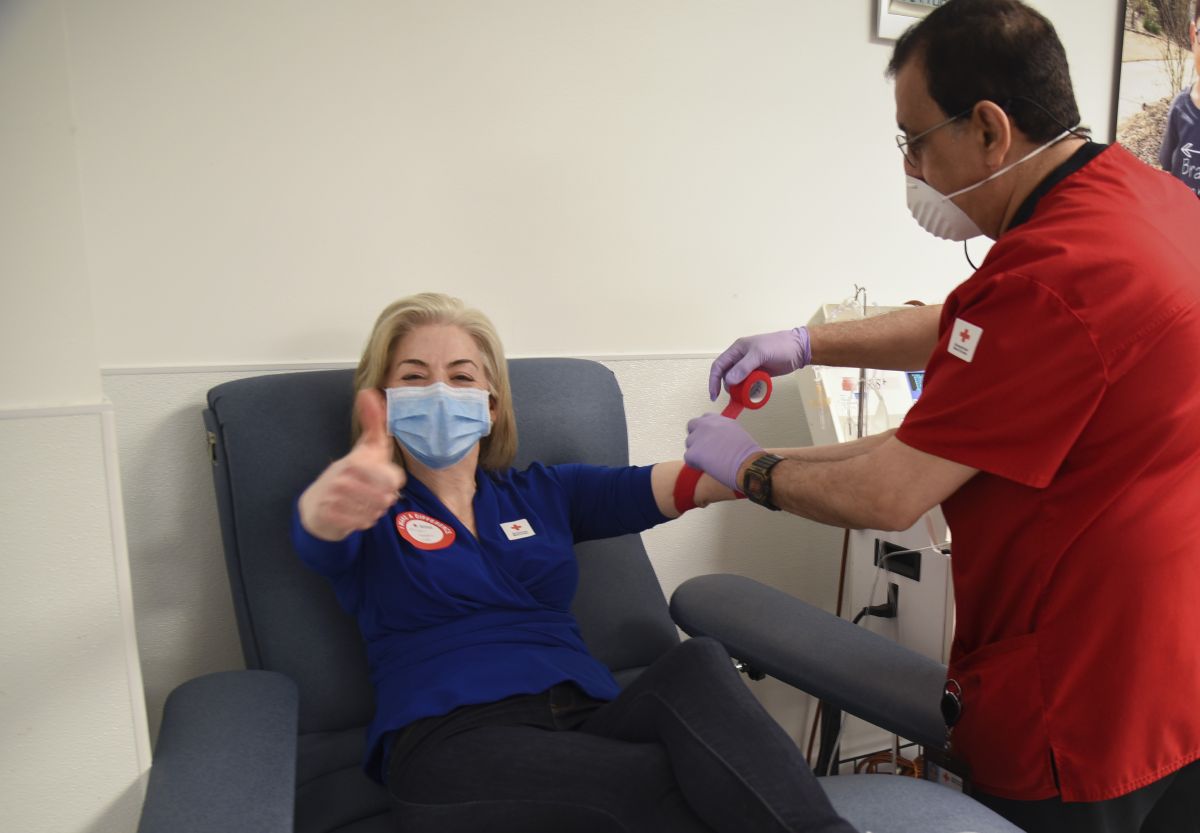
March is the ideal time to step up and “do your bit” as we all battle through this coronavirus siege. If you’re healthy, there’s no better feeling than giving the gift of life with a blood donation. Those who have recovered from COVID-19 are especially needed for their convalescent plasma, which is being used to treat acute COVID cases.
March 31, 2020. Washington, DC
Blood donation at Dr. Charles Drew Donation Center during COVID-19.
Photo by Jeanette Ortiz-Osorio/American Red Cross
If you can’t give time or blood, you can support Red Cross disaster relief activities financially on Giving Day, March 24. Every eight minutes, the Red Cross responds to a home fire or other disaster. A gift of $95, for example, will feed a family of three for a day and provide blankets and other essentials when they need them most.
To learn more about volunteering here in northern Ohio, reach out to Melanie Collins at melanie.collins4@redcross.org or 330-204-6615. To schedule a blood donation, check out redcross.org/blood or download the free Red Cross blood app from your app store. And to make a financial gift, go to redcross.org/donate or call 1-800-REDCROSS.


 NOHredcross