Red Cross: National blood crisis may put patients at risk

Dire situation facing blood supply, those in need of blood transfusions

The American Red Cross is facing a national blood crisis – its worst blood shortage in more than a decade. Dangerously low blood supply levels are posing a concerning risk to patient care and forcing doctors to make difficult decisions about who receives blood transfusions and who will need to wait until more products become available.

Blood and platelet donations are critically needed to help prevent further delays in vital medical treatments, and donors of all blood types – especially type O − are urged to make an appointment now to give in the weeks ahead.

In recent weeks, the Red Cross had less than a one-day supply of critical blood types and has had to limit blood product distributions to hospitals. At times, as much as one-quarter of hospital blood needs are not being met.

Pandemic challenges
The Red Cross continues to confront relentless challenges due to COVID-19, including a out a 10% overall decline in the number of people donating blood as well as ongoing blood drive cancellations and staffing limitations. Additionally, the pandemic has contributed to a 62% drop in blood drives at schools and colleges.

“Winter weather across the country and the recent surge of COVID-19 cases are compounding the already-dire situation facing the blood supply,” said Mike Parks, Regional CEO, American Red Cross of Northern Ohio. “Please, if you are eligible, make an appointment to give blood or platelets in the days and weeks ahead to ensure no patient is forced to wait for critical care.”

Make an appointment to give blood or platelets as soon as possible by using the Red Cross Blood Donor App, visiting RedCrossBlood.org or calling 1-800-RED CROSS (1-800- 733 2767).

Who donations help
Dylan Fink of Stow, Ohio was diagnosed with non-Hodgkin lymphoma in September 2019 at just 14 years old. Because of his chemotherapy treatment, Dylan’s blood counts were drastically low. Over the course of his 100 days in the hospital Dylan needed nine blood transfusions and 11 platelet transfusions. In May 2020, Dylan was able to “ring the bell” at Akron Children’s Hospital, marking his remission.

“In the cancer world, I don’t think people understand how much blood product is needed andjust how important it is,” said Krista Fink, Dylan’s mom.  Read more about Dylan’s story here.

Blood drive safety 
Each Red Cross blood drive and donation center follows the highest standards of safety and infection control, and additional precautions – including face masks for donors and staff, regardless of vaccination status – have been implemented to help protect the health of all those in attendance. Donors are asked to schedule an appointment prior to arriving at the drive. 

Volunteers needed
In addition to blood donors, the Red Cross also needs the help of volunteers to support critical blood collections across the country. Blood drive volunteers play an important role by greeting, registering, answering questions and providing information to blood donors throughout the donation process. Blood transportation specialists – another volunteer opportunity − provide a critical link between blood donors and blood recipients by delivering blood to hospitals in communities across the country. To volunteer to support Red Cross blood collections, visit redcross.org/volunteertoday.
Red Cross responds to weekend home fires, works to make homes safer

Volunteers install smoke alarms, assist people during their darkest hours

A dozen weekend fires kept responders busy in Northern Ohio, as firefighters throughout the region worked hard to prevent loss of life and property, while Red Cross volunteers assisted nearly 3-dozen people who were chased from their homes.

In Toledo, fire affected residents living in an eight-unit apartment building on Friday, January 7.  See coverage of the response here.

In all, 35 people were assisted by the Red Cross, which distributed more than $9,200 in immediate financial assistance, to help residents find safe shelter, food, clothing, and other immediate needs.

Red Cross volunteers provide refreshments for Akron firefighters battling a blaze at the former Lawndale School on 01-10-22. Photo credit: Teresa Greenlief, American
Red Cross volunteer.

Red Cross workers also helped about 40 Akron firefighters on Monday morning, as they battled flames in an abandoned school building, providing snacks and hot beverages on a bitterly cold morning.

On Saturday, several Red Cross
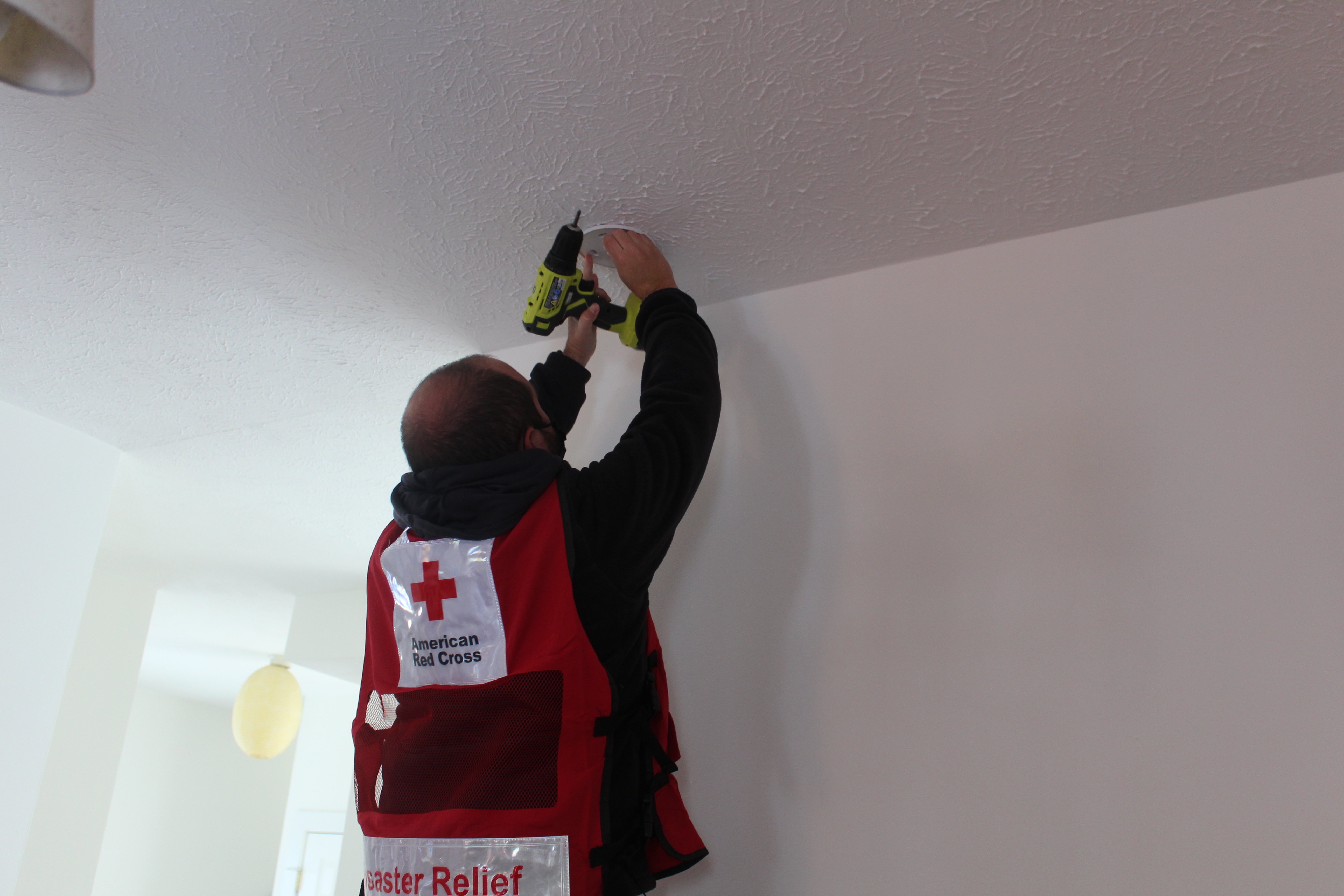
volunteers and the Cleveland Fire Department fanned out in the city’s Detroit-Shoreway neighborhood to install free smoke alarms and provide home fire safety information to residents.  This followed a fatal home fire in the area last month.

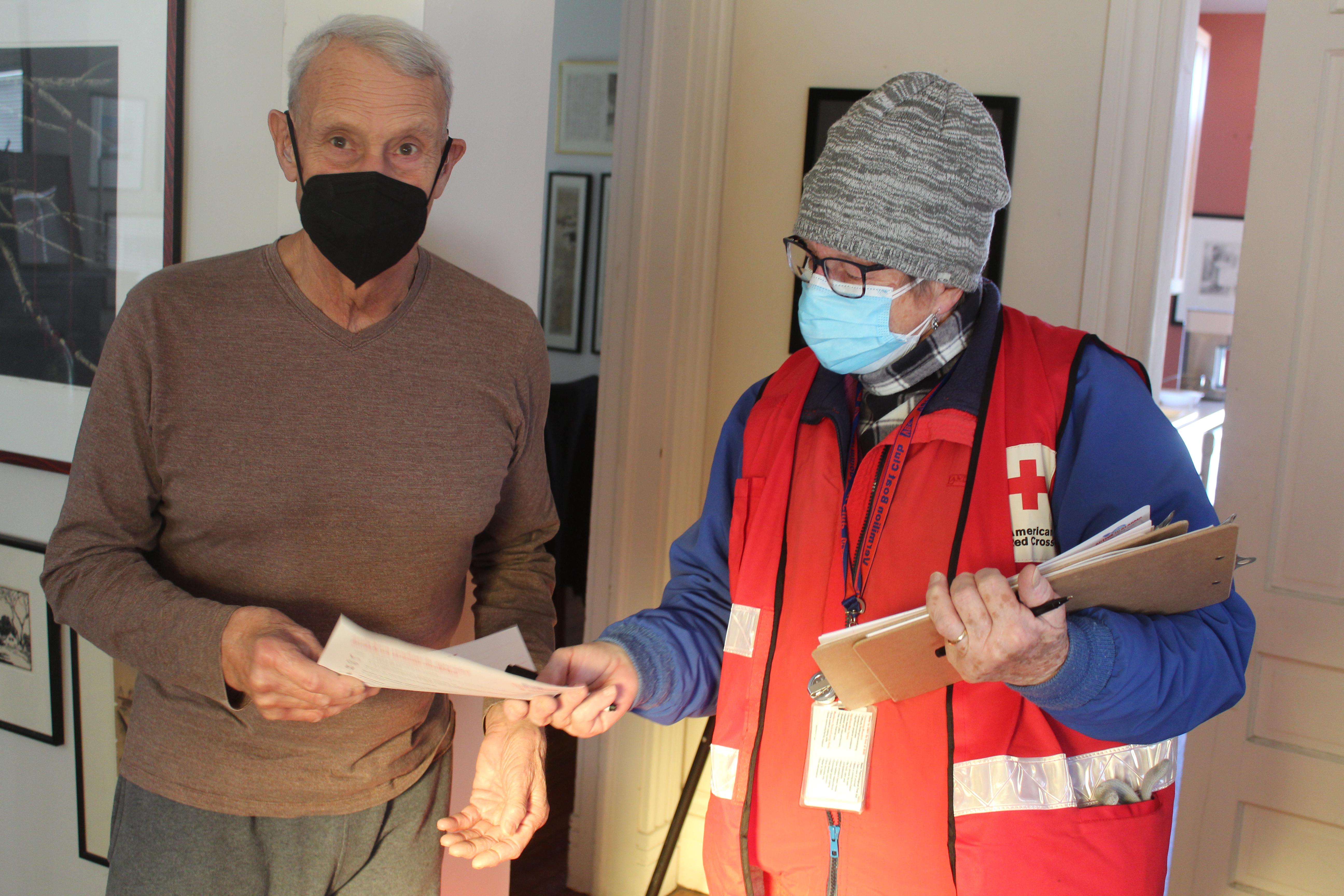
“People don’t stand a chance if there’s no alarm to warn them about a fire,” said homeowner Juan Ramirez, while Red Cross volunteer Benjamin Cutler installed several new alarms in his Franklin Avenue home.  Volunteer Ellen Braun briefed Mr. Ramirez about keeping him and his family safe, including information about testing smoke alarms every month.

“We walk right under it (smoke alarm) every day. You just don’t think about it,” he said.

Marc Ruckel of West Clinton Avenue said he was grateful that the Red Cross was helping him check smoke alarms off his to-do list.  “It’s something I needed to do,” he said, adding, “I just never got around to it.”

Northern Ohio residents can visit soundthealarm.org/noh to request a home fire safety visit, which includes free smoke alarm installations.  Due to the ongoing pandemic, appointments to fulfill smoke alarm requests may be delayed.

For additional photos, visit our Flickr photo album here.

Up your game: Resolve to volunteer!

By Eilene E. Guy, American Red Cross Volunteer

As we come to the end of another year, many of us are thinking about what we can do to make the next year better.

Resolve to lose (or gain) weight? Resolve to spend more wisely? Resolve to be on time?

How about, resolve to volunteer?

The American Red Cross has a wide variety of volunteer opportunities that pay off big time in “job satisfaction.”

“It’s a rewarding experience when you can help somebody,” said Paul Grygier.

Paul Grygier

Paul began his volunteer career as a Disaster Action Team (DAT) member, responding to home fires and other emergencies in Wyandot County, where he lives. In that role he brings compassion, safe accommodations and financial assistance to meet disaster-caused needs. “DAT is a good way to help people in their time of need,” he said.

Dotty Dolwick of West Park, in Cuyahoga County, finds her satisfaction as a blood donor ambassador, welcoming donors, being sure they’ve read important pre-donation materials and answering questions at a couple of blood drives a week.

“It’s a good way to get out with people,” the retired nurse said, adding that she likes the flexibility Red Cross offers its volunteers. “You get to kind of pick and choose where you go, when you go.”

Paul also leads his Red Cross chapter’s Sound The Alarm campaign, which strives to save lives by installing free smoke alarms in every home that needs one (or more). “I’m basically a mechanic,” he explained. “It’s easy for me to do. I like to help the older people who can’t get up on ladders.”

Dotty Dolwick

The Pillowcase Project is another of Paul’s favorites. He gives the Red Cross disaster preparedness presentations to third- through fifth-graders. “You know you’re reinforcing important lessons in an organized fashion,” he said, hoping those messages will spring to mind if the youngsters ever need them.

To explore all the volunteer roles the Red Cross has to offer, visit redcross.org/volunteer or contact your local chapter.

As for me, I wear a few hats with the Red Cross: Communicator, blood donor, chapter board member and financial supporter. These are all volunteer roles.

Eilene Guy

I enjoy spreading the message about what the Red Cross is doing to help people prevent, prepare for, respond to and recover from disasters large and small. Like a lot of other Red Cross activities, it’s something I can do from home; at a time of heightened COVID concern, the Red Cross has modified its activities to keep its staff, volunteers, and those we serve safe.

Serving as a board member and supporting the organization financially may be low-profile activities, but they’re vital for this organization with a big role in our society.

And don’t get me started about how rewarding it is to know that every time I donate blood, I could be saving up to three lives.

Dr. Paul Biedenbach

My ear, nose and throat doctor spotted my Red Cross socks and said proudly that he had just made a Power Red donation, giving two units of red blood cells at one sitting. “They even let me know where my blood is going,” Dr. Paul Biedenbach of Sandusky said. “It’s kinda cool.”

He realizes that giving the gift of life isn’t a casual act: “People need to make an effort, to register in advance. It’s not as easy as just walking into a donation site. But it’s so important.”

As someone said recently, “If I don’t do this, who’s gonna do it?”

So please, make it a happy new year and resolve to volunteer!

Edited by Glenda Bogar, American Red Cross volunteer

Volunteers respond to multiple local disasters; mobilize to assist in national relief efforts after horrific weekend tornadoes

It was another busy weekend for American Red Cross Northern Ohio disaster volunteers. Disaster action team members assisted families in nine counties who were affected by home fires, storms and a building collapse. The Red Cross helped 56 individuals, providing $11,433 in immediate assistance. Tragically, two young children died in one home fire. The Red Cross continues to provide home fire safety information to residents and install smoke alarms for those who need them. To request a smoke alarm, visit this site

December 12, 2021. Bowling Green, Kentucky. Sharon Wilson speaks to Red Cross volunteer Amy Miller and explains what happened to her last Saturday morning. Photo by Marko Kokic/American Red Cross

In addition to responding to local disasters, the Red Cross is deeply saddened by the loss of life and incredible devastation brought by the horrific tornadoes that touched down this weekend across multiple states in the center of the country. Over the weekend, Red Cross personnel and volunteers were busy mobilizing to help assist on large relief efforts in Kentucky, Tennessee, Arkansas, and Missouri to provide safe shelter, comfort and support in the face of one of the most devastating tornado outbreaks in years. Northern Ohio volunteers will be leaving in the coming days along with two emergency response vehicles from the Region, each with a two-person crew.

If you are a current volunteer with the Red Cross, please consider deploying to assist in the relief efforts around the Midwest and southern tornadoes. With such widespread damage, we know families will need support for weeks to come and the Red Cross will be there for as long as we are needed. To be considered for deployment, please update your availability in Volunteer Connection and someone will contact you. The Red Cross also needs additional volunteers who are willing to be trained and to deploy to future disasters.  A two-week commitment is typically required. Visit our website or call 216-431-3328 to apply.

In addition to disaster relief, the Red Cross has also provided approximately 200 additional blood products to hospitals in response to these devastating tornadoes. We remain in contact with our hospital partners throughout the affected areas and stand ready to provide additional blood products as needed. We anticipate Red Cross blood drives in affected communities may be canceled or experience lower donor turnout in the coming days, straining supply levels. We depend on the community to donate blood so we are able to provide it to those in need each day. If you are eligible to give, please schedule an appointment in the coming weeks. If you have questions about your eligibility to give, learn more here or call 1-800-RED CROSS (1-800-733-2767).

Red Cross offers home fire preparedness tips during National Fire Prevention Week

By Chris Chmura, American Red Cross volunteer

Next week is National Fire Prevention Week and the American Red Cross wants to ensure everyone is prepared should they experience a home fire. So far in 2021, Ohio has had 95 home fire fatalities vs. 67 in 2020. 

We lost four on-duty firefighters in 2021 and the year is not over. These heroes were willing to give up their lives to help save lives of fellow Ohioans.  

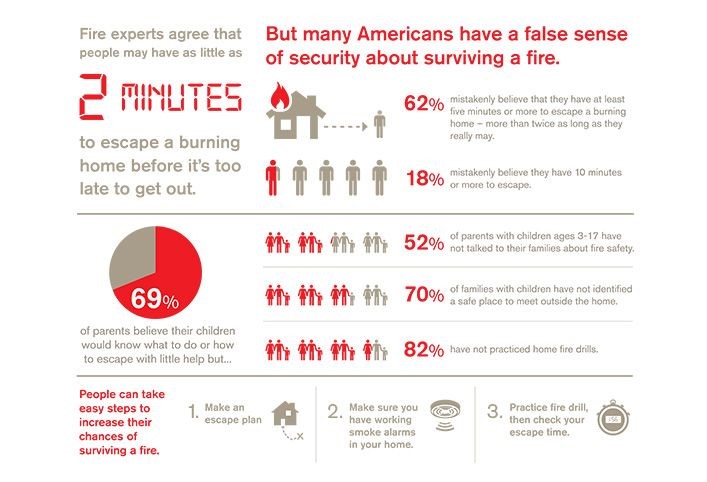
Could your family escape in 2 minutes in case of a home fire?

A survey conducted for the Red Cross, shows that people mistakenly believe they have more time than they really do to escape a burning home. Fire experts agree that people may have as little as two minutes to escape before it’s too late to get out. But most Americans (62%) mistakenly believe they have at least five minutes to escape, more than twice the amount they have. Nearly 18% mistakenly believe they have ten minutes or more to get out. 

The American Red Cross urges everyone prepare by practicing their home fire escape plan and testing their smoke alarms.

1. Practice a 2-Minute Fire Drill 

Use our worksheet to draw your home’s floor plan and plot your escape routes. 

  • Practice your 2-minute drill (from home to a safe meeting place) at least twice a year.
  • Everyone in your household should know two ways to escape from each room in your home. 
  • In a real fire, remember to get out, stay out and call 911. Never go back inside for people, pets or things. 

2. Test Your Smoke Alarms Monthly

Test your smoke alarms monthly by pressing the test button. 

  • You should hear three beeps, letting you know the alarm is working. 
  • Don’t hear the beeps? Then it’s time to change the batteries if your model requires them.
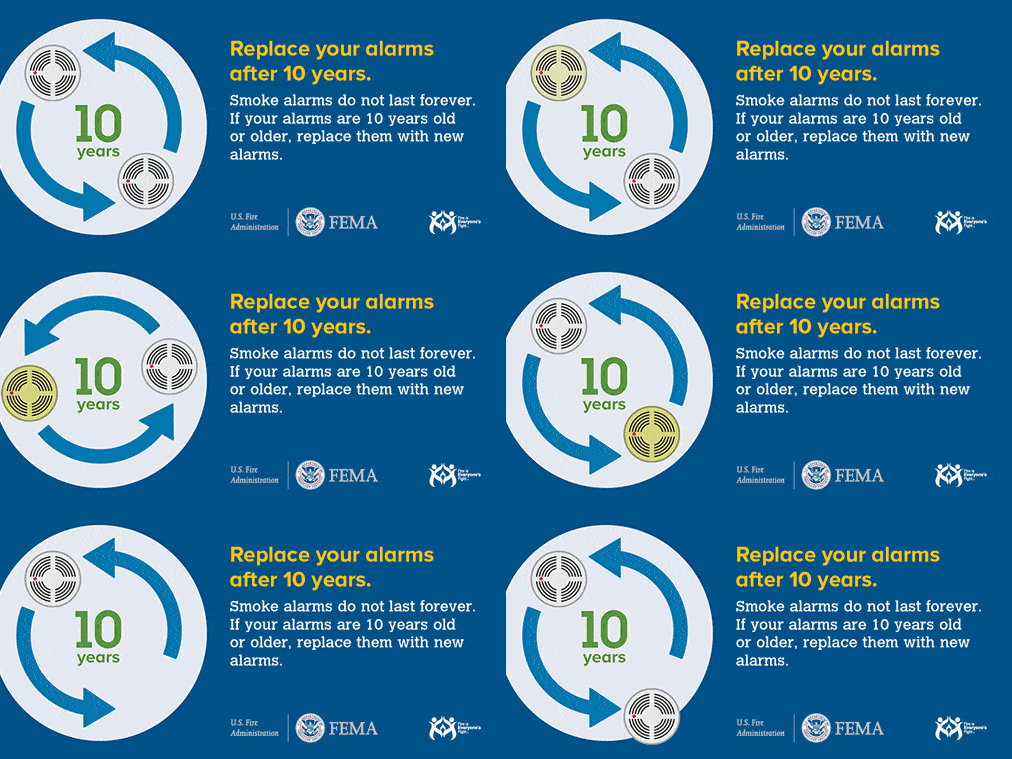
  • If your smoke alarm is 10 years old, it’s time to get a new alarm because the sensor becomes less sensitive over time. 

Teach kids about preparedness

Our age-appropriate preparedness materials include engaging activities and easy action steps that youth will find both fun and effective.

Volunteer to help those affected by home fires

Join your local Red Cross to help families prepare for, respond to, and recover from home fire. The need for volunteers continues amidst a busy disaster season. Disaster action team members from the Red Cross Northern Ohio Region responded to nine local events over the weekend, all of them home fires. Several individuals were affected, including 30 adults and 7 children. The Red Cross provided more than $10,400 in immediate assistance.

Make a donation

Your financial gift allows the Red Cross to provide food, comfort and aid to those who have lost their home to fire. It also helps us install free smoke alarms and educate families on fire safety.

Be prepared before disaster strikes

Be prepared for disasters and other emergencies with a well-stocked emergency kit for your home, workplace and automobile. Choose from a variety of survival kits and emergency preparedness supplies to help you plan ahead for tornadoes, flooding, fire and other disasters.

Giving back this Good Neighbor Day

By Sam Pudelski, American Red Cross volunteer

National Good Neighbor Day is September 28, a day that celebrates our neighbors and encourages us to get to know our community better. Neighbors look out for one another and help each other out.

Good Neighbor Day was created in the 1970s in Lakeside, Montana, and President Jimmy Carter in 1978 proclaimed the day, saying: “Understanding, love and respect build cohesive families and communities. The same bonds cement our nation and the nations of the world. For most of us, this sense of community is nurtured and expressed in our neighborhoods where we give each other an opportunity to share and feel part of a larger family.”

Neighbors extend past the individuals who share a common wall or property line. At the American Red Cross, our communities are our neighbors. Whether they are next door or beyond, the Red Cross works to help and support individuals who are in need—after a disaster, when a blood donation is needed or preparing before the next disaster strikes.

This Good Neighbor Day, there are many ways you can give back to your Northern Ohio neighbors through the Red Cross.

  • Donate. There are different ways you can make a financial contribution to support the work of the Red Cross, both in your local community and around the world.
  • Give Blood. Donating blood is a simple thing you can do to help save lives. Blood donations help people going through cancer treatment, having surgery, who have chronic illnesses and those who experience traumatic injuries. The Red Cross holds blood drives across Northern Ohio every week. You can find and sign up for an upcoming blood drive here.
  • Volunteer. 90% of the Red Cross workforce are volunteers. There are a variety of volunteer opportunities available right here in our area. You can learn more and apply to be a volunteer in Northern Ohio here.
  • Learn a Lifesaving Skill. The Red Cross has been teaching emergency and safety training for more than a century. You can learn first aid, be trained in administering CPR or using an AED, to be prepared for when a need for these skills arises. You can review and sign up for a class here.

There are endless possibilities of ways you can be a good neighbor and help give back to the community. You never know how one small act of kindness can impact a neighbor near you.

Edited by Glenda Bogar, American Red Cross volunteer

Multiple weekend home fires keep Red Cross volunteers busy

Need for volunteers continues amidst busy disaster season

Disaster action team members from the American Red Cross Northern Ohio Region responded to nine local events over the weekend, all of them home fires. Several individuals were affected, including 30 adults and 7 children. The Red Cross provided more than $10,400 in immediate assistance.

Home fires continue to be the main disaster affecting people in our area. In Northern Ohio, the Red Cross responds to an average of 3 home fires every day. And, tragically, recent home fires in the area have resulted in fatalities. The need for home fire safety doesn’t end during a pandemic. We urge everyone to take steps to keep their household safe by installing and maintaining smoke alarms, talking with loved ones about fire safety and creating and practicing a home fire escape plan. Learn more and download resources now to help your family prepare.

The Red Cross also has a need for volunteers to assist families who have been affected by local disasters, often a home fire. From offering a caring and compassionate ear, to meeting the disaster-caused needs of individuals and households, such as lodging and clothing, and connecting them with long term recovery services, our volunteers ensure that families don’t have to face tough times alone. During the pandemic, for the safety of you and those impacted by disaster, you will mostly respond virtually to provide compassionate and immediate care and assistance to those impacted. On occasion, a larger response may require some on-scene presence and coordination with your Disaster Action Team. To sign up, visit RedCross.org/volunteer.

The Red Cross is responding to local disasters and continues to assist those affected by natural disasters across the country, including the western wildfires and Hurricane Ida. The Northern Ohio Region currently has 13 individuals from our area deployed across the country. We expect to see the need for volunteers to deploy to continue in the coming months, as hurricane season continues.

The Red Cross could not continue to fulfill its humanitarian mission without the generous support of the American public. If you are not able to volunteer at this time, consider making a financial donation to help us provide the necessary resources for those facing disaster. Visit redcross.org, call 1-800-RED CROSS or text REDCROSS to 90999 to make a $10 gift. The Red Cross also has an ongoing need for blood and platelet donors. To schedule an appointment, visit RedCrossBlood.org.

Back-to-back disasters require nationwide Red Cross response

More than a thousand volunteers deploy to help those affected by wildfires, Hurricane Ida and flooding

Back-to-back massive disasters have more than 1,200 American Red Cross volunteers, including 32 from Northern Ohio, working tirelessly from coast to coast right now providing food, shelter and comfort to thousands of people in need. We are working around the clock with our partners to provide help to people struggling with the heartbreaking damage left behind by Hurricane Ida.

The Red Cross is working to provide help to people struggling with the massive flooding caused by the remnants of Hurricane Ida. Wednesday night, some 430 people sought refuge in 13 Red Cross and community shelters across Virginia, Maryland, Pennsylvania, New Jersey and New York. Some 130 trained Red Cross workers are on the ground now to support relief efforts. The Red Cross and its partners have already provided some 1,300 meals and snacks and distributed more than 100 relief items. Trained Red Cross volunteers have already made nearly 100 contacts providing emotional support, health services and spiritual care for people who’ve been evacuated.

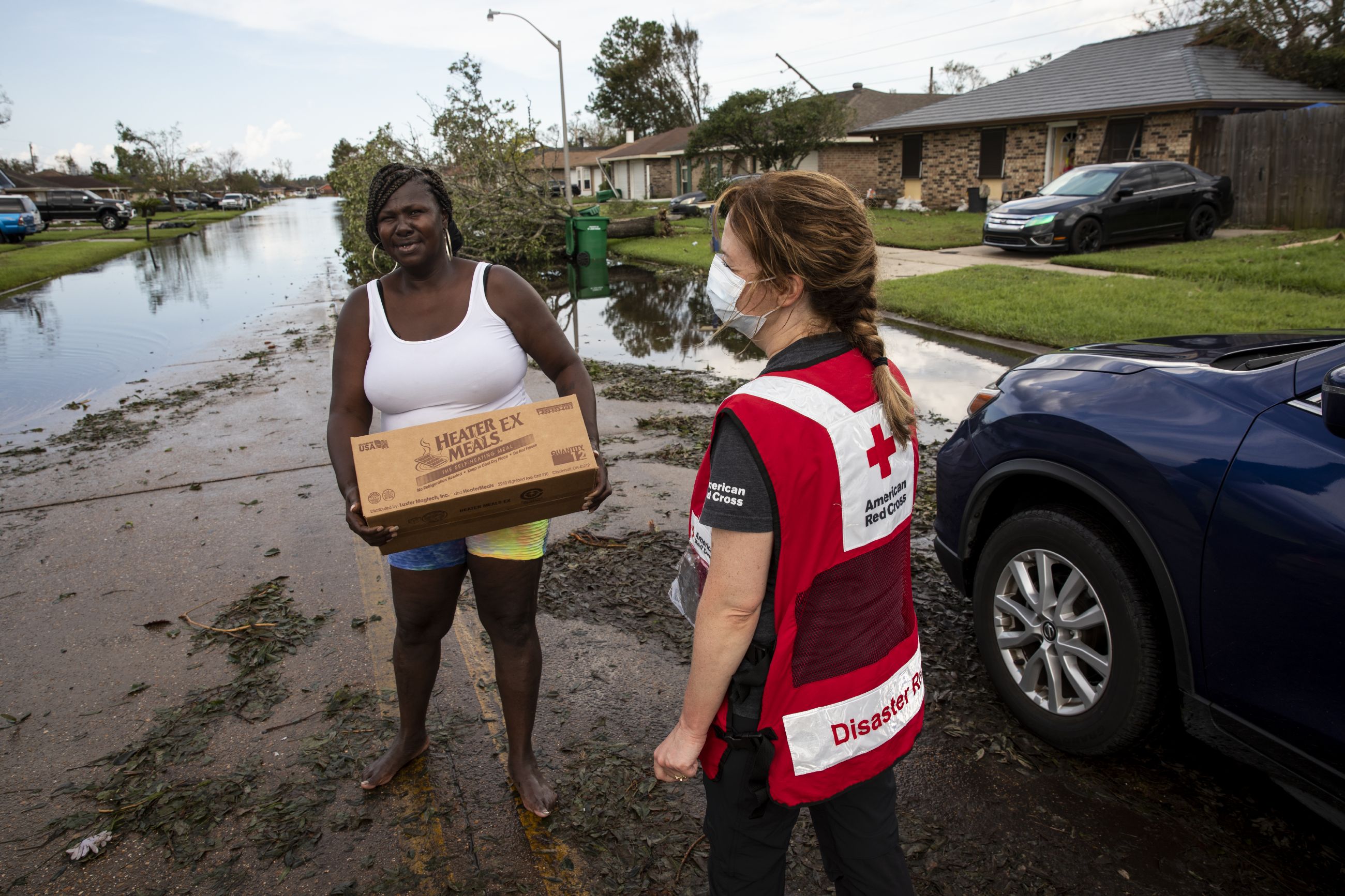
Wendy Halsey of the American Red Cross hands boxes of Meals Ready to Eat (MRE) to Cassandra Simon in LaPace, LA, one of the areas of Louisiana which suffered extreme damage from Hurricane Ida. Photo by Scott Dalton/American Red Cross

While massive flooding affected many states in the northern U.S., many southern states continue to deal with the aftermath Ida. Nearly 900 trained Red Cross workers are on the ground now to support relief efforts. The Red Cross and our partners have provided nearly 51,000 meals and snacks and distributed more than 16,000 relief items to people in need.

And, in the midst of responding to Hurricane Ida, the Red Cross continues to help people in California where tens of thousands of people are under evacuation orders as massive wildfires continue to spread. Red Cross workers have been on the ground since June helping evacuees find a safe place to stay, food to eat and emotional support during this heartbreaking time.

Red Cross volunteer Dave Wagner looks over damage from the Dixie Fire in Greenville, CA, a small town that was devastated by the fire on Saturday, August 7, 2021. Photo by Scott Dalton/American Red Cross

The Red Cross expects to respond to more disasters in the coming months, as the season is only beginning. Financial donations enable the Red Cross to prepare for, respond to and help people recover from disasters. To give, visit redcross.org or call 1-800-RED CROSS.

Individuals in unaffected areas of the country are urged to make an appointment to give blood to ensure a sufficient blood supply remains available for patients. Schedule a blood or platelet donation appointment by using the Red Cross Blood Donor app, visiting RedCrossBlood.org or calling 1-800-RED CROSS (800-733- 2767).

The Red Cross needs more volunteers now. If you have the time, you can make a significant impact. Review our most urgently needed volunteer positions at redcross.org/volunteertoday.
Local volunteers and blood donors needed for busy disaster season

Many weather experts predict a destructive wildfire and hurricane season this year. The American Red Cross needs volunteers to help people who are affected by these disasters.

“We’re preparing for another extremely busy disaster season, and it’s critical to have a trained, ready volunteer workforce to make sure we can provide relief at a moment’s notice,” said Mike Parks, Regional CEO, American Red Cross of Northern Ohio. “This year’s wildfire season is already very active and dangerous because of the severe drought and dry woodlands across the west. And experts are predicting we could see 10 or more hurricanes in the upcoming weeks.”

“We’re preparing for another extremely busy disaster season, and it’s critical to have a trained, ready volunteer workforce to make sure we can provide relief at a moment’s notice.”

Mike Parks, Regional CEO, American Red Cross of Northern Ohio

SHELTER VOLUNTEERS AND HEALTH PROFESSIONALS NEEDED

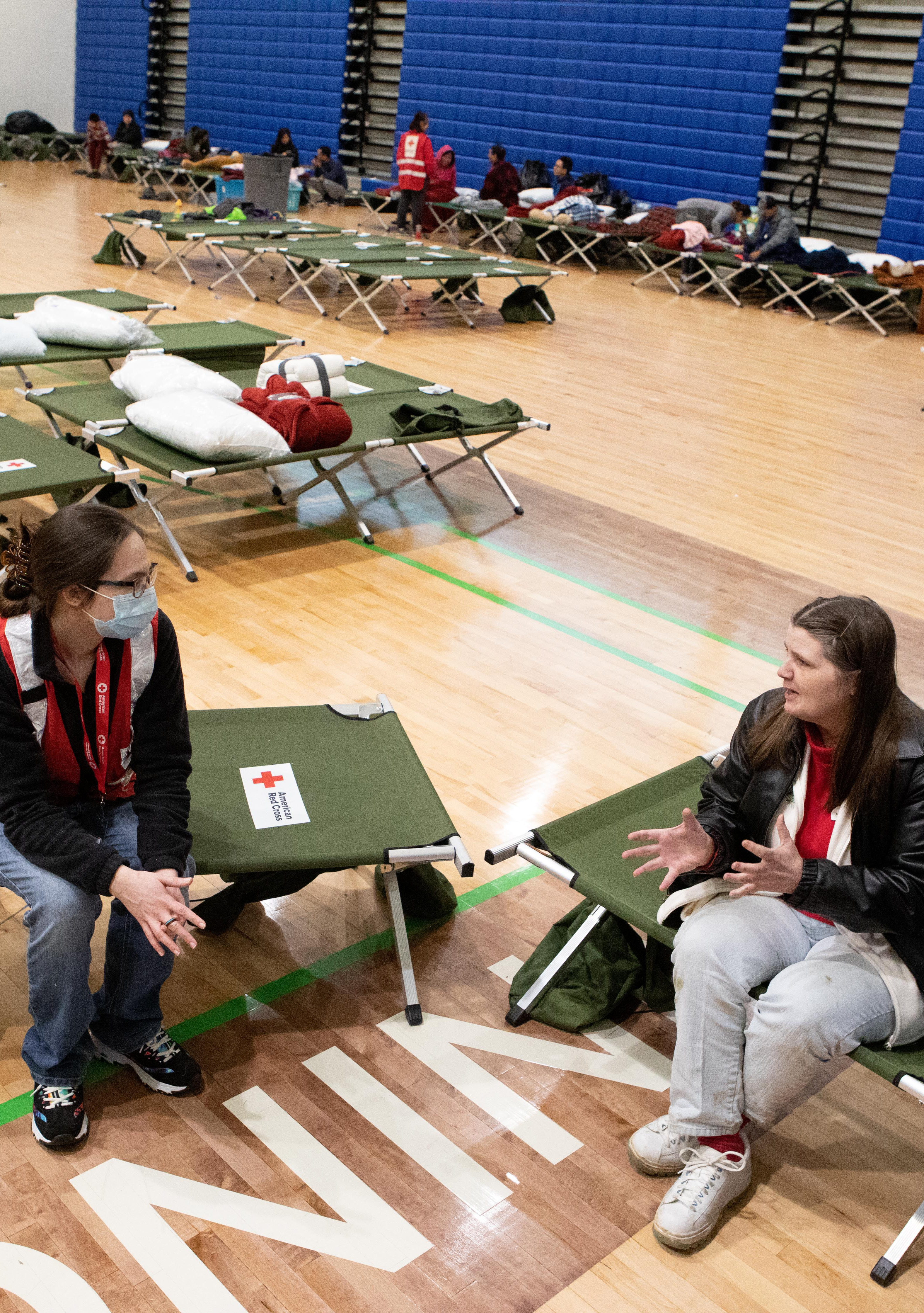
The Red Cross needs new volunteers to support disaster shelters. Volunteers will help with reception, registration, food distribution, dormitory, information collection and other vital tasks inside disaster shelters. Both entry and supervisory-level opportunities are available.

The Red Cross also needs volunteers who can work in disaster shelters to address people’s health needs and provide hands-on care in alignment with their professional licensure (registered nurse and licensed practical nurse/licensed vocational nurse). Daily observation and health screening for COVID-19-like illness among shelter residents may also be required. If you are an RN, LPN, LVN, APRN, NP, EMT, paramedic, MD/DO or PA with a current and unencumbered license, this position could be right for you.

Red Cross volunteer Dave Wagner looks out damage from the Dixie Fire on the outskirts of Greenville, CA, a small town that was devastated by the fire on Saturday, August 7, 2021. Many of the evacuated residents found shelter with the Red Cross in nearby Quincy and Susanville, CA.
Photo by Scott Dalton/American Red Cross

DISASTER ACTION TEAM MEMBER

Local Disaster Action Teams provide 24-hour emergency response to local disasters, particularly home fires, ensuring that those affected have access to resources for basic necessities such as food, shelter and clothing. If you are team-oriented and want to help your neighbor, the DAT responder may be just the thing for you.

Disaster Action Team members from Northern Ohio respond to a fire in Lakewood on Aug. 4, 2021.

At 1 p.m. today, the Red Cross will host a Facebook Live event where our experts will discuss the various volunteer roles and how you can get involved in helping families after disasters here locally and across the country. Tune in to learn more and get your volunteer questions answered.

Last year, the Northern Ohio Region provided immediate emergency assistance to more than 5,100 people after nearly 1,200 home fires and other disasters.

If you can’t join us this afternoon but are interested in helping your community when disasters occur, you can sign up online or contact our area offices at 216-431-3328 or neovolunteer@redcross.org.

BLOOD AND PLATELET DONORS NEEDED

Wildfires, record-breaking heat and a busy hurricane season can also impact the nation’s blood supply. On top of the toll extreme weather events take on the lives of millions, disasters can cause blood drive closures or prevent donors from being able to give safely. Eligible donors can help overcome the critical need for blood and ensure blood is readily available by making an appointment to give by using the Red Cross Blood Donor App, visiting RedCrossBlood.org, calling 1-800-RED CROSS (1-800-733-2767) or enabling the Blood Donor Skill on any Alexa Echo device.

The power of personal connections: Transitioning back to in-person disaster response

By Tim Poe, American Red Cross volunteer

As we emerge from the COVID-19 pandemic, many American Red Cross services are transitioning back to being in-person, especially in Disaster Response and Sheltering. While virtual response and other safety measures helped the Red Cross effectively respond to disasters during the height of the pandemic, in-person assistance was missed. As Mike Arthur, regional mass care and logistics manager for Northern Ohio, explained, the ability to provide hot coffee and a hug can mean a great deal.

In addition to Mike, I spoke with Tom Revolinsky, Red Cross disaster program manager for Northeast Ohio, and volunteer Mark Cline, whose many responsibilities include serving as lead for Disaster Action Team (DAT) and Sheltering Applications in Northern Ohio. Each spoke about how effective an in-person connection is for Red Cross responders and clients recovering from a disaster.

Red Cross volunteers respond to an apartment fire

Tom said the transition began a month ago and is going very well. The DAT team is ensuring volunteers are comfortable with the change, and it is safe. As we learn more, he said, we will adapt to ensure everyone’s safety.

Currently, 80% of disaster responses in our region are in-person. For the other 20%, virtual response remains the best option. Northern Ohio DAT has been highly active. Over the past two weekends they responded to 14 home fires, assisting 73 people.

Mark said an in-person meeting gives a chance to better connect with those in need of assistance, as it is much more personal. Similarly, Tom spoke of how meeting in-person better provides the opportunity to give hope, show someone cares and help with recovery. 

Tom recalled how after an exceptionally busy day, he received a late-night call to respond following a home fire. Upon arrival, he met a woman, in tears, sitting in front of her burned-out house. His being there greatly helped, provided comfort, and she soon moved from tears to smiles. Tom said it was empowering for him.

Disaster responder Jan Cooper assists resident Gabriella Asseff after a condo fire in Westlake

I had similar experiences during my time with DAT. The instances when I could see a person begin to recover, to smile and hope again, remain with me.

As for sheltering following a large disaster—fortunately not common in our region—Mike and Tom said congregate housing is now the first option. This will ensure enough space is available, as many hotels are currently near capacity. Safety protocols will be in place. Both Tom and Mike said the Red Cross remains flexible and adapts to each situation, and non-congregate housing remains an option.

Such adaptability has been a hallmark of the Red Cross. When the pandemic necessitated virtual responses to disasters, the DAT team responded. Additionally, technology implemented during the pandemic is also helping with in-person responses.

For many of us, the pandemic underscored the importance of personal connections, especially following a disaster. Thankfully, Northern Ohio DAT responders can provide that again, offering financial assistance along with comfort, hugs and hope.