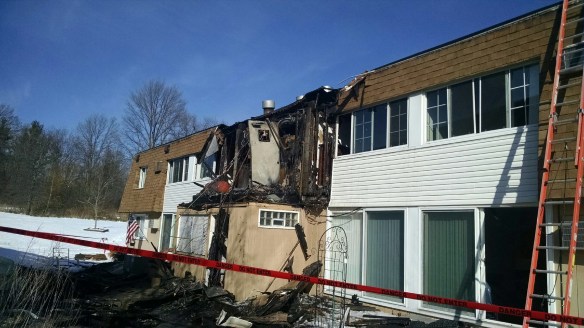
Photo credit: Cal Pusateri/American Red Cross Volunteer
Winter has finally decided to show up. With it has come deep snow in most areas of our region, and cold temperatures.
Given the increase in the number of carbon monoxide emergencies during cold snaps (like in this story), we want to remind you to exercise caution when heating your home.
Carbon monoxide is an invisible, odorless and silent killer that, nationally, claims hundreds of lives each year. A threat year round, carbon monoxide poisoning tends to increase when storms and power outages force people to turn to unsafe alternative heat sources such as fuel-burning appliances, gas generators, camp stoves and charcoal grills and use them in confined spaces.
The best way to keep your family safe during this time is to install carbon monoxide alarms and learn how to reduce the risk of carbon monoxide poisoning.
“Every home should have at least one carbon monoxide alarm in addition to their smoke alarms,” said Tim O’Toole, Regional Disaster Officer of the Red Cross of Northeast Ohio. “If there is only one carbon monoxide detector, it should be in or near sleeping areas. Both carbon monoxide and smoke alarms are relatively inexpensive and easy-to-maintain devices that have been proven to save lives. There are even models that feature a combined smoke and carbon monoxide alarm.”
Follow these safety recommendations:
- Furnaces and other natural gas fired appliances should be serviced once a year.
- Install carbon monoxide alarms in central locations on every level of your home and outside sleeping areas (avoid corners where air does not circulate). Test the alarm every month.
- Have heating systems (including chimneys and vents) inspected and serviced annually, checking for blockages, corrosion, and partial and complete disconnections.
- Never use a generator, grill or camp stove inside a home, garage or basement.
- Do not use gas appliances such as ranges, ovens or clothes dryers to heat your home.
- Know the symptoms of carbon monoxide poisoning: headache, dizziness, weakness, nausea, vomiting, sleepiness, and confusion. If you suspect carbon monoxide poisoning, move quickly to a fresh air location, and then call 9-1-1.
- Treat the alarm signal as a real emergency each time. If the alarm sounds and you are not experiencing any symptoms described above, press the reset button. If the alarm continues to sound, call the fire department.
Download the Red Cross First Aid App at redcross.org/apps to get access to life-saving information on what to do for common, everyday first aid emergencies.
For more Red Cross fire safety and preparedness information, visit redcross.org/homefires.




 On the First Day of Christmas, the Red Cross recommends that you install a SMOKE ALARM. Smoke alarms should be installed on every level of a home; outside bedrooms on the ceiling or high on the wall, at the top of open stairways and at the bottom of enclosed stairs and near (but not in) the kitchen. It is important to check your Smoke Alarms every month and replace their batteries when Daylight Savings Time begins in the spring and ends in the fall.
 On the Second Day of Christmas, the Red Cross recommends that you install a CARBON MONOXIDE (CO2) ALARM. Carbon Monoxide Alarms should be placed in hallways throughout the home. They should also be placed in recreational vehicles and on boats.
 On the Third Day of Christmas, the Red Cross recommends that you install a FIRE EXTINGUISHER. Install A-B-C type Fire Extinguishers in the home and teach all household members how to use them.
 On the Fourth Day of Christmas, the Red Cross recommends that you install a FIRE ESCAPE LADDER. Homes with more than one floor should have at least one Fire Escape Ladder stored on all floors, other than ground level. Store these ladders where they are easily accessible.
 On the Fifth Day of Christmas, the Red Cross recommends that you assemble a
  On the Sixth Day of Christmas, the Red Cross recommends that you assemble a
  On the Seventh Day of Christmas, the Red Cross recommends that you acquire a WEATHER RADIO. As the voice of the National Weather Service, a Weather Radio provides continuous broadcasts of the latest weather information directly from a National Weather Service Forecast Office. During severe weather routine broadcasting is interrupted and special watch and warning messages are issued.
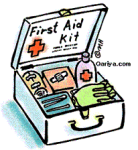 On the Eighth Day of Christmas, the Red Cross recommends that you get a
  On the Ninth Day of Christmas, the Red Cross recommends that you attend
  On the Tenth Day of Christmas, the Red Cross recommends that you purchase HOUSE NUMBERS. Each home should have its number posted clearly on the front door, over the doorway, or elsewhere on the front so emergency responders can easily locate it. Lives and property can be saved simply by using adequate house numbers placed where emergency workers can find them. You can purchase numbers at your local hardware store.
 On the Eleventh Day of Christmas, the Red Cross recommends that you purchase a FLASHLIGHT. As simple as a Flashlight is, it can become a very important tool to use during and after a disaster. Every family disaster supplies kit should contain a flashlight and spare batteries.
 On the Twelfth Day of Christmas, the Red Cross recommends that you create an