As extreme weather events increase, so does the need for Red Cross services and volunteers

2024 is predicted to be an extremely active year

By Tim Poe, American Red Cross Volunteer

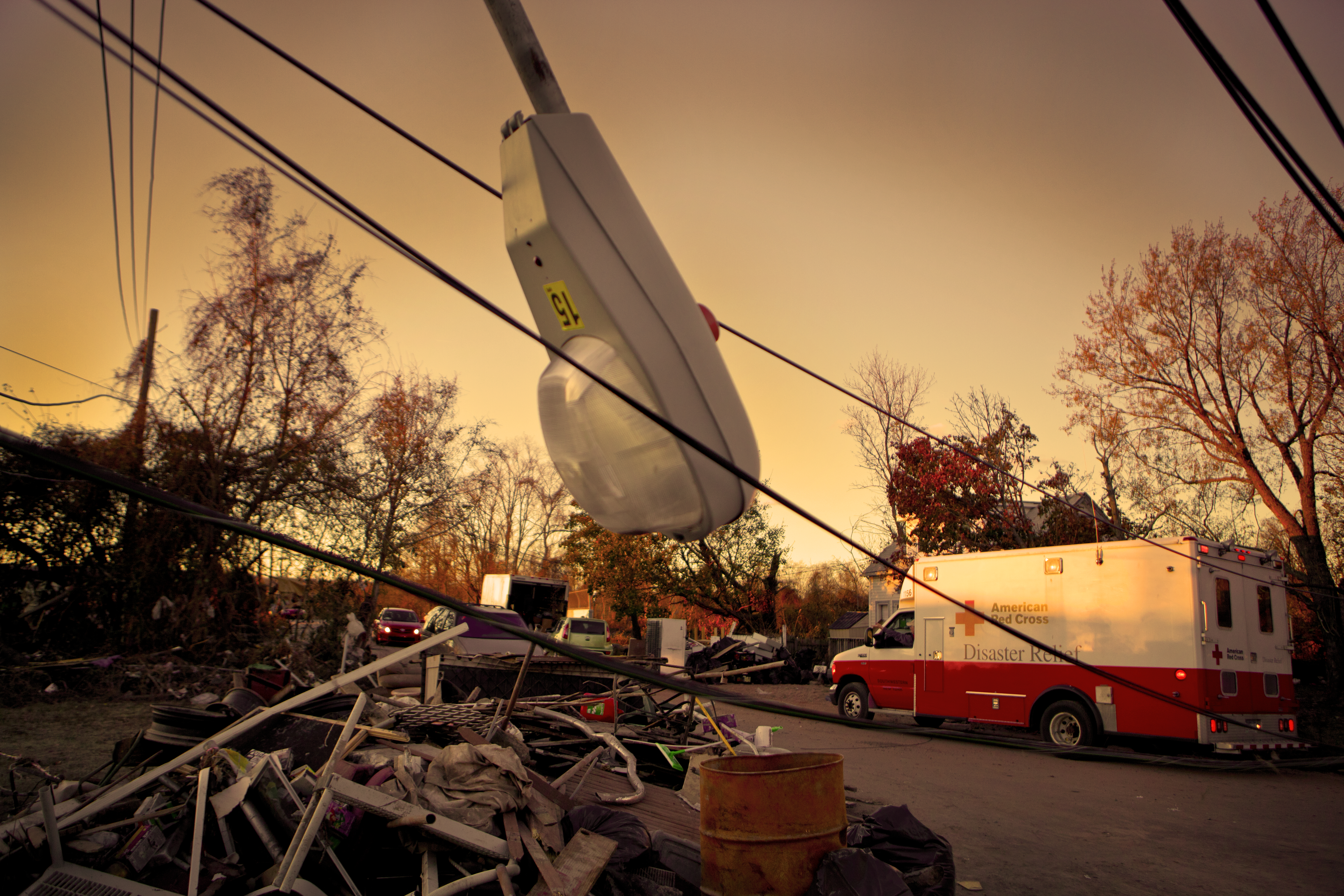
Polyrhythms of raindrops drum at the window, accented by rolling bellows of thunder, a severe late May storm approaches. Lights flicker. I am relieved the roof, damaged weeks ago, has finally been repaired. Yet as a Northern Ohio resident I am fortunate, as the region is less prone to natural disasters. Earlier, I watched reports from the latest of this spring’s tornado outbreaks. Amidst the catastrophic scenes, as always, American Red Cross volunteers and staff members are there, ensuring those impacted have food, shelter, care, comfort, and resources to begin recovering.

March 30, 2023. Amory, Mississippi. Red Crosser Eric Besson examines damage to a home on Thursday in Amory, Miss. As many as 2,000 structures across Mississippi received major damage or were destroyed by tornadoes on March 24. More than 380 trained Red Cross disaster workers are on the ground in Mississippi, Georgia and Alabama, as the nonprofit organization works with partners to make sure everyone has a safe place to stay, meals, emotional support and comfort in the aftermath of deadly tornadoes on March 24. Photo by Scott Dalton/American Red Cross

As extreme weather events become more frequent and severe–and 2024 is predicted to be an exceptionally active year–the need for Red Cross services is increasing. Already, the Red Cross responds to almost twice as many large disasters than it did a decade ago, and in just the last 10 months, 125 volunteers from Northern Ohio have assisted residents affected by hurricanes and wildfires across the U.S. Four Northern Ohio volunteers are currently deployed to Texas and Iowa.

As eventful as 2023 was, with weather-related disasters forcing an estimated 2.5 million people from their homes, one-third of them for longer than a month, according to the New York Times, 2024 may be even more severe.

The National Oceanic and Atmospheric Administration (NOAA) reports that, as of May 8, 2024, the US has had seven confirmed weather/climate disaster events, each with losses over $1 billion, resulting in the deaths of 70 people. The NOAA also states there were 384 preliminary tornado reports in April, more than double the 1991-2020 average and the second highest April count on record.

March 31, 2023. Rolling Fork, Mississippi. Red Crosser Yolanda Gainwell visits with Karebya Christmas on Friday outside Christmas’ heavily damaged home in Rolling Fork, Miss. Christmas was home with her three children – ranging in age from 2 to 11 years old – when the tornado arrived. Just like Christmas’ grandmother taught her, she brought the family into the bathtub and put a pillow on top of them. No one was injured, but her home suffered major damages, disrupting their lives, as well as the self-owned business she ran from the home. On Friday, Christmas received help at a drive-through distribution center, where the Red Cross and partners distributed rakes, shovels, totes, clean-up kits, flashlights, batteries and more. Displaced, Christmas is staying at a hotel in Ridgeland, Miss. until at least Monday. As she finished talking with Gainwell, Christmas thanked her for coming to talk with her at her home, but with the damage rendering it uninhabitable, she hesitated to call it a home. “I don’t know what to call it – my blessing in disguise, maybe,” she said. Photo by Scott Dalton/American Red Cross

As summer approaches, the likelihood of an extremely active hurricane season and above-average wildfire season looms. Jim McIntyre, Regional Communications Director for the American Red Cross, Northern Ohio Region, recently conducted an interview with meteorologist Trent Magill of WEWS News 5. Jim and Trent discussed recent events, the need for planning and Red Cross services, and the outlook for the hurricane and severe storm season. Trent states, “everything we’re seeing shows above average intensity,” and that “it’s going to be a rough season.” Continuing, Trent says “Everyone should have a plan.”

Hopefully, you are wondering what you can do. For one, make sure you are prepared and have a plan. For another, please consider volunteering with the Red Cross. Volunteers account for 90% of the Red Cross workforce and represent a wide array of cultures, backgrounds, ages, gender identities, lifestyles, and beliefs, just like those we serve. Everyone is welcome, and free online training is provided.
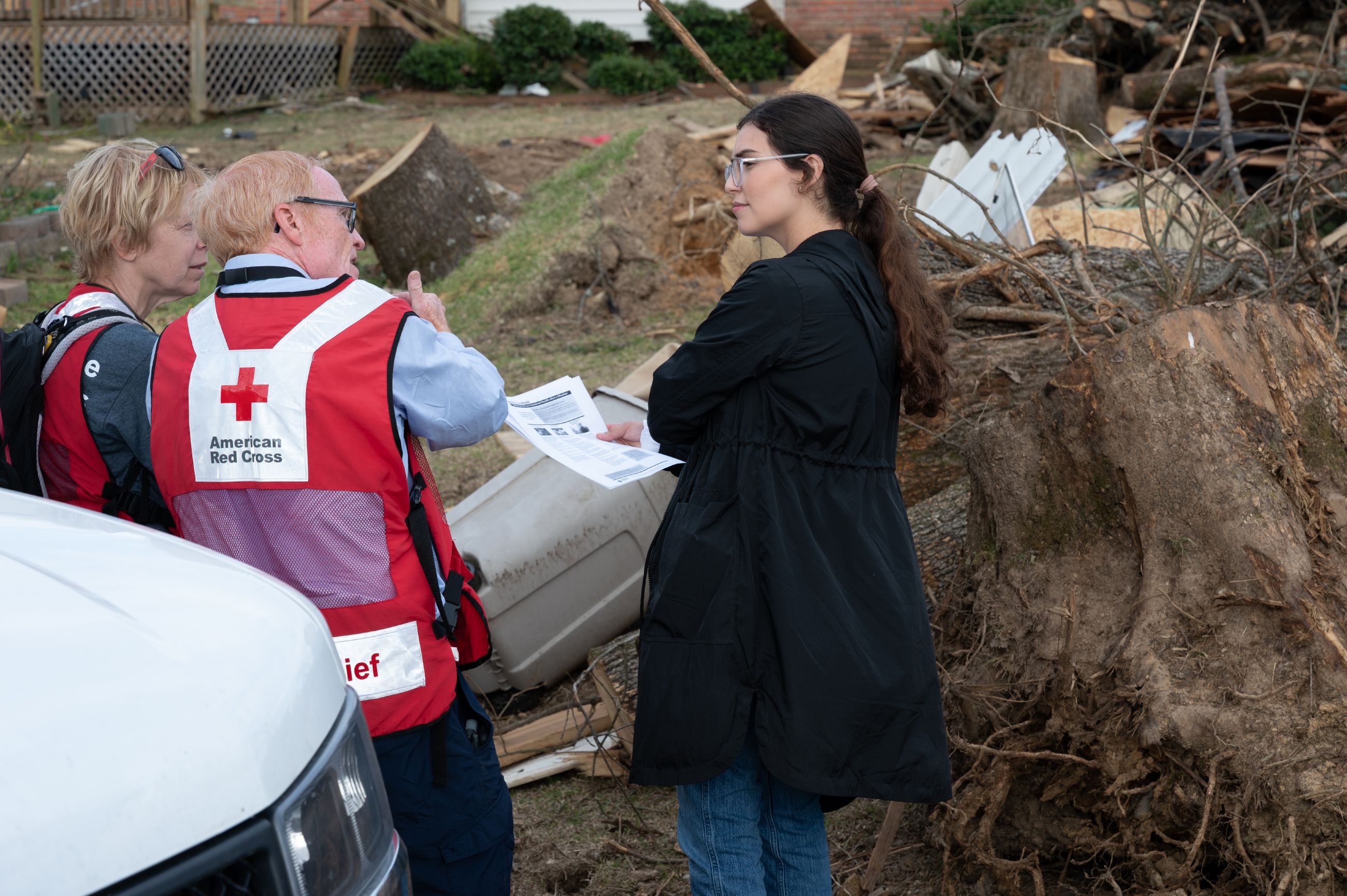
April 9, 2023. Little Rock, Arkansas. William Burkey, a member of the Red Cross disaster mental health team, and Jamie Harms, a member of the disaster health services team, work together to bring comfort and hope to Paula Rocha, whose home was damaged by a tornado that struck Little Rock, Arkansas, and several nearby towns. Photo by Kevin Suttlehan/American Red Cross

Three key positions are especially needed: Disaster Action Team volunteers, who help families in need following a disaster; Shelter Services volunteers, who support day-to-day activities in an emergency shelter; and Disaster Health or Mental Health Services volunteers, who use their professional skills as licensed healthcare providers to assist those impacted by a disaster. Please consider joining, as I can personally attest you will work alongside outstanding people and the see difference Red Cross services provide.

Posted by Ryan Lang, American Red Cross board member and volunteer
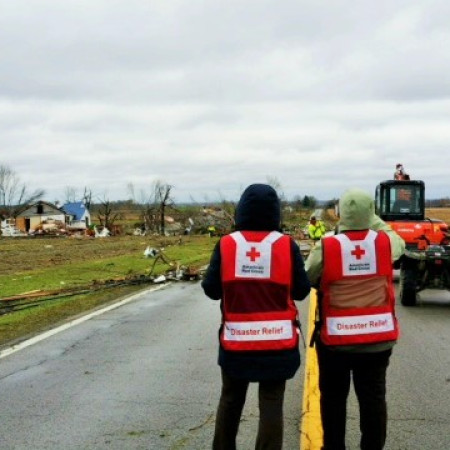
    How to keep safe this severe weather season

    By Sam Pudelski, Red Cross volunteer

    Now that it’s spring, the storms that come along with the season and summer months also arrive. While many rainy days are part of the season, Northeast Ohio usually experiences several severe weather events throughout the year. The American Red Cross has tips to help keep you and your loved ones safe when severe weather strikes.

    Severe Weather Safety

    If thunderstorms are likely to occur, postpone outdoor activities. Many people who are struck by lightning aren’t in the area of a storm where it is raining.

    Watch for storm signs – these can include darkening skies, lightning and increasing wind. If thunder roars, head indoors! If you can hear thunder, you are close enough to be in danger of being stuck by lightning.

    If a severe thunderstorm warning is issued for your area and arrives:
    – Take shelter in a substantial building. If you aren’t near a building, shelter in a vehicle with the windows closed. Make sure to get out of mobile homes, as they can blow over in high winds.
    – If you’re driving, make your way to safely exit the road and park. Stay in your vehicle and turn on the emergency flashers so other cars on the road can see you until any heavy rain ends.
    If you are outside and are unable to seek shelter inside of a safe building or vehicle, avoid high ground, water, tall or isolated trees and metal objects, such as fences and bleachers. Picnic shelters, dugouts, sheds and pavilions are not considered safe shelters.
    Keep away from windows.
    Don’t take a bath, shower, wash dishes or use plumbing.

    If a tornado warning is issued for your area:
    – Move to an underground shelter, basement or safe room. If none of these are available to you, moving to a small, windowless interior room or hallway on the lowest level of a sturdy building is the safest alternative.
    Note: No area of a mobile home is safe during a tornado. If you have access to a sturdy shelter or a vehicle, move to this immediately.
    – If you are able to, go to the nearest local emergency shelter.

    Superstorm Sandy 2012 November 5, 2012. Photo by Talia Frenkel/American Red Cross

    If someone is struck by lightning:
    – Call for help immediately. Call 9-1-1 or your local emergency number. Anyone who has been struck by lightning requires professional medical care. Check the person for burns and other inquiries.
    – If the person has stopped breathing, call 9-1-1 and begin CPR. If the person is breathing normally, look for other possible injuries and care for them as necessary.
    – People who have been struck by lightning do not retain an electrical charge in their body.

    Flooding Safety
    Flooding often occurs following a hurricane, thawing snow or several days of sustained rain. Flash floods, on the other hand, occur suddenly due to rapidly rising water along a stream, body of water or low-lying area.

    If there is a flood risk in your area:
    – Listen to local radio, NOAA or TV news stations for the latest updates and information about weather in your area.
    – Be prepared to evacuate quickly if you need to evacuate. Know your routes and destinations ahead of time. Find a local emergency shelter.
    – Check your emergency kit and replenish any items missing or that are in short supply, such as medical supplies and medications.

    If you have pets or livestock:

    • Consider a precautionary evacuation of your animals, especially any
      large or numerous animals. Waiting until the last minute could be
      fatal for them and dangerous for you.
    • Where possible, move livestock to higher ground. If using a horse or
      other trailer to evacuate your animals, move sooner rather than later.
    • Bring your companion animals indoors and maintain direct control of
      them. Be sure that your pet emergency kit is ready to go in case of
      evacuation.

    For more information on how to prepare and respond in a severe weather emergency, visit redcross.org.

    Edited by Glenda Bogar, Red Cross volunteer

    NEO Shelter Closes

    The longest-running shelter operation in Northeast Ohio in recent memory has ended.

    For 11 nights, residents of the Loganberry Ridge Apartments in Richmond Heights spentIMG_6247 the overnights away from their homes, with some of their neighbors and American Red Cross workers as they waited for their homes to be deemed safe enough to reoccupy.  A fire on July 20, 2018 forced them from their apartments, and repairs kept them away until July 31.
    IMG_6280

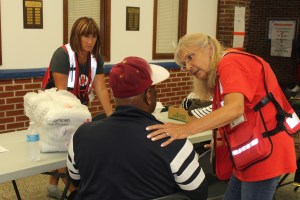
    Red Cross volunteers Monica Bunner, left, and Sue Wisdom with a shelter resident


    During that time, more than 50 Red Cross volunteers staffed the shelter, 24 hours a day.  The shelter operation began at Richmond Heights High School, where officials were able to move quickly to help accommodate nine residents the first night.  Due to previously scheduled school activities, the shelter location moved to the Christian Assembly Church on nearby Chardon Road, where an average of seven residents took shelter for the next nine nights.

    “We operated a shelter for seven days in 2006, when the Grand River flooded in Painesville,” said Debbie Chitester, who has worked for the Red Cross in Northeast Ohio for more than 25 years.  She served as Director of Operations for the Richmond Heights shelter.  “We made sure the residents were safe, and tried to give them a home away from home.”

    “Every one of my needs have been met,” said Tracy Foster, one of the Richmond Heights residents who stayed in the shelter. “I’ve had plenty of water, plenty of sandwiches, lunch, breakfast and dinner.”  Tracy was featured in a video on day three of the shelter operation.

    Almost 1,000 meals and snacks were served during the 11-night shelter operation.  The cost of food and water, logistics, technology, and immediate financial assistance the Red Cross committed to giving residents affected by the fire totaled nearly $11,000.  The funds for assisting victims of disasters are only available because of the generosity of donors, and the power of volunteers, who mobilize every time disaster strikes in Northeast Ohio and across the country.  You can donate to the Red Cross or volunteer to help your neighbors during their darkest hours by visiting redcross.org/neo.

    See more photos from the shelter operation here.

    Shelter Closes, But Casework Continues

    Red Cross Workers Continue to Assist Dozens of Residents Forced to Flee from Fire

    A shelter operated by the Red Cross for residents of the Studio City Apartments in Cuyahoga Falls closed today, after Red Cross caseworkers were able to ensure that all residents in need of shelter had suitable alternative housing.

    Since Friday, April 14th, the Red Cross has been providing safe shelter, warm meals and comfort care daily for up to six residents who otherwise would have had no other housing alternatives.

    “We are extremely grateful to the Cuyahoga Falls City Schools and the Riverfront YMCA for providing the space for us to operate a shelter for these residents,” said Tim O’Toole, Regional Disaster Officer in Northeast Ohio.  “And we are especially grateful to the dedicated volunteers, many of whom gave up family time over the Easter holiday weekend, to provide the services that were needed following last week’s fire.”

    Shelter Residents from Cuyahoga Falls play basketball with Red Cross Volunteers on Easter Sunday.  Photo credit: Zackery McAvoy/American Red Cross

    Although the shelter has closed, Red Cross assistance will continue for the foreseeable future, as nearly 80 people who were forced to flee their homes on Thursday, April 13 are getting help from caseworkers, who are meeting with residents one-on-one to create recovery plans, navigate paperwork and locate help from other agencies.  Most of the work is being done by volunteers, who have received specialized training to help people following a disaster.

    The Red Cross has a need for additional volunteers to help when the next disaster occurs.  Volunteer opportunities include not only casework and shelter help, but also response immediately following disasters, when people often experience their darkest hours.  Those interested in becoming trained Red Cross volunteers can visit redcross.org/neo, or call 216-431-3328 to begin the application process.

    shelter

     Red Cross shelter workers created this display to express their appreciation for the use of  Gordon Dewitt Elementary School in Cuyahoga Falls as a shelter over Easter weekend.

    Meeting the challenges of Northeast Ohio Weather – May edition

    Even before the storm clouds rolled over the radar screen, the hub at the Red Cross in Cleveland was readying its response to the coming storm.

    On Monday, while the wind and rain howled throughout the region, members of our disaster response team began to initiate the first stages of the plan. Red Cross workers began the work of setting up a shelter for the residents of North Ridgeville, who had to be evacuated by boats due to the rising flood waters.

    Summit and Portage County Board Member, Leonard Foster, loads a clean-up kit at the chapter.

    Summit and Portage County Board Member, Leonard Foster, loads a clean-up kit at the chapter.

    As the sun rose on Tuesday volunteers and staff were loading up the Red Cross vehicles to begin the process of observing, collecting, assessing, processing and recording information on each affected areas. The information obtained in this assessment helps the Red Cross determine how to respond to a disaster and what supplies will be required.

    Our process starts with an area assessment and then moves to looking at individual homes to see what specific damage has been wrought by the storm – checking water levels in the basement or living space of a home and seeing if it is still inhabitable.

    In the case of one Stow area family, where a basement wall had collapsed allowing mud and debris to slide into the home, we were able to help start the process of repairing the wall so that they will be able to stay in their home.

    The Red Cross Emergency Response Vehicle (ERV) loaded with bleach and buckets donated by Home Depot, May 2014

    The Red Cross Emergency Response Vehicle (ERV) loaded with bleach and buckets donated by Home Depot, May 2014

    In other areas of Summit, Medina and Lorain Counties, we provided residents with clean-up kits containing disinfectant, a mop, a bucket and information about how to begin cleaning up the mess the storm and water had left in their homes. In some areas, we also passed out bleach, a donation from Home Depot.

    If you are still looking for information on how to clean your basement, check out this link to our Repairing your Flooded Home booklet.

    Back in North Ridgeville, we loaded up our Emergency Response Vehicle and set out through the streets, providing food to the residents who were there making their own assessments of the damage to their properties.

    We cannot say enough to praise the many volunteers who left their own flooded basements to help other members in their community and in neighboring counties. If you are interested in joining their ranks, you can get started as a volunteer by signing up through our website.

    If you would like to financially contribute to the clean-up effort, please visit www.redcross.org/donate or contact your local chapter.