Apartment building residents placed in short-term housing

Red Cross sheltering operations cease after six days

Residents of the Terrace Towers apartments in East Cleveland have been relocated to other short-term housing options, and the shelter operated by the American Red Cross has closed.
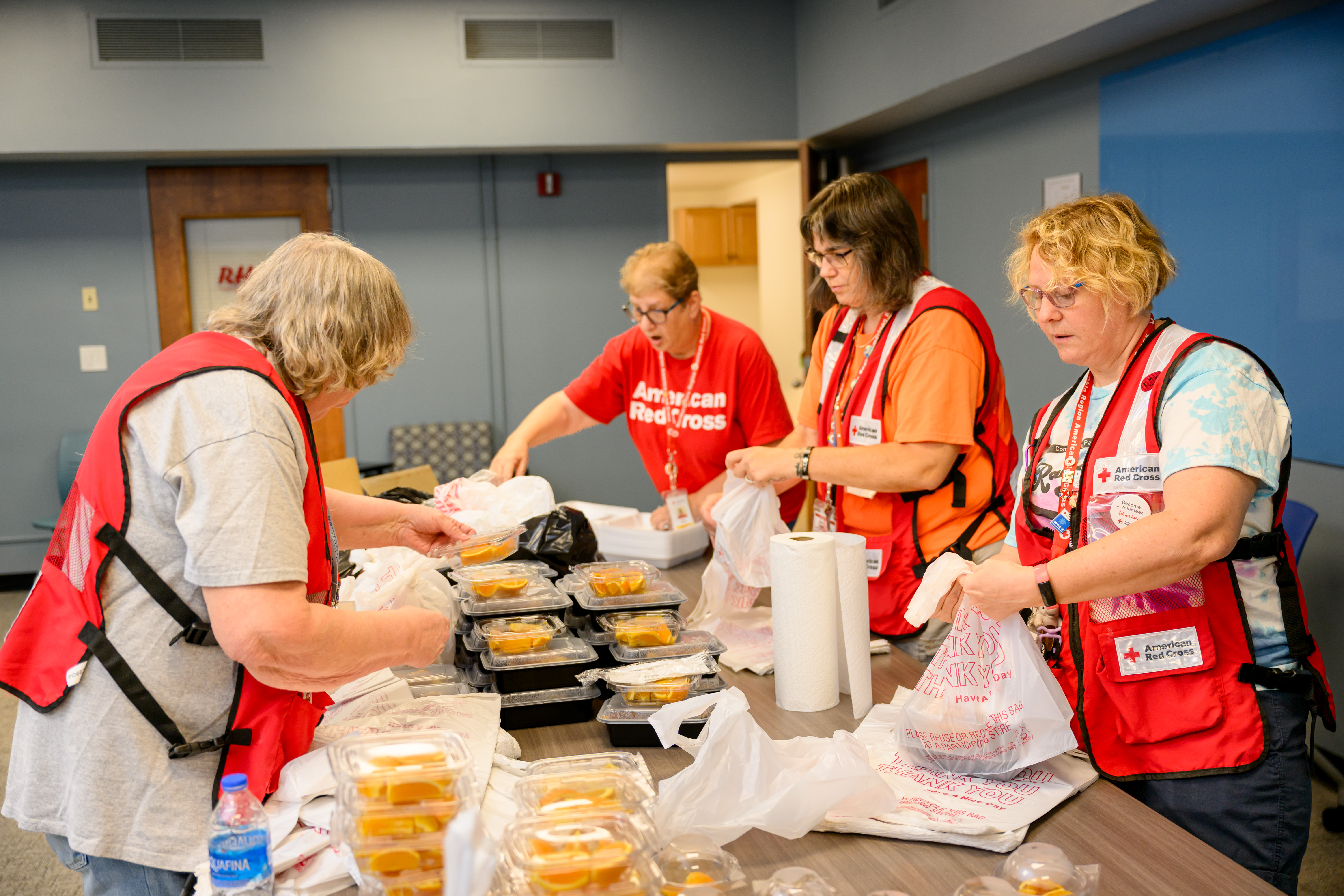
Red Cross workers preparing meal distribution.  Photo credit: Cuyahoga County Multimedia

More than 130 residents took refuge in the shelter for six nights, after fire forced them to flee on Monday, July 3rd . They took refuge the first two nights at the Salvation Army East Cleveland Corps Community Center. On Wednesday, the shelter was transferred to a dormitory at Case Western Reserve University. The shelter closed on Sunday.

It was the largest sheltering operation in Northern Ohio since 2004.

 Tom Revolinsky, Red Cross disaster program manager, and Alfreda Scott, Terrace Towers resident.  Photo credit:  American Red Cross

“We made a lot of friends,” said Tom Revolinsky, Disaster Program Manager for the Red Cross of Northeast Ohio. “A lot of the residents were understandably upset when they were forced out of their homes on the night before the fourth of July, but by the time they left the shelter on Sunday, we were getting lots of hugs.”

During the six nights of shelter operations, the Red Cross provided:
 525 overnight shelter stays
 2,023 meals
 304 health services
 256 comfort kits (personal hygiene items)
 125 blankets
 Continuous emotional support

Officials with RHM Real Estate Group, the Terrace Towers property management firm, is providing alternative housing options for the residents while repairs to the apartment complex are being made.

“We’re grateful to Terrace Towers property management for working so diligently this week to find alternative lodging for their residents,” said Emily Probst, Regional Disaster Officer for the Red Cross of Northern Ohio. “And we thank the Salvation Army for providing space for the first two nights, and Case Western Reserve University for opening one of their dormitories to these residents.”

Emmanuel Grant, Terrace Towers resident.  Photo credit: American Red Cross

Emmanuel Grant, one of the residents of Terrace Towers who took refuge at the Red Cross shelter, said, “One thing I appreciate about the Red Cross; they follow scripture when it said to extend hospitality, caring for your neighbor. So these things have really been a blessing.”

Alfreda Scott, Terrace Towers resident. Photo credit: American Red Cross

“My experience, believe it or not, has been wonderful,” said shelter resident Alfreda Scott. “It’s just been like a nice community, and everyone’s been hugging and supporting each other, and it’s been wonderful.”

She said once her housing situation stabilizes, she plans to become a Red Cross volunteer.

“I made some new friends.”

You can hear more from Emmanuel and Alfreda in this video here.

See more photos here.

Red Cross and County Emergency Management workers.  Photo credit:  Cuyahoga County Multimedia

The Red Cross received assistance from several organizations, including the Cuyahoga County Office of Emergency Management, and several businesses stepped-up to provide meals, including Bon Appetit, Case Western Reserve University’s food service provider.

“No one organization can carry out such a challenging task alone, and we’re thankful for all the help the residents received,” said Probst. “We’re also indebted to our dedicated volunteer workforce. We could not have provided such valuable assistance without them.”

To learn more about volunteer opportunities with the Red Cross, visit redcross.org/volunteer.

Posted by Ryan Lang, Red Cross board member and volunteer

Tips to keep your pet safe the remainder of winter

.By Chris Chmura, American Red Cross volunteer

Despite a few days of above normal temperatures, winter is baaaack! The American Red Cross would like to share some useful tips to help your family pets get safely through the rest of this winter season.

The American Red Cross and the Humane Society of the United States recommend following these basic steps to keep your pets safe during Ohio’s long winter months:

Bring your pets inside, especially if you’ll be gone for several hours.

The American Society for the Prevention of Cruelty to Animals ®  (ASPCA ®) reports if pets are left outdoors, they can freeze, become disoriented, lost, stolen, injured, or killed. In addition, don’t leave pets alone in a car during cold weather, as cars can act as refrigerators that hold in the cold and cause animals to freeze to death.

If pets cannot come indoors, make sure they are protected by a dry, draft free enclosure. Make it large enough to allow them to sit and lie down, but small enough to hold in the pet’s body heat.

Raise the enclosure floor a few inches off the ground and cover it with cedar shavings or straw. Turn the enclosure away from the wind and cover the doorway with waterproof burlap or heavy plastic.

Make sure your animals have access to non-frozen drinking water. If you keep food and water outside, make sure their access to food and water is not blocked by snow drifts, ice or other obstacles.

Salt and other chemicals used to melt snow and ice can irritate a pet’s paws. Wipe their paws with a damp towel before your pet licks them and irritates their mouth. The ASPCA adds that you can also use petroleum jelly or booties to protect sensitive paws. Use pet-friendly ice melt products.

If you make shelter space in your garage, shed or other secondary building, check for chemical spills and wipe up any you find before your pet can come in contact with it. Antifreeze (for example) is sweet and attracts pets, but it a deadly poison. Store antifreeze out of reach.

Move other animals or livestock to sheltered areas and make sure they have access to non-frozen drinking water. If the animals are outside, make sure their access to food and water is not blocked by snow drifts, ice, or other obstacles.

Photo of Tye, provided by Christy Peters

Take care of their coat and skin. To avoid itchy, flaking skin, the ASPCA recommends keeping your home humidified and towel dry your pet as soon as he or she comes inside. Pay special attention to paws and in-between the toes. Remove any snow from between foot pads. If possible, keep your dog’s coat longer in winter for warmth. If your dog is short-haired, consider getting a coat or sweater for your pet. Keep pet bathing to a minimum when it’s cold to avoid dry skin. If your pet needs a bath, use a moisturizing shampoo.

Know your pet’s limits outdoors. The American Veterinary Medical Association (AVMA) reports you should be aware of how your pet tolerates cold weather and adjust as needed. Consult your veterinarian if you need advice.

Check your engine. A warm vehicle engine can be an appealing heat source for outdoor and feral cats, but it’s deadly. Check underneath your car, bang on the hood, and honk the horn before starting the engine to make sure a cat hasn’t taken refuge on your engine.

Use space heaters with caution. The heater can burn your pet or be knocked over, possibly starting a home fire.

Watch for hypothermia. If your pet is whining, shivering, anxious, slower than usual or stops moving, seems weak or starts looking for warm places to burrow, get them back inside quickly because they are showing signs of hypothermia. Frostbite is harder to detect and may not be fully recognized until a few days after the damage is done. If you suspect your pet has hypothermia or frostbite, consult your veterinarian immediately.

Be prepared: Winter can bring blizzards and power outages. Prepare an emergency kit and include your pet in your plans. Have enough food, water, and medicine (including any prescription medications as well as heartworm and flea/tick preventives) on hand to get through at least five days.

Avoid walking on frozen water. Stay away from frozen ponds, lakes, and other water. You don’t know if the ice will support your pet’s weight and falling through the ice could be deadly.

Photo of Winnie provided by Chris Chmura

Can I bring my dog to a Red Cross shelter?

Most American Red Cross shelters cannot accept pets because of health and safety concerns and other considerations. Service animals that assist people with disabilities are allowed in Red Cross shelters. Know which friends, relatives, boarding facilities, animal shelters or veterinarians can care for your animals in an emergency.

Download the Red Cross Pet First Aid app to put veterinary advice for everyday pet emergencies in the palm of your hand. With videos, interactive quizzes and simple step-by step advice it’s never been easier to know Pet First Aid.

More Resources for Pet Owners:
Pet Disaster Safety
Protect Your Pets from Heat
Pet Travel Safety
Pet Fire Safety

Edited by Glenda Bogar, American Red Cross volunteer