
By Sue Wilson, American Red Cross Board Member and Volunteer Leader
 Today is the first official day of summer, although we’ve already had a number of days with temperatures into the 90’s. Heat and humidity can be uncomfortable for us, but it is far more uncomfortable, even dangerous for our pets. Here are some tips for keeping your pets safe in hot weather.
Never, ever leave your pets in the car. It seems obvious, but we still see so many people who want to bring their dogs along for the ride. Many justify this by saying their dogs love car rides, and love to be with them. But running in to the store for “just 5-minutes” put your dog in jeopardy.
First, of all, what if you get distracted? What if there is a long line at the check-out? 5 minutes turns into 10 while the temperature in your car soars. On an 75-degree day, temps can reach over a 100 within 30 minutes, even with the car window cracked.
If you see a pet in a hot car, take action. Take down the make, model and license of the car and go into the place of business to report it. Call the non-emergency number for the police to report the situation. And you can get involved by asking store managers at local restaurants, malls, and businesses to put up signs asking customers to not leave their pets in their cars.
The Humane Society has things you can do if you see a dog in a hot car.
Some dogs are more prone to have difficulty in hot weather than others. Dogs with short snouts, heavy fur, that are overweight, or breathing issues are are higher risk of heat stroke. If you notice heavy panting, fast pulse or any of these symptoms, take immediate action to cool down your pet. Dogs with white colored early are more susceptible to skin cancers, so keep your dog out of direct sunlight in the summer for long periods.
Hot asphalt is dangerous to pads. A dog’s feet pads are tender, and burn easily. The rule is, if it is too hot for your bare feet, do not walk your dog on it as it is too hot for their feet too. Walk your dog on the grass. Dogs sweat through their feet so their paws are an important temperature gauge and their pads must be protected.
Provide shade and water Keep plenty of fresh cool water available for your dog inside and out. Carry a water bottle with you on walks and keep a portable collapsible pet bowl with you to keep your dog from dehydrating. If your pets spend lots of time outside provide a spot with plenty of shade. Tarps or tree shade are better than a dog house, as they provide air flow. Dog houses often make the heat worse. In excessive heat, many dogs love a small baby pool filled with water to cool off. Add ice to water bowls.
Download the Red Cross Pet First Aid App for more information on how to include Pets in emergency preparedness plans, in case of a natural disaster or other emergency situations. The app also features instructions for first aid emergencies. Find the app in your app store or you can text GETPET to 90999 for a link to download or go here redcross.org/apps. You can also take the Red Cross First Aid online course. Access the course here redcross.org/catdogfirstaid and go through the content at your own pace.
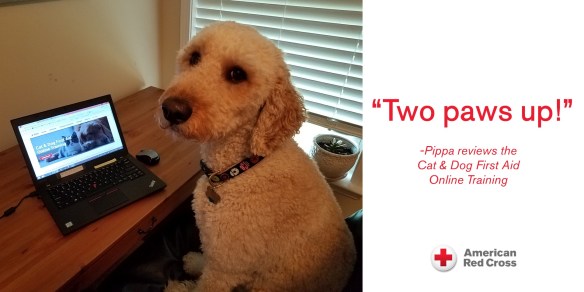
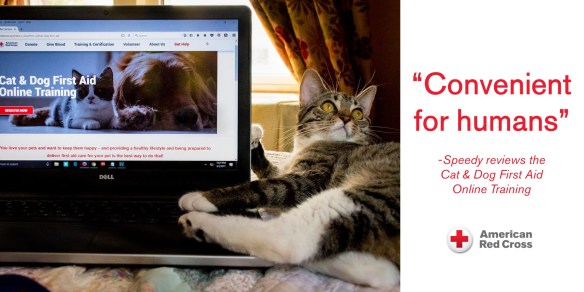 The app will also help cat and dog owners keep their pets safe by learning what emergency supplies to have, when they should contact their veterinarian, and where to find a pet care facility or pet-friendly hotel. Users learn how to assemble a pet first aid kit and an emergency kit. Owners have access to step-by-step instructions, videos and images for more than 25 common first aid and emergency situations including how to treat wounds, control bleeding, and care for breathing and cardiac emergencies.
 On the First Day of Christmas, the Red Cross recommends that you install a SMOKE ALARM. Smoke alarms should be installed on every level of a home; outside bedrooms on the ceiling or high on the wall, at the top of open stairways and at the bottom of enclosed stairs and near (but not in) the kitchen. It is important to check your Smoke Alarms every month and replace their batteries when Daylight Savings Time begins in the spring and ends in the fall.
 On the Second Day of Christmas, the Red Cross recommends that you install a CARBON MONOXIDE (CO2) ALARM. Carbon Monoxide Alarms should be placed in hallways throughout the home. They should also be placed in recreational vehicles and on boats.
 On the Third Day of Christmas, the Red Cross recommends that you install a FIRE EXTINGUISHER. Install A-B-C type Fire Extinguishers in the home and teach all household members how to use them.
 On the Fourth Day of Christmas, the Red Cross recommends that you install a FIRE ESCAPE LADDER. Homes with more than one floor should have at least one Fire Escape Ladder stored on all floors, other than ground level. Store these ladders where they are easily accessible.
 On the Fifth Day of Christmas, the Red Cross recommends that you assemble a
  On the Sixth Day of Christmas, the Red Cross recommends that you assemble a
  On the Seventh Day of Christmas, the Red Cross recommends that you acquire a WEATHER RADIO. As the voice of the National Weather Service, a Weather Radio provides continuous broadcasts of the latest weather information directly from a National Weather Service Forecast Office. During severe weather routine broadcasting is interrupted and special watch and warning messages are issued.
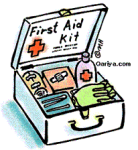 On the Eighth Day of Christmas, the Red Cross recommends that you get a
  On the Ninth Day of Christmas, the Red Cross recommends that you attend
  On the Tenth Day of Christmas, the Red Cross recommends that you purchase HOUSE NUMBERS. Each home should have its number posted clearly on the front door, over the doorway, or elsewhere on the front so emergency responders can easily locate it. Lives and property can be saved simply by using adequate house numbers placed where emergency workers can find them. You can purchase numbers at your local hardware store.
 On the Eleventh Day of Christmas, the Red Cross recommends that you purchase a FLASHLIGHT. As simple as a Flashlight is, it can become a very important tool to use during and after a disaster. Every family disaster supplies kit should contain a flashlight and spare batteries.
 On the Twelfth Day of Christmas, the Red Cross recommends that you create an
  There is nothing more frustrating (or hilarious, depending on how you view it) than going through your 72-hour kit and seeing a huge pack of newborn diapers intended to fit your 15-month-old toddler.
 NOHredcross