Protecting what matters most in Northern Ohio

October 8 – 14 is National Fire Prevention Week

By Doug Bardwell, American Red Cross volunteer

Unless you live near a fire station, you might be surprised by how many fires occur in
Northern Ohio. Where we live in Strongsville, you can usually detect that single
siren driving down Royalton Road as an EMS ambulance. But, if you hear multiple
sirens and the sound of large diesel engines, you know the entire squad is responding
to yet another fire – and they are usually home fires.

The Red Cross works with local fire departments to help prevent home fires

The most common home fires are caused by cooking. Every year, firefighters respond
to more than 170,000 kitchen fires, causing hundreds of deaths, thousands of injuries
and more than $1 billion in damages each year.

Since 2015, would you believe the American Red Cross in Northern Ohio has
responded to more than 11,000 home fires, and assisted nearly 17,000 families?
Despite insurance or Red Cross financial assistance, think of the inconvenience of
being displaced for weeks or months before your home is habitable again after a fire.

Damage caused by fire to a home in East Cleveland in 2022

There’s a better way

Following these simple tips, you and your family can help prevent kitchen fires:

  1. Use a timer to remind yourself that the stove or oven is on.
  2. Keep anything that can catch fire — potholders, oven mitts, wooden utensils,
    paper or plastic bags, food packaging, towels or curtains — away from your
    stove, oven or any other appliance in the kitchen that generates heat.
  3. Always check the kitchen before going to bed or leaving the home to make
    sure all stoves, ovens, and small appliances are turned off.
  4. Install a smoke alarm near your kitchen, on each level of your home, near
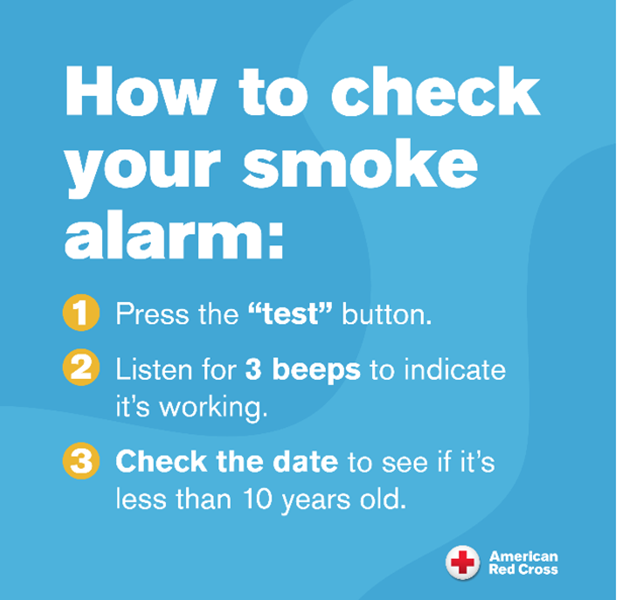
    sleeping areas, and inside and outside bedrooms if you sleep with doors closed. Use the test button to check it each month. Replace all batteries at least once a year if your smoke alarm requires it.
  5. Tap here for another half dozen sensible tips to avoid kitchen fires.
A Red Cross volunteer installs a smoke alarm in a home in Cleveland, with guidance from a firefighter

Smoke alarms are crucial in saving lives

The Northern Ohio region of Red Cross has been installing free smoke alarms for those who need them since 1992. To date, more than 200,000 alarms have been
installed.

Nationally, the Red Cross and partners, through the Home Fire Campaign, have installed 2.6 million alarms in more than 1.1 million households since 2014.

Do they really make that much difference?

Verifiably – yes, they do. As of August 31, 1,928 lives nationwide were documented as
saved due to work done by the Red Cross and partners through the Home Fire
Campaign.

For five more ways you can help the Red Cross continue this valuable practice in Northern Ohio communities, tap here.

If you’d like trained Red Cross volunteers to offer you valuable home fire safety
information to help YOU prevent a fire in your home – and/or to install smoke alarms in
your home, tap here.

Posted by Ryan Lang, Red Cross board member and volunteer
Take a few moments and potentially save the lives of your family

Sunday marks the start of National Fire Prevention Week

By Doug Bardwell, American Red Cross Volunteer

October 9 – 15 is National Fire Prevention Week and is a perfect time to ensure your family’s safety this coming winter. In Northern Ohio, we see a 23% increase in home fires each winter. Unfortunately, during fiscal year 2022, the Northern Ohio Region of the American Red Cross needed to respond to 1,150 home fires. 

First, teach your children what a smoke alarm sounds like and what they should do when it goes off. The most chilling story I read recently was about a grade-schooler who was asked what he would do when he heard the sound of a smoke alarm. His answer was authentic but frightening, “Go hide in the attic!”

I’ll be asking my grandchildren that question this week for sure. It shows that we can’t take anything for granted when it comes to children.

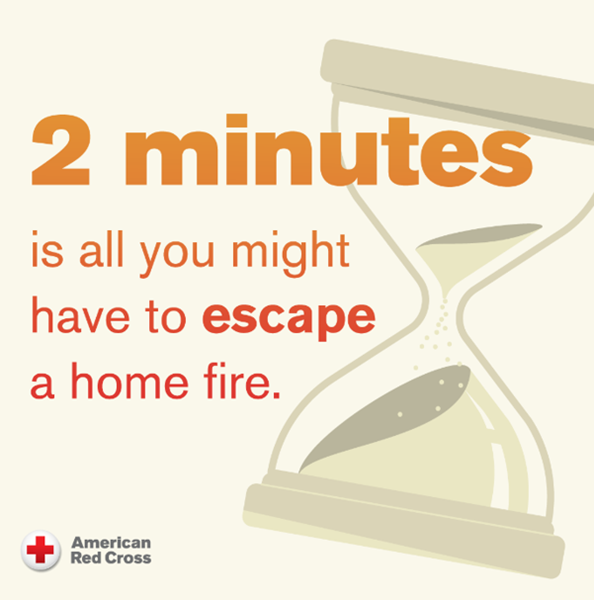
After they realize that was the wrong answer, it’s a perfect time to practice the correct response, which the family should do together. Luckily, the Red Cross has created a Two-Minute Drill to follow:

Studies have shown you will probably only have two minutes to escape a fast-burning fire safely. Practice your plan with everyone in your household. Visit redcross.org/fire for more information, including a printable escape plan and safety tips for cooking and home heating — the leading causes of home fires, according to the National Fire Protection Association, which is sponsoring Fire Prevention Week with the theme, “Fire Won’t Wait. Plan Your Escape.”

  • Include at least two ways to exit every room in your home in your escape plan.
  • Select a meeting spot at a safe distance away from your home, such as your neighbor’s home or a landmark like a specific tree in your front yard, where everyone knows to meet.
  • Tailor your escape plan to everyone’s needs in your household. If you or a loved one is deaf or hard of hearing, install strobe lights and bed-shaker alarms to help alert you to a fire.

Check your smoke alarms:

  • Place smoke alarms on each level of your home, including inside and outside bedrooms and sleeping areas. Test alarms monthly and change the batteries at least once a year if your model requires it.
  • Check the manufacturer’s date of your smoke alarms. Ten years or older, they likely need to be replaced because components such as the smoke detection sensor can become less reliable. Follow your alarm’s manufacturer’s instructions.

If you need and can’t afford smoke alarms:

Contact your local Red Cross office and they’ll arrange to get them installed for you at no cost. During the previous 12 months, the Northern Ohio Region of the Red Cross installed more than 8,300 smoke alarms, making more than 3,200 homes safer through our fire safety visits.

Since 2014, nearly 1,400 lives have been saved thanks to the Red Cross Home Fire Campaign, which includes Sound the Alarm events. During these events, local fire departments partner with the Red Cross and spend the day installing alarms for those who need them but don’t have them. Thousands of other families received new alarms when they discovered that theirs were so old they probably wouldn’t have worked in the case of a real fire.

Learn more about our Home Fire Campaign here, and/or request a smoke alarm, volunteer to help with installations or donate to help provide more free smoke alarms. 

Pushing one button could save a life – will you do it?

More than 65% of your friends won’t

By Doug Bardwell, American Red Cross volunteer

October 5, 2020- It’s National Fire Prevention Week from October 4 – 10, and as a nation, we are woefully underprepared for an emergency. Home fires haven’t stopped since COVID-19 started, and American Red Cross volunteers still answer four fire calls per day on average in Northern Ohio.

A new 2020 national Red Cross survey shows most of us aren’t taking the steps to protect ourselves.

So, what are those things you aren’t doing?

  • Push the button to test your smoke alarms each month helps ensure that they’re working — which can cut the risk of dying in a home fire by half. Still, 65% of us don’t.
  • Practicing your escape plan twice a year also increases the odds of survival. But 70% of us don’t.
  • Escaping in less than two minutes can be the difference between survival and tragedy, according to fire experts. Yet more than half of us think we have more time.

It’s not that difficult, so how about today?

Here’s a quick to do list you might want to print out:

  1. Make sure you have smoke detectors on each level of your home, preferably inside and outside your bedrooms. If they are more than 10 years old, new batteries won’t help, they need to be replaced.
  2. Insure there are two escape paths from every room in your house. If there aren’t, seriously consider your alternatives.
  3. Have a meeting place for your family to rendezvous after a fire so everyone is accounted for.
  4. Practice emergency escape drills to make sure everyone can exit and meet outside in less than two minutes.
  5. Make sure young children recognize the sound of a fire alarm and, just as importantly, what you expect them to do if they hear one.

Many Northern Ohio fires could have been prevented

Being a disaster services responder, I hate to say it, but most of the calls I respond to in our region could have been prevented.

  • A kitchen fire that started while the cook went to watch TV.
  • A candle left in a room unattended, that the dog knocked over.
  • A child with a candle on their bedside table.
  • An electric fryer with a frayed cord.
  • A wheelchair patient smoking while on oxygen.
  • An electric heater placed too near a pile of clothes.
  • An electric heater left in the attic while away at work.

If any of those sound familiar – STOP IT!  Download the Red Cross Emergency app, tap Prepare, and then tap Home Fire.  You’ll find all sorts of helpful hints, which will benefit you and your family. Then help us prevent the tens of thousands of home fires we respond to annually by making a donation. Learn more about our fire prevention efforts and join the Home Fire Campaign.