Keep your kids safe as they head back to school

It’s getting closer… Yes, it is almost time… Time for the kids to go back to school! And while parents all across Northern Ohio collectively exhale that sigh of relief, knowing that their “break” from the summer mayhem is on the horizon, there are still things to think about. Most notably back to school safety! With that, the American Red Cross offers ways to help keep your students safe as they return to school for the upcoming year.

If your student is younger or going to school for the first time, teach them:

  • Their phone number, address, how to get in touch with their parents at work, how to get in touch with another trusted adult and how to dial 911.
  • Not to talk to strangers or accept rides from someone they don’t know.

If your child walks to school, teach them to:

  • Walk on the sidewalk. If no sidewalk is available, walk facing traffic.
  • Stop and look left, then right and left again to see if cars are coming.
  • Cross the street at the corner, obey traffic signals and stay in the crosswalk.
  • Never run out into the street or cross between parked cars.

If your student takes the bus to school, teach them to:

  • Get to their bus stop early and stand away from the curb while waiting for the bus to arrive.
  • Board the bus only after it has come to a complete stop and the driver or attendant has instructed them to get on. And only board their bus, never an alternate one.
  • Stay in clear view of the bus driver and never walk behind the bus.

If your student rides their bike to school, teach them to:

  • Always wear a helmet.
  • Ride on the right in the same direction as the traffic is going.

If you drive your child to school, make sure to:

  • Always use seat belts. Younger children should use car seats or booster seats until the lap-shoulder belt fits properly (typically for children ages 8-12 and over 4’9”), and ride in the back seat until they are at least 13 years old.

If you have a teenager driving to school, make sure they:

  • Use seat belts.
  • Don’t use their cell phone to text or make calls and avoid eating or drinking while driving.

If you are considering getting your student a cell phone:

  • Download the free Red Cross First Aid and Emergency apps to give them access to first aid tips for common emergencies and full weather alerts. Find the apps in smartphone app stores by searching for the American Red Cross or going to redcross.org/apps.

DRIVERS, SLOW DOWN! Drivers should slow down as children head back to school. Know that yellow flashing lights indicate a school bus is getting ready to stop ─ motorists should slow down and be prepared to stop. Red flashing lights and an extended stop sign indicate the bus is stopped and children are getting on or off.

Motorists must stop when they are behind a bus, meeting the bus or approaching an intersection where a bus is stopped. Motorists following or traveling alongside a school bus must also stop until the red lights have stopped flashing, the stop arm is withdrawn, and all children have reached safety. This includes two and four-lane highways. If physical barriers such as grassy medians, guide rails or concrete median barriers separate oncoming traffic from the bus, motorists in the opposing lanes may proceed without stopping. Do not proceed until all the children have reached a place of safety.
Red Cross offers training that can save lives

By Kathryn Dean

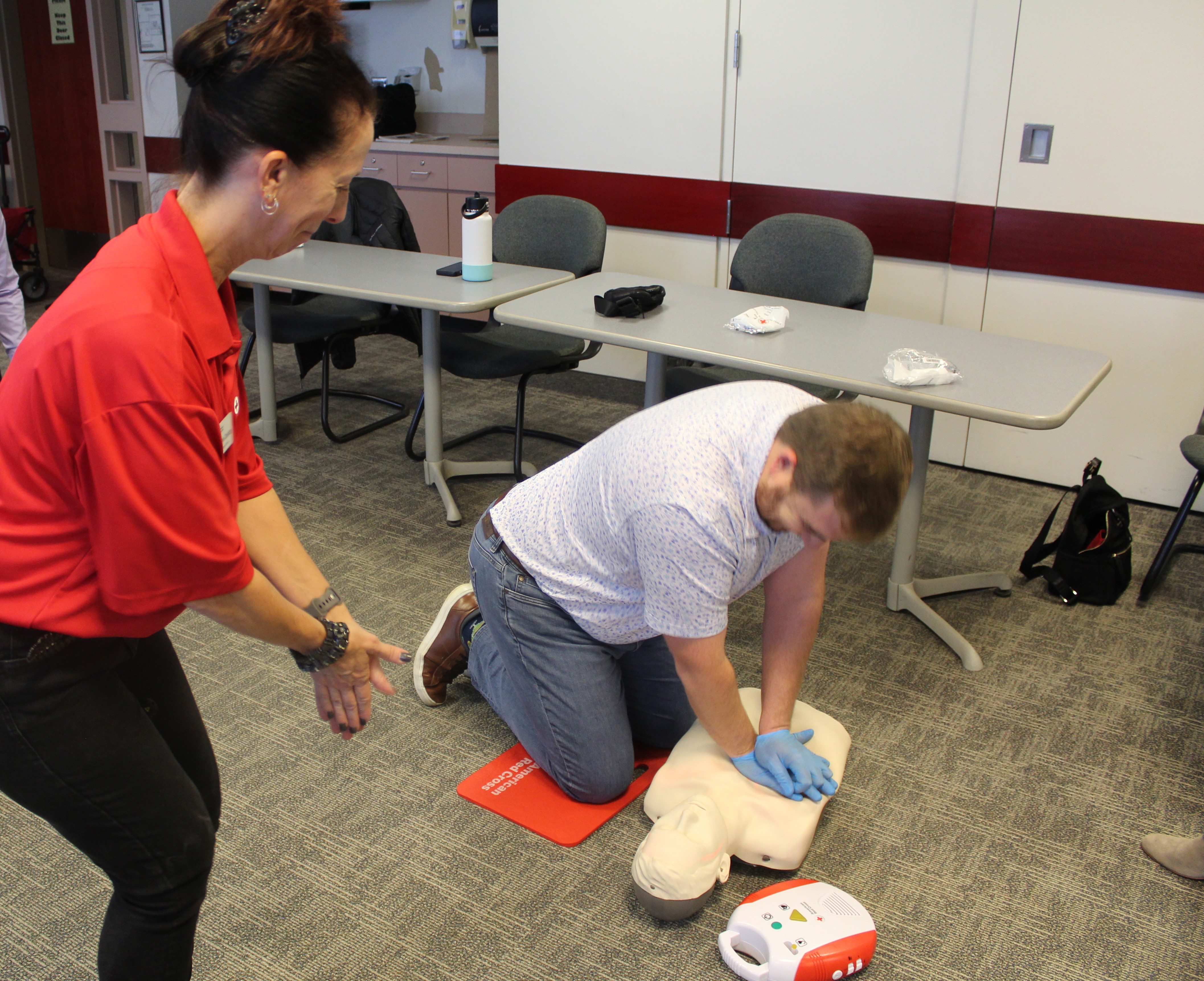
March is Red Cross Month and the American Red Cross wants to encourage everyone to learn the important skills of CPR, first aid and AED usage.

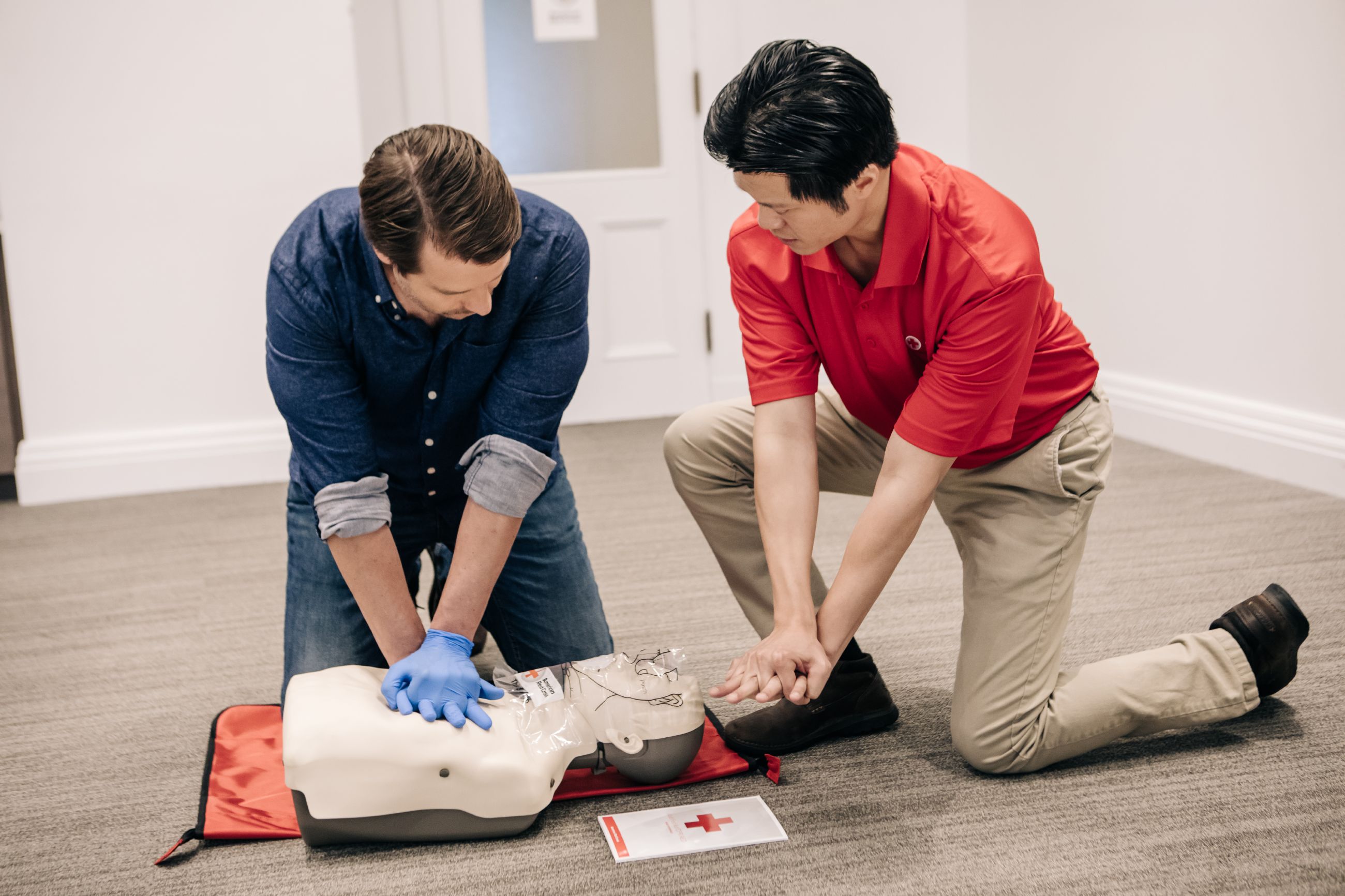
Red Cross instructor Angele Cassiday teaching CPR

Sudden cardiac arrest can happen anywhere. According to the American Heart Association, more than 357,000 cardiac arrests occur outside of the hospital setting each year in the United States, and nearly 90% of those arrests are fatal.

Despite this, survival rates can double or triple for victims of cardiac arrest if CPR is started immediately. That’s why training is vitally important so that prompt medical attention can be given before emergency responders arrive.

What should you do if you see a person suddenly collapse? Assess the scene for safety and check the victim’s pulse and breathing. Call 911. Start CPR. Use an AED.

How do you check a pulse? The easiest way is to place your fingers on the victim’s throat and slide your fingers laterally down into the groove on either side of the esophagus. The wrist can also be used; the pulse is located just below the thumb joint, also in the groove.

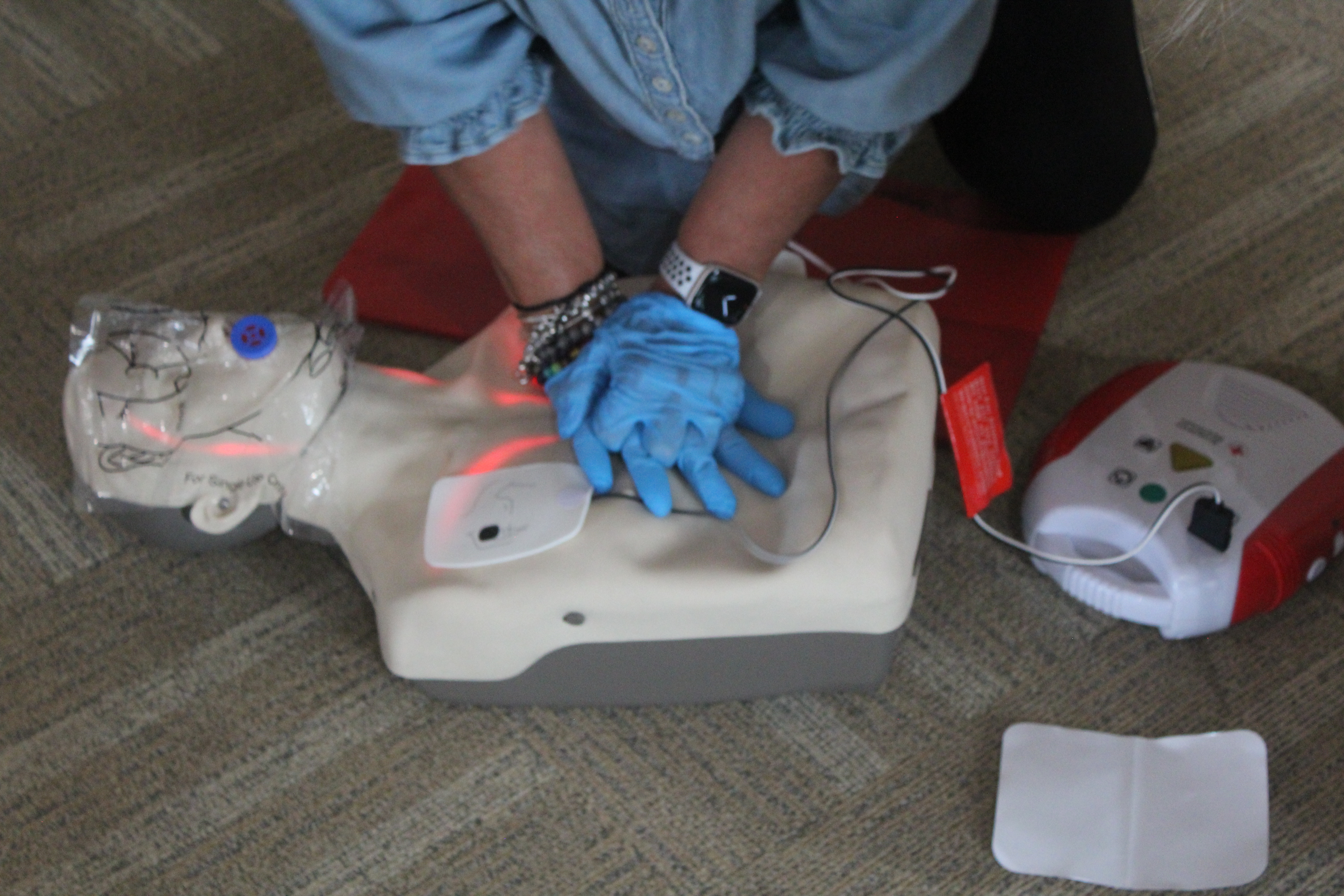
CPR, or cardio-pulmonary resuscitation, is the application of chest compressions to keep blood pumping through the body. The Hands-Only CPR method is recommended for bystanders in public settings, meaning the focus is solely on delivering chest compressions, without breaths, until emergency responders arrive.

AED stands for automated external defibrillator. It is an important, lifesaving tool used in sudden cardiac arrest when the heart stops beating or is beating ineffectively. The machine is easy to use and talks you through the steps to deliver effective medical care until help arrives. Anyone can learn to use an AED.

More and more communities are placing AEDs in public areas, such as parks, town centers, grocery stores and workplaces, so lifesaving measures can be started even earlier. The next time you are out and about, note the locations of AED machines in your community. This knowledge may help save someone’s life one day.

Did you know that the Red Cross offers training in CPR, first aid and AED? While CPR and AED training is common among health care workers, child care workers and lifeguards, it is a skill that anyone can and should learn. Be prepared for any situation by visiting https://www.redcross.org/take-a-class and signing up to take an online or in-person class.

Edited by Glenda Bogar, Red Cross volunteer

Posted by Ryan Lang, Red Cross board member and volunteer

Learn how to save a life during National CPR + AED Week

The basketball referee crumbled to the floor of the court, lifeless. The game between the Glass City Wranglers of Toledo and the Jamestown Jackals of New York came to an abrupt halt, as players and spectators wondered what was wrong.

Myles Copeland did not wait.

Myles Copeland – Toledo Firefighter

Myles is a Toledo firefighter – and was playing with the Wranglers during his off hours when referee John Scully suffered cardiac arrest – something Myles was trained to treat. He immediately began CPR, cardiopulmonary resuscitation, performing chest compressions while awaiting the arrival of emergency medical personnel, and that likely saved John’s life.

Myles Copeland won an Acts of Courage award from the American Red Cross of Western Lake Erie for his swift intervention, as did Lt. Jim Schulty, also with the Toledo Fire Department. Jim performed CPR on a fellow hockey player after his heart stopped beating and is also credited with saving a life.

These are just two examples of the value of knowing how to perform CPR, and there’s no better time to highlight these stores, as National CPR + AED Awareness week begins today. And while Myles and Jim are professional firefighters and have had on-the-job training, anyone can be trained to help save lives with CPR and an AED.

More than 350,000 people suffer a cardiac arrest annually, but only 9% survive.

Every second counts when responding to a cardiac arrest. If you see someone suddenly collapse, call 911, send someone for the AED and begin CPR. 

Nicole and Lindsey Bechter

That’s what Lindsey and Nicole Bechter did while they were serving as referees at a volleyball court in Cuyahoga Falls last summer. A player collapsed, and the sisters took turns performing CPR until the ambulance arrived.

Even if you aren’t trained, doing chest compressions (pushing hard and fast in the center of the chest) is better than doing nothing. It’s what Jim Kuhn did. The bus driver for the city of Wadsworth helped keep a passenger alive by pushing down on the man’s chest after he collapsed when trying to board the bus last November. For their lifesaving actions, Jim, Lindsey and Nicole received Acts of Courage awards from the Red Cross of Greater Akron and the Mahoning Valley.

Acts of Courage award winner Jim Kuhn, center, with board member Ryan Lang, left, and committee chair Tara Silva, right.

You can get trained by visiting redcross.org/take-a-class. At the very least, learn how to perform hands- only CPR.

Every second counts in cardiac arrest. If you see someone collapse without warning, know your  “Cardiac Arrest 1‐2‐3.”

  1. Call 9‐1‐1 and get the AED 
  2. Start CPR 
  3. Use an AED

CPRSavesLives

Edited and posted by Ryan Lang, Red Cross board member and volunteer

Employee’s lifesaving action inspires Red Cross training

CPR being taught to workers nationwide

Jamell Fetter had not yet received First Aid/CPR/AED training from the American Red Cross through his employer, Estes Express Lines. But the Toledo man had already used CPR to save a co-worker’s life.

Jamell Fetter received a certificate and pin from Rachel Hepner, executive director of the Red Cross of Western Lake Erie

“I sat in on classes with my sisters and my friends who had to do all their certifications online,” he said. “I never had any formal training. Just watching the videos.”

Jamell said he was at a company lunch event in September, 2020 when he saw coworker Mark Benschoter on the floor, lifeless.

“I wasn’t thinking about it until afterwards, and I just knew he needed help, and I was there.”

Mark is back on the job, working every day with Jamell. “He is my personal security guard,” Mark said. “Every time we have a function, people will not let him go home until I do. He has to stay until I leave.”

After learning of Jamell’s lifesaving actions, company officials asked the Red Cross to provide First Aid/CPR/AED training to all managers, supervisors and directors at its facilities across the country.

“It’s a great project,” said Tom Zahler, director of corporate training and development for Estes Express Lines, based in Richmond, Virginia. “We’re really grateful we’re partnering with the Red Cross.”

Tom visited Toledo on the day Jamell was presented with the certificate of extraordinary personal action at the headquarters of the Red Cross of Western Lake Erie in Toledo. The award is presented to individuals for selfless and humane action using lifesaving skills.

“We’re training supervisors and above to be sure that someone on every shift, every day is available, should another event like this happen.”

Although Jamell isn’t at the supervisor level, he is being included in the training being provided by Estes Express Lines.

Mark Benschoter, Jamell Fetter and Tom Zahler of Estes Express Lines

“It’s working,” Tom said. “We hear stories all the time about people who are there when something happens.”

Information about First Aid/CPR/AED training is available at redcross.org /take-a-class.

Hear Jamell, Mark and Tom tell the story on our podcast, Be A Hero.

Posted by Ryan Lang, Red Cross board member and volunteer

Red Cross training in action: A lifesaving moment

By Ryan Lang, American Red Cross volunteer and board member

Anyone who’s received CPR and AED training through the American Red Cross will tell you they hope to never have to use it, but knowing it’s there just in case is comforting.

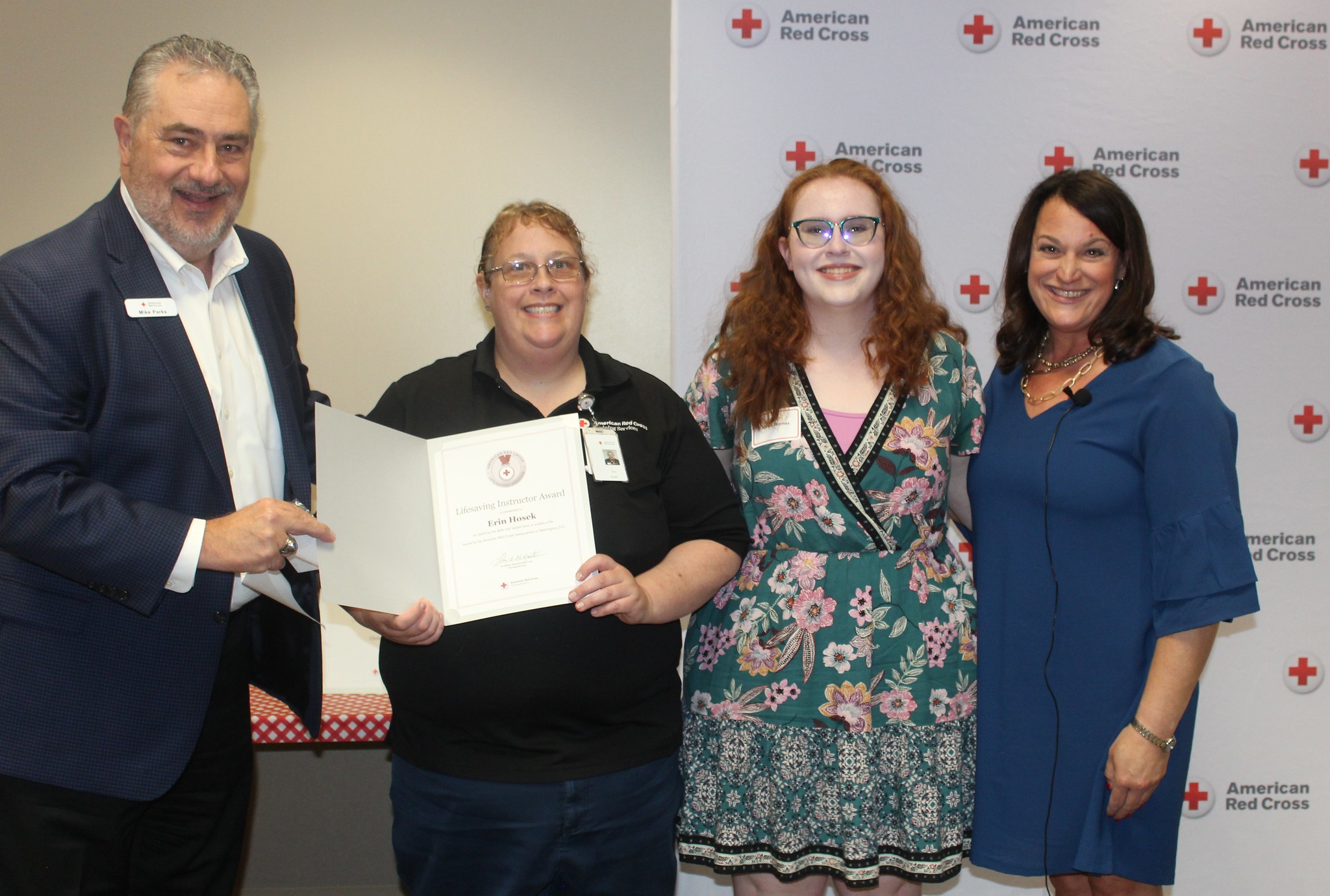
Michael Parks, Regional Executive of the Northeast Ohio Region of the American Red Cross, Alexis Starnes, Rachel D’Attoma, Executive Director of the American Red Cross of Greater Akron and the Mahoning Valley

Stow-Munroe Falls High School graduate Alexis Starnes would tell you that she’s grateful for the knowledge and training she received during her time as a Girl Scout and on December 30th, 2021 that training helped save the life of a small child.

That day, Alexis was working at the Small Steps Big Strides Childcare center in Stow as part of a real world work experience program through her school. She was feeding a 7-month-old girl baby food when the child stopped responding. “She stopped making noise and she wasn’t moving,” Alexis recalled during a recent interview with American Red Cross Regional Communications Director Jim McIntyre. Thanks to her Red Cross training, Alexis immediately recognized that these were signs that the child was choking. That’s when she unstrapped the child from her chair and began administering back blows, just like she learned in training.

Alexis was able to dislodge the food that was obstructing the baby’s airway. She saved the child’s life – something Alexis says she could have never done without her CPR and AED training from the Red Cross.

On June 8th, 2022, during the Lifesaving Award Program, Alexis was honored with the Certificate of Merit – the highest honor given by the Red Cross that is signed by the President of the United States. The award is given to someone who embodies the spirit of the Red Cross by using action to help alleviate human suffering in the face of an emergency. On that day, December 30th, 2021, that is exactly what Alexis did.

Michael Parks, Regional Executive of the Northeast Ohio Region of the American Red Cross, Erin Hosek, American Red Cross Instructor for the Girl Scouts of America, Alexis Starnes, Rachel D’Attoma, Executive Director of the American Red Cross of Greater Akron and the Mahoning Valley

Red Cross CPR and AED instructor and Girl Scout troop leader Erin Hosek, who taught Alexis her lifesaving skills, was also awarded the Lifesaving Instructor Award. After receiving her award, Erin pointed out that of her entire graduating Girl Scout troop, Alexis was the only one who chose to renew her certification two years after she had received her initial training. “And I’m glad she did,” Erin said, adding how proud she is of Alexis for using those lifesaving skills that day.

Alexis is continuing her education at Stark State University in the fall and will pursue a career in childcare. As for the young child Alexis saved, she says the girl still regularly attends the childcare facility in Stow and is a very happy and healthy baby.

Help stop the bleed to save a life

By Sam Puldeski, American Red Cross volunteer

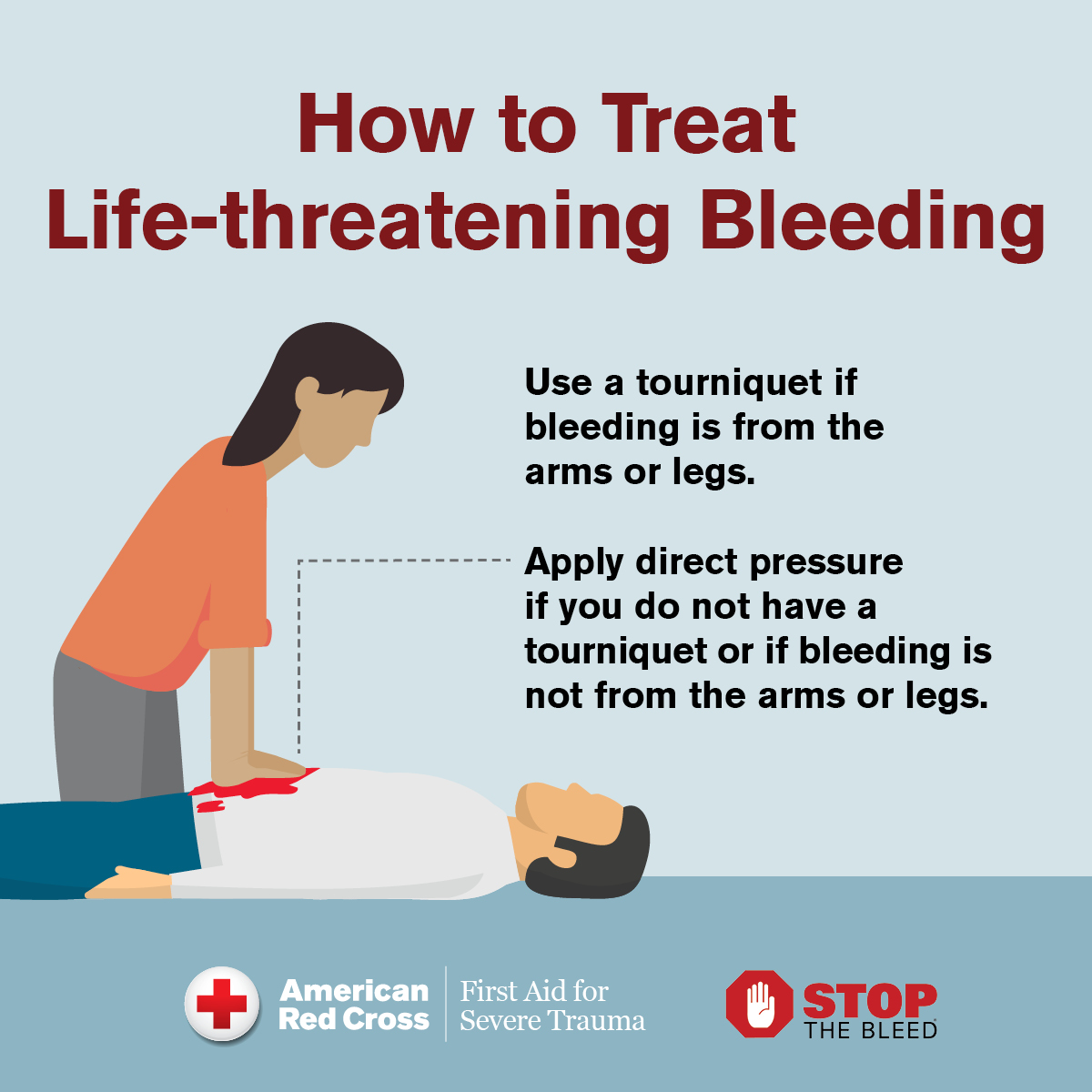
Did you know that someone with a serious injury can experience life-threatening blood loss within as little as five minutes? When someone is injured and severely bleeding, it is imperative that bystanders help to quickly stop the blood loss.

The American Red Cross has some tips and information to follow if someone around you is experiencing a life-threatening loss of blood.

  • A half can of soda is the approximate amount of blood loss that is life
    threatening in an adult. For children and infants, the amount is
    proportionately less.
  • If blood is flowing continuously, squirting or pooling, take action
    immediately with these steps.
    a. Call 911.
    b. Ask someone to find a bleeding control kit, which should include
    items like gloves, gauze and a tourniquet.
    c. Apply the tourniquet and wait for the medical professionals to arrive.
    – If the injury is in on the head or torso, apply direct pressure
    with your hands or knee using gloves if they are available.
  • If you don’t have a medical tourniquet on hand, apply direct pressure with
    your hands or knee. Research has shown that homemade or improvised
    tourniquets don’t work. It is recommended to use manufactured tourniquets
    over homemade options.

It’s important for everyone to know how to respond in these types of emergencies should they ever be in a situation when someone needs help. The Red Cross offers classes to help teach people of all ages how to respond in an emergency. Some classes offer online instruction while other classes can be found at a location near you.

You can sign up for a class (or two!) by visiting: https://www.redcross.org/local/ohio/take-a-class.

Edited by Glenda Bogar, American Red Cross volunteer

Courage in the face of adversity

By Ryan Lang, Red Cross Volunteer

One of the definitions of courage you’ll find in the Oxford Dictionary is “strength in the face of pain or grief.”

Most people can say they’ve exhibited courage at least a few times in their life. Not as many can say that every day for the past year, just simply facing the day has been an act of courage.

Lynn Decker, Wadsworth School District Head Nurse

If you asked Lynn Decker about it, she’d probably tell you that was an overstatement. But after hearing her story about her fight against breast cancer and her unwavering commitment to the students and staff of the Wadsworth City School District, there was no question that Lynn embodied the true meaning of courage.

Lynn is the District Nurse for Wadsworth City Schools. She’s been a nurse for a long time, working in the ICU at Summa Akron City Hospital for more than a decade. In 2014, Lynn joined the district and the world of school nursing. “I thought it was just Band-Aids and ice packs; no big deal,” she said of the job, but as she quickly found, it was a lot more than that. It was much more critical care than she’d first anticipated, which Lynn says was a good thing, as that’s been her “bread and butter” throughout her career.

As the head of eight school nurses, Lynn says she quickly realized that there were several “areas of improvement” that needed to be addressed, one of those being CPR training. “I decided to get my certificate over at the Red Cross to become a certified instructor so I could help employees here, and also train coaches and administrators in CPR.”

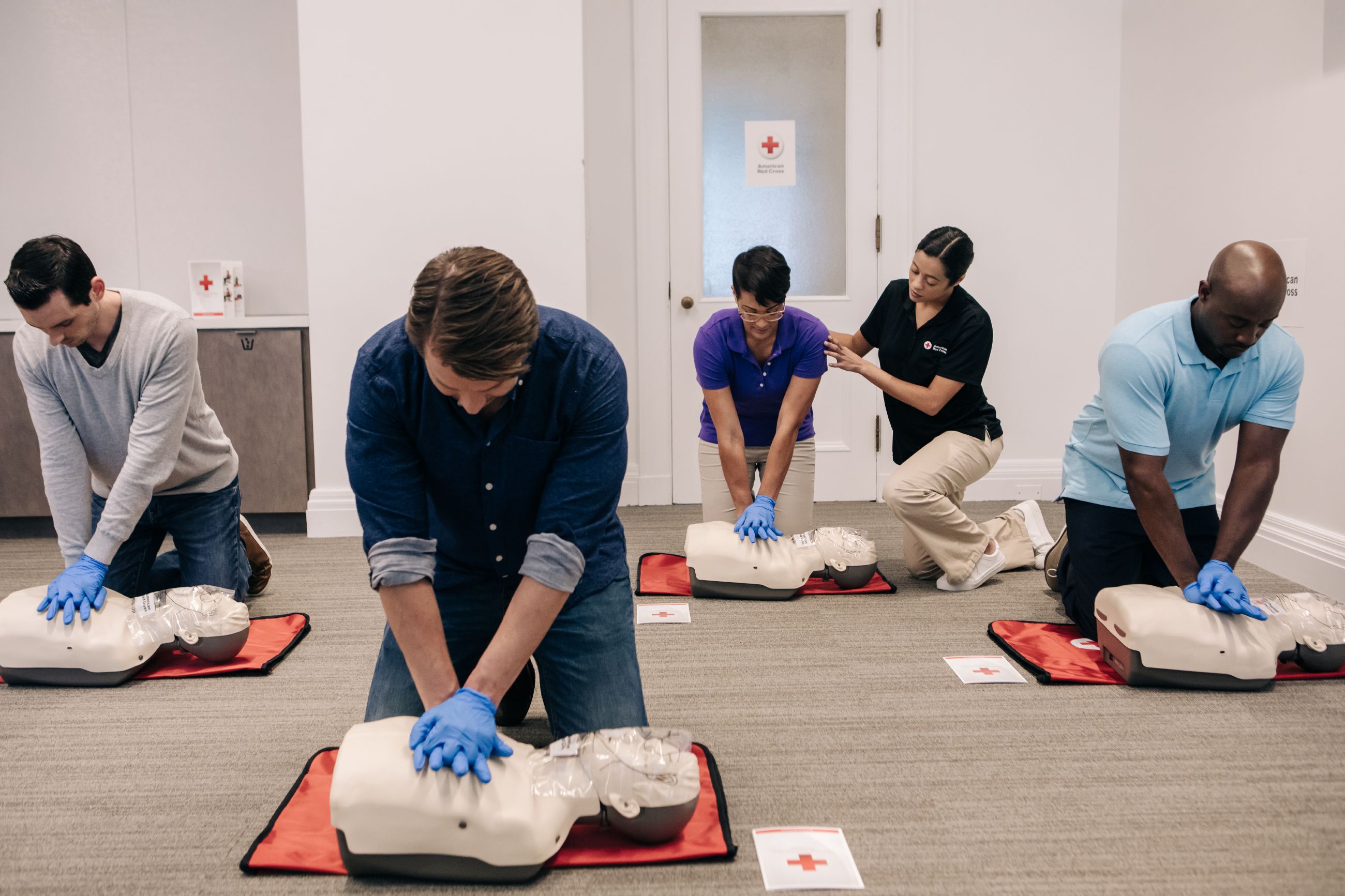
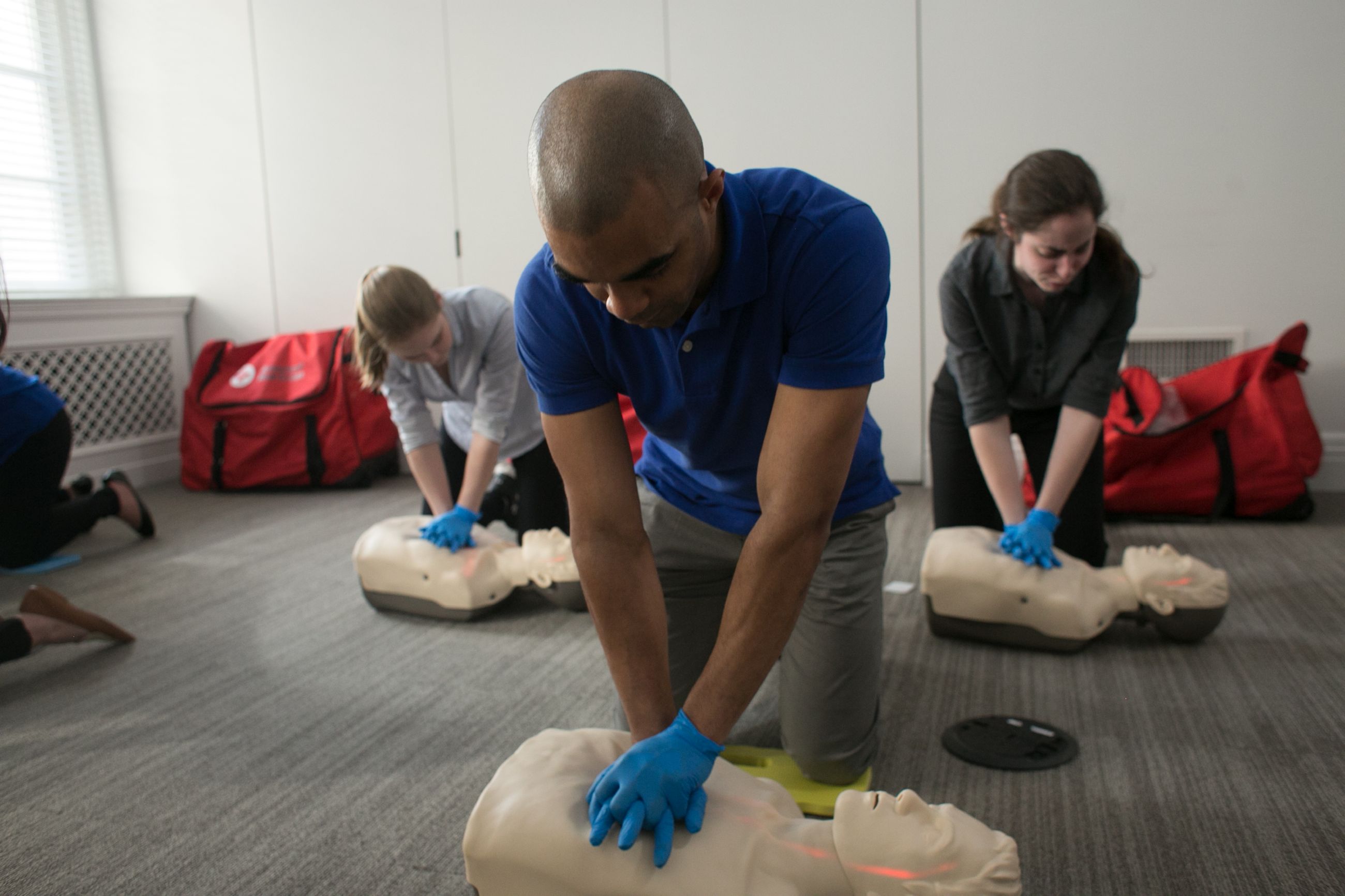
June 22, 2018. Washington, DC. CPR stock photos by Roy Cox for the American Red Cross.

Throughout her years in the Wadsworth School District, Lynn trained dozens of her fellow employees in CPR, but only recently started training 8th grade students as well. “We realized how important it is for kids of a young age to learn CPR, and actually found that they are much easier to teach.” And they’re interested in learning, Lynn says: “They love it! They get super excited when we’re coming in with the mannequins and the mock AED machines and more.”  

And then, a setback.

It was about a year ago that Lynn was diagnosed with breast cancer, and in the middle of a pandemic, no less. “When the entire world is shutting down and you’re worried about hospital care and being able to get your surgery and your chemo, but still being part of running the district.” In spite of the diagnosis and facing a double mastectomy, Lynn still was concerned about her students and her staff in Wadsworth. “People still have to be taken care of and we need to be sure that our students and our faculty are safe.”

After finishing her chemo treatments and her surgery in May, Lynn was visiting her parents’ home for a small get together at their pool in the backyard a little more than a month later, in July last year. A neighbor had fallen into the pool and gone under the water. Without regard for herself and how she was feeling after her treatments, Lynn deployed her Red Cross training and did everything she could to help that family friend.

Unfortunately, there was no helping that friend. He eventually passed away. It was an experience Lynn says she’ll never forget and a real world reminder of how important her training is and how important it is that she pass along what she learned through the Red Cross.

Today, Lynn’s treatments continue. And Lynn continues to provide an invaluable, potentially life-saving skill set to her colleagues and her students alike. Additionally, she’s become an advocate for early and regular health screenings and now helps others in similar situations as hers face their diagnoses head on, with strength and with courage.

Akron athletic trainers recognized for using Red Cross training to save life

By Eric Alves, American Red Cross of Northern Ohio

January 20, 2021- Have you ever wanted to get CPR and AED training, but you thought you would never have an opportunity to use your training to save a life? Well, hopefully today’s post will change your mind.

John Walters and Kalie Jenkins are athletic trainers at the University of Akron.

On January 11, 2020, while working during an indoor track meet at the Stile Athletic Field House, a spectator in the stands began to experience chest pains.

John and Kalie quickly responded to the aid of the gentleman. Instantly their Red Cross training kicked in as they delivered breath and chest compressions and administered an AED, until first responders were able to arrive to assist.

Thanks to the quick thinking and responsiveness of John and Kalie, the spectator survived and made a full recovery.

During a virtual ceremony last week, the American Red Cross of Greater Akron and the Mahoning Valley presented John and Kalie with the Lifesaving Award for Professional Responders, the highest award given to an individual, or team of individuals, who saves or sustains a life, outside of a medical setting, as part of their employment or while on duty.

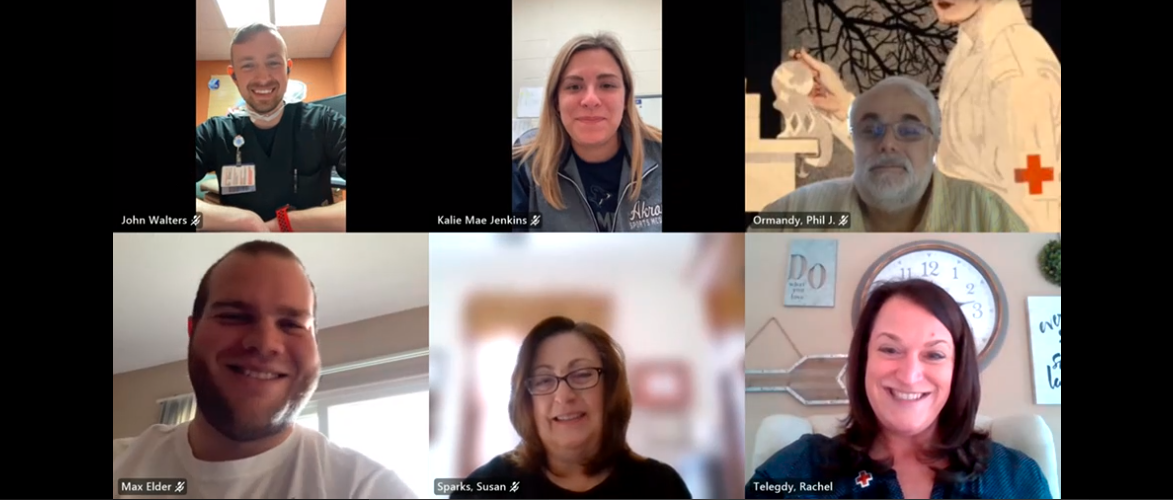
A screenshot from the virtual award presentation. Left to right/top to bottom: John Walters, Kalie Jenkins, Phil Ormandy, Max Elder, Susan Sparks, Red Cross Training Services, and Rachel Telegdy.

“I am always amazed when someone takes the wherewithal to act. That is the hardest step,” stated Phil Ormandy, American Red Cross Training Services, during the presentation. “I am very proud of you [John and Kalie] and thankful that you put your training in action to save a life.”

“Thankfully John and Kalie were at the right place at the right time. I am proud of them and the University of Akron for holding these trainings,” said Max Elder, John and Kalie’s coworker, who nominated them for the award.

The American Red Cross offers training programs in various areas from first aid, CPR, AED administration, water safety, babysitting and more. Learn more about Red Cross lifesaving courses here.

If you wish to nominate someone for a lifesaving award, visit redcross.org/take-a-class/lifesaving.

Student will live to see graduation because of duo’s quick action

By Doug Bardwell, American Red Cross volunteer

July 24, 2020- Imagine seeing a high school student fall to the ground while watching a football team practice. Would your first inclination be to assume he was horsing around? Fortunately, Shamara Golden, a student at Youngstown State University, was watching and had a sense there was more to it than that.

Shamara and athletic trainer Alex McCaskey rushed to his aid. Finding that he was still breathing and still had a pulse, but was unresponsive and unconscious, Alex stayed by his side and called 911. Shamara ran for the AED machine and medical kit.

Golden 1

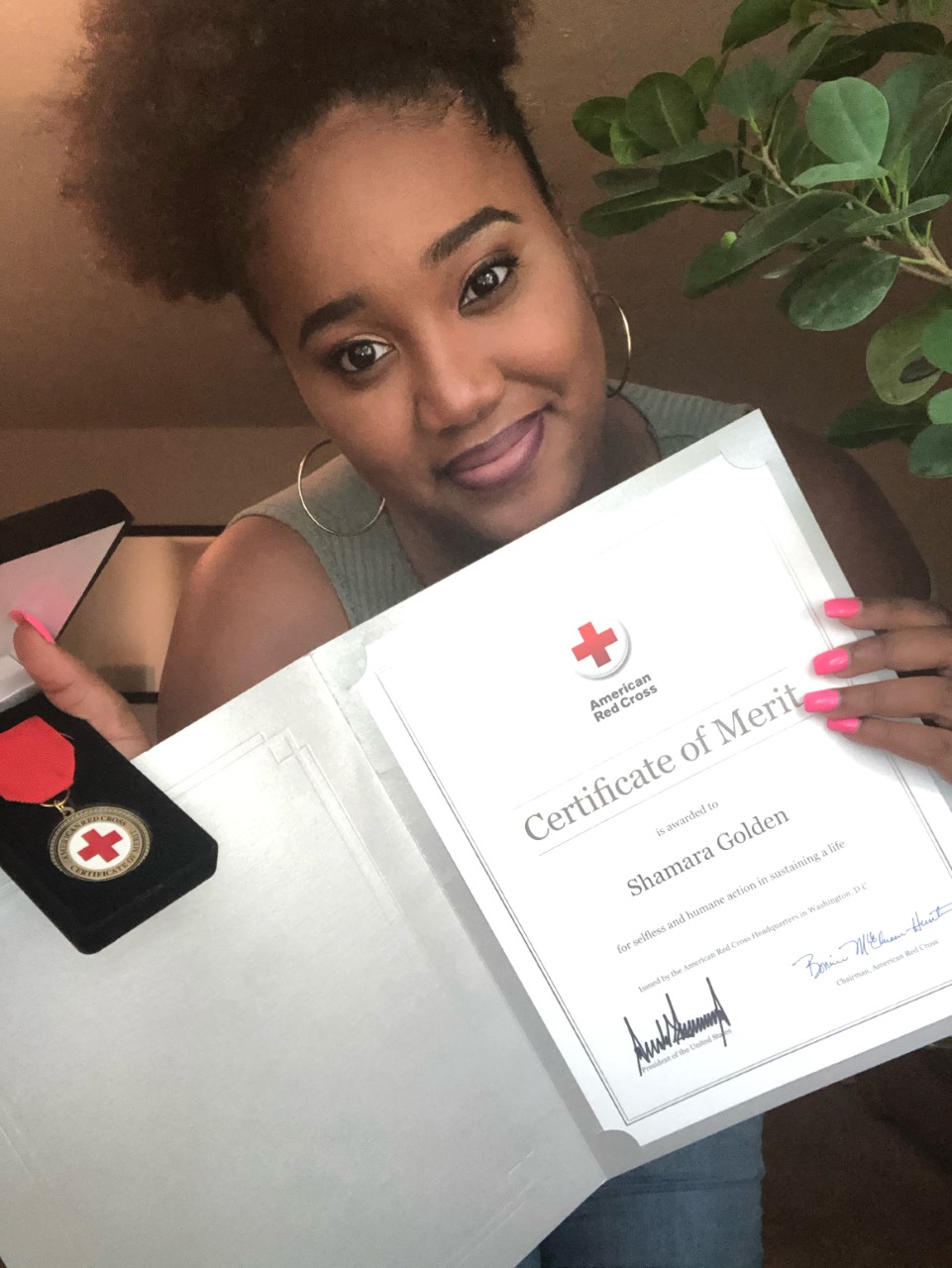
Shamara Golden with her Red Cross Certificate of Merit

While she was gone, the student stopped breathing. Alex immediately began CPR. As she returned, Alex cut open his shirt as Shamara attached the AED pads for assessment. Following the instructions on the AED, they delivered a shock, which caused him to start breathing again.

Once the victim began to breathe again, Alex stabilized the victim’s spine while Shamara rolled the victim into recovery position. While waiting for the ambulance to arrive, the victim stopped breathing again and the AED advised to continue CPR. Alex began to again administer five rounds of CPR until the ambulance arrived.

“I received a call from the boy’s mother when he was taken off the ventilator in the hospital,” recalled Alex. “That was an amazing feeling, getting that call. After that, a number of the Warren G. Harding High School administration members came down to congratulate Shamara and me at future football games.”

RedCrossAwards-002 (002)

Virtual award presentation featuring Greater Akron and the Mahoning Valley Chapter Executive Director Rachel Telegdy, Northern Ohio Region CEO Mike Parks, Dr. Morgan Bagley, Shamara Golden and Alex McCaskey

“The day after it happened,” explained Shamara, “I didn’t mention it to my class, because I still hadn’t heard how the boy was doing. After we heard that he was fine, my classmates found out and there were cheers all around.”

Alex and Shamara were nominated for American Red Cross lifesaving awards by Dr. Morgan Bagley, associate professor at Youngstown State University where Shamara was studying to become an athletic trainer.

Alex received the Certificate of Extraordinary Personal Action for those who step up in an emergency to save or sustain a life. Shamara received the Certificate of Merit, the highest award given by the Red Cross to a person who saves a life using the skills and knowledge learned in an American Red Cross Training Services course.

RedCrossAwards-011 (003)

Alex McCaskey

“I’m so proud of both of them,” said Dr. Bagley. “Shamara told me, ‘It’s just like you said, we have to constantly practice to be prepared for anything and everything.’”

Without a doubt, the skills learned in the American Red Cross CPR and AED Training class helped to save the life of this student.

You, too, can sign up and receive training in CPR, AED and First Aid with the Red Cross. Online classes are available. Click here to get started.

Edited by Glenda Bogar, American Red Cross volunteer

Red Cross continues to teach lifesaving skills

By Tim Poe, American Red Cross volunteer

June 5, 2020- The first week of June is National CPR and AED Awareness Week, which calls attention to the critical importance of these lifesaving skills and how many can be saved if more Americans learn CPR and how to use an automated external defibrillator (AED). While more than 1,600 people suffer cardiac arrest each day in the nation, immediate bystander CPR can double or triple the chance of survival.

CPR Classroom Stock Video and Photography Shoot 2018

Cardiac arrests and other emergencies do not cease during a pandemic. While immediate aid for someone suffering sudden cardiac arrest is crucial at any time, increased calls for assistance during the COVID-19 pandemic may increase the need for a relative or bystander to provide effective assistance.

“Bystanders that activate emergency response, initiate chest compressions, and apply and follow the directions of an AED have the greatest impact for the survival of the victim of a cardiac arrest,” said Rosanne Radziewicz, a registered nurse and volunteer with American Red Cross Disaster Health Services.

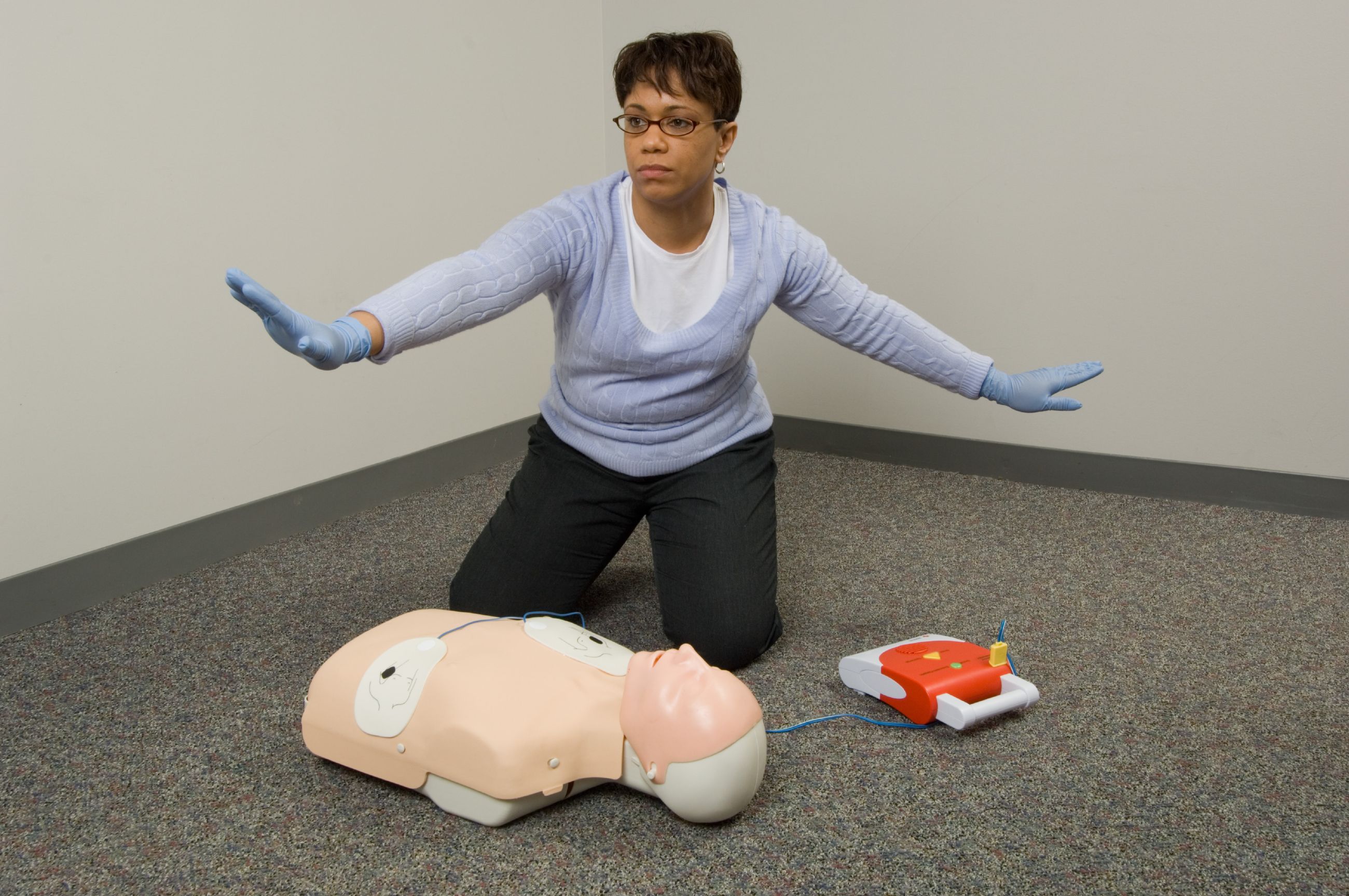
AED Trainer with participant 2

To help address this need, the Red Cross continues to provide CPR and AED training, whether online, in classrooms or a blend of the two.

A number of CPR and AED training and certification courses are available, many of which are tailored to the needs of workplace responders, professional rescuers, school staff, healthcare providers and the general public. Several courses are Occupational Safety and Health Administration (OSHA) compliant.

While online-only courses do not offer the opportunity to demonstrate skills to a certified instructor—and may not meet certain certification requirements—they are still an excellent choice for many. The expert-designed courses are interactive, engaging and can help provide the skills and confidence to save a life in an emergency.

CPR Stock Photography 2018

In addition, the Red Cross is offering special pricing on some online-only courses during the COVID-19 pandemic.

For those who need in-person training and certification, essential Red Cross CPR, AED and first aid programs are available. These courses can be in an instructor-led classroom setting or a blend of online training with an in-class skills session. All in-person sessions use social-distancing approaches and follow the guidance of the CDC (Centers for Disease Control and Prevention) and state and local public health officials.

35985_017

For more information on online, in-person and blended classes or to register, visit redcross.org/takeaclass.

The Red Cross also offers a free First Aid app and Red Cross Skills for Amazon Alexa.

Edited Glenda Bogar, American Red Cross volunteer