
Whether you live ten feet or ten miles from one of the many rivers and streams that run through Northeast Ohio, you never know when heavy rains and melting snow will combine to produce a terrible flood. Here are some ways to keep your friends and family safe as we look to the skies over the next few weeks.

Right Before a Flood
- Listen to local area radio, NOAA radio or TV stations for the latest information and updates.
- Be prepared to evacuate quickly and know your routes and destinations. Find a local emergency shelter.
- Check your emergency kit and replenish any items missing or in short supply, especially medications or other medical supplies. Keep it nearby.
- Fill plastic bottles with clean water for drinking.
- Fill bathtubs and sinks with water for flushing the toilet or washing the floor or clothing.
- Fill your car’s gas tank, in case you need to evacuate.
- Bring outdoor belongings, such as patio furniture, indoors.
- Turn off propane tanks to reduce the potential for fire.
- Consider a precautionary evacuation of your animals, especially any large or numerous animals. Waiting until the last minute could be fatal for them and dangerous for you.
- Where possible, move livestock to higher ground. If using a horse or other trailer to evacuate your animals, move sooner rather than later.
- Bring your companion animals indoors and maintain direct control of them. Be sure that your pet emergency kit is ready to go in case of evacuation.
Staying Safe Indoors
- Turn off the power and water mains if instructed to do so by local authorities.
- Boil tap water until water sources have been declared safe.
- Avoid contact with floodwater. It may be contaminated with sewage or contain dangerous insects or animals.
- Continue listening to local area radio, NOAA radio or TV stations for the latest information and updates.
- Don’t use gas or electrical appliances that have been flooded.
- Dispose of any food that comes into contact with flood water .
Staying Safe Outdoors
- Don’t walk, swim or drive through floodwater. Just six inches of fast-flowing water can knock you over and two feet will float a car.
- If caught on a flooded road with rapidly rising waters, get out of the car quickly and move to higher ground.
- Don’t walk on beaches or riverbanks.
- Don’t allow children to play in or near flood water.
- Avoid contact with floodwater. It may be contaminated with sewage or contain dangerous insects or animals.
- Stay out of areas subject to flooding. Underpasses, dips, low spots, washes, etc. can become filled with water.
For more information on what to do if your home becomes flooded, visit http://www.redcross.org/get-help/how-to-prepare-for-emergencies/types-of-emergencies/flood#After.




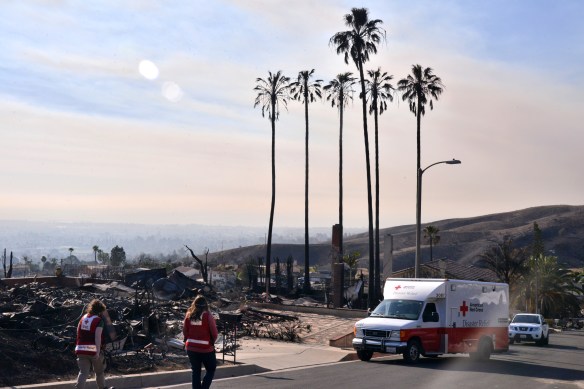 I recently heard an interview on the radio about a couple who moved from Brooklyn, NY to Ventura, CA this year. The interview was about the mandatory evacuations in their neighborhood related to the Thomas fire. They talked about how different it is to live in a community that has to be prepared at all times to flee their homes. Everyone they know has an emergency kit ready for not if, but when the wildfires get too close. That observation struck me. We live in a part of the country where very few people have natural disasters on their minds regularly. How many people do you know in Northeast Ohio that have an emergency kit ready at home?
 disasters like Hurricane Harvey, Hurricane Irma, historic wildfires and hundreds of home fires. In Northeast Ohio, we responded to about 1,000 incidents, the vast majority of them home fires, helping more than 4,100 people.
 Volunteers installed 418,460 smoke alarms, including more than 16,000 in Northeast Ohio to make homes safer, bringing the total number installed to more than one million since our Home Fire Campaign began in 2014.


 NOHredcross