
By Doug Bardwell, American Red Cross volunteer
May 24, 2019- Sound the Alarm 2019 wrapped up in Northeast Ohio on May 12. With a total of 21 events over a two-week period, more than 1,500 homes were made safer by the installation of 3,743 smoke alarms.
After responding to dozens of fires as an American Red Cross Disaster Action Team member, it’s always sad to see a family lose all their possessions; but far more heart-wrenching is when a family member is hurt or a pet dies. Sometimes, it’s just a matter of a minute or two that makes the difference in who survives and who doesn’t. Sound the Alarm’s purpose is to make sure the number of home fire fatalities is significantly reduced each year.
First-hand experience
David Leatherwood, who still carries the scars of being in a home fire when he was younger, was appreciative when approached by volunteers in Lorain during the Sound the Alarm event. “It makes me feel so much better knowing that my whole house is now protected by smoke alarms,” said David. Volunteers from Ford Motor Lorain plant installed new alarms, replacing his old ones that were already more than 10 years old.

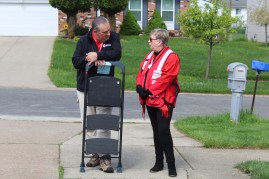
Volunteers Stephanie Pinskey (L) and Dionna Seplight (C) discuss the importance of replacing smoke alarms every 10 years with homeowner David Leatherwood (R).
Stephanie Pinskey, one of the Ford volunteers commented, “I can’t believe the power of the Red Cross brand. Not one of the people we met today ever hesitated about letting us come in to install alarms in their homes. With all the mistrust of strangers these days, this was heartwarming to know people really trust Red Cross and their volunteers.”
By the numbers
Begun in 2014, the Home Fire Campaign can already count 582 lives nationally that have been saved, thanks to smoke alarms installed by Red Cross volunteers. In that time:
- More than 709,000 households have been made safer
- More than 1,700,000 smoke alarms have been installed
- 1,300,000 youth have been educated through the campaign
Not just a two-week event
Installing smoke alarms for those who need them is a year-round activity for Red Cross. In Northeast Ohio, anyone who needs alarms installed can visit SoundTheAlarm.org/NEO and be placed on a list for free installations. Cleveland, where the smoke alarm program began, has been making homeowners safer since 1992, when businessman Sam Miller partnered with Red Cross and the Cleveland Fire Department to lower the number of fire fatalities each year. This year marked the milestone of the 200,000th alarm to be installed in Cleveland.
In addition, fire prevention safety education has helped make sure that people know that they only have two minutes to safely leave their home in case of fire and that their children need to know what to do in case an alarm sounds. Families are encouraged to plan two escape routes from each room and to practice their escape drills twice a year.
Even though this year’s Sound the Alarm has wrapped up, Red Cross still accepts donations for additional alarms to be purchased and installed throughout the year. To donate, visit redcross.org/donate or call 800-HELP NOW (800-435-7669).
Catch the excitement of this year’s events by viewing photos on our Flickr page.
See photos from our Cleveland-West Sound the Alarm event here.
See photos from our Youngstown Sound the Alarm event here.
See photos from our Sandusky Sound the Alarm event here.
See photos from our Ravenna sound the Alarm event here.
See photos from our Parma sound the Alarm event here.
See photos from our Sound the Alarm kick-off news conference here.
See photos from our Carrollton Sound the Alarm event here.
See photos from our Ashland Sound the Alarm event here.
See photos from our Mansfield Sound the Alarm event here.
See photos from our Slavic Village Sound the Alarm event here.
See photos from our Medina Sound the Alarm event here.
See photos from our Norwalk Sound the Alarm event here.
See photos from our Akron 5/7 Sound the Alarm event here.
See photos from our Akron 5/9 Sound the Alarm event here.
See photos from our Lorain Sound the Alarm event here.
Edited by Glenda Bogar, American Red Cross volunteer.
Photos provided by Cal Pusateri, Doug Bardwell, Eric Alves, Jim McIntyre and Karen Conklin – American Red Cross.





 enjoy the many natural water resources Northeast Ohio is fortunate to have, from magnificent Lake Erie and its islands, to the beautiful Cuyahoga River. In the Akron area, thousands enjoy boating, swimming and water skiing on the Portage Lakes in additional to local ponds, lakes and pools. It is crucial that adults and children are committed to water safety and take precautions as they prepare for a summer of water fun.
 of the ongoing drowning pandemic in the United States and around the world, and educate people to be safe in and around water. Among preventable injuries, drowning is the leading cause of death for children one to four years old. But people of all ages can drown in all kinds of situations.
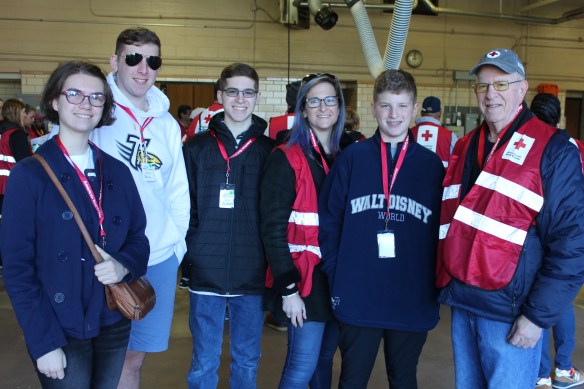


 millions of people experiencing crises and disasters around the globe. The American Red Cross is part of the world’s largest volunteer network, extending across 187 countries.
 With a strong principle of promoting International Humanitarian Law, the national societies that work under the umbrella of the global Red Cross assist some 284 million people every year. The tasks they carry out depend upon the rules and regulations of that particular country. Therefore, their work is driven by local needs. For example, the American Red Cross provides nearly half of the nation’s blood supply. The Palestine Red Crescent Society and Mexican Red Cross operate hospitals and ambulances. The Norwegian and Italian Red Cross conduct search and rescue operations. The Kenyan, Russian and Vietnam Red Cross provide care and support to people living with HIV/AIDS.
 week of April 29 to May 4, with installation events in North Ridgeville, Carrollton, Ashland, Ashtabula, Massillon, Slavic Village (Cleveland), Medina and Mansfield.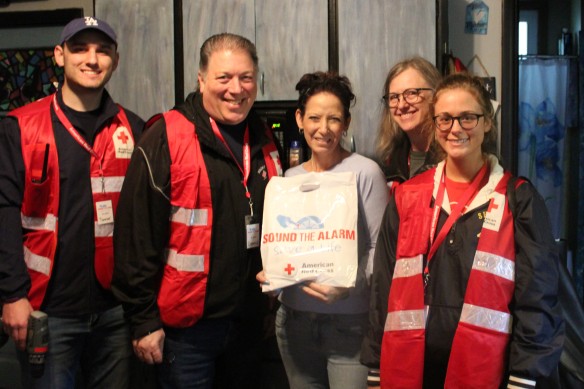
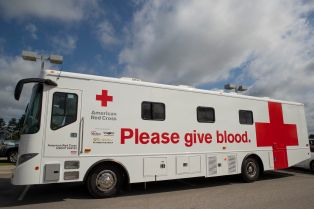 Health Innovation. The American Red Cross of Northeast Ohio will be hosting the Wrapped in Red Gala.
 A new state-of-the-art bloodmobile measures 40-feet long and 8.5 feet wide and includes three health history booths where donors’ eligibility screenings are conducted, as well as up to five beds where blood is drawn.
 NOHredcross