Stormy summer weather prompted calls for assistance from the Northern Ohio Region of the American Red Cross during the weekend of August 13-15.
A family of five received assistance on Friday, after experiencing storm damage at their home in Toledo.
Flash floods in Elyria affected more than two dozen people, who received assistance totaling more than $4,400. The affected residents were able to use the funding to find safe shelter, buy food, clothing, and any other assistance they needed.
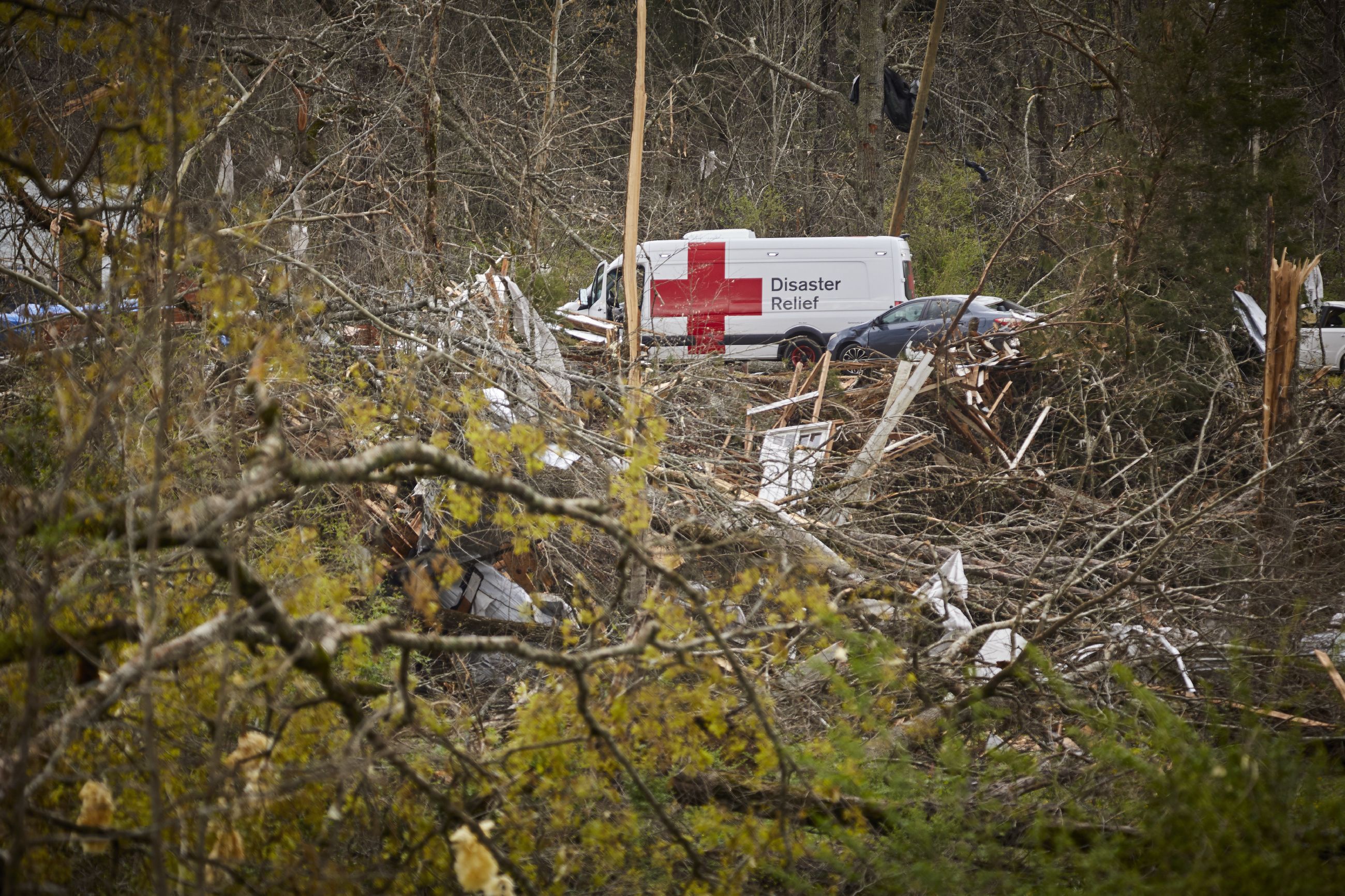
March 28, 2021. Ohatchee, Alabama. American Red Cross canvassing the area to provide assistance to all those affected by the devastating spring storms in and around Birmingham, Alabama. Photo by Jaka Vinsek/American Red Cross
Disaster assistance over the weekend was also provided to 10 adults and children who were forced from their homes by fire. Volunteers assisted fire-stricken residents in Cuyahoga, Summit, Portage, Ashtabula, and Monroe County, Michigan.
Andy Garcia – Photo credit: Meg Brinkman, Red Cross volunteer
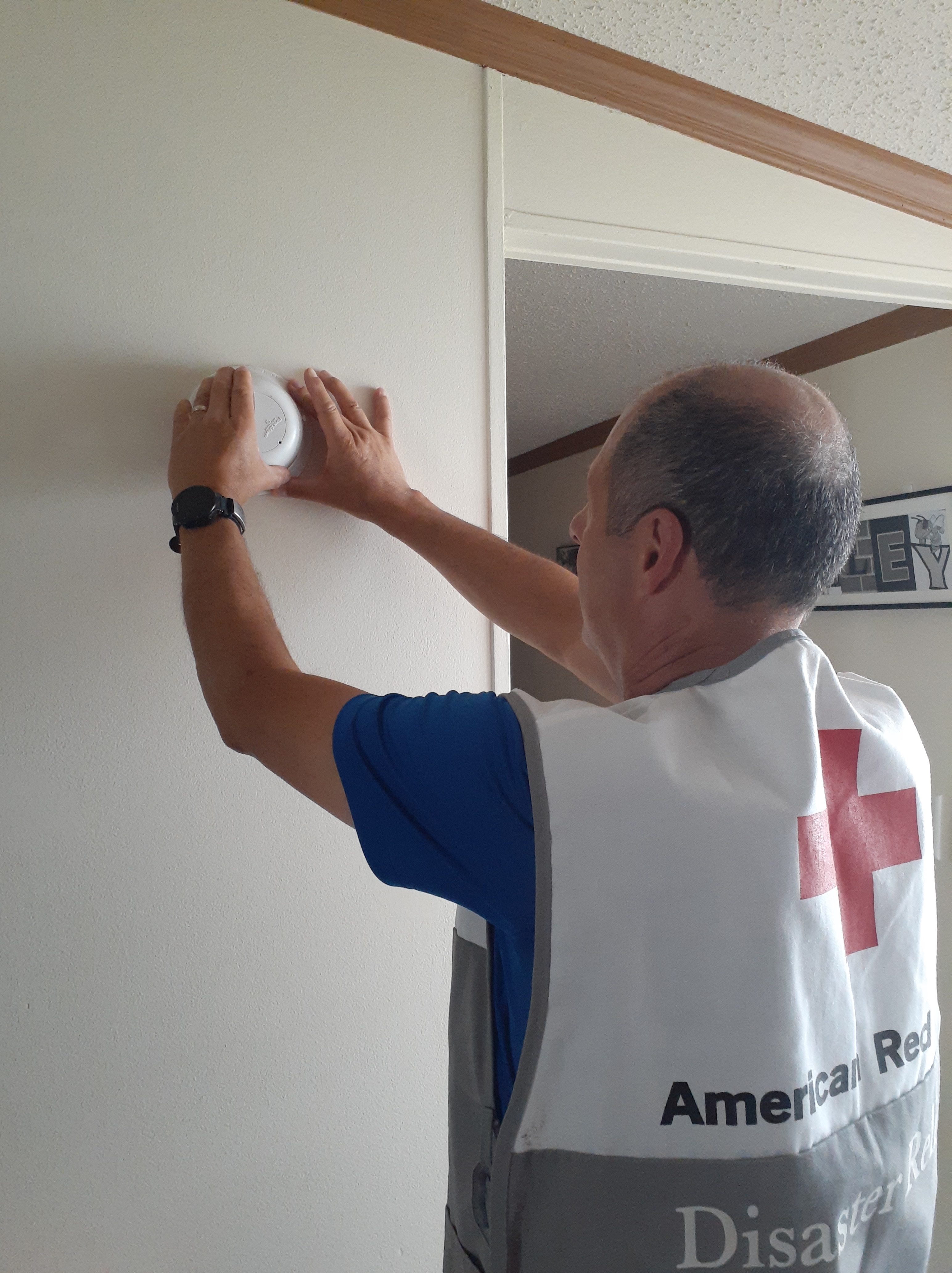
In an effort to prevent fatal home fires, volunteers in Hancock County helped install smoke alarms and provided home fire safety information to residents in Findlay on Saturday. The effort was organized by Ben Garcia of Findlay, as his Eagle Scout project. Ben is a member of Troop #319 in Findlay. Teams of scouts and volunteers recruited by Ben were joined by local Red Cross volunteers to visit residents in Riverview Terrace and the surrounding neighborhood to install smoke alarms and teach residents about what to do in case a fire breaks out.
22 homes were made safer, as Ben and the rest of the volunteers installed 49 smoke alarms.
Accompanying Ben were his father, Andy Garcia (pictured here), his mother and his brother.
If your home needs the protection of working smoke alarms, visit our Home Faire Campaign page to request a visit from trained Red Cross volunteers who can provide free smoke alarms, install them, and offer vital home fire safety information.
Many weather experts predict a destructive wildfire and hurricane season this year. The American Red Cross needs volunteers to help people who are affected by these disasters.
“We’re preparing for another extremely busy disaster season, and it’s critical to have a trained, ready volunteer workforce to make sure we can provide relief at a moment’s notice,” said Mike Parks, Regional CEO, American Red Cross of Northern Ohio. “This year’s wildfire season is already very active and dangerous because of the severe drought and dry woodlands across the west. And experts are predicting we could see 10 or more hurricanes in the upcoming weeks.”
“We’re preparing for another extremely busy disaster season, and it’s critical to have a trained, ready volunteer workforce to make sure we can provide relief at a moment’s notice.”
Mike Parks, Regional CEO, American Red Cross of Northern Ohio
SHELTER VOLUNTEERS AND HEALTH PROFESSIONALS NEEDED
The Red Cross needs new volunteers to support disaster shelters. Volunteers will help with reception, registration, food distribution, dormitory, information collection and other vital tasks inside disaster shelters. Both entry and supervisory-level opportunities are available.
The Red Cross also needs volunteers who can work in disaster shelters to address people’s health needs and provide hands-on care in alignment with their professional licensure (registered nurse and licensed practical nurse/licensed vocational nurse). Daily observation and health screening for COVID-19-like illness among shelter residents may also be required. If you are an RN, LPN, LVN, APRN, NP, EMT, paramedic, MD/DO or PA with a current and unencumbered license, this position could be right for you.
Red Cross volunteer Dave Wagner looks out damage from the Dixie Fire on the outskirts of Greenville, CA, a small town that was devastated by the fire on Saturday, August 7, 2021. Many of the evacuated residents found shelter with the Red Cross in nearby Quincy and Susanville, CA. Photo by Scott Dalton/American Red Cross
DISASTER ACTION TEAM MEMBER
Local Disaster Action Teams provide 24-hour emergency response to local disasters, particularly home fires, ensuring that those affected have access to resources for basic necessities such as food, shelter and clothing. If you are team-oriented and want to help your neighbor, the DAT responder may be just the thing for you.
Disaster Action Team members from Northern Ohio respond to a fire in Lakewood on Aug. 4, 2021.
At 1 p.m. today, the Red Cross will host a Facebook Live event where our experts will discuss the various volunteer roles and how you can get involved in helping families after disasters here locally and across the country. Tune in to learn more and get your volunteer questions answered.
Last year, the Northern Ohio Region provided immediate emergency assistance to more than 5,100 people after nearly 1,200 home fires and other disasters.
If you can’t join us this afternoon but are interested in helping your community when disasters occur, you can sign uponline or contact our area offices at 216-431-3328 or neovolunteer@redcross.org.
BLOOD AND PLATELET DONORS NEEDED
Wildfires, record-breaking heat and a busy hurricane season can also impact the nation’s blood supply. On top of the toll extreme weather events take on the lives of millions, disasters can cause blood drive closures or prevent donors from being able to give safely. Eligible donors can help overcome the critical need for blood and ensure blood is readily available by making an appointment to give by using the Red Cross Blood Donor App, visiting RedCrossBlood.org, calling 1-800-RED CROSS (1-800-733-2767) or enabling the Blood Donor Skill on any Alexa Echo device.
Here we are, still in the dog days of summer. If you’re not sweating out heat and humidity today, you’re likely to again before we slide into the cooler days of fall.
But what about our furry friends, our dogs and cats? Do they sweat the misery of hot, humid weather?
Actually, dogs and cats do sweat to cool off. And their fur acts as insulation.
But pets rely on us, “their people,” to behave like the “alpha animals” in their lives and protect them from the worst of summer.
“The American Red Cross focuses on the welfare of human beings, but we know how important pets are to people,” said Dr. Eve Schaming, veterinarian at Sagamore Hills Animal Hospital in Summit County. “That’s why we want to help folks prevent heat-related issues with their animals.”
Provide plenty of fresh water. To avoid pet heat exhaustion, make sure your pets have plenty of cool, fresh water and access to shade all day long.
Never leave your pet in the car. And no, cracking the window open or parking in the shade doesn’t count! The inside of a vehicle can reach 120 degrees in a matter of minutes, which puts an animal in real danger.
And watch the humidity. Just like humans, our pets sweat or pant to cool off, but high humidity slows that process down.
The Red Cross offers these steps to treat heat stroke in dogs:
Get your animal out of direct heat.
Check for signs of shock, which include: collapse, body temperature of more than 104, bloody diarrhea or vomit, stupor, seizures or coma, excessive panting or difficulty breathing, increased heart rate, salivation.
Take your dog’s temperature.
Spray your dog with cool water and then retake its temperature.
Put water-soaked towels on the dog’s head, neck, feet, chest and abdomen; turn on a fan an point it in the dog’s direction; rub isopropyl alcohol (70%) on the foot pads, but don’t use large quantities.
Take your dog to the nearest veterinarian. The effects of heat stroke may not show up right away.
Pay special attention to older animals and to dogs with shorter noses (like pugs, boxers and bulldogs). They’re at greater risk for heat stroke.
Protect your pet’s paws from hot surfaces. Walk your pet in the grass or the shade whenever possible. If the pavement is too hot for your bare feet, it’s too hot for your pet’s paws! If it needs to go outside on a hard surface to “do its business,” try wetting the surface with a hose or water bottle to help cool it off.
Don’t overdo outdoor exercise. Often, dogs don’t know when they need a break, so it’s up to us, “their people,” to stop for regular shaded breaks and offer water. Try to plan your walks, hikes or runs during the cooler times of day. (Better for you too!)
Whether it’s hot or not, check with your vet to see if your pets should be taking heartworm prevention medication. Heartworm disease, which is transmitted by mosquitoes, can be fatal to both dogs and cats.
The Humane Society of the United States says fleas and ticks are another summer threat. Only use flea and tick treatments recommended by your vet; some over-the-counter product can be toxic, even when used according to directions.
You can have first aid advice for everyday pet emergencies at your fingertips by downloading the Red Cross Pet First Aid App from smartphone app stores by searching for the American Red Cross or by going to redcross.org/apps.
Pet owners can also access the Red Cross Cat and Dog First Aid online course on a desktop or tablet at redcross.org/catdogfirstaid. The 35-minute course covers:
How to determine a pet’s normal vital signs so you can spot something that’s out of the ordinary;
Step-by-step instructions for what to do if a pet is choking, needs CPR, has a wound or is having a seizure; and
Information on preventative care, health and tips for a pet’s well-being.
My neighbor’s dog, Nap, thanks you. And so does my son’s cat, Spike.
Some moments remain in memory with surprising detail. While recent, I suspect receiving the COVID-19 vaccine will remain in mine. Not so much for the injections themselves but for the relief, plans and hope they brought. Even after the first shot, I looked forward to seeing friends, attending family gatherings, hearing live music, traveling and everyday things like grocery shopping without risk assessments. While the Delta variant and vaccine hesitancy are delaying these plans, I cling to a cautious optimism, am grateful that many have some defense against the virus, and am in awe at how quickly and effectively science and knowledge respond to grave threats.
I realize how fortunate I am to have grown up without risk of measles, polio, tetanus and several other diseases, thanks to immunizations. Many are not so fortunate. This is something that the American Red Cross and partner organizations are continuously working to remedy. I am also reminded that we must keep up with our vaccinations. Since August is National Immunization Awareness month, now is an excellent time to ensure your and your family’s vaccinations are up to date.
In addition to the COVID-19 vaccine, other immunizations are needed, especially as many resume pre-pandemic behaviors. Gatherings carry influenza risk, especially in fall and winter, so do not forget your flu shot this year. Travel is also booming, and those traveling abroad should be properly immunized for the destination. (For more information on travel preparedness, read this blog.)
The Centers for Disease Control and Prevention (CDC) states that all adults need vaccines for COVID-19, influenza, Td or Tdap (tetanus) and others, depending on circumstances. In addition, routine vaccinations throughout childhood help prevent 14 diseases. In fact, the CDC says, “among children born from 1994-2018, vaccinations will prevent an estimated 936,000 early deaths, 8 million hospitalizations and 419 million illnesses.”
Vaccine effectiveness and the need for vigilance is especially clear with measles and rubella (German measles). Measles, an exceptionally contagious and severe childhood disease, surged in 2019, though an effective vaccine exists. The World Health Organization (WHO) reports that global measles cases increased to 869,770 in 2019 with 207,500 deaths. While cases were lower in 2020, the WHO says the pandemic disrupted vaccination and prevention efforts. As of November 2020, it estimates “more than 94 million people were at risk of missing vaccines due to paused measles campaigns in 26 countries.”
September 27, 2018. Nairobi, Kenya. Prince Osinachi sits in a Red Cross volunteer’s arms after receiving routine immunizations in Nairobi, Kenya.
The Red Cross and its partners in the Measles & Rubella Initiative are working to create a world free of these diseases. The vaccine is safe, effective and one of the most cost-effective health interventions available. Since 2001, the initiative has vaccinated 2 billion children, preventing over 23 million measles-related deaths. Learn more here. Please consider donating if you can help with this effort.
Your doctor and county board of health can help with vaccinations. For more information on vaccination clinics at the Cuyahoga County Board of Health, CLICK HERE. If you need a COVID-19 vaccine, visit the CDC’s website.
As of this writing, Cleveland, Akron, and Massillon have declared that all returning students will be required to wear masks until further notice. With the Delta variant as dangerous as it is, that’s the only way to protect those too young to be vaccinated.
But that’s not all
The virus isn’t the only thing parents and caretakers need to be aware of. Accordingly, the American Red Cross has issued a list of ten tips to help make this school year a safe one.
If your student rides a bus to school, they should plan to get to their bus stop early and stand away from the curb while waiting for the bus to arrive.
Students should board the bus only after it has come to a complete stop and the driver or attendant has instructed them to get on. They should only board their bus, never an alternate one.
All students should stay in clear view of the bus driver and never walk behind the bus.
Cross the street at the corner, obey traffic signals and stay in the crosswalk.
Never dart out into the street or cross between parked cars.
If children go to school in a car, they should always wear a seat belt. Younger children should use car seats or booster seats until the lap-shoulder belt fits properly (typically for children ages 8-12 and over 4’9”), and ride in the back seat until they are at least 13 years old.
If a teenager is going to drive to school, parents should mandate that they use seat belts. Drivers should not use their cell phone to text or make calls, and avoid eating or drinking while driving.
Some students ride their bike to school. They should always wear a helmet and ride on the right, in the same direction as the traffic is going.
When children are walking to school, they should only cross the street at an intersection, and use a route along which the school has placed crossing guards.
Parents should walk young children to school, along with children taking new routes or attending new schools, at least for the first week to ensure they know how to get there safely. Arrange for students to walk to school with a friend or classmate.
“Parents and kids are both eager to get back to normal and return to the classroom as a new school year starts,” said Mike Parks, Regional CEO, Red Cross of Northern Ohio. “But don’t forget to make safety a top priority.”
While most people realize that the Red Cross responds to disasters, we try equally hard to promote safety at home, at work, and at school; so your donations are always welcome.
For Cleveland Browns fans across northeast Ohio, the opening of Training Camp this past weekend was a welcome site after COVID-19 disrupted so much last season. And, while lots of exciting action was taking place in Berea, fans across Northern Ohio were also showing their love for the hometown team by helping save lives.
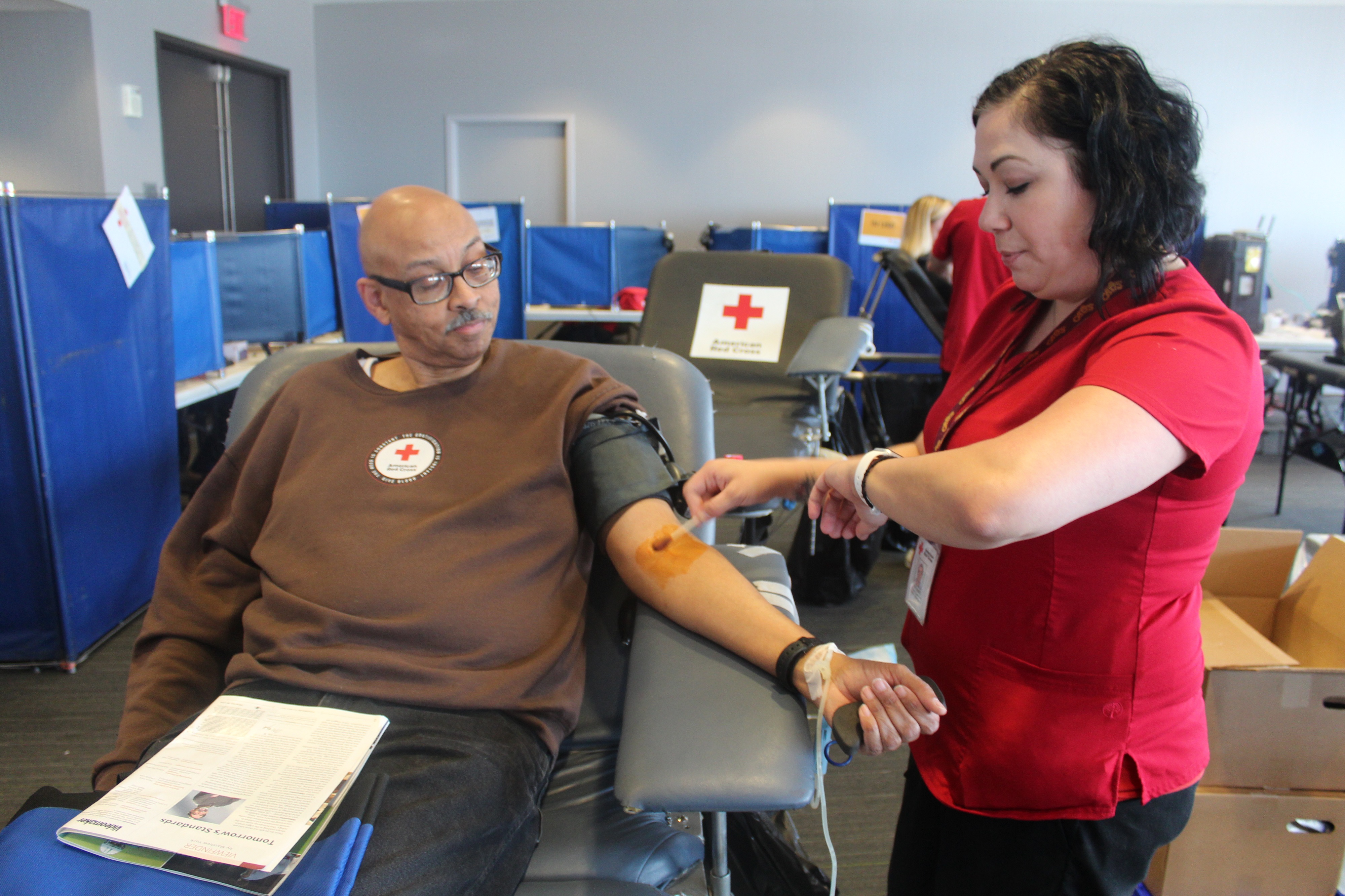
The annual Cleveland Browns Blood Drive was held this past weekend at 12 locations across northern Ohio. The blood drive is part of Browns Training Camp weekend each year and is one of the largest blood drives in the region. This year was no exception. Fans stepped up in a big way to help address a continuing severe blood shortage, donating 571 pints which have the potential to help more than 1,700 patients, as each pint can help up to three individuals.
Many fans came to give at FirstEnergy stadium, home of the Cleveland Browns. Christopher Haddock, of Euclid, is the city Fire Chief and knows firsthand the importance of giving blood. “I was in a car crash in 2006 and needed 15 pints of blood. I’m giving back,” said Haddock. “And I bleed orange and brown.”
Chris Haddock donates blood at FirstEnergy Stadium during the Cleveland Browns Blood Drive July 31
Bridget C. Miller Harper gives blood during the annual Cleveland Browns Blood Drive
Bridget C. Miller Harper works in the transplant department at University Hospitals. “My mom taught me to give back,” she said. “I feel I’m giving back to my patients.”
Shelby Kulick, Therese Kaye and Abigail Seaman began donating blood together while in college at Baldwin Wallace. Back then, they received free burritos after giving. Even though there’s no more free food, the friends continue to donate together.
Shelby Kulick, Therese Kaye and Abigail Seaman at FirstEnergy Stadium for the Cleveland Browns Blood Drive
The support of the Cleveland Browns and their fans was crucial as the Red Cross continues to face a severe blood shortage and has an emergency need for donors. For those who couldn’t give blood this past weekend, the Red Cross urges donors of all blood types – especially type O and those giving platelets – to make an appointment to give now to help ensure hospital shelves are stocked with blood products to meet patient needs.
During the month of August, the Red Cross is partnering with the Bonnaroo Music and Arts Festival and Apple Music for two different promotions to encourage more people to come and give. Read our recent blog post to learn more. And, to see more photos from this past weekend, check out our Flickr album. To find a blood drive near you or for more information, visit RedCrossBlood.org. Go Browns!
If you are as big of a music-lover as I am, then you likely share in my excitement for public concerts returning this summer for the first time in over a year. The music industry is bursting at the seams with music ready to be performed.
This year, the American Red Cross is partnering with Bonnaroo to give away free tickets to this sold-out music festival, which will be held in Manchester, Tennessee, the first weekend of September 2021. By donating blood at a Red Cross drive Aug. 1-15, you will be entered to win an all-expenses paid trip to Bonnaroo for two. Various genres of music can be heard at Bonnaroo over the course of the four-day festival from pop and alternative rock to jazz, country and gospel. For more information on the offer, click here.
The Red Cross is one of the primary suppliers of blood for hospitals throughout the U.S. but currently has a dire need for blood donations. Right now, the Red Cross is distributing 12% more blood to hospitals than distributed at this time last year, which is contributing to the severe blood shortage that we are currently experiencing. This shortage affects every region, including Northern Ohio.
Leaders of several major hospitals are lending their voices to the call for increased blood donations.
“Our nation is facing a critical blood shortage,” said Tom Mihaljevic, M.D., CEO and President of Cleveland Clinic. “In this time of need, we urge the community to donate so we can ensure we have lifesaving blood products for patients.”
Dr. Mihaljevic added, “One person can help save hundreds of lives. At Cleveland Clinic, we support blood drives all year long and encourage everyone who is able to give blood and get involved.”
MetroHealth President and CEO Akram Boutros, MD, FACHE, said, “An adequate blood supply is essential to perform our life-saving work at MetroHealth as the region’s most experienced Level 1 Trauma Center.” Dr. Boutros added, “Every day, blood donors help save countless lives in Cleveland and beyond – the lives of our family, friends and neighbors. It’s time for us all to step up for our community and donate this precious resource.”
“Every day, blood donors help save countless lives in Cleveland and beyond – the lives of our family friends and neighbors. It’s time for us all to step up for our community and donate this precious resource.”
Akram Boutros, MD, FACHE, MetroHealth President and CEO
Cliff Megerian, MD, CEO of University Hospitals said, “A blood donation, especially at such a critical time, can truly help save lives. As a provider of coordinated trauma care with Level 1 trauma centers for adults and children, as well as a network of regional Level III trauma centers, we at University Hospitals know how lives can change in an instant and the crucial importance of having adequate blood supplies for trauma and surgeries. Please give if you’re able.”
Kristy Short, ProMedica blood bank manager in Toledo said, “The Red Cross is our primary source for blood. We have been working closely with them to keep our inventory levels stable so that we can continue to meet all our patients’ needs.” She added, “Our community is the key to helping end this shortage. We encourage all those who are eligible to donate and help save lives.”
And Richard L. George, MD, MSPH, FACS Chief, Division of Trauma ICU Surgical Director Summa Health System – Akron Campus, said, “Blood donations save lives. Having an adequate supply is essential to treat patients.” “As we continue to see a shortage of blood across the country, we encourage you to donate soon.”
To find a blood drive near you, click here. Encourage a friend or family member to do the same and help the Red Cross continue supplying lifesaving blood to patients around the country. You never know, maybe you’ll get to spend four days at the Bonnaroo music festival to top it all off!
Edited by: Glenda Bogar, American Red Cross volunteer
Support for the men and women of the armed forces has been central to the American Red Cross since the organization was founded 140 years ago.
One of our key services is helping military personnel as they leave active duty and look toward putting their skills to work in the civilian world.
Volunteering with the American Red Cross for over 20 years, Suzan Stafford, whom is trained as a psychologist has been hosting workshops with veterans to help them with their transition back to civilian life. Photo by Roy Cox/American Red Cross
“All the way back to our founder, Clara Barton, the Red Cross has been helping military veterans ease back into civilian life,” said Jessica Tischler, Service to the Armed Forces regional program manager for northern Ohio.
“We do this through free in-person workshops as well as small-group virtual modules. These sessions help veterans and their families build skills to successfully pivot into the non-military work world,” she explained.
Regional SAF Program Director Jessica Tischler and Koby Langley, Senior Vice President, Red Cross Service to The Armed Forces
In-person Reconnection and Mind-Body workshops are confidential, led by licensed mental health professionals with additional Red Cross training.
Virtual workshops, also led by professionals, include topics such as:
Creating calmness in stressful times
Psychological first aid and resilience
Effective communication
Stress solutions
Connecting with kids
U.S. Air Force veteran Sally Falasca, a licensed independent social worker in the Youngstown area, is a volunteer workshop leader.
“When I was on active duty, I relied on the Red Cross to assist me in helping service members from all branches,” she said. “I had seen them do so much good.” So Sally was glad to share her skills as a civilian.
Red Cross SAF Volunteer Sally Falasca
She began volunteering in 2018, doing reconnection workshops for adults, children and teens. Since COVID shut down most in-person sessions, she’s been impressed by how much the on-line sessions help veterans and their families strengthen their “emotional grit” and find that all-important work-life balance.
“The Red Cross is an ideal volunteer site for veterans because it offers the opportunity to serve others — just as service men and women do in uniform — in an organized and supportive environment,” Jessica said. “Think of being a disaster responder, locally or nationally, or a blood services volunteer or a first aid or water safety instructor, for example.
“There are lots of overlaps between military service and humanitarian service.”
Mike Parks, Rear Adm. (retired), USCG Regional CEO, Red Cross of Northern Ohio
“I can speak from personal experience when I say that the American Red Cross dovetails with uniformed military service in terms of our dedication to mission and our high regard for leadership,” said Rear Admiral Mike Parks, U.S. Coast Guard (Ret.), who now serves as Northern Ohio Regional Executive for the Red Cross.
The Red Cross has an online military occupation specialty (MOS) “translator” that makes it easy for veterans to find full-time opportunities that match their skills. The site currently lists more than two dozen paid positions right here in Ohio and more than 750 across the country: https://www.redcross.org/about-us/careers/military-occupational-specialty-translator.html
If you’re retired from the U.S. armed services, or know someone who is, and would like to know more about the many Red Cross services to the armed forces, contact your local Red Cross chapter.
If you’d like to financially support this important work and all of the other humanitarian work of the Red Cross, visit redcross.org/donate.
Edited by Glenda Bogar, American Red Cross volunteer
As we emerge from the COVID-19 pandemic, many American Red Cross services are transitioning back to being in-person, especially in Disaster Response and Sheltering. While virtual response and other safety measures helped the Red Cross effectively respond to disasters during the height of the pandemic, in-person assistance was missed. As Mike Arthur, regional mass care and logistics manager for Northern Ohio, explained, the ability to provide hot coffee and a hug can mean a great deal.
In addition to Mike, I spoke with Tom Revolinsky, Red Cross disaster program manager for Northeast Ohio, and volunteer Mark Cline, whose many responsibilities include serving as lead for Disaster Action Team (DAT) and Sheltering Applications in Northern Ohio. Each spoke about how effective an in-person connection is for Red Cross responders and clients recovering from a disaster.
Red Cross volunteers respond to an apartment fire
Tom said the transition began a month ago and is going very well. The DAT team is ensuring volunteers are comfortable with the change, and it is safe. As we learn more, he said, we will adapt to ensure everyone’s safety.
Currently, 80% of disaster responses in our region are in-person. For the other 20%, virtual response remains the best option. Northern Ohio DAT has been highly active. Over the past two weekends they responded to 14 home fires, assisting 73 people.
Mark said an in-person meeting gives a chance to better connect with those in need of assistance, as it is much more personal. Similarly, Tom spoke of how meeting in-person better provides the opportunity to give hope, show someone cares and help with recovery.
Tom recalled how after an exceptionally busy day, he received a late-night call to respond following a home fire. Upon arrival, he met a woman, in tears, sitting in front of her burned-out house. His being there greatly helped, provided comfort, and she soon moved from tears to smiles. Tom said it was empowering for him.
Disaster responder Jan Cooper assists resident Gabriella Asseff after a condo fire in Westlake
I had similar experiences during my time with DAT. The instances when I could see a person begin to recover, to smile and hope again, remain with me.
As for sheltering following a large disaster—fortunately not common in our region—Mike and Tom said congregate housing is now the first option. This will ensure enough space is available, as many hotels are currently near capacity. Safety protocols will be in place. Both Tom and Mike said the Red Cross remains flexible and adapts to each situation, and non-congregate housing remains an option.
Such adaptability has been a hallmark of the Red Cross. When the pandemic necessitated virtual responses to disasters, the DAT team responded. Additionally, technology implemented during the pandemic is also helping with in-person responses.
For many of us, the pandemic underscored the importance of personal connections, especially following a disaster. Thankfully, Northern Ohio DAT responders can provide that again, offering financial assistance along with comfort, hugs and hope.
Over the weekend, the American Red Cross was once again very active responding to calls across Northern Ohio and assisting residents who have suffered a local disaster.
During the weekend of July 17-18, the Red Cross responded to 9 incidents across the region, including home fires and flooding. The disaster team assisted 15 adults and 11 children, and provided more than $5,5000 in immediate financial assistance.
While many of us hear “disaster” and think of large events like wildfires and hurricanes, local disasters are where much of our response happens. In fact, every 24 hours, on average, the Northern Ohio Red Cross responds to three home fires, as well as floods and severe storms. Red Cross volunteers are on call and ready to respond 24/7 when a disaster strikes. After emergency personnel, these individuals are often some of the first people to be on scene at a disaster. They assess the victims’ needs and ensure they have food, clothing, shelter and other services to help take the first steps to recovery.
The Red Cross is committed to helping our community prepare for, respond to, and recover from emergencies. We are able to make a difference in our local communities because of the generosity of our donors and support of our volunteers.
If you would like to provide a financial donation to assist the Red Cross’ efforts to support the residents of Northern Ohio, visit redcross.org/donate, call 1-800-RED CROSS or text REDCROSS to 90999 to make a $10 donation. If you cannot support the Red Cross monetarily but you are interested in making an impact in your local community, the Red Cross is always looking for volunteers. To volunteer, visit redcross.org/volunteer to learn more and sign up.












 NOHredcross