Shaker Heights Resident Turns to Red Cross for Help Following Home Fire

Volunteers Respond to Provide Assistance for Immediate Needs

After Keith Dulin’s kitchen caught fire in November, the intense stench made it difficult for him to stay in his apartment in Shaker Heights.

fire-damage

Dulin tried to return that night, but slept in his car because he was overwhelmed by the reek of grease fire, which burned his stove and surrounding cabinets and wall. Familiar with the type of services provided by the Red Cross, he reached out for assistance.

“It was unbearable, trying to stay in the apartment,” Dulin said. “I needed another place to stay, and I knew the Red Cross could help.”

resident-keith-dulin-receives-help-from-red-cross-volunteers-bill-geschke-and-felicia-lee-3

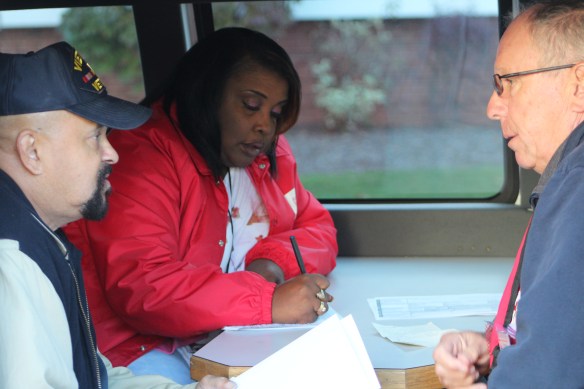
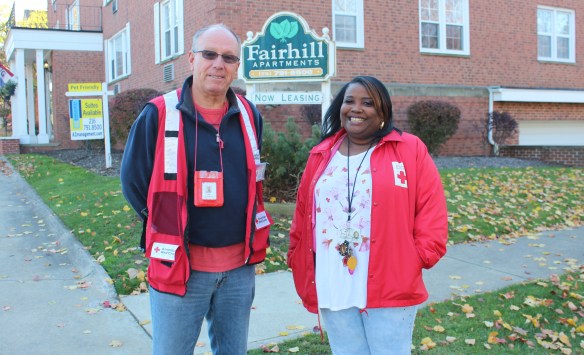
Keith Dulin receives help from Red Cross volunteers Bill Geschke and Felicia Lee after a fire damaged his apartment in Shaker Heights, Ohio. “I am trying to give back to people who are less fortunate,” Geschke said. “I volunteer for other organizations, but the work I do for the Red Cross gives me the most satisfaction.”

After meeting with two Red Cross volunteers at his home, Dulin received a comfort kit with necessities like toiletries, as well as assistance to help cover food and alternative lodging to help get him back on his feet.

Volunteers like Felicia Lee and Bill Geschke respond to an average of three home fires a night in Northeast Ohio.  If you have an interest in volunteering, visit our website or call 216-431-3328.

red-cross-volunteers-bill-geschke-and-felicia-lee

Red Cross volunteers Bill Geschke and Felicia Lee

Photo credit: Jim McIntyre/American Red Cross

Thankful for YOU, NEO

Thank you for all the support you give to the Red Cross in Northeast Ohio!

Without you, none of this would be possible. So, today, we are thankful for you.

To learn more about our services in NEO, visit http://www.redcross.org/neo.

Smoke Alarms Installed Ahead of Holiday Cooking Time

With the holiday season in full swing we can not stress enough the importance of…

SMOKE ALARMS.

Let’s face it, winter in NEO is C-O-L-D! It’s prime time for home fires, between holiday cooking and trying to stay warm. And that’s why our Operation Save-A-Life program is so vitally important.

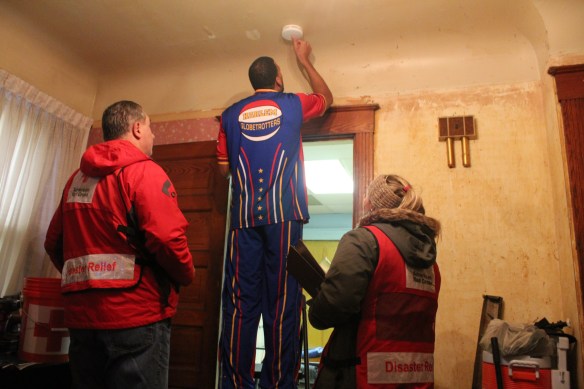
We applaud the volunteers and fire department personnel of Olmsted Twp. who braved our first real cold snap last Saturday to install smoke alarms in one Olmsted Township neighborhood. Through their work, we were able to install more than 320 smoke alarms in 130 homes!

(Click on the photo below to view our album on Flickr!)

Olmsted Twp Fire Walk

If you or someone you know need smoke alarms installed, please visit www.redcross.org/neoosal and click on your county to learn more about this free program.

After Escaping Home Fire, Ravenna Family Turns to Red Cross for Relief

norton-family-in-their-hotel-room-edna-jerome-sr-raymil-and-malik-1
It was an ordinary August morning for Edna Norton until she returned home to find her house ablaze.

Surrounded by nearly a dozen fire trucks, Norton rushed to meet her family outside of their home in Ravenna, Ohio. Much to her relief, her husband and sons made it to safety after the eldest rescued his 18-year-old brother, who uses a wheelchair. But the threat to her family’s lives and destruction to their home left her distraught.

A Red Cross volunteer responding to the fire came to Norton’s side, offering comfort and support.

“She had a spirit about her. She was so calming and soothing,” Norton said of the volunteer. “She made you feel like you could make it through. She was very knowledgeable. I was a wreck. She made me sit down. Gave me water. She was still there after [the first responders] were leaving.”

The Red Cross helped Norton and her family figure out their next steps, addressing urgent needs such as replacing prescription medications that were destroyed by the fire. She said she’s grateful for the support to develop a path for their recovery.

edna-norton-with-red-cross-worker-debbie-chitester-2“To lose everything and to know [there are] people out there that care…There are a lot of good people out in the world,” she added. “I’m telling you that I had so much generosity, so much love, from strangers saying, ‘What can I do to help?’”

If you would like to volunteer as a member of the Red Cross team, visit www.redcross.org/neo and click on Volunteer.

Photos: Mary Williams/American Red Cross

Thanksgiving is almost here!!

If you are like my family members, you can already taste the pumpkin pie and cranberry sauce. But with children and pets (and let’s face it – some grown-ups, too) running around and through the kitchen, paying close attention while preparing the feast is vital to having a safe holiday.

“Cooking is the number one cause of home fires,” said Mike Parks, Regional CEO. “Last year over 40 individuals – more than a dozen of them children – experienced a home fire over the holiday weekend. Education is key in preventing cooking fires.”

TOP TEN COOKING SAFETY TIPS

1. Don’t wear loose clothing or sleeves that dangle while cooking.

2. If you are frying, grilling or broiling food, never leave it unattended – stay in the kitchen. If you just leave the kitchen for even a short period of time, turn off the stove.

3. If you’re simmering, baking, roasting or broiling food, check it regularly.

4. Use a timer to remind yourself that the stove or oven is on.

5. Keep kids and pets away from the cooking area. Make them stay at least three feet away from the stove.

6. Keep anything that can catch fire – pot holders, oven mitts, wooden utensils, paper or plastic bags, food packaging, and towels or curtains—away from your stove, oven or any other appliance in the kitchen that generates heat.

7. Clean cooking surfaces on a regular basis to prevent grease buildup.

8. Consider purchasing a fire extinguisher to keep in your kitchen. Contact your local fire department to take training on the proper use of extinguishers.

9. Always check the kitchen before going to bed or leaving the home to make sure all stoves, ovens, and small appliances are turned off.

10. Install a smoke alarm near your kitchen, on each level of your home, near sleeping areas, and inside and outside bedrooms if you sleep with doors closed. Use the test button to check it each month. Replace all batteries at least once a year. We can help! Learn more about our free smoke alarm and education program, Operation Save-A-Life, at www.redcross.org/neoosal!


Bonus Tip

Download the American Red Cross First Aid App. The app provides users with quick, expert advice on what to do in case of an emergency. See all the Red Cross apps at redcross.org/mobileapps.

Red Cross Helps Cleveland Family Displaced by Fire

Children Receive Stuffed Toys to Help Them Through Crisis

Cara Hunt was at home with her three young children when their upstairs caught fire in September.

The Cleveland family escaped unharmed, but the fire stripped them of their basic necessities and left them with no place to sleep.


As firefighters worked to extinguish the blaze, two American Red Cross workers responded to offer relief. They gave each child a stuffed animal toy to help calm their fears, and provided financial assistance to cover temporary lodging for the family, whose home was deemed unlivable.

Cleveland Fire Battalion Captain Chris Posante, who connected Hunt with the Red Cross workers, underscored the importance of this support.

img_2071

Red Cross worker Mark Cline offers assistance to resident Cara Hunt

“These are good people who are suffering through no fault of their own,” Posante said. “The help you give them is much needed.”

You can help people who have been driven from their homes by fire when you donate to Red Cross Disaster Relief, at redcross.org/donate, or by calling 1-800 RED CROSS.  You can also text REDCROSS to 90999 to make a $10 donation.


img_2078

Red Cross worker Jeremy Bayer offers stuffed toys to children driven from their home by fire


Be Prepared for Winter Weather

It’s Winter Safety Awareness Week

We have experienced mild autumn weather this year, but if you have spent any amount of time at all in Northeast Ohio, you know the snow could start to fly any day. And forecasters are predicting colder temperatures and more snow for the Great Lakes area this winter, thanks to La Nina. It’s not too early to be prepared for the winter weather ahead, and Governor John Kasich is promoting Winter Safety Awareness Week, Nov. 13-19, encouraging households and businesses to update their safety plans, replenish their disaster supply kits, and prepare themselves, their vehicles and their property for winter-related incidents.

B2p4ClUCIAAmRsq

Freshly fallen snow on the trees (and power lines) of a Northeast Ohio neighborhood.

Be Informed

Know the difference between advisories, watches and warnings.

Advisory: Winter weather conditions are expected to cause significant inconvenience and may be hazardous. When caution is used, these situations should not be life threatening.

Watch: Winter storm conditions are possible within the next 36 to 48 hours. People in a watch area should review their winter storm plans and stay informed about weather conditions.

Warning: Life-threatening, severe winter conditions have begun or will begin within 24 hours. People in a warning area should take precautions immediately.

Here’s a good rule of thumb: when in doubt, don’t go out.  Minimize travel outdoors. If travel is necessary, keep a disaster supplies kit in your vehicle.  Emergency kits are available in the Red Cross store.

Your emergency kit for your car should include:

  1. Flashlight with extra batteries
  2. An extra Cell Phone Car Charger
  3. Blanket and/or emergency Mylar blanket
  4. Fleece Hat, Gloves, Scarf (one set for each traveler)
  5. Flares
  6. Folding Shovel
  7. Sand or Cat Litter
  8. Ice Scraper and Snow Brush
  9. First-Aid Kit
  10. Small battery-operated radio
  11. Emergency contact card with names and phone numbers
  12. Extra prescription medications
  13. Bottled Water (4 quarts per traveler – don’t forget pets!)
  14. High protein snacks such as nuts and energy bars; canned fruit and a portable can opener
  15. Maps
  16. Whistle
  17. Baby formula and diapers if you have a small child
  18. A baggie of pet food, if you frequently travel with your four-legged friend

Visit redcross.org for more information on how to make an emergency kit, and keep yourself and your loved ones safe and warm this winter.

Parma Neighborhood Now Better Protected from Home Fires

Fire Walk

Photos provided by Cal Pusateri/American Red Cross Volunteer

Smoke Alarms Installed in Dozens of Homes

While many of us were preparing to “Turn and Test”…turn our clocks back an hour, and test our smoke alarms on Saturday, November 5, the last day of Daylight Savings Time for 2016, several Parma residents got new smoke alarms installed in their homes.Fire Walk

The Red Cross and its partners with the Parma Fire Department and Parma CERT (Community Emergency Response Teams) visited 38 homes, and installed 116 smoke alarms that day as part of Operation Save-A-Life.

Residents were also given valuable fire safety information, including ways to develop escape plans in the event of a home fire.

Last year, the Red Cross and its partners installed almost 13,000 smoke alarms in homes throughout the Northeast Ohio Region.

If you would like to help the Red Cross make Northeast Ohio a safer place to live by partnering with us to install smoke alarms, or if you need smoke alarms in your home, visit our Operation Save-A-Life page at redcross.org/neoosal.

CEO’s Veterans Day Message

Rittman8

Ohio Western Reserve National Cemetery, Veterans Day Program 2015

By Mike Parks, CEO, American Red Cross Northeast Ohio Region, Rear Admiral, U. S. Coast Guard (Ret.)

American Red Cross of Northeast Ohio Family Members:   Yes…it’s Veterans Day and we have Red Cross members representing us in parades and festivities around the country in honor of those who have served our grateful nation.  For those of you who are veterans—thank you for your faithful service.  For those of you who have family members who are or were veterans, thank you for supporting them.  As every person who has worn the uniform of this country will attest—support from family and friends was crucial to their success.    And thank you to all the Red Crossers who support our Servicemen and Servicewomen every day of the year.

Here is a blog post that I thought you might find interesting from the Senior Vice President for the American Red Cross’ Service to the Armed Forces (SAF), Koby Langley, it really gets to the heart of why we do what we do.

As we pause from our Red Cross duties to reflect on Veterans Day, I thought it fitting to share some historical thoughts with you about one of the American Red Cross’ most distinguished leaders who was also arguably one of the greatest military leaders in our nation’s history, General George C. Marshall:

Veterans Day Parade3

2nd Annual City of Cleveland Veterans Day Parade

“By the summer of 1949, President Truman was mulling over means of bringing Marshall back into public service as head of the American Red Cross. There were signs that Basil O’Connor, head of the American Red Cross since 1944, might soon retire. Why not, thought the President, give Marshall that job? It would associate him again with public affairs in a way that carried fewer burdens than had his previous appointments.

Basil O’Connor had been named by President Roosevelt to succeed Norman Davis as Chairman of the Red Cross when Davis died in 1944. O’Connor was very hardworking but had managed to offend and alienate some of the older Red Cross leaders. Many of the disagreements had been smothered during the war, when the Red Cross had given outstanding service to servicemen, refugees, prisoners of war, and others desolated throughout the world.

Part of the trouble came from the apparent domination of the organization in the late thirties by wealthy and socially prominent Eastern-establishment figures on the Red Cross board of governors. Active heads of chapters in other cities and regions complained that they had no voice in operations. Volunteer workers, a highly important part of the Red Cross’s activities, charged that they were not used or involved in decisions. These charges and complaints boiled down to the bitter feeling that a very few people ran the organization.

In 1946, the Red Cross made a decision to create a special committee headed by E. Roland Harriman, Averell Harriman’s brother, a partner in Brown Brothers, Harriman, and manager of the North Atlantic region of the Red Cross during the war. He and his committee members undertook to meet some of the chief complaints of others in the organization, and their proposed changes were approved by Congress and President Truman in the spring of 1947. The President of the United States was to appoint the President, and the board of governors was enlarged and rearranged to give far more representation to the chapters. Chairman O’Connor now became President.

Despite O’Connor’s efforts to stop controversy, sharp criticism persisted. By 1948, it was evident that the organization needed a leader of great stature who had not been associated with the infighting, and who could respond to the claims of all factions without prejudice. O’Connor made it plain that he was ready to step down.

Truman naturally thought of Marshall. His appeals for the European Recovery Program were of the exact kind needed by the American Red Cross. During the war he had sought public support for Red Cross drives, and his war’s-end reports praised the organization’s service to the men of the armed forces and their families. His 1948 speeches for ERP showed his effectiveness in convincing the same types of people that the Red Cross needed. Few were aware of another factor that made him so desirable as O’Connor’s successor. As Pershing’s aide in France after World War I and later in the United States, he came into contact with many Eastern- establishment figures, whose influence was still needed by the Red Cross. He was perhaps the one person who could bridge the gap between the factions…”27280817982_d96f924a01_z

“Marshall set out to eliminate friction, to fire the workers with enthusiasm, to smooth out dissension. In the early months of the year he spent as head of the Red Cross, he was on the road constantly. In the last months, the coming- of the Korean War gave added emphasis to the Blood Bank program, and to morale-building services concerned with the troops and their families, thus gaining added support for overall programs.

The number of personal trips he made surprised even him. Near the end of 1949, he wrote Queen Frederika of Greece, who had asked about his new job, that although he was at Pinehurst for the winter, he would be traveling constantly on Red Cross business from January 15 until March 7, some 20,000 miles. Since taking over in October, he had covered 9,000 miles. In fact, he said, he would be increasingly busy until he took a few days off for rest in August.”    From George C. Marshall: Statesman 1945-1959 by Forrest C. Pogue