Volunteering as a Disaster Team Member

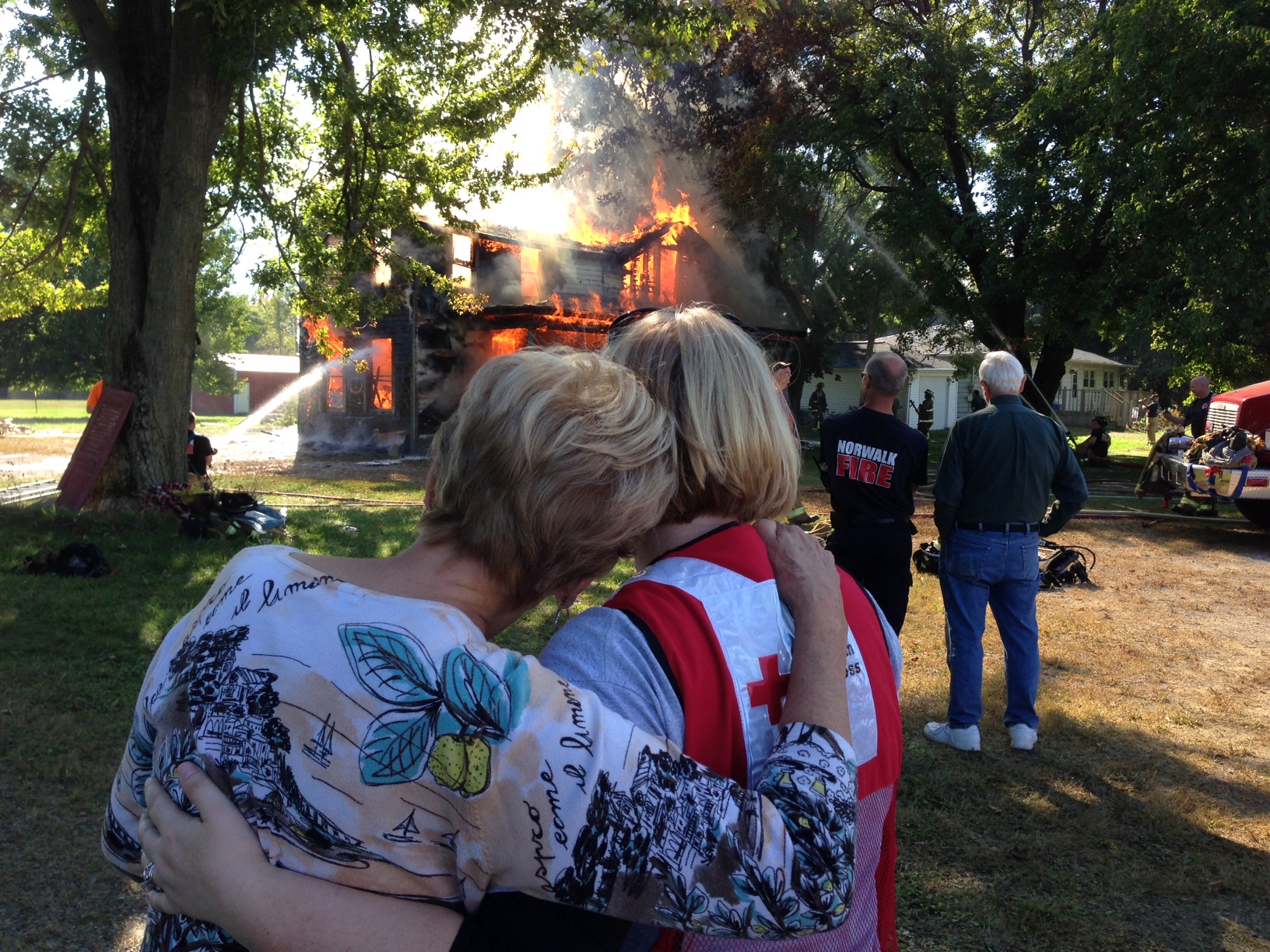
Team members on a Firewalk - passing out fire safety literature in susceptible areas - in Summit CountyOur Disaster Action Team (DAT) members are amazing people!

When a family experiences a home fire a two a.m., it is the DAT team that pull themselves from their own beds and respond, bringing a little light into a dark situation. If a building complex catches fire on Thanksgiving Day and requires multiple fire departments to respond and control, DAT team members leave their own families and turkey dinners to serve hot coffee, cold water and other snacks to the fire personnel.

Walter Reddick, DAT volunteer with the Greater Cleveland Chapter, feels that giving people a direction after a disaster has given him a purpose. When asked what made him want to volunteer with the American Red Cross he said he had a stranger show him love and wanted to do the same thing, to better himself and to help create something new in the lives of those with whom he interacts.

For some, volunteering with the Red Cross has been a family affair. Jack Beck, a volunteer with the Summit, Portage, and Medina Counties Chapter, became a volunteer after his father and uncle volunteered with the organization. Once, he responded to a familiar address. When his aunt experienced a home fire, Jack found it was gratifying to be able to provide support as the Red Cross to her.

Many of our volunteers work with families across the United States. When a disaster strikes, they are called up on to report to the scene, even if it is hundreds of miles away. Gene McCray, DAT Team Leader and Logistics Lead for the Stark and Muskingum Lakes Chapter, has been on 10 disaster relief operations including places as far away as Tampa and South Dakota.

Gene even met the love of his life, Cheryl, through the Red Cross!

It’s not just the two a.m. calls that keep our volunteers busy, many also volunteer in other Red Cross services areas, such as our Service to Armed Forces programs and Disaster Education Preparedness programs. Take for example, Alice Martinez, a volunteer with the Lake Erie/Heartland Chapter, who volunteers with as DAT member, a Pillowcase Project presenter, a general Community Disaster Education Presentations/Events worker, as part of the Shelter Survey project and provides occasional support to disaster casework and volunteer candidate inquires. Or Mark Morrow, from the Lake to River Chapter, who- in addition to his DAT team responsibilities, volunteers as Office Support at the Jefferson Office location, and recently became an instructor for our health and preparedness classes!

If you are interested in volunteering as a DAT member – or in any of the other positions available with the Red Cross – visit www.redcross.org/volunteer or call 216-431-3328
5 Years Later, Remembering the 2010 Earthquake in Haiti

by Wedley Charles, Intern at the American Red Cross of Northeast Ohio

January 12, 2010 I was being lured to sleep by the monotone voice of my physical education professor at Saint Cloud High School in Florida. He was rambling about the dangers that exist in the world and I decided to doodle. I was lost in my own world until he said “Disasters happen Wedley, you’ll never know when it’ll be your last day.”

I felt like a prisoner in my own mind when I arrived home. I couldn’t escape the words my professor told me. As I was walking towards my father I overheard breaking news from CNN saying there was an earthquake the magnitude of 7.0. The earthquake hit the capital of Haiti, Port-au-Prince, and neighboring cities.

My father, his bestfriend from Cap-Haitien, and I

My father, his best-friend, and I

My father went into an immediate panic. You could hear him mashing the buttons into the body of his phone. He was trying to contact all of his family members in Haiti, but he couldn’t reach them all. I remember him telling me stories of him growing up in a village in Cap-Haitien. The people of the village raised the children together teaching them local traditions and customs. He told me it would be his dream to have me go to his village and see his family. Now that the earthquake hit, I could no longer see those dreams.

Days later we discovered that my father lost two cousins and his wife at the time lost three family members. The deaths occurred northeast of the capital; La Gonave, Gonaives, Cap-Haitien.

The American Red Cross has supported more than 4.5 million Haitians since the 2010 earthquake. They have also contributed $98 million to improve the vital health care in Haiti. This allows families to have better access to quality medical care and clean water. $48 million dollars have been spent on job training, cash grants, and livelihood programs for the devastated communities. The Red Cross has also started programs to help entrepreneurs improve their business and marketing skills and they’ve trained nearly 10,000 people in construction techniques for emergency-ready homes. They provided safer sheltering conditions for 132,000 Haitians and upgraded or repaired more than 15,000 homes enabling them to remain safe far into the future.

Haiti 5 year Infographic

Haiti 5 year Infographic

The fundraising efforts of the Red Cross contributed $488 million for work in Haiti. The American Red Cross worked in partnership with the Haitian Red Cross and local Haitian organizations to support and sustain a permanent culture of preparedness.

Gail McGovern, CEO of the American Red Cross said “I have seen firsthand the destruction and shock in the days right after the earthquake, where people were just trying to get through the day with minimal food, water and health care. I have seen the steady progress and the return of a spirit of resiliency as Haitians have rebuilt their lives and communities. The pace of progress on the road to recovery is never as fast as we would like, but everywhere you look, there is a marked difference in Haiti, and I’m very proud of all that we have accomplished.”

What would you do if extreme weather forced you to stay in your car for hours?

Extreme weather can happen anywhere and at anytime. Typically, the public has advanced notice of extreme weather and can prepare for the event. But consider the ice storm that stopped Georgians in their tracks last January. Some travelers were stuck in their cars on the interestate for 12 or more hours.

So, what can you be prepared for the next #blizznado? (#winterblizz? #heckofalottasnow?)

A lot, actually! Be aware of the amount of gas you have in your car and never let it get below a quarter of a tank.

Pack a special Emergency Kit (Car Edition!) that you keep in your car. Include:

  1. Flashlight with extra batteries
  2. An extra Cell Phone Car Charger
  3. Blanket and/or emergency Mylar blanket
  4. Fleece Hat, Gloves, Scarf (one set for each traveler)
  5. Flares
  6. Folding Shovel
  7. Sand or Cat Litter
  8. Ice Scraper and Snow Brush
  9. First-Aid Kit
  10. Small battery-operated radio
  11. Emergency contact card with names and phone numbers
  12. Extra prescription medications
  13. Bottled Water (4 quarts per traveler – don’t forget pets!)
  14. High protein snacks such as nuts and energy bars; canned fruit and a portable can opener
  15. Maps
  16. Whistle
  17. Baby formula and diapers if you have a small child
  18. A baggie of pet food, if you frequently travel with your four-legged friends

Additionally, know the differences between winter storm outlooks, advisories, watches and warnings.

  • Winter storm outlook – Winter storm conditions that are possible in the next 2 to 5 days.
  • Winter Weather Advisory – Winter weather conditions are expected to cause significant inconveniences and may be hazardous. When caution is used, these situations should not be life-threatening.
  • Winter Storm Watch – Winter storm conditions are possible within the next 36 to 48 hours. People in a watch area should review their winter storm plans and stay informed about weather conditions.
  • Winter Storm Warning – Life-threatening, severe winter conditions have begun or will begin within 24 hours.
    • People in a warning area should take precautions immediately.

Are you prepared for a home fire? Test yourself

Did you realize that, on average, the Red Cross of Northeast Ohio responds to 2.5 home fires every night? While one piece of our mission is to help families displaced by these and other disasters, many households can help themselves by becoming more aware of how to reduce their chances of experiencing a fire.

2014 Katie with Fire VICTIM

In fact, the Red Cross and its local and national partners have launched the Home Fire Preparedness Campaign, an initiative that aims to reduce deaths and injuries caused by home fires by 25% in five years.

Test yourself with this handy quiz to determine what you have covered, and what you and your family may need to work on.

The Red Cross is asking every household in America to join us in taking two simple steps that can save lives: checking or installing smoke alarms and practicing fire drills at home.

Join the Red Cross and Federal Emergency Management Agency in the second annual PrepareAthon on September 30

Join us for the second annual America’s PrepareAthon! national day of action.

The last few years have been an important reminder to all of us that disasters can strike anytime and anyplace. Nearly every region of the country experienced some form of extreme weather event, including devastating tornadoes in Oklahoma, scorching wildfires throughout California, and destructive flooding in Northeastern Ohio.

The destructive power of weather affects all communities. Learning how prepare for an emergency will help determine your course of action during a disaster.

The destructive power of weather affects all communities. Learning how prepare for an emergency will help determine your course of action during a disaster.

As with many life events, preparation is the key to success. When you prepare and practice for an emergency in advance of an event, it makes a real difference in your ability to take immediate and informed action when it matters most. Early action can also help you to recover more quickly.

That’s why thousands of individuals, organizations, schools, houses of worship, and local governments across the Nation are actively participating in a new national campaign for action – America’s PrepareAthon!

The Red Cross continues to support and promote this action-based initiative to build a more resilient Nation starting with the national day of action on September 30.

Can’t participate on September 30? Preparing for disasters is a year-round activity. So pick a date that works for you. You can still register to be counted in the movement. And be sure to post your preparedness activities on the national calendar.

It’s not a matter of if the next disaster will happen, but when. Take action and prepare now by completing simple steps such as making a plan and having an emergency kit. Start the conversation in your family today. It can help determine what you need to do next to become more prepared.

Be smart, take part, and prepare for emergencies before they strike!

Give 10 hours, help your community

Look for our volunteers on Dawg Pound Drive just outside the stadium at tomorrow’s Browns vs. Ravens game!

The Cleveland Browns are encouraging fans to volunteer 10 hours of service in their own communities during the year.

The First and Ten initiative, which launched in June of 2014, is the first of its kind in the NFL. The Browns are hoping that fans will volunteer over 500,000 hours to communities throughout the area, and really, anywhere that a Browns Fan may live. With over 10,000 pledges already in, they are well on their way to meeting that goal.

This is a perfect partnership for the American Red Cross, which relies on volunteers to continue its mission to prevent and eliminate human suffering in the face of emergencies. Volunteers make up more than 94% of the workforce of the Red Cross.

How can you volunteer to #Give10 hours to the Red Cross in your community?

You can get started as a volunteer by going to www.redcross.org/volunteer and filling out the online form.

Then head over the Brown’s First and Ten website to register, as a Browns’ fan, to give 10 hours in your community.

Share your #Give10 story

If you are social media savvy, you can share your story of giving 10 hours by using the hashtag #Give10 on Twitter. Then tag @BrownsGiveBack and @NEORedCross. Fans can follow the #Give10 movement on Twitter by following @BrownsGiveBack or searching for the hashtag #Give10.


Not on twitter? Share your story of volunteerism by visiting the First and Ten site.


Disaster preparedness for pets too!

When disaster strikes, all members of the family should be prepared with a disaster kit – including your pets.  Keep items in an accessible place and store them in sturdy containers so that they can be carried easily.

Pictured beside Zack and Zoe are leashes, water, food, Vet information, dog toys, a towel, dog treats, medical history, medicine, current picture of Z&Z and a water bowl.

Pictured beside Zack and Zoe are leashes, water, food, Vet information, dog toys, a towel, dog treats, medical history, medicine, current picture of Z&Z and a water bowl.

Your kit should include—

  • Sturdy leashes, harnesses and/or carriers to transport pets safely and ensure that they can’t escape.
  • Food, drinking water, bowls, cat litter/pan and a manual can opener.
  • Medications and copies of medical records stored in a waterproof container.
  • A first aid kit and download the Pet First Aid App
  • Current photos of you with your pet(s) in case they get lost. Since many pets look alike, this will help to eliminate mistaken identity and confusion.
  • Information on feeding schedules, medical conditions, behavior problems, and the name and number of your veterinarian in case you have to foster or board your pets.
  • Pet beds and toy

Click here for a complete list of pet disaster preparedness items: http://www.redcross.org/images/MEDIA_CustomProductCatalog/m3640126_PetSafety.pdf

Pets will look to family members for comfort during all the changes that disasters bring.  Having a plan ahead of time will reduce stress and ensure you that you can care for your furry family members.

Celebrate National Preparedness Month: Make a plan, get a kit, be informed!

September is National Preparedness Month.  There are many ways that your family and community can prepare for an emergency. Over the next few weeks, we’ll be showcasing some of the simple steps that you can take to get prepared.

Oklahoma Tornado One Year Report 2014Carney, Oklahoma Home Kit DeliveryThe simplest way to prepare for a crisis is to have an emergency kit ready to go. An emergency kit is made up of basic necessities that will help you and your loved ones survive sheltering in place. (To shelter in place means that you are staying in a safe space in your home for any amount of time, like when you go to your basement or other enclosed area during a tornado warning.)

The core items needed for a basic emergency kit are available at many of the locations where you do your weekly shopping, so it doesn’t even require a special trip to get started!

Your kit should include:

  • Water
    • one gallon per person, per day (3-day supply for evacuation, 2-week supply for home)
  • Food
    • Ready-to-eat canned meats, fruits, vegetables
    • Protein or fruit bars
    • Dry cereal or granola
    • Peanut butter
    • Dried fruit
    • Nuts
    • Crackers
    • Canned juices
    • Non-perishable pasteurized milk
    • High energy foods
    • Vitamins
    • Food for infants
    • Comfort/stress foods
  • Can Opener
  • Flashlight
  • Battery-powered or hand-crank radio (NOAA Weather Radio, if possible)
  • Extra batteries
  • First aid kit
    • 2 absorbent compress dressings (5 x 9 inches)
    • 25 adhesive bandages (assorted sizes)
    • 1 adhesive cloth tape (10 yards x 1 inch)
    • 5 antibiotic ointment packets (approximately 1 gram)
    • 5 antiseptic wipe packets
    • 2 packets of aspirin (81 mg each)
    • 1 blanket (space blanket)
    • 1 breathing barrier (with one-way valve)
    • 1 instant cold compress
    • 2 pair of nonlatex gloves (size: large)
    • 2 hydrocortisone ointment packets (approximately 1 gram each)
    • Scissors
    • 1 roller bandage (3 inches wide)
    • 1 roller bandage (4 inches wide)
    • 5 sterile gauze pads (3 x 3 inches)
    • 5 sterile gauze pads (4 x 4 inches)
    • Oral thermometer (non-mercury/nonglass)
    • 2 triangular bandages
    • Tweezers
    • First aid instruction booklet
  • Medications (7-day supply) and medical items
  • Multi-purpose tool
  • Sanitation and personal hygiene items
  • Copies of personal documents (medication list and pertinent medical information, proof of address, deed/lease to home, passports, birth certificates, insurance policies – paper copies and on a usb stick)
  • Cell phone and/or chargers
  • Family and emergency contact information
  • Extra cash
  • Emergency blanket(s)
  • Map(s) of the area

Don’t forget to include specialized items for all of your family members, especially the tiny or four-legged ones! If relevant, be sure to include:

  • Baby supplies
    • Bottles
    • Formula
    • baby food
    • diapers
  • Games and activities for children
  • Pet supplies
    • Collar
    • leash
    • ID
    • Food
    • Carrier
    • Bowl
  • Medical supplies
    • hearing aids with extra batteries,
    • glasses
    • contact lenses
    • syringes, etc

And some additional supplies that would be good to keep at home or in your survival kit (based on the types of disasters common to your area):

  • Whistle
  • N95 or surgical masks
  • Matches
  • Rain gear
  • Towels
  • Work gloves
  • Tools/supplies for securing your home
  • Extra clothing, hat and sturdy shoes
  • Plastic sheeting
  • Duct tape
  • Scissors
  • Household liquid bleach
  • Entertainment items
  • Blankets or sleeping bags

For more information on building an emergency kit, visit www.redcross.org/prepare or download our free Situational Emergency apps.

On Twitter? Show us your kit! Tweet a picture, tag @neoredcross and use the hashtag #NatlPrep.