What you need to know about the flu vaccine (and donating blood) this year

By Sam Pudelski, American Red Cross volunteer 

Fall is here, and along with it comes flu season. If you are a regular blood donor, you may have questions about the flu shot and if it will affect your ability to donate blood (Spoiler alert: it doesn’t!). Even if you donate blood less frequently or you have not donated before, the American Red Cross of Northern Ohio answers some common questions about getting the flu vaccine and shares what you need to know about donating blood this fall and winter. 

Why should people get their annual flu vaccine? 

  • Getting your yearly flu shot is the best line of defense against the flu. If you do get sick, your symptoms might not be as severe if you are vaccinated. 
  • While some people may think getting the flu is no big deal, it can be serious – even for those who are healthy. 
  • Vaccination to prevent influenza is especially important for people who are at high risk for developing serious complications from the flu. Members of their household or those who are in close, frequent contact with individuals who are high risk should get vaccinated. 

Who should get the flu vaccine? 

  • The Centers for Disease Control and Prevention recommends everyone six months of age and older should get a flu vaccine every season, with rare exceptions. 
  • There are different flu vaccines approved for different age groups and for some people, like those who are pregnant or have certain chronic health conditions. 
  • If you have any questions, talk to your primary care provider. 

What do I need to know about the flu vaccine and donating blood? 

March 11, 2019. Monroe Carell Jr Children’s Hospital at Vanderbilt, Nashville, Tennessee. Photographs from blood bank at Vanderbilt University Medical Center, blood donations at Red Cross on Monday, March 11, 2019 in Nashville, Tenn. Photo by Sanford Myers/American Red Cross
  • Getting the flu vaccine helps to support a healthy community and ensure that patients have access to lifesaving blood products year round. 
  • When you get a flu shot, you don’t need to defer or delay your next blood donation. 
  • If you do get the flu, it is important to wait until you no longer exhibit symptoms and have recovered completely before attempting to donate. 

Can I get my flu shot and COVID-19 shot at the same time? 

  • It is safe to get your flu and COVID-19 vaccination shots at the same time.  
  • Talk to your health care provider to see if you are eligible to get your COVID booster or if you have any questions. 

Where can I get a flu vaccine? 

There are several places that offer flu shots in our community. You can check with your local pharmacy or schedule an appointment with your primary care provider’s office to get your vaccine. Additionally, some local county public health departments may offer flu vaccine clinics. Check your local county health department’s website for more information.  

How frequently can you donate blood? 

Have you considered donating blood this year? If so, you should know that you can donate more than once per year. You can provide whole blood donations every eight weeks (56 days), up to six times per year. You must wait 16 weeks (112 days) between Power Red donations. Platelet donors can give every seven days, up to 24 times per year. Plasma donors can give every 28 days, up to 13 times per year. As a thank-you, all who come to give Oct. 16-31, 2022, will receive a $10 e-Gift Card by email to a merchant of choice. 

The Red Cross holds blood drives across Northern Ohio regularly. You can help save lives by giving blood. To find an upcoming blood drive near you, visit www.redcross.org/give-blood.  

Edited By Glenda Bogar, American Red Cross volunteer 

Posted by Ryan Lang, American Red Cross board member and volunteer
Recognizing Red Cross phlebotomists during National Blood Collectors Week

By Christy Peters, American Red Cross Regional Communications Manager

Often, when I tell someone I work for the American Red Cross, I get one of two responses. The first is usually a story about how the Red Cross helped the person or someone they knew. The second reaction is an immediate explanation of how the person really wants to give blood but they’re nervous and they just don’t think they could ever do that.

I can make you feel better right now if you happen to be one of those people who’s never given blood. I didn’t start giving until I began working for the Red Cross and, even then, it took me a really long time to finally do it. What’s even worse? A big part of my job is talking about why we need more people to give! So, what made me finally take the plunge? Getting to know the amazing phlebotomists at the Red Cross.

I recently gave my 12th pint of blood and, as always, I was nervous as I went through the process. But I was lucky because that day, La’shawn Sims was my phlebotomist. She was incredible…funny, kind, enthusiastic and she calmed my nerves immediately. La’shawn has been with the Red Cross for three years as a phlebotomist/driver.

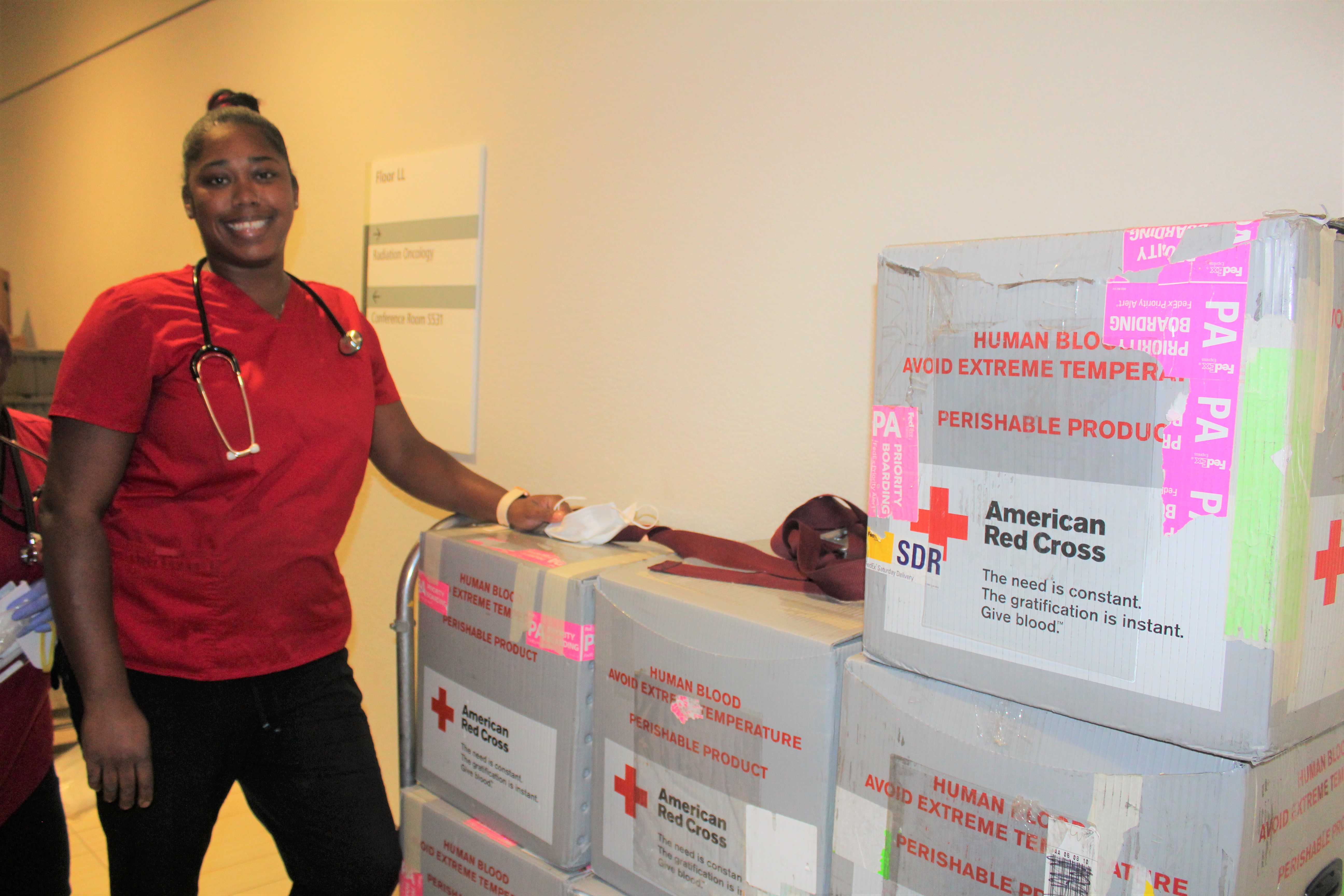
Red Cross Northern Ohio phlebotomist La’shawn Sims prepares blood products for transport during a blood drive at University Hospitals in Cleveland.

“I love my job because of its mission, the ability to help others save lives,” said La’shawn. “I love listening to the donors and the reasons why they donate.”

September 4-10 is National Blood Collectors Week, a time to recognize the amazing work done every single day at the Red Cross by phlebotomists like La’shawn. In the Northern Ohio Region nearly 100 individuals work in this role, helping to collect blood in communities across the Region. The position requires an individual to complete weeks of specific Red Cross training, both in the classroom and on the job, prior to working independently.

Northern Ohio phlebotomist Ariel Blanks prepares to draw blood from Martha Liechty at the 2022 Cleveland Browns Blood Drive

In addition to collecting blood, many staff members drive Red Cross trucks loaded with the equipment needed to set up and run a successful blood drive. The driver role often requires first heading to Regional headquarters in downtown Cleveland, loading the truck and then driving it to the blood drive location. Phlebotomists can also take additional training to learn how to collect Power Red or platelet donations, which require a different process than whole blood collection. Above all else, these individuals are the face of the Red Cross, helping donors through the blood donation process, ensuring a positive experience and hopefully, a lifetime of blood donations.

During National Blood Collectors Week, we give thanks to you – all the phlebotomists who are on the front lines each day, ensuring patients have the blood they need. And, even if you’re nervous like me, La’shawn encourages everyone to donate blood.

“It only takes 30 minutes of your time, and you’ll help save three lives with just one pint.” And, whether it’s La’shawn, or another great Northern Ohio collections staff member, you can know you’ll be in great hands.

Learning by example: How will you celebrate National Parents’ Day?

By Doug Bardwell, American Red Cross Volunteer

National Parents’ Day (July 24, 2022) isn’t one of the most recognizable holidays in the United States, but it has been celebrated since 1994. That’s when President Clinton signed a congressional resolution to “recognize, uplift and support the role of parents in the rearing of children.” It’s been held annually on the fourth Sunday of July ever since.

Really?

Having been a proud parent for 55 years, would you like to know how many times we’ve been wished “Happy Parents’ Day?” Me too. I don’t think ever. 

So, maybe Parents’ Day is a day to wish each other congratulations for everything you’ve done well over the years. I can get into that.

A bit of background

Growing up as an only child, I had only one perspective on my parents’ parenting skills. Conversely, my wife was one of 11, and grew up with an entirely different set of experiences. Fortunately, being the second oldest in her family, she learned all the skills I never did about taking charge of and caring for youngsters. That bode well for our children, and I credit her for keeping our family on the straight and narrow.

When we were expecting our first child, I took Parenting 101 at Cuyahoga Community College, and the only thing I recall but did try to live by was that “children learn by example.”

Jim Henson, of Muppets fame, probably said it better:  “The attitude you have as a parent is what your kids will learn from more than what you tell them. They don’t remember what you try to teach them. They remember what you are.”

Did it work?

Having been a blood donor for years now, as our children got older, they were aware of my blood donations, and as they entered college, a majority donated as well. At a recent boy’s night out with my boys and grandsons, I polled the table and was delighted to find out that most of my grandchildren, 17 and over, are donors as well. As their younger siblings become of age to donate, I’d expect the trend to continue.

Siblings Greg and Sarah Whitkoski recently donated blood together at Lakewood High School.

Hopefully, you are a donor (but if not, now’s not too late to start.) Next time you donate, consider coaxing your teen to come along. They can donate in many states at 16 with parental consent, assuming they meet certain height and weight restrictions. Learn more here about special student guidelines.

Even if they don’t come along, make them aware of why donating is important to you. I didn’t realize its impact on my family until years later. Happily, I didn’t have to tell them to do it – they just grew up doing what I did. That’s thanks enough for Parents’ Day.

And I can’t think of a better tradition for Parents’ Day than giving blood regularly.  Start here by finding a blood drive close to you.

Edited by Glenda Bogar, American Red Cross volunteer

“Tattoos!” A story and reminder about blood donation and tattoos for National Tattoo Day

By Christy Peters, American Red Cross Regional Communications Manager

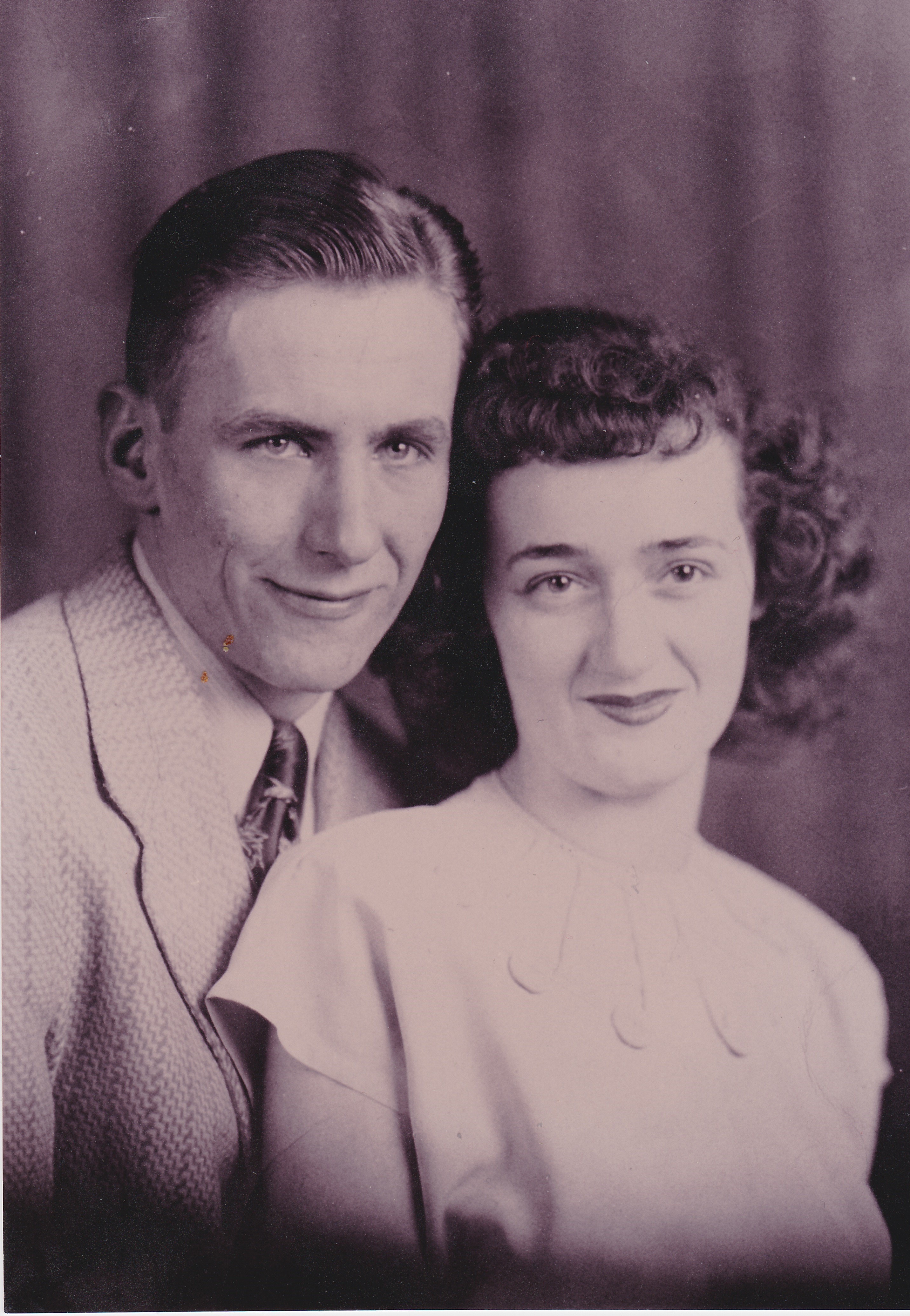
1947 – Grandma & Grandpa’s engagement picture – photo courtesy of Christy Peters

One of my favorite stories about my grandparents happened on one of their early dates. They both lived in Canton and had recently started dating. One night, when my grandfather was driving my grandmother home, they had car trouble. Luckily for both of them, my grandfather worked as a mechanic. He pulled the car over to the side of the road and got out to inspect under the hood.

Grandma got out with him and once the hood was open, Grandpa began rolling up his sleeves to get to work. Suddenly he heard my grandmother scream, “TATTOOS!” Apparently, in all their time together, Grandpa had always worn long sleeves and had not revealed his two very prominent arm tattoos, courtesy of his time in the Army during World War II.

Grandma was shocked but I think most of her reaction had to do with what her parents, my great grandparents, were going to say when they found out she was dating a man with tattoos. Thankfully, everyone got over the scandalous tattoos and my grandparents went on to be married for 70 years until my grandmother passed away in 2019.

You’re probably thinking, “Great story but what does it have to do with the American Red Cross?” Well, if you didn’t know, July 17 is National Tattoo Day, a day that “recognizes the history, culture, and artists dedicated to etching ink permanently on the skin.” Unfortunately, many people think the Red Cross is just as shocked by tattoos as my grandmother was that night many years ago. People often tell me they can’t donate blood because they have a tattoo, or that they recently got a tattoo and think they must wait years before giving again.

Grandpa and his tattoos in 1952 – photo courtesy of Christy Peters

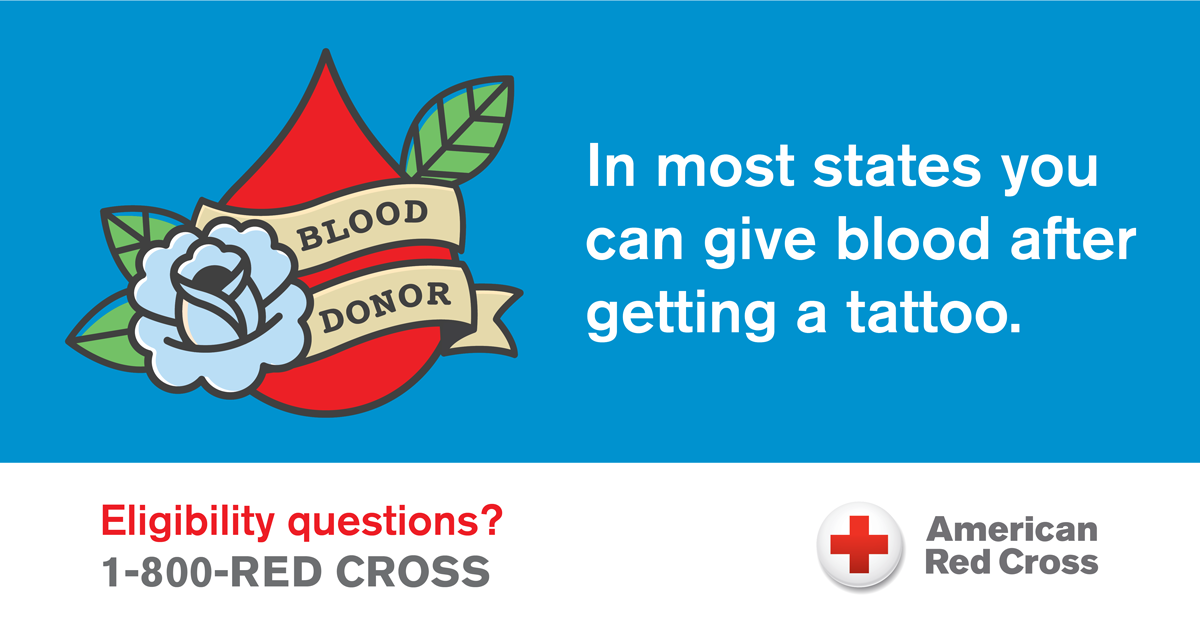
I’m writing this blog to let all of you with gorgeous ink know that none of that is true! In Ohio, there isn’t a deferral if your tattoo was applied with a sterile needle and fresh ink in a state regulated facility. If you received your tattoo in a different state, you can find out if that state requires you to wait to give here. And, even if you do have to wait, the deferral period is only three months, not years.

If you’ve not been donating because of tattoos, now is the perfect time to begin. During the month of June, the Northern Ohio Region collected nearly 2,000 fewer donations than needed to help meet patient needs. Your donation now will help us avoid a summer shortage. So, just like my grandpa did on that date, roll up those sleeves proudly and show off your tattoos while you help save lives! Find a drive near you and make an appointment today!

Posted by Ryan Lang, American Red Cross volunteer and board member

Edited by Glenda Bogar, American Red Cross volunteer

Rock, Roll, and Ride with the Red Cross this World Blood Donor Day

By Tim Poe, American Red Cross volunteer

June 14th is World Blood Donor Day, and the American Red Cross Can’t Help giving blood donors a chance to get All Shook Up, whether rocking and rolling with the legacy of Elvis at Graceland or on rides at Cedar Point.

The World Health Organization (WHO) created World Blood Donor Day to raise global awareness of the need for safe blood and blood products for transfusion, highlight the critical contribution of volunteer blood donors to national health systems, and help support and expand blood donor organizations’ programs. The WHO states, “Becoming a regular voluntary blood donor is a simple but selfless step that everyone can take to strengthen their communities, support local health systems and save lives.”

The Red Cross, which supplies about 40% of the U.S. blood supply, typically sees a drop in blood donations during the summer, but the need for blood does not take a break. On average, someone in the U.S. needs blood every two seconds, including new moms, premature babies, cancer patients and accident victims. Each day, the Red Cross needs to collect about 12,500 blood donations to meet the needs of patients at about 2,500 hospitals and transfusion centers across the country.

And blood donors can now celebrate providing the gift of life with roller coasters and rock and roll!

In addition to helping save lives, through August 4th, generous blood donors at select blood drives in Northern Ohio will receive a free ticket to Cedar Point, while supplies last. To find a blood drive with this promotion, enter sponsor code “CEDARPOINT” when searching here or call 1-800-RED-CROSS.

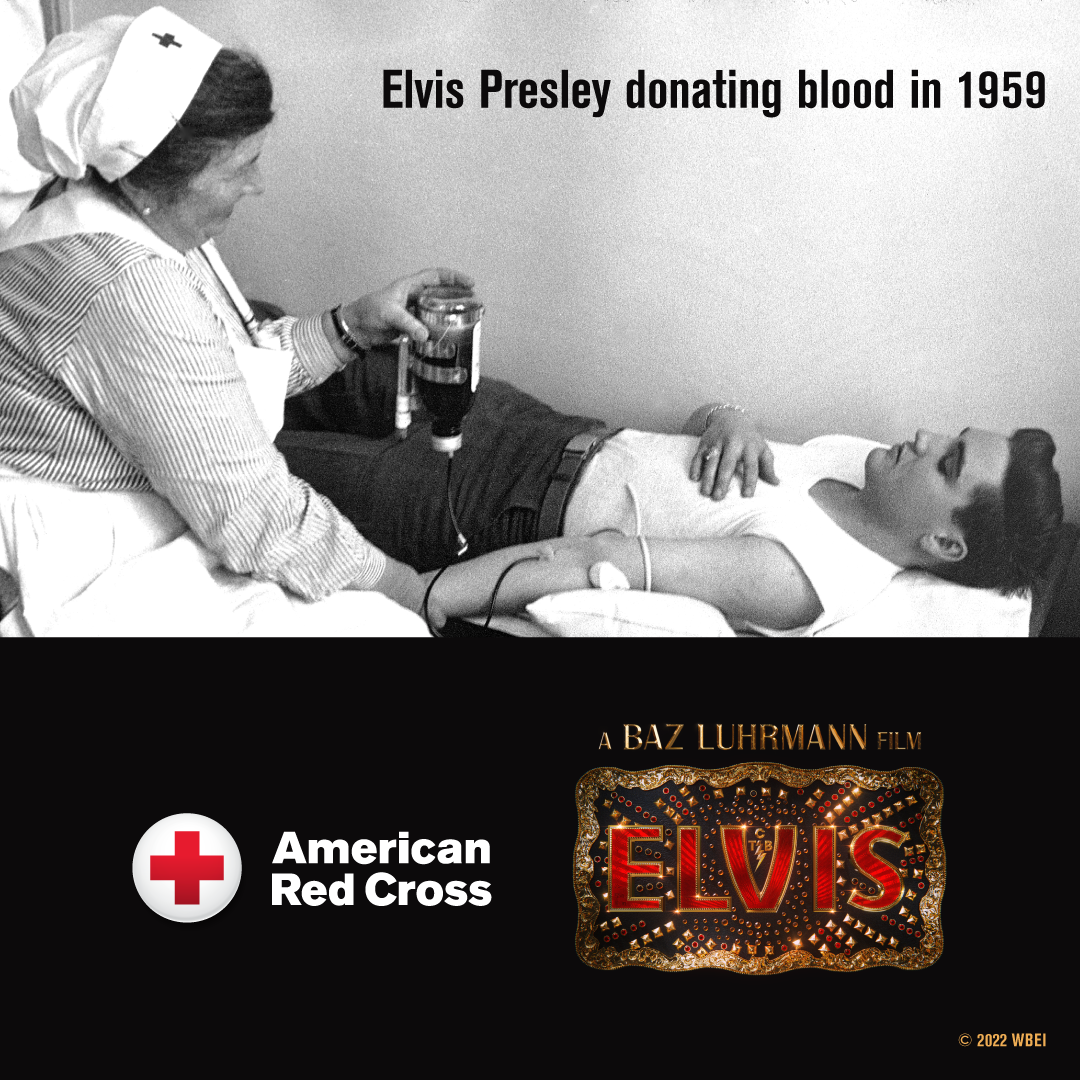
And throughout the U.S., the Red Cross is celebrating Elvis Presley–a blood donor himself who left a legacy of generosity and community service–rock and roll, and the new film, Elvis, with a chance to win a VIP trip for two to Memphis and Graceland! Through June 30th, those who come in to give blood will be automatically entered for a chance to win the trip, which includes round-trip airfare for two to Memphis, a three-night stay at The Guest House at Graceland and Elvis Entourage VIP tour, courtesy of Graceland, and $500 gift card for expenses, plus a custom-wrapped Gibson Epiphone guitar! Blood donors will also be sent a $5 e-gift card to a merchant of their choice. More information and terms and conditions are here.

Please visit redcrossblood.org to find a local blood drive. A blood donor app is also available, which makes it easy for donors to schedule and manage appointments, track the lifetime impact of donations, view health history information, and earn rewards. It is available at the above website, texting BLOODAPP to 90999, or searching “American Red Cross” in app stores.

Please help celebrate the gift of life, summer fun, the spirit of rock and roll, Elvis, and World Blood Donor Day by scheduling a donation. And thank you, thank you very much.

Blood donor hits goal set 18 years ago

By Tim Poe, Red Cross volunteer

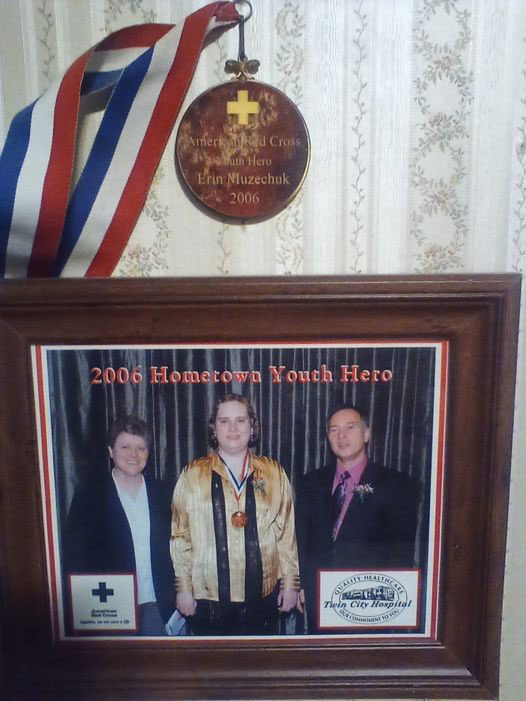
Erin Muzechuk – Photo credit: CynthiaElaine

In April, Erin Muzechuk arrived at an American Red Cross blood drive set up in New Philadelphia’s New Town Mall and accomplished a goal she set 18 years ago, donating 10 gallons of blood.

This journey began when Erin was just 17 and saw a blood drive poster at Buckeye Career Center. She felt it could be a way to help others. Later, she watched a news story about a man donating his 10th gallon, thought she could do that, too, and hoped to inspire others to donate as well.

At age 35, Erin has reached that goal while inspiring many and saving hundreds of lives.

I asked Erin how she felt upon reaching her goal. “I’m happy that I was able to help so many people,” she said. “When I first started donating, I learned that each pint has the potential to help three people! Ten gallons means I helped up to as many of 240 people! I didn’t realize that until recently.”

Erin plans to continue donating blood but does not have another goal in mind.

Erin spoke of her fantastic experiences donating blood and helping people over the last 18 years. She speaks especially fondly of getting to know Jane Jarvis at Union Hospital, part of the Cleveland Clinic, in Dover, Ohio. “She’s a special lady,” Erin recalled of the hospital’s blood drive program leader.

Erin’s First Gallon Award

Erin also spoke highly of her experience with the Red Cross. Her favorite memory is the shock she felt upon being recognized for donating her first gallon when she was 19. She added, “I’m surprised and honored again to hear from the American Red Cross now that I’m 35!”

“We are so thankful for Erin and her commitment to regularly give the gift of life,” said Kim Kroh, Executive Director of the Red Cross of Heartland, Stark and Muskingum Lakes. “Without donors like her, we could not meet the needs of patients across northern Ohio.”

In addition to donating blood, Erin enjoys working at Litty’s Cakes & Cookies in New Philadelphia and spending time with her family and friends, whom she says she loves very much.

For those considering donating blood for the first time, Erin advised, “It’s just a little pinch in the arm, and it doesn’t hurt or take a lot of your time to donate. And you will help save a life!”

If you, too, are inspired by Erin and would like to donate blood, please visit redcrossblood.org.

A Times-Reporter article on Erin’s achievement is here.

Edited by Glenda Bogar, Red Cross volunteer

One Man’s Dedication: The Joseph DeRosa Legacy

By Sue Wilson, Red Cross Community Volunteer

The lifeblood of the Red Cross is its volunteers, and in particular, its blood donors. Joseph DeRosa was the definition of lifeblood, having donated an astounding 165 pints of blood in his lifetime. 

Joseph DeRosa, lifelong blood donor

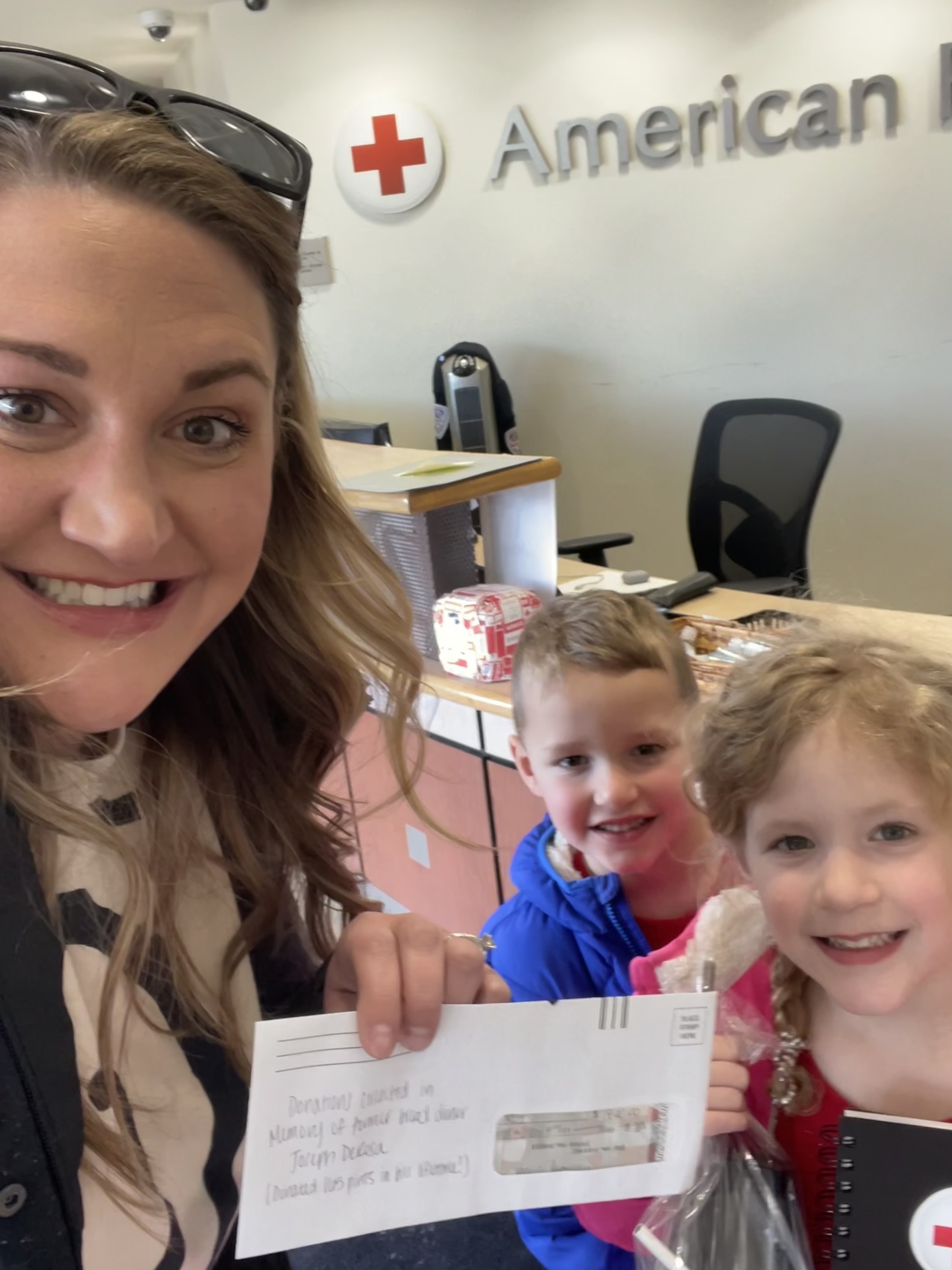
Valerie Stanley shared the story of her grandpa and his dedication to the American Red Cross and its blood donor program last month. She and her children, Joseph’s great grandchildren, Eva and Isaac delivered a check to the Red Cross for $1,860 in his name. 

Joseph DeRosa was a dedicated high school math/psychics/chemistry teacher for over 30 years. After retirement, Valerie said she and her brother spent their summers at their grandparent’s house. One day, years before he passed, her grandpa told her he had something very important to share with her. He opened a cupboard and took a white box from the shelf. It was filled with pins from the Red Cross honoring his many blood donations over the years. “Here are all my Red Cross pins,” he said. “I want you to make sure that when I die, they are buried with me.”   

It was not something Valerie wanted to think about at the time. “My grandpa was one of those people who went through so much in his life, faced health challenges and got through them, and to me he was invincible,” she said. When he passed on March 5, 2021, the first thing that came to her mind was her grandpa’s request. She went straight to his house to get that box of pins, which had continued to grow in number. 

The Red Cross recommends donors wait 56 days between blood donations. Joseph kept a calendar for the year, with the first day he could donate again marked, and he always went right away to make his donation. Valerie said she never knew exactly when her grandpa’s commitment to blood donation began, or if there was a particular reason behind it. “He knew it was something he could give, to help others in need. If he could convince the world to donate blood, he would!”

Valeria, Isaac, and Eva

If there was a word to describe her grandpa, Valerie said it would be: dedicated.  “He was passionate in everything he did in life, from his dedication to his family, to the students he taught in his many years as a teacher, to his volunteering for the Special Olympics for over 35 years, to the Red Cross.”   

Joseph DeRosa is survived by his wife of 66 years, Patti DeRosa, his 2 sons, Joe DeRosa and Bob DeRosa and his legacy of grand and great grandkids. 

“I want to make sure that when I die, they are buried with me.” – Joseph DeRosa

“After his passing, I remember reading comments on his online obit and saw so many of his former students commenting how he changed their lives. So many have successful careers that they attribute to him and I know he would be so proud of that legacy.” 

Every blood donation can help save up to three lives. Blood donations are used for patients in need of surgery, cancer treatment and transfusions for blood loss from traumatic injuries. The lives Joseph DeRosa has saved are in the thousands. Can you imagine, if everyone had such dedication to blood donation?

Learn more about blood donation and where you can donate HERE.

Platelet donor sets a new goal

600 units not enough for Painesville Township man

Richard and Carol Gundelach – Photo Credit: Jim McIntyre/American Red Cross

Richard Gundelach donates platelets every two weeks, and on March 11, 2022, he reached a milestone: 600 platelet units donated.

His wife Carol baked a carrot cake to mark the occasion.

“Compared to giving (whole) blood, it’s easier,” Richard said after the donation. “People need it.”

Platelets are cell fragments in our blood that form clots and stop or prevent bleeding. They can be essential to helping patients survive surgeries such as organ transplants, and to fight cancer, chronic diseases and traumatic injuries.

During the platelet donation, the blood clotting portion of whole blood is “spun” out and the rest of the blood is returned to the donor; typically, the body replaces its platelets in 24-36 hours.

Platelets are always in short supply because they only have a shelf life of five days. Every 15 seconds, someone needs platelets.

Richard Gundelach – Photo Credit: Jim McIntyre/American Red Cross

Encouraged by a friend, Richard began donating platelets during a time of unemployment 27 years ago. He’s retired now, and he wants to continue giving regularly.

His new goal: to donate 1,000 units of platelets.

When he achieves that goal, Carol may need to bake a bigger cake!

Donors can make an appointment to give platelets, whole blood or plasma by visiting redcrossblood.org, by calling 1-800-RED CROSS, or by installing the Red Cross blood app on their smartphones.

Edited by Glenda Bogar. American Red Cross volunteer

March 23rd is Giving Day, and the need for Red Cross services is critical

By Tim Poe, Red Cross volunteer

March 23rd is the eighth annual American Red Cross Giving Day, when communities come together to raise awareness about our critical disaster relief mission and fund our lifesaving work across the country. As recent events show, the Red Cross mission and services are critically needed, as #HelpCantWait.

As I reported earlier this month, Disaster Action Team (DAT) responses in our region increased by over 30% in February, mainly due to home fires, and March has continued to be exceptionally busy. Nationally, the Red Cross responded to more than 15,900 home fires since January 1, providing help to almost 60,000.

Please see this video for a behind-the-scenes look at the work Giving Day makes possible.

The blood supply is vulnerable, and help is greatly needed, from blood donors, volunteers, and those providing financial support.

In addition, climate change, global instability, and the effects of the pandemic will continue to pose challenges for all humanitarian services. Challenges that, with your help, the Red Cross will rise to meet. 

On a personal note, as a disaster responder I have seen the benefits of Red Cross services. I often saw the relief on people’s faces when we arrived after a home fire, knowing they would have help recovering. And, as assistance was provided, I also frequently saw human resiliency and signs of hope returning. Such moments occur, on average, more than three times a day in Northern Ohio and are made possible by donors and volunteers.

Here are some examples of what a financial gift can provide:

  • $3: one comfort kit containing hygiene items.
  • $15: one smoke alarm installation with fire safety education.
  • $50: a full day of food and shelter for one person.
  • $135: one smoke alarm and fire safety education for a hearing-impaired person.
  • $150: travel, meals, and shelter for one day for a deployed Red Cross disaster relief, health, or mental health worker.
  • $200: a full day of food and shelter to a family of four. Includes the cost of Red Cross workers to provide this service.
  • $350: the daily cost to deploy an Emergency Response Vehicle (ERV).
  • $605: financial assistance for a family impacted by a local disaster, like a home fire. This helps the family purchase food, lodging, clothing, and other critical needs.
  • $4,000: a Sound the Alarm event. Includes installing smoke alarms and providing a fire safety package, deploying an ERV for the day, and lunch for volunteers. Average events install around 200 alarms.

To participate in Giving Day, please visit redcross.org/GivingDay. A gift of any size makes a difference.

For Northern Ohio volunteer opportunities, please visit this link..

To donate blood, visit RedCrossBlood.org.

To learn lifesaving skills like CPR and First Aid, consider taking a class at redcross.org/TakeAClass.

Video streamers can also help. See here if interested.

Down, but not out – Blood supplies are still vulnerable

By Doug Bardwell, Red Cross Volunteer

Last month the blood supply was in “crisis.” This month it’s rated “vulnerable.” Neither of those are optimal – the latter being only incrementally better. Bottom line = we still need everyone to donate if they are able.

Photo Credit: Doug Bardwell, Red Cross Volunteer

With relaxation of COVID-19 restrictions, doctors are once again allowing elective surgery. Don’t associate “elective” with just things as tummy tucks and facelifts.

Elective means it can be scheduled in advance instead of being scheduled as an emergency. Some heart surgeries, including bypass and valve surgeries, as well as some cancer surgeries or biopsies are scheduled electively. When elective surgeries are delayed for too long, life-threatening emergencies can occur.

Since issuing its first-ever blood crisis alert, severe winter weather has further complicated efforts to rebuild the Red Cross blood supply. So far in 2022, approximately 600 blood drives have been canceled across the country due to winter storms, forcing nearly 20,000 blood and platelet donations to go uncollected.

Photo Credit: Doug Bardwell, Red Cross Volunteer

Don’t let the supply go back to “crisis” mode – make and keep those appointments. It’s quick and easy to find a location and time near you at redcrossblood.org.

If you have either type O positive or O negative – you are needed most urgently:
o Type O positive is the most transfused blood type and can be transfused to Rh-positive patients of any blood type.
o Type O negative is the universal blood type and what emergency room personnel reach for when there is no time to determine the blood type of patients in the most serious situations.

Platelet donations are also urgently needed. Platelets are the clotting portion of blood, which must be transfused within five days of donation. Nearly half of all platelet donations are given to patients undergoing cancer treatments.

Need more motivation???

For drives March 1-31: All who come to give blood or platelets will get a $10 e-gift card, thanks to Fanatics, world’s largest collection of officially licensed sports gear.

Plus, donors will also automatically be entered for a chance to win a trip for two to the 2022 MLB® All-Star Game® in Los Angeles, California, when you come to give March 1-31. The package includes two tickets to 2022 MLB® All-Star Saturday, the 2022 Home Run Derby and the 2022 MLB® All-Star Game®, round-trip airfare to Los Angeles, four-night hotel accommodations (July 16-20, 2022), plus a $750 gift card for expenses. Details available at rcblood.org/team.

Edited by Glenda Bogar, American Red Cross volunteer