Blood drives abound this holiday season

By Jim McIntyre, American Red Cross volunteer

In Northern Ohio, we’ve experienced weather-related school closings, road closures and traffic accidents – and it’s not even mid-December! 

As winter approaches, the chance of severe weather can compound an already challenging time for blood donors who are busy with holiday preparations and travel plans.  Seasonal illnesses can also keep donors from making or keeping an appointment to give. 

That’s why the American Red Cross schedules several highly visible blood drives throughout the region during the month of December – to give busy donors a variety of days, times and locations where they can roll up a sleeve and help bring hope and healing to patients in need. 

“People with cancer and so many other conditions could not be treated without the blood they need to have every day,” said Dr. Zaher Otrock of Cleveland Clinic.  It’s just one of the many quotes I’ve gathered while visiting blood drives and talking to donors over the past 10 years. 

“I was in a car crash in 2006 and needed 15 pints of blood. I’m giving back,” said Christopher Haddock. 

“This is my way to give of myself to help someone in need.” – Sylvia Stewart-Lumkin 

“I love that I get to save lives and find out my blood type.” – first-time donor Meredith Reinhard 

 “My mom taught me to give back.” - Bridget Miller 

“Christ gave His blood for everyone, the least I can do is help a few.” - Gary Pfeiffer 

 “It doesn’t take a lot of time and it’s really, really, rewarding.” – Mark Fleischer 

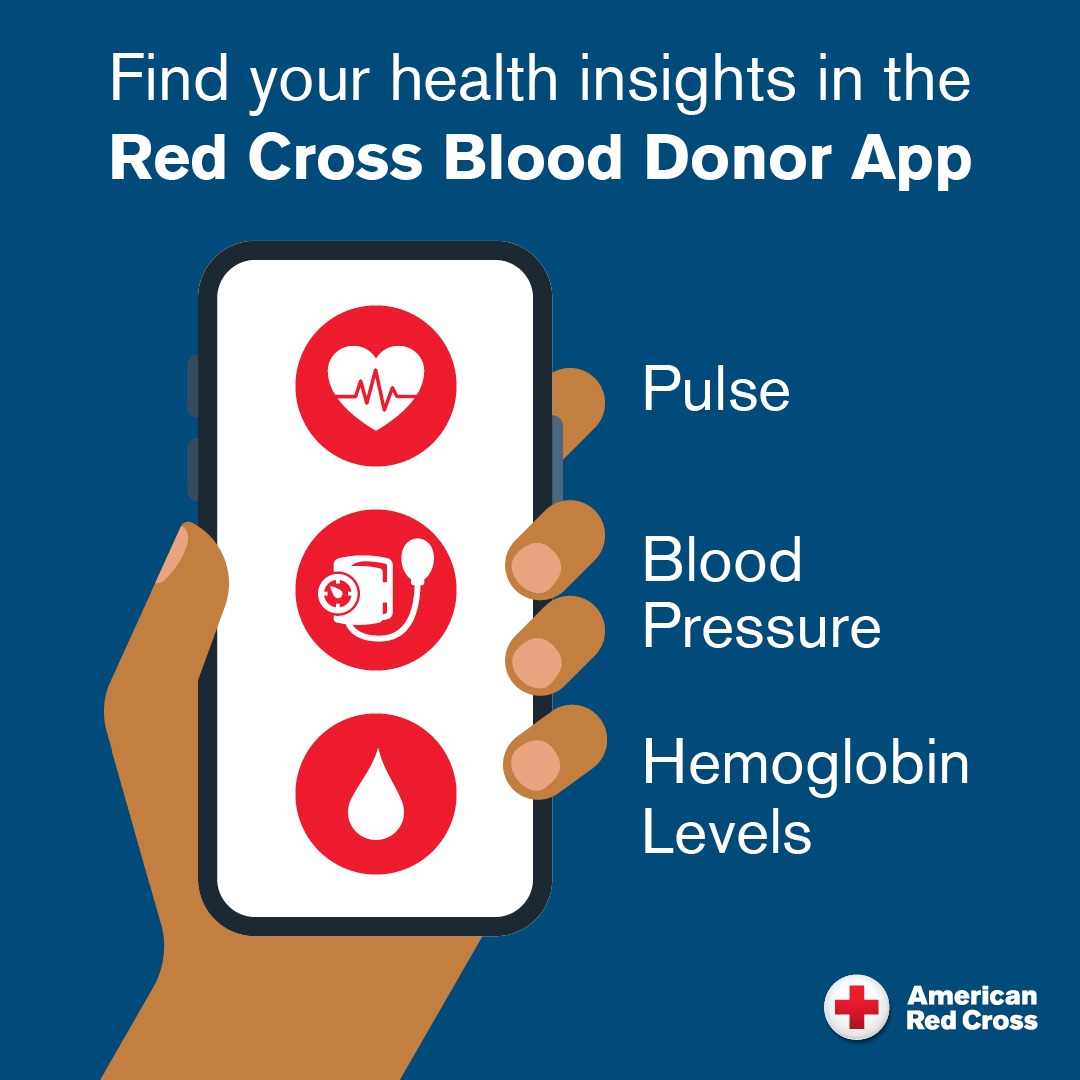
There’s still time to help save lives this year. During this season of giving, give something that means something and make an appointment to give blood or platelets by using the Blood Donor App, visiting RedCrossBlood.org or calling 1-800-RED CROSS (1-800-733-2767.) 

OR… 

Come to one of the following holiday season blood drives: 

17th Annual Holiday Blood Drive – Cuyahoga Falls  
Tuesday, December 16 from 7 a.m. – 7 p.m. 
Sheraton Akron/Cuyahoga Falls  
1989 Front St.
Cuyahoga Falls, Ohio 44221 

Annual Holiday Blood Drives – Mahoning Valley
Monday, December 22 from 9 a.m.- 4 p.m. 
Packard Music Hall 
1703 Mahoning Ave.
Warren, Ohio 44483 
Tuesday, December 23 from 9 a.m. – 4 p.m. 
Stambaugh Auditorium 
1000 Fifth Ave.
Youngstown, Ohio 44504 

In Memory of Harvey J. Steele Blood Drive – Toledo
Tuesday, December 23 from 8 a.m. – 2 p.m.  

Hilton Garden Inn Toledo/Perrysburg

Create a new holiday tradition and help spread comfort and support lifesaving care.

Red Cross staff detects health issue in longtime blood donor during routine check in

By Sam Pudelski, American Red Cross volunteer

Peggy Hammond has donated blood for over 40 years. As someone with O+ blood, she understands the importance of giving blood. She started giving blood after a friend had a daughter diagnosed with Apert syndrome and needed regular blood infusions. She realized how extremely important it was to donate blood to help people like her friend’s daughter, who rely on blood donations.

Fast forward a few years, and Peggy was at the American Red Cross Michael T. George Blood Donation Center checking in for her routine blood donation. When she was signing in, the nurse noticed a sore on her head and told Peggy, “I think it’s infected.” The supervisor confirmed it was, and Peggy wasn’t able to donate that day. Over Christmas, she contacted her doctor and after sending a picture of the spot in question, she went in to have it evaluated.

Her doctor determined the sore was not just an irritated spot on the head, but was in fact skin cancer, specifically squamous carcinoma. Approximately 2 out of every 10 skin cancers are squamous cell skin cancers, according to the American Cancer Society. Luckily, the cancer was caught early. Peggy had Mohs micrographic surgery to have the cancerous spot removed. The procedure went well, and with the surgical site healed, she was able to resume her regular blood donations.

She returned back to the donation center to begin her regular blood donations again, and of all people volunteering that day, the same nurse who discovered her spot, was there again! “She saved my life,” Peggy said. She was grateful to have the chance to tell her how much her catch that day helped her.

In speaking with Peggy, it’s evident she’s passionate about giving back and grateful that she’s still able to continue to donate to help others in need. If you are interested in donating blood, the Red Cross holds blood drives across Northern Ohio. To find an upcoming blood drive near you, visit redcrossblood.org.

Edited by Glenda Bogar, American Red Cross volunteer


The Unseen Battle: Why Platelet Donations are Vital for Those Fighting Breast Cancer 

By Kathryn Dean, American Red Cross volunteer 

October is Breast Cancer Awareness Month.  In the United States, 1 in 8 women will be diagnosed with breast cancer at some point in their life, making breast cancer the second most common cancer in women behind skin cancer.   

Mother and son, Rosalie Lang and Ryan Lang

Almost all of us have been affected in one way or another by this terrible disease, whether it has impacted a family member, friend, associate, or oneself.  Ryan Lang, Regional Communications Manager at the American Red Cross Northern Ohio Region, shared his own personal story back in February about his mom’s battle with breast cancer.  You can read his story HERE

When dealing with any cancer, transfusions are often an important and crucial part of treatment.  Chemotherapy and radiation cause bone marrow suppression, reducing the number of blood cells that the body can produce.  Low counts of red and white blood cells and platelets lead to symptoms like anemia, immunosuppression, and risk of hemorrhage.   

With around one-fourth of all blood products and half of all platelets used in the U.S. by patients who are fighting cancer, it is crucial to maintain an adequate blood supply. 

Platelet donations are needed daily, as they have a shelf life of only about 5 days.  However, most are tested and used within 3 days.  The need is so great that every 15 seconds, someone in the U.S. receives a platelet infusion.   

Donating platelets is by appointment only and will take around 3 hours of your time, but a single donation can help up to 3 people in need.  Here are some things to expect at your visit: 

  • 3 hours from start to finish includes set up, pre-donation questionnaire, and refreshments afterwards. 
  • A smaller needle is used to donate platelets than a standard blood donation, making the process more comfortable for some. 
  • Eligibility is the same as that for whole blood donations. 
  • It is possible to donate both plasma and platelets at the same time if you choose. 
  • Some find recovery to be easier than blood donations, as the fluids and red blood cells are returned to you during the process. 

Make a difference this October and help those fighting breast cancer and beyond by considering a life-giving donation. Donate platelets by Oct. 19 and receive a $10 Amazon Gift Card, or donate between Oct. 20–Nov. 3 to receive an American Red Cross Platelet Donor t-shirt, while supplies last! 

To learn more about platelet donations, click the link HERE.  You can schedule an appointment by downloading the Red Cross Blood Donor App HERE, or by visiting this link HERE

National Volunteer Week Spotlight: Volunteer gives back to Red Cross after it reunited family years ago

By Kathryn Dean, American Red Cross volunteer

“…and I knew from that point on, even as young as I was…I said to myself, ‘when I’m old, I’m going to volunteer for the Red Cross,” said Linda Consolo of Stow.

A pivotal moment in Linda’s young life changed her trajectory and mindset. At the tender age of 18, just out of high school and newly engaged, her life was turned upside down. Her fiancé was drafted and sent to Vietnam, where he was wounded and sent to a field hospital. When he was well enough for transport and moved to a hospital in Japan, the army reached out to his parents, allowing only them the opportunity to visit. 

Unfortunately, the cost of travel was too much for the family, and they worried if they would ever see their son again. That’s when the American Red Cross stepped in to help. They covered the costs, and his parents were able to spend the last few weeks of his life with him. This was something that Linda never forgot, and she knew one day she would volunteer for the Red Cross.

Now, nearly 55 years later, she is living that reality and has dedicated a large portion of her retirement to volunteering with the Red Cross. She has found her niche in the role of Blood Donor Ambassador, a position that she really enjoys, working sometimes up to four days per week at blood drives.

“It’s my way of giving back to them because they did something special for somebody for me. Because having his parents there for his last month or two was amazing,” she reflected.

Not only does she volunteer at blood drives, but she is also a blood donor. “I’ve given 16 gallons and one pint in my lifetime,” she proudly states. Quite an achievement, considering that eight donations equate to one gallon of blood. 

“I started when I worked at Goodyear,” she explained. “Goodyear always had blood drives, and I started giving blood there because we were allowed to leave our desk and go across the street to Goodyear hall, give blood and have something to eat. We didn’t have to take time off from work. Goodyear made it easy for us to donate blood.”

“Donating blood is probably more important to me than volunteering,” she said, “but I do them in tandem. I do it every 56 days or as close to it as I can.”

Despite her busy schedule, she also finds time to bake for the workers at the blood drives, earning her the affectionate moniker, ‘the muffin lady.’ 

As a retiree, Linda said that she appreciates the opportunity to stay active and social and meet new people. “Now it’s time for me to give back,” she said. “It’s the thing to do. It makes your heart feel good that you’re giving back to the world. I’m doing my part and trying to give my best.”

The Red Cross is always looking for new volunteers. If you would like to learn more about this vital volunteer role or any of the other available opportunities, visit www.redcross.org/noh and click the Volunteer tab or call 1-800-RED CROSS.

Edited by Glenda Bogar, American Red Cross volunteer

Donate Blood in March and receive a free A1C screening

By: Kathryn Dean, American Red Cross volunteer

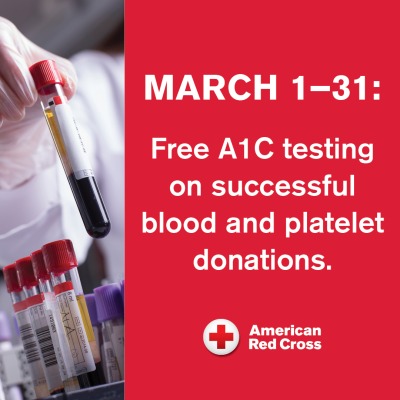
The American Red Cross of Northern Ohio is helping to bridge access to health care for blood donors by providing free A1C testing, commonly used to screen for diabetes and prediabetes, on all successful blood, platelet and plasma donations in March.

One-third of people lack access to regular primary care in the U.S., where diabetes affects 1 in 10 people and nearly a quarter of those living with it have been undiagnosed, according to the Centers for Disease Control and Prevention (CDC). The free A1C screening aims to help address this gap by empowering blood donors with valuable information to maintain their health and well-being.

What is the hemoglobin A1C test?  This is a common laboratory blood test that doctors use to help diagnose diabetes or prediabetes. Unlike a blood glucose test (or blood sugar test) which provides an instant snapshot of your current blood sugar levels, A1C reflects the average blood sugar levels of an individual over the past 3 months. This gives doctors a better idea of where your blood sugar typically lies, outside of the daily fluctuations.

Why is this important for me? It is estimated that there are over 8.7 million people in the U.S. living with undiagnosed prediabetes or diabetes. Type 2 diabetes accounts for over 90% of all cases and often remains symptomless until damage has been done. Untreated diabetes can lead to plaque build-up in the blood vessels which in turn puts you at greater risk for a stroke or heart attack. The eyes, kidneys, nerves, and skin are particularly vulnerable to the effects of decreased blood flow due to high glucose levels in the blood.  Fortunately, prediabetes is reversible with lifestyle changes, so early detection is key.

Blood donor, Audrey Savage
Photo by Michelle Frankfurter for the American Red Cross

How should I prepare for my donation?  No fasting is required for the A1C test or any other special preparation. Just be sure you are feeling well on the day of donation by getting enough rest, staying hydrated, and eating a well-balanced meal.

When will I get my results? You can expect your results within one to two weeks of your donation. Results will be posted on the Red Cross Donor App or through your donor’s account at RedCrossBlood.org.

What do my results mean?  An A1C test result of 5.7% or above will require follow-up with your primary care physician. Your doctor will be able to diagnose and guide you through an appropriate treatment plan. 

To learn more about the A1C test, pre-diabetes and diabetes, check out this informational page at the Red Cross website HERE. Download the Red Cross Blood Donor App HERE to schedule your next donation and view your donation history and test results.

Celebrating National Phlebotomists Week

Recognizing the men and women who collect lifesaving blood

By Eilene Guy, American Red Cross volunteer

One of the key activities of the American Red Cross is collecting, testing and distributing blood for trauma victims, cancer and sickle cell “warriors” and others in need of critical treatment.

Phlebotomists – the men and women who skillfully slide needles into arms – are vital connections between our blood donors and those who need lifesaving transfusions.

This week, the Red Cross salutes its 5,500 team members across the country who collect nearly 2.5 million blood and platelet donations each year.

If you have trouble wrapping your mind around the word “phlebotomist,” just relax and picture Safeyyah Edwards in her deep red and black scrubs, gently but efficiently preparing a donor for their “pinch.”

Safeyyah Edwards

Safeyyah has been drawing blood for 23 years for the Red Cross and she values the donor/friends she’s made at the Cleveland blood, platelet and plasma donation center.

“We refer to them as ‘my donor.’ They become like family. We hear their stories, we hear why they donate; we see pictures of their kids, events in their lives.”

Phlebotomists help people help people,” Safeyyah says, referring to the fact that trained professionals like her make it possible for donors to give the gift of life, mostly for people they don’t even know.

“I am just in awe,” she says respectfully. “Some people are just terrified when they come for the first time, but they want to donate; they want to save lives.

“We do have good people out there.”

Every two seconds, someone in the U.S. needs blood. As the provider of nearly half of the nation’s blood supply, the Red Cross relies on phlebotomists to help fill that need. They strive to give volunteer donors a safe and positive experience while ensuring that blood is collected properly for the safety of recipients.

Safeyyah and her fellow professionals – You wouldn’t want to trust a blood draw or transfusion needle to an amateur, would you? – are especially crucial at a time like this: Seasonal illnesses and extreme weather events have cancelled hundreds of blood drives, leading to a nationwide blood emergency.

In the 31 counties of the northern Ohio region, the Red Cross needs to collect some 500 donations a week to meet the needs of more than 70 local hospitals.

To make an appointment to donate at a Red Cross blood drive near you, go online to redcrossblood.org or call 1-800-RED CROSS (1-800-733-2767).

And if you’re interested in a rewarding role in the medical field, the Red Cross offers training to become a certified phlebotomist. This link will take you to a variety of career opportunities in blood collection: https://www.redcross.org/about-us/careers/pbjob-types/blood-collection.html

Give blood and celebrate the 20th Anniversary “Elf”

By Christy Peters, Regional Communications Manager

For most of my life, I have been a holiday purist. My family always waited until after Thanksgiving before we did anything related to Christmas. No decorating the house or finding a tree until the last weekend in November. And, of course, only certain foods on certain holidays. Heaven forbid you have turkey on both holidays – turkey on Thanksgiving, ham on Christmas.

My strict expectations even extended into holiday entertainment. Only certain films were true holiday “classics.” For example, there are only two acceptable versions of “A Christmas Carol.” For the kids “A Muppet Christmas Carol” and only George C. Scott as Ebeneezer Scrooge for everyone else. And if you don’t watch “It’s A Wonderful Life,” can it even be Christmas? So, it probably comes as no surprise that when the movie “Elf” debuted, I didn’t see it. I was good with my classics, and it didn’t seem to fit that category at all.

But it seems I missed the memo because “Elf” is celebrating its 20th anniversary this year and has rightly earned classic holiday movie status. As strongly as I feel about George C. Scott, there are probably many more people who see Buddy as the true hero of the holiday season. And for them, I have some fantastic news! When you come to give blood now through Nov. 30, you’ll receive an exclusive pair of “Elf” + American Red Cross socks, while supplies last.

Donations are critical to the blood supply as the holiday season draws near – a time when blood donations often decline. And for traditionalists like me, the Red Cross is encouraging people to add a new tradition as the holiday season begins: Spread cheer with a blood or platelet donation. Donors of all blood types are urged to give, especially type O blood donors and those giving platelets.

Before the holiday rush begins, take an hour out of your day to give blood or platelets and help someone in need. You can find a blood drive near you and make an appointment using the Red Cross Blood Donor App, visiting RedCrossBlood.org or calling 1-800-RED CROSS (1-800-733-2767).

And, in case you were wondering, at the insistence of my husband, I finally watched “Elf” a few years ago…and loved it. It’s now required viewing in our home every year. Even us traditionalists can shake it up every now and then.

American Red Cross Blood Collectors – a vital link in patient care

Happy Labor Day! This year, the Labor Day holiday coincides with National Blood Collectors Week which is September 3-9. While it may be a coincidence, it is absolutely fitting because this week is a time to celebrate the contributions of blood collection workers in supporting hospital care. Without the more than 5,500 American Red Cross blood and platelet collections team members who work at blood drives and donation centers across the country, lifesaving blood would not be available for patients in need. Each year, Red Cross staff collect blood and platelet donations from nearly 2.5 million volunteer donors.

Here in Northern Ohio, we are fortunate to have wonderful collections staff across the 31 counties we serve. One of those amazing staff members is Danita Craig. Danita has been with the Red Cross for 9 ½ years. Her career has spanned many roles within the organization, from Collections Tech to Charge Staff and now a Team Supervisor in Cleveland.

As a Team Supervisor, Danita is focused on building a strong team, coaching and mentoring new employees and providing great customer service to staff, volunteers, recruitment representatives and blood program leaders. In her role, Danita says she can lead by example, showing her staff how much she loves her job and how exciting it is to help save lives with every pint collected. For Danita, the lifesaving blood she and her team help collect has a special meaning. “I have a relative who has sickle cell disease and receives blood products yearly, sometimes monthly, so this job impacts my life on a personal level,” said Danita. “I love knowing that where I work help saves many lives and helps my family member. I hold the mission close to my heart.”

In addition to her work in Biomedical Services, Danita had the opportunity to go to Florida and help with recovery efforts in the wake of Hurricane Ian. “It was an honor to see people from all over the world come together to help others,” she said. Danita has always had a passion for taking care of people and as a Red Cross employee she has plenty of opportunities to do so. When she’s not working, she enjoys traveling with her family and line dancing with friends.

The Red Cross in Northern Ohio is thankful for Danita and all the collections staff who work so hard to help patients in need. If you’ve never donated blood or it’s been a while, there’s no better way to celebrate Blood Collectors Week than making an appointment to give. And right now, donations are especially needed as Hurricane Idalia caused more than 700 blood and platelet donations to go uncollected in the Southeast last week. Your donation not only helps local patients but allows the Red Cross to help whenever and wherever disaster strikes. Find a blood drive near you at redcrossblood.org.

Saluting lab techs – vital in blood supply chain

By Eilene E. Guy, American Red Cross volunteer

Patient safety is the number one priority for the blood services arm (no pun intended) of the American Red Cross.

The Red Cross collects about 40% of our nation’s blood supply from donors like me – and you, I hope. We give this lifesaving liquid freely, so it’s available as soon as someone – usually someone we don’t even know – needs it to treat an illness or traumatic injury, or for replacement during surgery.

Blood that’s meant for transfusion must be free from anything that could harm a patient. That includes a host of foreign substances like viruses, bacteria or parasites.

Celeste Dean-El, who heads the Red Cross Immunohematology Reference Lab (IRL) in Cleveland, said blood also has inherited characteristics that could trigger a bad reaction, or enhance its benefit, in a recipient.

That’s where laboratory technicians come in, she said. Lab techs test every unit of donated blood, to be sure it’s wholesome and robust, and to identify unique components that will make a given unit a match for a transfusion recipient.

Most of us know our inherited blood group: A, B or O, positive or negative. Getting the wrong ABO match could kill a patient, Celeste said. But our blood also has what’s called an Rh protein; getting that match wrong could make a patient very, very sick.

Lab technician Paul Kopin and Celeste Dean-El, Director of the Immunohematology Reference Lab for the Red Cross of Northern Ohio

Lab technicians also perform specialized tests to unearth even more unique inherited characteristics that – if properly matched – will enhance the benefit and safety of a transfusion.

Celeste offered an example: A man from Ohio’s Amish community needed treatment recently after a serious injury. Lab techs isolated an antibody in his blood that made his type so rare that compatible units would only be found in others of his community. Based on that information, the Red Cross recruited donors from that group to find “matches” that would boost his recovery.

“Transfusions are the most important and most common treatments in hospitals,” Celeste said, listing things like leukemia and lymphoma – diseases that can cause very low blood counts in patients.

Or take sickle cell disease, an inherited blood disorder. A patient – typically someone of African descent – will need regular transfusions of the blood component hemoglobin to supplement her blood’s ability to carry oxygen. Lab techs can test for antigens in each patient’s blood to make the transfusion impact as strong as possible or, in some cases, avoid life-threatening transfusion reactions.

Lab technicians are positioned at a critical point in the blood supply chain, so their training and certification is demanding: two to four years of specialized education and internship. “Experience in the lab is vital,” Celeste said. To work in her IRL takes another one to two years of highly complex training.

The Red Cross salutes Medical Laboratory Professionals Week, April 23 through 29, to recognize the vital work lab techs perform for our blood supply.

“Everything we do is for the safety of the recipients,” Celeste said.

To be part of this lifesaving service, sign up to donate blood at redcrossblood.org. Because “help can’t wait.”