Help NEEDED…More Volunteers

Red Cross volunteer Kim Sterling of Ashtabula met Red Cross President and CEO Gail McGovern after being deployed to Austin, Texas

There are currently 30 volunteers from Northeast Ohio in or en route to Texas to provide relief to those affected by Hurricane Harvey. Some of them have been featured in the local media:

http://www.wkyc.com/news/local/five-ways-you-can-help-make-a-difference-for-harvey-victims-in-need/469042466

http://www.medina-gazette.com/Medina-County/2017/08/31/Medina-County-natives-involved-in-Harvey-efforts.html

http://www.news5cleveland.com/news/local-news/oh-summit/two-local-red-cross-volunteers-head-south-to-help-thousands-forced-from-their-flooded-homes

Volunteers continue to leave for the hurricane zone to provide sheltering, meals, and other services to residents who were forced from their homes.  And more volunteers will be needed in the coming weeks, to continue providing assistance to the tens of thousands of residents affected by Hurricane Harvey.

Red Cross volunteers are trained to provide the services needed before, during and after disaster strikes.  New training sessions are being scheduled.  If you are interested in becoming a Red Cross volunteer, and helping people like the volunteers featured in the media stories above, visit our volunteer page to begin the application process.

Local Volunteers Helping in Texas

21231897_1516811688365112_5973836313552191305_n

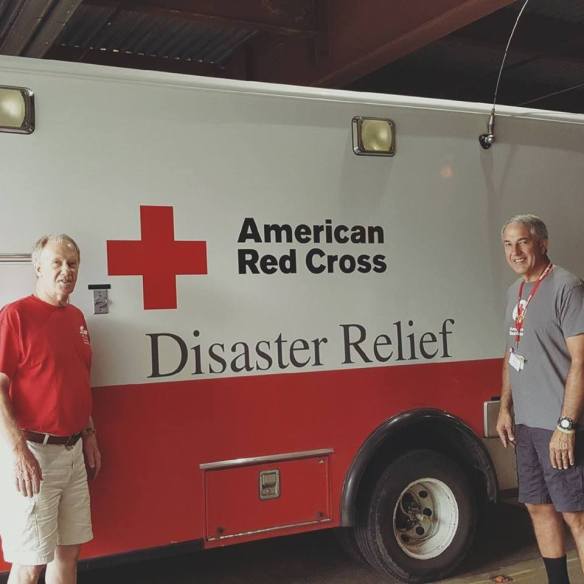
Red Cross volunteers Cameron Fraser and Rick King are improvising.

“We’re both trained in logistics, but when we got here, we saw a greater need and offered to help deliver meals,” Rick said as he assembled packages of snacks. “Flexibility is key. Our snack packs could end up being lunch, dinner and breakfast.”

Rick and Cameron are among more than two dozen volunteers from Northeast Ohio who have been deployed in the wake of Hurricane Harvey.  They have been assigned to help residents in and around Texas City, Texas.

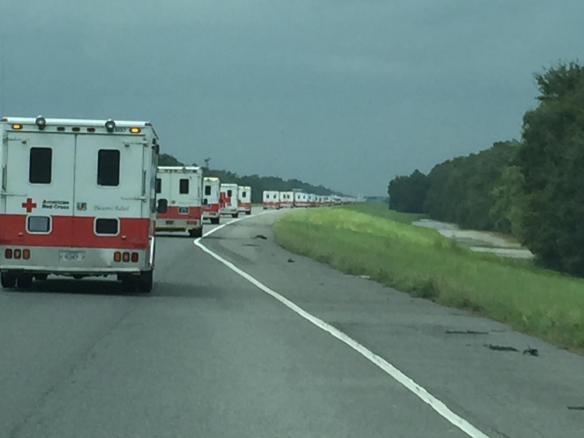
“We went from Baton Rouge to Hempstead in the Great Texas ERV Drive,” Rick said, referring to a convoy of more than 40 emergency response vehicles (ERVs) that made their way to the Houston area. “It took us hours and hours to get there.”

ERV drive

In total, eight groups headed to the area last Thursday.  They were able to communicate with one another through a smart phone app.

Cameron and Rick are working with partners from the Southern Baptist Convention, who set up a mobile kitchen for preparing the meals Red Cross workers will deliver.

“There’s a feeling of nervous energy,” said Rick. “We’ve spent time training on what to expect and we’re ready to go.”

To become a Red Cross volunteer, visit our volunteer page, or call 216-431-3328.

By the numbers:

· Saturday night, at least 32,399 people sought refuge in 226 Red Cross and partner shelters across Texas overnight. The Red Cross is also assisting the Louisiana state government with an emergency shelter which hosted nearly 1,700 people last night.

· More than 2,700 Red Cross disaster workers are on the ground, and more than 660 are on the way.

· Shelter supplies to support more than 85,000 people are on the ground.

· Along with our partners, we have served more than a half million (515,000) meals and snacks since the storm began.

· We have trailers of kitchen supplies on the ground to support 14 kitchens, each able to produce 10,000 meals a day, and 2 more trailers are on the way.

· We also have about 150,000 ready-to-eat meals currently on the ground with an additional 5,000 on the way.

· More than 215 emergency response vehicles have been activated to help deliver meals and relief supplies.

· Mental health and health services professionals have provided some 15,000 contacts to provide support and care to evacuees.

· We’ve distributed more than 27,000 relief items like diapers and comfort kits that contain deodorant, toothbrushes, toothpaste and other hygiene items for people forced from their homes. Cleaning and relief supplies to support more than 15,000 homes are on the ground, with an additional 5,000 on the way.


Hurricane Harvey: Week One Recap

Northeast Ohio Numbers

  • Northeast Ohioans deployed to the affected areas: 23
  • Emergency Response Vehicles deployed to the affected areas 4 of 4 in NEO
  • Average Individual Deployment: 2 weeks

National Information

  • The Red Cross is working hard to get help to where it is needed. Access into

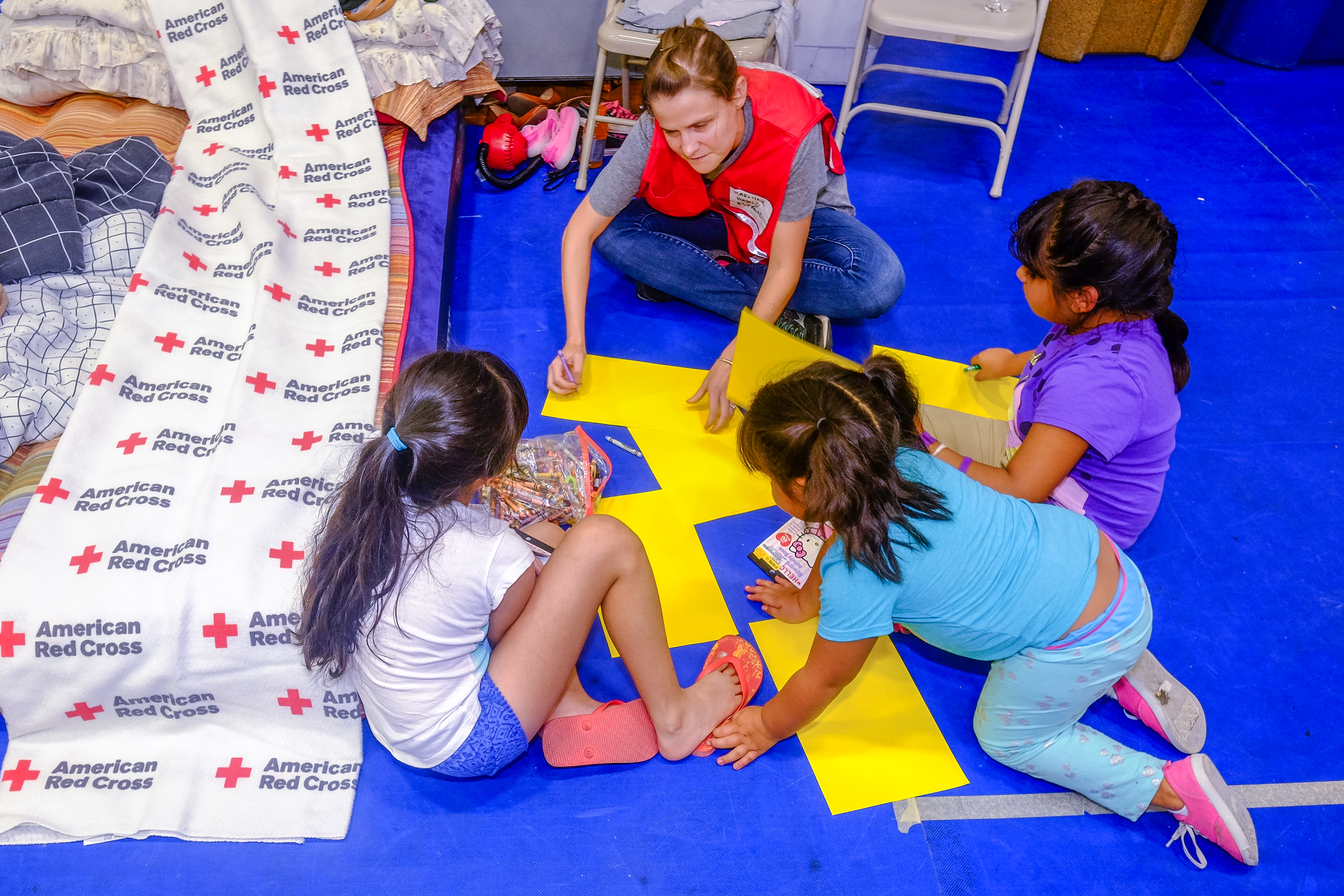
    August 30, 2017. Delco Center Shelter, Austin, Texas. Red Cross volunteer Caroline Pinkston colors with children staying at a shelter in Austin, Texas. Photo by Chuck Haupt for the American Red Cross

    many areas is still quite difficult, and we are partnering with the U. S. Coast Guard and the Texas National Guard to move supplies and volunteers to where they are needed most. Our first priority is keeping people safe while providing shelter, food and a shoulder to lean on.

  • Estimates indicate more than 33,800 people sought refuge in more than 240 Red Cross and partner shelters across Texas Tuesday night.
  • Six shelters are also open in Louisiana with more than 450 people.

How we respond

  • Massive disasters like Hurricane Harvey create more needs than any one organization can meet on their own. The Red Cross is working very closely with the entire response community – government agencies, other non-profit groups, faith-based organizations, area businesses and others – to coordinate emergency relief efforts and get help to people as quickly as possible.
  • The Red Cross is working dozens of disaster partners to support feeding, child care, disaster assessment and other disaster services. Some of the partners we are coordinating with include Americorps NCCC, Church of the Brethren Children’s Disaster Services, Save the Children, Southern Baptist Disaster Relief and Islamic Relief USA.
  • We have trailers of kitchen supplies on the ground to support 6 kitchens, each

    August 29, 2017. George R. Brown Convention Center, Red Cross Mega Shelter, Houston, Texas. Texas Gulf Coast Region board member, Amy Gasea and event based volunteer, Emanuel Castillo, hand out hot meals to shelter residents at the George R. Brown Convention Center. Amy has been a board member since 2014 and is an assigned volunteer to the Disaster Relief Operation. Amy was originally assigned to supporting the operation in the planning function, but jumped in to assist as the Feeding Manager of the GRB Convention Center when a leader was needed. Photo by Daniel Cima for the American Red Cross

    able to produce 10,000 meals a day and 6 more trailers are on the way. We also have about 116,000 ready-to-eat meals currently on the ground with an additional 39,000 en route. More than half of our emergency response fleet – 200 Emergency Response Vehicles – have been activated for the operation. Shelters are standing by in other states, including Tennessee, Oklahoma and Arkansas, in case they are needed.

  • With blood products prepositioned in Houston and Dallas ahead of the storm, the Red Cross continues to work closely with local, state and federal authorities to deliver blood and platelets to our hospital partners in flood affected areas.
  • After the effects of the storm passes, we are offering emotional support and health services, and distributing emergency relief supplies such as comfort kits and cleaning supplies. But our work doesn’t end there; the Red Cross also plays a critical role in helping families and communities get back on their feet.

Donations

  • The Red Cross has launched a massive response to this devastating storm and needs financial donations to be able to provide immediate disaster relief. Help people affected by Hurricane Harvey by visiting redcross.org, calling 1- 800-RED CROSS or texting the word HARVEY to 90999 to make a $10 donation.
  • Donations enable the Red Cross to prepare for, respond to and help people recover from this disaster.
  • We thank everyone for their overwhelming support for people impacted by this catastrophic storm. If you are having issues with text donations, please visit redcross.org or call 1-800-REDCROSS to donate.
  • We know Americans are generous and want to do everything they can to help after a disaster. Unfortunately, collecting and sending food, clothing and other household items often does more harm than good. Instead, the best way to support disaster victims is with a financial donation.
  • It takes time and money to store, sort, clean and distribute donated items, which diverts limited time and resources away from helping those most affected. In contrast, financial donations can be accessed quickly to support those affected, and be put to use right away. With a financial donation, individuals can buy what they need and want.
  • Storing donated items can also result in thousands of dollars in warehousing, cleaning, transportation and handling fees – whereas financial donations allow us to be flexible to give those directly affected by Harvey what they need most.

Volunteers

  • Hundreds of experienced American Red Cross volunteers and employees are

    August 29, 2017. George R. Brown Convention Center, Red Cross Mega Shelter, Houston, Texas. Red Cross volunteer, Rabia Vaid comforts six week old, Anaya Rizwan. Photo by Daniel Cima for the American Red Cross

    working around the clock to provide shelter and supplies to Gulf Coast residents affected by Harvey.

  • The Red Cross appreciates the overwhelming interest of the public to volunteer. Please be patient–with the tremendous outpouring of support we are seeing, it will take some time to reach out to all those who have signed up to volunteer.
  • Please also remember that, when connecting with the Red Cross or other volunteer groups, check first to learn about current opportunities and when volunteers are needed—before traveling to the affected areas independently. Access to relief operation areas is extremely difficult and search and rescue efforts are still ongoing.
  • The effects of Harvey will be felt for a long time. Today or in the future, if you would like to volunteer with the Red Cross, you should visit the volunteer section of redcross.org to learn more about volunteer opportunities and how to apply to be a volunteer. This will allow those interested to help on large disasters like Hurricane Harvey, but also when smaller disasters like home fires happen in local communities.

Media Partners raise money to help people affected by Hurricane Harvey

Communities in Northeast Ohio are filled with the most generous people in the country. And if you didn’t believe it before this week, you now have your proof.

Three local news stations are devoting airtime today to sharing the mission of the Red Cross in Texas and Louisiana, and driving financial donations that will help people affected by Hurricane Harvey.

IMG_0953

A digital first for Northeast Ohio, the Hurricane Harvey Digi-thon is being carried on WKYC’s digital and social outlets including their website, Facebook page (www.facebook.com/WKYC.Channel3) and mobile apps.


WKBN will host a telethon from 5 to 8 p.m. Covelli Enterprises has generously agreed to donate $10,000, and they hope the community will step up to match at least that amount. To donate, call 866-782-4581. Calls will not be answered until 5 p.m.

IMG_0951

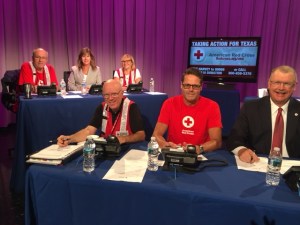
Taking Action for Texas: WEWS News 5 hosts phone bank to help hurricane victims. Phones will be open all day Thursday, through the Cleveland Browns game. Call 800-658-5370 to donate.

  •  


And all we can say is:

thank-you-1400x800-c-default

NEO Harvey Update

20170830_103222Northeast Ohio continues to offer support to those affected by Hurricane Harvey.

As of today, 20 volunteers from the Northeast Ohio region have headed south to assist in the relief efforts in East Texas and Louisiana, along with four emergency response vehicles. In total, the Red Cross has provided 1,500 disaster relief workers and 200 emergency response vehicles.

Hurricane Harvey has set a record for the greatest amount of single-storm rainfall in the continental United States, surpassing 50 inches of rain. Preliminary FEMA estimates indicate as many as 67,000 homes in Texas may be damaged.

If you are interested in helping the Red Cross provide relief to those in need, you can visit redcross.org/neo, call 1-800-RED-CROSS or make a one-time $10 donation by texting HARVEY to 90999. Due to the time involved with sorting, storing and cleaning in-kind items, a financial donation is the most effective way to assist those in need.

NEO Responds to Harvey

As the devastating effects of Hurricane Harvey continue across parts of east Texas and Louisiana, the Red Cross is on the ground to offer shelter, food and hope to those affected by the storm.

12253-027.jpg

16 Northeast Ohio volunteers have headed into the fray, with many more still to be deployed. Three NEO emergency response vehicles are among the 200 already in the affected area or en route. More than half of the Red Cross fleet of emergency vehicles are mobilized to respond, providing hot meals and cleaning supplies to neighborhoods once the flooding recedes.

12253-019.jpg

The generosity of Northeast Ohioans is extremely heart warming. Many people have contributed to the financial needs of those affected, though no tally is yet available. A financial donation allows a family the opportunity to purchase the things they need and want to aid in their recovery. Working with partner organizations and retailers, the purchasing power of the Red Cross allows us provide water, snacks and everyday items like diapers, to shelter residents at a cost much lower than what consumers can get from a local store.

12252-104.jpg

If you would like to help those affected by Hurricane Harvey you can log on to redcross.org/neo and click on donate, call 1-800-REDCROSS or text HARVEY to 90999 to make a $10 donation.

Still Writing Checks and Saving Lives

Charitable Trust Continues to Fund Smoke Alarm Installations

IMG_4470

In 1992, following a spate of fire fatalities, the American Red Cross of Greater Cleveland partnered with the Cleveland Division of Fire to install smoke alarms, free of charge to residents who lived in neighborhoods deemed to be at high risk for home fires.

The project was made possible then, and continues now, in part because of funding from the Fred A. Lennon Charitable Trust.  “25 years later, we’re still writing checks and saving lives,” said Chris Hitchcock, Executive Director of the Trust, adding, “And now it’s becoming a national program.  That’s very exciting.”

IMG_4457

 Chief Angelo Calvillo, Tim O’Toole, and Chris Hitchcock 

Chris joined Red Cross volunteers, members of  the Westshore Community Emergency Response Team (CERT), and the Cleveland Division of Fire on a Sound the Alarm home fire safety and smoke alarm installation event in the neighborhood in Cleveland where a woman and her 8-year old great-granddaughter died in July.

28 homes were made safer, as the volunteers and firefighters installed 85 smoke alarms and helped residents formulate escape plans.

The Cleveland Fire Department, which has an active presence on Twitter, broadcast a live interview on the Periscope app with Chris, Chief Angelo Calvillo,  and Tim O’Toole, the Red Cross Regional Disaster Officer.

See more photos here, on our Flickr album.


The Red Cross and the Eclipse…Please Explain

By Todd James, Red Cross Public Affairs Volunteer and Executive Director from the Ohio Buckeye Region

IMG_1217I recently had the opportunity to serve as part of the Red Cross preparedness operations team in Kentucky as part of the Great American Eclipse.

Many people will ask, “What does the Red Cross have to do with an eclipse?”

Well, whenever there is a large public event such as the Super Bowl, a national political convention, or in this case, an eclipse,  the Red Cross is part of the planning process with local,  state and federal  officials. It takes a lot of work to be prepared for large crowds of people coming into an area. In this case, over 7 million people were expected to visit the 12 states in the path of totality to see the eclipse. This had the potential to overwhelm local infrastructure in many communities, especially here in Hopkinsville, Kentucky,  where the point of greatest eclipse took place.

The Red Cross has been planning, for over a year, for single this event.

In Kentucky, where I served, 21 counties were in the path of totality and hundreds of thousands of people were expected to visit the area in the days leading up to the eclipse.

What if a natural disaster occurred during this period? The possible need for sheltering and feeding was a big concern. Many people may have had to sleep in their cars!

This is storm season! A severe storm or tornado would be devastating in normal circumstances, but could be catastrophic with thousands more people than usual in the area. Severe heat is also common in the area at this time of year. The Kentucky Red Cross spent months making sure shelter locations were secured and inspected. They loaded trailers with shelter supplies and moved them to strategic locations, ready to be moved to town shelters where needed. Red Cross volunteers signed up to be available and ready at a moment’s notice to open shelters and provide care and comfort.

Prior to the event, the Red Cross coordinated safety and preparedness messaging with emergency management officials to let people traveling to view the eclipse know what they could do to make their trip a safe one.

All this work led up to August 21, the day of the eclipse.

So, what happened? Nothing! Millions of people made their way to their destination, viewed the eclipse and returned home safely. There were no major incidents or disasters. Our teams went home without having to open a single shelter.  And that’s just the way we wanted it!  Preparedness is key to the Red Cross mission. We’re constantly training, preparing and collaborating with our partners, so when a disaster happens, we are ready to respond immediately. But, sometimes, our best days are the ones when we don’t do anything but wait.

5 Ways to Support World Humanitarian Day

5ways

Sign the petition to protect civilians trapped in conflict
Visit www.worldhumanitarianday.org to sign the petition demanding that civilians in conflict are protected – encourage your colleagues and counterparts to add their
names.
• Share the #NotATarget campaign on Social Media
Download a social media graphic from our repository http://bit.ly/WHDcomms17 and post it with the following sample tweet to your social media accounts:
On #WorldHumanitarianDay, I stand up for civilians trapped in conflict. They are #NotATarget. Sign the petition at WorldHumanitarianDay.org Visit OCHA’s Twitter (twitter.com/UNOCHA) and Facebook (facebook.com/UNOCHA/) accounts to share the
#NotATarget messages.

• Organize your Stand Together event
Invite your colleagues and partners to stand together in solidarity with millions of civilians trapped in conflict. We have prepared #NotATarget signs for you to print and
hold during the event. (See the guidelines for organizing a Stand Together.)

• Join a Stand Together event
Across the world, the UN and partners will be organizing Stand Together events. Contact an OCHA office in your country to see what is being planned. In New York, on Friday 18 August, you can join the the UN ‘Staff Stand Together’ at 11:30am at UNHQ and the public event in Times Square at 4:00pm. Similar events are being planned across the world. Together we will reaffirm that civilians caught in conflict are #NotATarget and demand global action to protect them.

• Record a Facebook Live video with the #NotATarget filter
Starting from 18 August, visit UNOCHA’s Facebook page where you will find a link to the #NotATarget filter. Access the filter and record a live video, narrating the story of a person trapped in conflict.

The American Red Cross is a part of the global network dedicated to relieving human suffering. Learn more here.

aidworker_acknowledgement.jpg

Red Cross Staffer Celebrates 25 Years (and More!) with the Organization

By: Debbie Chitester, Disaster Program Manager for Summit, Portage, and Medina CountiesIMG_1212.JPG

I literally have been with the Red Cross since birth, as both of my parents had volunteered with the Red Cross since before I was born.  Serving and helping others was instilled in me at a very young age.  One of my earliest memories centers around playing house in the old feeding vehicle at the chapter building on 12th and Prospect.

The blizzard of ’78 hit when I was 7-years-old. My family lived at the office for a week while my parents helped with the many aspects of sheltering and communication.  My job, that week, was to be the elevator operator. I learned how to close the doors, wind it up and push the buttons to make it go. I also served as the message runner, taking messages from one end of the hall to other.

Over the years I listened to the calls my parents would take from clients, those that had fires or any other emergency.  This was a time before a centralized emergency number existed, so people called the Red Cross.  Through their examples, I could see that helping people was so rewarding.  I watched my parents receive such great satisfaction from giving a little boy, who just had a fire, a bag of apples. I saw, first hand, the power of a simple gesture.

For many years, my dad would always take the Disaster Action Team shift over the four day Thanksgiving holiday.  He would always say that he had so much to be thankful for, that he wanted show that gratitude by helping others. So, growing up, there were a few Thanksgiving Day meals interrupted by a call to assist others in need.

It was witnessing these experiences as I was growing up that drove me study Social Work in college. So I, too, could help people.

These memories from my childhood led into many more memories throughout my career.  My first disaster relief operation was Hurricane Andrew in 1992.  I had just graduated college and had just been hired on as a caseworker after completing my internship.  We provided casework services out of tent in South Florida, and we made a home of it for our clients and volunteers.  A few weeks into my assignment, we got word that then President of the Red Cross, Elizabeth Dole, was going to stop in for a visit the next day.  We all wanted to show off our “home” and set about to tidy up the place. Across the compound was a sign that announced the name of our little home.  It had been beat up and faded by the South Florida sun, so I decided that it needed to be spruced up. I found a black sharpie marker, sat down in front of that sign and just started coloring.  It was kind of therapeutic in a way to color the sign.  As I sat there, the Disaster Mental Health volunteer came by to check on me.

“Everything ok?”

“Oh, yes! I love to color, and it is kind of helpful for me to do this!” I replied.

“Oh,” he said, “that is good.” He turned to walk away. Then he turned back.

“Should I be concerned that you are only using black?”

I smiled back, and, laughing, said, “It was the only color I could find!”   The next day Elizabeth Dole showed up, as schedule, and while I do not think she saw my sign, I was still proud of my coloring project.

In my years with this organization, there has always been change. We have moved forward in the last 25-years by always keeping the needs of the client in mind.  The biggest, positive change for clients was the implementation of Client Assistance Cards, a pre-paid gift type card that we use to provide financial assistance.  This may seem like a such an odd thing as the most positive change, but it really helps the client become more involved with their own recovery.  The card helps to take away some of the stigma of being a disaster client, as they can now go where they want and do not have to endure the special attention of using a specific voucher.

I love what I do, and have lived the mission of the Red Cross for a long time.
IMG_4438.JPG

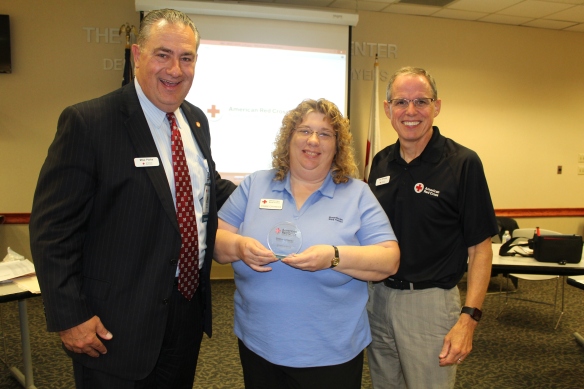
Regional CEO Mike Parks, Debbie Chitester, and Regional Chief Disaster Officer Tim O’Toole 


Debbie celebrated 25-years as a paid staff member with the Red Cross on July 19. She was recognized with an award, seen here, from Regional CEO, Mike Parks and Regional Disaster Officer, Tim O’Toole at the Quarterly All Staff Meeting on August 15.