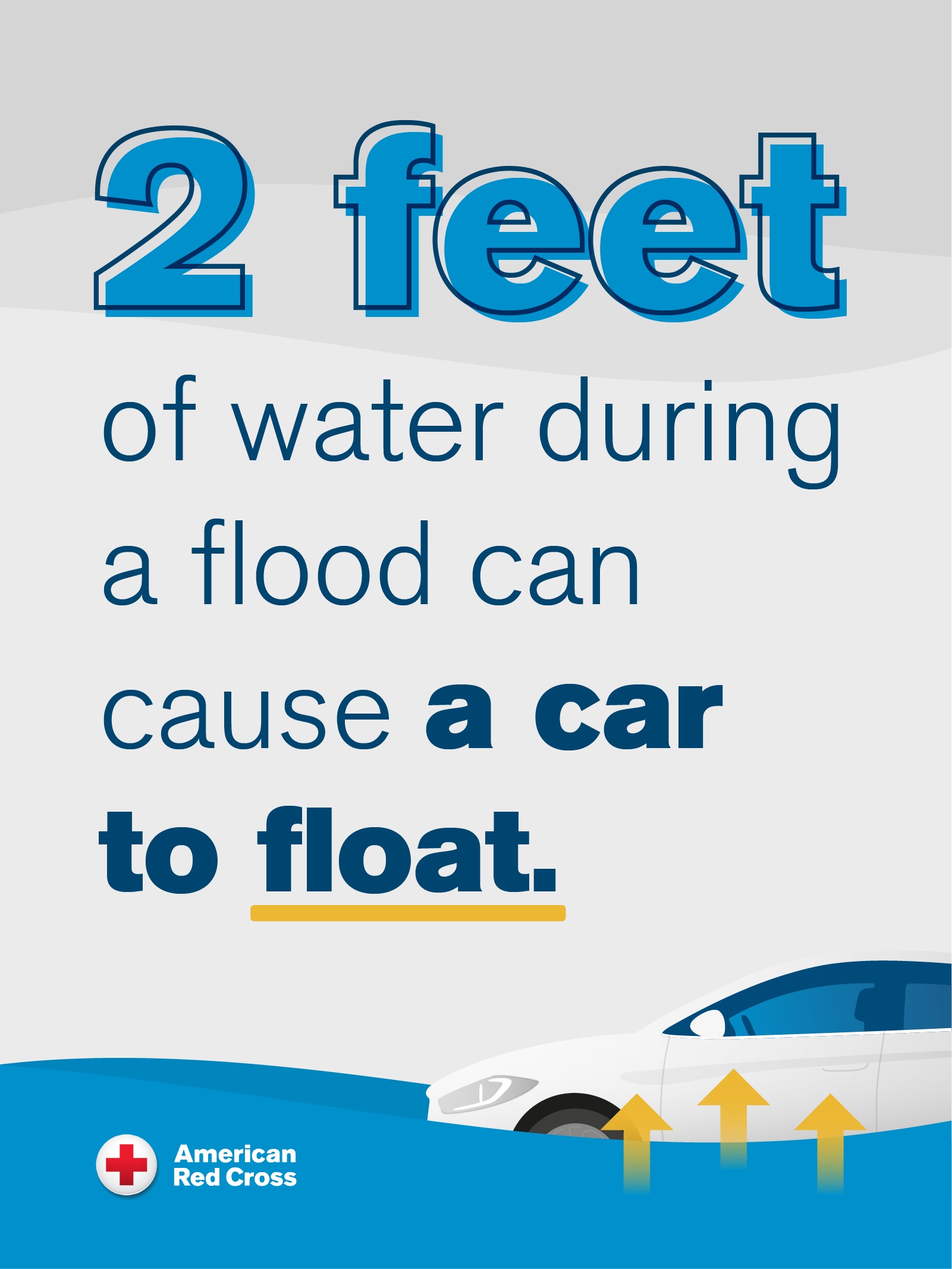
High winds, heavy rains, crashing trampolines — be prepared for spring storms

By Tim Poe, American Red Cross volunteer.

Early April, a family gathering for an 81st birthday as an early spring storm rattles, patters and howls, not unlike the taps and rumbles at the windows as I write this. A bellowing whoosh and deep crash, a house-shuddering boom. I stand, thinking a tree has fallen, and look out the window to see a black-and-chrome mass fall from the sky, striking cars in a cacophony of shattering glass and bending metal. A family member repeatedly shouts, “What was that?!” I step outside and piece together what has happened. A neighbor’s trampoline, windblown, smashed into and knocked down a portion of fence, rose up, crashed onto the roof, where one of its legs protrudes from the hole it has just made, rose again and plunged onto the cars.

This was the scene last April, turning a birthday celebration into a flurry of activity to ensure everyone was safe, mitigate damage from the compromised roof, assess damage and make plans on how to proceed. Now that spring has returned along with its storms, we must be prepared for whatever they bring, whether high winds, tornadoes, heavy rains, flooding or falling trampolines.

As we have written before, preparation is key. The American Red Cross is responding to an increasing number of disasters and expects this trend will continue. The National Oceanic and Atmospheric Administration also recently reported that Ohio set a record for tornadoes in 2024.

Here are tips for planning and staying safe.
  • Practice drills with everyone in your household.
  • Contact your local office of emergency management to learn what hazards may affect your community. Sign up for free emergency alerts from your local government. Remember, a WATCH alert means be prepared; a WARNING means take action.
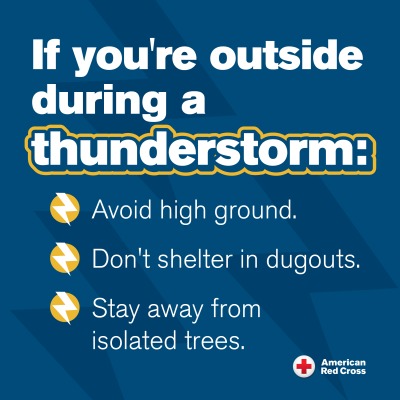
  • Get inside a sturdy building, one with walls and a foundation, before a thunderstorm hits. Plan to shelter in the basement or a small, interior, windowless room on the lowest level to provide additional protection from high winds.
  • If you are in a mobile, manufactured, trailer home or RV, identify a sturdy building you can access quickly.
  • In certain emergencies you may need to travel to safety. Decide where you will go, how to get there and what you will need to take. Make additional plans if assistance or public transportation is needed.
  • Include pets in your plans.
  • Plan to reconnect with loved ones should you become separated or communications are down. Carry a contact card with important phone numbers. Also consider including a list of medications.
  • Plan to stay informed even if the power is out. Backup batteries, devices to charge cell phones and battery-powered or hand-crank radios are helpful.
  • Prepare both stay-at home and go kits. The go-kit should have three-day’s worth of critical supplies, while the stay-at-home kit should have two weeks of food and water and a one-month supply of medications/medical supplies.
  • Keep personal, financial and medical records in a safe, easily accessible place.
  • Make a list of items outside you will need to tie down or put away. (Yes, including trampolines).
  • Learn First Aid and CPR.
  • Download the Red Cross Emergency App.

More information is available here. As always, please prepare and stay safe, and call on the Red Cross if needed.

Edited by Glenda Bogar, American Red Cross volunteer

Busting common myths about donating blood

By Samantha Pudeslki, American Red Cross volunteer

Have you always assumed you can’t donate blood? You’re not alone. There are a lot of people who may think they cannot donate, but actually can. Here are a few of the most common myths around blood donation restrictions and the facts you need to know.

Myth #1: You can’t donate blood if you have a tattoo and/or body piercing.

Fact: You can donate blood if you have tattoos and/or body piercings. If you recently had a tattoo and it was applied in a state-regulated/licensed tattoo facility using sterile needles and the ink was not reused, you may not have to wait to give blood. Those who are certain a sterile needle was used for a body piercing also may not need to wait. Otherwise, you must wait one year after receiving a tattoo or body piercing.

Myth #2: You can’t donate blood if you take regular medications.

Fact: In almost all cases, medications won’t disqualify you as a blood donor. Instead, your eligibility is based on the reason the medication was prescribed. As long as the condition is under control and you are healthy, blood donation is usually permitted. If you are unsure, visit our eligibility page at RedCrossBlood.org..

Myth #3: You can’t donate blood if you are a diabetic.

Fact: Diabetics who are well controlled on insulin or oral medications are eligible to donate.

Myth #4: You can’t donate blood if you have had cancer.

Fact: It depends on the type of cancer and your treatment history. Those who have had leukemia or lymphoma, including Hodgkin’s disease and other cancers of the blood are not eligible. With most other types of cancers, you are able to donate blood if it the cancer has been treated successfully and it has been more than 12 months since treatment. Cleveland city councilman Kevin Conwell is once again a regular donor, after winning a battle with cancer. Read his story here.

Myth #5: I am too old or too young to donate.

Fact: You must be 17 years old or 16 years old with parental/guardian consent to donate blood, if allowed by state law. There is no age limit for older adults as long as you are healthy and meet the other criteria.

Myth #6: You can’t donate blood if you have travelled outside of the U.S.

Fact: While there are some travel restrictions in place, they are very specific to the location and time period that the individual spent there. If you have questions about eligibility, you can call 866-236-3276 to speak with an eligibility specialist about your travel.

For more facts around the blood donation process, visit the American Red Cross FAQ page. Ready to donate? Visit our website to find an upcoming drive near you.

If you are someone who is unable to donate blood, there are other ways you can support the cause! The Northern Ohio Region of Red Cross relies on volunteers to help with essential tasks like registration to make sure blood drives run smoothly. To learn more about volunteer opportunities in Northern Ohio, click here.

Edited by Glenda Bogar, American Red Cross volunteer

12 Safety Tips for Savvy International Travel

Summertime is vacation time. It is one of the most popular times for people in the United States to embark on international trips. If you are traveling to another country this summer, the Red Cross offers some tips to help make you a savvy traveler.

Whether you are driving across a border, setting sail for a tropical coastline, or jetting overseas, taking these 12 steps will help you stay safe. (If you’re traveling by car, don’t forget to pack an emergency kit in the vehicle.)

A little advance preparation goes a long way. So add this checklist to your itinerary:Icon App

  1. Download the first aid app. The Red Cross first aid app puts expert advice for everyday emergencies in your hand. Whether you’re home or abroad, arming yourself with basic first aid skills can save a life. Be sure to download the app while you’re still in the United States, otherwise you’ll download the local Red Cross or Red Crescent’s mobile app (which will be in the local language).
  2. Make a plan. Just like at home, it’s important to establish a time and place to meet family members in case you get separated.
  3. Know what natural disasters are possible. It’s important to research whether your destination faces emergencies you’ve never experienced. The Red Cross offers basic tips about what to do during natural disasters like tsunamis, volcanoes, and hurricanes.
  4. Register your trip with the State Department. Enter your travel details with the free Smart Traveler Enrollment Program online, which allows the State Department to better assist you in case of an emergency while you are abroad. You can also get information about safety conditions in the country you are planning to visit.
  5. Write down contact details for the nearest U.S. embassy or consulate to carry with you in case of emergency while traveling.
  6. Check out the State Department’s ‘What the Department of State Can and Can’t Do in a Crisisand have an evacuation plan that doesn’t rely on the U.S. government.
  7. Keep your destination country’s emergency numbers handy. You know to use 911 in the United States, but how will you reach the fire department, police, or an ambulance abroad? Find your destination country on this reference sheet from the State Department—and write down the emergency numbers before you take off.
  8. Know the six-month passport rule. Some countries deny travelers entry if their passport expires in less than six months. Renew your passport about nine months before the expiration date.
  9. Let your credit card company know what countries you will be visiting and when. This way, they won’t think your card is stolen and shut it off just when you need it the most.
  10. Pack your International Certificate of Vaccination. Also referred to as the “yellow card,” it lists your immunizations, allergies, and blood type. The “yellow card” is available from your physician or local health department.
  11. Bring medications, bug repellent. If you’re traveling somewhere with mosquito-borne illnesses—such as malaria, dengue, or Zika—be sure to spray repellent and/or cover your arms and legs with lightweight clothing at critical times of the day. Don’t forget your medications and it’s a good idea to bring other stuff like OTC pain reliever and something for an upset stomach.
  12. Check for emergency exits and evacuation routes. The Red Cross has helped many communities around the world install signs that indicate evacuation routes in case flooding or another natural disaster occurs. Be sure to identify evacuation routes at your destination and pay attention to the location of emergency exits.

Safe travels!