Stay safe this summer when temperatures heat up

By Tim Poe, American Red Cross volunteer
While Northern Ohio hasn’t seen temperatures over 90 degrees Fahrenheit since last year, summer is here, and it is time to prepare for high temperatures. Extreme heat is happening more often and more intensely — 2024 was the hottest year on record globally — and in more places, like Northern Ohio. As extreme heat is a leading cause of weather-related deaths in the U.S., the American Red Cross urges everyone to take critical actions to stay safe. These include: 

Stay hydrated. When temperatures are high, drink a cup of water every hour, even if you aren’t thirsty. Avoid sugary, caffeinated and alcoholic drinks. Remind friends and family members to do the same. Also, babies should be breast- or bottle-fed often. Fewer wet diapers or darker urine can be signs of dehydration. 

Stay cool. Spend time in air-conditioned places. If your home is too hot, go to a mall, library or cooling center. You can also take a cool shower or bath. Please make sure to look out for older neighbors and relatives as well as anyone without air conditioning.  

Outdoor workers and athletes should take breaks in the shade and frequently drink water: a cup every 20 minutes. They should also use a buddy system to check on one another. 

Wear lightweight, loose-fitting clothes in bright colors. 

Never leave a child or pet alone inside a parked car, and make sure pets have access to fresh water and shade. 

Prepare for power outages during heat waves. Be ready to stock an ice-filled cooler with food, water and medicine, so that they don’t spoil. If you need to keep medicine cold or use medical devices that need power, talk to your doctor about a backup plan. Also keep food cold by keeping refrigerator and freezer doors closed as much as possible; eat fresh, perishable foods first; and throw out perishable food that has been warmer than 40 degrees Fahrenheit. More information is available here

Stay connected.  Check on others and ask for help if you need it. Also download the free Red Cross emergency app

Know the signs of heat illness. While some are at higher risk of heat related illness, such as older adults, children, pregnant women and those with medical conditions, anyone can become ill when their body cannot properly cool down. It is critical to act fast, as some types of heat illness can be deadly. 

Heat cramps are signaled by heavy sweating and muscle pain. Stop what you’re doing, rest in a cool place and slowly sip water. Don’t drink if you feel sick, and get medical help if cramps last over an hour or you have heart problems.  

Heat exhaustion is signaled by heavy sweating, weakness, cool and clammy skin, muscle cramps, dizziness, fainting, nausea or vomiting. In addition to the above, loosen your clothes and place a cool wet cloth on your body. Get medical help if you don’t feel better, vomit or have heart problems.  

Heat stroke is a deadly condition signaled by high body temperature, rapid heartbeat, confusion, headache, dizziness, fainting, nausea or vomiting. Call 911. Move to a cooler place, remove extra clothing and use a wet cloth or a cool bath to cool down. Don’t drink anything. 

Learn more tips and download the Red Cross’ Extreme Heat Safety Checklist HERE. 

Edited by Glenda Bogar, American Red Cross volunteer

Students can develop skills and help communities over summer break

By Tim Poe, American Red Cross volunteer

On this blog, we have been fortunate to share the achievements and life stories of several extraordinary individuals in Northern Ohio. These include several young people who have applied life-saving skills learned from the American Red Cross, like Alexis Starnes and Travis Shrout, organized a blood drive, like Andrew Lazowski, and worked as advocates, like Makenzie Nance. There are many others who have assisted their communities, helped save lives, developed skills that will help them throughout their lives and careers, and built lasting friendships.

If you are a student, recent graduate, or parent searching for activities during the summer break, the Red Cross offers an array of classes and volunteer opportunities.

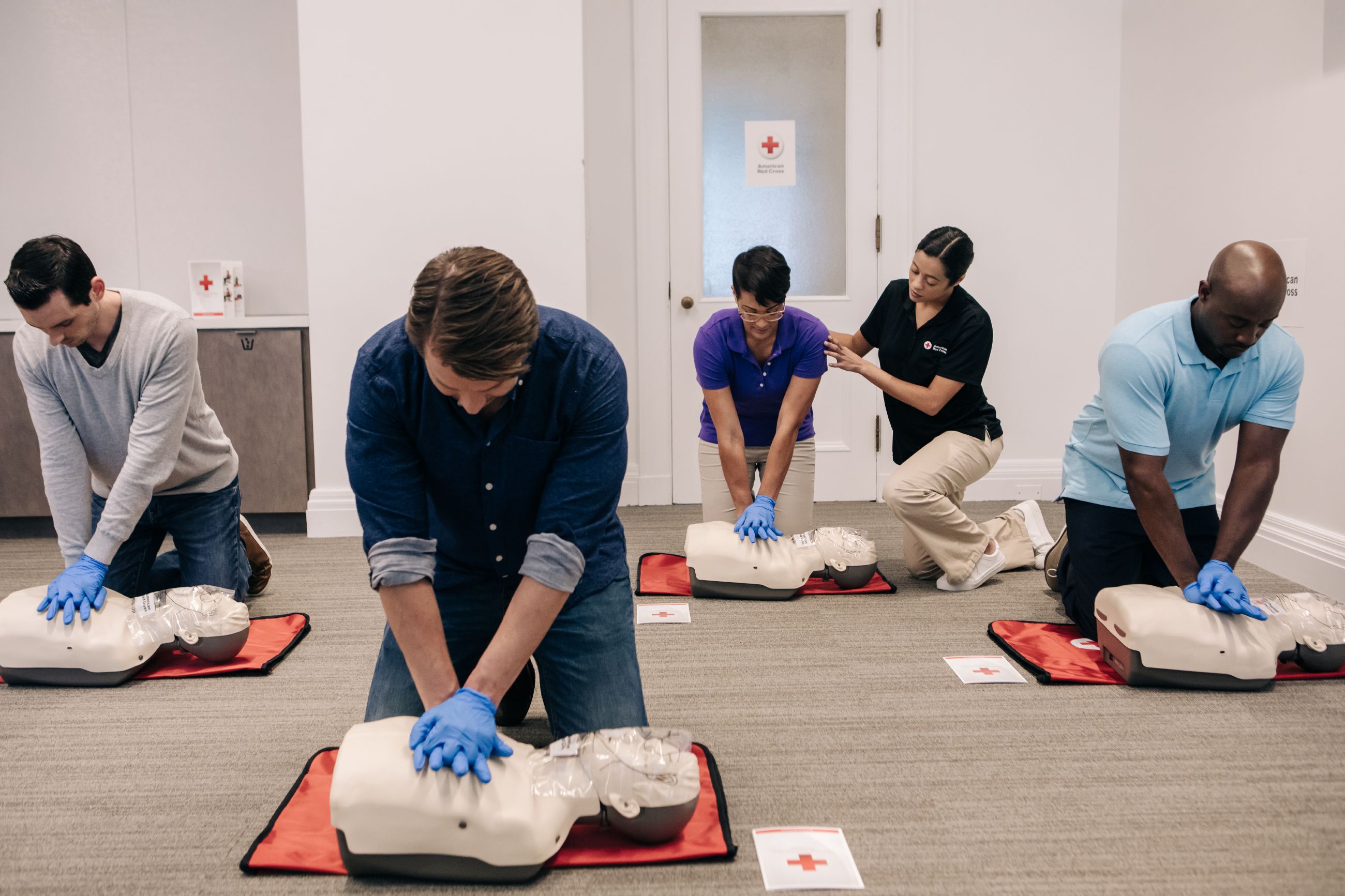
Red Cross classes are offered throughout the summer in online, in-person, and blended formats. The Red Cross encourages everyone to learn first aid, CPR, and how to use an AED. Time is critical during a cardiac arrest; chances of survival double or triple if CPR is administered or an AED is used within the first few minutes.

June 22, 2018. Washington, DC. CPR stock photos by Roy Cox for the American Red Cross.

In addition, the Red Cross offers Babysitting Training for students between 11 and 15 years of age. Advanced Child Care courses are available for students 16 years and older. The babysitting classes feature topics such as choosing age-appropriate activities, basic child care (including bottle feeding), child behavior, leadership, professionalism, safety, starting a babysitting business, and more. These courses also cover emergency and first aid skills such as bee stings, allergic reactions, asthma, burns and choking. Advanced Child Care course participants learn the most common child care routines and behavior along with safety inside and outside the home, including driving with children and water safety.

For those seeking to volunteer, opportunities are available depending on age, such as assisting or organizing blood drives, participating in Red Cross Clubs, even streaming to help support Red Cross disaster relief efforts.

Northern Ohio volunteer opportunities are here. Blood Donor Ambassadors are especially needed.

If you are interested in organizing a blood drive, and possibly earning a scholarship, please see the Leaders Save Lives page.

Additional information is available on the Red Cross Youth page.

Blood donors are also needed. If you are 17 or older (16 with parental/guardian consent in some cases), please consider donating. Information for teen donors is here.

My first experience with the Red Cross was assisting a blood drive at my high school and learning CPR. While that was decades ago, the experience and skills have had a positive influence ever since, helping instill a desire to assist others and leading to volunteering as an adult. I have also been fortunate to work alongside many dedicated, caring people. It began with a Red Cross sign-up sheet (I predate the internet) and a willingness to learn and help.

Posted by Ryan Lang, American Red Cross volunteer and board member

12 Safety Tips for Savvy International Travel

Summertime is vacation time. It is one of the most popular times for people in the United States to embark on international trips. If you are traveling to another country this summer, the Red Cross offers some tips to help make you a savvy traveler.

Whether you are driving across a border, setting sail for a tropical coastline, or jetting overseas, taking these 12 steps will help you stay safe. (If you’re traveling by car, don’t forget to pack an emergency kit in the vehicle.)

A little advance preparation goes a long way. So add this checklist to your itinerary:Icon App

  1. Download the first aid app. The Red Cross first aid app puts expert advice for everyday emergencies in your hand. Whether you’re home or abroad, arming yourself with basic first aid skills can save a life. Be sure to download the app while you’re still in the United States, otherwise you’ll download the local Red Cross or Red Crescent’s mobile app (which will be in the local language).
  2. Make a plan. Just like at home, it’s important to establish a time and place to meet family members in case you get separated.
  3. Know what natural disasters are possible. It’s important to research whether your destination faces emergencies you’ve never experienced. The Red Cross offers basic tips about what to do during natural disasters like tsunamis, volcanoes, and hurricanes.
  4. Register your trip with the State Department. Enter your travel details with the free Smart Traveler Enrollment Program online, which allows the State Department to better assist you in case of an emergency while you are abroad. You can also get information about safety conditions in the country you are planning to visit.
  5. Write down contact details for the nearest U.S. embassy or consulate to carry with you in case of emergency while traveling.
  6. Check out the State Department’s ‘What the Department of State Can and Can’t Do in a Crisisand have an evacuation plan that doesn’t rely on the U.S. government.
  7. Keep your destination country’s emergency numbers handy. You know to use 911 in the United States, but how will you reach the fire department, police, or an ambulance abroad? Find your destination country on this reference sheet from the State Department—and write down the emergency numbers before you take off.
  8. Know the six-month passport rule. Some countries deny travelers entry if their passport expires in less than six months. Renew your passport about nine months before the expiration date.
  9. Let your credit card company know what countries you will be visiting and when. This way, they won’t think your card is stolen and shut it off just when you need it the most.
  10. Pack your International Certificate of Vaccination. Also referred to as the “yellow card,” it lists your immunizations, allergies, and blood type. The “yellow card” is available from your physician or local health department.
  11. Bring medications, bug repellent. If you’re traveling somewhere with mosquito-borne illnesses—such as malaria, dengue, or Zika—be sure to spray repellent and/or cover your arms and legs with lightweight clothing at critical times of the day. Don’t forget your medications and it’s a good idea to bring other stuff like OTC pain reliever and something for an upset stomach.
  12. Check for emergency exits and evacuation routes. The Red Cross has helped many communities around the world install signs that indicate evacuation routes in case flooding or another natural disaster occurs. Be sure to identify evacuation routes at your destination and pay attention to the location of emergency exits.

Safe travels!