
by: Melissa Papini, Disaster Program Manager
As we spend time reflecting on the closing of 2017, celebrating the season with our loved ones, being thankful for all the little things that bring us joy like safety and security, let’s also take time to think about (and say prayers for, if you’re so moved) our friends and family all over the world whose safety and security was threatened this year by natural disasters.
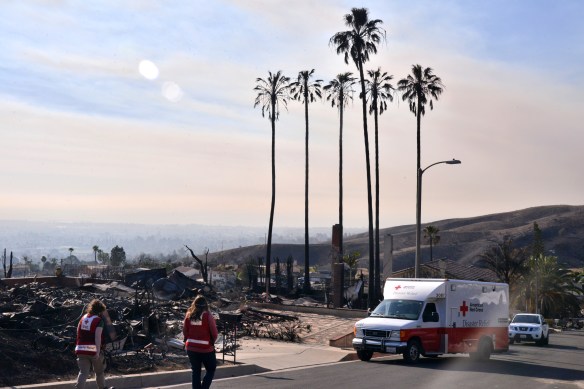 I recently heard an interview on the radio about a couple who moved from Brooklyn, NY to Ventura, CA this year. The interview was about the mandatory evacuations in their neighborhood related to the Thomas fire. They talked about how different it is to live in a community that has to be prepared at all times to flee their homes. Everyone they know has an emergency kit ready for not if, but when the wildfires get too close. That observation struck me. We live in a part of the country where very few people have natural disasters on their minds regularly. How many people do you know in Northeast Ohio that have an emergency kit ready at home?
Through my recent career move to “all things disaster,” my 10-year-old daughter has picked up on the idea of disaster preparedness. She has heard me talking about the Pillowcase Project and has created her own emergency kit that she’s packed in a pillowcase. She has a change of clothes, a flashlight, and a first aid kit ready to go if we ever need it. After reviewing the checklist in the Pillowcase Project booklet, I may suggest she add things like toiletries, markers and paper, a blanket, and a favorite toy.
For a detailed list of items that you can put together to create an entire household emergency kit please refer to our previous posts. There are also many Red Cross apps that can help you be prepared for and alerted about local disasters.
One other thing I’ve realized about preparedness through follow-up casework with our clients who’ve had home fires is how important it is to create an inventory of the contents of your home. If you are ever in a situation where you have a fire, your insurance company cannot begin to help you start replacing things until you’ve created a detailed inventory list for them. This is a daunting task for people who have millions of other things on their minds after a home fire. The easiest way to do this is take videos in each room of your home. Be sure to open drawers where you may have valuables too. Keep a copy of this video somewhere safe like an external hard drive in a fire proof lock box, the cloud, or you can even email it to yourself.
If you are like me and can’t wait to crack open your new planner for 2018 and start making lists of goals, be sure to add preparedness to your list of resolutions!
 By now you know may think that you know all about hurricanes — massive storm systems that form over the water and move toward land. Threats from hurricanes include high winds, heavy rainfall, storm surge, coastal and inland flooding, rip currents, and tornadoes. These large storms are called typhoons in the North Pacific Ocean and cyclones in other parts of the world. The Atlantic hurricane season runs from June 1 to November 30, with the peak occurring now, between mid-August and late October. The Eastern Pacific hurricane season begins May 15 and ends November 30.
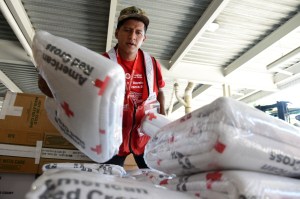 Coming right smack in the middle of the peak of Hurricane season, is Preparedness Month. Celebrated every September, it is the perfect time for you, your family, and your community learn how to BE PREPARED.
 On the First Day of Christmas, the Red Cross recommends that you install a SMOKE ALARM. Smoke alarms should be installed on every level of a home; outside bedrooms on the ceiling or high on the wall, at the top of open stairways and at the bottom of enclosed stairs and near (but not in) the kitchen. It is important to check your Smoke Alarms every month and replace their batteries when Daylight Savings Time begins in the spring and ends in the fall.
 On the Second Day of Christmas, the Red Cross recommends that you install a CARBON MONOXIDE (CO2) ALARM. Carbon Monoxide Alarms should be placed in hallways throughout the home. They should also be placed in recreational vehicles and on boats.
 On the Third Day of Christmas, the Red Cross recommends that you install a FIRE EXTINGUISHER. Install A-B-C type Fire Extinguishers in the home and teach all household members how to use them.
 On the Fourth Day of Christmas, the Red Cross recommends that you install a FIRE ESCAPE LADDER. Homes with more than one floor should have at least one Fire Escape Ladder stored on all floors, other than ground level. Store these ladders where they are easily accessible.
 On the Fifth Day of Christmas, the Red Cross recommends that you assemble a
  On the Sixth Day of Christmas, the Red Cross recommends that you assemble a
  On the Seventh Day of Christmas, the Red Cross recommends that you acquire a WEATHER RADIO. As the voice of the National Weather Service, a Weather Radio provides continuous broadcasts of the latest weather information directly from a National Weather Service Forecast Office. During severe weather routine broadcasting is interrupted and special watch and warning messages are issued.
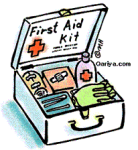 On the Eighth Day of Christmas, the Red Cross recommends that you get a
  On the Ninth Day of Christmas, the Red Cross recommends that you attend
  On the Tenth Day of Christmas, the Red Cross recommends that you purchase HOUSE NUMBERS. Each home should have its number posted clearly on the front door, over the doorway, or elsewhere on the front so emergency responders can easily locate it. Lives and property can be saved simply by using adequate house numbers placed where emergency workers can find them. You can purchase numbers at your local hardware store.
 On the Eleventh Day of Christmas, the Red Cross recommends that you purchase a FLASHLIGHT. As simple as a Flashlight is, it can become a very important tool to use during and after a disaster. Every family disaster supplies kit should contain a flashlight and spare batteries.
 On the Twelfth Day of Christmas, the Red Cross recommends that you create an
  NOHredcross