Residents still recovering after back-to-back July storms

By Jim McIntyre, American Red Cross volunteer

Early afternoon, July 5, 2026: Canfield Township in Mahoning County is hit with a powerful one-two weather punch – first, a tornado with estimated peak winds reaching 95 miles per hour. Then, as the National Weather Service website states, “As the tornado cycled out across the region, a significant rear flank downdraft formed and increased in intensity, causing substantial straight-line wind damage across a larger portion of Mahoning County. Winds up to 90 mph caused extensive tree, power pole, and power line damage…”
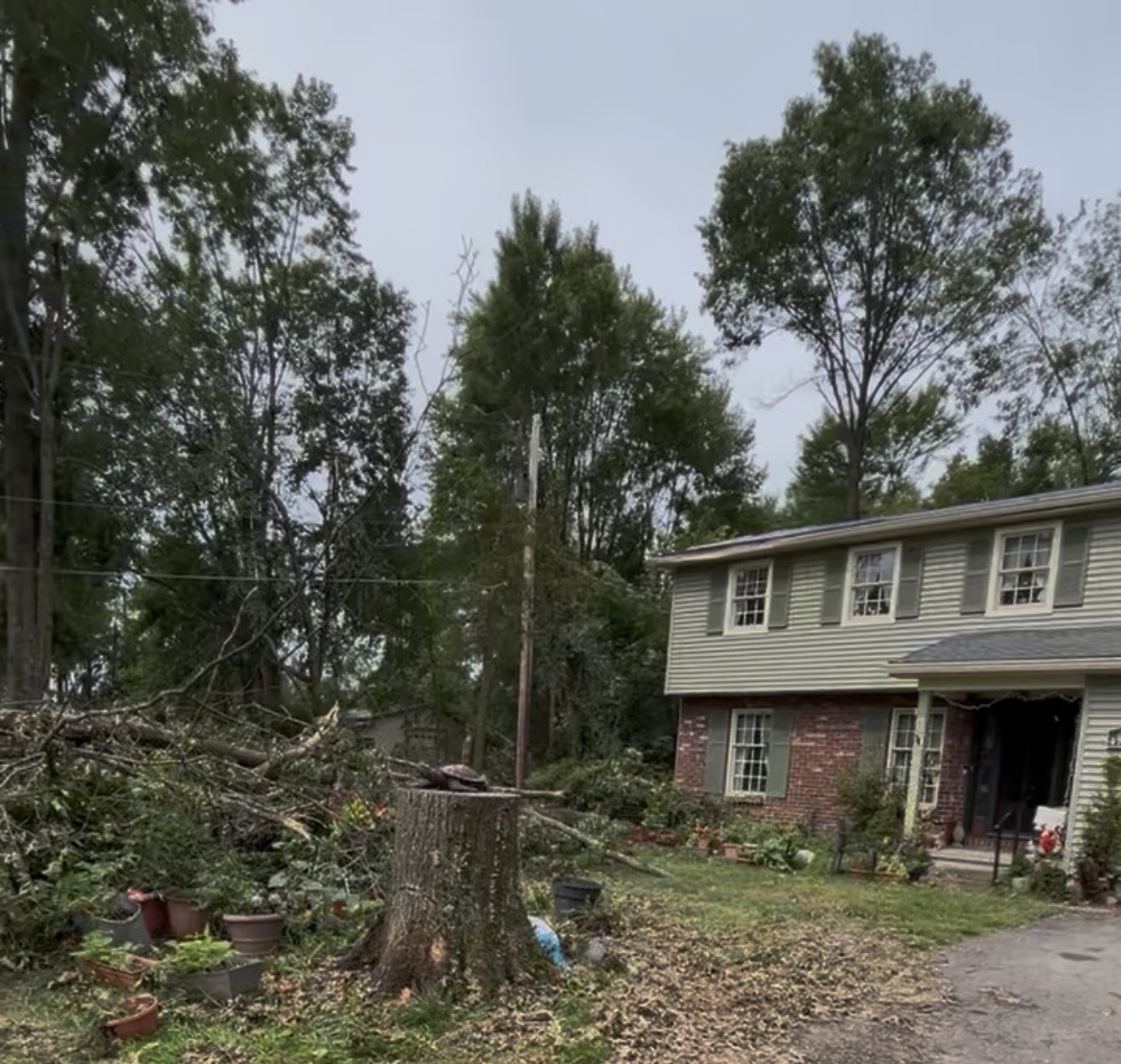
The NWS labeled this storm a macroburst.

While the initial tornado is described as short-lived, having spent about a minute on the ground, the powerful straight-line winds that immediately followed lasted more than thirty minutes, and toppled nearly a thousand trees, according to the NWS estimate.

At least two-dozen of those trees fell on and around the home of Thomas and Sandra Treleven.
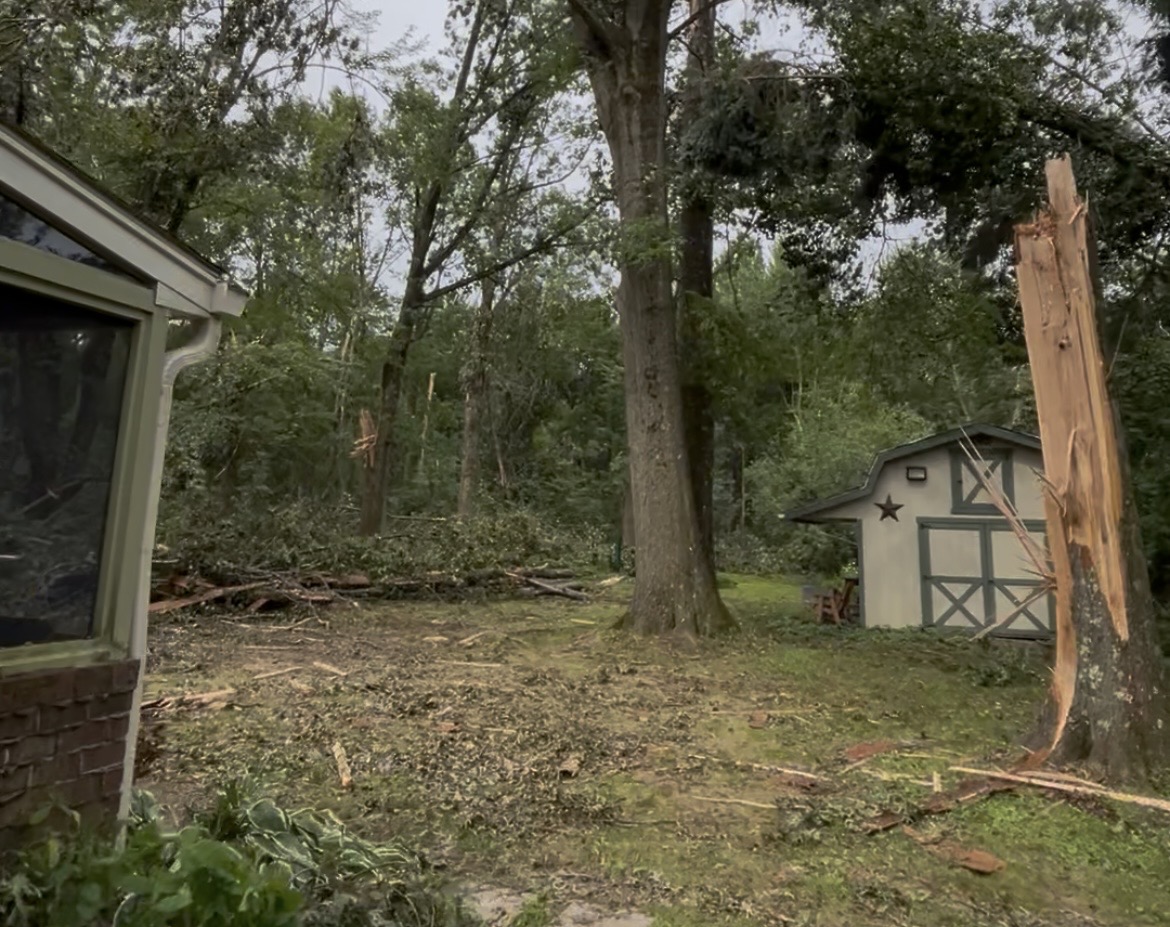
“Every tree was down. It was just unbelievable,” according to Lisa Friend-Timko, an American Red Cross disaster responder who showed up the next day to offer help to residents who were affected by the storm.

And no one needed more help than the Trelevens. 

Fallen trees blocked access to the house and driveway, and while the storm damage created chaos outside, there was another crisis inside the Treleven home; Thomas had suffered a seizure the day before the storm, and was unresponsive. 

“I was like a walking zombie,” said Sandra. 
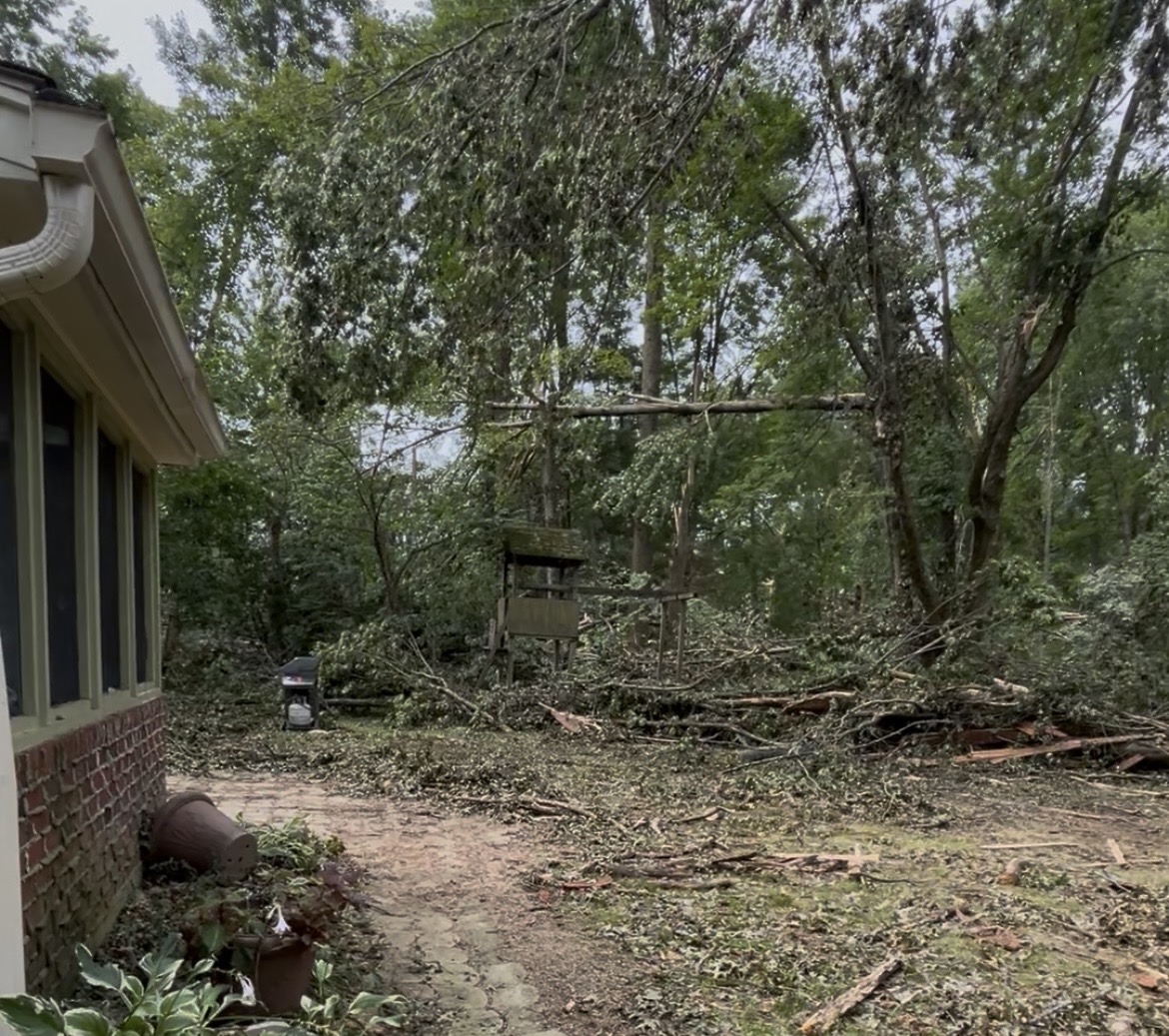
Lisa credits community mobilization for helping the Trelevens and others who were affected by the storm.  She said volunteers with Southern Baptist Disaster Relief worked with the Mahoning County Emergency Management Agency to cut and carry away the fallen trees.

“It was astounding, what they did,” she said, noting how volunteers worked continuously in blistering heat. She said Catholic Charities, the United Way and Team Rubicon also offered assistance, in addition to the financial help provided by the Red Cross. 

More than two months after the storm, the Trelevens are still trying to repair the roof damaged by one of the trees that fell on the home they built 54 years ago. And Sandra is saddened, seeing stumps where so many old, healthy trees once provided shade and beauty in their yard.  But her outlook remains positive. She said her husband regained consciousness the day after the storm.
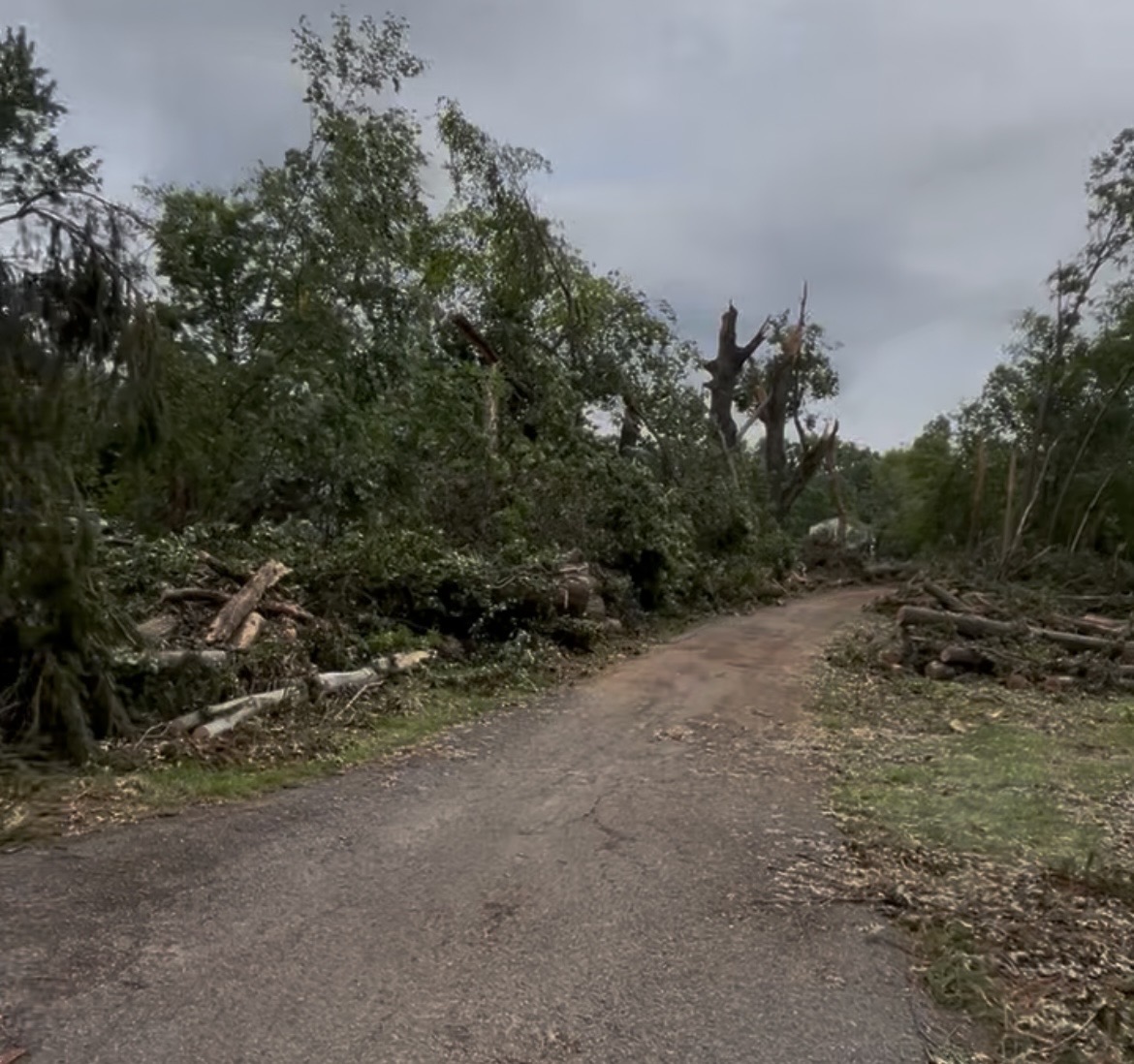
“Everything will be alright,” she said.

The Red Cross in Northern Ohio responds to more than 1,000 disasters annually, thanks to generous volunteers and donors, who provide the funding to help people like the Trelevens.

Click here to learn more about Red Cross disaster response, and how you can help.

Severe Weather Refresher

We normally share tornado safety information in the spring, when tornadoes in Northeast Ohio are most likely.  But the National Weather Service U. S. Hazards Outlook indicates a chance of severe weather for Northeast Ohio tomorrow.  So here is some information you can review:

Tornado Safety

Tornado70K

Top Tips

  • Identify a safe place in your home where household members and pets will gather during a tornado: a basement, storm cellar or an interior room on the lowest floor with no windows.
  • In a high-rise building, pick a hallway in the center of the building. You may not have enough time to go to the lowest floor.
  • In a mobile home, choose a safe place in a nearby sturdy building. If your mobile home park has a designated shelter, make it your safe place. No mobile home, however it is configured, is safe in a tornado.

What should I do to prepare for a tornado?

  • Know the Difference
    • Tornado Watch – A tornado WATCH means a tornado is possible.
    • Tornado Warning – A tornado WARNING means a tornado is already occurring or will occur soon. GO TO YOUR SAFE PLACE IMMEDIATELY.
  • During any storm, listen to local news or a NOAA Weather Radio to stay informed about tornado watches and warnings.
  • Know your community’s warning system. Communities have different ways of warning residents about tornadoes, with many having sirens intended for outdoor warning purposes.
  • Pick a safe room in your home where household members and pets may gather during a tornado. This should be a basement, storm cellar or an interior room on the lowest floor with no windows.
  • Practice periodic tornado drills so that everyone knows what to do if a tornado is approaching.
  • Consider having your safe room reinforced. Plans for reinforcing an interior room to provide better protection can be found on the FEMA web site (open in Chrome)
  • Prepare for high winds by removing diseased and damaged limbs from trees.
  • Move or secure lawn furniture, trash cans, hanging plants or anything else that can be picked up by the wind and become a projectile.
  • Watch for tornado danger signs:
  • Dark, often greenish clouds – a phenomenon caused by hail
  • Wall cloud – an isolated lowering of the base of a thunderstorm
  • Cloud of debris
  • Large hail
  • Funnel cloud – a visible rotating extension of the cloud base
  • Roaring noise


What to Do During a Tornado

  • The safest place to be is an underground shelter, basement or safe room.
  • If no underground shelter or safe room is available, a small, windowless interior room or hallway on the lowest level of a sturdy building is the safest alternative.
  • Be aware that no area of a mobile home is safe during tornadoes or other severe winds.
    • If you have access to a sturdy shelter or a vehicle, abandon your mobile home immediately and go to either, using your seat belt if driving.
  • If you are caught outdoors, seek shelter in a basement, shelter or sturdy building.
  • If you cannot quickly walk to a shelter:
    • Immediately get into a vehicle and try to drive to the closest sturdy shelter. Remember to buckle your seat belt and drive at right angles to the storm movement to get out of its path.
    • Stay away from bridge/highway overpasses.
    • If strong winds and flying debris occurs while driving, pull over and park, keeping your seat belt on and engine running. Put your head down below the windows, covering your head with your hands and a blanket (if available).


Winter Prep: Simple Steps to Stay Safe

Blizzards, ice storms, Nor’easters and freezing cold ­ winter can be a killer. The season can have a huge impact on travel, schools, businesses and health. Just look at what happened to Buffalo recently, where people were trapped at home and in their cars due to snow measured by the foot. Or the Thanksgiving Nor’easter that disrupted the busiest travel day of the year and left more than 400,000 people without power in the northeast. Don’t let winter hazards catch you unprepared. Follow these simple steps from the National Weather Service to stay safe this winter:

1. Know your risk

Check the forecast at weather.gov before you leave the house. Familiarize yourself with winter watches, warnings and advisories so you know what to do when the National Weather Service issues one for your area.

2. Take Action

Make sure you have an emergency supplies kit in both your home and car. If possible, avoid leaving your home if hazardous winter weather is approaching. If you must leave, make sure you are dressed for the elements and that your mobile phone is fully charged. If it’s too cold for you to be outside, it’s also too cold for pets. Make sure to provide a warm, dry place for any animals that typically stay outdoors.

To learn more about cold weather health dangers, like frostbite and hypothermia download the free Red Cross First Aid app (a 99¢ Red Cross Pet First Aid app is also available!)

3. Be A Force of Nature

Set an example and others will follow. Take to social media to post about approaching hazardous weather and tell your family and friends how you are preparing (on Twitter use #WinterPrep). Call friends, family and neighbors to alert them to dangers and encourage them to get ready for the storm. After the storm passes, check on your loved ones and neighbors. Offer assistance where you can, especially to the elderly who are particularly vulnerable. Be a Force of Nature in your hometown. Winter weather can be deadly. But with a few simple steps, you can stay safe.