September is National Preparedness Month. There are many ways that your family and community can prepare for an emergency. Over the next few weeks, we’ll be showcasing some of the simple steps that you can take to get prepared.
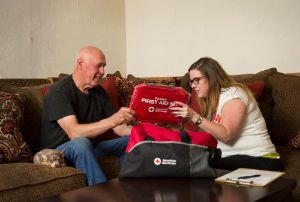 The simplest way to prepare for a crisis is to have an emergency kit ready to go. An emergency kit is made up of basic necessities that will help you and your loved ones survive sheltering in place. (To shelter in place means that you are staying in a safe space in your home for any amount of time, like when you go to your basement or other enclosed area during a tornado warning.)
The core items needed for a basic emergency kit are available at many of the locations where you do your weekly shopping, so it doesn’t even require a special trip to get started!
Your kit should include:
- Water
- one gallon per person, per day (3-day supply for evacuation, 2-week supply for home)
- Food
- Ready-to-eat canned meats, fruits, vegetables
- Protein or fruit bars
- Dry cereal or granola
- Peanut butter
- Dried fruit
- Nuts
- Crackers
- Canned juices
- Non-perishable pasteurized milk
- High energy foods
- Vitamins
- Food for infants
- Comfort/stress foods
- Can Opener
- Flashlight
- Battery-powered or hand-crank radio (NOAA Weather Radio, if possible)
- Extra batteries
- First aid kit
- 2 absorbent compress dressings (5 x 9 inches)
- 25 adhesive bandages (assorted sizes)
- 1 adhesive cloth tape (10 yards x 1 inch)
- 5 antibiotic ointment packets (approximately 1 gram)
- 5 antiseptic wipe packets
- 2 packets of aspirin (81 mg each)
- 1 blanket (space blanket)
- 1 breathing barrier (with one-way valve)
- 1 instant cold compress
- 2 pair of nonlatex gloves (size: large)
- 2 hydrocortisone ointment packets (approximately 1 gram each)
- Scissors
- 1 roller bandage (3 inches wide)
- 1 roller bandage (4 inches wide)
- 5 sterile gauze pads (3 x 3 inches)
- 5 sterile gauze pads (4 x 4 inches)
- Oral thermometer (non-mercury/nonglass)
- 2 triangular bandages
- Tweezers
- First aid instruction booklet
- Medications (7-day supply) and medical items
- Multi-purpose tool
- Sanitation and personal hygiene items
- Copies of personal documents (medication list and pertinent medical information, proof of address, deed/lease to home, passports, birth certificates, insurance policies – paper copies and on a usb stick)
- Cell phone and/or chargers
- Family and emergency contact information
- Extra cash
- Emergency blanket(s)
- Map(s) of the area
Don’t forget to include specialized items for all of your family members, especially the tiny or four-legged ones! If relevant, be sure to include:
- Baby supplies
- Bottles
- Formula
- baby food
- diapers
- Games and activities for children
- Pet supplies
- Collar
- leash
- ID
- Food
- Carrier
- Bowl
- Medical supplies
- hearing aids with extra batteries,
- glasses
- contact lenses
- syringes, etc
And some additional supplies that would be good to keep at home or in your survival kit (based on the types of disasters common to your area):
- Whistle
- N95 or surgical masks
- Matches
- Rain gear
- Towels
- Work gloves
- Tools/supplies for securing your home
- Extra clothing, hat and sturdy shoes
- Plastic sheeting
- Duct tape
- Scissors
- Household liquid bleach
- Entertainment items
- Blankets or sleeping bags
For more information on building an emergency kit, visit www.redcross.org/prepare or download our free Situational Emergency apps.
On Twitter? Show us your kit! Tweet a picture, tag @neoredcross and use the hashtag #NatlPrep.


 NOHredcross