Mother advocating for her “Sickle Cell Warrior”

By Ryan Lang, American Red Cross

Sickle cell disease affects more than 100,000 people in the United States. One out of every 365 Black or African American births is affected by sickle cell. People living with sickle cell disease may need as many as 100 units of blood each year. These are all statistics that Demeatrice Nance was unaware of prior to October 2003, when her daughter Makenzie was born. 

Makenzie Nance, sickle cell warrior

“There were some abnormalities in her newborn screening and the doctor wanted us to come in to talk about it,” Demeatrice said. “That was when they told us that Makenzie had sickle cell disease.”

Demeatrice and her husband were devastated, mostly, she said, because they didn’t know where to start getting the best help for their daughter.

From that point on, Demeatrice was on a fact-finding mission – a quest for knowledge about sickle cell disease. “We did a lot of online research and had a lot of conversations with the doctors. We were also referred to a local sickle cell outreach group that provided a lot of resources for Makenzie and our family,” Demeatrice said.

As Demeatrice delved more deeply into the world of sickle cell disease, she quickly discovered how important blood donors, especially Black blood donors, would be in Makenzie’s life.

Fast forward just two and a half years and Makenzie needed her first blood transfusion. “The doctor told us her hemoglobin had dropped, and it was at a crucial state, and Makenzie needed a blood transfusion,” Demeatrice explained. Then she and her husband got word from the doctor that there was a blood shortage, specifically from African American donors, which was what Makenzie and most all sickle cell patients need.

“The doctor said we’re just gonna try and wait it out and try and locate blood for her,” Demeatrice said. And while it was only about a day before they did locate blood for Makenzie, Demeatrice said it felt like a year. “From that time, donating blood has been a priority to me and educating people about the importance and the reason to donate blood. It’s important that our sickle cell warriors have the blood supply when it’s needed.”
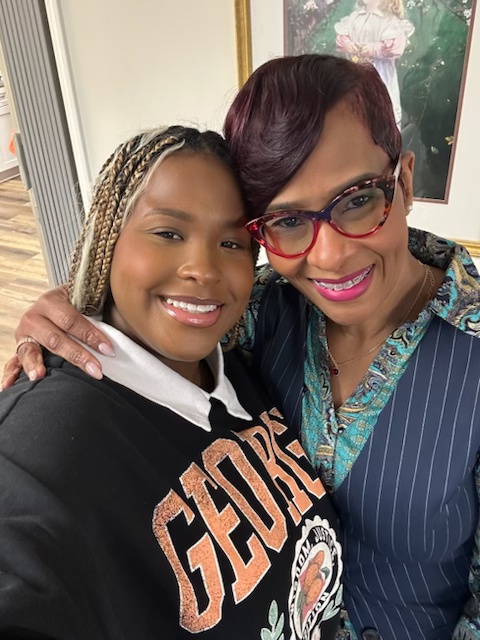
Makenzie and Demeatrice Nance

For the past 15-plus years Demeatrice and her family have been advocating and educating. Advocating for her own sickle cell warrior, Makenzie, and all of the sickle cell warriors who desperately need blood. And educating the public about why they need blood and why the blood supply needs to be maintained through regular donations.

“My first blood drive was small,” Demeatrice said, “but when I shared my story and explained the importance of donating, not just for sickle cell patients, but for cancer patients and trauma victims and others, the numbers started growing.” Demeatrice says she always tells people, “It could by my day today, or it could be your day tomorrow,” which is why she encourages everyone she meets to donate blood.   

As for Makenzie, she’s just graduated with an associate’s degree in health science and is starting her nursing clinicals in the next couple of months. “Sickle cell patients are often told they can’t do a lot of things, but over the past 21 years Makenzie’s done more things than a lot of people ever thought she could do,” Demeatrice said, beaming with pride for her sickle cell warrior.

Click here to hear more of Demeatrice’s story about her journey with Makenzie and sickle cell disease.

To schedule your appointment to donate today, visit redcrossblood.org.  

Lifting of restrictions opens window for new blood donors

One-year anniversary of blanket deferral that prevented blood donations

By Kathryn Dean, American Red Cross volunteer

If you’ve ever attended a blood drive in the past and were turned away due to a deferral, there has never been a better time to reassess your eligibility. Over the past two years, two important deferrals that have been in place since the 1980s have been modified or lifted, increasing the ever-needed pool of eligible blood donors.

In 1986, Bovine Spongiform Encephalopathy, colloquially known as “Mad Cow Disease,” was discovered in cattle in the United Kingdom. This disease was found to be transmissible to humans if infected meat was eaten and caused a number of illnesses, including a variant of Cruetzfeld-Jakob disease (vCJD), a degenerative, fatal disease that affects the central nervous system of the host.

U.S. Air Force veteran John Dowell of Lakewood  gave blood after the variant Creutzfeldt-Jakob
(mad cow) Disease deferral was lifted.

Due to this, during the 1980’s and 90’s the Food and Drug Administration restricted people who had visited certain European countries from donating blood in the United States in an effort to prevent the transmission of vCJD. The American Red Cross honored this ban, which remained in place until 2022 when it was removed after a steep decline in reported cases and no signs of a second wave.

Additionally, in 2023 a second long-standing deferral that restricted gay and bisexual men from donating was modified to remove the blanket deferral and instead assess people on a case-by-case basis. This deferral was originally created in an attempt to curb the spread of HIV, which became an epidemic in the 1980s.

Red Cross worker and volunteer, Mark Fleischer

Both of these deferrals affected long-time Red Cross worker and volunteer, Mark Fleischer, who was able to donate blood for the first time in decades back in January of this year. You can read his story HERE and learn of his great pride in being able to donate again after years of ineligibility.

When I spoke to him back in January, he indicated that not only was he previously affected by the deferrals placed on gay men, but because of his brief time living in England back in 1992 and because of fears surrounding Mad Cow disease, he had been told he was ineligible to donate for life. Now all of that has changed with the recent modifications to blood donor eligibility requirements.

Mark Fleischer and phlebotomist Ed Leonardi

In an update since his January 2024 donation, Mark told me that he has helped organize and has participated in many successful blood drives at the Willoughby Senior Center, some of which have exceeded their goal for blood donations. He is also personally scheduled to donate blood again at the end of this month.

“Recruiting for blood donors is in full force and things are going great,” he said. He also previously told me, “You may have been deferred decades ago for something that may no longer be in place. So I want to encourage people to look at the questions that the Red Cross asks (and) look at the deferred list…those deferrals or restrictions may have been lifted.”

Mark Fleischer and Red Cross staff at blood drive

Check out the Red Cross Give Blood page to learn more about eligibility requirements, and to find a local blood drive near you.

Edited by Glenda Bogar, American Red Cross volunteer

Posted by Ryan Lang, American Red Cross board member and volunteer

Thanks for Giving 2018

Volunteers and donors share stories and a meal at second annual event

44164142110_64e761266f_z

It was a family affair.  Our NEO Red Cross family.

Dozens of volunteers and donors gathered on the Tuesday before Thanksgiving at Regional Headquarters in Cleveland to hear CEO Mike Parks offer his sincere appreciation for the time, talent and treasure they donate to help fulfill the Red Cross mission.

Red Crossers from all five chapters – Greater Cleveland, Lake Erie/Heartland, Lake to River, Stark and Muskingum Lakes, and Summit. Portage and Medina Counties were represented at the Region’s Thanks for Giving event.

Visit our Facebook page to see Mike’s message, along with a video message from National Red Cross CEO Gail McGovern, and a couple of mission moment videos: one addressing the Red Cross effort to help those affected by wildfires in California,  the other with a leukemia survivor who is now an advocate for blood donations.  And see photos captured by communications volunteer Cal Pusateri in our Flickr album.

If you’d like to join our volunteer workforce, visit redcross.org/neo to explore the many volunteer opportunities available.


Thankful for YOU, NEO

Thank you for all the support you give to the Red Cross in Northeast Ohio!

Without you, none of this would be possible. So, today, we are thankful for you.

To learn more about our services in NEO, visit http://www.redcross.org/neo.