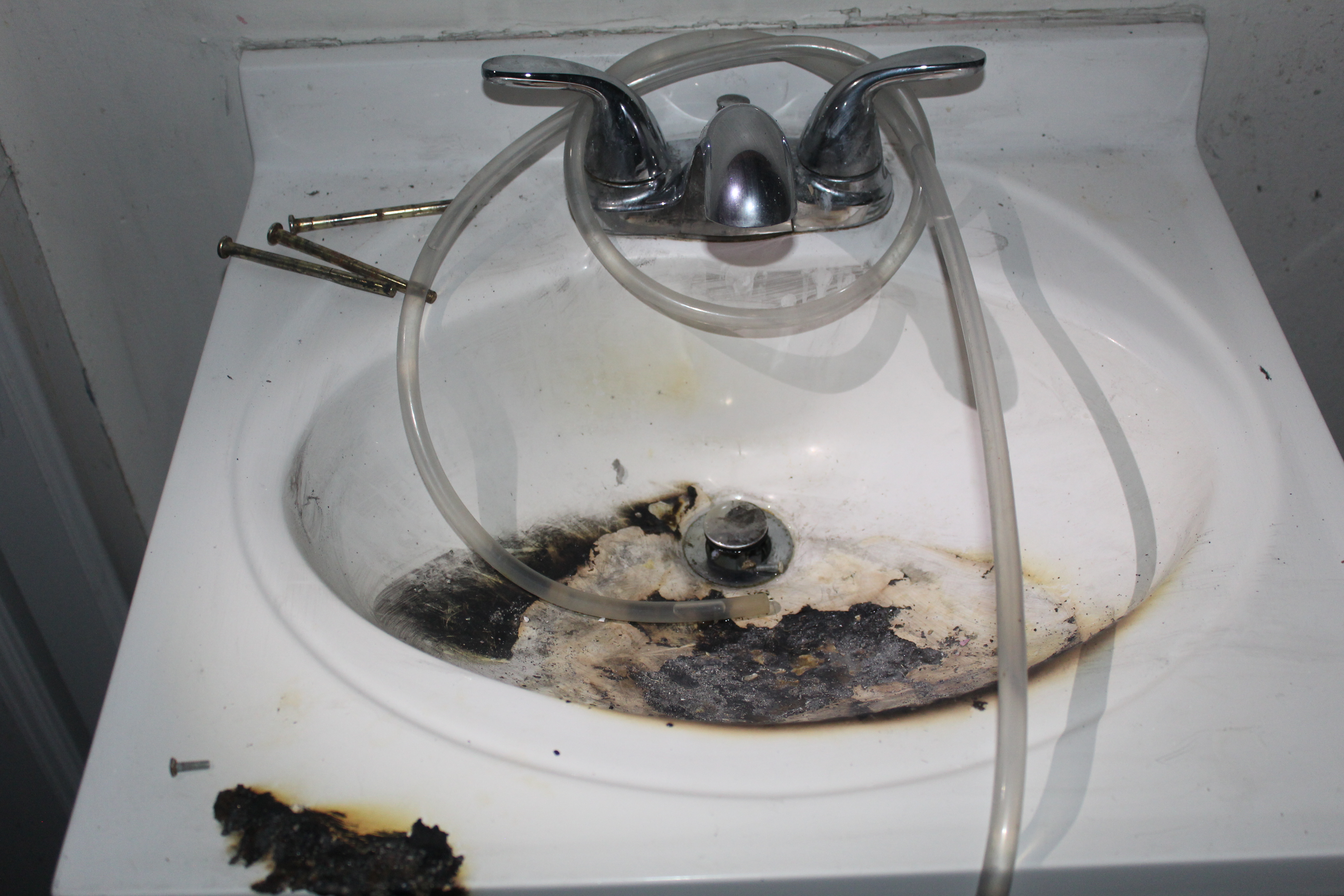
Shawn Spaulding had just returned to his home in Akron on Saturday, April 30th, after a long day of work. The private security guard was unwinding on his living room couch when the smoke alarm in the next room sounded. Fire had erupted behind a wall on the second floor of his home, and the smoke was starting to fill the entire house.
“I knew it was a situation beyond my control,” he said just a few days after the incident. He called 911 and evacuated the home.
Akron firefighters responded within minutes and were able to save the home, but not before significant damage had been done. Despite the damage, Shawn’s most treasured possessions were spared.
“I don’t know what I would have done if I lost my military records and piano.”
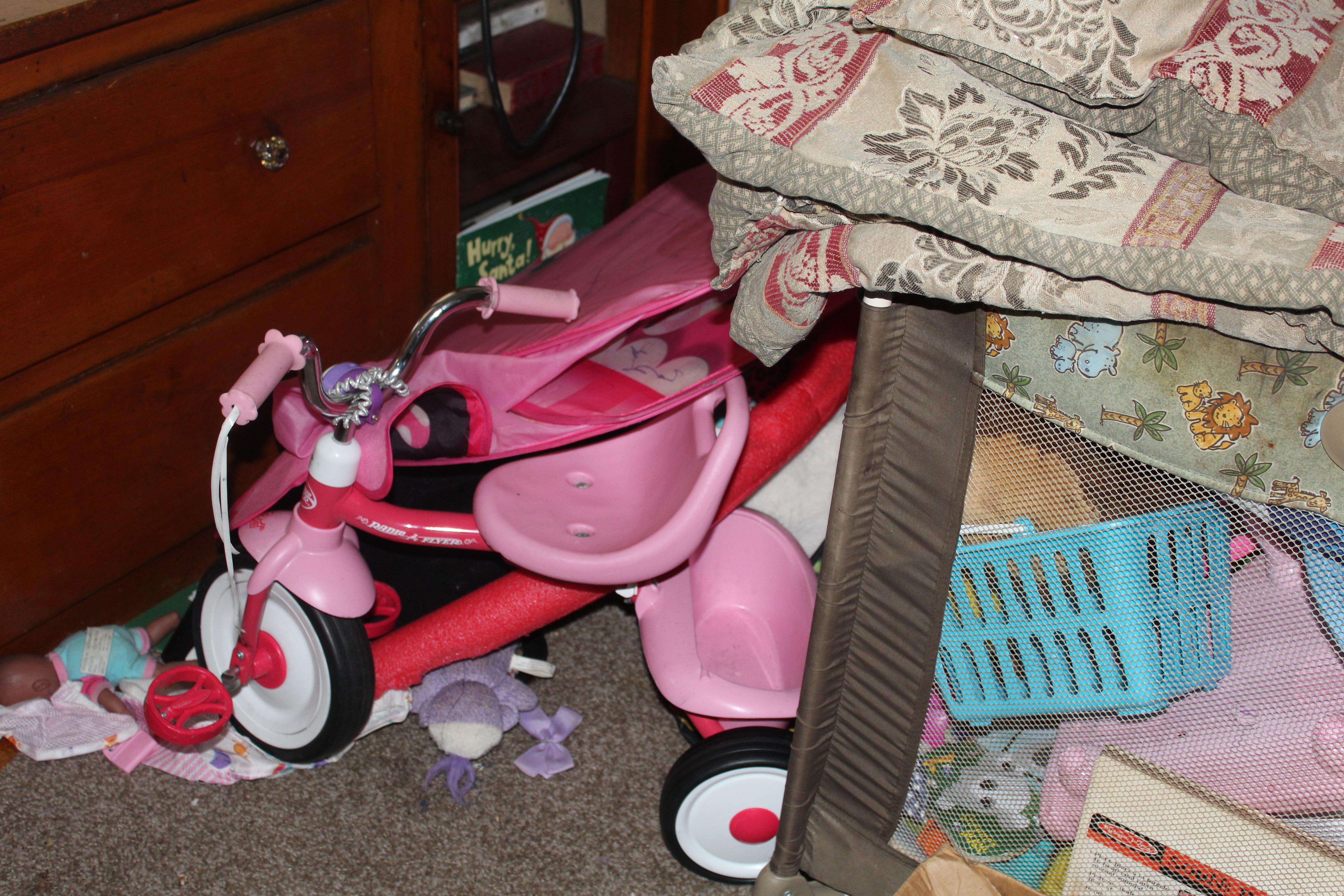
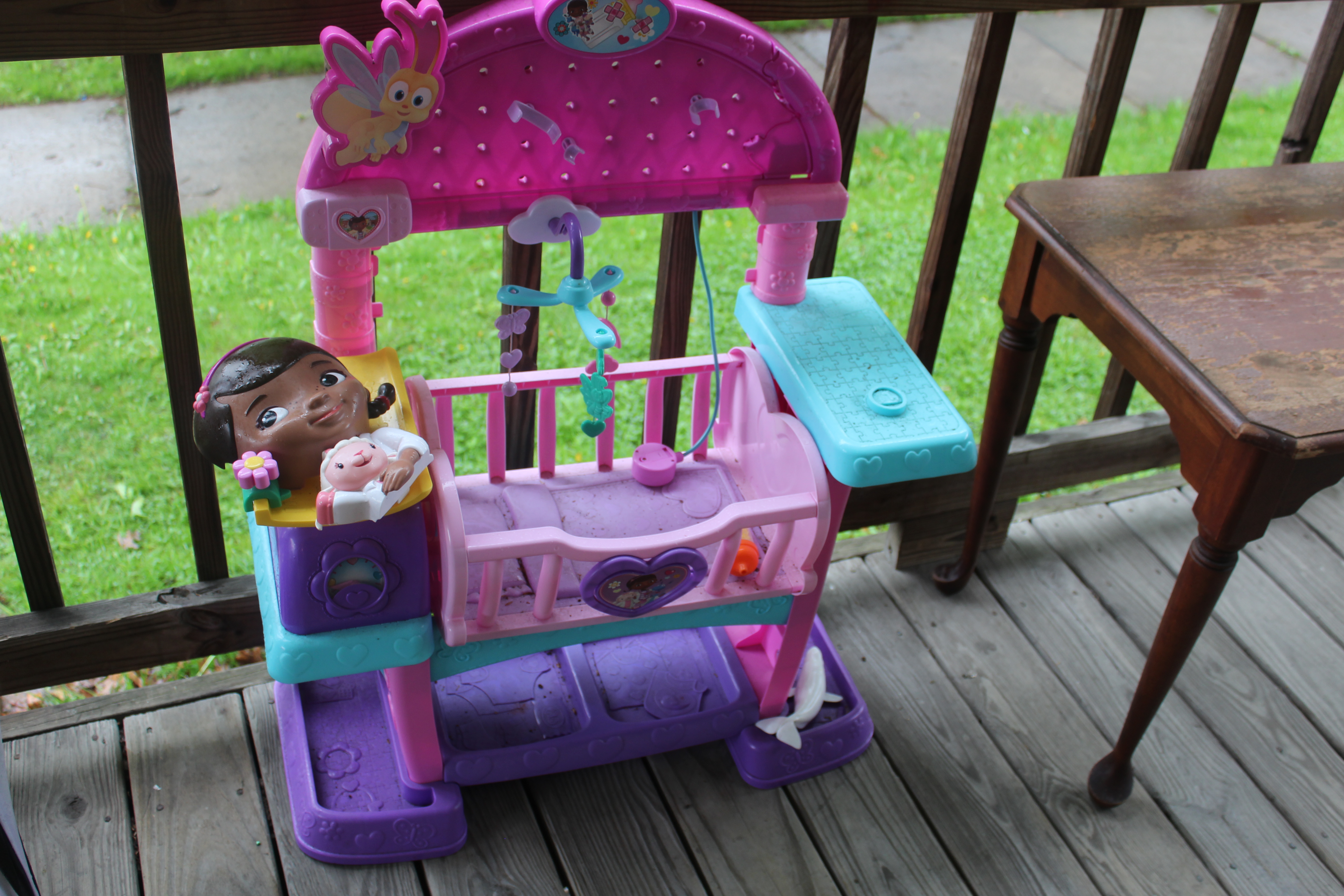
Children’s toys filled a pack n’ play in the dining room of the home, and more toys were seen on the front porch. They belong to Shawn’s 3-year old granddaughter Jemeara, who lives with her grandfather but was under someone else’s care and was not home the night of the fire.
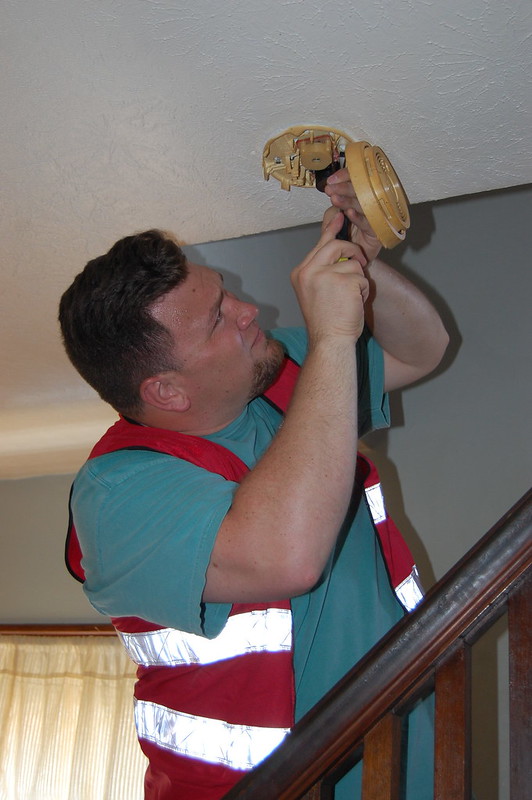
The smoke alarm that alerted Shawn to the fire had been installed about a year earlier by Akron firefighters, through a partnership with the Red Cross. The two firefighters who installed the alarm, Lieutenant Joe Falkenstein and firefighter Steve Dort returned to the home to check on Mr. Spaulding, who is now among 1,331people whose lives have been saved since 2014 as a result of the American Red Cross home fire campaign.
Akron firefighter Steve Dort, left, Shawn Spaulding and fire Lt.. Joe Falkenstein
“It saves lives,” Shawn said of the smoke alarm program. “It really does.”
To request a smoke alarm in the Akron area, residents can call 330-535-2030. Elsewhere throughout Northern Ohio, you can visit soundthealarm.org/noh to learn how to request smoke alarms for your home.
American Red Cross volunteers come from many backgrounds, professions, and demographics and show up ready to work with different motivations. Whether it is the desire to make a difference, a way to network and socialize, or to stay active in retirement, a day in the field helping the Red Cross fulfill its mission with one of its many programs is a day well spent.
Elizabeth Sullivan (right), Red Cross Volunteer
Elizabeth Sullivan got involved this past May after a colleague suggested they partner with the Sound the Alarm campaign as part of their Yale Alumni Service activities. Sound the Alarm is part of the Red Cross home fire campaign, established in 2014 to help prevent fire-related fatalities. A similar program began in Cleveland in 1992, when the Red Cross partnered with the Cleveland Division of Fire to reduce fire fatalities by installing smoke alarms in homes and teaching fire safety.
Elizabeth, the director of opinion for cleveland.com, and previous editor of the editorial pages of The Plain Dealer, along with her team and others, installed 175 smoke alarms in 60 homes in Cleveland ‘s Old Brooklyn neighborhood on May 14. For her, the project took on a deeper meaning.
“My father survived a house fire as a child because his older sister came into the room at night with a wet towel, and they put it over their mouths and they crawled along the floor to safely escape,” said Elizabeth.
That experience prompted her father to do annual fire drills with their family when Elizabeth was a child. “We were taught basic fire safety tips, like touch the door before you open it to make sure it’s not hot and to go out the window.” While she and her siblings had fun climbing out on the roof, the importance of those drills stuck with her.
Red Cross volunteers, Elizabeth Sullivan (far right)
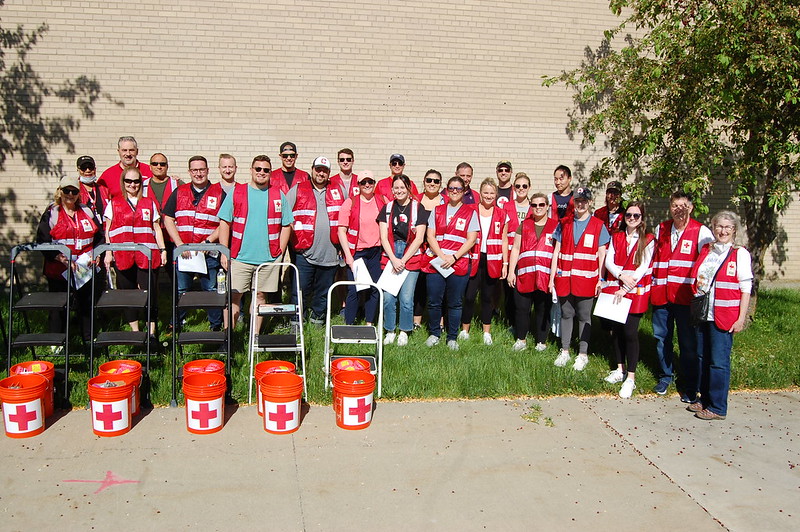
Covid paused this important program over the last two years, but this spring, Red Cross staff members and volunteers like Elizabeth installed 2,374 smoke alarms throughout Northern Ohio, making 929 homes safer.
Home fires claim lives every day, but having working smoke alarms can cut the risk of death by half. The good news? You don’t have to wait until the next Sound the Alarm campaign, the Red Cross installs smoke alarms throughout the year.
If you or someone you know may need a smoke alarm, click here to request a home safety visit and smoke alarm installation. And if Elizabeth’s story encouraged you to want to volunteer, find more information here.
Edited by Glenda Bogar, American Red Cross volunteer Posted by Ryan Lang, American Red Cross volunteer and board member
By Ryan Lang, American Red Cross volunteer and board member
Anyone who’s received CPR and AED training through the American Red Cross will tell you they hope to never have to use it, but knowing it’s there just in case is comforting.
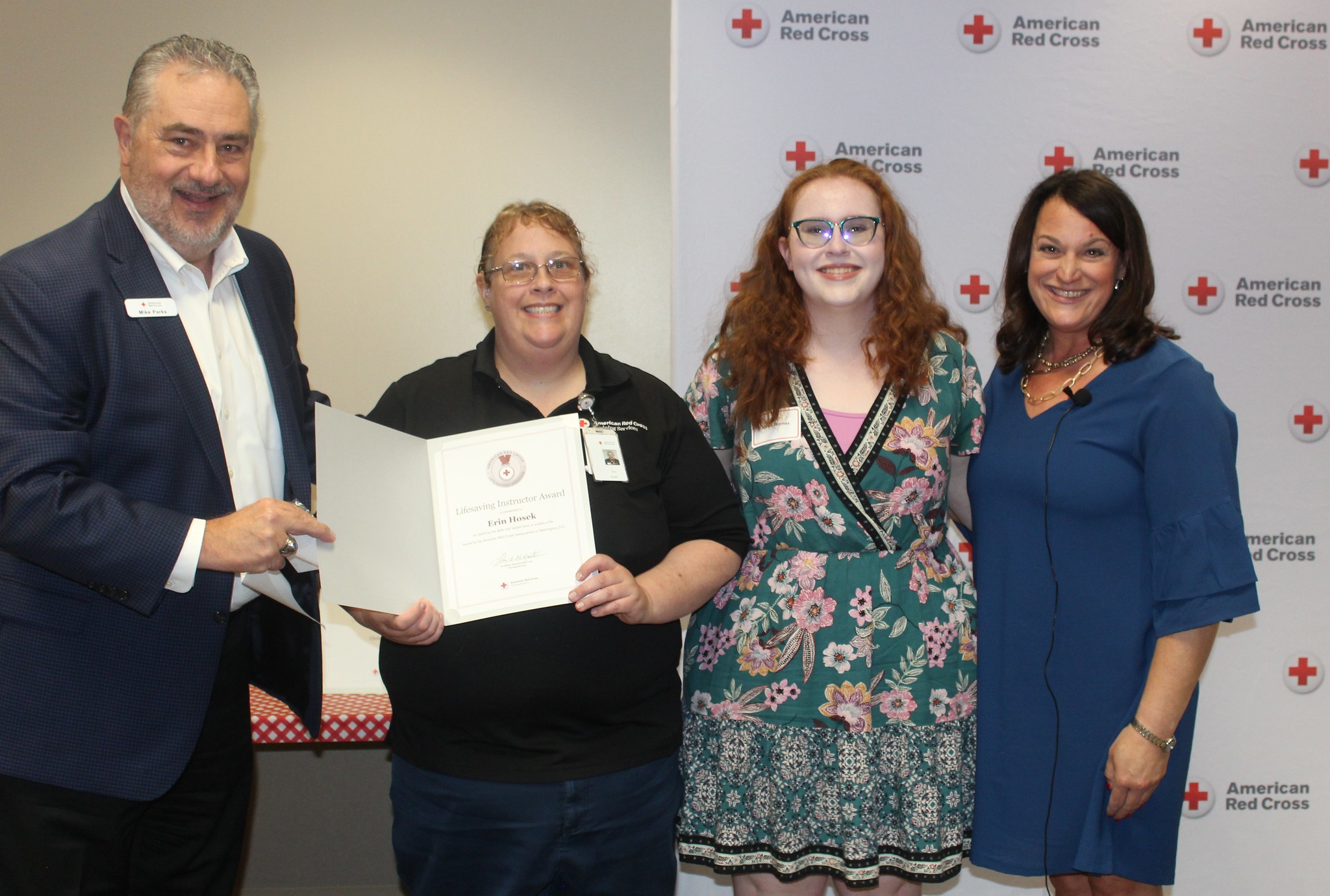
Michael Parks, Regional Executive of the Northeast Ohio Region of the American Red Cross, Alexis Starnes, Rachel D’Attoma, Executive Director of the American Red Cross of Greater Akron and the Mahoning Valley
Stow-Munroe Falls High School graduate Alexis Starnes would tell you that she’s grateful for the knowledge and training she received during her time as a Girl Scout and on December 30th, 2021 that training helped save the life of a small child.
That day, Alexis was working at the Small Steps Big Strides Childcare center in Stow as part of a real world work experience program through her school. She was feeding a 7-month-old girl baby food when the child stopped responding. “She stopped making noise and she wasn’t moving,” Alexis recalled during a recent interview with American Red Cross Regional Communications Director Jim McIntyre. Thanks to her Red Cross training, Alexis immediately recognized that these were signs that the child was choking. That’s when she unstrapped the child from her chair and began administering back blows, just like she learned in training.
Alexis was able to dislodge the food that was obstructing the baby’s airway. She saved the child’s life – something Alexis says she could have never done without her CPR and AED training from the Red Cross.
On June 8th, 2022, during the Lifesaving Award Program, Alexis was honored with the Certificate of Merit – the highest honor given by the Red Cross that is signed by the President of the United States. The award is given to someone who embodies the spirit of the Red Cross by using action to help alleviate human suffering in the face of an emergency. On that day, December 30th, 2021, that is exactly what Alexis did.
Michael Parks, Regional Executive of the Northeast Ohio Region of the American Red Cross, Erin Hosek, American Red Cross Instructor for the Girl Scouts of America, Alexis Starnes, Rachel D’Attoma, Executive Director of the American Red Cross of Greater Akron and the Mahoning Valley
Red Cross CPR and AED instructor and Girl Scout troop leader Erin Hosek, who taught Alexis her lifesaving skills, was also awarded the Lifesaving Instructor Award. After receiving her award, Erin pointed out that of her entire graduating Girl Scout troop, Alexis was the only one who chose to renew her certification two years after she had received her initial training. “And I’m glad she did,” Erin said, adding how proud she is of Alexis for using those lifesaving skills that day.
Alexis is continuing her education at Stark State University in the fall and will pursue a career in childcare. As for the young child Alexis saved, she says the girl still regularly attends the childcare facility in Stow and is a very happy and healthy baby.
Recently, I was talking with visitors at a family health fair, explaining the always- urgent need for blood donations. I was especially targeting African-Americans, asking what they know about sickle cell disease.
Interestingly, their responses ranged from a blank look to, “Yes, I lost a cousin to sickle cell.”
Keith Lofton of Olmsted Falls at a recent blood drive in Rocky River
Apparently this is not unusual, which is why the American Red Cross is leading a national drive to raise awareness and recruit more blood donors who are Black. This is because their blood is uniquely suited to help patients with sickle cell disease live full and comfortable lives.
“As an organization dedicated to alleviating suffering, the Red Cross is committed to the health and well-being of all communities, and a diverse blood supply is critical to improving health outcomes for all patients – especially those with sickle cell disease,” said Gail McGovern, CEO and president of the Red Cross. “For someone facing a sickle cell crisis, a blood transfusion can make a lifesaving difference.”
Sickle cell disease (SCD) is a hereditary condition that can be life threatening. It leads to anemia (a shortage of red blood cells), causing fatigue and possible damage to blood vessels and vital organs. It often causes severe pain that can last for hours or days; it can even lead to disabling strokes.
In the U.S., it’s estimated that more than 100,000 people have SCD and roughly 1,000 babies are born with the disease every year. SCD knows no national boundaries, which is why June 19 is designated World Sickle Cell Day.
Blood transfusions from individuals of the same race or similar ethnicity and blood type are the most effective way to help patients experiencing a sickle cell crisis. Since the majority of people with sickle cell are of African descent, blood donations from Black individuals are critical in helping those suffering from this disease.
Sabrina Spikes works full time for the Red Cross to rally African-American civic and faith-based organizations to recruit and educate.
“It’s vital that we get the word out as much as possible, to get more blood donors who are Black,” she said. “Here in northern Ohio, we’ve seen an increase (in donor numbers), but we still have work to do. Especially in the summer, when blood donations tend to fall off.”
In addition to recruitment, Sabrina’s other priority is education: preparing potential donors for a successful experience at a blood drive.
“Preparation is key,” she said. “Drinking plenty of water and eating iron-rich foods is important. And cutting out caffeinated beverages — coffee, tea, sodas — that slow the absorption of iron helps cut the deferral rate of donors, especially African-American women.”
Sabrina herself carries the trait for sickle cell, although she does not have the disease. It was important for her to know that: If the father of her three children had also had the trait, the children would suffer from the life-long condition. Sadly, too many babies are born with SCD.
The need for blood is not limited to patients with sickle cell disease. Every two seconds someone in the U.S. needs a blood transfusion, including women or girls experiencing childbirth complications, people fighting cancer, surgery patients and accident victims.
Bridget C. Miller Harper of Cleveland at the Browns Blood Drive in July, 2021
Fifty-one percent of people who are Black have type O (positive or negative) blood, in comparison to approximately 45% of white individuals. Type O blood is most often needed by hospitals to help patients, so donors who are Black play a critical role in meeting the constant need for blood.
Blood products have a limited shelf l-life and volunteer donors are the only source of blood and platelets for patients in need of lifesaving transfusions.
“My call to action is, schedule a blood donation appointment by visiting RedCrossBlood.org, downloading the Blood Donor App or calling 1-800-RED CROSS,” Sabrina said.
Edited by Glenda Bogar, American Red Cross volunteer Posted by Ryan Lang, American Red Cross volunteer and board member
June 14th is World Blood Donor Day, and the American Red Cross Can’t Help giving blood donors a chance to get All Shook Up, whether rocking and rolling with the legacy of Elvis at Graceland or on rides at Cedar Point.
The World Health Organization (WHO) created World Blood Donor Day to raise global awareness of the need for safe blood and blood products for transfusion, highlight the critical contribution of volunteer blood donors to national health systems, and help support and expand blood donor organizations’ programs. The WHO states, “Becoming a regular voluntary blood donor is a simple but selfless step that everyone can take to strengthen their communities, support local health systems and save lives.”
The Red Cross, which supplies about 40% of the U.S. blood supply, typically sees a drop in blood donations during the summer, but the need for blood does not take a break. On average, someone in the U.S. needs blood every two seconds, including new moms, premature babies, cancer patients and accident victims. Each day, the Red Cross needs to collect about 12,500 blood donations to meet the needs of patients at about 2,500 hospitals and transfusion centers across the country.
And blood donors can now celebrate providing the gift of life with roller coasters and rock and roll!
In addition to helping save lives, through August 4th, generous blood donors at select blood drives in Northern Ohio will receive a free ticket to Cedar Point, while supplies last. To find a blood drive with this promotion, enter sponsor code “CEDARPOINT” when searching here or call 1-800-RED-CROSS.
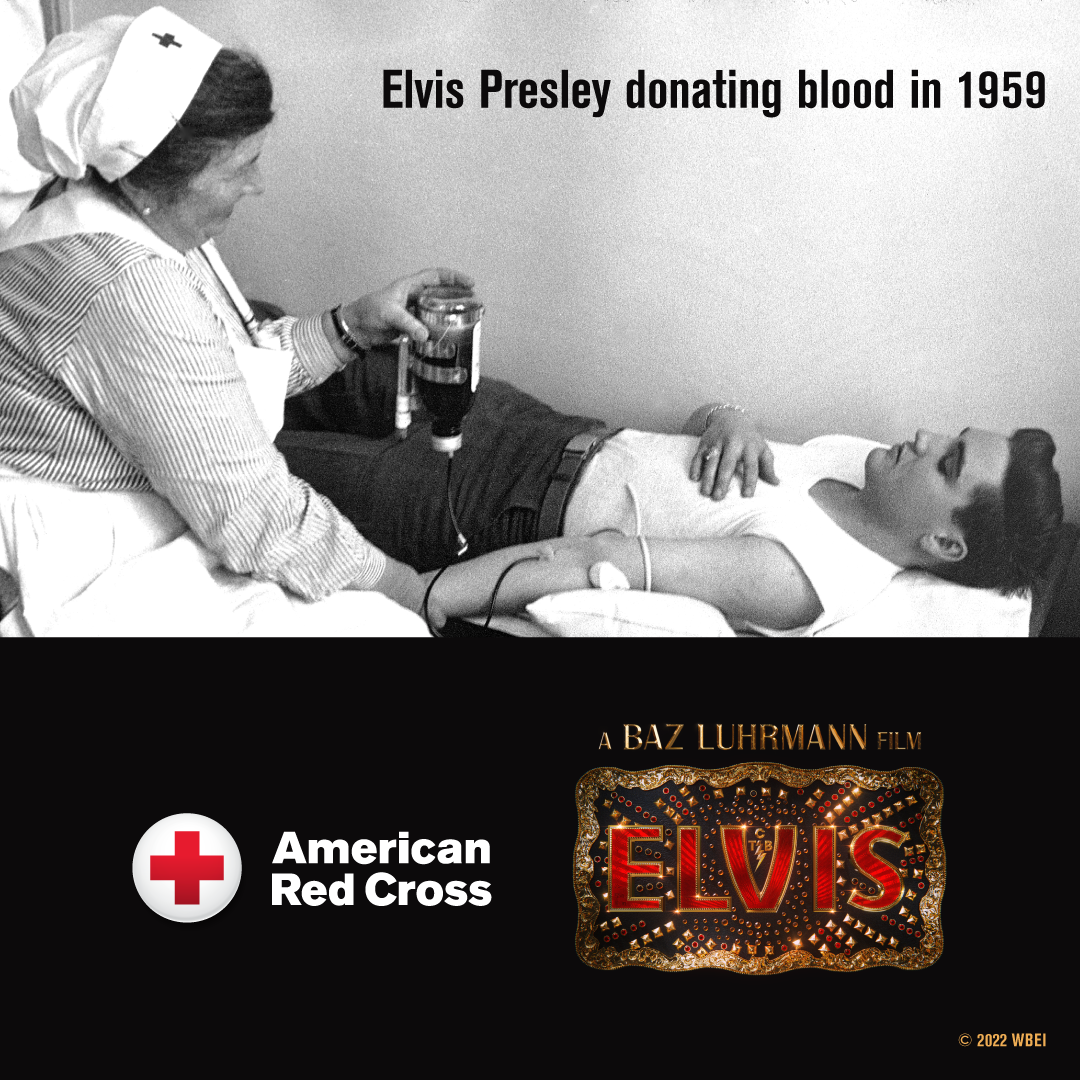
And throughout the U.S., the Red Cross is celebrating Elvis Presley–a blood donor himself who left a legacy of generosity and community service–rock and roll, and the new film, Elvis, with a chance to win a VIP trip for two to Memphis and Graceland! Through June 30th, those who come in to give blood will be automatically entered for a chance to win the trip, which includes round-trip airfare for two to Memphis, a three-night stay at The Guest House at Graceland and Elvis Entourage VIP tour, courtesy of Graceland, and $500 gift card for expenses, plus a custom-wrapped Gibson Epiphone guitar! Blood donors will also be sent a $5 e-gift card to a merchant of their choice. More information and terms and conditions are here.
Please visit redcrossblood.org to find a local blood drive. A blood donor app is also available, which makes it easy for donors to schedule and manage appointments, track the lifetime impact of donations, view health history information, and earn rewards. It is available at the above website, texting BLOODAPP to 90999, or searching “American Red Cross” in app stores.
Please help celebrate the gift of life, summer fun, the spirit of rock and roll, Elvis, and World Blood Donor Day by scheduling a donation. And thank you, thank you very much.
By Samantha Pudelski, American Red Cross volunteer
Did you know that American Red Cross provides about 40 percent of the nation’s blood supply? These critical blood donations come from individuals in our community who donate their blood during blood drives.
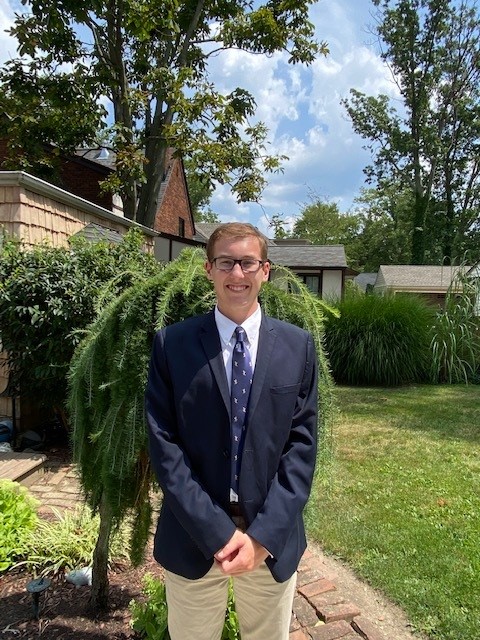
Andrew Lazowski
Andrew Lazowski, a high school student at Bay Village, decided he would coordinate a drive to help support the critical need for donors through the Red Cross’s Leaders Save Lives Program. He knew about the critical need for blood donations and how necessary they are for patients in an emergency. Several of his family members have held drives in the past and one of his family members also lost a battle with acute leukemia. Blood donations can help cancer patients, trauma patients and individuals with certain disorders, just to name a few.
With the help of Melissa Weiss, a Red Cross account manager, Andrew planned a blood drive at the local police station. Andrew found the help invaluable, saying, “she explained the technology and business aspects for the drive and was always encouraging and willing to answer any questions. She helped me with the recruitment process and provided items for me to include in a first-time donor basket.”
Through the blood drive, Andrew was able to recruit several of his friends as first-time donors and teach them about the blood donation process. “For my blood drive, I focused on recruiting my high school friends and classmates, none of whom had ever donated before,” said Andrew. “They are all signed up again to donate at my second blood drive and I am thrilled to know that I am making a positive difference for those in need.“
Individuals are eligible to donate blood at age 17, and in some states, people can donate starting at 16 with parental consent. The drive resulted in a total of 30 pints donated, which ultimately helped members in their community. Additionally, Andrew was chosen as one of the winners of the Leaders Save Lives Program scholarship drawings. He plans to use the $1,000 scholarship towards furthering his education in biology and pre-med.
Why should you or a student you know consider hosting a blood drive? “I would tell others that hosting a blood drive is fun and a unique way to give back to the community,” Andrew said. “Students will learn about what goes on behind the scenes in a nonprofit organization and the importance of supporting local blood drives.”
Holding regular blood drives in our communities helps to ensure a strong blood supply throughout the year. If you or someone you know is a student looking to give back to their community, the summer program is open from now until Aug. 31, 2022. The Red Cross also will be holding drives throughout Northeast Ohio for individuals to stop in and donate blood. You can find an upcoming drive near you by visiting redcross.org/give-blood.
The Leaders Save Lives Program encourages community-minded high school and college students to host blood drives during their school breaks. It provides students an opportunity to gain valuable leadership skills and community service by recruiting classmates, friends and family to donate blood. The student who plans and hosts the blood drive is then eligible for a gift card valued up to $200 and is eligible to be entered to win a Red Cross scholarship if at least 25 pints of blood are donated.
June 22, 2018. Washington, DC. CPR stock photos by Roy Cox for the American Red Cross.
Today, June 7th marks the end of National CPR and AED Awareness Week. What . . . you don’t even know what AED is? It stands for Automated External Defibrillator – more commonly seen as the paddles that doctors, nurses or paramedics use to resuscitate someone whose heart has stopped pumping. But you, too, could quickly learn to use them to save someone’s life.
As more businesses, recreation centers, swimming pools, movie theaters, etc., have AEDs available, wouldn’t it be great if you knew how to use them? Through American Red Cross-sponsored classes, you can, and in just one class.
I took a CPR and AED class at the Red Cross headquarters in downtown Cleveland last year, and it was a fun and easy refresher for the courses I had taken three years earlier. (They suggest every two years for refreshers — my bad.)
A series of related classes can be taken individually or combined, pertaining to your needs. Some people need certification for construction job site requirements, while others might need it for school, but there are class combinations for everyone. CPR and AED are ideally taken together.
Online-only classes can be found here, but I’d highly suggest combining online and in-person courses – referred to as blended learning. Visit redcross.org/take-a-class and then input your desired location and select CPR or AED. You’ll likely find over 100 choices of classes.
February 21-22, 2018. Washington, DC
CPR Classroom Stock Video and Photography Shoot 2018
Photos by Dennis Drenner/American Red Cross
A recent CPR/AED student, Steve Riv explained it this way: “I was worried it would be more video instruction and not so much hands-on. I actually really ended up loving the video modules, followed by the in-class instruction. Our instructor was very articulate in explaining the CPR and AED procedures. And, yes, you do get to practice with a “dummy.” I think that the instructor made something that can be mundane an enjoyable and memorable experience.”
Read more here, and schedule that class. More than one person thought they would never need the training but ended up saving someone’s life. Next time, it could be YOU.
Funding to help Red Cross prepare residents for and respond to disasters
The Sam J. Frankino Foundation of Cleveland has announced a $500,000 matching grant to the American Red Cross of Northern Ohio. The announcement was made during an event last month, commemorating the 30th anniversary of a program designed to make homes safer, by providing and installing free smoke alarms and offering residents valuable fire safety information.
The funds generated by the grant will be used to help the Red Cross and its partners, including the Cleveland Division of Fire, continue to install smoke alarms in homes considered at high risk for fires. The money will also help residents who suffer a home fire, by providing the Red Cross the means by which to offer immediate financial assistance and additional help when it’s needed.
“We want to help people prepare for disasters like home fires and natural disasters like tornadoes,” said Lorraine Frankino-Dodero, executive director of the foundation and a member of the board of directors of the Red Cross of Northeast Ohio. “The Red Cross offers such valuable assistance to people during their darkest hours, it makes sense to ensure the resources are there, when they are most needed.”
Lorraine Dodero, in the Emergency Response Vehicle funded by a 2018 grant from the Sam J. Frankino Foundation.
“The Sam J. Frankino Foundation has been a generous supporter of the Red Cross in Greater Cleveland for decades,” said Mike Parks, Regional CEO of the Red Cross of Northern Ohio. “Thanks to Lorraine’s kind and giving heart, the Red Cross will be able to help people prepare for and recover from disasters for years to come.”
You can double the impact of your donation by making a contribution to the American Red Cross here.
By Mike Arthur, Regional Mass Care & Logistics Manager, American Red Cross of Northern Ohio
I’m grateful to live in northern Ohio, one of the safest areas of the country from a weather-related disaster standpoint. We don’t have to worry about a hurricane coming and wiping our homes away. We are unlikely to walk out our front doors and have trouble breathing due to smoke from a nearby wildfire.
I have never worried about the fate of my family and myself, where we would live and work after a disaster destroyed my home and place of work. I have never had to make a decision about which of my hard-earned belongings I need to take with me when I evacuate. I have never had my community devastated. Every year thousands of families have their lives changed drastically when their homes and communities are affected by disasters large and small.
Mike Arthur, during the Red Cross response to hurricane Harvey in Houston, Texas in 2017
I’m also grateful that I get the opportunity to help people in need. As a Regional Mass Care & Logistics Manager, I get to put the skills and talents learned over the course of my life to good use leading and supporting the American Red Cross workforce in meeting the needs of our clients locally and nationally.
I get to deploy for a few weeks each year making an immediate difference in someone’s life. Deployments to large disasters are tough but incredibly rewarding. The hours can be long. The food is not always five star. I sometimes sleep on a cot in a staff shelter with my fellow workers. It can be stressful. Compassion fatigue is a risk.
Residents wait to receive clean up supplies from the Red Cross after hurricane Harvey in 2017.
I look forward to each deployment and go as often as I can. I feel like I make a difference. I have made incredible friends across the country. I have great stories to tell. I get to bring hope to those in need. I help provide a safe place to sleep and food in bellies, and sometimes, most importantly I can provide a warm hug, bright smile and a sympathetic ear. My life is fuller because of my deployment experiences. I hope you will take to opportunity to join me out in the field this year and experience the magic of helping.
Help those in need when they need it most by becoming a volunteer with the Red Cross. To find a volunteer opportunity that’s right for you, visit redcross.org/volunteer.
Summer: a time for family gatherings, swimming, grilling, and many more events that have become staples of the season. Whatever your plans are, the American Red Cross Northern Ohio Region has some resources you can use to help you, and even your four-legged friends, have a safe summer.
July 30, 2014. City of Myrtle Beach Parks and Recreation, South Carolina. Julieth Martinez, 4, enjoying her swim lesson as part of the Centennial campaign. Photo by Connie Harvey/American Red Cross
WATER SAFETY
Every day, an average of 11 people die in the U.S. from unintentional drowning — and one in five of those are children 14 or younger according to the Centers for Disease Control and Prevention (CDC). The Red Cross wants everyone to know critical safety knowledge and skills that could save your life in and around the water. We encourage families to build confidence in the water by learning to be safe, making good choices, learning to swim and how to handle emergencies. · Preventing unsupervised access to water, providing constant, active adult supervision and knowing how to swim are critical layers of protection to help prevent drowning. · Classes to learn how to swim are available for both children and adults. Check the map for Learn-to-Swim providers in your community. Everyone should learn first aid and CPR too, so they know what to do in an emergency. · Download the Red Cross Swim app (https://www.redcross.org/get-help/how-to-prepare-for-emergencies/types-of-emergencies/water-safety/swim-safety.html), sponsored by The ZAC Foundation, for safety tips, kid-friendly videos and activities, and take the free Water Safety for Parents and Caregivers online course in English or in Spanish. · It’s best to swim in a lifeguarded area. Always designate a “water watcher” whose sole responsibility is to keep a close eye and constant attention on everyone in and around the water until the next water watcher takes over. · Drowning behavior is typically fast and silent. Unless rescued, a drowning person will last only 20 to 60 seconds before submerging. Reach or throw, don’t go! In the event of an emergency, reach or throw an object to the person in trouble. Don’t go in! You could become a victim yourself.
CAMPING SAFETY
If a camping trip is in your plans, know the level of ability of the people in your group and the environment around you. Plan accordingly. · Pack a first aid kit to handle insect stings, sprains, cuts and bruises and other injuries that could happen to someone in your group. Take a Red Cross First Aid and CPR course and download the First Aid app so that you will know what to do in case help is delayed. You’ll learn how to treat severe wounds, broken bones, bites and stings and more. · Sprains and falls are some of the most common misfortunes travelers may face. Falls are the biggest threat, many due to poor decision-making, lack of skill or not being properly prepared. Dehydration is also a danger. Plan ahead for these dangers. · Share your travel plans and locations with a family member, neighbor or friend. · Bring nutritious food items and water, light-weight clothing to layer and supplies for any pets.
GRILLING SAFETY
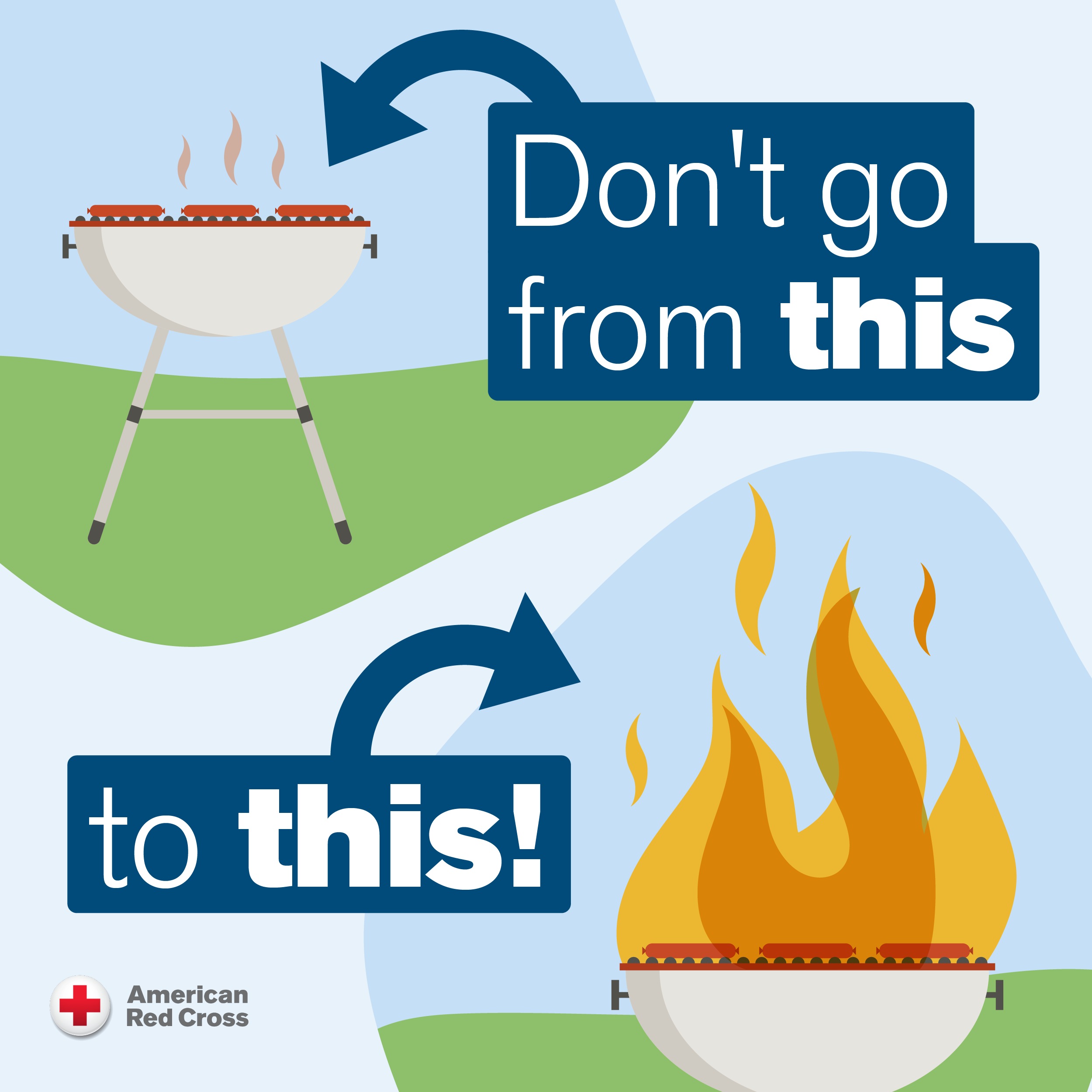
More than three-quarters of U.S. adults have used a grill — yet, grilling sparks more than 10,000 home fires on average each year. To avoid this, the Red Cross offers these grilling safety tips: · Always supervise a barbecue grill when in use. Don’t add charcoal starter fluid when coals have already been ignited. · Never grill indoors — not in the house, camper, tent or any enclosed area. · Make sure everyone, including pets, stays away from the grill. · Keep the grill out in the open, away from the house, deck, tree branches or anything that could catch fire. · Use the long-handled tools especially made for cooking on the grill to help keep the chef safe.
PET SAFETY
Summer’s heat can be dangerous for your family pets. Follow these steps to take to help ensure your pet stays safe this summer. · Don’t leave your pet in a hot vehicle, even for a few minutes. The inside temperature of the car can quickly reach 120 degrees even with the windows cracked open. · Animals can suffer heat stroke, a common problem for pets in the warmer weather. Dogs with short noses or snouts, like the boxer or bulldog, are especially prone to heat stroke, along with overweight pets, those with extremely thick fur or any pet with upper respiratory problems such as laryngeal paralysis or collapsing trachea. · Some of the signs of heat stroke in your pet are heavy panting and being unable to calm down, even when lying down, brick red gum color, fast pulse rate and being unable to get up. · If you suspect your pet has heat stroke, take their temperature rectally. If the temperature is above 105 degrees, cool the animal down. The easiest way to do this is by using the water hose. Stop cooling the animal when the temperature reaches 103 degrees. · Bring your pet to the veterinarian as soon as possible as heat stroke can lead to severe organ dysfunction and damage. Download the Red Cross Pet First Aid app for instant access on how to treat heat stroke, other emergencies and general care for cats and dogs and take the Cat and Dog First Aid Online Training course.
FIREWORKS SAFETY
· Never give fireworks to small children, and never throw or point a firework toward people, animals, vehicles, structures or flammable materials. Always follow the instructions on the packaging.
· Keep a supply of water close by as a precaution.
· Make sure the person lighting fireworks always wears eye protection.
· Light only one firework at a time and never attempt to relight a “dud.”
· Store fireworks in a cool, dry place away from children and pets.














 NOHredcross