Are you prepared for a home fire? Test yourself

Did you realize that, on average, the Red Cross of Northeast Ohio responds to 2.5 home fires every night? While one piece of our mission is to help families displaced by these and other disasters, many households can help themselves by becoming more aware of how to reduce their chances of experiencing a fire.

2014 Katie with Fire VICTIM

In fact, the Red Cross and its local and national partners have launched the Home Fire Preparedness Campaign, an initiative that aims to reduce deaths and injuries caused by home fires by 25% in five years.

Test yourself with this handy quiz to determine what you have covered, and what you and your family may need to work on.

The Red Cross is asking every household in America to join us in taking two simple steps that can save lives: checking or installing smoke alarms and practicing fire drills at home.

Join the Red Cross and Federal Emergency Management Agency in the second annual PrepareAthon on September 30

Join us for the second annual America’s PrepareAthon! national day of action.

The last few years have been an important reminder to all of us that disasters can strike anytime and anyplace. Nearly every region of the country experienced some form of extreme weather event, including devastating tornadoes in Oklahoma, scorching wildfires throughout California, and destructive flooding in Northeastern Ohio.

The destructive power of weather affects all communities. Learning how prepare for an emergency will help determine your course of action during a disaster.

The destructive power of weather affects all communities. Learning how prepare for an emergency will help determine your course of action during a disaster.

As with many life events, preparation is the key to success. When you prepare and practice for an emergency in advance of an event, it makes a real difference in your ability to take immediate and informed action when it matters most. Early action can also help you to recover more quickly.

That’s why thousands of individuals, organizations, schools, houses of worship, and local governments across the Nation are actively participating in a new national campaign for action – America’s PrepareAthon!

The Red Cross continues to support and promote this action-based initiative to build a more resilient Nation starting with the national day of action on September 30.

Can’t participate on September 30? Preparing for disasters is a year-round activity. So pick a date that works for you. You can still register to be counted in the movement. And be sure to post your preparedness activities on the national calendar.

It’s not a matter of if the next disaster will happen, but when. Take action and prepare now by completing simple steps such as making a plan and having an emergency kit. Start the conversation in your family today. It can help determine what you need to do next to become more prepared.

Be smart, take part, and prepare for emergencies before they strike!

Disaster preparedness for pets too!

When disaster strikes, all members of the family should be prepared with a disaster kit – including your pets.  Keep items in an accessible place and store them in sturdy containers so that they can be carried easily.

Pictured beside Zack and Zoe are leashes, water, food, Vet information, dog toys, a towel, dog treats, medical history, medicine, current picture of Z&Z and a water bowl.

Pictured beside Zack and Zoe are leashes, water, food, Vet information, dog toys, a towel, dog treats, medical history, medicine, current picture of Z&Z and a water bowl.

Your kit should include—

  • Sturdy leashes, harnesses and/or carriers to transport pets safely and ensure that they can’t escape.
  • Food, drinking water, bowls, cat litter/pan and a manual can opener.
  • Medications and copies of medical records stored in a waterproof container.
  • A first aid kit and download the Pet First Aid App
  • Current photos of you with your pet(s) in case they get lost. Since many pets look alike, this will help to eliminate mistaken identity and confusion.
  • Information on feeding schedules, medical conditions, behavior problems, and the name and number of your veterinarian in case you have to foster or board your pets.
  • Pet beds and toy

Click here for a complete list of pet disaster preparedness items: http://www.redcross.org/images/MEDIA_CustomProductCatalog/m3640126_PetSafety.pdf

Pets will look to family members for comfort during all the changes that disasters bring.  Having a plan ahead of time will reduce stress and ensure you that you can care for your furry family members.

Celebrate National Preparedness Month: Make a plan, get a kit, be informed!

September is National Preparedness Month.  There are many ways that your family and community can prepare for an emergency. Over the next few weeks, we’ll be showcasing some of the simple steps that you can take to get prepared.

Oklahoma Tornado One Year Report 2014Carney, Oklahoma Home Kit DeliveryThe simplest way to prepare for a crisis is to have an emergency kit ready to go. An emergency kit is made up of basic necessities that will help you and your loved ones survive sheltering in place. (To shelter in place means that you are staying in a safe space in your home for any amount of time, like when you go to your basement or other enclosed area during a tornado warning.)

The core items needed for a basic emergency kit are available at many of the locations where you do your weekly shopping, so it doesn’t even require a special trip to get started!

Your kit should include:

  • Water
    • one gallon per person, per day (3-day supply for evacuation, 2-week supply for home)
  • Food
    • Ready-to-eat canned meats, fruits, vegetables
    • Protein or fruit bars
    • Dry cereal or granola
    • Peanut butter
    • Dried fruit
    • Nuts
    • Crackers
    • Canned juices
    • Non-perishable pasteurized milk
    • High energy foods
    • Vitamins
    • Food for infants
    • Comfort/stress foods
  • Can Opener
  • Flashlight
  • Battery-powered or hand-crank radio (NOAA Weather Radio, if possible)
  • Extra batteries
  • First aid kit
    • 2 absorbent compress dressings (5 x 9 inches)
    • 25 adhesive bandages (assorted sizes)
    • 1 adhesive cloth tape (10 yards x 1 inch)
    • 5 antibiotic ointment packets (approximately 1 gram)
    • 5 antiseptic wipe packets
    • 2 packets of aspirin (81 mg each)
    • 1 blanket (space blanket)
    • 1 breathing barrier (with one-way valve)
    • 1 instant cold compress
    • 2 pair of nonlatex gloves (size: large)
    • 2 hydrocortisone ointment packets (approximately 1 gram each)
    • Scissors
    • 1 roller bandage (3 inches wide)
    • 1 roller bandage (4 inches wide)
    • 5 sterile gauze pads (3 x 3 inches)
    • 5 sterile gauze pads (4 x 4 inches)
    • Oral thermometer (non-mercury/nonglass)
    • 2 triangular bandages
    • Tweezers
    • First aid instruction booklet
  • Medications (7-day supply) and medical items
  • Multi-purpose tool
  • Sanitation and personal hygiene items
  • Copies of personal documents (medication list and pertinent medical information, proof of address, deed/lease to home, passports, birth certificates, insurance policies – paper copies and on a usb stick)
  • Cell phone and/or chargers
  • Family and emergency contact information
  • Extra cash
  • Emergency blanket(s)
  • Map(s) of the area

Don’t forget to include specialized items for all of your family members, especially the tiny or four-legged ones! If relevant, be sure to include:

  • Baby supplies
    • Bottles
    • Formula
    • baby food
    • diapers
  • Games and activities for children
  • Pet supplies
    • Collar
    • leash
    • ID
    • Food
    • Carrier
    • Bowl
  • Medical supplies
    • hearing aids with extra batteries,
    • glasses
    • contact lenses
    • syringes, etc

And some additional supplies that would be good to keep at home or in your survival kit (based on the types of disasters common to your area):

  • Whistle
  • N95 or surgical masks
  • Matches
  • Rain gear
  • Towels
  • Work gloves
  • Tools/supplies for securing your home
  • Extra clothing, hat and sturdy shoes
  • Plastic sheeting
  • Duct tape
  • Scissors
  • Household liquid bleach
  • Entertainment items
  • Blankets or sleeping bags

For more information on building an emergency kit, visit www.redcross.org/prepare or download our free Situational Emergency apps.

On Twitter? Show us your kit! Tweet a picture, tag @neoredcross and use the hashtag #NatlPrep. 

A Month of Preparedness, sneak peek into September at the Red Cross of Northeast Ohio

One piece of the mission of the American Red Cross is to prevent human suffering in the face of emergencies. The simplest way to do that is to help individuals and families learn how to be prepared for the disasters that happen in our communities. When a disaster strikes, because it can and will happen, everyone will have the tools and knowledge to respond accordingly.

The month of September is National Preparedness Month. For the Red Cross and many of our partner organizations, September is the perfect opportunity to voice the power of being prepared in our homes and in our communities.

There are so many simple, quick ways to prepare for an emergency situation.

  1. Check your smoke detectors once a month and change the battery at least once a year.
  2. If you don’t have smoke detectors, install them. One in every bedroom, one outside of sleeping areas and one on every level of your home. (NOTE: carbon monoxide detectors and smoke detectors are not the same thing.)
  3. Make a Fire Escape Plan and teach it to every member of the household.
  4. Practice your plan twice a year.
  5. Know what emergencies can affect your area: Flooding, Tornadoes, etc.
  6. Create a 72-hour Emergency Kit filled with necessities to keep your family safe and sound for 3 days.
  7. Take a first aid and CPR course.
  8. Download the FREE Red Cross Apps through iOS or Android app marketplaces.
  9. Make your neighbors part of your emergency plan (and you become a part of theirs), especially if they are older adults or have young children in the home.

All September long, our blog will be dedicated to details ways that you can get your family prepared, so be sure to subscribe or check back often.

If you are regular reader of this blog or just happened here through Google, please, share this link with your friends and colleagues. It is vitally important that we help ourselves and each other before an emergency situation happens.

Heading out to the movies this weekend?

Wildfire is a phenomena that we don’t really worry about happening here in Northeast Ohio.

However, if you are heading out to see Disney’s new movie, Planes Fire and Rescue, then you may want to arm yourself for the conversation that could follow.

In the movie, Dusty Crophopper (star of the first Planes movie) travels to Piston Peak National Park to train as a firefighter. While there he encounters and fights several wildfires.

Careless use of fire in heavily wooded areas such as a campsite at Piston Peak, combined with drought or dry conditions, dramatically increase the chance of a wildfire. Fire can spread quickly.

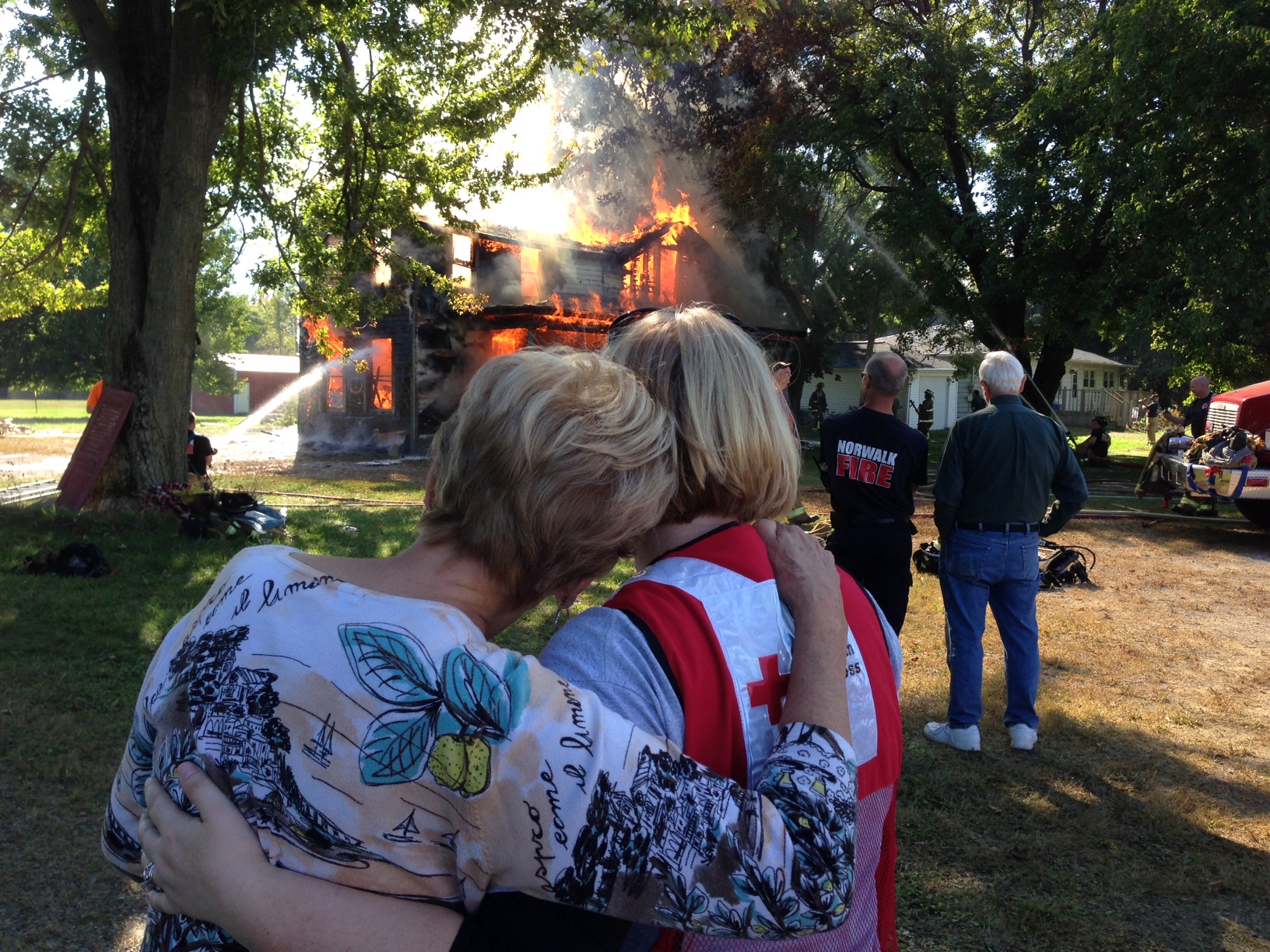
A Red Cross Volunteer observes first responders at a Wildfire.

When a wildfire rages, every second counts.

While first responders, like Dusty, control the fire through aerial and ground maneuvering, the American Red Cross establishes shelters and provides food and water to those who were forced to flee their homes. Shelters provide a safe place to stay and volunteers offer support and a caring shoulder. Once it is safe to return to a community, the Red Cross provides trash bags, masks and heavy work gloves to the people who start to shift through the ashes.

The Red Cross may also provide refreshments to the first responders who fight the blazes. (Cab, a cola depicted in the movie, anyone?)

Preparedness is paramount to those who live in areas susceptible to wildfire. That is why the Red Cross developed Wildfire Safety Tips and the Wildfire App.

In our communities, the Red Cross is more likely to respond to a home fire. In Northeast Ohio, we respond to an average 2.5 home fires a night. Some of the steps you can take to prevent this is your own home include:

  • Keep anything that can catch fire—like pot holders, towels, plastic and clothing— away from the stove.
  • Never smoke in bed.
  • Talk to your children regularly about the dangers of fire, matches and lighters and keep them out of reach.
  • Install smoke alarms on every level of your home, inside bedrooms and outside sleeping areas.
  • Teach your children what smoke alarms sound like and what to do when they hear one.
  • Once a month check whether each alarm in the home is working properly by pushing the test button.
  • Replace batteries in smoke alarms at least once a year. Immediately install a new battery if an alarm chirps, warning the battery is low.
  • Carbon monoxide alarms are not substitutes for smoke alarms. Know the difference between the sound of smoke alarms and carbon monoxide alarms.
  • Ensure that all household members know two ways to escape from every room of your home.
  • Make sure everyone knows where to meet outside in case of fire.
  • Practice escaping from your home at least twice a year and at different times of the day. Practice waking up to smoke alarms, low crawling and meeting outside. Make sure everyone knows how to call 9-1-1.
  • Teach household members to STOP, DROP and ROLL if their clothes should catch on fire.

For more information on home fire prevention and safety, visit our website.

Some of the scenes in Planes Fire and Rescue may be a little worrisome to young viewers. You can assure them that there plenty of specially trained first responders ready to respond to the emergency. And organizations, like the Red Cross, are ready to respond to the people who experience a wildfire or a home fire.

Basement Flooded? Follow these four safety steps.

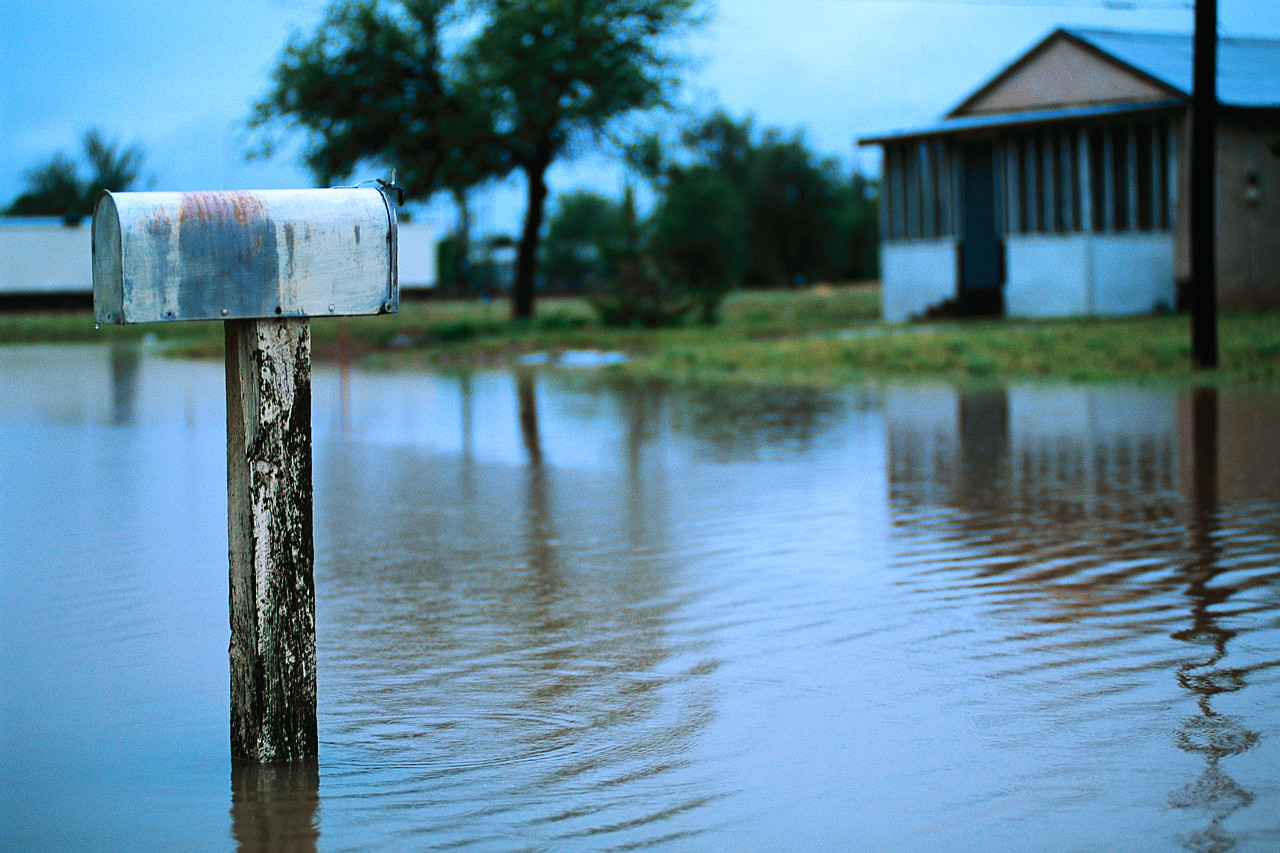
Mailbox in Flood WatersStep #1: Stay SAFE!

Don’t risk serious injury if your basement floods. A flooded basement can be a serious health and safety risk. If your basement floods, follow these rules to make sure your family stays safe.

  •  Avoid venturing down into the basement if possible. In a severe basement flooding situation (water covering the basement floor to a depth of an inch or more), it’s best to stay out of the basement until the water is pumped out. Standing water in your basement can contain harmful bacteria.
  • Never touch electrical wiring or fixtures. If you must venture down into a flooded basement, wear waterproof rubber boots. Avoid touching or using electrical devices (except for a battery-powered flashlight) because this puts you at risk of electrical shock or electrocution.
  • Have standing water pumped out as soon as possible.


Step #2: Determine the cause of your flooded basement.

Sometimes the source of unwanted water is obvious –as with a burst water line or sewer backup. In other cases, water may be leaking into your basement for different reasons. If it is not obvious what caused your flooding, contact a licensed professional for an inspection.

Step #3. Remove water-damaged items and begin cleanup.

Are there wood-framed walls finished with drywall in your basement? If so, the lower section of these walls is likely to retain moisture and attract mold –even without a major basement flood. Take precautions for safety, but begin clean up as soon as possible. Eliminate the source of the flooding first, then clean up and toss out anything that is contaminated, using bleach and similar household cleaners. Bleach is the best cleaning product to kill mold, mildew and bacteria.

Step #4. Mitigate future flooding.

There are a number of ways you can mitigate future flooding loss by installing preventive equipment and valves, raising the height of critical utilities and appliances off the floor or out of your basement entirely, and simply keeping gutters clean. Make sure the ground around your home slopes away from your foundation. Raising the electrical outlets in your basement can also alleviate electrical shorts and injury due to shock. Acquire flood insurance.

For more information, download this helpful check list and information sheet: Basement Flooding – Safety and Clean-up Checklist

Is there still wicked weather raging over your house? Learn what to do before, during and after a flood. Download the Flood Safety Checklist, check out the Red Cross Flood App (available for iOS and Android) or visit the American Red Cross Flood Safety page.

Fourth of July Safety Tips

Happy Independence Day!Founders
Northeast Ohioans can expect a gorgeous Holiday weekend and many are expected to celebrate at a backyard party or poolside.

Whatever way you chose to enjoy yourself during the party weekend of the summer, be sure to keep these simple, safety tips in mind.

Soak Up the Sun, Safely:

Keep your skin safe by wearing sunscreen outdoors, even if it is partly sunny. But how exactly does sunscreen work? According to the Center for Disease Control and Prevention (CDC), most sun protection products work by absorbing, reflecting, or scattering sunlight. All products do not have the same ingredients so if you have a bad skin reaction to one brand, try another.

Know your sunscreen’s rating. All sunscreens have a sun protection factor (SPF) number clearly stated on their label. The SPF number illustrates their effectiveness in blocking UV rays. Higher numbers indicate more protection. Look for sunscreen with at least a rating of SPF 15. This number applies to cosmetics that contain sunscreen as well. And be sure to check out your label’s directions regarding reapplication. Most brands recommend reapplying after two hours or after swimming, sweating or toweling off.

Sunscreen does have a shelf life! Check your sunscreen’s expiration date. If it is expired, or you’ve had it for three years, throw it out and purchase new.

Take Water Seriously:

Stay hydrated! Drink plenty of water, even if you are not “thirsty”. Avoid drinking alcohol or caffeinated beverages in excess.

Use the buddy system when swimming. No one should swim alone. Adults should pay close and constant attention to children and inexperienced swimmers. Have young children or inexperienced swimmers wear U.S. Coast Guard-approved life jackets around water, but do not rely on life jackets alone.

Download the free Red Cross Swim and First Aid Apps. Swim App users can learn water safety and drowning prevention information for a variety of aquatic environments. Children can have fun learning water safety tips with the child-friendly videos and quizzes in the app. The First Aid App puts expert advice for everyday emergencies at someone’s fingertips. The apps are available for smart phones and tablets and can be downloaded from the Apple or Google Play for Android app stores. The Swim App is also available in the Amazon Kindle Store.

Backyard Pool Owners can take the Home Pool Essentials online course. The Red Cross and National Swimming Pool Foundation have developed an online safety course for pool and hot tub owners. Home Pool Essentials (HomePoolEssentials.org) helps people understand the risks of pool ownership, how to maintain a safer and cleaner pool, what safety equipment is appropriate, how to prevent pool and hot tub entrapment hazards and how to respond to an emergency.

For more water safety information check out redcross.org.

Fireworks and Flag