Give blood early in August, get chance at music festival tickets, help build supply during shortage

By: Olivia Wyles, American Red Cross volunteer

If you are as big of a music-lover as I am, then you likely share in my excitement for public concerts returning this summer for the first time in over a year. The music industry is bursting at the seams with music ready to be performed.
This year, the American Red Cross is partnering with Bonnaroo to give away free tickets to this sold-out music festival, which will be held in Manchester, Tennessee, the first weekend of September 2021. By donating blood at a Red Cross drive Aug. 1-15, you will be entered to win an all-expenses paid trip to Bonnaroo for two. Various genres of music can be heard at Bonnaroo over the course of the four-day festival from pop and alternative rock to jazz, country and gospel. For more information on the offer, click here.

The Red Cross is one of the primary suppliers of blood for hospitals throughout the U.S. but currently has a dire need for blood donations. Right now, the Red Cross is distributing 12% more blood to hospitals than distributed at this time last year, which is contributing to the severe blood shortage that we are currently experiencing. This shortage affects every region, including Northern Ohio.

Leaders of several major hospitals are lending their voices to the call for increased blood donations.

“Our nation is facing a critical blood shortage,” said Tom Mihaljevic, M.D., CEO and President of Cleveland Clinic. “In this time of need, we urge the community to donate so we can ensure we have lifesaving blood products for patients.”

Dr. Mihaljevic added, “One person can help save hundreds of lives. At Cleveland Clinic, we support blood drives all year long and encourage everyone who is able to give blood and get involved.”

MetroHealth President and CEO Akram Boutros, MD, FACHE, said, “An adequate blood supply is essential to perform our life-saving work at MetroHealth as the region’s most experienced Level 1 Trauma Center.” Dr. Boutros added, “Every day, blood donors help save countless lives in Cleveland and beyond – the lives of our family, friends and neighbors. It’s time for us all to step up for our community and donate this precious resource.”

“Every day, blood donors help save countless lives in Cleveland and beyond – the lives of our family friends and neighbors. It’s time for us all to step up for our community and donate this precious resource.”

Akram Boutros, MD, FACHE, MetroHealth President and CEO

Cliff Megerian, MD, CEO of University Hospitals said, “A blood donation, especially at such a critical time, can truly help save lives. As a provider of coordinated trauma care with Level 1 trauma centers for adults and children, as well as a network of regional Level III trauma centers, we at University Hospitals know how lives can change in an instant and the crucial importance of having adequate blood supplies for trauma and surgeries.  Please give if you’re able.”
Kristy Short, ProMedica blood bank manager in Toledo said, “The Red Cross is our primary source for blood. We have been working closely with them to keep our inventory levels stable so that we can continue to meet all our patients’ needs.” She added, “Our community is the key to helping end this shortage. We encourage all those who are eligible to donate and help save lives.”

And Richard L. George, MD, MSPH, FACS Chief, Division of Trauma ICU Surgical Director Summa Health System – Akron Campus, said, “Blood donations save lives. Having an adequate supply is essential to treat patients.” “As we continue to see a shortage of blood across the country, we encourage you to donate soon.”

To find a blood drive near you, click here. Encourage a friend or family member to do the same and help the Red Cross continue supplying lifesaving blood to patients around the country. You never know, maybe you’ll get to spend four days at the Bonnaroo music festival to top it all off!

Edited by: Glenda Bogar, American Red Cross volunteer
Donors continue to respond to blood shortage

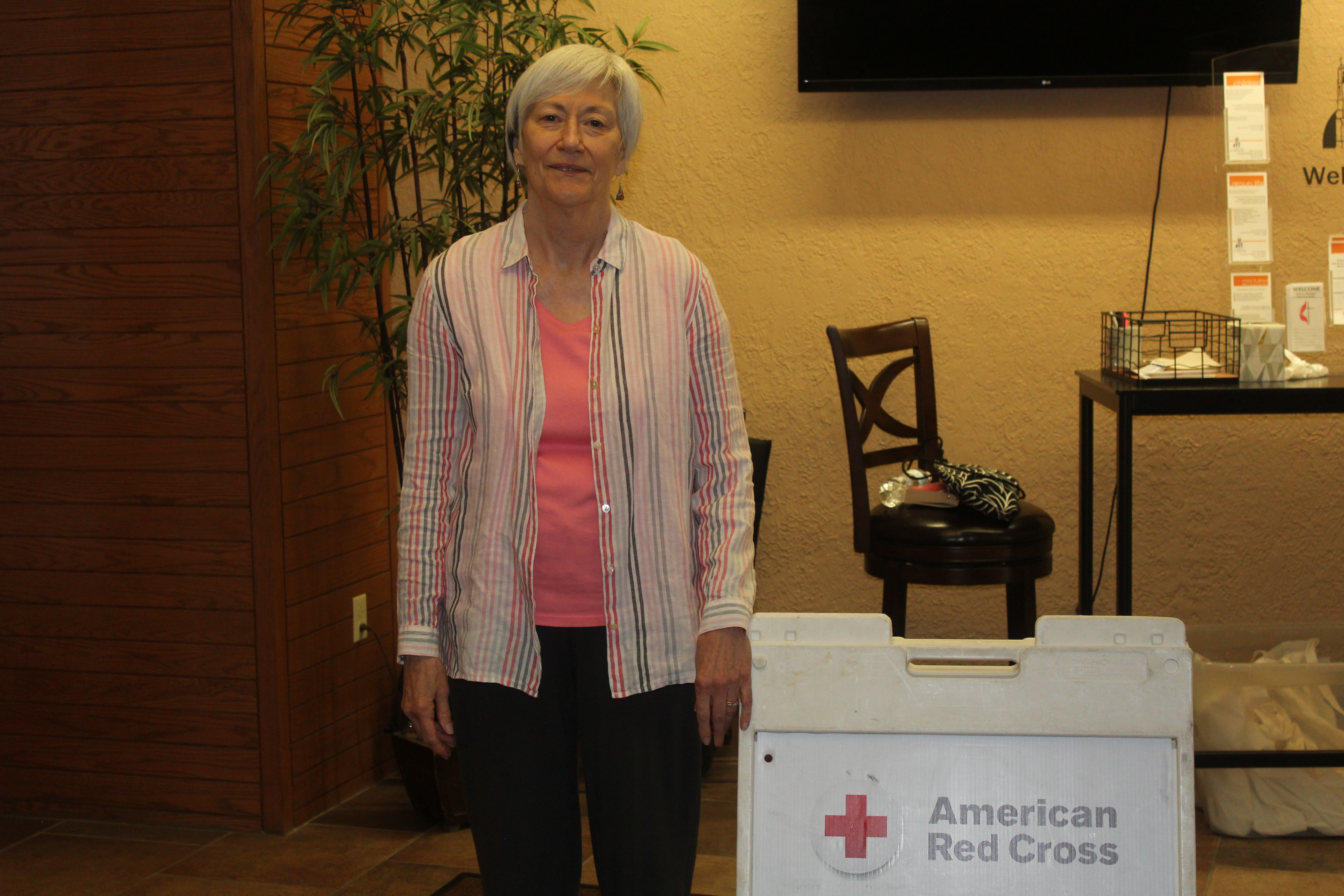
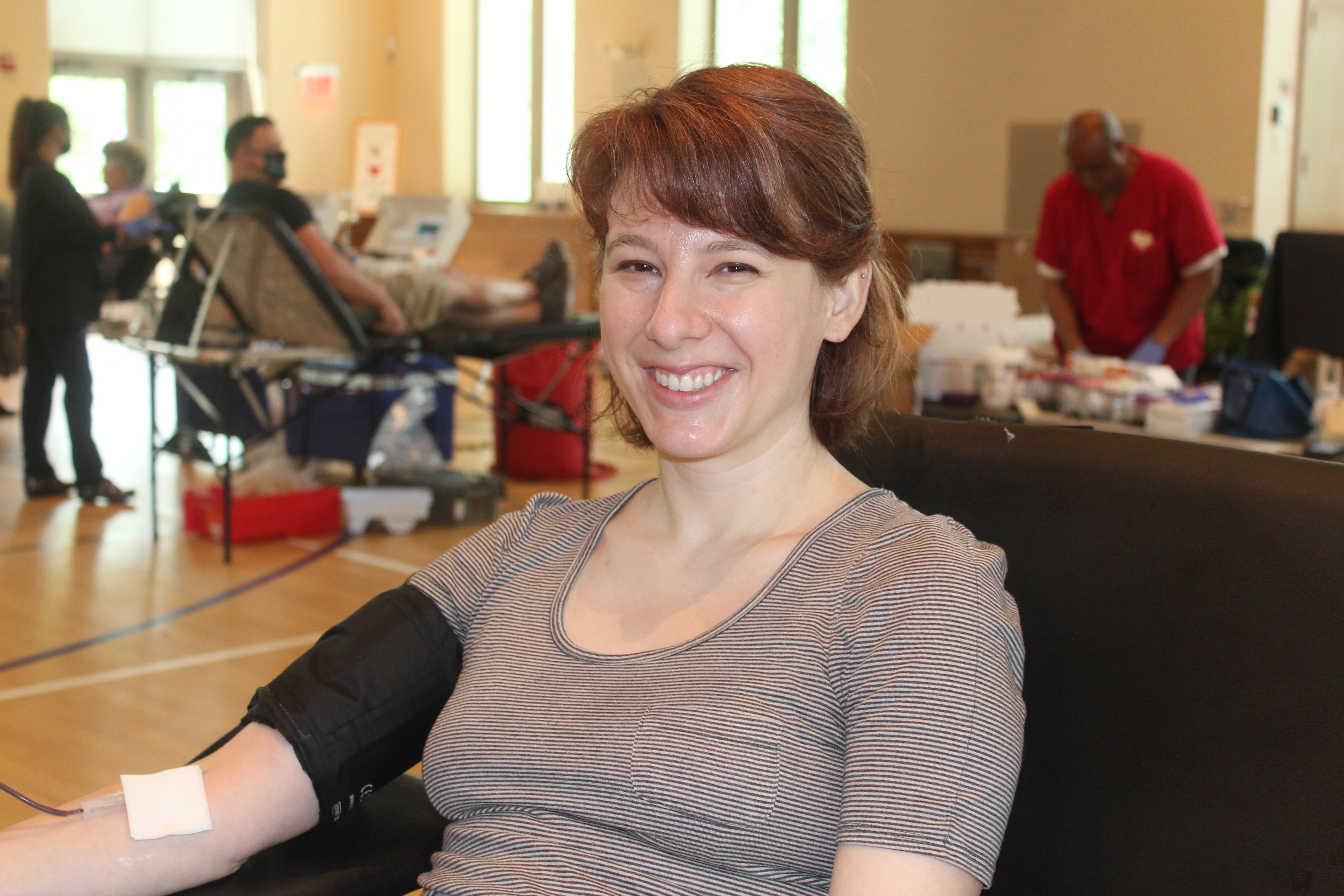
It had been about five years since Ellen Eoff last donated blood. “I heard about the shortage,” she said as she rested on a donor bed at a recent blood drive at the Church of the Savior in Cleveland Heights. “I’m vaccinated and felt comfortable about donating blood again.”

Red Cross blood donor Ellen Eoff

Ellen was one of 44 people who donated at the blood drive, helping the American Red Cross address a severe blood shortage, as hospitals respond to an unusually high number of traumas and emergency room visits, organ transplants and elective surgeries.

In most cases, those who have received a COVID-19 vaccine – like Ellen – can donate. However, knowing the name of the manufacturer of the vaccine they received is important in determining donation eligibility.

Currently, the Red Cross needs to collect more than 1,000 additional blood donations each day to meet current demand. That’s why donations like Ellen’s are so important.

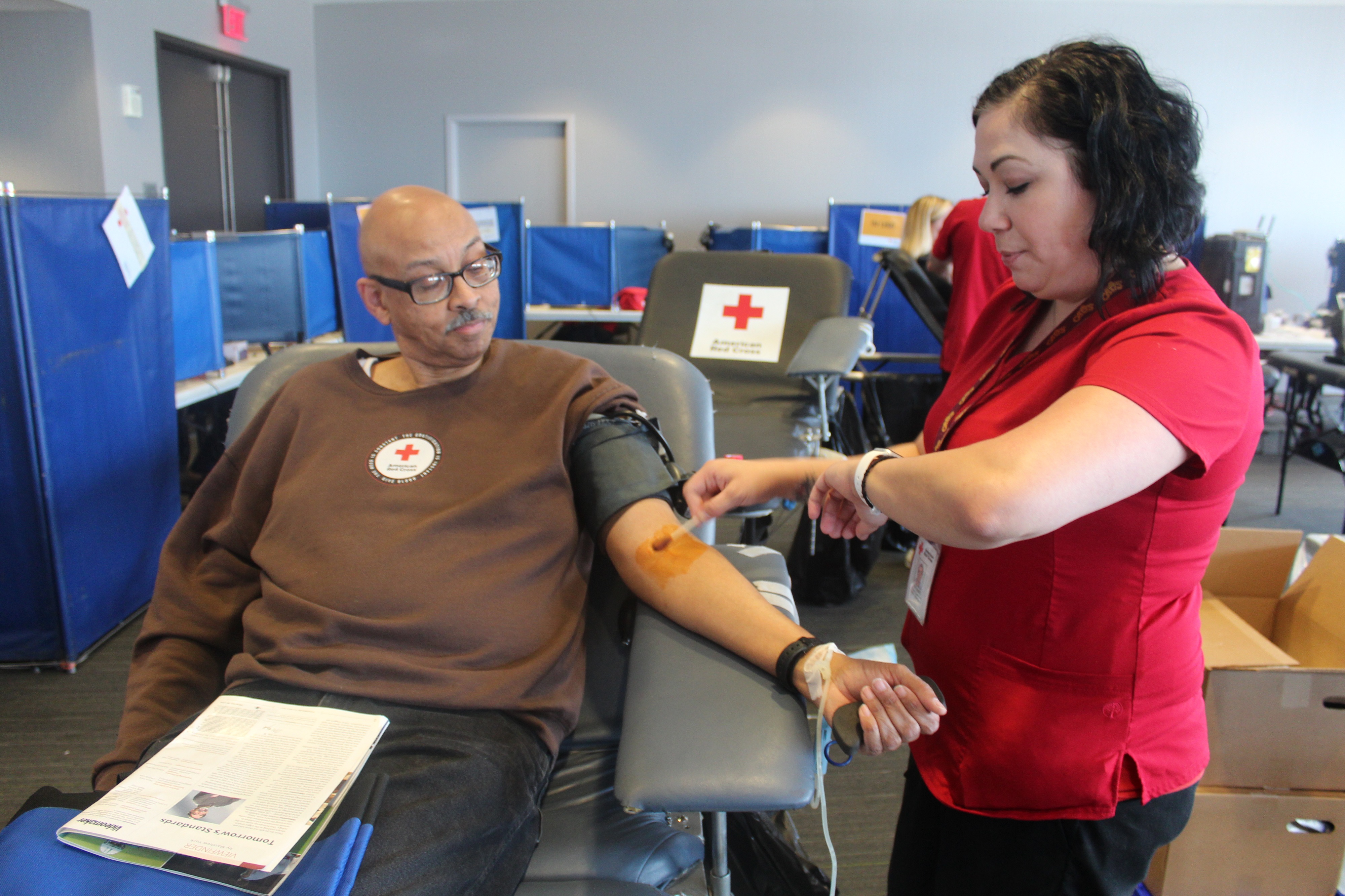
Red Cross blood donor Michael Melicoff and blood drive supervisor Shantel Haynes

“I donate for the public good,” said Michael Melincoff, who has been a Red Cross blood donor for more than 40 years. “I donate 2 to 4 times a year,” he said. He also makes financial donations in response to disasters.

Patricia Moyer said she’s working toward donating her second gallon of blood. “It was there when I needed it,” she said, referring to a past surgical procedure she experienced.

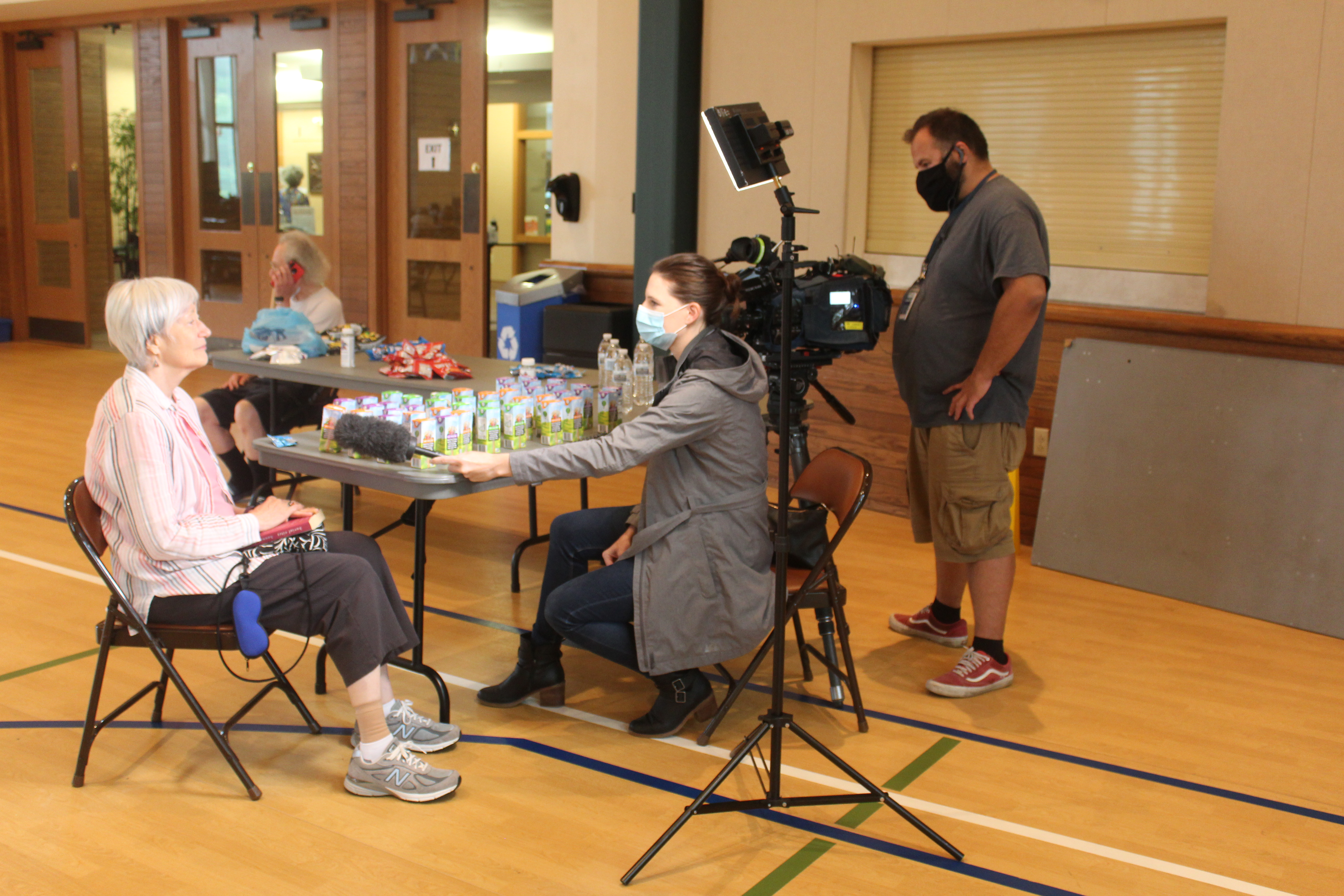
WEWS News 5 reporter Caroline Sweeney and photographer Anthony Garcia helped the Red Cross spread the word about the blood shortage by covering the blood drive. You can see their report here.

To thank donors who help refuel the blood and platelet supply this month, all who come to give July 7-31 will receive a $10 Amazon.com Gift Card via email and will also receive automatic entry for a chance to win gas for a year (a $5,000 value). More information and details are available at rcblood.org/fuel. Also, all those who come to donate throughout the entire month of July will be automatically entered for a chance to win a trip for four to Cedar Point or Knott’s Berry Farm. To learn more, visit rcblood.org/CedarFair.

Donors who give now will help stock the shelves for the rest of the summer season. Schedule an appointment to give blood or platelets by using the Red Cross Blood Donor App, visiting RedCrossBlood.org, calling 1-800-RED CROSS (1-800-733-2767) or enabling the Blood Donor Skill on any Alexa Echo device.

Vaccinated and ready to travel?

Here are some things to check before you leave Northern Ohio

By: Doug Bardwell, Red Cross Volunteer

Travel restrictions have just been lifted for those who want to go to Europe, so it appears that travel season is about to switch into high gear here in Northern Ohio.  If you are planning a trip out of the country, there are a number of points you’ll want to check to ensure that it is a safe and enjoyable experience.   

Does your hospitalization cover you when you travel?  Some only work in this country, and some only with certain health organizations. Here’s a good reference. 

Driving? Will your car insurance cover you when you cross into Canada (probably) or into Mexico (probably not). Be sure to call your agent and verify. You also need to check if you’ll be renting a car – most local policies don’t cover rentals abroad.

And don’t forget to check very specifically about your cellphone rates outside the country. Many people didn’t check first, only to find out that international rates added thousands to their cellphone bill.   

Check your credit cards. Some issue surcharges for international transactions, while others do not. Also, avoid travelers’ cash exchanges at airports, which usually offer less advantageous conversion rates than banks in town.

Be sure to notify your credit card company about when you plan to be out of town (even in this country), so your cards are not held up pending “fraud protection” while you try to prove it’s really you buying shoes in Guadalajara.

Are you up to date on your vaccinations, malaria shots, tetanus shots, etc. Let your county health care professional know where you’ll be traveling and see if any additional shots are required. Here’s the link to Cuyahoga County’s board of health, but each county should have their own.

Are there any travel advisories issued by our State Department for the countries you plan to visit? You can sign up there for travel advisories.

Before you go, photograph or scan your passport, immunization record, any important medical information and emergency numbers for your credit cards and bank. Put it on a small USB flash drive that you can hide in your socks, just in case you are robbed.  Also leave a duplicate of the information with a friend or relative who is not traveling with you.

Lastly, before you go, make a blood donation appointment.  There’s a severe shortage right now, and the need is great.  If you’ve never donated before, you can load the Red Cross Blood app on your phone, and shortly after your donation, you’ll know what blood type you are. Then, while you are traveling, rest easy, knowing your donation can save up to three lives.

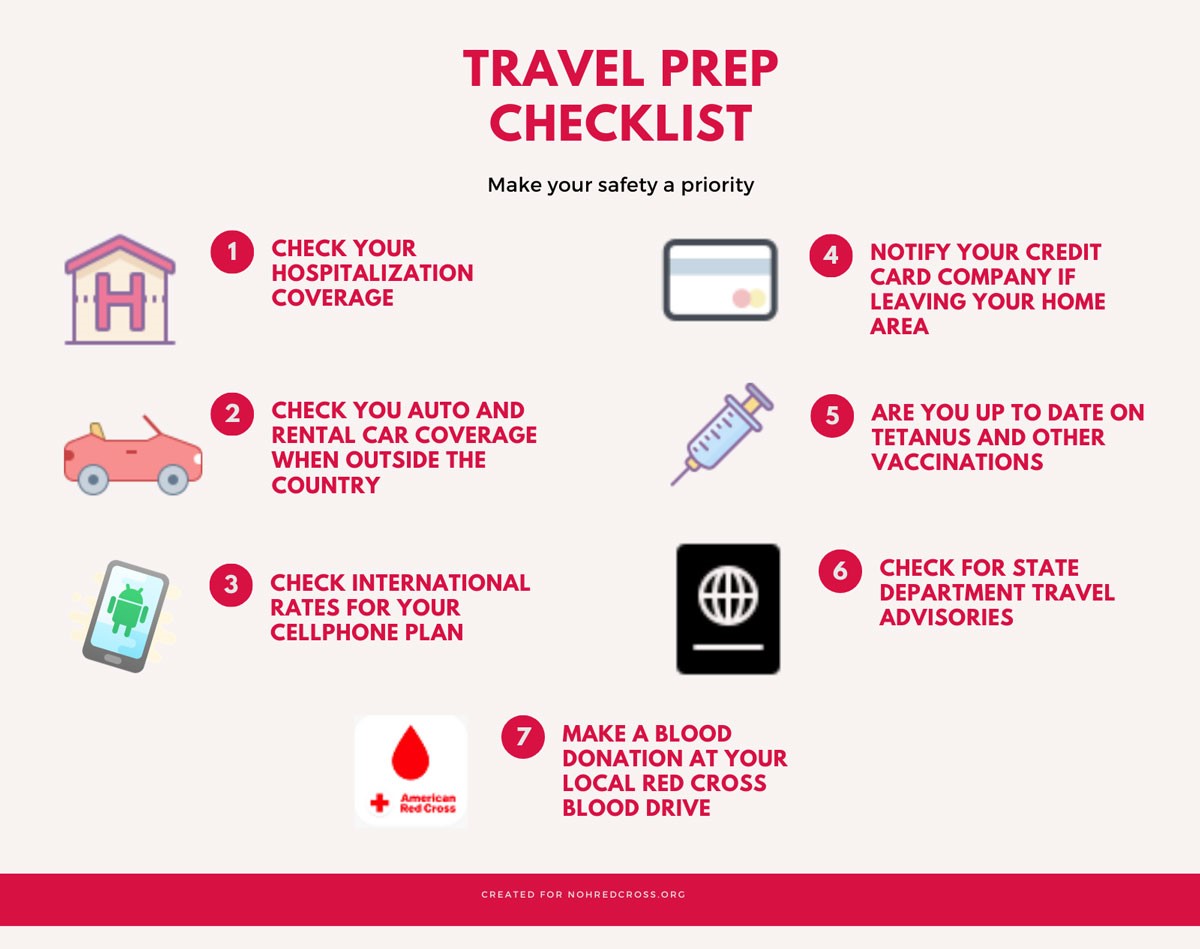
Click here for a printable checklist when you start your travel planning.

Red Cross facing severe blood shortage: Donors needed now

The American Red Cross is experiencing a severe blood shortage as the number of trauma cases, organ transplants and elective surgeries rise– and deplete the nation’s blood inventory. Donors of all blood types – especially type O and those giving platelets – are urged to make an appointment to give as soon as possible to prevent further impact to patients.

Right now, hospitals are responding to an atypically high number of traumas and emergency room visits, as well as overdoses and resulting transplants. In comparison to 2019, the Red Cross has seen demand from trauma centers climb by 10% in 2021− more than five times the growth of other facilities that provide blood transfusions.  

The Red Cross Northern Ohio Region appreciates the support of the local media, who have shared our need for blood and encouraged the community to come out now and help overcome the shortage. Read more at the links below:

WKYC – TV
WEWS-TV
WFMJ – TV
WKBN-TV
WNWO-TV
The Canton Repository
The Monroe News
Bowling Green Sentinel-Tribune
WFIN Radio

In addition to trauma needs, there is a great hospital demand for blood as people who deferred care during the height of the pandemic present with more advanced disease progression, requiring increased blood transfusions. Over the last three months, the Red Cross has distributed about 75,000 more blood products than expected to meet these needs.

In most cases, those who have received a COVID-19 vaccine can donate. However, knowing the name of the manufacturer of the vaccine they received is important in determining donation eligibility.

Final weeks for COVID-19 antibody testing

As more than a third of Americans have become fully vaccinated against COVID-19, the Red Cross is winding down COVID-19 antibody testing for blood, platelet and plasma donations. 

Through June 25, the Red Cross is testing all donations for COVID-19 antibodies. Testing may show possible exposure to the virus or whether a donor has developed an immune response to vaccination. The conclusion of Red Cross antibody testing represents a new, hopeful phase as the nation continues to journey out of this pandemic.  

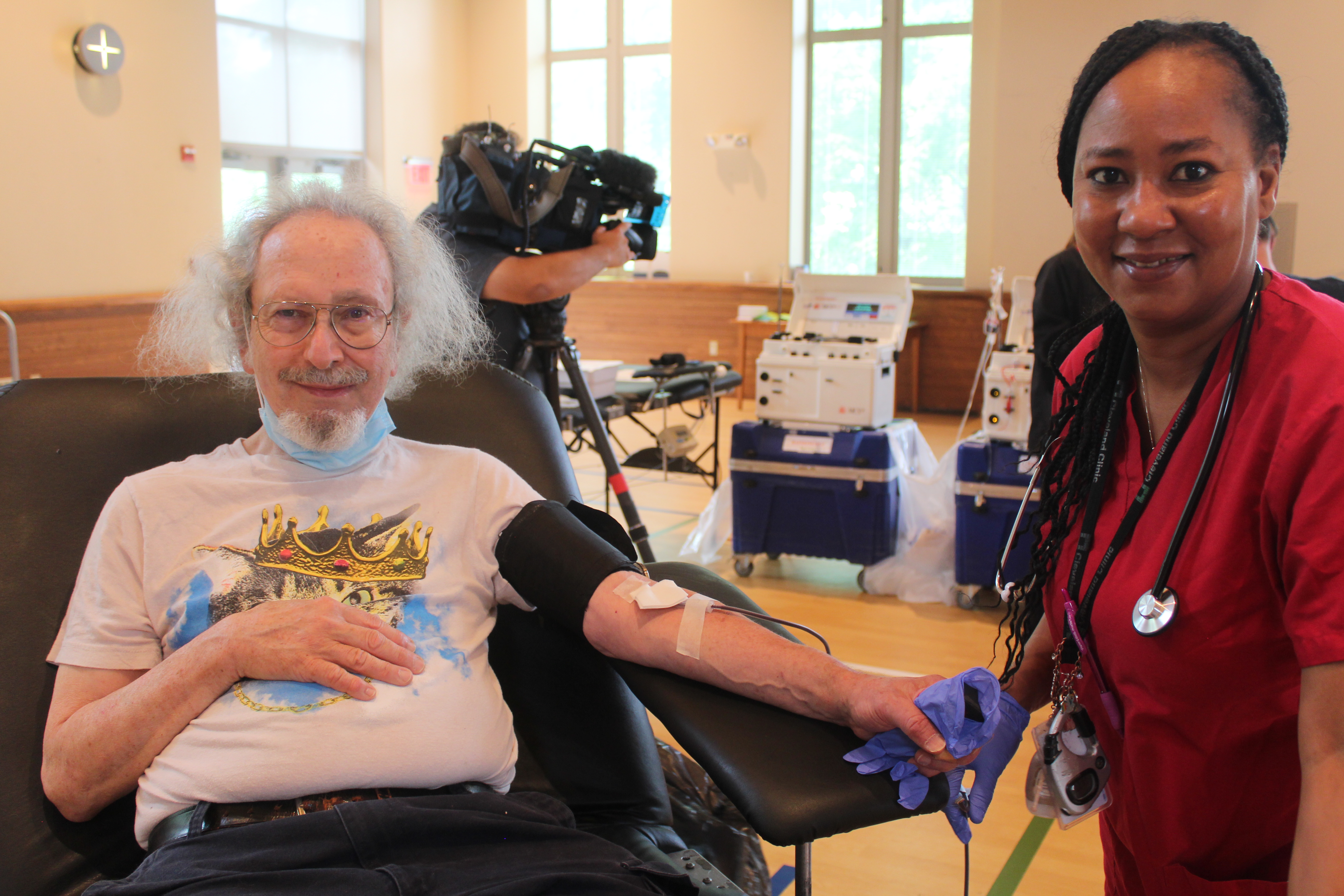
Thanks to the donors who turned out in Twinsburg at the Cleveland Clinic blood drive on June 16, 2021. Their donations will help alleviate the current blood shortage.

The Red Cross of Northern Ohio hosts around 20 blood drives each day across the 30 counties we serve. Approximately 80 local hospitals in Cleveland, Akron, Youngstown and Toledo depend on us to help meet the blood transfusion needs of patients. Below are several upcoming blood drives across the region. Schedule an appointment to give blood now by using the Red Cross Blood Donor App, visiting RedCrossBlood.org, calling 1-800-RED CROSS (1-800-733-2767) or enabling the Blood Donor Skill on any Alexa Echo device. As a thank-you, those who come to give now through June 30 will receive a $5 Amazon.com Gift Card via email, courtesy of Amazon. (Restrictions apply. Additional information and details are available at RedCrossBlood.org/Together.)  

Cleveland
June 25, 10 a.m. – 2:30 p.m., Mentor Civic Arena, 8600 Munson Rd., Mentor
June 28, 1 – 7 p.m., Independence Community Center, 6363 Selig Drive, Independence June 29, 7 a.m. – 7 p.m.: Cuyahoga Valley Church, 5055 E. Wallings Rd., Broadview Heights
June 30, Noon – 7 p.m., Avon Isle Park, 37080 Detroit Road, Avon

Akron/Canton
June 28, Noon – 6 p.m., St Paul Lutheran Church, 127 Cherry Road NE, Massillon
June 30, 11 a.m. – 5 p.m., United Methodist Church, 1435 E. Main St., Kent
July 1, 7 a.m. – 7 p.m., Cuyahoga Falls Natatorium, 2345 4th St., Cuyahoga Falls

Youngstown
June 24, 11 a.m. – 5 p.m., Stambaugh Auditorium, 1000 Fifth Ave., Youngstown
June 28, 11 a.m. – 5 p.m., Boardman Public Library, 7680 Glenwood Ave., Boardman
June 30, Noon – 6 p.m., Packard Music Hall, 1703 Mahoning Ave., Warren

Toledo
June 26, 9 a.m. – 3 p.m., First Presbyterian Church, 200 East Broadway, Maumee
June 27, 8:30 a.m. – 2 p.m., Grace Lutheran Church, 4441 Monroe St., Toledo
June 28, 1:30 p.m. – 6 p.m., Fremont VFW, 204 Birchard Ave., Fremont
June 30, 9:30 a.m. – 2:30 p.m., Zoar Lutheran Church, 314 East Indiana, Perrysburg

Student spreads the word about sickle cell disease

World Sickle Cell Awareness Day observed each June 19th

By Eilene E. Guy, American Red Cross volunteer
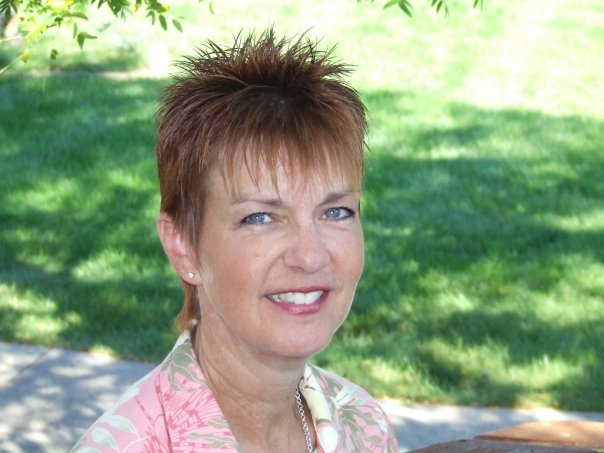
The American Red Cross believes Black lives matter. That’s why it’s urgent that more Black and African Americans roll up their sleeves and donate lifesaving blood for those living with sickle cell disease.

Cleveland teenager Makenzie Nance is one of an estimated 100,000 people in the U.S. who have sickle cell disease (SCD). Some 90% of those are of African descent and roughly 1,000 babies are born with the disease each year.

Sickle cell disease is a hereditary condition that can be life threatening. It leads to anemia (a shortage of red blood cells), causing fatigue and possible damage to blood vessels and vital organs. It often causes severe pain that can last for hours or days; it can even lead to disabling strokes.

Makenzie was a preschooler when she first had a critically low hemoglobin level – which meant her red blood cells couldn’t carry oxygen from her lungs throughout her body. She needed a blood transfusion immediately.

And to be the most effective, that blood needed to come from someone of her own ethnicity, an African American.

“They told me there was a shortage of African American blood,” her mother, Demeatrice Nance, recalls. “It had to be flown in from somewhere else. That’s when I realized the importance of getting African Americans to donate blood.”

Thanks to Makenzie getting regular checkups and immediate attention when she gets so much as a common cold, the 17-year-old has only had two transfusions. “But we know friends who have to have transfusions every couple of months,” Demeatrice said.

Makenzie’s condition could change at any time, requiring more transfusions. A single patient with SCD can need up to 50-100 pints of blood each year.

The Red Cross, which collects about 40% of the nation’s blood supply, wants to be sure there’s plenty of blood to meet these very specific needs. In an all-out effort to fill the gap, the Red Cross is trying to triple the number of Black and African American blood donors by the end of December 2024.

SCD also affects people with ancestors from India, Central and South America, the Middle East, the Caribbean and Mediterranean nations such as Italy, Greece, France and Turkey.

Both Makenzie and her mom are active in recruiting blood donors. “African Americans just haven’t been educated about giving blood,” Demeatrice said. “ ‘Oh, I don’t like needles,’ or ‘Oh, they’ll take all my blood.’ We have to dispel all of that misinformation.”

Makenzie goes to high schools around Cleveland to educate her peers. And because she’s spent so much time in hospitals and doctors’ offices herself, she wants to go into nursing; she’s already a Certified Nursing Assistant with a goal of becoming a Registered Nurse.

Demeatrice regularly sponsors Red Cross blood drives which include information about SCD as well as team that can do finger pricks to screen for the trait that can lead to having a child with the disease.

“I’m all in,” for spreading the word about SCD, with the goal of early detection and plenty of blood for effective treatment, she said.

To learn more about SCD, go to RedCrossBlood.org/SickleCell.

Local blood donors testify on World Blood Donor Day

By Samantha Pudelski, American Red Cross volunteer

Today is World Blood Donor Day, a day where organizations around the world highlight the importance of safe blood, platelet and plasma donations provided by individuals around the world, and right here in our own backyard.

Donors are especially important at times like these, during the severe blood shortage currently being experienced, due to increased hospital demand, as the number of trauma cases, organ transplants and elective surgeries have risen, depleting the nation’s blood supply.

Every two seconds someone in the U.S. need blood and/or platelets. It is essential for people having surgery or cancer treatment, individuals who experienced a traumatic injury and those with certain chronic illnesses. The American Red Cross provides about 40% of our nation’s blood and blood component supply, collected from generous volunteer donors at blood drive events throughout the year.

This World Blood Donor Day, we’d like to highlight some of our recent Northern Ohio blood donors and their words of encouragement to others about donating blood.

“Once you get started, you won’t want to stop. It is very rewarding.  Even when I did not have a high enough Iron level, I was not deterred. I kept trying. I kept going,” says Roberta Koester from Chardon.

Linda Goeke from Hudson said, “I love getting the messages that my blood has been sent to such and such a place to help someone in need.”

And finally Brenda Turek from Boardman talk about how little time it takes to donate: “It is easy. For me it is one hour from the time I leave home to the time I get back home.“

It’s with donation from donors like you, that life-saving blood can be provided to people when they need it the most. Only 3% of age-eligible people donate blood yearly, and with each new donor, we are able to better meet the supply needed.

To learn more about the donation process and to find a blood donation drive near you, visit redcross.org/blood.

Give blood, have thrilling fun

A free ticket to Cedar Point available to blood donors at select drives

By Jason Copsey, American Red Cross volunteer

Cedar Point has been a part of Ohio family summer traditions for generations. The ever-growing amusement park draws millions each year from all over the world with 72 rides, including 18 roller coasters – many of which are considered best-in-class. And, each year, thousands of blood donors enjoy admission to the park for free, thanks to the generosity of Cedar Fair.

Cedar Fair, the owner and operator of Cedar Point and many other parks across the country, is once again partnering with the American Red Cross this summer to offer free tickets to blood donors at several blood drives throughout the region. Visit our calendar of events to find the drives offering Cedar Point tickets, then make your appointment at redcrossblood.org, sponsor code cedarpoint.  Those who participate in these select drives will receive one free ticket, which can be used for entry at any of Cedar Fair’s parks, including Cedar Point.

Cedar Fair has been an important supporter of the Red Cross mission for years. Since 2016, the company has donated over 100,000 tickets to the Red Cross to help promote blood donations. The partnership and promotion helps the Red Cross maintain blood and platelet donation levels, as summer months often bring a decline in donations.

In addition, beginning July 1, all presenting donors will be entered to win a trip for four to Cedar Point of Knott’s Berry Farm – airfare, hotel stay and food vouchers included. More information can be found online. Anyone can enter the contest by emailing customercare@redcross.org.

Cedar Point is celebrating its 150th anniversary this year, with a full slate of special events, live music, food and experiences lasting throughout the season. Although the actual 150th anniversary was last year, the COVID-19 pandemic disrupted planned events.


“You’re not donating blood. You’re donating life.”

By Eilene E. Guy, American Red Cross volunteer
Have you ever set a goal and reached it? How about doubling the goal and reaching that?

Now, how about knowing that in reaching those goals you’ve saved or improved the quality of life for hundreds of men, women and especially children?

Al Whitney knows that feeling: He’s donated platelets – the part of blood that creates clotting – in all 50 states. Twice!  Oh, and in Canada and Australia for good measure.

“When people ask me why I do this, I just tell them, ‘You go and walk through a cancer ward and then come back and ask me why I do it’,” he said. “You’re not donating blood. You’re donating life.”

The spry 84-year-old began his life-saving career in 1965, when he saw a big Red Cross sign in downtown Cleveland that said, “Donate blood.” So he did. When he walked out, he was inspired: “Al, you can do more.”

So he started organizing regular blood drives in Avon Lake, his home town, while continuing to donate blood himself, every 56 days.

Sometime in the late 1970s or early ‘80s, he switched to donating platelets, which are always in short supply because that blood component only has a shelf life of five days. Every 15 seconds, someone with cancer, chronic disease or traumatic injuries needs platelets.

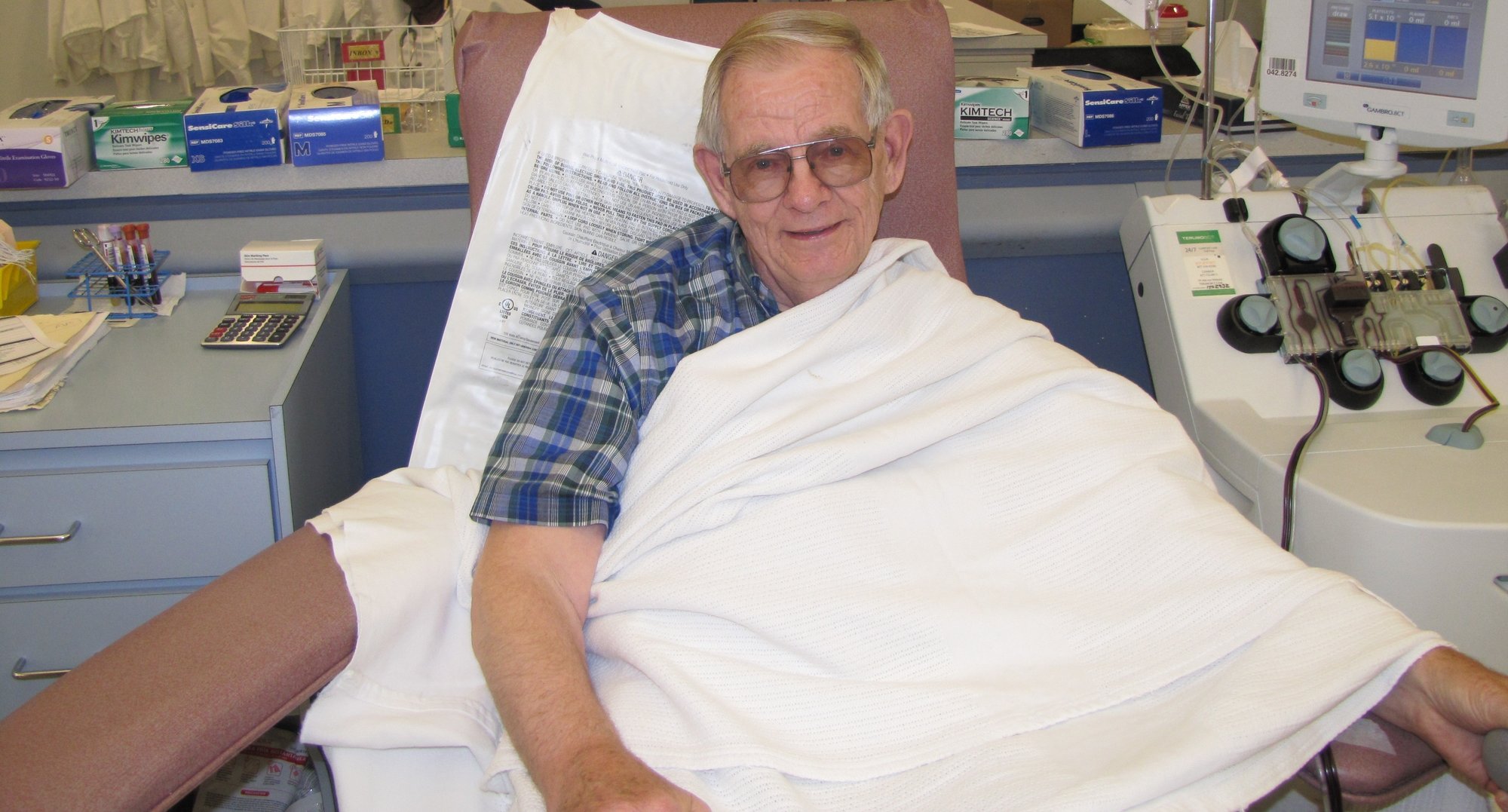
In the process of platelet donation, the blood clotting portion of whole blood is “spun” out and the rest of the blood is returned to the donor; typically, the body replaces its platelets in 24-36 hours. The FDA allows platelet donors to give 24 times a year.

In the fall of 2007, Al challenged himself to donate platelets in every state. It took him five years to reach that goal. “Al, you can do more,” whispered in his ear again.  So he set out to double the feat. He hit that target in March this year, when he made a donation in Albuquerque, N.M.

“Sometimes people will tell me, ‘I don’t like needles’,” Al said. “I tell them, ‘I know how you feel. But think of that little boy in the cancer ward. Do you think he likes needles?’ ”

As of his most recent donation, on April 21, Al has given 983 units. “God willing, I’ll make it to 1,000,” he said. He looks forward to hitting that milestone this fall, at the Red Cross donation center in Cleveland.

To learn more about donating platelets through the American Red Cross, visit  https://www.redcrossblood.org/donate-blood/how-to-donate/types-of-blood-donations/platelet-donation.html

Editor’s Note: The Red Cross currently has an emergency need for platelets and type O blood, as hospital demand for these products continues to outpace donations. Over the last year, the Red Cross has collected over 1 million units of platelets, and nearly half of those have been provided to patients undergoing cancer treatment. More platelet donors are needed to continue to meet these needs. 

Blood donations needed as cancer patients resume care after challenging year

American Red Cross and American Cancer Society partner to help patients and encourage donors to Give Blood to Give Time

CLEVELAND, June 7, 2021 – The American Red Cross and the American Cancer Society have teamed up this June to encourage people across the country to Give Blood to Give Time and help ensure loved ones have the strength and support they need as they undergo cancer treatment.

According to the American Cancer Society, many patient visits and procedures were forced to delay or cancel early in the pandemic to reduce the risk of exposure to COVID-19. With procedures resuming, blood donations are critical for cancer treatments. Unfortunately, the Red Cross is seeing fewer blood and platelet donors give as the nation begins to climb out of this pandemic. This downturn comes at a time when the Red Cross continues to see strong demand for blood products − including platelets − by hospitals, causing concern for the sufficiency of the blood supply this month and throughout the summer.

The Red Cross currently has an emergency need for eligible donors in Northern Ohio to make an appointment now to give platelets to ensure critical patient needs are met. Platelets, the clotting portion of blood primarily given to cancer patients during treatment, must be transfused within five days of donation and, therefore, are always in great demand.

“Many cancer patients, especially those going through chemotherapy, will have a need for blood products during treatment,” said Dr. Baia Lasky, medical director for the Red Cross. “When someone donates blood or platelets, they may not only help prevent life-threatening bleeding that can cause stroke or relieve some symptoms, like shortness of breath and headaches, but also give patients and their families the time and hope they need to fight back.”

Some types of chemotherapy can damage bone marrow, reducing red blood cell and platelet production. Other times, the cancer itself or surgical procedures cause the need for blood products. About six blood products are needed every minute to help someone going through cancer treatment. Yet only 3% of people in the U.S. give blood. It is vital that more people donate blood and platelets regularly to meet that need.

To schedule a blood or platelet donation appointment, visit GiveBloodToGiveTime.org. As a special thank-you, those who come to donate through June 13 will receive a limited-edition Red Cross T-shirt, while supplies last.

“The need for blood in cancer treatments is an important and untold story,” said Howard Byck, senior vice president of corporate and sports alliances, American Cancer Society. “The American Cancer Society is excited to be working with the Red Cross on Give Blood to Give Time. Through this partnership, we want people to know there are multiple ways they can help and make a meaningful difference in the lives of patients and their families.”

The Red Cross not only has an emergency need for platelets, but also for type O blood donors, as hospital demand for these blood products continues to outpace donations.Type O blood is the most needed blood group by hospitals. Type O positive is the most transfused blood type and can be transfused to Rh-positive patients of any blood type. 

Type O negative is the universal blood type and what emergency room personnel reach for when there is no time to determine the blood type of patients in the most serious situations. Visit redcrossblood.org to find the blood drive that fits your schedule.

Eighty-plus years of lifesaving blood collections-happy birthday Dr. Drew

Plus an opportunity this weekend to do your part

By Doug Bardwell, American Red Cross volunteer
Responsible for providing approximately 40% of the nation’s blood supply, the American Red Cross is always concerned with maintaining a wide variety of blood types as well as blood derivatives such as plasma and platelets. With constant demand, the Red Cross aims to provide a well-stocked, diverse blood donor bank at all times.

A pioneer in blood preservation

As World War II began in 1939, Dr. Charles Drew, an African American doctor was a General Education Board Fellow in surgery at Columbia University in New York City. There, he studied blood preservation, and developed techniques for preserving plasma, a crucial blood component often given to trauma patients and burn victims.

Dr. Drew’s Columbia dissertation had direct implications on the transportation and storage of blood during World War II. Dr. Drew’s dissertation included details for establishing the experimental blood bank at the Presbyterian Hospital. He described the processes of drawing blood, typing donors and identifying the indications for transfusion. He compiled both donor and recipient statistics as well as the types of adverse reactions to transfusion. Many of these processes are still in use today.

In 1940, the American Red Cross and its partners launched “Blood for Britain”. They planned to ship large quantities of plasma to England to help heal those wounded during the Blitz. “Blood for Britain” chose Dr. Drew to lead the project as its medical director.

In January 1941, Dr. Drew was named the first medical director of the American Red Cross Blood Services. He oversaw the first blood drives using bloodmobiles — refrigerated trucks serving as donation centers. The drives were a success, even though it was still quite uncommon for people to give blood for unknown recipients and without compensation. Bloodmobiles are still in use today by the Red Cross and other blood collection organizations for blood drives across the US.

Dr. Charles Drew was born on this date, June 3rd, in 1904.

Blood collection today

Four Red Cross blood donation centers operate year-round in Northern Ohio:

  • Warzel Donation Center; 3747 Euclid Avenue; Cleveland, 44115
  • Parma Donation Center; 5585 Pearl Road; Parma, 44129
  • Akron Donation Center; 501 West Market Street; Akron, 44303
  • Toledo Donation Center; 3510 Executive Parkway; Toledo, 43606

In addition, remote collection sites occur all during the year across Northern Ohio.  A list of sites can be found here. Merely type in your zip code and select the best time and date for your appointment. 

One of those blood donor events will be Saturday, June 5th, from 9:00 a.m. until 3:00 p.m. at University Circle United Methodist Church (a.k.a. the  Church at the Circle), 1919 East 107th Street, Cleveland, OH 44106. The Red Cross will be having their blood drive in the Great Hall (lower level – elevator accessible.) Donors will receive a $10 Amazon gift card by email and a free Red Cross T-shirt while supplies last. Go to RedCrossBlood.org or call 1-800-REDCROSS (800-733-2767) to check for available appointment times.