World Sickle Cell Day: The importance of a diverse blood supply

By Akash Mallady, Red Cross volunteer

More than 100,000 people in the United States live with sickle cell anemia, an inherited blood disease where red blood cells take on a different shape that leads to complications. They become rigid and characteristically crescent-shaped instead of the typical soft, round structure. The misshapen cells carry less oxygen and get stuck in blood vessels, which can leave patients feeling immense pain episodes and the potential for a stroke. While many see blood transfusions as an option during an emergency, they are a normal and necessary part of life for those managing sickle cell from childhood to adulthood. 
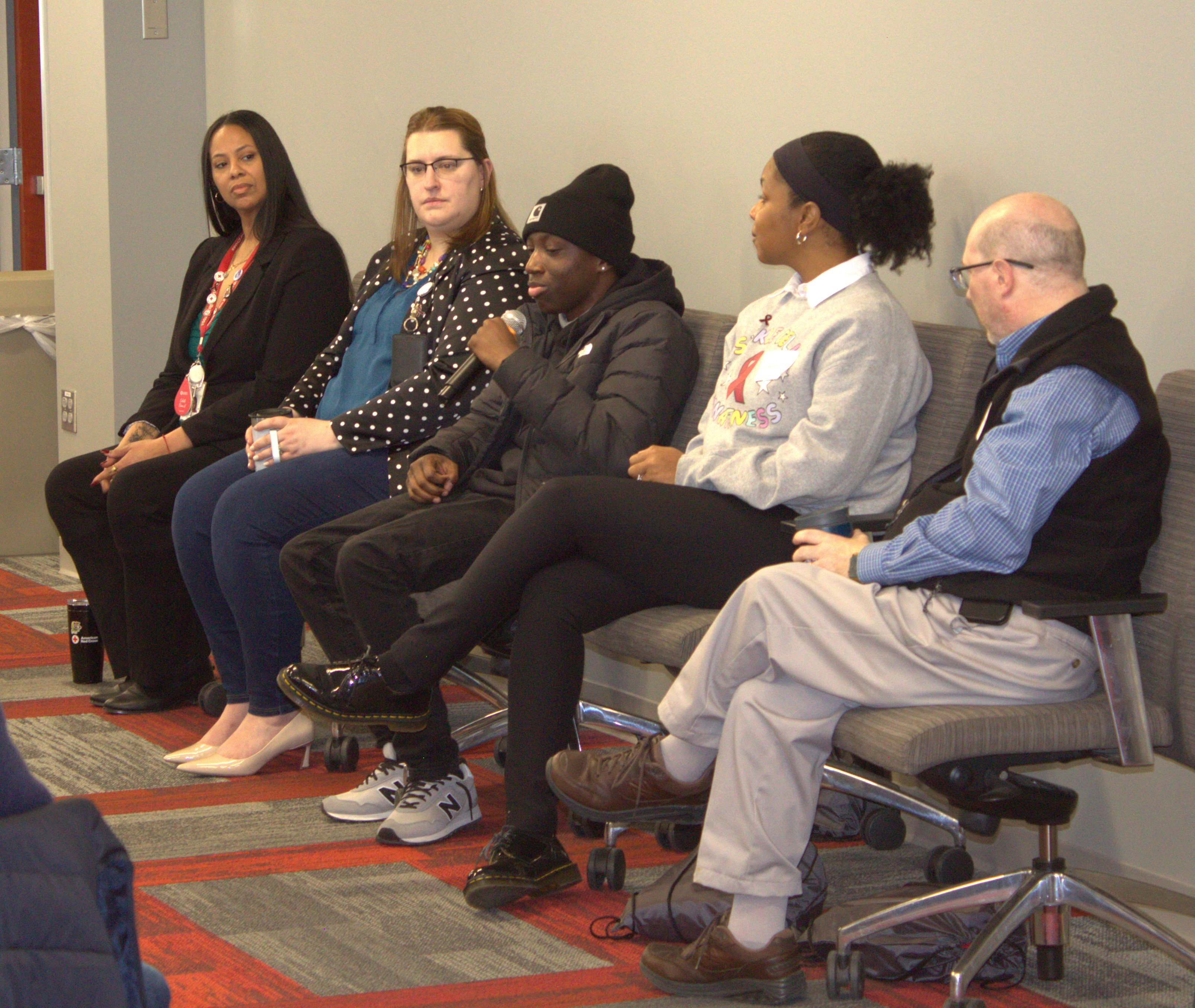
Sickle Cell Warrior Alijah Ellis speaking on a panel at the 2026 Sickle Cell Brunch at the American Red Cross of Northern Ohio headquarters in Cleveland.

Research has shown that sickle cell disease affects the US population in a disproportionate way. More than 90% of people with sickle cell disease in the United States are Black or African American, and 3%-9% are Hispanic or Latino. According to the CDC, people with sickle cell disease have a life expectancy that is 20 years shorter than average. 

Maintaining an adequate blood supply, particularly from diverse donors, is one way the American Red Cross is working to combat this. 

Blood donor diversity matters for sickle cells because blood compatibility can go deeper than just blood type. Red blood cells carry antigens, which are proteins on their surface. A patient can receive a safer and more effective transfusion if it comes from a donor whose antigen profile matches more closely. Often sickle cell patients can receive frequent transfusions of mismatched blood, and their immune system can create antibodies against these mismatched antigens. This increases the complexity of finding matches for in future transfusions. Ultimately, similar ethnic backgrounds are more likely to have a shared antigen profile, making representation in the donor population a clinical necessity. 

Current data makes the urgency clear. The communities that are most likely to produce compatible matches for most sickle cell patients continue to remain underrepresented in the blood donor pool. Compared to the White donor population being 80.2%, Black and African American donors comprise just 3.8%, Hispanic or Latino donors 6.6%, and Asian donors 3.4%. 
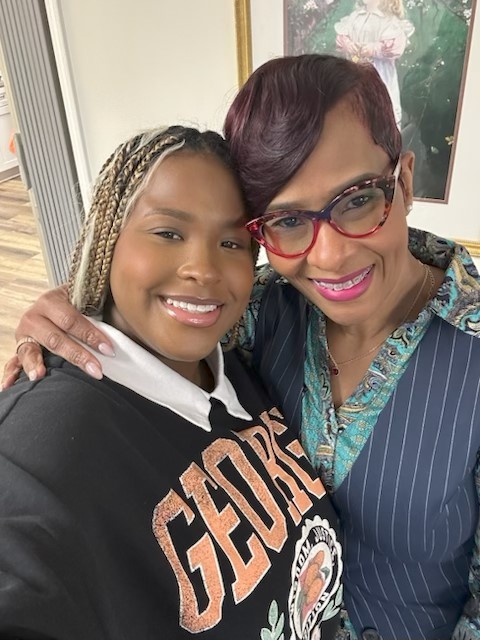
Sickle Cell Warrior Makenzie Nance and her mother, Demeatrice.

There have been hopeful changes, however. Since 2021, Black or African American blood donors have increased by 37.6%, with Hispanic or Latino donors up 8.5%, and Asian donors up 7.8%. The Red Cross Sickle Cell initiative has been paramount in this increase by providing more than 300,000 sickle cell trait screenings to donors self-identifying as Black, or multiracial. The Red Cross HBCU Ambassador Program has collected over 7,300 pints of blood from 320 campus drives. 

Still, with only 3% of the U.S. population donating blood each year, the donor pool for sickle cell patients of diverse ethnic backgrounds remains low. If you come from an underrepresented background in the donor pool, your donation can provide support to patients who need it most. 

Schedule a donation or share this post  – –  both can make a huge difference. 

Visit RedCrossBlood.org, download the Red Cross Blood Donor App, or call 1-800-RED CROSS to find a drive near you . 

Student spreads the word about sickle cell disease

World Sickle Cell Awareness Day observed each June 19th

By Eilene E. Guy, American Red Cross volunteer

The American Red Cross believes Black lives matter. That’s why it’s urgent that more Black and African Americans roll up their sleeves and donate lifesaving blood for those living with sickle cell disease.

Cleveland teenager Makenzie Nance is one of an estimated 100,000 people in the U.S. who have sickle cell disease (SCD). Some 90% of those are of African descent and roughly 1,000 babies are born with the disease each year.

Sickle cell disease is a hereditary condition that can be life threatening. It leads to anemia (a shortage of red blood cells), causing fatigue and possible damage to blood vessels and vital organs. It often causes severe pain that can last for hours or days; it can even lead to disabling strokes.

Makenzie was a preschooler when she first had a critically low hemoglobin level – which meant her red blood cells couldn’t carry oxygen from her lungs throughout her body. She needed a blood transfusion immediately.

And to be the most effective, that blood needed to come from someone of her own ethnicity, an African American.

“They told me there was a shortage of African American blood,” her mother, Demeatrice Nance, recalls. “It had to be flown in from somewhere else. That’s when I realized the importance of getting African Americans to donate blood.”

Thanks to Makenzie getting regular checkups and immediate attention when she gets so much as a common cold, the 17-year-old has only had two transfusions. “But we know friends who have to have transfusions every couple of months,” Demeatrice said.

Makenzie’s condition could change at any time, requiring more transfusions. A single patient with SCD can need up to 50-100 pints of blood each year.

The Red Cross, which collects about 40% of the nation’s blood supply, wants to be sure there’s plenty of blood to meet these very specific needs. In an all-out effort to fill the gap, the Red Cross is trying to triple the number of Black and African American blood donors by the end of December 2024.

SCD also affects people with ancestors from India, Central and South America, the Middle East, the Caribbean and Mediterranean nations such as Italy, Greece, France and Turkey.

Both Makenzie and her mom are active in recruiting blood donors. “African Americans just haven’t been educated about giving blood,” Demeatrice said. “ ‘Oh, I don’t like needles,’ or ‘Oh, they’ll take all my blood.’ We have to dispel all of that misinformation.”

Makenzie goes to high schools around Cleveland to educate her peers. And because she’s spent so much time in hospitals and doctors’ offices herself, she wants to go into nursing; she’s already a Certified Nursing Assistant with a goal of becoming a Registered Nurse.

Demeatrice regularly sponsors Red Cross blood drives which include information about SCD as well as team that can do finger pricks to screen for the trait that can lead to having a child with the disease.

“I’m all in,” for spreading the word about SCD, with the goal of early detection and plenty of blood for effective treatment, she said.

To learn more about SCD, go to RedCrossBlood.org/SickleCell.