Donate Blood in March and receive a free A1C screening

By: Kathryn Dean, American Red Cross volunteer

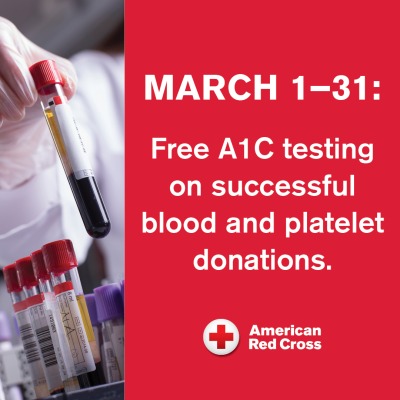
The American Red Cross of Northern Ohio is helping to bridge access to health care for blood donors by providing free A1C testing, commonly used to screen for diabetes and prediabetes, on all successful blood, platelet and plasma donations in March.
One-third of people lack access to regular primary care in the U.S., where diabetes affects 1 in 10 people and nearly a quarter of those living with it have been undiagnosed, according to the Centers for Disease Control and Prevention (CDC). The free A1C screening aims to help address this gap by empowering blood donors with valuable information to maintain their health and well-being.

What is the hemoglobin A1C test?  This is a common laboratory blood test that doctors use to help diagnose diabetes or prediabetes. Unlike a blood glucose test (or blood sugar test) which provides an instant snapshot of your current blood sugar levels, A1C reflects the average blood sugar levels of an individual over the past 3 months. This gives doctors a better idea of where your blood sugar typically lies, outside of the daily fluctuations.

Why is this important for me? It is estimated that there are over 8.7 million people in the U.S. living with undiagnosed prediabetes or diabetes. Type 2 diabetes accounts for over 90% of all cases and often remains symptomless until damage has been done. Untreated diabetes can lead to plaque build-up in the blood vessels which in turn puts you at greater risk for a stroke or heart attack. The eyes, kidneys, nerves, and skin are particularly vulnerable to the effects of decreased blood flow due to high glucose levels in the blood.  Fortunately, prediabetes is reversible with lifestyle changes, so early detection is key.

Blood donor, Audrey Savage
Photo by Michelle Frankfurter for the American Red Cross

How should I prepare for my donation?  No fasting is required for the A1C test or any other special preparation. Just be sure you are feeling well on the day of donation by getting enough rest, staying hydrated, and eating a well-balanced meal.

When will I get my results? You can expect your results within one to two weeks of your donation. Results will be posted on the Red Cross Donor App or through your donor’s account at RedCrossBlood.org.

What do my results mean?  An A1C test result of 5.7% or above will require follow-up with your primary care physician. Your doctor will be able to diagnose and guide you through an appropriate treatment plan. 

To learn more about the A1C test, pre-diabetes and diabetes, check out this informational page at the Red Cross website HERE. Download the Red Cross Blood Donor App HERE to schedule your next donation and view your donation history and test results.
World Cancer Day: The power of platelets and other blood products

By Ryan Lang, American Red Cross board member and volunteer

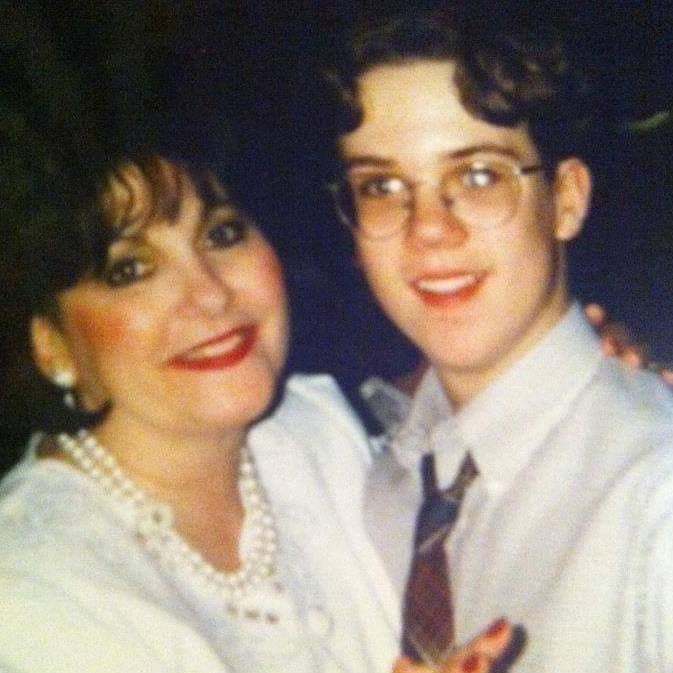
I was just a small child when my mom was diagnosed with breast cancer. In fact, most of my childhood she was in remission. That is, until she wasn’t. I was 12 or 13 when it came back more aggressively. I was 16 when she eventually passed away.

Rosalie and Ryan Lang

Trips to the doctor’s office and hospital were commonplace throughout my early teen years. No one doctor visit really stood out. What did stand out were the times my father and my aunts and uncles went to donate platelets on behalf of my mother. I was young and naive and thought they were specifically for mom. I later realized they were donating to replenish the supply of platelets.

Due to their short shelf life, hospitals require a consistent supply of platelets. That’s why donors like my dad, aunts and uncles, and you are critical to helping the American Red Cross replenish that supply.

February 4 is World Cancer Day, a day that touches many of us who have either had the disease or know someone who has fought the tough battle against it. Almost two million new cases may occur this year, according to experts, and blood products will be important for many of these patients in their fight against cancer.

Blood is so important during their treatment that patients fighting cancer use nearly one quarter of the nation’s blood supply — more than patients fighting any other disease. The Red Cross asks you to schedule a time to donate blood now to help cancer patients and so many others.

CANCER PATIENTS NEED BLOOD — THE FACTS

  • One in three people will be diagnosed with cancer during their lifetime.
  • Many of these patients, especially those undergoing chemotherapy, will likely have a need for blood products.
  • In fact, about six blood products are needed every minute to help someone going through cancer treatment.
  • Low blood count is a major side effect of cancer treatment. Some types of chemotherapy can damage bone marrow, reducing red blood cell and platelet production and putting a person at risk for life-threatening infections or bleeding.
  • The cancer itself can cause the need for blood and platelet transfusions by causing internal bleeding or preventing the patient’s body from producing blood cells.
Grady, Krista, Ed, and Dylan Fink

My friend Dylan and his family know the importance of blood and platelet donors. At just 14- years-old, Dylan was diagnosed with non-Hodgkin lymphoma. He’s in remission now, but that hasn’t stopped him and his family from paying it forward and organizing their own blood drives through the Red Cross.

Some cancer patients require more blood products than others. That was the case with Casey, who discovered she had cancer when she was ten weeks pregnant. She said, “Giving blood helps not just the person receiving it, by helping with their disease, but it truly helps that person’s family and friends as well.”

To find out more about donating platelets, click here. And, to schedule your appointment to give blood, visit RedCrossBlood.org, call 1-800-RED CROSS or download the free Red Cross Blood App.

Posted by Ryan Lang, Red Cross board member and volunteer

Local teacher inspires students to give the gift of life through blood donations

By Kathryn Dean, American Red Cross volunteer

It’s already nearing mid-December and with the holiday season in full swing, the spirit of giving is on many of our hearts and minds. As we grow older, we learn to appreciate the fulfillment that giving to others brings. This year, as we consider ways to give back, either through gifts, service, or charity, let’s remember one other significant way that we can help – by giving the gift of life through blood donations.

Merrylou Windhorst and St. Vincent – St. Mary High school teacher Heidi Tripp

Merrylou Windhorst knows the importance of giving back to the community. She has been doing it throughout her almost 80 years of life (she’ll reach her milestone birthday on Christmas day this year).As a teacher at St. Vincent – St. Mary High School (St. V’s) in Akron and now as a volunteer for the last 50 years, Merrylou has been mentoring students and organizing blood drives through the American Red Cross, giving back to the community that she loves.

Merrylou started out as a student at Our Lady of Elms Catholic school. After graduation, she stayed on as religious sister at the Elms for 11 years before feeling called to do something else. That something else was to become a mother and a teacher, and thus starting her work at St. V’s. During her tenure, she worked as a health and physical education teacher, as well as teaching theology and coaching softball.

Her interest in health and well-being led her to start a program at St. V’s about 40 years ago that she still leads and is still going strong today, the Future Medics program. Recently she has expanded the program to include students from her alma mater, Our Lady of the Elms. In it, students who have an interest in the medical field meet up once a month and learn about career options and hear from alumni who have found success in medicine. Students also help to run three blood drives per school year, something that she brought to the school over 20 years ago.

“As a teacher I’ve always said ‘don’t just think of yourself as a ME, turn the M upside down and it becomes a W, becomes WE’… and that’s kind of what I have done as a teacher and especially at Future Medics and at blood drives. It’s time to give to other people.”

High school students who are 16, with a parent’s permission, can donate blood. Students can also volunteer to work at the blood drives. Either way, they earn service hours for graduation, an important part of the culture at St. V’s. Merrylou is so proud of her students and their willingness to go above and beyond for their community.

“I’m always honored and amazed at these young people at age 16, and it’s gotta be scary to roll up their sleeve and give blood.”

She said with the students help, they often make or exceed their donation goals. Their next blood drive is scheduled for Jan. 22 at the school and is open to the public.

“You think about, when can you save a life? How can we ever in our life, other when you stop and give CPR to somebody on the side of the road, who can say, ‘I’ve saved lives?’”

Recently Merrylou received recognition from the Red Cross for her over 20 years of service in organizing blood drives.

If you’re considering donating and giving the gift of life this holiday season, join us at the annual holiday blood drive at the Sheraton Suites in Cuyahoga Falls on Dec. 17 from 7am-7pm. There will be refreshments and raffles all day, and all donors will receive a free, long-sleeved Red Cross T-shirt!

Edited by Glenda Bogar, Red Cross volunteer

Posted by Ryan Lang, Red Cross board member and volunteer

Will you be there for patients in need?

By Ryan Lang, Red Cross board member and volunteer

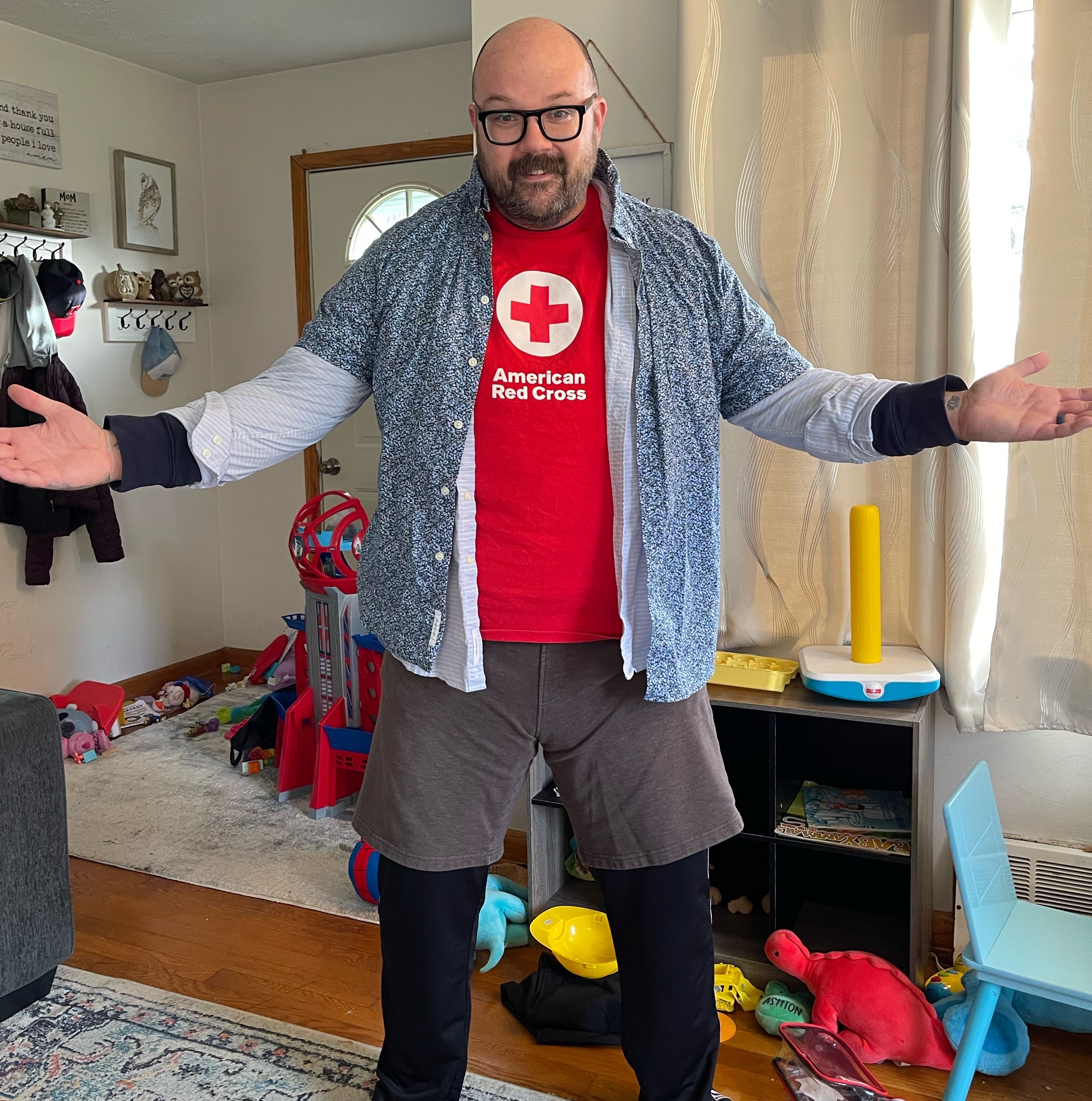
Look at me! I’m a blood donor, could I be wearing any more clothes?!

Ryan Lang, Blood Donor and Friends enthusiast

The short answer: yes! I could have a fun pair of “Friends” socks courtesy of the American Red Cross when I donate blood over the next few weeks.

To celebrate 30 years of the iconic TV show “Friends,” the Red Cross is asking donors to grab their bestie and make donating blood a holiday tradition. Those who come to give now through December 8th, 2024, will receive two pairs of custom “Friends” + Red Cross socks, while supplies last – one to keep and one to give to a friend.

Friends x Red Cross socks

Everything’s better with friends, especially giving lifesaving blood. Not only does it strengthen the bond of friendship, but it also doubles the impact in the community.

A couple of things to remember before donating:

  • Sleep! Whether that’s taking a great nap with your friend, a la Joey and Ross in “The One with the Nap Partners,” or a good night’s sleep in your own bed, be sure and rest up.
  • Hydrate! And we’re not talking about a latte at Central Perk. Water is essential. Plan on drinking an extra 16 ounces of H20 the day of your donation.
  • Eat! Iron rich foods are recommended, like eggs, meat, spinach, and more. Remember, Joey doesn’t share food, and you shouldn’t either – not on donation day.

So grab a friend and visit redcrossblood.org to schedule your donation appointment today! And if you download the Red Cross Blood Donor app, you and your friend can track where your donation goes through the “blood journey” feature.

Posted by Ryan Lang, Red Cross board member and volunteer

Now is the time to get your flu vaccine

By Tim Poe, American Red Cross volunteer

October. Sunlight arcs lower, days shorten but become more golden, rain and winds cool but whisper “live!” I walk along a wooded path, rhythmic crunch of my steps over fallen leaves occasionally accented by the staccato cracks of a falling acorn. For all autumn’s beauty and inspiration, however, the leaves, breezes, and moonlit evenings also usher in the beginning of flu season, as we spend more time indoors and air becomes dryer. As I stroll along the path, I feel pleased with my more mature, more risk-averse self, as I recently received my flu shot. It only took a few minutes, a brief jab followed by a dull ache a few hours later, but it will likely prevent several days of fever-ridden-runny-nose regret in the next few months.

The American Red Cross states now is the time to get your flu vaccine and has several tips to keep you and your loved ones safe during flu season. Everyone six months of age and older should receive a flu vaccine each season with rare exceptions, as the flu can cause mild to severe illness, and even lead to death. Thus, the vaccine is especially important for those at risk for serious complications.

While influenza viruses spread year-round, flu activity typically peaks between December and February, and it takes about two weeks for the flu vaccine to become fully effective. The Centers for Disease Control and Prevention (CDC) recommends getting the vaccine before influenza starts spreading in your community. Ideally, everyone should be vaccinated by October’s end.

The flu vaccine is also important in Ohio. In 2022, the state had 1,906 reported deaths from influenza and pneumonia. At the time of this writing, the Ohio Department of Health’s Seasonal Influenza Report currently shows a few hospitalizations in our region.

Flu vaccines are available in many locations, including doctor’s offices, pharmacies, and health departments. You can search for locations in your area here.

Here are additional tips to help stop the flu from spreading:

  • Cover your nose and mouth with a tissue or sleeve when coughing or sneezing and throw the tissue away after use. If a tissue isn’t available, cough or sneeze into your elbow, not your hands.
  • Wash hands often, especially after coughing or sneezing. If soap and water are not available, use an alcohol-based hand-sanitizer.
  • Avoid touching your eyes, nose, and mouth.
  • Avoid close contact with people who are sick.
  • Stay home if you’re sick.

For more information, the Red Cross’s national flu vaccine release is here; free Red Cross apps are available at redcross.org/apps.

So please, if you have yet to receive your vaccine, do so now, and avoid risking achy, fever-ridden, runny-nose regret later.

All photos credit: Tim Poe

Editor’s note: You can donate blood if you’ve had a flu shot and you have no symptoms and are fever-free. You can always check your eligibility to donate at 1-800 RED CROSS.

Scholarship winner is blood donor advocate and community service role model

By Tim Poe, American Red Cross volunteer

The American Red Cross grants Sickle Cell Fighter High School Scholarships to the nation’s top 10 high schools that host at least one blood drive and collect the most productive units from donors who self-identify as African American. One of the 2023-2024 recipients is Charles F. Brush High School in Lyndhurst, and their scholarship recipient is Meredith Davis-Cooper.

Meredith Davis-Cooper

Meredith graduated from Brush High School in 2024 and is now studying architecture at Kent State University. She graciously took time from her busy schedule to speak with me.

I asked Meredith how she became so active in community service. It began with her family, which is involved with several committees, church and worship groups, and counseling. This continued at Brush High School and the National Honor Society (NHS), as community involvement is a major initiative with both organizations. In addition to blood drives, Meredith and other students held several food drives last year.

“I’m always open to the community,” Meredith said. “I love staying involved. It brings me joy.” She has also learned she is quite adept at it.

Meredith’s skill in assisting community efforts was clearly seen with Brush’s three blood drives last school year. As the school’s National Honor Society president, she helped recruit and schedule students and donated blood herself.

I asked Meredith how she was so effective convincing others to become blood donors. She said knowing Red Cross facts helped, especially the critical need for blood donations in the African American community to help fight sickle cell disease. And her status as NHS president, a top 10 student, artist, and athlete were key. Meredith said her leadership and ability to fit in everywhere garnered trust and helped her persuade others to donate.

Meredith’s former NHS adviser, Mrs. Jill Strainic, concurs. She said, “It helps to have a role model like Meredith on our recruiting team. She’s an excellent student and leader, but by stepping up and donating blood herself, she takes ownership and is a great ambassador for the process. Meredith also brings this amazing sense of enthusiasm and confidence to everything she does. When she talks, students listen.”

In addition to her studies, Meredith works as a volleyball coach. She played volleyball in high school and competed in swimming, shot put, and discus. She is also an accomplished artist, creating abstract sculptures, some of which have won Gold Key awards and honorable mentions from the Cleveland Institute of Art. Meredith said art is how she developed her interest in architecture.

While Meredith is just getting settled in at Kent State and her demanding major, she plans to continue helping the community and donating blood, whether in Kent or at home. She also hopes to play or referee volleyball next year, and would like to study architecture abroad.

After graduating, Meredith hopes to eventually have her own firm and create innovative, striking buildings. She is especially inspired by Zaha Hadid’s work.

Meredith is extremely grateful for the Sickle Cell Fighter scholarship. She said she had been stressed about paying for college, and the award was a “shocking surprise.” It helped “seal the deal” so she could begin her university studies and prepare for her future.

The Red Cross is currently offering sickle cell trait screening for donors who self-identify as Black or African American. To schedule a blood donation, please visit redcrossblood.org.

Edited by Glenda Bogar, Red Cross volunteer

Posted by Ryan Lang, Red Cross board member and volunteer

Sonata in B Positive (B+)

A blood donor story told in the spirit of film noir

By Tim Poe, American Red Cross volunteer

Tim Poe, Red Cross volunteer and blood donor

I shut off the car’s engine and reached for the bottle. This was the place. Looking at the glass and sandstone medical building bristling in the late-July afternoon, I unscrewed the cap and took a long swig. This wasn’t some liver-pummeling swill, though, nor even a dainty-derby aperitif. It was the good stuff: water, straight from the tap. I knew I’d need it; they’d told me so. They also told me to get a good night’s sleep, but the ghosts of nexuses past, present, and future rattling chains at bebop tempo in my brain had other ideas. But I had slept some, had drank plenty of water, and was here to do some good. I stepped out of my dented ride and gazed at a sky blue enough to make Monet weep. But today’s theme was red. I headed toward the building, prepared to lose some blood.

I had plenty, after all, and others needed it. Today I was a blood donor.

Cots, computers, snacks, beverages, people bustling, many wearing shades of red. I’d found the room. A Blood Donor Ambassador welcomed me with a smile and scanned the fuzzy square on my phone. I had completed the RapidPass that morning.

The two donors preceding me said they always gave together, as often as possible. O negatives, universal donors. Today they were donating whole blood. Next time, Power Red. These two were cool. I was humbled, in the presence of greatness.

Another groovy person called me over, verified the information I had provided earlier, asked a few more questions, checked vitals, and drew blood to check my iron, a large drop of crimson emerging from a finger. My mind wandered from iron to the irony of my blood type, which sounded like a happiness mantra: “Be positive.” Better suited for a life coach or morning weather reporter, not a mug who’d spent his formative years breathing blue notes through saxophones followed by a lifetime thinking of novel ways to describe dusks, dawns, dramas, drunks, and dreams.

My mental meanderings paused; time to get on a cot. Even in summer, I’m pale, nearly translucent with easily visible veins, a phlebotomist’s joy. A groovetastic phlebotomist in a cerise shirt handed me a squeezy then worked a scanner, tubing, bags, and swabs with the deftness of Bill Evans pressing piano keys into song. The scent of iodine sent a jumbled reel of hospital memories rolling through my mind. But those were times of need. Now to give, help someone going through something similar. I wondered if that someone’s personality matched “be positive.”

The needle. A pinch, the frosty tubing turned garnet as my blood flowed into unseen bags below. I resisted the urge to peer over at them, instead squeezing the foam every few seconds, my other hand with the phone, taking a photo, then scrolling in hope of finding some good news.

Soon came beeps and the return of the phlebotomist. With a flurry of clips, tubes, samples, cotton, and a candy red bandage wrap, I was done. I stood up, walked to the snack table, selected a blueberry granola bar, a bottle of spring water, and awaited the slight light- headedness to subside.

Shortly later I walked back down the hall, proudly wearing my bandaged arm, greeting others, possibly with a little “be positive” swagger. Because today, I did some good. Today, I was a blood donor.

Posted by Ryan Lang, American Red Cross board member and volunteer

Lifting of restrictions opens window for new blood donors

One-year anniversary of blanket deferral that prevented blood donations

By Kathryn Dean, American Red Cross volunteer

If you’ve ever attended a blood drive in the past and were turned away due to a deferral, there has never been a better time to reassess your eligibility. Over the past two years, two important deferrals that have been in place since the 1980s have been modified or lifted, increasing the ever-needed pool of eligible blood donors.

In 1986, Bovine Spongiform Encephalopathy, colloquially known as “Mad Cow Disease,” was discovered in cattle in the United Kingdom. This disease was found to be transmissible to humans if infected meat was eaten and caused a number of illnesses, including a variant of Cruetzfeld-Jakob disease (vCJD), a degenerative, fatal disease that affects the central nervous system of the host.

U.S. Air Force veteran John Dowell of Lakewood  gave blood after the variant Creutzfeldt-Jakob
(mad cow) Disease deferral was lifted.

Due to this, during the 1980’s and 90’s the Food and Drug Administration restricted people who had visited certain European countries from donating blood in the United States in an effort to prevent the transmission of vCJD. The American Red Cross honored this ban, which remained in place until 2022 when it was removed after a steep decline in reported cases and no signs of a second wave.

Additionally, in 2023 a second long-standing deferral that restricted gay and bisexual men from donating was modified to remove the blanket deferral and instead assess people on a case-by-case basis. This deferral was originally created in an attempt to curb the spread of HIV, which became an epidemic in the 1980s.

Red Cross worker and volunteer, Mark Fleischer

Both of these deferrals affected long-time Red Cross worker and volunteer, Mark Fleischer, who was able to donate blood for the first time in decades back in January of this year. You can read his story HERE and learn of his great pride in being able to donate again after years of ineligibility.

When I spoke to him back in January, he indicated that not only was he previously affected by the deferrals placed on gay men, but because of his brief time living in England back in 1992 and because of fears surrounding Mad Cow disease, he had been told he was ineligible to donate for life. Now all of that has changed with the recent modifications to blood donor eligibility requirements.

Mark Fleischer and phlebotomist Ed Leonardi

In an update since his January 2024 donation, Mark told me that he has helped organize and has participated in many successful blood drives at the Willoughby Senior Center, some of which have exceeded their goal for blood donations. He is also personally scheduled to donate blood again at the end of this month.

“Recruiting for blood donors is in full force and things are going great,” he said. He also previously told me, “You may have been deferred decades ago for something that may no longer be in place. So I want to encourage people to look at the questions that the Red Cross asks (and) look at the deferred list…those deferrals or restrictions may have been lifted.”

Mark Fleischer and Red Cross staff at blood drive

Check out the Red Cross Give Blood page to learn more about eligibility requirements, and to find a local blood drive near you.

Edited by Glenda Bogar, American Red Cross volunteer

Posted by Ryan Lang, American Red Cross board member and volunteer

Recognizing blood donors on World Blood Donor Day

Increased need for donors during summer months

By Eilene E. Guy, American Red Cross volunteer

Why in the world would anybody willingly roll up a sleeve and take a needle jab, to give up a bag of precious blood?

“My mother, she gave I don’t know how many gallons,” one donor recently told me. This middle-aged daughter was honoring her late mother’s example of generosity.

Eilene E. Guy, Red Cross volunteer and blood donor

“Back in 1970, a friend of mine was going to have surgery, so I went to Cleveland to donate for him,” another donor recalled. With his donation the day we talked, that man was approaching his 35-gallon mark!

On this, World Blood Donor Day, the American Red Cross salutes the estimated 6.8 million people in the U.S. who donate blood. That yields about 13.6 million units (a “unit” of blood is about one pint) of whole blood and red blood cells a year.

That’s a whole lot of blood!

But consider: Every two seconds, someone in the U.S. needs blood or platelets. That amounts to some 29,000 units of red blood cells every day.

And this isn’t an option. Blood is saving the lives of critically injured emergency room patients, mothers and newborns experiencing complications of childbirth and folks having surgery. It’s sustaining hundreds of thousands of people undergoing chemotherapy treatment for cancer and tens of thousands who rely on blood transfusions to cope with the effects of sickle cell disease.

We’re fortunate to live in an age of modern medicine, but one challenge remains: There’s no way to “manufacture” blood.

So until that magic day, it’s a measure of our humanity that so many donors step forward to save the lives of others – in most cases, people they’ll never know.

The fact is, only about 3% of age-eligible people donate blood every year. That often leaves the supply agonizingly short. Over the last month, for example, the Red Cross collected about 20,000 fewer units of blood than needed to maintain a safe and stable national blood supply.

That’s worrisome, because blood donations typically drop during the summer months. At the same time, the need doesn’t stop.

Which brings us back to the source, blood donors.

I know from personal experience that it takes about an hour to go through the whole process: Screening to be sure I’m healthy and don’t have any disqualifications (The U.S. Food and Drug Administration decides what that would be, such as exposure to communicable diseases like malaria, or recent tattoos or piercings.); donating; and recovery (Water, juice and snacks are encouraged to jump-start the body’s replacement of the blood removed.)

You don’t need to know your blood type to make a blood donation. And if you think you’ve been disqualified, give it another try: You, or the rules, may have changed.

You can schedule your blood donation by using the free Blood Donor App, by visiting RedCrossBlood.org or by calling 1-800-RED CROSS (1-800-733-2767). 

On this World Blood Donor Day and every day, “bravo” to those who make the choice to save or sustain a life.

Edited by Glenda Bogar, Red Cross volunteer

Posted by Ryan Lang, Red Cross board member and volunteer

Give blood and get a free Cedar Point ticket

By Samantha Pudelski, American Red Cross volunteer

It’s almost summer, which means lots of time at the pool, summer barbeques, vacations and trips to Cedar Point. It’s also when blood donations tend to decline, as donors are busy with all of their summer activities. Unfortunately, the need for blood is constant in our community and across the country, and we need donors like you to help ensure those who need blood are able to receive it.

Every two seconds, someone in the U.S. needs blood. This includes accident and burn victims, heart surgery and organ transplant patients and those battling cancer.


This summer, the American Red Cross and Cedar Fair theme parks are teaming up again to encourage donors to help save lives this summer. All you need to do is donate blood at select blood drives through August 1st and you’ll receive a free Cedar Point ticket.*

To find a Cedar Point blood drive near you and schedule an appointment, visit RedCrossBlood.org and enter sponsor code “CEDARPOINT”. Appointments for these blood drives are highly encouraged.**

*All those who come to donate at select blood drives will receive one free ticket, valid for entry to Cedar Point, while supplies last. Tickets are valid during the 2024 season and other restrictions may apply. Check park website for information on capacity, open dates and hours.

**Donors without appointments are not guaranteed a Cedar Point ticket, as
supplies are limited.

Posted by Ryan Lang, Red Cross board member and volunteer