
By Kathryn Dean, American Red Cross volunteer
“In some situations, it takes a village of people to save one person’s life.” – Dr. Kristin Gype
Last August, 38 weeks pregnant with her second child, Dr. Kristin Gype went in to see her doctor for a routine checkup and ultrasound. Everything had been going smoothly with this pregnancy, but at this appointment, the staff noticed that her amniotic fluid appeared cloudy on the scan. As a precaution, her doctor recommended that she deliver within 24 hours.

Feeling a bit unnerved at this unexpected turn of events, she called her husband, reluctantly gathered her belongings, and dropped her daughter off at her mother-in-law’s house. As she hugged her daughter goodbye, Kristin had a powerful urge to squeeze her extra tight and hold on a little longer.
A few years earlier, she had undergone a C-section with the birth of her daughter and was determined this time to try a natural birth. At the hospital, labor was induced and she received an epidural as she waited for her son to be born. Sometime overnight, they broke her water, and it was perfectly normal. She felt a wave of relief, but also a hint of frustration.
Later that morning, she noticed that her son’s fetal monitor was showing his heart rate dipping periodically into the 30s. A normal fetal heart rate is around 110 to 160 beats per minute. She was also feeling pain in her lower right abdomen. Despite the anesthesiologist administering more medicine, the pain persisted.
Due to the low heart rate, it was determined that a C-section was necessary, and she went in for emergency surgery. Her son was born in under 90 seconds and was perfect and healthy, but she quickly realized something else was seriously wrong.
Having attended many C-sections during her career as a nurse anesthetist, Kristin understood the subtle cues the medical staff were giving. She soon realized that she had uncontrolled bleeding and they were trying desperately to stop it.
“I felt this impending doom,” she recalled. “I felt like I was dying…it truly felt cold and dark, and gloomy, and there was no control.”
She began losing her ability to communicate coherently with her husband and staff. At one point they informed her that a total hysterectomy was necessary to try to stop the bleed and she readily agreed. The next thing she knew she woke up in recovery in the ICU.
After speaking to her doctor the next day, she learned that she had required a total of 52 units of blood during her surgery. To put that number into perspective, the average human body holds around 10 units or pints of blood. In addition, she estimates that up to 83 blood donors were required to produce all of the blood products she needed that day.
Luckily, she suffered no long-term consequences from this traumatic incident. Today she has a new life perspective, realizing that she was literally saved from the brink by the generous blood donors who contribute to the crucial blood supply in our community.

To give back, she has been donating her extra breast milk to the Ohio Milk Bank. “I went on to donate 3,500 oz of breast milk,” she proudly explained. “The milk bank providers said 1 ounce of breastmilk can give three meals to a newborn ICU patient.”
Regarding her blood donors, she reflected, “Those people had a ripple effect. They kept me alive, kept these two babies’ mommy alive. I get to go to work and take care of people and keep them alive, and my breastmilk goes to critically ill babies.”
“It seems so simple because putting a needle in your arm and donating a pack of units is so minor compared to the downstream effects of all those things. You give somebody another Christmas, give somebody another chance at life.”
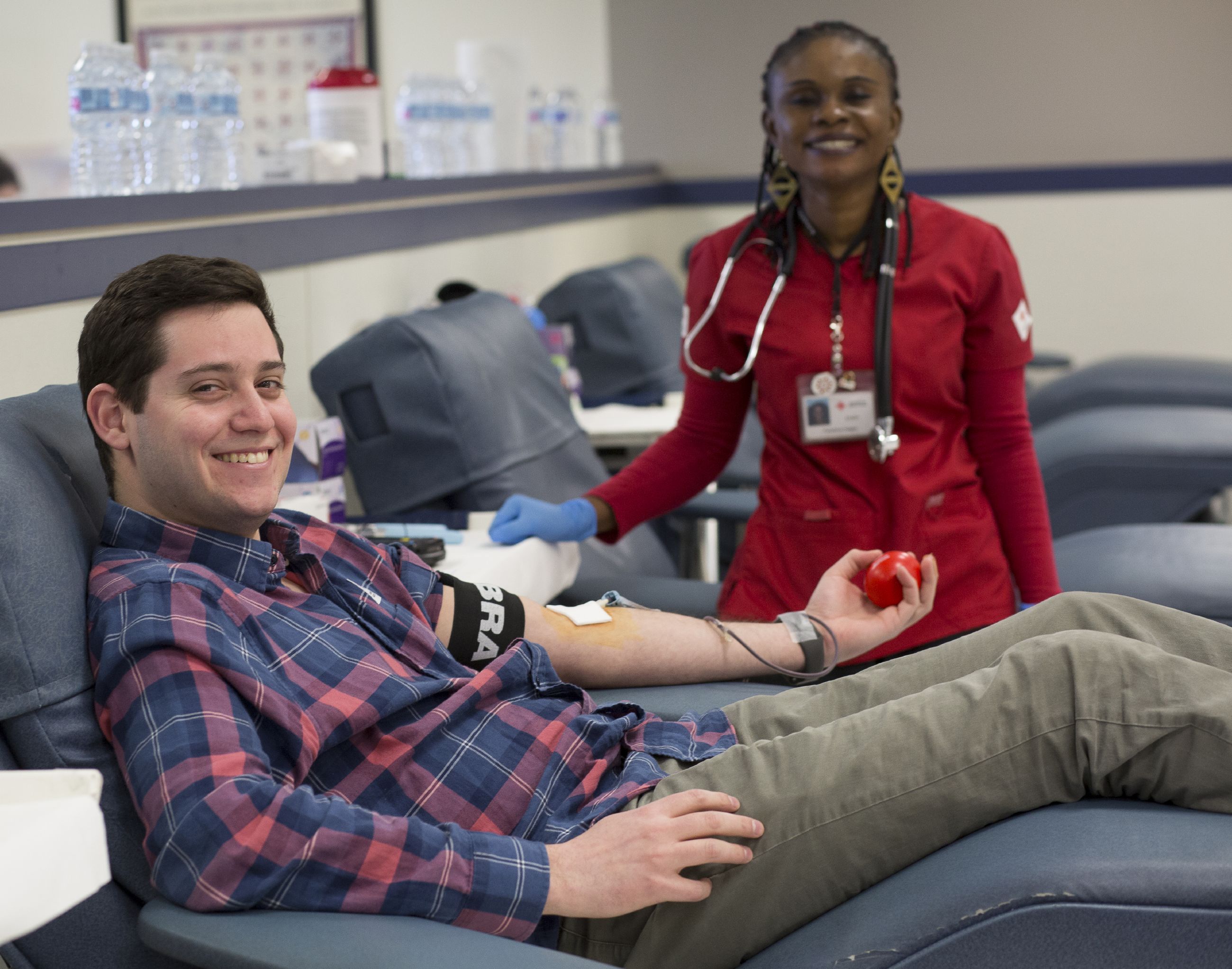
The American Red Cross is in critical need of blood donors. Just one hour of your time could save the life of a new mother or other critically ill patient. To donate, visit RedCrossBlood.org, or download the free American Red Cross Blood Donor App by clicking HERE.
Edited by Glenda Bogar, American Red Cross volunteer




 NOHredcross