Sonata in B Positive (B+)

A blood donor story told in the spirit of film noir

By Tim Poe, American Red Cross volunteer

Tim Poe, Red Cross volunteer and blood donor

I shut off the car’s engine and reached for the bottle. This was the place. Looking at the glass and sandstone medical building bristling in the late-July afternoon, I unscrewed the cap and took a long swig. This wasn’t some liver-pummeling swill, though, nor even a dainty-derby aperitif. It was the good stuff: water, straight from the tap. I knew I’d need it; they’d told me so. They also told me to get a good night’s sleep, but the ghosts of nexuses past, present, and future rattling chains at bebop tempo in my brain had other ideas. But I had slept some, had drank plenty of water, and was here to do some good. I stepped out of my dented ride and gazed at a sky blue enough to make Monet weep. But today’s theme was red. I headed toward the building, prepared to lose some blood.

I had plenty, after all, and others needed it. Today I was a blood donor.

Cots, computers, snacks, beverages, people bustling, many wearing shades of red. I’d found the room. A Blood Donor Ambassador welcomed me with a smile and scanned the fuzzy square on my phone. I had completed the RapidPass that morning.

The two donors preceding me said they always gave together, as often as possible. O negatives, universal donors. Today they were donating whole blood. Next time, Power Red. These two were cool. I was humbled, in the presence of greatness.

Another groovy person called me over, verified the information I had provided earlier, asked a few more questions, checked vitals, and drew blood to check my iron, a large drop of crimson emerging from a finger. My mind wandered from iron to the irony of my blood type, which sounded like a happiness mantra: “Be positive.” Better suited for a life coach or morning weather reporter, not a mug who’d spent his formative years breathing blue notes through saxophones followed by a lifetime thinking of novel ways to describe dusks, dawns, dramas, drunks, and dreams.

My mental meanderings paused; time to get on a cot. Even in summer, I’m pale, nearly translucent with easily visible veins, a phlebotomist’s joy. A groovetastic phlebotomist in a cerise shirt handed me a squeezy then worked a scanner, tubing, bags, and swabs with the deftness of Bill Evans pressing piano keys into song. The scent of iodine sent a jumbled reel of hospital memories rolling through my mind. But those were times of need. Now to give, help someone going through something similar. I wondered if that someone’s personality matched “be positive.”

The needle. A pinch, the frosty tubing turned garnet as my blood flowed into unseen bags below. I resisted the urge to peer over at them, instead squeezing the foam every few seconds, my other hand with the phone, taking a photo, then scrolling in hope of finding some good news.

Soon came beeps and the return of the phlebotomist. With a flurry of clips, tubes, samples, cotton, and a candy red bandage wrap, I was done. I stood up, walked to the snack table, selected a blueberry granola bar, a bottle of spring water, and awaited the slight light- headedness to subside.

Shortly later I walked back down the hall, proudly wearing my bandaged arm, greeting others, possibly with a little “be positive” swagger. Because today, I did some good. Today, I was a blood donor.

Posted by Ryan Lang, American Red Cross board member and volunteer
Raising awareness in Akron for patients with sickle cell disease

When patients living with sickle cell disease face a sickle cell crisis, blood transfusions can make a lifesaving difference. That’s why the Akron National Panhellenic Council partnered recently with the American Red Cross to grow the number of blood donors who are Black to help patients with sickle cell disease, the most common inherited blood disorder in the U.S.

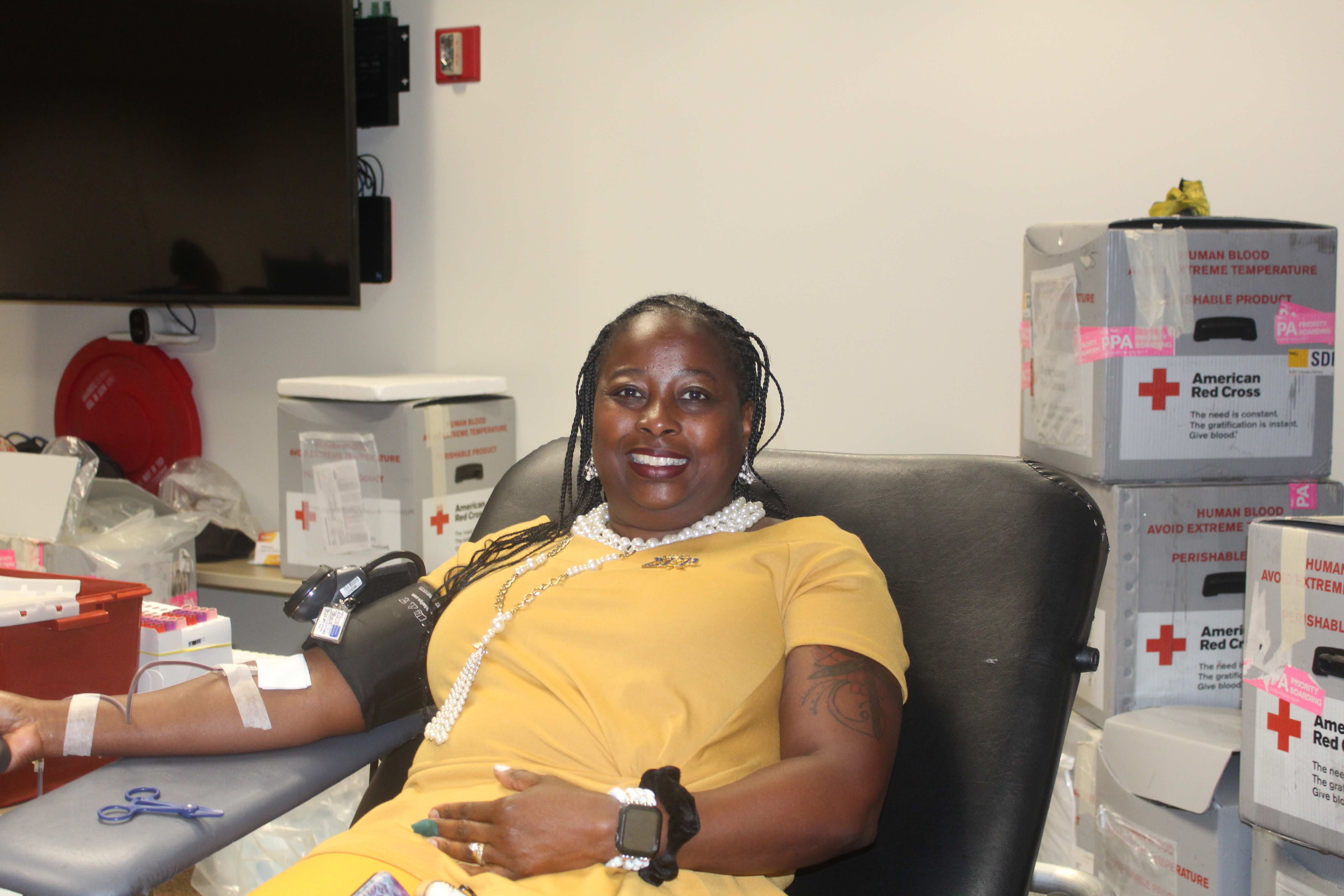
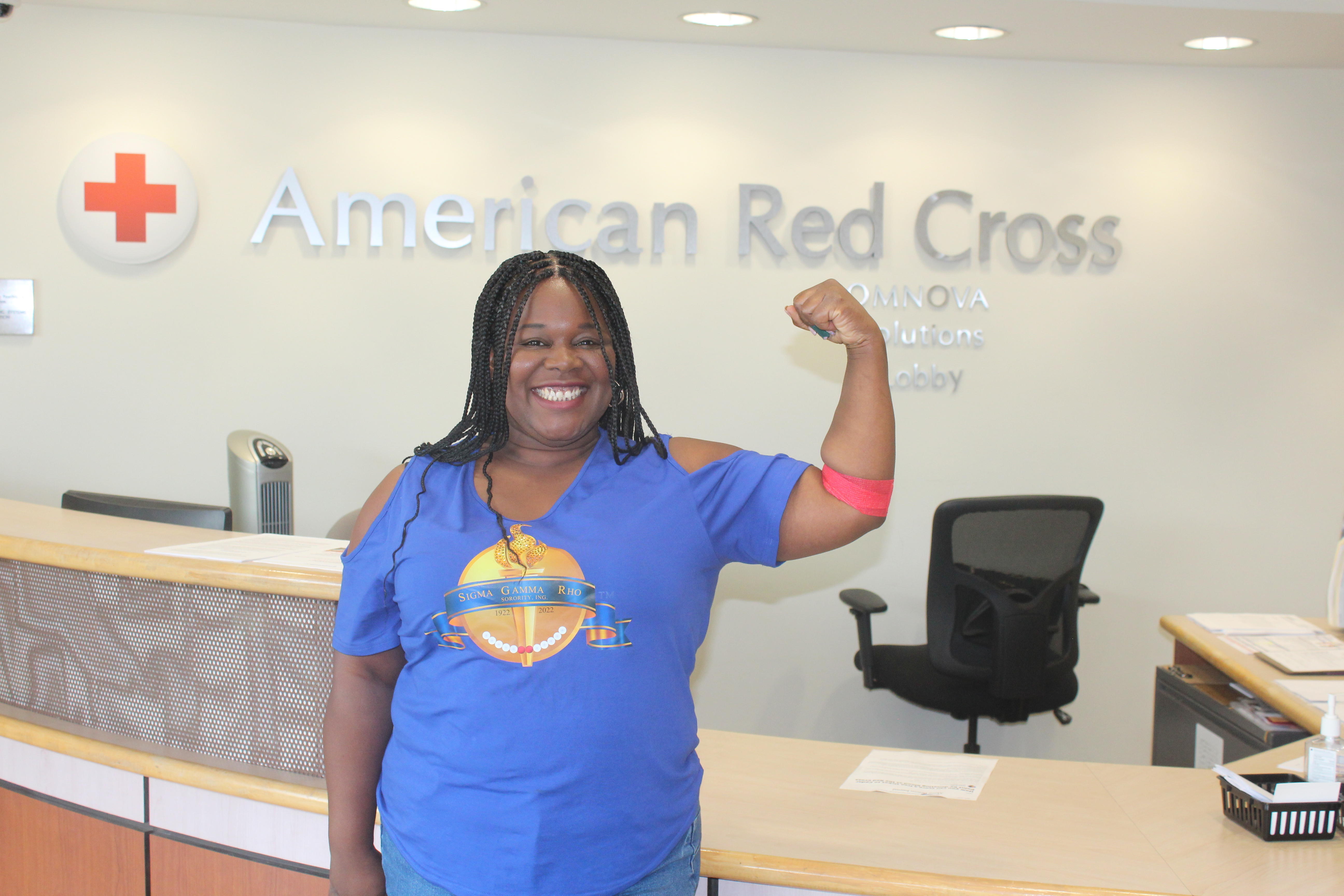
28 donations were collected at the Akron NPHC blood drive on Saturday, June 23, to help raise awareness for patients living with the disease. Nine sororities and fraternities took park in the drive.

Jasina Chapman, first-time blood donor and organizer of the Akron NPHC blood drive for sickle cell awareness

“We mobilized all of our groups to get them to either donate or volunteer,” said Jasina Chapman, who donated blood for the first time at the drive. As the Community Service Chairperson for the Eta Delta Sigma Chapter of Sigma Gamma Rho Sorority, Inc. and the Akron NPHC, she helped organize the blood drive.

“We are African American leaders in our community,” she said. “We need to activate African Americans to donate blood.”

More than 100,000 people live with sickle cell disease nationwide, and the majority of patients are of African descent. The disease distorts soft, round blood cells and turns them hard and crescent-shaped, which can cause extreme pain. When hardened, the cells can get caught in blood vessels, potentially leading to stroke and organ failure. Blood transfusions are often used in treatment, and many individuals who are Black have distinct markers on their red blood cells that make their blood donations the most compatible match for helping patients with sickle cell disease. One in three African American blood donors is a match for people with sickle cell disease.

Christa Nuru, one of 28 donors at the Akron NPHC blood drive

How to donate blood:
Simply download the American Red Cross Blood Donor App, visit RedCrossBlood.org, call 1-800-RED CROSS (1-800-733-2767) or enable the Blood Donor Skill on any Alexa Echo device to make an appointment or for more information. All blood types are needed to ensure a reliable supply for patients. A blood donor card or driver’s license or two other forms of identification are required at check-in. Individuals who are 17 years of age in most states (16 with parental consent where allowed by state law), weigh at least 110 pounds and are in generally good health may be eligible to donate blood. High school students and other donors 18 years of age and younger also have to meet certain height and weight requirements.

Blood and platelet donors can save time at their next donation by using RapidPass ® to complete their pre-donation reading and health history questionnaire online, on the day of their donation, before arriving at the blood drive. To get started, follow the instructions at RedCrossBlood.org/RapidPass or use the Blood Donor App.

The Need Never Ends

Red Cross issues urgent call for blood and platelet donors

This January, National Blood Donor Month, the American Red Cross has an urgent need for blood and platelet donors of all blood types to make an appointment to give now and help address a winter blood donation shortage. Severe winter weather, in addition to seasonal illnesses and hectic holiday schedules have collectively contributed to more than 28,000 fewer donations than what was needed in November and December.

There is a critical need for the following blood and donation types right now:

  • Platelets: The clotting portion of blood primarily given to cancer patients during treatment and always in great demand.
  • Type O negative: The blood type that can be transfused to almost everyone and is what doctors reach for in trauma situations.
  • Type B negative: The blood type that can be transfused to type B Rh-positive and negative patients.
  • Type AB: The plasma type that can be transfused to almost everyone and can be donated through a platelet or plasma donation, where available, or during a regular blood donation.

Right now, blood and platelet donations are being distributed to hospitals as fast as they come in. The Red Cross must collect more than 13,000 blood and platelet donations every day for patients at about 2,600 hospitals and transfusion centers nationwide.

Eligible donors can find a blood platelet donation opportunity and schedule an appointment to donate by using the free Blood Donor App, visiting redcrossblood.org or calling 1-800-RED CROSS (1-800-733-2767). Donation appointments and completion of a RapidPass are encouraged to help speed up the donation process. RapidPass lets donors complete the pre-donation reading and answer the health history questionnaire online, on the day of their donation, by visiting redcrossblood.org/rapidpass from the convenience of a mobile device or computer, or through the Blood Donor App.